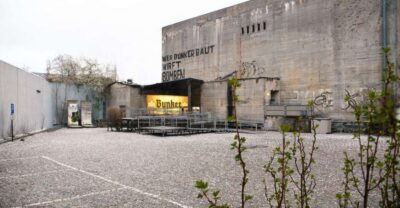
Reviewed · BERLIN TOURS
Berlin: David Bowie in 1970s West-Berlin
Bowie still echoes through West Berlin. This private three-hour tour connects Hansa Studios, former clubs, Bowie’s old neighborhood, and songs shaped by the city. I like the personal scale, and I like that guide Martin Sauter brings both Bowie facts and Berlin stories. The main drawback is the $288 price per person, which is a serious outlay for a tour focused mainly on exterior sights.
You begin at Martin Gropius Bau, once the site of the 2014 David Bowie exhibition, then move through Potsdamer Platz, Hansa Studios, City West, KaDeWe, and the former locations of Dschungel and Chez Romy Haag. A bus ride takes you to Bowie’s Berlin home. The old clubs are gone or changed, so this is best for people who enjoy atmosphere, context, and musical connections more than preserved interiors.
In This Review
- Key points at a glance
- Why Bowie chose West Berlin in 1976
- Starting at Martin Gropius Bau
- Potsdamer Platz and Bowie’s changing Berlin
- Hansa Studios, the tour’s essential stop
- City West, KaDeWe, and the old nightlife circuit
- The bus ride to Bowie’s Berlin home
- How Martin Sauter shapes the experience
- Is $288 per person good value?
- Who should book this Bowie tour?
- Practical advice before you go
- Should you book it?
- FAQ
- How long does the David Bowie Berlin tour last?
- What language is the tour offered in?
- Is this a private tour?
- Where does the tour begin?
- How will I identify the guide?
- Does the tour include hotel pickup?
- Does the tour visit inside Hansa Studios?
- Can I cancel for a full refund?
Key points at a glance
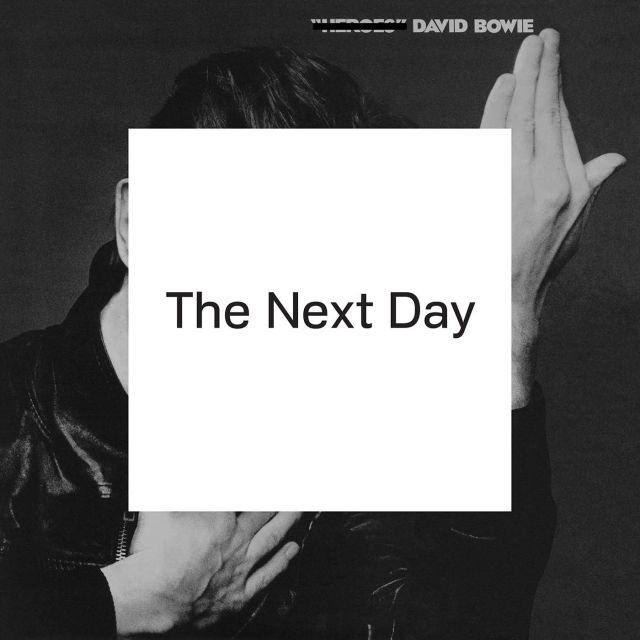
- Hansa Studios is the musical anchor: You stand outside the building linked with Bowie’s Berlin recordings and the sound of Heroes.
- The tour follows Bowie’s city, not just his biography: Potsdamer Platz, City West, KaDeWe, former clubs, and his home all help explain daily life in West Berlin.
- Martin Sauter leads a private tour: He speaks English, French, or German and can adapt the experience to your interests.
- The club stops require imagination: Dschungel and Chez Romy Haag are former locations, so you see where they were rather than preserved nightlife venues.
- The bus transfer saves time: The walking route is combined with public transport to reach Bowie’s home at the end.
- The price suits dedicated fans: At $288 per person, the value depends on how much you want detailed Bowie and Berlin interpretation.
Why Bowie chose West Berlin in 1976
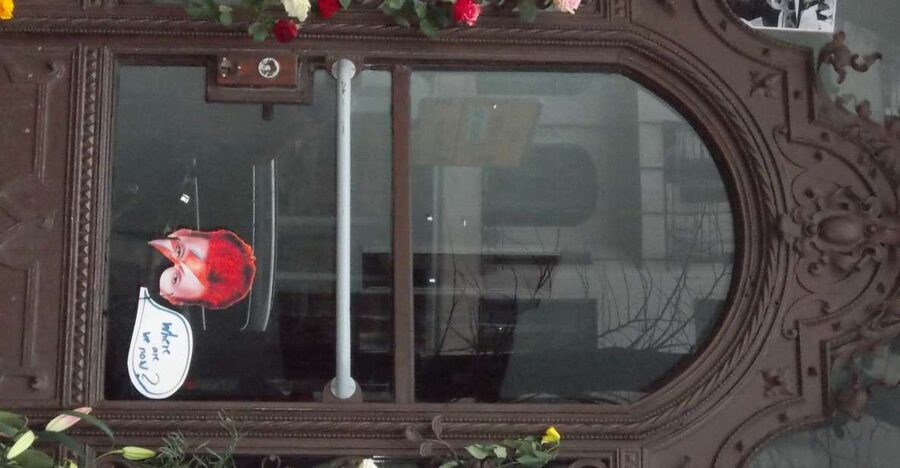
David Bowie arrived in West Berlin after completing Nicolas Roeg’s The Man Who Fell to Earth. He was leaving behind his previous life, and the move had several causes. The tour introduction explains those reasons before you begin tracing his time in the city.
One important factor was Bowie’s interest in new electronic sound. Düsseldorf played a major role in that movement, but West Berlin also offered the kind of creative setting he was seeking. The city was divided, unusual, and full of artistic energy. You do not need to know every detail of 1970s music culture to follow the story, but the setting helps explain why Berlin mattered to Bowie.
Before finding his own flat, Bowie stayed at the apartment of Edgar Froese, founder of Tangerine Dream. That detail gives the story a useful human scale. His Berlin chapter did not begin with a grand arrival at a famous address. It began with a temporary place to stay while he found his footing.
Bowie lived in Berlin from 1976 to 1978. The tour uses those years as its frame, showing how the city affected both his work and his daily life. You hear about Heroes, along with Boys Keep Swinging, Yassassin, and Neuköln. The misspelling of Neukölln is part of the discussion, as are the links between these songs and Bowie’s life in West Berlin.
I like this approach because it avoids treating Berlin as a simple backdrop. The city is part of the creative story. You are not just checking off addresses connected to a famous singer. You are considering why these particular streets, clubs, studios, and districts mattered to him.
A few more Berlin trips worth comparing
- Berlin: Reichstag, Dome and Government District Guided Tour
★ 4.7 · 18,288 reviews - Berlin: 1-Hour City Tour by Boat with Guaranteed Seating
★ 4.3 · 16,993 reviews - Berlin: Boat Tour Along the River Spree
★ 4.4 · 11,252 reviews
Starting at Martin Gropius Bau
The tour begins at Martin Gropius Bau, a practical meeting point with a clear Bowie connection. In 2014, the building hosted the major David Bowie exhibition. It is not presented as a current Bowie museum, so you should not expect to walk into an exhibition devoted to him today.
Instead, the site works as an introduction. It gives you a sense of how Bowie’s career has been presented in Berlin and sets up the move from formal exhibition space to the city itself. Your guide will be holding a David Bowie album, book, or CD, making the meeting easy to spot.
This first stop also helps you get oriented before the route begins. Martin’s role is important here. His strongest quality, based on the available feedback, is his ability to combine Bowie detail with general Berlin background. His style is described as charming, humorous, communicative, and passionate about the subject.
That matters on a private tour. You can ask about a song, a neighborhood, the recording period, or the reasons Bowie chose Berlin. Martin has also adapted private tours to personal interests and has sometimes allowed extra time for discussion. That flexibility is one of the better reasons to choose this over a large group walk.
Potsdamer Platz and Bowie’s changing Berlin
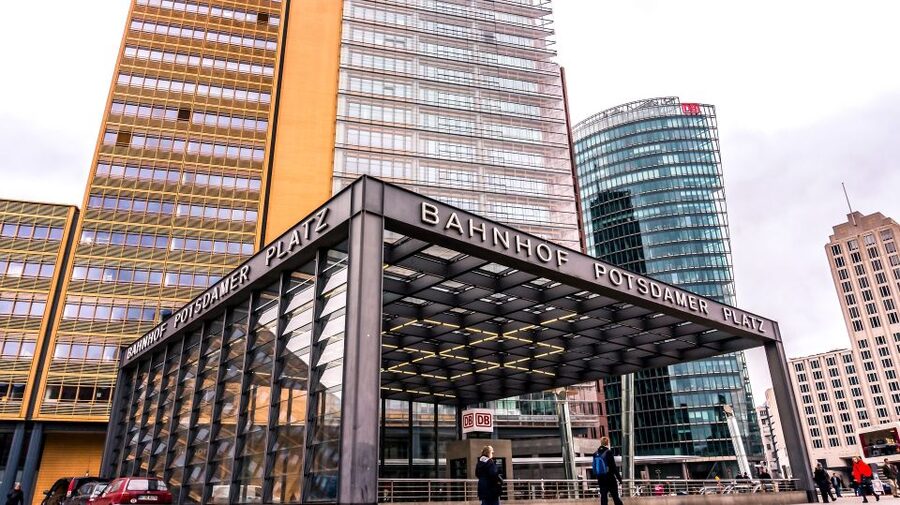
From Martin Gropius Bau, the route continues toward Potsdamer Platz. Bowie later referred to this area in Where Are We Now?, released in 2012. The stop connects his 1970s life with his later reflections on Berlin.
Potsdamer Platz is useful because it lets you think about time as well as music. The tour is about a West Berlin that no longer exists in the same form. Some places have changed, some former clubs have disappeared, and some addresses now require you to picture the past rather than simply see it.
That can be a strength or a weakness. If you want intact Bowie interiors, this tour will not provide many of them. If you enjoy matching present-day streets with stories from another era, the contrast becomes part of the experience.
I would pay close attention here to how Martin explains the difference between Bowie’s Berlin and today’s Berlin. The value is not only in the photograph you take at a location. It is in understanding what the place represented when Bowie lived and worked there.
Hansa Studios, the tour’s essential stop
Hansa Studios is the key address for many people booking this experience. You stand outside the studio and hear about its place in Bowie’s Berlin years. The building is closely tied to the period and to Heroes, making it the most important musical stop on the route.
Be clear about what is included: you stand in front of Hansa Studios. This is not advertised as an interior studio visit or a recording session. That distinction matters if you are comparing this tour with a specialist studio access experience.
Still, an exterior stop can carry real weight when the story is strong. Bowie’s Berlin work is connected to the building, and hearing the context on location is more useful than simply reading the address in a guidebook. Martin’s detailed explanations help turn a building facade into a place with meaning.
For me, this is where the tour’s format makes the most sense. You are not merely hearing that Bowie recorded in Berlin. You are standing at one of the places that helped define the era. The setting gives the music a physical reference point.
Still Berlin, at a slower pace:
- Discover Berlin Half-Day Walking Tour
★ 5.0 · 9,624 reviews - Berlin: Hop-on Hop-off Bus Tour with Live Commentary
★ 4.3 · 8,579 reviews - Berlin: Government District around the Reichstag Guided Tour
★ 4.7 · 8,447 reviews - Berlin: Reichstag, Plenary Chamber, Cupola & Government Tour
★ 4.6 · 8,422 reviews
City West, KaDeWe, and the old nightlife circuit
After Hansa Studios, the route heads through City West and passes KaDeWe. The tour then points out the former locations of Dschungel and Chez Romy Haag, clubs that were important to Bowie’s social world in Berlin.
The former club sites are not polished museum stops. They are city locations with a past, and the original venues may no longer be there. You need to bring some imagination. Martin’s narration is what links the address to the people, nights, and creative circles associated with the clubs.
Chez Romy Haag is presented as a place that can transport you back to 1970s West Berlin. That depends heavily on the guide, since the physical location alone may not tell you much. The same is true of Dschungel. These stops work best if you want to understand where Bowie spent time, not just where he recorded.
The inclusion of KaDeWe and City West broadens the tour beyond a narrow fan pilgrimage. You see parts of the city connected with shopping, nightlife, and ordinary movement through West Berlin. That makes the itinerary feel more like a look at Bowie’s life than a string of recording locations.
The trade-off is that the tour does not promise entry into these former clubs. If your main interest is active nightlife or preserved interiors, you may find these stops less satisfying. If you like tracing a vanished cultural scene, they should be worthwhile.
The bus ride to Bowie’s Berlin home
The final part of the tour uses a bus to reach David Bowie’s Berlin home. This is a sensible way to cover more ground within three hours. It also changes the pace after the walking sections through central and western Berlin.
The home is viewed from outside. You should not expect to enter a private residence, and the experience is about location and context rather than access. Ending there gives the tour a personal finish after the public spaces of studios, clubs, shopping streets, and major squares.
I like the order. You begin with Bowie’s reasons for coming to Berlin, move through places connected with his work and social life, then finish at the address where he lived. The route gradually narrows from the city to the individual.
The bus transfer also makes the tour less physically demanding than a three-hour walk. There is still walking at several stops, so comfortable shoes make sense, but you are not asked to cover every section on foot. Hotel pickup is available if desired, which may help if you prefer a simpler start.
How Martin Sauter shapes the experience
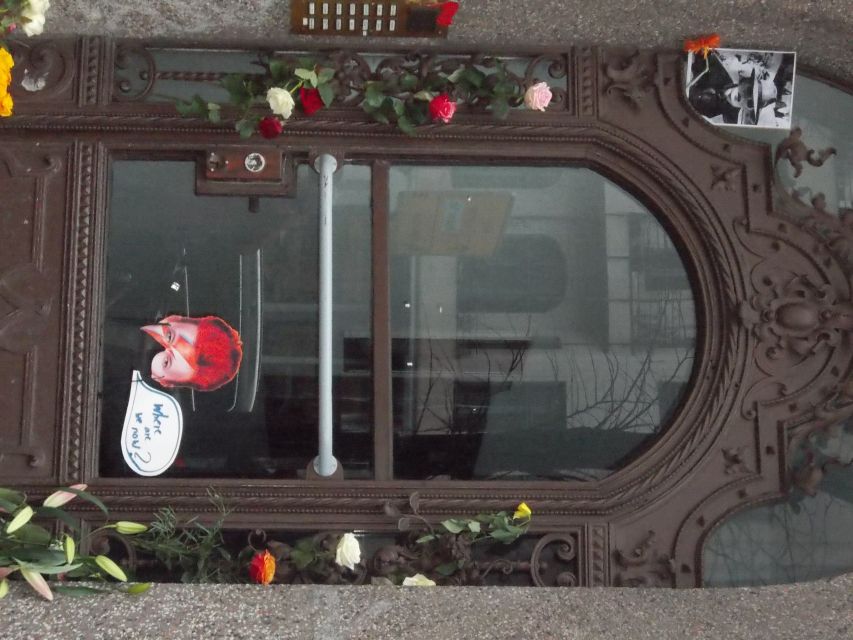
The guide can make or break a music-location tour, especially when several stops are former venues rather than preserved attractions. Martin Sauter receives especially strong praise for his Bowie knowledge, his Berlin background, his humor, and his ability to communicate clearly.
The most useful detail is that he adjusts a private tour to your needs. That means you can make the experience more music-focused, more centered on Berlin, or more conversational, depending on what interests you. The tour is available in English, French, and German.
You should tell Martin early if you have favorite songs or a particular Bowie period you want to discuss. The information provided does not promise a fixed playlist or a set of audio clips, so do not assume music will be played during the walk. The emphasis is on spoken interpretation at the locations.
The private format also means you are not sharing the guide with a large group. That can make it easier to ask questions and pause for explanation. It may also explain why the tour receives such high praise for feeling like a discovery outing with an old friend.
Is $288 per person good value?
At $288 per person, this is expensive compared with a standard group walking tour. The price is easier to justify if you are a serious Bowie fan, want a private guide, and value detailed conversation in one of three languages.
The tour lasts three hours and includes hotel pickup if desired, along with the guide’s focused attention. You are paying for the personal format and the subject expertise, not for admission tickets, food, drinks, or access to private interiors. There are no food or drink inclusions.
I would not book it simply because you have a passing interest in Heroes. You can see several addresses from the outside, but the main reward is the interpretation connecting them. At this price, you should want that depth.
For two or more people who share a strong interest in Bowie, the cost may feel more reasonable because you are buying a private experience rather than separate public tickets. The available feedback also points to the guide spending extra time with the group, which adds value, though you should not assume every booking will run longer than three hours.
The free cancellation option up to 24 hours before the start and the reserve-now, pay-later choice reduce some booking risk. Those are useful practical terms, but they do not change the central value question: are you paying for access, or are you paying for a well-told story? Here, it is mainly the story.
Who should book this Bowie tour?
I would recommend it most strongly to fans who know the Berlin albums and want to connect the songs with real places. It also suits anyone interested in West Berlin’s artistic life in the 1970s, even if Bowie is not their only reason for visiting.
The tour is a good match if you:
- Want a private guide rather than a large group
- Prefer spoken context to a self-guided address list
- Are curious about Heroes, Neuköln, Yassassin, or Boys Keep Swinging
- Appreciate old locations even when the original venue is gone
- Want a mix of walking and bus transport
- Need a tour in English, French, or German
I would hesitate if you want to enter Hansa Studios, visit a working Bowie museum, or spend the entire time inside preserved clubs. That is not what this experience offers.
Practical advice before you go
Wear shoes suitable for city walking, and allow yourself to listen closely at each stop. The route includes several addresses, and the details may be more rewarding than the buildings themselves.
At Martin Gropius Bau, look for the guide holding a Bowie album, book, or CD. If you choose hotel pickup, confirm the arrangement when booking, since the standard meeting point is at Martin Gropius Bau.
Think about your questions before the tour. Ask about Edgar Froese, the move from London and Los Angeles to Berlin, the electronic sound Bowie was seeking, or the meaning behind the Berlin-related songs. A private tour gives you a better chance to shape the discussion.
Do not judge the experience only by how many places you photograph. The former club stops may look ordinary now. Their value comes from understanding what they meant in Bowie’s world and how the city influenced his work between 1976 and 1978.
Should you book it?
Book this tour if Bowie’s Berlin period matters to you and you want a private, detailed account led by someone who clearly cares about both the artist and the city. Martin Sauter is the strongest reason to choose it, while Hansa Studios and Bowie’s former home provide the essential addresses.
Skip it if $288 feels too high for exterior stops or if you want interior access. For dedicated fans, the personal storytelling and carefully linked route can make the price fair. For casual listeners, a self-guided walk may offer better value.
FAQ
How long does the David Bowie Berlin tour last?
The tour lasts three hours.
What language is the tour offered in?
The live tour guide can lead the experience in English, French, or German.
Is this a private tour?
Yes. The activity is offered for a private group.
Where does the tour begin?
The tour begins at Martin Gropius Bau, where the 2014 David Bowie exhibition was shown.
How will I identify the guide?
The guide will be holding a David Bowie album, book, or CD.
Does the tour include hotel pickup?
Hotel pickup is available if desired.
Does the tour visit inside Hansa Studios?
The tour includes standing in front of Hansa Studios. Interior access is not listed as part of the experience.
Can I cancel for a full refund?
Yes. You can cancel up to 24 hours in advance for a full refund.
Just added around Berlin
- Private Walking Tour in Berlin: Hitler’s Germany & WWII★ 5.0 · 7 reviews
- The History of Berlin: WWII PRIVATE Walking Tour With Locals★ 5.0 · 209 reviews
- Private Berlin WWII and Cold War History Tour with Local Expert Guide★ 5.0 · 28 reviews
- Private Walking Tour Berlin 3 hours: Brandenburg, Historic Center★ 5.0 · 7 reviews
- Berlin: Private Bike Tour of the Berlin Wall and Third Reich★ 5.0 · 23 reviews
- Group Driving Tour 1 to 6 people. Berlin Shore Excursion incl pick-up at Port★ 5.0 · 8 reviews
- Berlin: Guided Private Bike Tour to Explore the Highlights★ 5.0 · 12 reviews
- Berlin Photography Masterclass – Private Photography Lesson★ 4.5 · 23 reviews
Berlin Tours, compared.
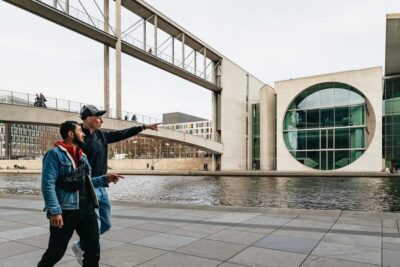
Reichstag, Dome and Government District Guided Tour
Read our review →
1-Hour City Tour by Boat with Guaranteed Seating
Read our review →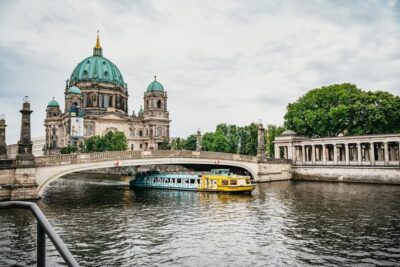
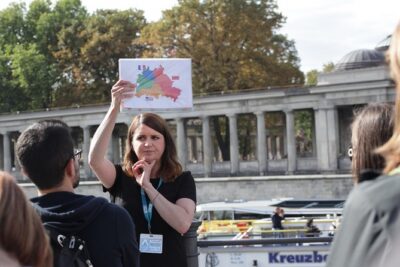

Government District around the Reichstag Guided Tour
Read our review →
Reichstag, Plenary Chamber, Cupola & Government Tour
Read our review →