Reviewed · BERLIN TOURS
Berlin: GDR witness tour in small group
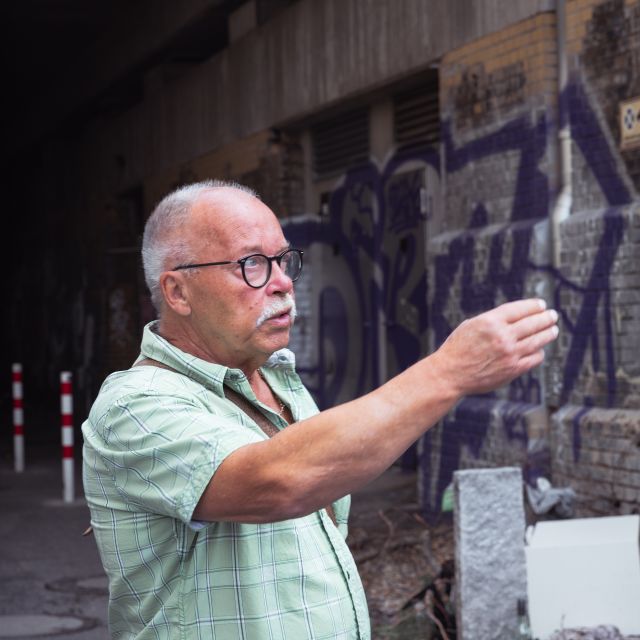
History gets personal here. This small-group Berlin tour is led by Karl-Heinz Richter, a former political prisoner who tried to escape East Germany and later spent months in Stasi detention. I like the direct human focus, and I like that the story reaches beyond the Berlin Wall to explain daily life, surveillance, and fear inside the GDR. The main drawback is that the tour is conducted in German, and one customer reported that it ended after 1.5 hours instead of the advertised 2.5.
Richter’s account centers on his failed escape attempt at Friedrichstrasse station, his arrest, and his treatment in the Stasi prison in Berlin-Pankow. The personal details are the reason to book, but you should come ready for a serious, sometimes painful account rather than a broad sightseeing tour.
In This Review
- Key points to know before booking
- Why Karl-Heinz Richter’s story matters
- Friedrichstrasse station and the failed escape
- Stasi detention in Berlin-Pankow
- What the tour tells you about daily GDR life
- A small group changes the tone
- German language is the biggest practical issue
- Is $27 a fair price?
- The personal style can be a strength and a weakness
- Who will enjoy this tour most?
- Weather, timing, and planning your day
- Should you book the Berlin GDR witness tour?
- FAQ
- Where does the tour take place?
- How long is the tour?
- How much does the tour cost?
- What language is the tour conducted in?
- Who leads the tour?
- What does Karl-Heinz Richter discuss?
- Is hotel transportation included?
- Is the tour wheelchair accessible?
- Does the tour run in bad weather?
- Can I cancel the booking?
Key points to know before booking
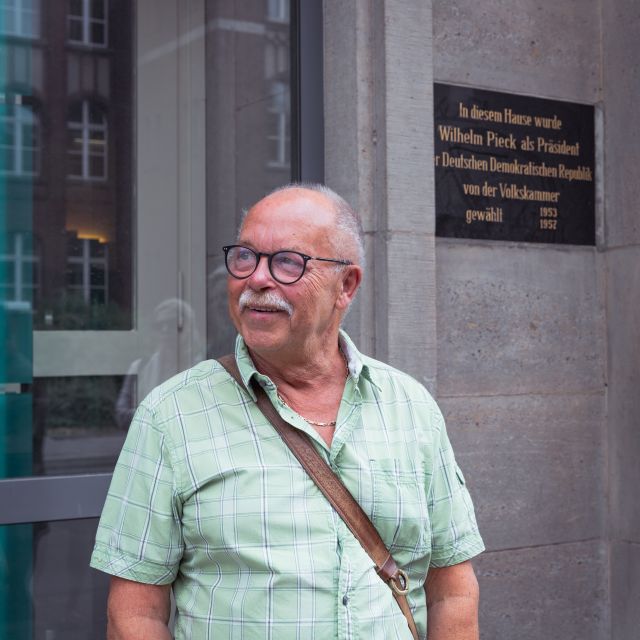
- Karl-Heinz Richter tells his own story: He grew up in East Berlin, planned to flee west three years after the Wall went up, and was arrested after trying to jump onto a moving train at Friedrichstrasse station.
- This is a witness account, not a standard city tour: The focus is on GDR life, political repression, Stasi methods, and Richter’s time in pre-trial detention.
- Friedrichstrasse station has a powerful role: It was the setting for Richter’s failed escape attempt, giving the story a clear Berlin location.
- The tour is in German: You need enough German to follow a detailed spoken account of prison, interrogation, and everyday life.
- The advertised duration is 2.5 hours: One customer reported a much shorter 1.5-hour tour, so confirm the timing when you book.
- The price is $27 per person: That is reasonable for a small-group, firsthand history lesson if the full tour length is delivered.
Why Karl-Heinz Richter’s story matters
Berlin offers many ways to learn about the GDR. You can visit former prison buildings, read museum panels, and see sections of the Wall. Those places matter, but they can also make the past feel safely sealed behind glass.
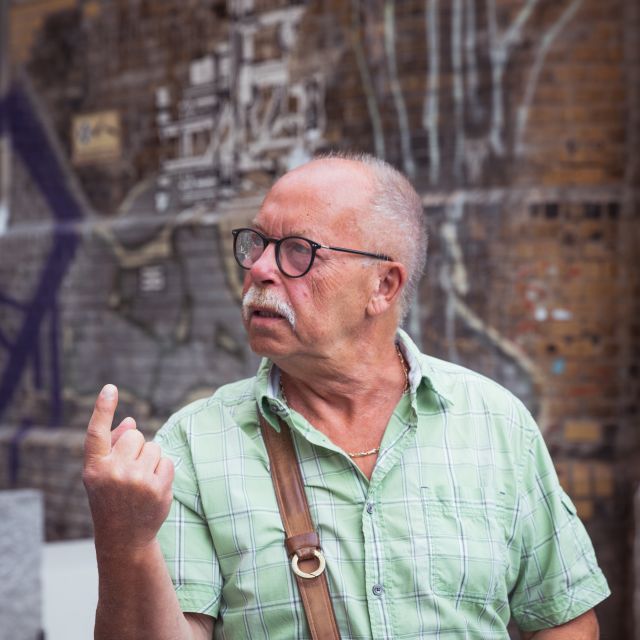
This tour puts a person at the center. Karl-Heinz Richter was born in Schwarzheide, Brandenburg, in 1946 and grew up with his family in East Berlin. His childhood and young adulthood unfolded inside the German Democratic Republic, so his account covers more than the famous border crossing points and Cold War politics.
I find that useful because the GDR was not only a government, a wall, or a secret police force. It was also a place where people went to work, raised families, made private plans, and measured their words. Richter’s story helps connect those ordinary routines with the pressure of state control.
The most striking part is the choice he made after the Berlin Wall had been in place for three years. He planned to leave for the West and tried to jump onto a moving train at Friedrichstrasse station. The attempt failed. He was arrested and spent several months in harsh pre-trial detention at the Stasi prison in Berlin-Pankow.
That sequence gives the tour a clear emotional and geographic thread: life in East Berlin, the decision to escape, the desperate attempt, arrest, imprisonment, and the wider effect of the Stasi.
A few more Berlin trips worth comparing
- Berlin: Reichstag, Dome and Government District Guided Tour
★ 4.7 · 18,288 reviews - Berlin: 1-Hour City Tour by Boat with Guaranteed Seating
★ 4.3 · 16,993 reviews - Berlin: Boat Tour Along the River Spree
★ 4.4 · 11,252 reviews
Friedrichstrasse station and the failed escape
Friedrichstrasse station is not presented here simply as a transport hub. In Richter’s story, it is the place where his plan to reach the West went wrong.
You should not assume that the tour includes a special behind-the-scenes visit or a staged recreation. The supplied details describe a guided account of what happened, not a list of exclusive station access or physical activities. The value is in hearing the location explained through Richter’s own experience.
That distinction matters. If you want a conventional tour with many monuments and photo stops, this will feel narrow. If you want to understand how a single escape attempt could carry such high stakes, the setting gives the story weight.
A moving train and a split-second decision sound dramatic, but the real point is the risk. In the GDR, trying to reach the West could lead to arrest, interrogation, and prison. Richter’s account brings home how far an individual might go when legal travel and personal freedom were tightly restricted.
I would pay close attention to the connection between the station and the wider border system. The story is not just about a man making a dangerous jump. It is about the barriers that made such a desperate act seem like an option.
Stasi detention in Berlin-Pankow
The tour then moves into the most difficult section of Richter’s account: his months in pre-trial detention at the Stasi prison in Berlin-Pankow.
The phrase pre-trial detention can sound bureaucratic. In this context, it points to a period when Richter had already lost his freedom but had not yet gone through a normal, open legal process. The tour describes the conditions as inhumane, and Richter explains what it meant to be held by the state security service.
You can expect discussion of prison conditions, interrogation, and the ways the Stasi tried to control people psychologically. This is not presented as a sensational prison tour. It is a firsthand explanation of what happened after the escape failed.
The Stasi’s influence also reached far beyond prison walls. Richter explains how the organization affected East German society and how surveillance shaped everyday behavior. That wider context is important. A political prison did not exist apart from daily life. The possibility of observation, reporting, or interrogation could affect what people said and whom they trusted.
I like that the tour connects the prison experience with society as a whole. You are not left with the easy idea that only escapees or outspoken opponents had reason to worry. Instead, the account points toward a system that influenced ordinary relationships and private decisions.
The subject matter is heavy, so plan your day with some space afterward. The tour is about fear, confinement, and political repression. Its power comes from that seriousness, not from light entertainment.
What the tour tells you about daily GDR life
The description promises more than a prison story. Richter also explains the reality of everyday life in East Germany.
That part may be the most valuable for visitors who already know the basic Berlin Wall timeline. You may already understand that the Wall divided the city and that the Stasi monitored opposition. Richter’s personal memories can help show what those facts felt like at street level.
The experience appears to focus on lived details rather than a long list of dates. You hear how a person and his family lived in East Berlin, how the desire to leave developed, and how the state responded when he acted on it.
I would expect the discussion to be shaped by Richter’s own memories, not by a neutral lecture covering every part of GDR history. That is both a strength and a limit. A witness can explain fear and uncertainty in a way a textbook cannot, but one person cannot represent every East German life.
This is why I would pair the tour with a museum or memorial if you have time. The tour gives you a personal voice. A museum can then provide documents, photographs, political context, and a broader range of experiences. You do not need to choose one or the other.
Still Berlin, at a slower pace:
- Discover Berlin Half-Day Walking Tour
★ 5.0 · 9,624 reviews - Berlin: Hop-on Hop-off Bus Tour with Live Commentary
★ 4.3 · 8,579 reviews - Berlin: Government District around the Reichstag Guided Tour
★ 4.7 · 8,447 reviews - Berlin: Reichstag, Plenary Chamber, Cupola & Government Tour
★ 4.6 · 8,422 reviews
A small group changes the tone
The small-group format suits this subject. A personal account of imprisonment works better when you can hear the speaker clearly and stay close to the thread of the story.
No exact group size is provided, so I would not book expecting a particular number of participants. Still, the format suggests a more direct setting than a large coach tour. That can make it easier to follow Richter’s explanations and ask questions, assuming time allows.
There is also a practical benefit. A smaller group usually makes a serious talk feel less like a public performance. The experience depends heavily on listening, and a quieter setting supports that.
The trade-off is that the tour may feel less varied than a standard Berlin walking tour. You should not expect a long route packed with landmarks, restaurants, or general city commentary. The main attraction is the story and the person telling it.
German language is the biggest practical issue
The live guide language is German. This is the most important booking point for many English-speaking visitors.
The tour does not list English interpretation, subtitles, or translated materials. If your German is limited, you may miss the fine detail in Richter’s account, especially when he discusses interrogation methods, prison conditions, or the sequence of his escape attempt.
I would book only if you can follow sustained spoken German. Basic tourist German is unlikely to be enough for a long, emotionally serious historical account. If you are traveling with someone fluent in German, that may help, but the experience is still built around listening directly to the guide.
For German-speaking visitors, the language is a major advantage. You hear the story in the language in which it is being told, without depending on a translation layer. That can make the account feel more immediate.
The tour is listed as wheelchair accessible. Hotel pickup and drop-off are not included, so you need to make your own way to the meeting point. The exact starting place and time should be checked during booking.
Is $27 a fair price?
At $27 per person, this tour sits in a reasonable range for a 2.5-hour guided experience, especially one led by a former political prisoner rather than a general city guide.
The value depends on what you want. If you are paying for a broad Berlin overview, the tour is too specialized. If you are paying for a firsthand account of GDR repression, the price is modest for the amount of time advertised.
I would judge the cost against three things:
- The guide: Karl-Heinz Richter brings personal experience that cannot be reproduced by a standard script.
- The subject: You receive a focused account of escape, arrest, Stasi detention, interrogation, and daily life in East Germany.
- The delivered duration: The advertised length is 2.5 hours, but one customer reported a 1.5-hour ending and felt the price was too high for that shorter session.
That last point deserves attention. The short-duration complaint is specific and serious. Another customer gave the experience a top rating and described it as exciting, interesting, and full of private insights, with a strong emotional response to Richter’s story. The overall score is 4.1 from nine ratings, which suggests a generally positive experience but not a perfect one.
The difference may come from expectations, timing, or the way the particular session was conducted. Still, I would check the meeting details and expected finish time before paying. At the full 2.5 hours, $27 looks fair. At 1.5 hours, the value becomes much weaker.
The personal style can be a strength and a weakness
A tour led by someone recounting his own past will not feel like a polished museum audio guide. That is part of the appeal.
Richter’s account offers private insight into a period he personally lived through. One customer found the experience deeply moving and appreciated the way his story made the past feel impossible to forget. That response points to the tour’s strongest feature: emotional connection.
At the same time, personal memory can be complicated. One customer felt that parts of Richter’s narrative were unclear and seemed different at the beginning and end of the tour. That person came away concerned that parts of the story may have been embellished.
I would keep this in mind without dismissing the entire experience. A witness account is not the same as an archival lecture. Memories can be uneven, and a story told aloud may not follow a tidy timeline. But if you want a tightly documented historical presentation, you may prefer to compare what you hear with a museum, book, or memorial site.
The best way to approach this tour is as one man’s testimony within the larger history of the GDR. Listen carefully, notice the human details, and keep the broader context in view.
Who will enjoy this tour most?
I would recommend the experience to:
- Visitors with a strong interest in the Berlin Wall and Cold War Berlin
- People who prefer personal testimony to a general sightseeing talk
- German speakers who can follow detailed historical storytelling
- Anyone planning to visit other GDR or Stasi sites in Berlin
- Visitors who want to understand daily fear and political control, not just see border remains
I would be more cautious if you want an English-language tour, a fast-paced walking route, or a broad introduction to Berlin. The subject is serious, and the format depends almost entirely on the guide’s storytelling.
Families with older teenagers may find it meaningful, but the difficult material should be considered in advance. The supplied information does not give a minimum age or a special children’s program, so I would not assume that young children will find it suitable.
Weather, timing, and planning your day
The tour runs rain or shine. That matters if any part of the experience takes place outdoors or requires moving between locations, even though the available details do not provide a full stop-by-stop route.
Wear practical clothing and check the forecast. More important, leave enough room in your schedule for the full advertised 2.5 hours. A rushed appointment immediately afterward could make the day stressful, particularly if the group runs to the planned finish.
You can cancel up to 24 hours in advance for a full refund, and the reserve now, pay later option lets you hold a place without paying immediately. Those policies are useful if your Berlin plans are still shifting, but they do not solve the language or duration questions. Those are the points I would settle before booking.
Should you book the Berlin GDR witness tour?
Book it if you want a focused, personal account of East Germany from someone who tried to escape, was arrested, and endured Stasi detention. Karl-Heinz Richter’s story gives Friedrichstrasse station and Berlin-Pankow a human connection that ordinary sightseeing cannot provide.
Skip it if you need English, want a broad Berlin tour, or prefer a fully documented presentation with a fixed academic structure. I would also think twice if a 2.5-hour session is essential to your budget and schedule, since one customer reported a much shorter experience.
For German-speaking visitors who value firsthand history, the $27 price is fair and the subject is unusual. Go with patience, an open mind, and realistic expectations about the personal nature of the account.
FAQ
Where does the tour take place?
The tour takes place in Berlin, in the state of Berlin, Germany. Richter’s story includes Friedrichstrasse station and the Stasi prison in Berlin-Pankow.
How long is the tour?
The advertised duration is 2.5 hours. One customer reported that a session ended after 1.5 hours, so check the timing when you book.
How much does the tour cost?
The listed price is $27 per person.
What language is the tour conducted in?
The live tour guide speaks German. No other tour language is provided in the available information.
Who leads the tour?
The guide is Karl-Heinz Richter, a contemporary witness and former political prisoner who experienced life in East Germany.
What does Karl-Heinz Richter discuss?
He discusses his childhood and family life in East Berlin, his planned escape to the West, the failed attempt at Friedrichstrasse station, his arrest, Stasi detention, interrogation methods, and everyday life in the GDR.
Is hotel transportation included?
No. Hotel pickup and drop-off are not included.
Is the tour wheelchair accessible?
Yes, the activity is listed as wheelchair accessible.
Does the tour run in bad weather?
Yes. The tour takes place rain or shine.
Can I cancel the booking?
Yes. You can cancel up to 24 hours in advance for a full refund. You can also reserve now and pay later.
Just added around Berlin
- Private Walking Tour in Berlin: Hitler’s Germany & WWII★ 5.0 · 7 reviews
- The History of Berlin: WWII PRIVATE Walking Tour With Locals★ 5.0 · 209 reviews
- Private Berlin WWII and Cold War History Tour with Local Expert Guide★ 5.0 · 28 reviews
- Private Walking Tour Berlin 3 hours: Brandenburg, Historic Center★ 5.0 · 7 reviews
- Berlin: Private Bike Tour of the Berlin Wall and Third Reich★ 5.0 · 23 reviews
- Berlin: Guided Private Bike Tour to Explore the Highlights★ 5.0 · 12 reviews
- Berlin Photography Masterclass – Private Photography Lesson★ 4.5 · 23 reviews
- Group Driving Tour 1 to 6 people. Berlin Shore Excursion incl pick-up at Port★ 5.0 · 8 reviews
Berlin Tours, compared.
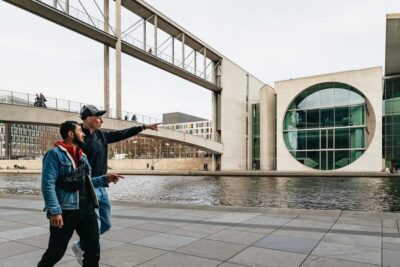
Reichstag, Dome and Government District Guided Tour
Read our review →
1-Hour City Tour by Boat with Guaranteed Seating
Read our review →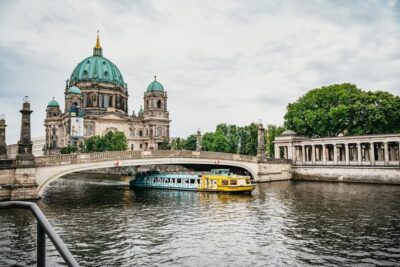
Government District around the Reichstag Guided Tour
Read our review →
Reichstag, Plenary Chamber, Cupola & Government Tour
Read our review →