Reviewed · BERLIN TOURS
Berlin: Modernist Architecture Tour in the Hansaviertel
Berlin’s boldest neighborhood experiment is hiding in plain sight. This two-hour Hansaviertel walk connects elegant prewar villas, a lost Jewish community, and Cold War modernism in one compact district. I especially like the sharp historical contrast and the chance to see work by Walter Gropius, Oscar Niemeyer, and Alvar Aalto without spending the day in a museum. I also like that guide Morgan brings the buildings to life with stories and handles questions well. The main drawback is that the tour asks you to walk and stand for about two hours, and its serious historical content suits older teenagers and adults best.
At $23 per person, this is a solid value if you care about architecture, Berlin history, or less familiar parts of the city. You will not enter a long list of museums or monuments, and food is not included, but the tour gives you a clear story for a small, historically important neighborhood. Wear comfortable shoes, bring water, and meet the guide under the orange umbrella outside Berlin-Tiergarten S-Bahn station.
In This Review
- Key points about Berlin’s Hansaviertel walk
- Why Hansaviertel is worth two hours
- Meeting at Tiergartenquelle
- From 19th-century villas to famous residents
- Remembering Jewish life before the war
- Interbau 1957 and the Cold War city
- Meeting Gropius, Niemeyer, Aalto, and others
- The 90-minute Hansaviertel route
- Is $23 a fair price?
- Who should book this Berlin architecture tour?
- My verdict on the Hansaviertel experience
- FAQ
- Where does the Hansaviertel tour begin?
- Where does the tour finish?
- How long does the tour last?
- What language is the tour offered in?
- How much does the tour cost?
- Is food included?
- Are museum or monument admissions included?
- Is the tour wheelchair accessible?
- What should I bring?
- Can children join the tour?
Key points about Berlin’s Hansaviertel walk
- A Cold War architecture showcase: Interbau 1957 transformed war-damaged land into a bold West Berlin statement about modern urban life.
- A neighborhood with several pasts: You begin with 19th-century villas before moving through Nazi persecution, wartime destruction, and postwar rebuilding.
- Major architects in one district: See buildings linked to Gropius, Niemeyer, Aalto, and other leading modernists.
- A quiet Jewish history memorial: The walk pauses at a site connected to a significant Jewish community erased by Nazi persecution and bombing.
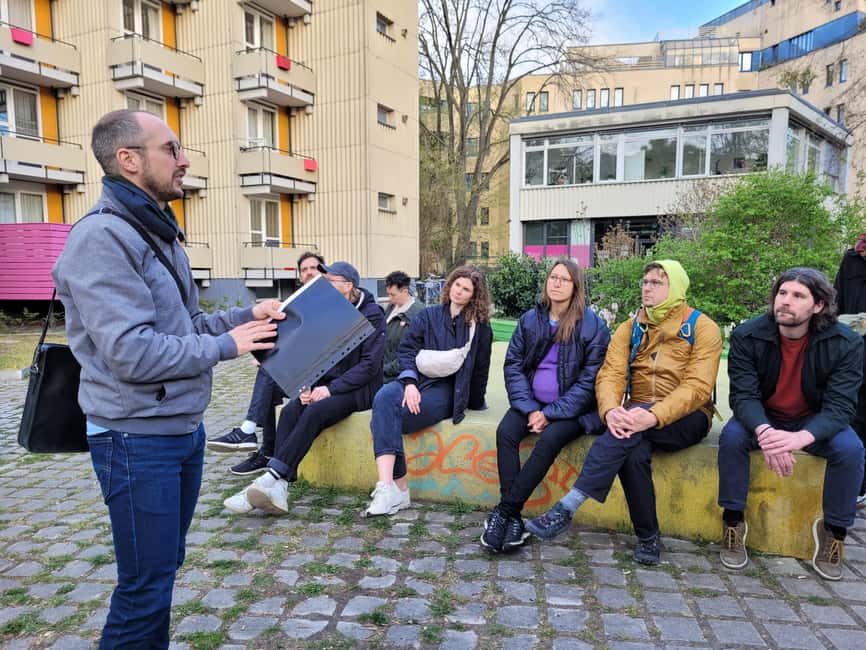
- A personal guide makes the difference: Morgan is praised for lively storytelling, detailed explanations, and answering questions across many subjects.
- Simple, flexible logistics: The tour lasts two hours, is offered in English or German, and allows cancellation up to 24 hours before departure for a full refund.
Why Hansaviertel is worth two hours
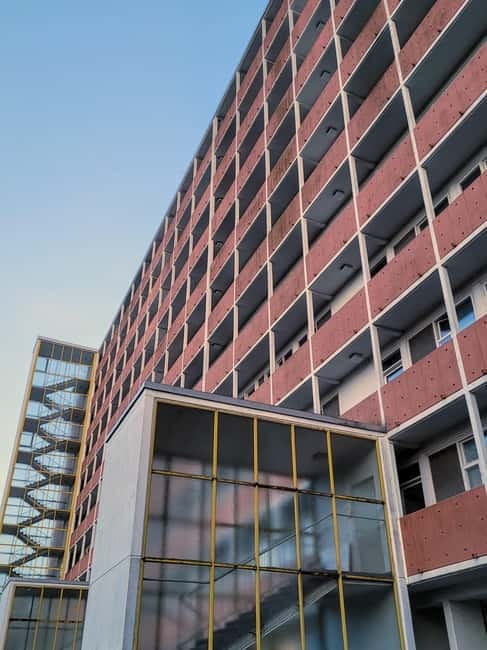
Most first visits to Berlin focus on the Brandenburg Gate, the Berlin Wall, Museum Island, or the Reichstag. Hansaviertel offers a different kind of Berlin. Here, the main attractions are apartment blocks, tree-lined streets, open spaces, and the ideas built into them.
That may sound less dramatic than a famous monument. It is not. The district shows how architecture became political after World War II. West Berlin wanted to present itself as modern, democratic, international, and forward-looking. Hansaviertel became a physical version of that argument.
I like this tour because it does not treat architecture as a collection of pretty façades. You learn why the buildings appeared here, what their designers hoped to achieve, and how the district related to the larger contest between East and West Berlin. The setting also helps. The neighborhood lies between the Spree and the Tiergarten, so the walk has a quieter feel than Berlin’s central sightseeing routes.
The story begins well before the famous modernist buildings. That matters. Without the older Hansaviertel, the postwar redevelopment can seem like a clean break from the past. Instead, you see a neighborhood layered with growth, privilege, persecution, ruin, and reinvention.
A few more Berlin trips worth comparing
- Berlin: Reichstag, Dome and Government District Guided Tour
★ 4.7 · 18,288 reviews - Berlin: 1-Hour City Tour by Boat with Guaranteed Seating
★ 4.3 · 16,993 reviews - Berlin: Boat Tour Along the River Spree
★ 4.4 · 11,252 reviews
Meeting at Tiergartenquelle
The meeting point is in front of Berlin-Tiergarten S-Bahn station, at the Siegmunds Hof and Bachstraße exit. Look for the guide with the orange umbrella beside Biergarten der Tiergartenquelle, also referred to as Biergartenquelle in the meeting instructions.
This is a practical starting point because the station gives you a clear transit reference. You do not need to search for an obscure private address or enter a museum before the walk begins. Arrive ready to go, since this is a walking tour rather than a seated introduction.
The tour finishes at Hansaplatz, while the activity information also describes the end as back at the meeting point. Either way, you remain within the Hansaviertel area, and the walk does not carry you across Berlin. Check the exact meeting instructions and departure time when booking, since start times vary by availability.
From 19th-century villas to famous residents
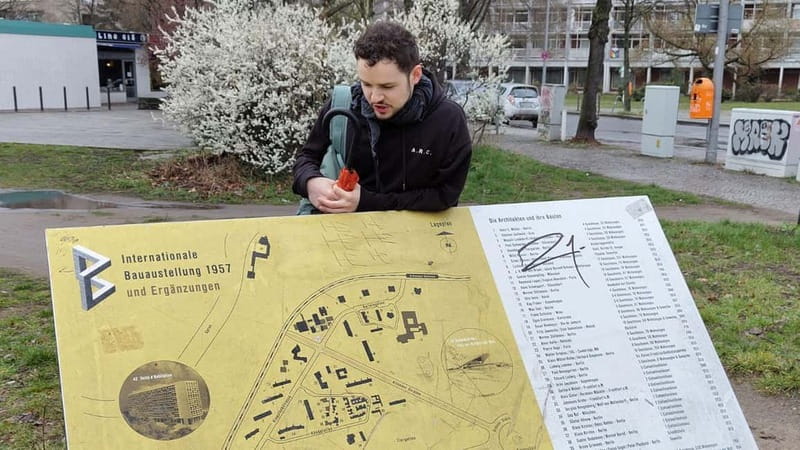
The first part of the route introduces Hansaviertel as a 19th-century residential district. As Berlin’s population grew quickly, this area developed into an enclave for middle- and upper-class residents. Villas, gardens, and elegant façades gave the district a polished character.
This opening section gives you useful context for what came later. The modernist Hansaviertel was not built on an empty patch of city. It replaced or reshaped an established neighborhood, and the contrast between old and new is one of the tour’s strongest features.
You also hear about people connected with the area, including Rosa Luxemburg, Nelly Sachs, and Käthe Kollwitz. These names add a human layer to the architecture. You are not simply looking at buildings; you are considering who lived in Berlin, who shaped its cultural life, and who was pushed out or destroyed by political violence.
The older section may appeal most if you enjoy social history as much as design. If you want only modernist buildings, you will need patience during the opening portion. In my view, that patience pays off because it prevents the postwar story from becoming too neat.
Remembering Jewish life before the war
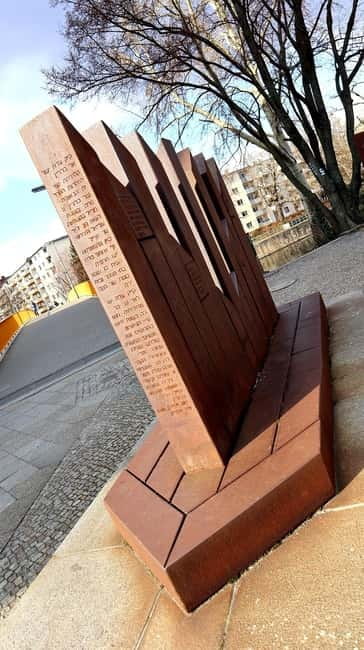
The tour then reaches a quiet memorial connected with one of Berlin’s important Jewish communities. The community was destroyed socially and physically under the Nazi regime, with further damage caused by Allied bombing during the war.
This is a serious pause in the walk. It also keeps the architecture story grounded in human consequences. Hansaviertel was not merely cleared for an exhibition or rebuilt after ordinary urban decline. The neighborhood passed through persecution, forced removal, destruction, and the loss of a community.
The information provided does not promise entry to a museum or monument, so expect an outdoor stop rather than a museum visit. Food, drinks, and admissions are not included. That keeps the price low, but you should not book this as an indoor cultural tour with extensive exhibits.
I appreciate that this section appears before the modernist showcase. It reminds you that postwar planning took place amid enormous absence. The sleek buildings that follow were designed in a city where entire communities and streets had been wiped away.
Still Berlin, at a slower pace:
- Discover Berlin Half-Day Walking Tour
★ 5.0 · 9,624 reviews - Berlin: Hop-on Hop-off Bus Tour with Live Commentary
★ 4.3 · 8,579 reviews - Berlin: Government District around the Reichstag Guided Tour
★ 4.7 · 8,447 reviews - Berlin: Reichstag, Plenary Chamber, Cupola & Government Tour
★ 4.6 · 8,422 reviews
Interbau 1957 and the Cold War city
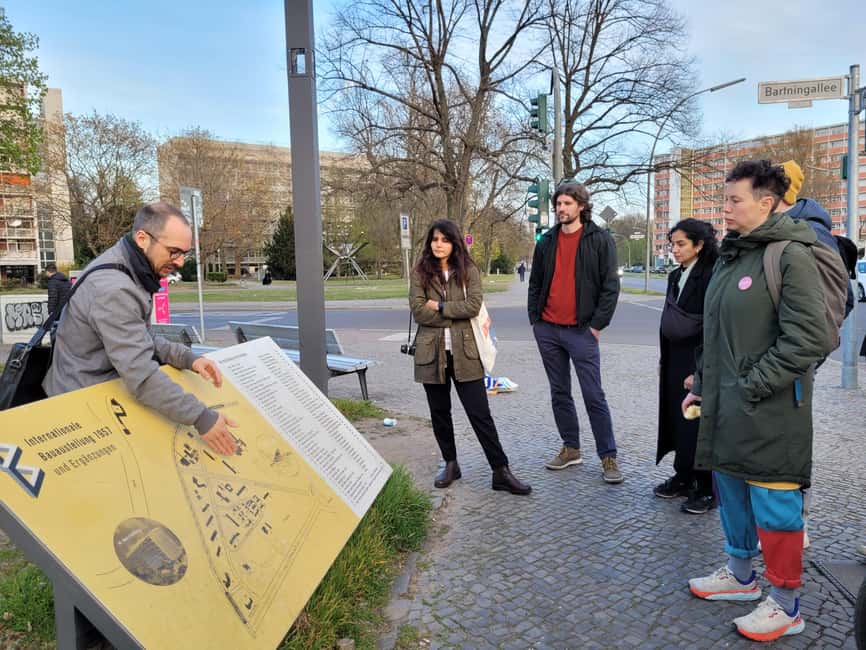
The central chapter arrives in 1957, when West Berlin hosted Interbau, an international architecture exhibition. The Hansaviertel became a model district and a public demonstration of what modern city living might look like after the war.
The political setting is essential. West Berlin was surrounded by East Germany and divided from the Soviet sector of the city. New architecture offered a way to make a statement without a speech. Light, open, functional housing could represent a break from the crowded 19th-century city and from the monumental styles associated with authoritarian rule.
You will hear how land damaged by war was reshaped by architects from several countries. The buildings were not all trying to say the same thing. Their differences are part of the point. Some are elegant and restrained. Others are experimental or provocative. Together, they show the range of modernist thinking in the 1950s.
A good guide makes this part more than a parade of famous names. Morgan is praised for telling the story in a lively way, offering plenty of detail, and answering questions that shift across subjects. That flexibility is useful here because modernist design can quickly become technical or abstract. The best explanations connect form to daily life: how buildings relate to open space, how residents might use them, and what a new city was supposed to feel like.
Meeting Gropius, Niemeyer, Aalto, and others
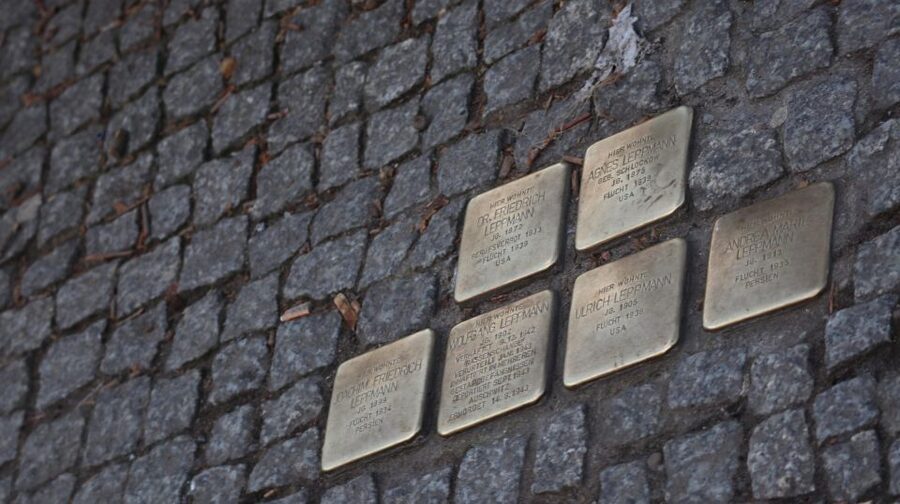
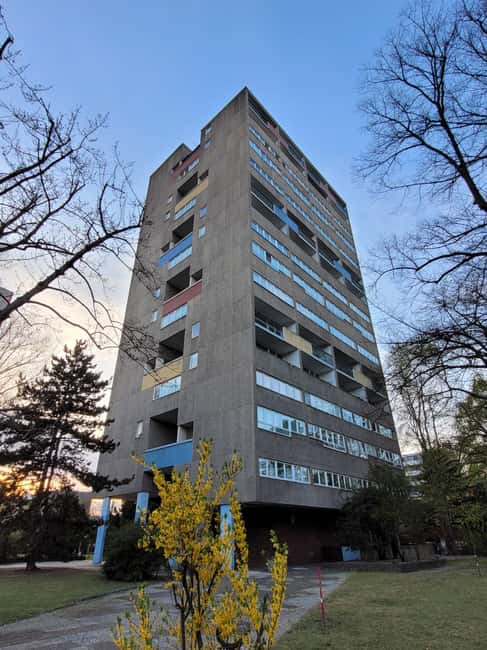
The tour highlights work by Walter Gropius, Oscar Niemeyer, Alvar Aalto, and other leading architects of the 20th century. Seeing their work in one neighborhood is a major reason to book.
You are not getting a full architectural survey of Berlin. Instead, you are seeing a concentrated group of designs and learning how each fits into the Interbau project. The value is in comparison. One building may favor clean geometry, another flowing curves, and another a more human-scale approach to housing and public space.
The tour also asks a question that remains useful today: does this architecture still feel modern? Some buildings may seem fresh, while others reveal their age. That tension is more interesting than a simple claim that the district was visionary. Modernism promised better housing and a better urban life, but the results deserve a careful look.
I would recommend bringing your own curiosity rather than expecting a grand interior tour. The focus is on walking among the buildings and understanding the ideas behind them. If you love taking architectural photographs, you will likely enjoy the mix of shapes, façades, open areas, and greenery. If you need constant visual spectacle, some stretches may feel quiet.
The 90-minute Hansaviertel route
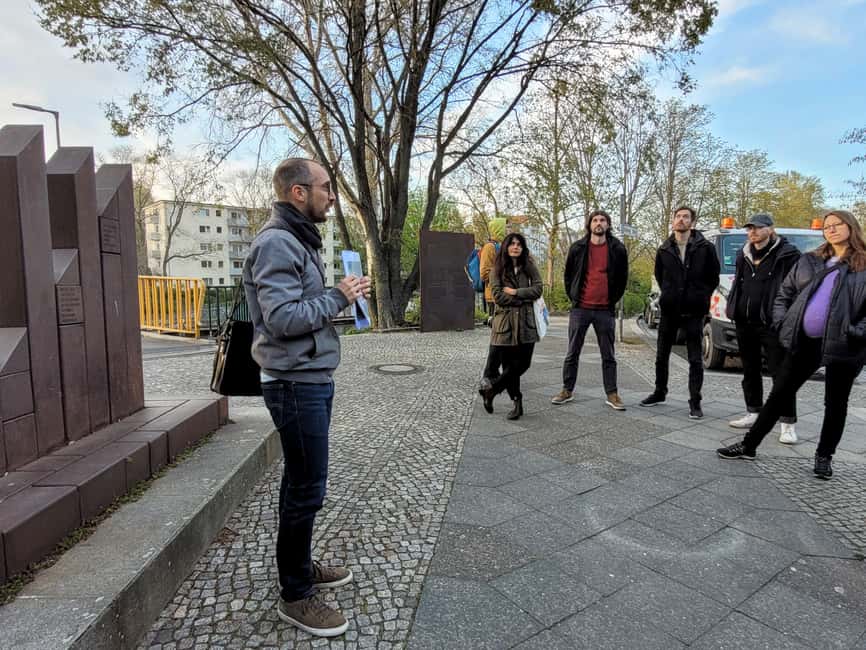
The guided portion through Hansaviertel lasts about 1.5 hours, with the full activity listed at two hours. That leaves time for the opening and closing points, transitions, and the walk between subjects.
The route has a sensible historical order:
- The older residential district establishes Hansaviertel before the war.
- The memorial connects the neighborhood to Jewish life and Nazi persecution.
- Interbau 1957 explains the postwar rebuilding.
- The modernist buildings reveal the competing ideas behind the new district.
- Hansaplatz provides the endpoint for the walk.
This structure makes the neighborhood easier to read. You move from what was there, to what was lost, to what West Berlin tried to create. Rather than receiving disconnected facts, you get a reason for the district’s unusual appearance.
You should be comfortable walking and standing for roughly two hours. Comfortable shoes are not just a polite suggestion here. Bring water, especially if you are fitting the tour between other sightseeing plans. The tour is wheelchair accessible, though anyone planning to use a wheelchair should still consider the physical demands of a route built around outdoor walking and standing.
Is $23 a fair price?
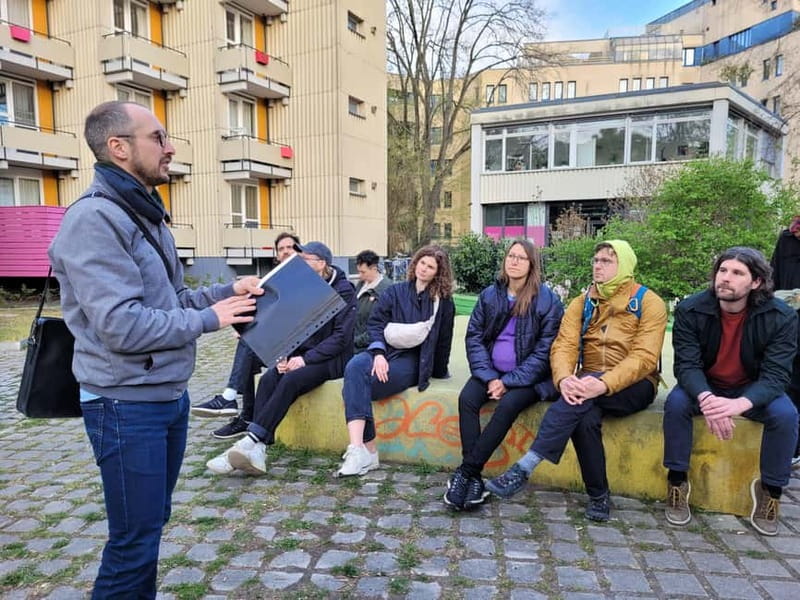
At $23, the tour is reasonably priced for a two-hour guided walk led by a local expert. The strongest value comes from interpretation. You can walk through Hansaviertel for free, but it is easy to see only apartment blocks and miss the political story, the older neighborhood, and the connection to Interbau.
You are paying for a focused route and a guide who can explain why the buildings matter. Morgan’s ability to answer questions and add related information is especially useful if you already know a little about Berlin or modern architecture.
The price does not include food, drinks, museum entry, or monument admission. That is not a problem if you treat the tour as an outdoor architectural and history walk. It would be less suitable if you want a full day of included attractions.
The reserve-now, pay-later option adds flexibility, and cancellation is free up to 24 hours before the start time. Those terms are helpful when your Berlin schedule includes weather-sensitive outdoor plans.
Who should book this Berlin architecture tour?
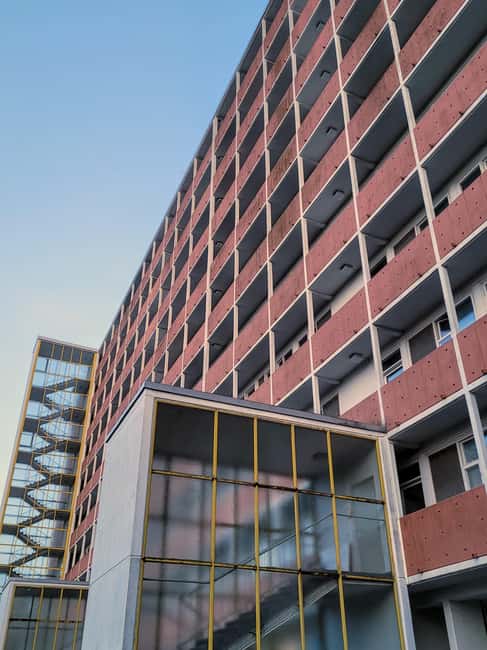
I would choose this walk if you like architecture, city planning, political history, or neighborhoods that reward close attention. It is also a good choice if you have already seen Berlin’s headline sights and want a calmer route with a strong sense of place.
The tour suits adults and older teenagers. The recommended age is 14 and up because the material includes Nazi persecution, the destruction of Jewish life, wartime bombing, and Cold War rivalry. Minors must be accompanied by an adult.
It may not suit young children or anyone who dislikes walking and standing. The tour also offers less if your only interest is famous architects without historical explanation. Much of its value comes from the connections between design and politics.
English and German tours are available with a live guide. The small number of published ratings gives the experience a perfect five-star score, but the sample is limited. I would treat that as encouraging rather than conclusive. The detailed praise for Morgan’s lively, flexible teaching is the more useful signal.
My verdict on the Hansaviertel experience
Book this tour if you want Berlin to make sense beyond its famous monuments. In two hours, you move through 19th-century privilege, Jewish loss, wartime destruction, Cold War competition, and modernist planning without crossing half the city.
I especially recommend it for visitors who want architecture explained in plain terms. The buildings are the stars, but the human stories give them weight. At $23, that combination makes the tour a good buy.
Skip it if you need indoor attractions, minimal walking, or a light sightseeing outing. Hansaviertel asks you to pay attention, stand for long stretches, and think about difficult parts of Berlin’s past. For the right audience, that is exactly why it works.
FAQ
Where does the Hansaviertel tour begin?
It begins in front of Berlin-Tiergarten S-Bahn station at the Siegmunds Hof and Bachstraße exit, next to Biergarten der Tiergartenquelle. Look for the guide with the orange umbrella.
Where does the tour finish?
The tour finishes at Hansaplatz. The activity information also describes the end as back at the meeting point, so check the current meeting details when booking.
How long does the tour last?
The full activity lasts two hours. The guided walk through Hansaviertel lasts about 1.5 hours.
What language is the tour offered in?
A live tour guide is available in English or German.
How much does the tour cost?
The listed price is $23 per person.
Is food included?
No. Food and drinks are not included.
Are museum or monument admissions included?
No. Entry to museums or monuments is not included unless specifically stated in the itinerary.
Is the tour wheelchair accessible?
Yes, the activity is listed as wheelchair accessible.
What should I bring?
Bring comfortable shoes and water. You should also be ready to walk and stand for approximately two hours.
Can children join the tour?
There is no strict age restriction, but the tour is recommended for ages 14 and up because of its historical content. All minors must be accompanied by an adult.
Just added around Berlin
- Private Walking Tour in Berlin: Hitler’s Germany & WWII★ 5.0 · 7 reviews
- The History of Berlin: WWII PRIVATE Walking Tour With Locals★ 5.0 · 209 reviews
- Private Berlin WWII and Cold War History Tour with Local Expert Guide★ 5.0 · 28 reviews
- Private Walking Tour Berlin 3 hours: Brandenburg, Historic Center★ 5.0 · 7 reviews
- Berlin: Private Bike Tour of the Berlin Wall and Third Reich★ 5.0 · 23 reviews
- Berlin: Guided Private Bike Tour to Explore the Highlights★ 5.0 · 12 reviews
- Berlin Photography Masterclass – Private Photography Lesson★ 4.5 · 23 reviews
- Group Driving Tour 1 to 6 people. Berlin Shore Excursion incl pick-up at Port★ 5.0 · 8 reviews
Berlin Tours, compared.
Reichstag, Dome and Government District Guided Tour
Read our review →
1-Hour City Tour by Boat with Guaranteed Seating
Read our review →

Government District around the Reichstag Guided Tour
Read our review →
Reichstag, Plenary Chamber, Cupola & Government Tour
Read our review →