
Reviewed · STREET ART
Berlin: Street Art and Alternative Tour
Berlin’s walls tell the city’s story. This three-hour walk connects Cold War history with street art, social protest, and the changing face of Kreuzberg. I like the way it looks beyond famous murals to explain why Berlin became a center for alternative culture. I also like that guides such as Antonella, Iacopo, Martin, and Marie bring a personal, lively touch to the history. The main drawback is practical: the meeting point can vary, and you must buy your own 24-hour AB public transport ticket.
At $31, this is a fair price for a small-group walk led in French or Italian. You are paying less for a checklist of sights and more for context, local stories, and help reading art that can otherwise look like colorful wallpaper. Wear good shoes, and allow extra time to sort out the starting point and transport ticket.
In This Review
- Key points at a glance
- Why Berlin street art needs a history lesson
- Starting in Kreuzberg, where the city gets complicated
- Reading the city after the Wall fell
- East Side Gallery and the former Wall
- Small pieces, hidden corners, and the wider city
- The guides make or break the experience
- Three hours on foot, with public transport added
- Is $31 good value?
- Who should book this walk?
- Should you book the Berlin Street Art and Alternative Tour?
- FAQ
- How long is the Berlin Street Art and Alternative Tour?
- How much does the tour cost?
- Which languages are available?
- Is public transportation included?
- Which Berlin areas does the tour cover?
- Is East Side Gallery included?
- What should I bring?
- Can I cancel for a full refund?
- Can I reserve the tour and pay later?
Key points at a glance
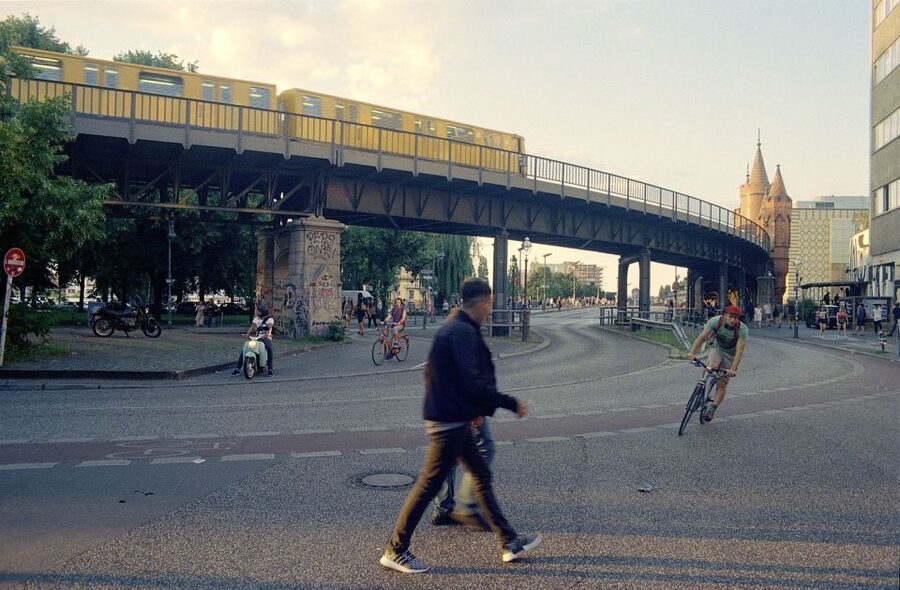
- Kreuzberg’s alternative culture: Walk through one of Berlin’s best-known creative districts and connect its street art with social change.
- East Side Gallery: See a major stretch of former Berlin Wall art and place it within the city’s divided past.
- History behind the paint: Learn how the fall of the Wall in 1989 shaped Berlin’s arts scene, neighborhoods, and politics.
- French or Italian guidance: Choose a tour led in one of these languages, with guides praised for clear explanations and a warm manner.
- Three hours on foot: Expect a walking-focused experience, with comfortable shoes and a 24-hour AB ticket required.
- A useful price point: At $31 per person, the tour offers a focused introduction to Berlin’s alternative side without the cost of a private guide.
Why Berlin street art needs a history lesson
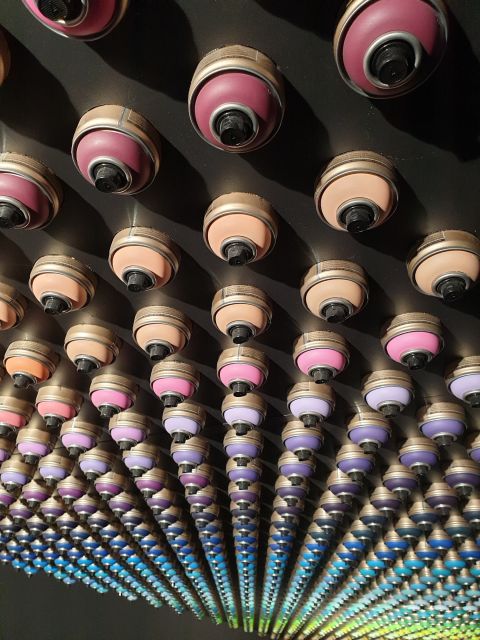
Berlin’s street art is easy to see but not always easy to understand. A large painted wall may look like a striking photo stop, yet its real meaning can involve the Cold War, squatting, protest, neighborhood identity, migration, or a fight against rising rents.
That is where this tour earns its keep. It treats the city’s art as part of Berlin’s political and social story, not as decoration scattered around town. You learn why the former border between East and West became such a powerful setting for murals and public art.
The tour also follows Berlin’s changes after 1989. The fall of the Wall opened empty buildings and neglected spaces to artists, musicians, political groups, and new residents. In the 1990s, that energy helped shape Berlin’s alternative reputation. The same appeal later brought investment and gentrification.
I appreciate that the route does not stop with nostalgia for an underground Berlin that no longer exists in the same form. The discussion reaches the present day, where street art can express resistance while also helping make a neighborhood more attractive and expensive. That tension gives the walk more substance than a simple mural hunt.
More street art walks in Berlin:
- Berlin: City Street Art Guided Walking Tour
★ 4.8 · 886 reviews - Berlin: 3-Hour Street Art Tour
★ 4.7 · 778 reviews - Berlin Street Art & Graffiti Walking Tour
★ 5.0 · 109 reviews
Starting in Kreuzberg, where the city gets complicated
Kreuzberg is the main setting for the alternative side of the tour. It is a useful place to begin because the district brings together the subjects you are here to explore: migration, working-class roots, political activism, changing architecture, and public art.
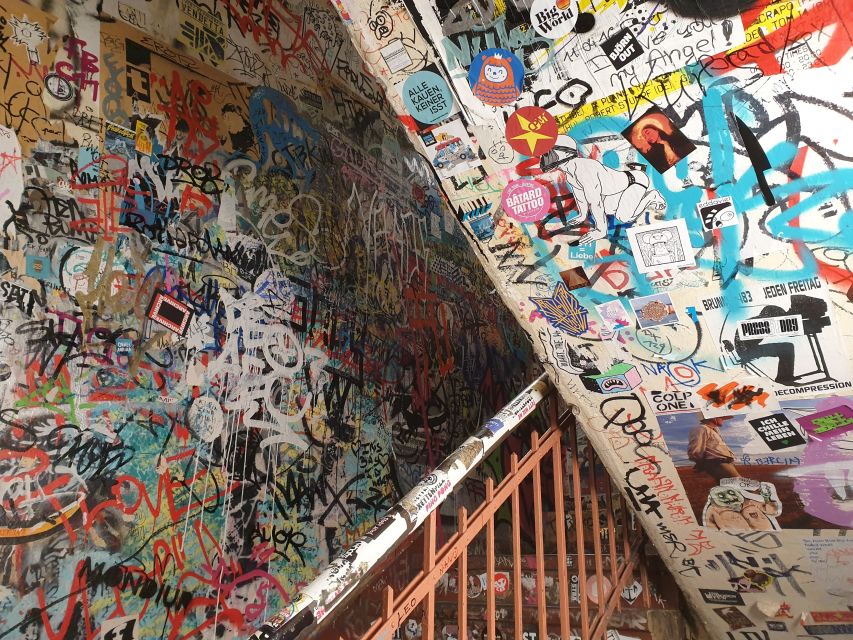
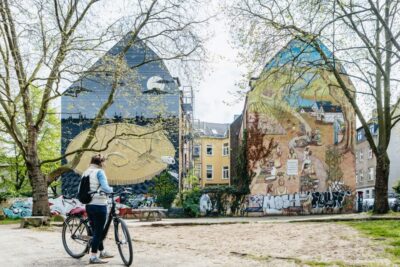
The streets can feel visually crowded. Art may cover building walls, shutters, leftover sections of urban infrastructure, and small corners that you could easily miss on your own. Some pieces are enormous and direct. Others are tiny, tucked away, or partly worn by weather and new paint.
That variety matters. A tour guide can point out the difference between a major commissioned mural and a small unsanctioned piece. You may also learn why a particular wall matters to local residents, or how a political message connects with the neighborhood around it.
The tour has been especially praised for its combination of street art, architecture, and history. That is an important mix. If you only want photographs of giant murals, you can find plenty of them online. The value here is learning how the buildings, streets, and artwork developed together.
One practical detail is worth noting. Some information about the route suggests that the walk begins around Kottbusser Tor, while the exact meeting location can change according to the option you book. Check your confirmation carefully instead of assuming the meeting point. This is a small issue, but Berlin public transport and large intersections can make a vague starting point annoying.
Reading the city after the Wall fell
The Cold War is not just background information on this walk. It is the reason Berlin’s alternative culture took such a distinctive form.
The Berlin Wall divided more than a city. It separated political systems, families, neighborhoods, and daily routines. After the Wall fell in 1989, the physical border left behind empty lots, damaged streets, abandoned buildings, and long stretches of concrete. Those spaces offered room for new forms of expression.
Artists used walls because walls were already loaded with meaning. Painting them became a way to claim public space, argue with authority, mark a neighborhood, or celebrate a new freedom. The tour uses this setting to explain why Berlin became such a strong center for urban art in the decades after reunification.
I like this historical frame because it helps you see why Berlin’s art often feels more political than decorative. The city’s murals are not all saying the same thing, and the guide cannot explain every piece in the same way. Still, the walk gives you a set of questions to use: Who made this? Who owns the wall? Who is the intended audience? What has changed since the artwork appeared?
The discussion of gentrification adds another useful layer. Neighborhoods once associated with low rents and alternative groups can become fashionable. Art that began as a challenge to the system may later attract property buyers, businesses, and tourists. You do not need to agree with every interpretation to see why this is an important part of modern Berlin.
East Side Gallery and the former Wall
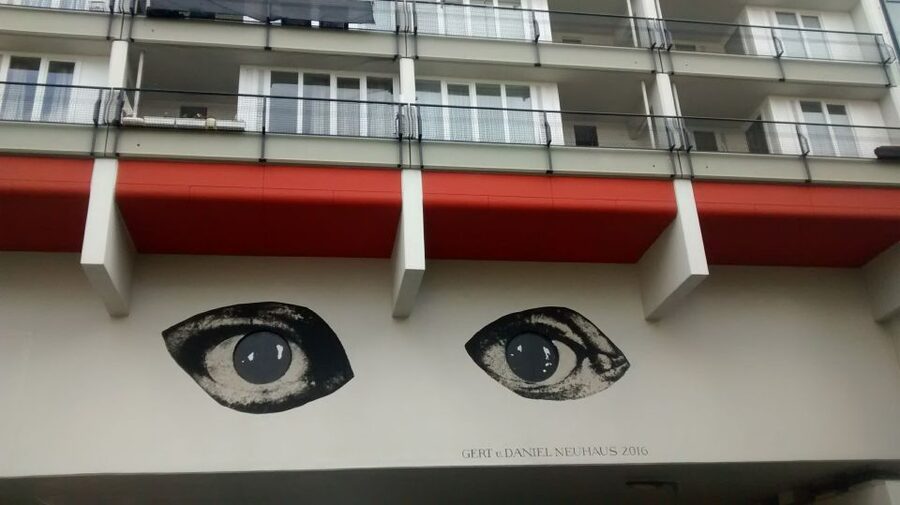
East Side Gallery is one of the tour’s main draws. This long section of the former Berlin Wall is covered with murals made after the Wall opened. It is both an outdoor art site and a physical reminder of division.
The scale makes an impression. Instead of seeing one isolated fragment in a museum, you encounter a long public stretch where the barrier itself became a surface for artistic statements. The work ranges from symbolic images to direct political messages, and the setting links the paintings to the events that made them possible.
The guide’s role is important here. Without context, East Side Gallery can become a line of well-known photo spots. With a good explanation, you can think about the difference between art created in the first rush of reunification and art viewed decades later, after Berlin has changed around it.
Do not expect a quiet gallery visit. This is an outdoor urban site, and the experience is tied to walking through the city rather than moving through a formal exhibition. The tour’s emphasis on history and politics should suit you if you want to understand the place, not simply collect a picture in front of a mural.
The route also connects East Side Gallery with nearby Friedrichshain and the broader border area between East and West. That link helps prevent the Wall from feeling like an isolated monument. You see it as part of a living city where old divisions, new development, and public art still overlap.
A few more Berlin trips worth comparing
- Berlin: Reichstag, Dome and Government District Guided Tour
★ 4.7 · 18,288 reviews - Berlin: 1-Hour City Tour by Boat with Guaranteed Seating
★ 4.3 · 16,993 reviews - Berlin: Boat Tour Along the River Spree
★ 4.4 · 11,252 reviews - Discover Berlin Half-Day Walking Tour
★ 5.0 · 9,624 reviews
Small pieces, hidden corners, and the wider city
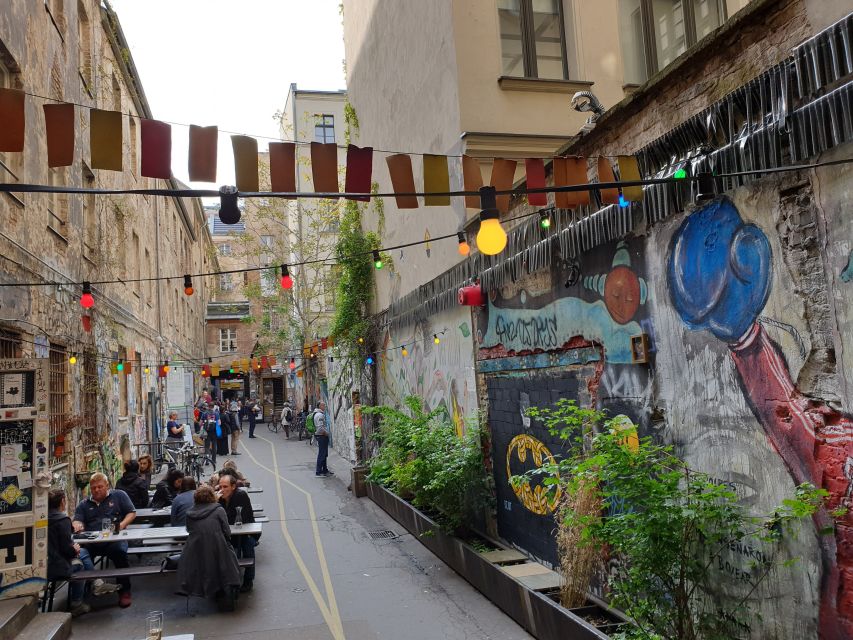
The tour is not limited to giant works. Berlin’s urban art also appears in smaller forms, including pieces wedged into corners, courtyards, and side streets. Some are easy to miss when you are walking quickly toward a major sight.
This is one of the best reasons to take a guided walk. The route may include parts of Mitte as well as Kreuzberg and Friedrichshain, depending on the option and meeting point. You might pass artwork that has no obvious sign or official marker. A guide can help you notice it and explain why it belongs in the story.
The experience is therefore less polished than a standard sightseeing tour. You should not expect every stop to be preserved, labeled, or presented like a museum object. Street art changes. Paint fades, buildings are renovated, and new work appears over old work.
That impermanence is part of the point, but it can also frustrate you. A particular piece may look different from photos, or may no longer be visible at all. If you need a fixed collection with guaranteed masterpieces, choose a conventional museum visit instead.
For me, the strongest version of this tour is one that teaches you how to look. Once you understand the city’s visual language, you can keep spotting small works after the three hours are over. The walk gives you a framework for exploring more of Berlin on your own.
The guides make or break the experience
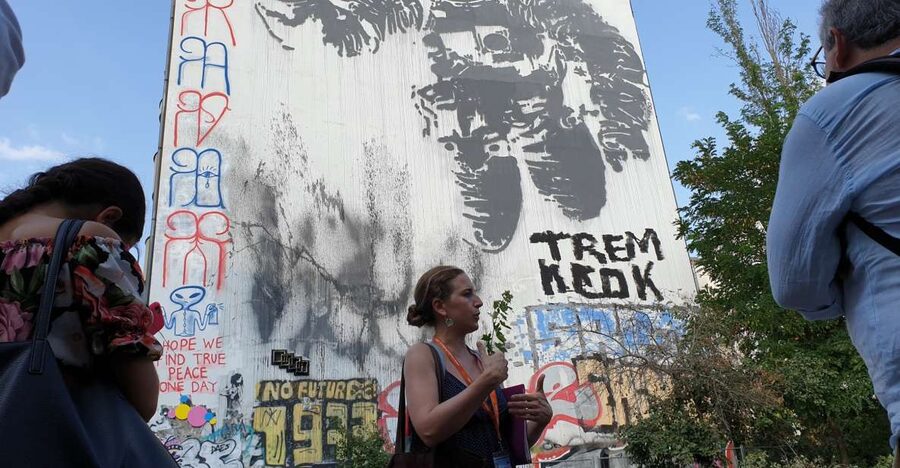
The tour is offered with a live guide in French or Italian. That makes it a useful choice if you want detailed explanations in one of those languages rather than a standard English-language group tour.
The guides named in the feedback include Antonella, Iacopo, Martin, and Marie. Their styles may differ, but the consistent praise centers on warmth, clear storytelling, and strong command of Berlin’s history and street art. One guide was singled out for sharing current anecdotes and answering questions throughout the walk. Another was praised for making the history of underground Berlin accessible.
That personal element matters. Berlin’s past can become a dry sequence of dates if it is not connected to ordinary streets and real social changes. A guide who explains the city with enthusiasm can turn a painted wall into a starting point for a wider conversation.
You should also feel free to ask questions. The tour covers art, architecture, economics, politics, and social change, so there is plenty to discuss. It is not only about identifying artists or taking pictures.
The language choice is a clear limitation for some people. French and Italian are the stated options, and no English guide is included in the tour details provided here. If you need an English-language tour, confirm the available option before booking.
Three hours on foot, with public transport added
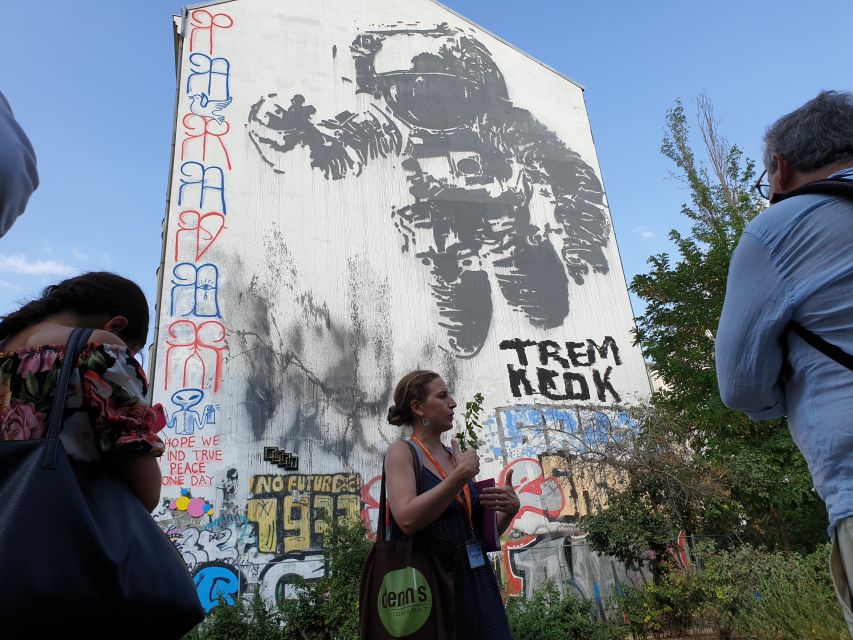
Three hours is enough time for a focused introduction, but it is not enough to cover every important street-art area in Berlin. The route appears designed to connect several districts and major themes rather than linger at every wall.
You will be walking for much of the experience. Comfortable shoes are essential, especially if the route crosses several neighborhoods or includes transport connections. This is not a sightseeing bus with occasional steps onto the pavement.
You also need a 24-hour AB public transport ticket. It is not included in the $31 price. That ticket is required to take the tour, so add its cost when comparing this experience with other activities.
The transport requirement has two sides. It adds a little planning and expense, but it also fits the subject. Berlin’s alternative culture is spread across different districts, and moving between areas helps you understand that the city’s art scene is not confined to one street.
Check the starting time and meeting point before you leave your hotel. The exact meeting point may vary by booking option, and one part of the route may begin around Kottbusser Tor. Give yourself enough time to reach the location with your ticket ready.
Is $31 good value?
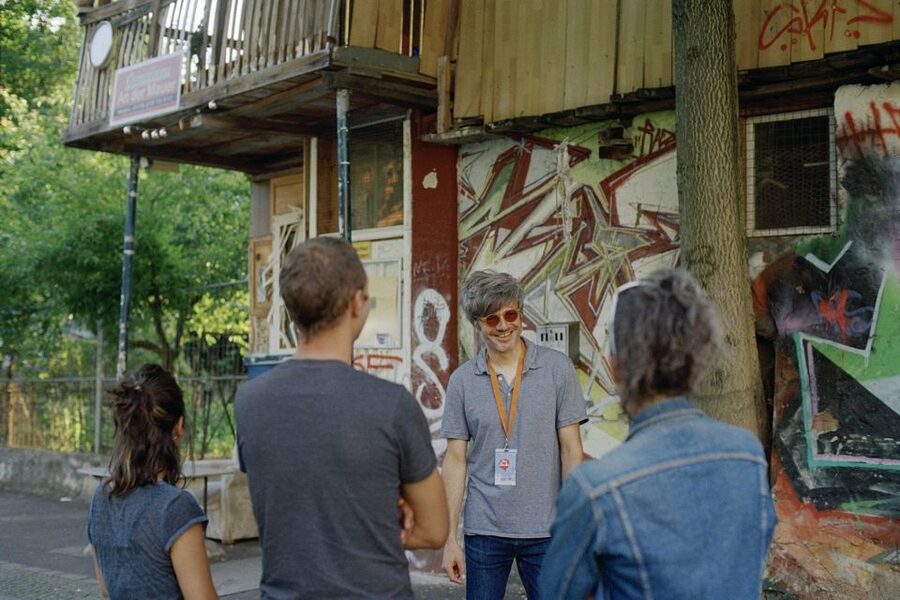
At $31 per person, this tour sits in a reasonable range for a three-hour small-group walking experience. The price makes sense if you value interpretation and local context. You are not simply paying to walk past murals. You are paying for a guide who can connect art with Berlin’s divided past and current changes.
The value is strongest for a first visit to Berlin or for anyone who has already seen the main monuments and wants a different side of the city. The walk can help you understand why Kreuzberg and Friedrichshain matter beyond their nightlife and photo opportunities.
The price is less attractive if you plan to spend the whole day independently photographing street art. In that case, you will still need the AB ticket, and much of Berlin’s public art can be seen without a guide. The tour’s advantage is explanation, not exclusive access.
Small-group size also matters. A smaller group usually makes it easier to hear the guide and ask questions, though the exact group size is not specified. Do not assume a private experience. You are booking a shared walking tour.
Free cancellation up to 24 hours before the start and the option to reserve now and pay later give you some useful flexibility. These are practical benefits, but the bigger decision is whether the tour’s language, subject, and walking style fit your plans.
Who should book this walk?
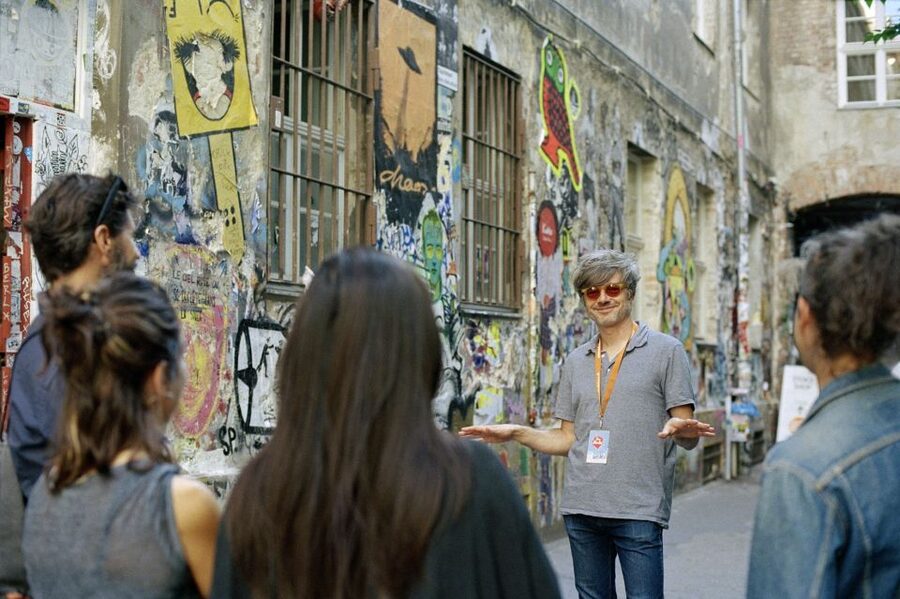
I would recommend it to you if you:
- Want Berlin history presented through streets, walls, and neighborhoods
- Enjoy political and social context along with visual art
- Prefer a small-group walking tour to a formal museum visit
- Speak French or Italian, or are booking for someone who does
- Have comfortable shoes and time for a three-hour route
- Want to see Kreuzberg, Friedrichshain, and East Side Gallery in one themed experience
It is also a good pick for repeat visitors. You may have already seen the Brandenburg Gate, Reichstag, and Museum Island. This walk shifts your attention to the Berlin that grew around the former border and the urban changes that followed reunification.
I would skip it if you want a short, fixed route centered only on famous murals. I would also be cautious if you dislike walking, need an English-language guide, or prefer not to arrange public transport separately.
Should you book the Berlin Street Art and Alternative Tour?
Book it if you want meaning behind the murals, not just attractive backdrops. The strongest parts are the Kreuzberg focus, the Cold War context, the stop at East Side Gallery, and the guides’ warm, accessible approach.
The main things to plan are simple: confirm the meeting point, buy the 24-hour AB ticket, choose the right language, and wear comfortable shoes. At $31, it is a solid way to spend three hours learning how Berlin’s art, politics, and neighborhood changes fit together.
FAQ
How long is the Berlin Street Art and Alternative Tour?
The tour lasts three hours.
How much does the tour cost?
The listed price is $31 per person.
Which languages are available?
The live tour guide is available in French or Italian.
Is public transportation included?
No. You must purchase your own 24-hour AB public transport ticket for the tour.
Which Berlin areas does the tour cover?
The experience focuses on Kreuzberg and includes East Side Gallery. The description also refers to major works in Friedrichshain and smaller pieces in parts of Mitte.
Is East Side Gallery included?
Yes. Experiencing East Side Gallery is one of the stated highlights.
What should I bring?
Bring comfortable shoes because this is a three-hour walking tour.
Can I cancel for a full refund?
Yes. You can cancel up to 24 hours in advance for a full refund.
Can I reserve the tour and pay later?
Yes. The reserve-now, pay-later option lets you hold a place without paying at the time of booking.
Just added around Berlin
- Private Walking Tour in Berlin: Hitler’s Germany & WWII★ 5.0 · 7 reviews
- The History of Berlin: WWII PRIVATE Walking Tour With Locals★ 5.0 · 209 reviews
- Private Berlin WWII and Cold War History Tour with Local Expert Guide★ 5.0 · 28 reviews
- Private Walking Tour Berlin 3 hours: Brandenburg, Historic Center★ 5.0 · 7 reviews
- Berlin: Private Bike Tour of the Berlin Wall and Third Reich★ 5.0 · 23 reviews
- Berlin: Guided Private Bike Tour to Explore the Highlights★ 5.0 · 12 reviews
- Berlin Photography Masterclass – Private Photography Lesson★ 4.5 · 23 reviews
- Group Driving Tour 1 to 6 people. Berlin Shore Excursion incl pick-up at Port★ 5.0 · 8 reviews
Street Art, compared.


Neustadt District Street Art Guided Walking Tour
Read our review →

Köln Ehrenfeld: Street Art und Graffiti Tour Walls of Wonder
Read our review →
Browse the lists this tour appears in