Reviewed · GUIDED
Berlin: The Wall Ride Guided Trabi Tour
Berlin’s history comes with a steering wheel. This 135-minute tour lets you drive an iconic Trabant through the German capital, following the old Berlin Wall and stopping at places tied to the Cold War. I like the hands-on format and the chance to see Berlin from a tiny piece of East German history. I also like that you get your own Trabi, rather than riding in a shared vehicle with strangers.
The main drawback is that you must pay attention to driving, traffic, the convoy, and the live commentary at the same time. The radio can be hard to hear, and passengers in the back may get less out of the sightseeing than the driver and front-seat passenger. Still, for anyone who enjoys unusual transport and modern history, this is a memorable way to see Berlin.
In This Review
- Key points before you book
- Why a Trabant changes the Berlin sightseeing experience
- Starting at TrabiWorld on Zimmerstrasse
- Getting comfortable behind the wheel
- Following the old Berlin Wall
- Checkpoint Charlie and the drama of the border
- The East Side Gallery and Berlin’s open-air memorial
- Relics of Marxism and Leninism
- What the guide and radio commentary add
- The ride itself: lively, noisy, and sometimes rough
- Is $116 a fair price?
- Who will enjoy this tour most?
- Should you book the Berlin Wall Ride?
- FAQ
- How long is the Berlin Wall Ride Trabi Tour?
- How much does the tour cost?
- Where does the tour begin?
- How can I reach the meeting point?
- Do I drive the Trabant myself?
- How many people can ride in one Trabi?
- Can drivers change during the tour?
- What license do I need?
- What languages are available?
- Is fuel included?
- Is insurance included?
- Do I need a ticket if I am only a passenger?
- Are attraction entry fees included?
- What should I bring?
- Can I cancel the booking?
Key points before you book
- You drive the Trabi yourself: Each booking includes a private Trabant for your party, with no other people placed in your car.
- The route follows Cold War Berlin: You pass the East Side Gallery, the former death strip, Checkpoint Charlie, and other politically important sites.
- The convoy is part of the fun: A guide leads several Trabants through the city while commentary comes by live radio.
- Driving rules matter: You need to be at least 18, hold a Class 2 or B driving license, and be fit to drive.
- The back seat is less rewarding: The front seats offer the best view and make it easier to follow the guide.
- The price includes useful extras: Fuel, mileage, insurance, a souvenir Trabi driver’s license, and your private vehicle are included.
Why a Trabant changes the Berlin sightseeing experience
Berlin has plenty of standard bus tours. This is not one of them. You sit behind the wheel of a Trabant, the small East German car that became a symbol of everyday life behind the Iron Curtain.
The car is part of the lesson. You are not simply looking at Cold War relics through a window. You are operating a machine linked to the former German Democratic Republic, then driving it through a city that has changed almost beyond recognition since reunification.
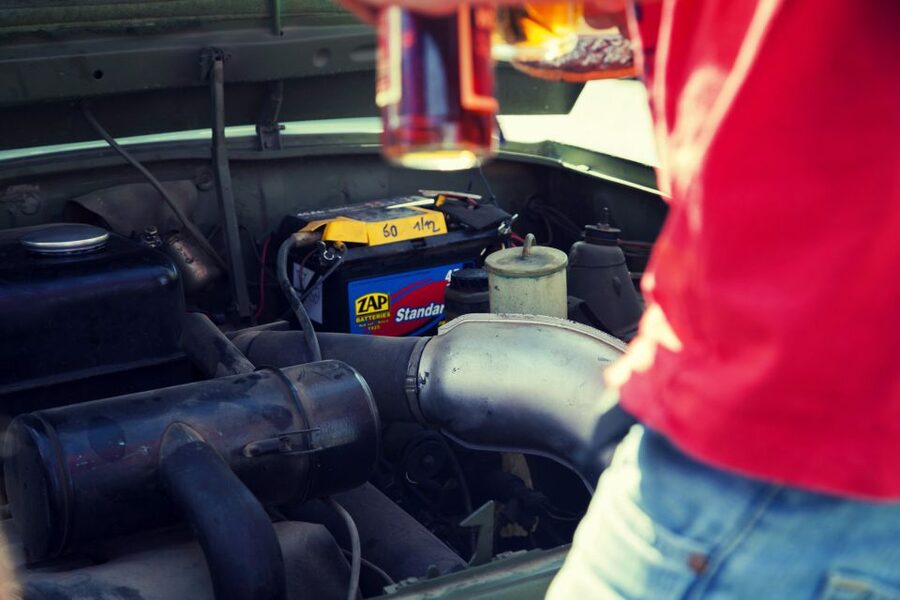
The Trabi is basic by modern standards. That is part of its appeal, but it also demands attention. You need to steer your car, keep the convoy in sight, and listen to the guide. You may absorb less detail than you would on a walking tour where you can stop, stare, and take notes.
That trade-off suits me. The point is not to collect every historical fact. The point is to feel the city move around you while you handle an unusual piece of its past.
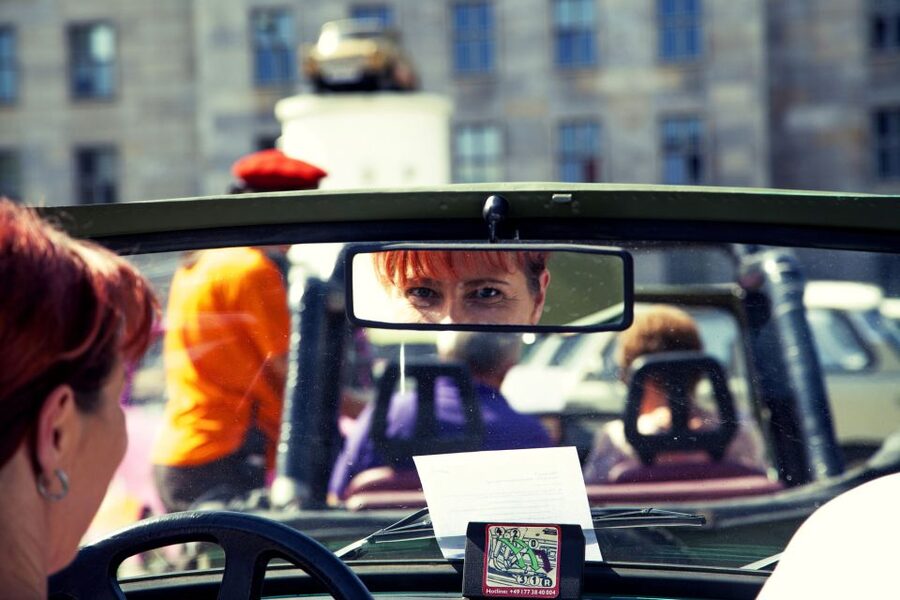
The experience is arranged as a convoy, with a guide driving at the front. You follow through central Berlin while receiving commentary by radio. Several Trabants together make a strong visual impression, and the cars attract attention from people on the streets. One useful detail: you may find yourself photographed by people visiting Berlin because the vehicles are so distinctive.
A few more Berlin trips worth comparing
- Berlin: Reichstag, Dome and Government District Guided Tour
★ 4.7 · 18,288 reviews - Berlin: 1-Hour City Tour by Boat with Guaranteed Seating
★ 4.3 · 16,993 reviews - Berlin: Boat Tour Along the River Spree
★ 4.4 · 11,252 reviews
Starting at TrabiWorld on Zimmerstrasse
The meeting point is TrabiWorld at Zimmerstrasse 97, on the corner of Wilhelmstrasse, in Berlin-Mitte. The nearest listed public transport option is Kochstrasse station on the U6.
This central location places you close to several major Cold War sights before the tour even begins. You should arrive with your driving license. The staff provide the vehicle and explain how to handle it, which matters if you have never driven a Trabant or are used to newer cars.
You need to be at least 18 years old and hold a Class 2 or B license. You must also be fit to drive. Every person in the vehicle needs a ticket, including the driver, co-driver, and passengers. Children need a free ticket, but they still require one.
Each Trabi can carry up to four people or 330 kilograms. Drivers may change during the route, so two licensed adults can share the driving. That is useful if one person wants to take in the scenery for part of the tour.
The booking includes liability and comprehensive insurance with a 650 euro excess in case of damage. That is worth noting before you commit. The car, fuel, mileage, and insurance are included, but you remain responsible for driving carefully.
Getting comfortable behind the wheel
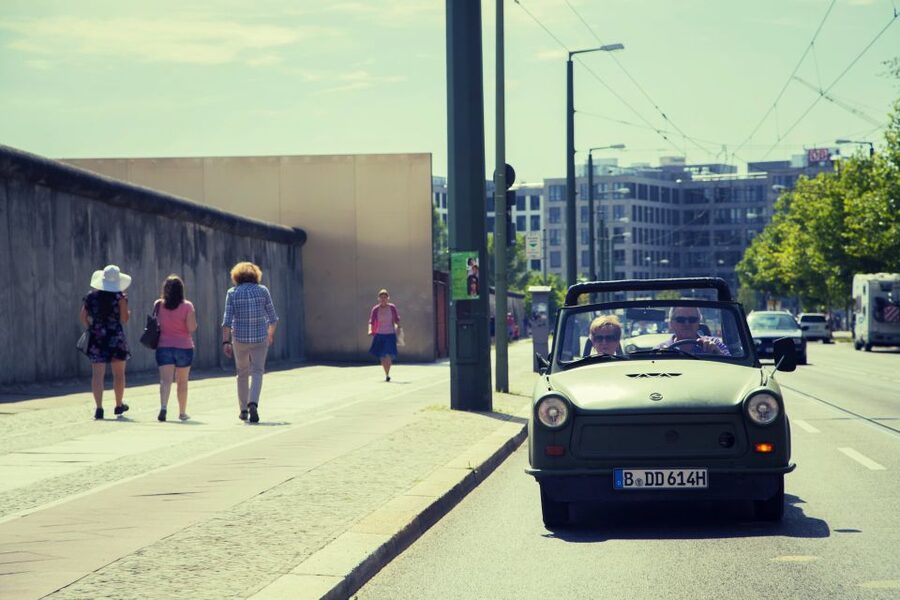
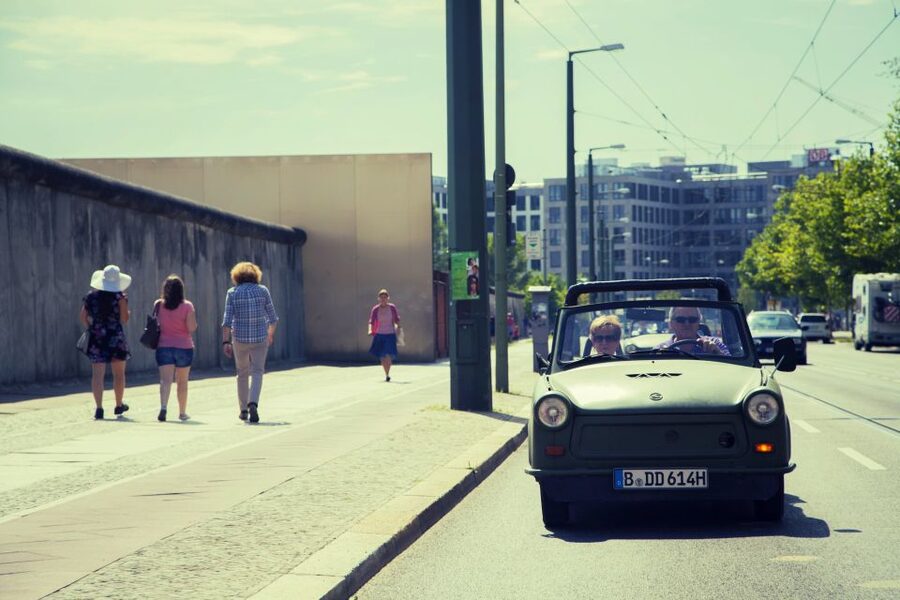
The Trabi is the star of the day, but it can take a little getting used to. One customer who had never driven a manual car said thorough instruction made it possible to handle the vehicle around Berlin. That is encouraging if you are comfortable learning a less familiar car, but it does not remove the need for confidence.
If you drive a manual vehicle regularly, you will likely find the basic controls manageable. If you do not, use the training time well and do not rush. The route takes place on city streets, and the convoy works best when everyone keeps a steady pace.
The guide drives ahead, so you need to keep up without driving aggressively. Sunday may be the easiest time for that. One booking from a Sunday noted that the roads were fairly clear and it was almost possible to stay with the other Trabants throughout the route. Weekday traffic could make that harder.
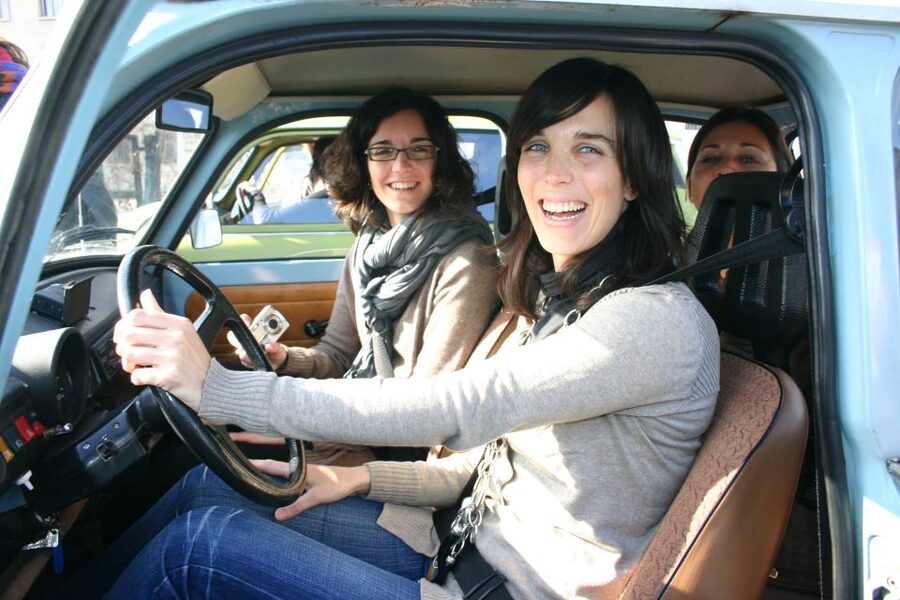
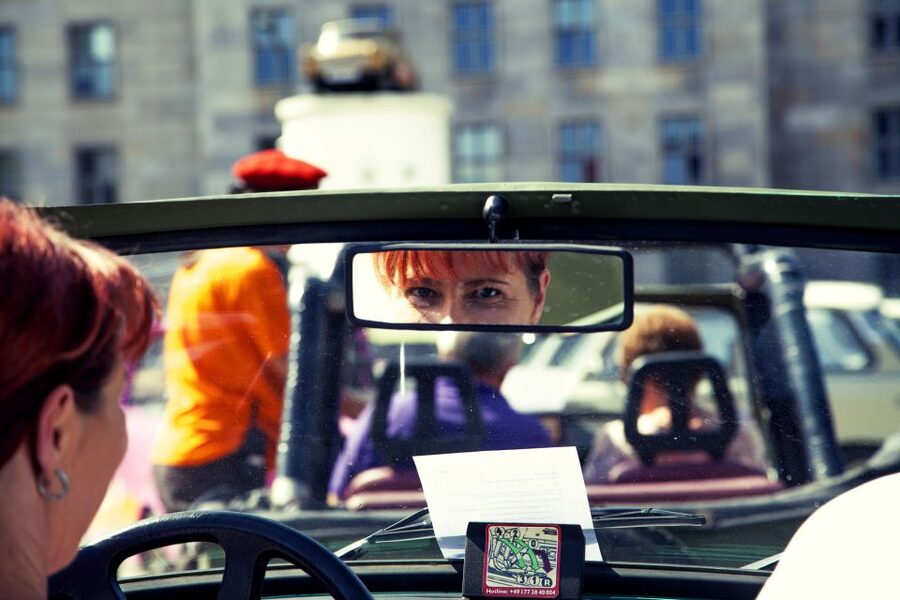
The front-seat passenger has an important role, too. That person can help watch for the convoy and listen to the commentary while the driver concentrates on the road. If your group has four people, the back-seat passengers may have a less satisfying view and a harder time hearing the radio.
Following the old Berlin Wall
The tour focuses on the places where the divided city was most sharply felt. You pass sites connected to the Wall, political confrontation, escape attempts, and the daily border between East and West Berlin.
The phrase death strip refers to the heavily controlled zone that ran along much of the Wall. Seeing this area from a Trabi gives the subject a useful physical scale. The Wall was not simply a single concrete barrier. It was part of a wider border system that divided streets, neighborhoods, families, and an entire city.
The tour connects those past divisions with today’s Berlin. You move through a capital that is now one city, but the route keeps reminding you that this unity is recent. More than 30 years after the Wall fell, the contrasts between old East and West remain an important part of understanding Berlin.
The commentary is delivered live in English or German, with audio support in both languages. The guide leads the convoy and explains what you are seeing as you drive. The guide’s role is especially important because the route itself does not provide long stops at every location.
One practical warning: the radio may not always be easy to hear. A booking from October 2024 specifically raised the problem of poor audio. Weather also affected the windscreen wipers and radio near the end of one tour. These sound like occasional equipment or weather issues rather than the main character of the experience, but you should not expect perfect audio every minute.
Still Berlin, at a slower pace:
- Discover Berlin Half-Day Walking Tour
★ 5.0 · 9,624 reviews - Berlin: Hop-on Hop-off Bus Tour with Live Commentary
★ 4.3 · 8,579 reviews - Berlin: Government District around the Reichstag Guided Tour
★ 4.7 · 8,447 reviews - Berlin: Reichstag, Plenary Chamber, Cupola & Government Tour
★ 4.6 · 8,422 reviews
Checkpoint Charlie and the drama of the border
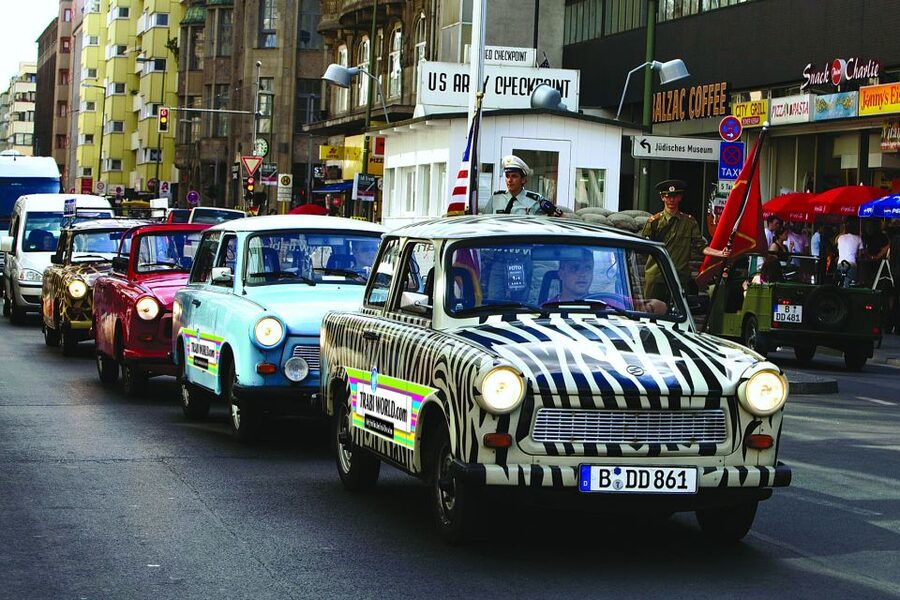
Checkpoint Charlie is one of Berlin’s best-known Cold War locations. It was a crossing point between the American and Soviet sectors, and passport checks took place there during the years when Berlin was divided.
Driving through this area in a former East German car creates a neat historical contrast. You are crossing a place once controlled by international tension while sitting in a vehicle built for ordinary life on the eastern side of the divide.
The stop is valuable for context, but it is also one of the more commercialized parts of Berlin. The tour does not include admission to sights, so you should not expect entry to museums or exhibitions as part of the price. If you want a fuller understanding of the border, plan separate museum time around the route.
The advantage of passing through by Trabi is speed and atmosphere. You see the location as part of a wider city route instead of treating it as an isolated photo stop. The disadvantage is that driving leaves little time for quiet reflection or detailed interpretation.
The East Side Gallery and Berlin’s open-air memorial
The East Side Gallery is another major point on the route. It occupies a long surviving section of the Berlin Wall covered with murals. The art turns a former barrier into a public display of memory, protest, and hope.
From the Trabi, you get a moving view of this stretch rather than the full experience of walking beside it. That is enough to place it in the story of the city, but you may want to return later if the murals interest you. A separate visit lets you take your time and examine the paintings without also watching traffic.
The route’s strength is the connection between places. You are not seeing Checkpoint Charlie, the death strip, and the East Side Gallery as unrelated attractions. You are tracing the changing meaning of the Wall, from guarded border to memorial and artwork.
Relics of Marxism and Leninism
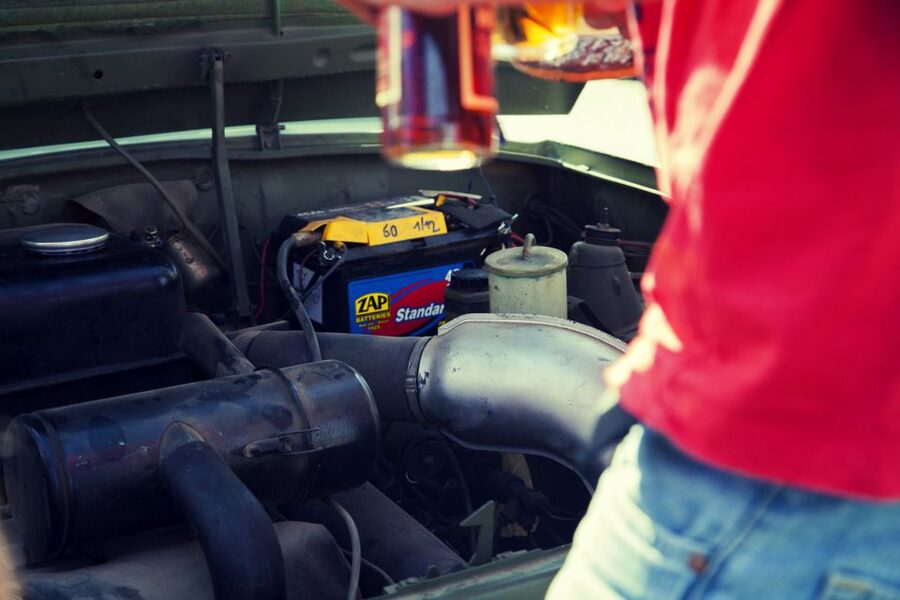
The route also passes sites linked to Marxism and Leninism. The exact amount of time at each place depends on the convoy and city conditions, but the theme adds useful context to the vehicle itself.
The Trabant was not a luxury car. It was an everyday product of East Germany, and owning one could involve a long wait. Driving one through Berlin gives you a small, practical connection to the political system discussed by the guide.
That connection makes the tour different from a general city drive. You see modern Berlin while handling an object associated with the former state. The experience works best if you enjoy history in physical form rather than only through museums and dates.
What the guide and radio commentary add

A live guide leads the group and provides commentary in English or German. This is not a silent rental. The guide gives the route structure and helps explain the political importance of the sites along the way.
The strongest praise for the experience centers on the guides. They are described as friendly, well informed, and good at making Berlin’s past enjoyable rather than dry. One booking praised a guide for offering a fun and detailed view of the city’s history, while another called the guide an expert who made the unusual format work.
Still, your attention will be divided. You are busy driving and trying not to lose the convoy. One useful expectation is that you will receive information, but you may not remember every detail. If your priority is a full history lesson, choose a walking tour or museum visit as well.
The radio system is the weak point. It can be difficult to hear inside the car, especially when traffic, weather, or the car itself gets in the way. Sit near the front if possible, keep the volume at a sensible level, and treat the commentary as a helpful layer rather than the sole reason to book.
The ride itself: lively, noisy, and sometimes rough
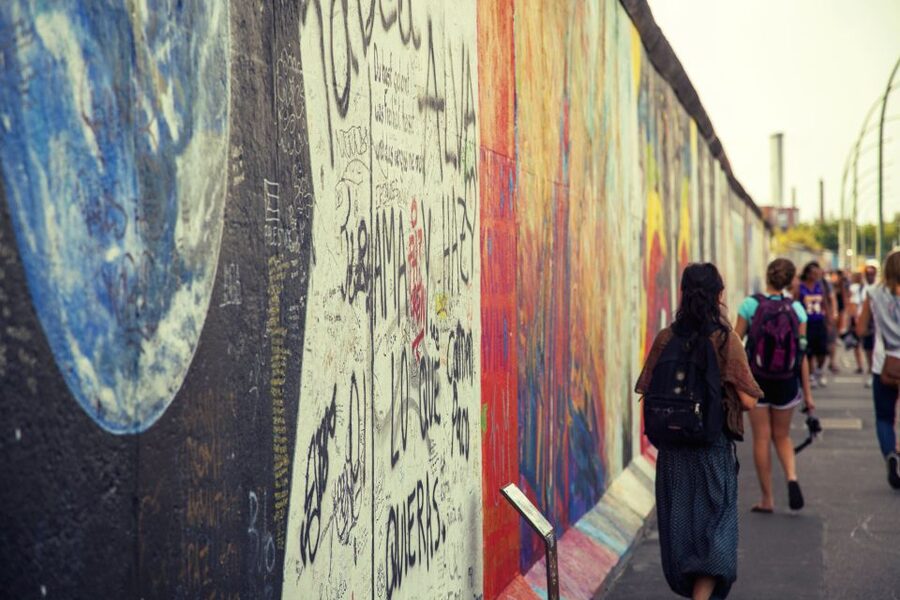
The Trabant makes the route feel like an adventure. It is small, unusual, and unmistakable. You are likely to attract attention from people along the way, which adds to the sense that you are part of a moving display.
The ride can also be rough. One group described cobblestone streets as feeling like being in a blender. That was presented as part of the fun, but it is a fair warning if you expect a smooth modern car.
Your comfort depends partly on where you sit. The driver and front passenger get the clearest forward view and have the easiest job following the guide. The rear seats can be less comfortable and less useful for sightseeing.
Weather can affect the experience, too. A wet day may make the car harder to manage and the audio less reliable. The tour continues through ordinary city conditions, so bring your driving license and dress for the weather rather than expecting a sheltered bus ride.
Is $116 a fair price?
At $116 per person, this is not the cheapest way to see Berlin. The value depends on how much you want the Trabi itself.
The price includes a private car, a guide leading the convoy, live radio commentary, mileage, petrol, insurance, and a souvenir Trabi driver’s license. You are paying for a two-hour-plus activity, not simply a short photo opportunity.
For a group of two to four people sharing one car, the experience may feel more reasonable because you share the vehicle and can change drivers. But each participant needs a ticket, and the maximum is four people or 330 kilograms per Trabi.
There are no admission fees included. You should budget separately if you want to enter museums or other sights along the route. The ticket is best value if you see it as a guided driving experience with historical context, not as a replacement for every Berlin attraction.
The tour also offers free cancellation up to 24 hours before departure and a reserve-now, pay-later option. Those terms make it easier to fit into a changing Berlin schedule.
Who will enjoy this tour most?
I would recommend the Wall Ride to:
- Couples or families who want a shared activity rather than a standard bus tour
- Drivers who enjoy unusual cars and are comfortable with a manual vehicle
- Visitors interested in the Cold War, the Berlin Wall, and East German daily life
- Repeat visitors who have already seen Berlin’s main sights
- Small groups who can share the driving
- People who value atmosphere and novelty as much as detailed commentary
I would be more cautious if you want a quiet, slow history tour. The vehicle requires attention, the radio may be hard to hear, and the back seat is not the best place for sightseeing. It is also not ideal for anyone who does not meet the license and fitness requirements.
The tour is listed as wheelchair accessible, but the supplied information does not explain how boarding, seating, or vehicle transfer works. If that affects your plans, confirm the practical arrangements before booking.
Should you book the Berlin Wall Ride?
Book it if you want Berlin’s history delivered with a steering wheel, a little engine noise, and a convoy of comic-looking East German cars. The guides, the private vehicle, and the route through Checkpoint Charlie, the death strip, and the East Side Gallery make this far more than a novelty car rental.
Skip it if your main goal is maximum historical detail, a smooth ride, or uninterrupted museum-style commentary. For most people who meet the driving requirements, the Trabi is the reason to go. It turns a familiar Berlin sightseeing route into something personal, funny, and hard to forget.
FAQ
How long is the Berlin Wall Ride Trabi Tour?
The stated duration is 135 minutes, or two hours and 15 minutes.
How much does the tour cost?
The listed price is $116 per person.
Where does the tour begin?
It begins at TrabiWorld, Zimmerstrasse 97, on the corner of Wilhelmstrasse, in Berlin-Mitte.
How can I reach the meeting point?
The listed public transport option is the U6 to Kochstrasse.
Do I drive the Trabant myself?
Yes. The booking includes a private Trabi that you drive yourself.
How many people can ride in one Trabi?
A maximum of four people or 330 kilograms, which is 727.5 pounds, are permitted in each vehicle.
Can drivers change during the tour?
Yes. Drivers may change during the tour, as long as the person driving meets the stated requirements.
What license do I need?
You need to be at least 18 years old and hold a Class 2 or B driving license. You must also be fit to drive.
What languages are available?
The live tour guide and audio commentary are available in English and German.
Is fuel included?
Yes. Mileage and petrol are included in the booking.
Is insurance included?
Yes. Liability and comprehensive insurance are included, with a 650 euro excess in case of damage.
Do I need a ticket if I am only a passenger?
Yes. Each driver, co-driver, and passenger needs a ticket. Children need a cost-free ticket.
Are attraction entry fees included?
No. Entry to sights is not included.
What should I bring?
Bring your driving license. It is required for anyone who will drive.
Can I cancel the booking?
You can cancel up to 24 hours in advance for a full refund. You can also reserve now and pay later.
Just added around Berlin
- Private Walking Tour in Berlin: Hitler’s Germany & WWII★ 5.0 · 7 reviews
- The History of Berlin: WWII PRIVATE Walking Tour With Locals★ 5.0 · 209 reviews
- Private Berlin WWII and Cold War History Tour with Local Expert Guide★ 5.0 · 28 reviews
- Private Walking Tour Berlin 3 hours: Brandenburg, Historic Center★ 5.0 · 7 reviews
- Berlin: Private Bike Tour of the Berlin Wall and Third Reich★ 5.0 · 23 reviews
- Berlin: Guided Private Bike Tour to Explore the Highlights★ 5.0 · 12 reviews
- Berlin Photography Masterclass – Private Photography Lesson★ 4.5 · 23 reviews
- Group Driving Tour 1 to 6 people. Berlin Shore Excursion incl pick-up at Port★ 5.0 · 8 reviews
Guided, compared.

Reichstag, Dome and Government District Guided Tour
Read our review →

Government District around the Reichstag Guided Tour
Read our review →