Reviewed · BERLIN TOURS
Daily First Rickshaw promotion in Combi Vehicle public Group 90€
Berlin rewards a quick ride. This four-hour private rickshaw tour links Alexanderplatz, Museum Island, the Berlin Wall, the Holocaust Memorial, and Brandenburg Gate without making you march between them. I like the small two-person format and the chance to get close to major sights for photos. I also like the relaxed pace, especially for anyone who finds a long walking tour tiring.
The main trade-off is simple: a rickshaw gives you a broad first look, not long museum visits. Most stops last only five to 15 minutes, and the price needs careful checking because the promotion is shown as 90€ while the listed booking price is $216.74 per group of up to two.
In This Review
- Key points to know before booking
- Why a Berlin rickshaw can work so well
- Starting at Alexanderplatz and the TV Tower
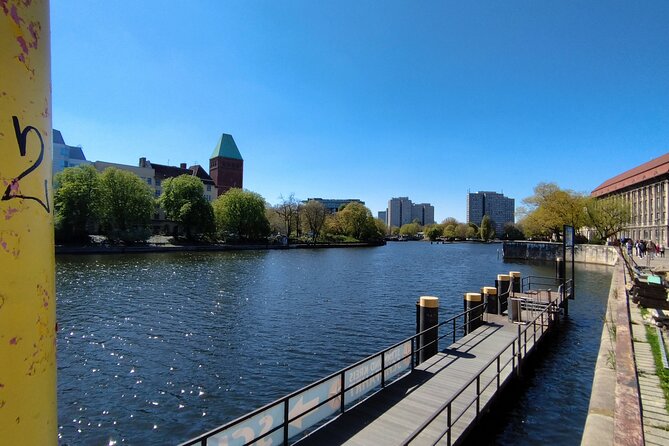
- Museum Island in a quick 15-minute look
- Bebelplatz and the warning beneath the square
- Gendarmenmarkt and Berlin’s grandest square
- Checkpoint Charlie and the former Wall route
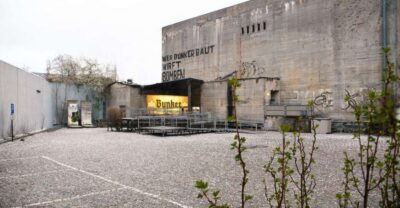
- Ten serious minutes at the Topography of Terror
- Potsdamer Platz, rebuilt after reunification
- The Holocaust Memorial requires quiet attention
- Brandenburg Gate and the government district
- Comfort, weather, and what comes with the ride
- Is $216.74 good value for two people?
- Who should book this four-hour route?
- Should you book the Berlin rickshaw tour?
- FAQ
- How long is the Berlin rickshaw tour?
- How many people can join one rickshaw?
- Where does the tour start?
- Does the tour return to the meeting point?
- Is admission to the attractions included?
- Is the tour suitable for people with limited mobility?
- Can I cancel for a full refund?
Key points to know before booking
- Private seating for up to two: You get your own rickshaw rather than joining a large coach or walking group.
- A useful four-hour route: The ride connects Berlin’s central sights from Alexanderplatz to Brandenburg Gate and the government district.
- Guide-led sightseeing: The guide drives, explains the city, and can stop for photographs along the way.
- Good for limited mobility: You enter the rickshaw in only a few steps, and the vehicle can stop close to monuments.
- Weather protection included: A roof and blankets can help during rain or cooler weather.
- Early departure is wise: A 9:00 a.m. start was specifically praised for quieter sights.
Why a Berlin rickshaw can work so well
Berlin is spread out. Its major sights sit across former East and West Berlin, along the old Wall route and around several large public squares. You can cover the same ground on foot, but it takes energy and careful planning.
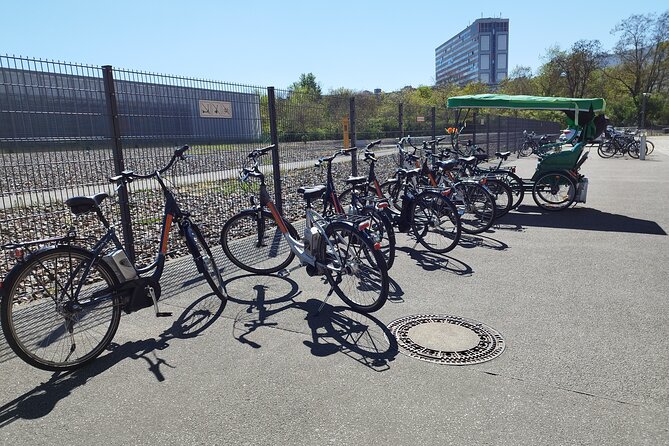
The rickshaw solves that problem in a cheerful, personal way. You sit while your guide pedals from place to place, so you spend more time looking around and less time studying transit maps. The open sides also give you a close view of streets, buildings, memorials, and passing neighborhoods.
This is not a silent ride. The driver is also your guide, and the experience depends heavily on that person. Levi is praised by name in the available feedback for being friendly, flexible, and good at adding places outside a standard route. A different guide may lead your tour, but the service is presented as experienced, informative, friendly, and safe.
The private setup matters. With room for only two people, you can ask questions without holding up a group. The guide can also adjust the emphasis to suit you, at least within the fixed route and four-hour limit. Extra rickshaws are available for bigger parties, though the stated maximum for this booking is two people.
A few more Berlin trips worth comparing
- Berlin: Reichstag, Dome and Government District Guided Tour
★ 4.7 · 18,288 reviews - Berlin: 1-Hour City Tour by Boat with Guaranteed Seating
★ 4.3 · 16,993 reviews - Berlin: Boat Tour Along the River Spree
★ 4.4 · 11,252 reviews
Starting at Alexanderplatz and the TV Tower
The meeting point is Weinbergsweg 6 in Berlin’s 10119 postal area, while the sightseeing route begins at the Berliner Fernsehturm on Alexanderplatz. Confirm the exact pickup arrangement when you book, since the published meeting point and first sightseeing stop are not the same address.
The Fernsehturm is Berlin’s tallest structure, rising 365 meters above the city. You do not enter the tower on this tour, and admission is not included. Instead, it serves as a clear starting marker in one of central Berlin’s best-known squares.
From Alexanderplatz, the rickshaw passes the Red Town Hall, Marien Church, and Neptune Fountain before reaching Museum Island. This opening stretch is useful because it quickly introduces several layers of Berlin: imperial buildings, religious architecture, public monuments, and the broad spaces of the former East Berlin center.
You get about five minutes at the TV Tower area. That is enough for orientation and photographs, but not for a tower visit. If going up the Fernsehturm is a priority, plan that separately.
Museum Island in a quick 15-minute look
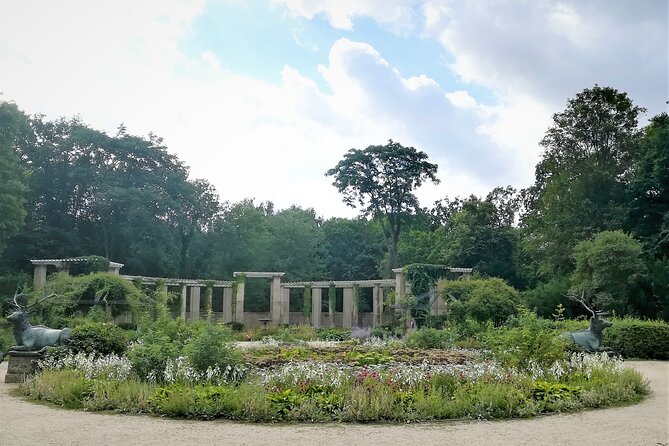
Museum Island is the longest stop on the first half of the route, with about 15 minutes to take in the setting. The UNESCO-listed complex includes the Berlin Cathedral, City Palace, Altes Museum, Bode Museum, and Neues Museum.
This is one of the places where the rickshaw has a clear advantage over a rigid coach. You can approach the major buildings closely, hear a short explanation, and take photographs without spending time searching for parking. The guide can point out the relationship between the museums, cathedral, riverfront, and palace area.
Still, 15 minutes is not enough to visit a museum. Admission is listed as free for the stop, but that means there is no charge to view the area from the tour, not that every museum interior is included. If you want to see the Egyptian collection at the Neues Museum or spend time inside the Bode Museum, return on your own.
Bebelplatz and the warning beneath the square
The ride continues to Bebelplatz, where you get roughly ten minutes. The square forms part of the Forum Fridericianum, a group of important buildings that includes the State Opera, Humboldt University, the State Library, and St. Hedwig’s Cathedral.
Bebelplatz also carries one of Berlin’s most painful reminders of Nazi rule. On May 10, 1933, Nazi forces organized a public book burning here, targeting works they labeled un-German. The site asks you to think about censorship, political control, and the speed with which intolerance can become public policy.
Ten minutes is enough for a brief explanation and a photograph, but the subject deserves more time than the schedule allows. I would listen closely here and return later if you want to visit the underground memorial or study the surrounding buildings at a slower pace.
Still Berlin, at a slower pace:
- Discover Berlin Half-Day Walking Tour
★ 5.0 · 9,624 reviews - Berlin: Hop-on Hop-off Bus Tour with Live Commentary
★ 4.3 · 8,579 reviews - Berlin: Government District around the Reichstag Guided Tour
★ 4.7 · 8,447 reviews - Berlin: Reichstag, Plenary Chamber, Cupola & Government Tour
★ 4.6 · 8,422 reviews
Gendarmenmarkt and Berlin’s grandest square
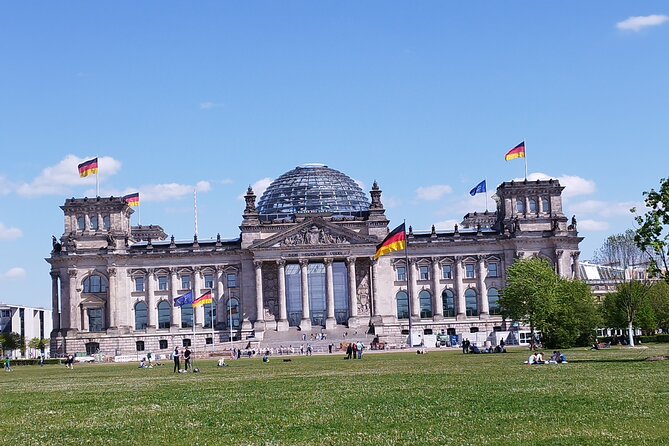
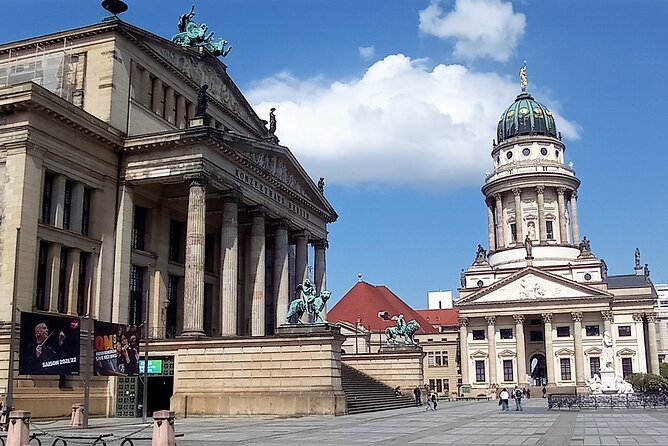
Gendarmenmarkt receives another ten-minute stop. The square is framed by the former Royal Concert Hall, the German Cathedral, and the French Cathedral, with statues and other monuments adding to the formal design.
This is one of the tour’s best photo locations. The buildings are close together, so even a short stop gives you a strong sense of Berlin’s architectural scale. The square also helps explain how the city presented power, religion, music, and government in one carefully planned space.
The drawback is current access can vary at major public sites, and ten minutes leaves little room for an interior visit. Treat this as an introduction rather than a full sightseeing session. The guide’s explanation is especially useful here because the square can otherwise look like a collection of impressive façades without much context.
Checkpoint Charlie and the former Wall route
At Checkpoint Charlie, the tour pauses for about five minutes. This former crossing point became a symbol of the Cold War and the 28 years when the Berlin Wall divided the city.
The stop is short, but its location helps tie together the political story of Berlin. You are moving through what was once the border strip, a space that separated families, friends, and opposing political systems. Original sections of the Wall remain nearby as reminders of that division.
Checkpoint Charlie itself can feel crowded and commercial compared with the nearby historical sites. A short visit is probably the right approach. You get the key facts, take a picture, and move on rather than spending a large portion of the four-hour tour at one busy intersection.
Ten serious minutes at the Topography of Terror
The Topography of Terror is another ten-minute stop, located beside the Martin-Gropius-Bau exhibition center. The documentation center focuses on crimes committed during the Nazi era and provides a direct link between Berlin’s present streets and the institutions that organized persecution.
The stop is free, and the building adds another layer to the visit. Martin-Gropius-Bau is a prewar exhibition building that has hosted shows connected with major artists, including Ai Weiwei and David Bowie. The nearby Prussian Landtag also brings political history into the picture.
This section of the route is important, but the timing is tight. Ten minutes lets you understand where you are and why it matters. It does not allow a serious visit to the documentation center or a full exhibition. You should plan a separate return if you want to read the displays carefully.
Potsdamer Platz, rebuilt after reunification
Potsdamer Platz shows a very different Berlin. After German reunification in 1990, the area became one of Europe’s largest construction sites, replacing a neglected wartime and Cold War zone with modern towers and large entertainment buildings.
The Sony Center is the best-known part of the complex and represents the city’s post-reunification identity. After several stops focused on monarchy, dictatorship, war, and division, this ten-minute visit gives the tour a look at rebuilding and modern urban design.
You may find the contrast striking. The square is not an old Berlin neighborhood, but that is precisely its value. It shows how quickly the city changed once the Wall was gone. The stop is mainly for orientation and photographs, with no listed interior admission.
The Holocaust Memorial requires quiet attention
The Memorial to the Murdered Jews of Europe consists of 2,711 concrete stelae arranged across a large central site. The tour allows about ten minutes at the memorial, which commemorates the six million Jews murdered under National Socialism.
The memorial is not a conventional monument with a long inscription explaining everything. Its meaning develops as you walk among the blocks, where the ground changes and sightlines shift. The tour’s short pause can introduce the memorial, but it cannot replace time spent there alone.
Please treat this stop with care. It is a place for quiet reflection, not simply another background for a quick photograph. The tour also takes you near the Memorial to the Murdered Sinti and Roma, recognizing another group persecuted and murdered under the Nazi regime.
Brandenburg Gate and the government district
The route ends at Brandenburg Gate, Berlin’s most famous landmark and a fitting final stop. The gate once marked the edge of the city, later sat beside the Wall, and now serves as a symbol of a reunited Berlin.
The stop lasts about ten minutes. You can photograph the gate and hear how the tour moves from the former East into the former West, then toward the government district. The route includes views of the Reichstag, the Bundestag, and the Chancellery.
This final section gives the tour a strong sense of closure. You have crossed much of central Berlin and seen how the city’s political story changed from monarchy to dictatorship, division, and reunification.
The activity ends back at the meeting point rather than at Brandenburg Gate. That return matters when planning the rest of your day. Allow time after the final stop for the ride back to Weinbergsweg 6.
Comfort, weather, and what comes with the ride
The rickshaw is designed for comfort rather than speed. You receive bottled water, WiFi on board, and alcoholic beverages according to the stated inclusions. Tips are not included.
A roof helps in wet weather, and blankets are provided. One account describes a guide pulling over during a rainstorm to continue explaining Berlin, with the roof and blanket helping keep the passenger dry and warm. That does not make the tour weatherproof, but it does show why a rickshaw can remain workable when the forecast is uncertain.
You should still dress for Berlin’s weather. The vehicle is not an enclosed car, and cooler temperatures or rain will affect how pleasant the ride feels. Ask about the weather plan before departure if conditions look poor.
The tour is also suited to people with limited mobility. The stated information says you enter the rickshaw in only a few steps, and the driver can stop close to monuments. You may even view some sights without getting out. That is useful, but anyone with specific mobility needs should confirm the seating and transfer details in advance.
Is $216.74 good value for two people?
The published price is $216.74 per group of up to two, while the promotion is described as a 90€ daily first-rickshaw offer. Because those figures do not match, check the actual total, currency, and promotion terms before paying.
At $216.74, the cost works out to about $108 per person for two people. That is not the cheapest way to see Berlin, but it includes a private vehicle, a driver-guide, a four-hour route, bottled water, WiFi, and stops at many major sights. The value improves if you want personal attention, have limited walking stamina, or prefer not to organize several connections across the city.
The price is less attractive if you mainly want museum interiors or long visits at memorials. The schedule gives you a broad overview, while a self-guided day using public transport could leave more time at fewer places. The private format and flexible photo stops are what justify the higher cost.
Who should book this four-hour route?
I would consider it a strong choice for a couple visiting Berlin for the first time, especially if you want to understand how the main sights fit together before exploring them in depth. It also suits people who prefer conversation and personal pacing over a large organized group.
The tour is particularly helpful if walking long distances is difficult. You can get close to monuments, remain seated for much of the route, and stop when you want photographs. The smaller vehicle also makes it easier to ask about subjects that interest you, from Cold War crossings to Berlin’s changing architecture.
Families or groups larger than two can add extra rickshaws, but the published booking is limited to two people. If your party needs more than one vehicle, confirm availability and pricing first.
A 9:00 a.m. start is a smart choice. The early departure was praised for finding sights before they became heavily crowded. It also leaves the afternoon open for a museum visit or a return to the Holocaust Memorial, Topography of Terror, or Museum Island.
The tour has an average booking lead time of about five days, so I would not leave it until the last minute if your Berlin schedule is fixed. Free cancellation is available up to 24 hours before the start time. Cancellations or changes made inside that window are not accepted for a refund.
Should you book the Berlin rickshaw tour?
Book it if you want a comfortable, private overview of central Berlin with a guide who can explain the city while you ride. The route covers an impressive range of places, from Alexanderplatz and Museum Island to the Wall, Nazi-era memorials, Potsdamer Platz, and Brandenburg Gate.
Skip it if you want to spend substantial time inside museums or memorials, or if the price feels high for a sightseeing introduction. For the right pair, though, the rickshaw offers an efficient first look, easy photo stops, and a more personal experience than a large group tour.
Confirm the promotion price, request the 9:00 a.m. start if available, and tell the operator about any mobility needs. Those three checks will help you decide if this unusual Berlin ride fits your plans.
FAQ
How long is the Berlin rickshaw tour?
The tour lasts approximately four hours.
How many people can join one rickshaw?
The booking is for a maximum of two travelers. Extra rickshaws can be added for larger groups.
Where does the tour start?
The meeting point is Weinbergsweg 6, 10119 Berlin, Germany. The sightseeing route begins at the Berliner Fernsehturm on Alexanderplatz.
Does the tour return to the meeting point?
Yes. The activity ends back at the meeting point.
Is admission to the attractions included?
The tour does not include admission to the Berliner Fernsehturm. The listed stops at Museum Island, Bebelplatz, Gendarmenmarkt, Checkpoint Charlie, Topography of Terror, Potsdamer Platz, the Holocaust Memorial, and Brandenburg Gate have no admission fee stated for the tour stops.
Is the tour suitable for people with limited mobility?
The tour is described as suitable for less mobile guests. You enter the rickshaw in a few steps, and the driver can stop close to monuments. Confirm your specific needs before booking.
Can I cancel for a full refund?
You can cancel for a full refund at least 24 hours before the experience start time. Cancellations and changes made less than 24 hours before the start time are not accepted.
Just added around Berlin
- Private Walking Tour in Berlin: Hitler’s Germany & WWII★ 5.0 · 7 reviews
- The History of Berlin: WWII PRIVATE Walking Tour With Locals★ 5.0 · 209 reviews
- Berlin: Private Bike Tour of the Berlin Wall and Third Reich★ 5.0 · 23 reviews
- Private Berlin WWII and Cold War History Tour with Local Expert Guide★ 5.0 · 28 reviews
- Private Walking Tour Berlin 3 hours: Brandenburg, Historic Center★ 5.0 · 7 reviews
- Berlin: Guided Private Bike Tour to Explore the Highlights★ 5.0 · 12 reviews
- Berlin Photography Masterclass – Private Photography Lesson★ 4.5 · 23 reviews
- Group Driving Tour 1 to 6 people. Berlin Shore Excursion incl pick-up at Port★ 5.0 · 8 reviews
Berlin Tours, compared.
Reichstag, Dome and Government District Guided Tour
Read our review →
1-Hour City Tour by Boat with Guaranteed Seating
Read our review →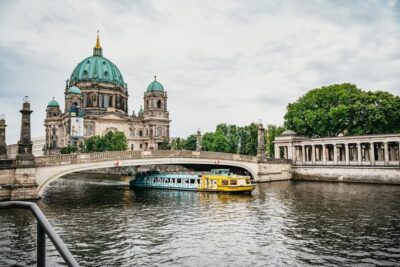
Government District around the Reichstag Guided Tour
Read our review →
Reichstag, Plenary Chamber, Cupola & Government Tour
Read our review →