Reviewed · BERLIN TOURS
DJ for a Day: Learn to Mix Like a Pro in Berlin
Berlin’s beats have a story. This 90-minute workshop lets you handle vinyl, try scratching, work a mixing table, and get a feel for how a Berlin DJ builds a track. I like the hands-on format and the chance to choose your own style, from trance and techno to hip hop and hardcore.
I also like the small group limit of six, which should give you real time at the equipment instead of watching from the back. The main consideration is the short running time: you will learn the basics, not become a club-ready DJ in one afternoon.
In This Review
- Key points at a glance
- A short workshop with real equipment
- Starting with the structure of a song
- Choosing your Berlin sound
- Vinyl, CDJ, and the physical side of DJing
- Hearing Berlin through electronic music
- Meeting the instructor, Sasha Jesus
- Why the six-person limit matters
- Drinks and the practical setting
- What the $67 price gets you
- Who should book this experience?
- Final call: book it for the hands-on lesson
- FAQ
- How long does the DJ workshop last?
- How much does the experience cost?
- Can I use vinyl during the session?
- What music styles can I choose?
- Is the workshop available in English?
- Is the activity suitable for children?
Key points at a glance
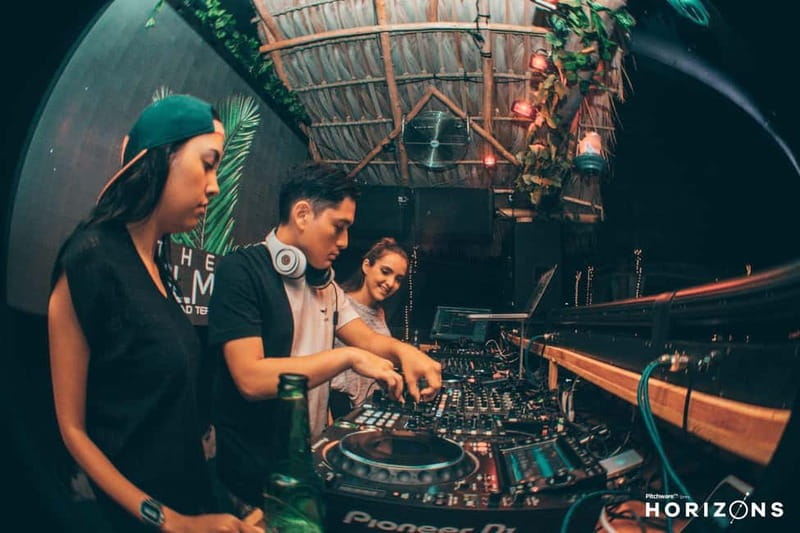
- Vinyl and CDJ practice: Compare older turntable skills with the modern CDJ setup.
- Your choice of music: Work with techno, trance, psytrance, progressive, hardcore, hip hop, hardstyle, or other available styles.
- Scratching basics: Try different approaches linked with hip hop, techno, and pop.
- Berlin music context: Hear how electronic music developed in Berlin and how club sounds differ.
- Small class size: The group is limited to six people, with English or German instruction.
- Simple, social setting: Coffee, water, and soft drinks are included during the 1.5-hour session.
A short workshop with real equipment
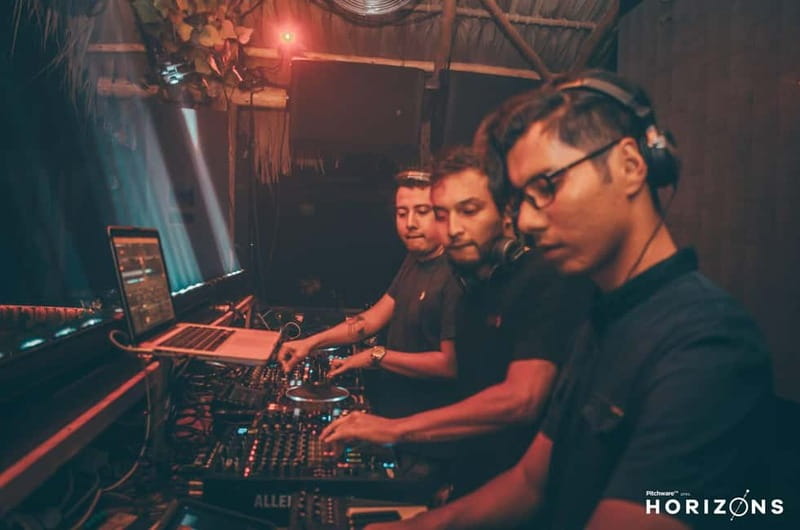
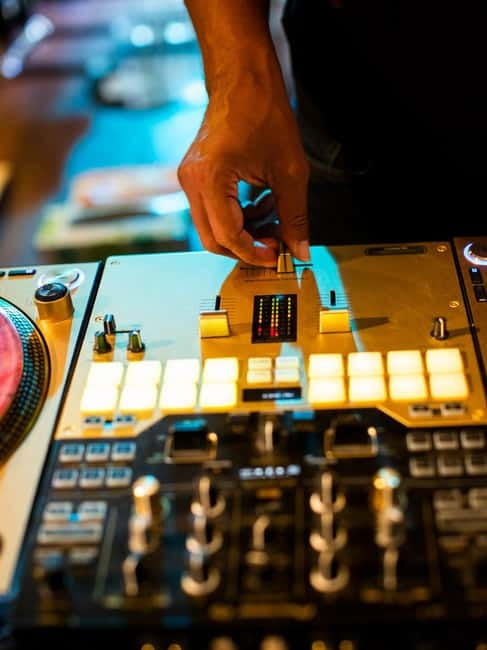
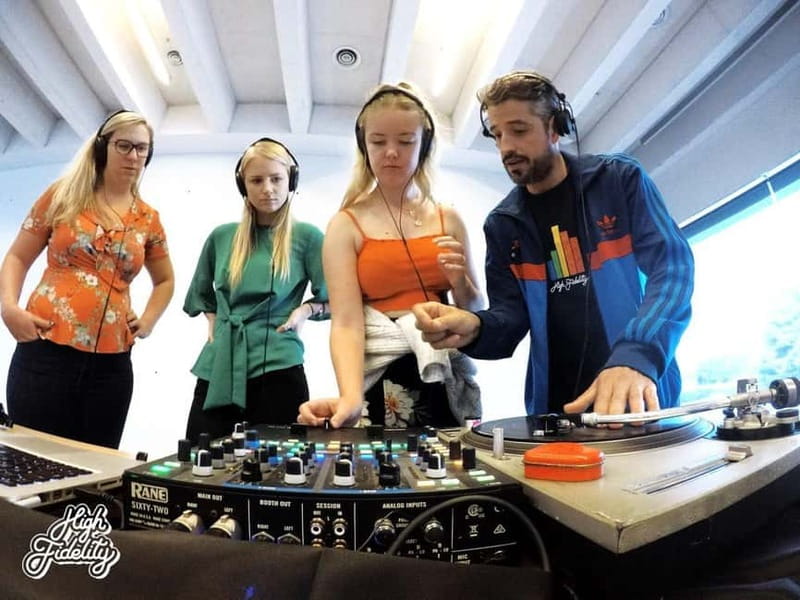
This is not a lecture about famous DJs. You are invited to touch the controls, work with the equipment, and test what happens when you bring two pieces of music together.
The session lasts 1.5 hours, so the pace matters. You will likely move through several basic skills rather than spend a long time perfecting one technique. That makes this a good first taste for a curious beginner, but it may feel brief if you already know how to beat-match or scratch.
The workshop gives you access to both vinyl and CDJ equipment. That comparison is useful because the two formats demand different habits. Vinyl requires careful handling of the record and turntable, while a CDJ offers a more modern way to select and control tracks. The point is not simply nostalgia. It is seeing how the tools shape the way a DJ works.
You can also sing one song, according to the experience details. That option adds a playful twist, though the main focus remains mixing, scratching, and learning the equipment.
A few more Berlin trips worth comparing
- Berlin: Reichstag, Dome and Government District Guided Tour
★ 4.7 · 18,288 reviews - Berlin: 1-Hour City Tour by Boat with Guaranteed Seating
★ 4.3 · 16,993 reviews - Berlin: Boat Tour Along the River Spree
★ 4.4 · 11,252 reviews
Starting with the structure of a song
The first useful lesson is learning to hear a song as a pattern. The workshop compares musical structure with the organized phrasing associated with composers such as Beethoven or Mozart, then applies that idea to beats and electronic music.
For a complete beginner, this is an important shift. You stop hearing a track as one long piece and start noticing its sections, rhythm, and changes. That helps explain why a mix can sound smooth in one moment and awkward in the next.
You should expect an introduction to the basics of mixing. The exact order may depend on the group, but the listed skills include handling vinyl, using a turntable, working with the mixing table, and applying effects. The instructor also explains how different scratching styles fit musical settings such as hip hop, techno, and pop.
The value here comes from doing, not just listening. A short explanation followed by your own attempt can reveal why DJs spend so much time practicing small movements. Moving a record, adjusting a control, or bringing in a second track can change the sound quickly.
Choosing your Berlin sound
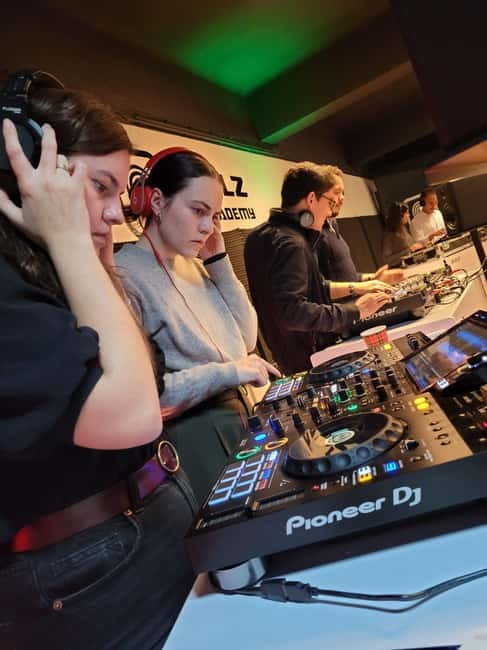
You are not locked into one narrow style. The available choices include techno, trance, psytrance, progressive, hard techno, hardcore, hip hop, and hardstyle. The experience also mentions pop and other electronic genres.
That range is helpful because Berlin club music is not one single sound. A hard techno set asks for a different mood and pace than a progressive or trance mix. Hip hop scratching has its own character, while psytrance and hardcore create their own demands.
I would choose a style before arriving, even if you remain open to suggestions. Think about the music you already enjoy and the kind of result you want to hear. If your taste is broad, ask to compare two contrasting genres. That may teach you more than staying with one familiar sound for the full session.
The instructor has a large music collection, so you should have material to work with. Still, it is wise to have a clear favorite artist, track, or style in mind. It gives the session a personal direction and helps the instructor tailor the examples.
The option to play your own preferred style is one of the workshop’s best features. You are not simply repeating a standard demonstration. You get a chance to understand how a DJ’s choices affect the feel of a set.
Vinyl, CDJ, and the physical side of DJing
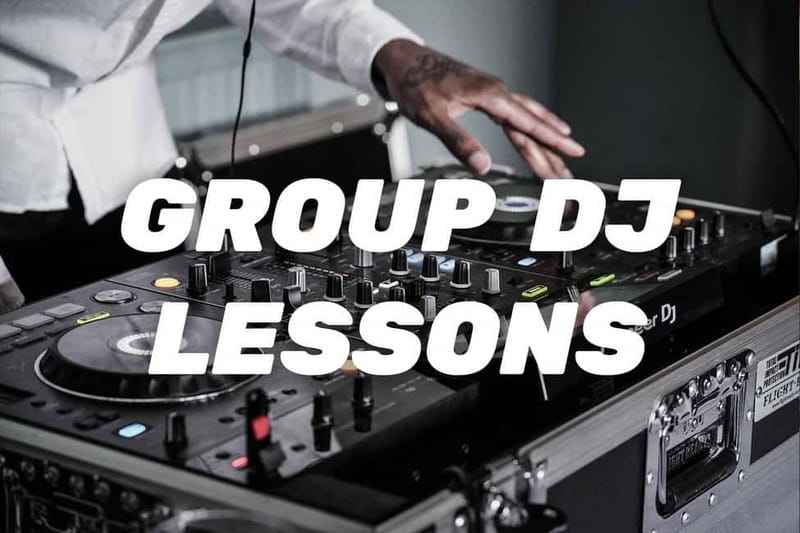
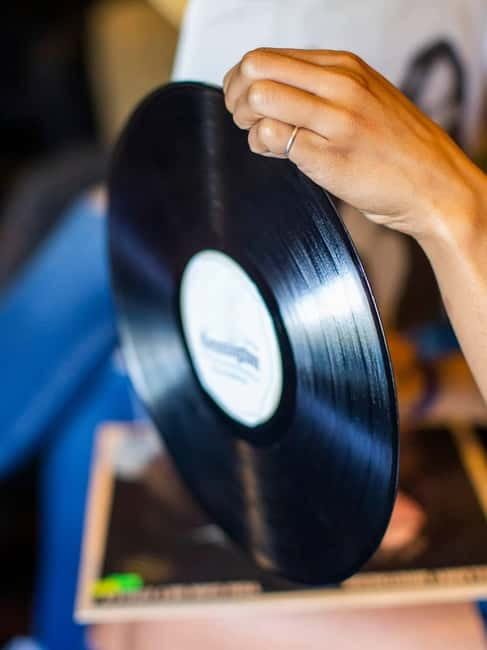
The vinyl section reaches back to the 1980s and 1990s, when turntables were central to DJ culture. You will learn how to handle vinyl and use a turntable, then see how that differs from working with a CDJ.
This contrast gives the session a useful before-and-after shape. Vinyl makes you pay close attention to the record itself. CDJ equipment represents a more current approach, with a different method of selecting and controlling music. The workshop promises an explanation of both the techniques and the differences between them.
You should not expect a full technical course on every modern DJ system. The session is only 90 minutes, and the description focuses on the basics. But that is enough to answer a practical question: do you enjoy the feel of physical records, or do you prefer the control offered by digital equipment?
The chance to scratch is another strong point. Scratching is often associated with hip hop, but the workshop introduces different styles for hip hop, techno, and pop. Your first attempt may sound rough. That is part of the fun, and the small group should make it easier to ask questions without feeling lost.
Still Berlin, at a slower pace:
- Discover Berlin Half-Day Walking Tour
★ 5.0 · 9,624 reviews - Berlin: Hop-on Hop-off Bus Tour with Live Commentary
★ 4.3 · 8,579 reviews - Berlin: Government District around the Reichstag Guided Tour
★ 4.7 · 8,447 reviews - Berlin: Reichstag, Plenary Chamber, Cupola & Government Tour
★ 4.6 · 8,422 reviews
Hearing Berlin through electronic music
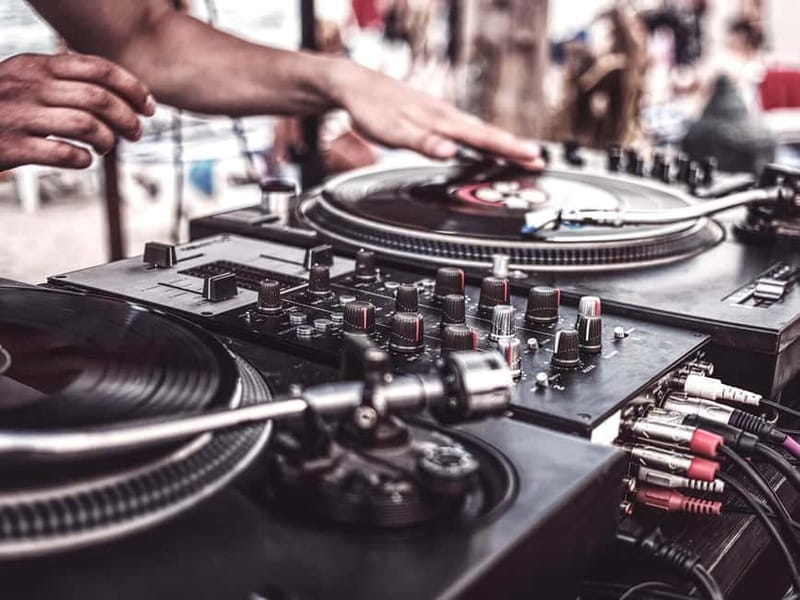
The workshop also includes a discussion of Berlin’s electronic music story. This adds local context to the equipment and techniques. You are not only learning where to place a record or adjust a control. You are also hearing how the city’s musical identity developed across different genres.
The session promises a look at the evolution of Berlin music and possible directions for the future. It also covers the kind of music associated with different Berlin clubs, including some of the oldest venues.
That club guidance could be especially useful if you plan to explore Berlin nightlife after the workshop. Clubs are not interchangeable. The sound, pace, and atmosphere can vary widely, so understanding which styles belong to which kinds of venues can help you choose more wisely.
The information provided does not name specific clubs, so you should treat this as a general introduction rather than a club-by-club walking tour. Its value is in connecting music styles with the city’s club culture, not in providing a complete nightlife guide.
For anyone interested in Berlin beyond its museums and major sights, this is a more personal way to understand the city. Electronic music is part of Berlin’s identity, and the workshop gives you a practical entry point.
Meeting the instructor, Sasha Jesus
The listed provider is Marcos Jesus Otero Valeta, and the session information identifies the instructor as Sasha Jesus. The instructor speaks English and German.
The personal teaching style matters here. Sasha is described as fun, easygoing, and very skilled, with a great deal to share about DJing. The strongest praise focuses on the combination of clear instruction and a relaxed manner. That is exactly what you want when trying unfamiliar equipment.
One especially useful detail is that the instruction covers both basics and actual practice. You are not left watching someone else mix. You can try the techniques yourself, including vinyl scratching, while receiving guidance.
A good instructor can make a technical subject feel approachable. The workshop appears aimed at people who are curious but not yet confident, with room for questions and mistakes. If you already perform regularly, you may find the introductory level too simple. For a first lesson, the friendly approach is a major advantage.
Why the six-person limit matters
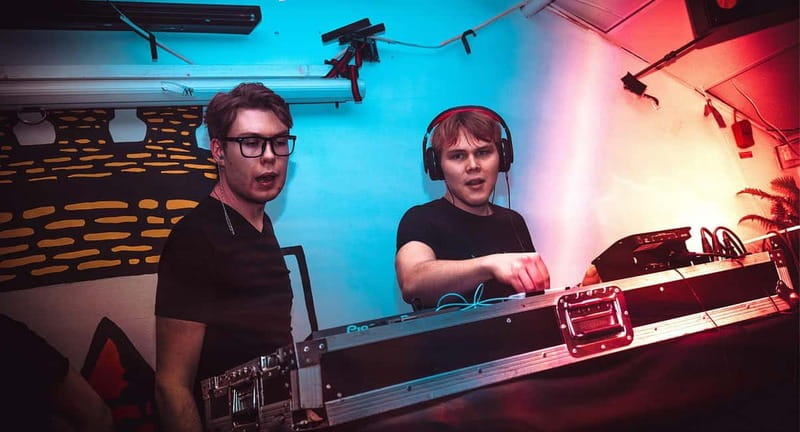
The group is limited to six participants. That is a meaningful detail in a workshop built around shared equipment.
A larger class could leave you waiting while someone else controls the turntable or mixing table. With six people, you still may not have constant solo time, but the format should allow more direct participation and easier conversation with the instructor.
Small groups also help with the social side of the activity. You can hear how other people choose music and watch different reactions to the same controls. If someone selects trance while another person prefers hip hop, the session becomes a quick demonstration of how musical taste changes the DJ’s approach.
The group size does not guarantee a private lesson. If you need one-to-one coaching, check the available format before booking. But for the stated price of $67 per person, a capped group of six gives the session a reasonable balance between personal instruction and a shared experience.
Drinks and the practical setting
Coffee, water, and soft drinks are included. That is a modest detail, but it suits a short workshop with active participation. You can pause, listen, and reset without needing to leave the session to find something to drink.
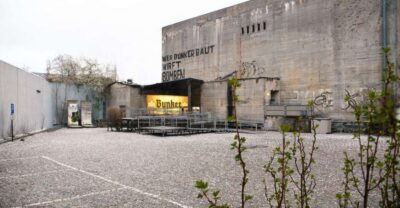
The meeting point is described as being by a cake shop and a jewelry shop between the building. That landmark should help you identify the location, but you should pay close attention to the exact meeting instructions when booking. The activity ends back at the same meeting point.
No transport is included or needed as part of the activity. This is a stationary workshop, not a tour around Berlin. Plan it as a compact stop between other activities, allowing enough time to locate the meeting point before the start.
The duration is convenient. At 90 minutes, it fits neatly into a morning, afternoon, or evening plan. You can make it part of a music-focused day without giving up half a day of sightseeing.
What the $67 price gets you
At $67 per person, the workshop is priced as a hands-on lesson rather than a simple demonstration. The value depends on what you want from it.
If you only want to watch a DJ work, the price may feel high for 90 minutes. If you want to use vinyl, test a CDJ, try scratching, and ask questions in a small group, the cost becomes easier to justify.
You are paying for access to specialist equipment, guided practice, and a personal introduction to Berlin’s electronic music culture. The included drinks are pleasant, but they are not the reason to book. The real value is the chance to try techniques that are difficult to understand from a video or a casual club visit.
The workshop also offers a useful test before you spend money on equipment or lessons at home. You can find out if you enjoy beat-based mixing, vinyl handling, and the concentration required to control a set.
The free cancellation policy allows cancellation up to 24 hours in advance for a full refund. You can also reserve now and pay later, which helps if your Berlin schedule is still shifting. Those terms reduce the risk, though you should still check the available start times before committing.
Who should book this experience?
I would recommend it most strongly to:
- First-time DJs who want a friendly introduction
- Music fans curious about how mixing really works
- Visitors interested in Berlin’s electronic music culture
- People who want to try vinyl without buying equipment
- Small groups looking for an unusual indoor activity
- Anyone choosing between traditional turntables and CDJ equipment
It also suits a person who enjoys learning by trying. You will get more from the session if you are willing to touch the controls, make a mistake, and try again.
I would be more cautious if you already have serious DJ experience. The workshop covers basics, so an advanced DJ may want a longer technical lesson with more detailed coaching.
Children under 13 are not permitted. The available instruction is in English or German, and the small group format is limited to six participants.
Final call: book it for the hands-on lesson
Book this workshop if you want more than a quick club story. You will handle vinyl, work with a CDJ, try scratching, choose music, and hear how different sounds connect with Berlin’s club culture.
The 90-minute format limits how far you can progress, and advanced DJs may outgrow it quickly. For beginners, though, the combination of equipment, personal practice, Sasha Jesus’s relaxed teaching style, and a six-person group makes $67 a fair price.
Go in with one or two music styles in mind, but stay open to comparison. That is where the workshop is most useful: not in turning you into a professional overnight, but in showing you how DJs shape rhythm, mood, and movement one control at a time.
FAQ
How long does the DJ workshop last?
The workshop lasts 1.5 hours, or 90 minutes. Starting times depend on availability.
How much does the experience cost?
The price is $67 per person.
Can I use vinyl during the session?
Yes. The workshop includes handling vinyl and using a turntable, along with learning how vinyl differs from CDJ equipment.
What music styles can I choose?
You can choose from styles including techno, trance, psytrance, progressive, hard techno, hardcore, hip hop, and hardstyle. Pop and other genres are also part of the instruction.
Is the workshop available in English?
Yes. The instructor speaks English and German.
Is the activity suitable for children?
No. The activity is not suitable for children under 13 years old.
Just added around Berlin
- Private Walking Tour in Berlin: Hitler’s Germany & WWII★ 5.0 · 7 reviews
- The History of Berlin: WWII PRIVATE Walking Tour With Locals★ 5.0 · 209 reviews
- Private Berlin WWII and Cold War History Tour with Local Expert Guide★ 5.0 · 28 reviews
- Private Walking Tour Berlin 3 hours: Brandenburg, Historic Center★ 5.0 · 7 reviews
- Berlin: Private Bike Tour of the Berlin Wall and Third Reich★ 5.0 · 23 reviews
- Berlin: Guided Private Bike Tour to Explore the Highlights★ 5.0 · 12 reviews
- Berlin Photography Masterclass – Private Photography Lesson★ 4.5 · 23 reviews
- Group Driving Tour 1 to 6 people. Berlin Shore Excursion incl pick-up at Port★ 5.0 · 8 reviews
Berlin Tours, compared.
Reichstag, Dome and Government District Guided Tour
Read our review →
1-Hour City Tour by Boat with Guaranteed Seating
Read our review →

Government District around the Reichstag Guided Tour
Read our review →
Reichstag, Plenary Chamber, Cupola & Government Tour
Read our review →