
Reviewed · MUSEUMS
Dresden: Albertinum Museum Entry Ticket
Art begins before you reach the galleries. The Albertinum opens with Rodin’s The Thinker, then carries you from German Romanticism to contemporary sculpture in a single museum visit. I like the clear sweep across time, and I like the mix of familiar masters with stranger modern works such as Birgit Diecker’s Seelenfänger. The main drawback is simple: the ticket covers entry, not a guided explanation, so you need to bring your own curiosity.
I also appreciate the freedom of a one-day ticket. You can take the museum at your own pace instead of racing through a fixed tour. At $16 per person, it offers solid value if you enjoy both painting and sculpture, though visitors who want only one famous artist may find the collection broader than expected.
In This Review
- Key points before you go
- Why the Albertinum works as a Dresden art stop
- Starting with Rodin’s The Thinker
- Caspar David Friedrich and the Romantic view
- From Wilhelm Lehmbruck to the modern figure
- Contemporary works and unfamiliar materials
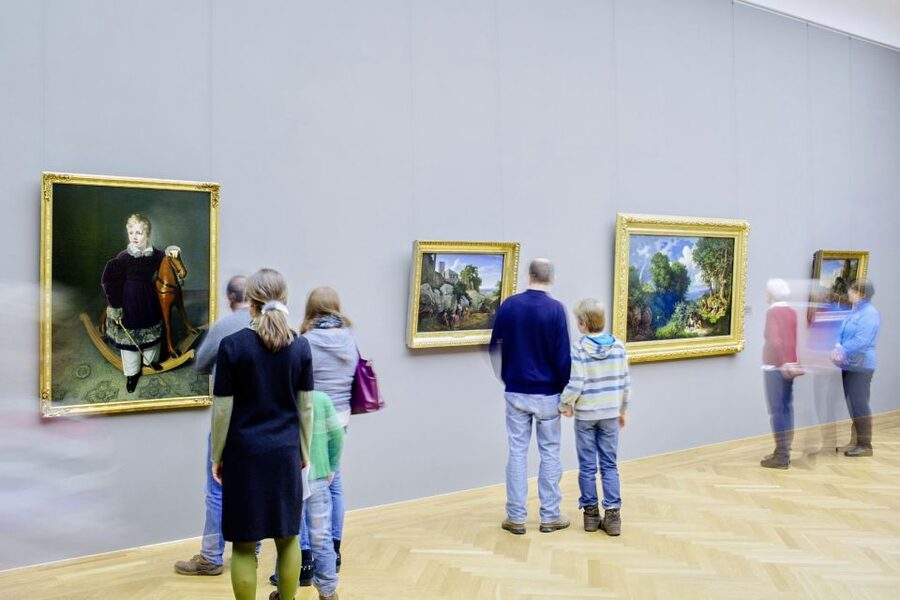
- Painting meets sculpture across two collections
- How long to plan for your visit
- Who gets the best value from the $16 price
- Access and practical comfort
- Is this Albertinum ticket right for you?
- FAQ
- How much does the Albertinum entry ticket cost?
- How long is the ticket valid?
- What kinds of art can I see at the Albertinum?
- Can I see Caspar David Friedrich’s art?
- Is the Albertinum wheelchair accessible?
- Are children admitted for free?
- Is any part of the museum closed on certain dates?
Key points before you go
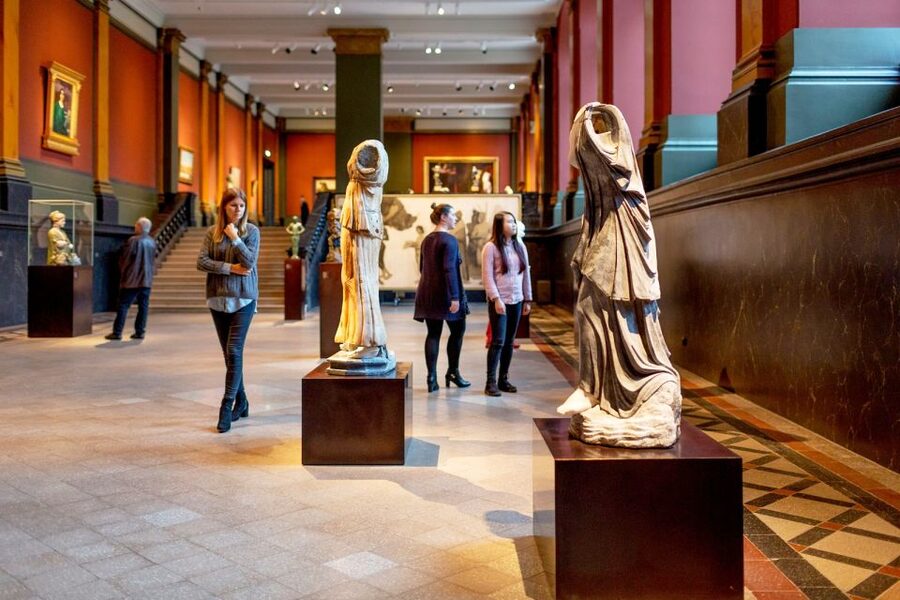
- Rodin’s The Thinker greets you first, giving the visit an immediate landmark and a clear introduction to the museum’s sculpture collection.
- Caspar David Friedrich is a major draw, especially if you want to see German Romantic painting in the place where it belongs.
- The collection moves from the 19th century to today, linking Romanticism, modern art, and contemporary work.
- Painting and sculpture share the same visit, so you can compare how artists treated the human body, nature, space, and materials.
- The $16 ticket is valid for one day, with free cancellation up to 24 hours before the visit and a reserve-now, pay-later option.
- The second floor is closed from April 7 through April 17 for technical construction work, which may affect what you can see.
Why the Albertinum works as a Dresden art stop
The Albertinum is not built around one narrow subject. Its appeal comes from the conversation between different kinds of art. You move from framed paintings to objects that occupy real space, from nineteenth-century feeling to twentieth-century experimentation and current ideas.
That broad range makes the museum useful for different kinds of visitors. If you know German art well, you get a chance to place Friedrich beside later artists. If you are new to museums, the visual change from painting to sculpture keeps the visit from feeling like one long wall of similar works.
I find the best way to approach the Albertinum is as a story about changing ways of seeing. Romantic artists often looked toward emotion, nature, and the inner life. Later artists questioned the human figure, the shape of objects, and the materials that art could use. By the time you reach contemporary works, the old line between painting, sculpture, and everyday materials has become much less firm.
The museum’s stated span begins in the Romantic period and continues to the present. That matters because you are not seeing isolated masterpieces. You are seeing a chain of artistic responses, with each era changing the terms of the next one.
More Museums in Dresden
- Dresden: Church of Our Lady Guided Tour of Gallery
★ 4.7 · 2,421 reviews - Dresden: Zwinger Museum Entry Ticket
★ 4.7 · 1,436 reviews - Dresden: Guided Walking Tour and Chocolate Museum Ticket
★ 4.5 · 385 reviews
Starting with Rodin’s The Thinker
Your first major work is Auguste Rodin’s The Thinker. It is a smart opening choice. The sculpture is instantly recognizable, yet standing near it gives you more than a quick reproduction on a postcard ever can.
Rodin helped point sculpture toward the many artistic styles that developed in the twentieth century. His work still uses the human body, but it does not treat the figure as a perfectly polished object. The pose feels concentrated and physical. You can look at the body as a symbol of thought, but you can also pay attention to its weight, tension, and surface.
I suggest pausing here before moving on. The museum is asking you to think about what sculpture can do. A painting creates an image on a flat surface. A sculpture claims a place in the room, and you understand it by changing your position around it.
That idea becomes useful later. As you meet more recent works, you will see artists make sculpture from unusual materials and arrange forms in ways that have little to do with traditional statues. Rodin gives you a familiar starting point before the museum begins to stretch your expectations.
Caspar David Friedrich and the Romantic view

Caspar David Friedrich is one of the strongest reasons to visit the Albertinum. His paintings are closely tied to German Romanticism, a period that gave nature, solitude, spiritual feeling, and personal reflection a central role.
Friedrich’s work is not simply about attractive scenery. His images often ask you to consider the person’s place within something larger. Even when the subject appears quiet, the mood can feel serious and inward. The viewer is not just looking at a view. You are being asked to consider how a view changes your state of mind.
The Albertinum’s Friedrich works give the wider collection an emotional anchor. After the direct physical presence of Rodin, painting brings you back to atmosphere, distance, and imagination. This shift is part of the pleasure of the museum. You are not forced to choose between a picture museum and a sculpture museum. You get both.
I would allow extra time here if Friedrich is your main reason for coming. The supplied details do not identify individual painting titles, so you should check the current museum information if you are hoping to see one specific work. The collection can change, and the official museum website remains the best place to confirm current displays and opening hours.
From Wilhelm Lehmbruck to the modern figure
Wilhelm Lehmbruck’s 1911 Kneeling Woman brings you into a more unsettled view of the human form. The title sounds straightforward, but the work belongs to a period when artists were testing how much a figure could be simplified, stretched, or emotionally charged while remaining recognizable.
The date matters. This is not an ancient statue trying to present an ideal body. It is a modern work, made at a time when artists were moving away from older rules of proportion and finish. Lehmbruck’s figure can be read as a body, but also as a mood.
I like this kind of placement in a museum because it helps you notice the change from Friedrich’s Romantic world. Friedrich turns the mind toward nature and feeling. Lehmbruck keeps the human body at the center, but gives it a more fragile and uneasy presence.
You do not need a technical art background to get something from the sculpture. Look first at the overall pose. Then notice how the figure’s shape affects the space around it. Sculpture often rewards this slower, physical kind of looking.
A few more Dresden trips worth comparing
- Dresden: Semperoper Tickets and Guided Tour
★ 4.7 · 12,102 reviews - Dresden Castle General Admission Ticket
★ 4.6 · 1,328 reviews - Dresden: Hop-On Hop-Off Sightseeing Bus Tickets
★ 4.5 · 1,036 reviews - Dresden: Virtual Reality Time Travel Experience Ticket
★ 4.5 · 748 reviews
Contemporary works and unfamiliar materials
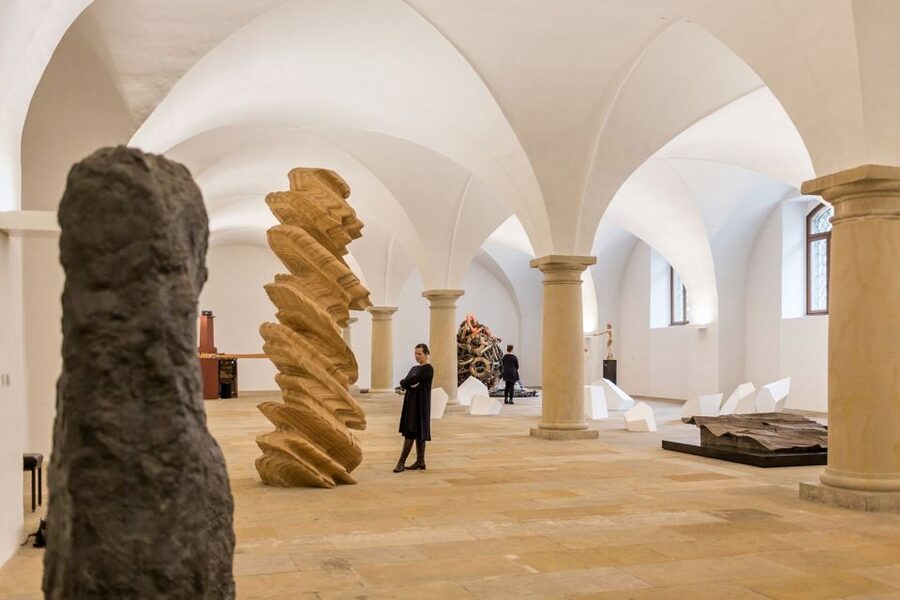
The Albertinum does not stop with the famous names. Birgit Diecker’s Seelenfänger and Tony Cragg’s mathematically stacked cube made from wood, fabric scraps, and loose-leaf binders show how far the idea of sculpture has traveled.
The Tony Cragg work is especially useful for visitors who think sculpture must be made from marble, bronze, or stone. Its materials carry ordinary associations. Wood, fabric scraps, and loose-leaf binders belong to daily life, yet they are organized into a carefully calculated form.
The contrast is the point. A sculpture can be built from common objects and still depend on balance, rhythm, proportion, and structure. Cragg’s mathematically stacked cube invites you to inspect how the parts fit together. You may find yourself switching between two views: the practical materials and the larger geometric idea.
Seelenfänger offers another reason not to hurry through the contemporary section. The title suggests an emotional or psychological reading, though the work itself asks you to decide how much meaning comes from the object, the name, and your own response. Contemporary art does not always hand you a single answer. That can be frustrating if you want clear explanations, but it also gives you room to look and form your own opinion.
This part of the museum may be the most rewarding for repeat art museum visitors. You already know what a traditional figure or landscape asks you to do. Contemporary sculpture changes the task. You start thinking about materials, construction, space, and the boundary between art and ordinary things.
Painting meets sculpture across two collections
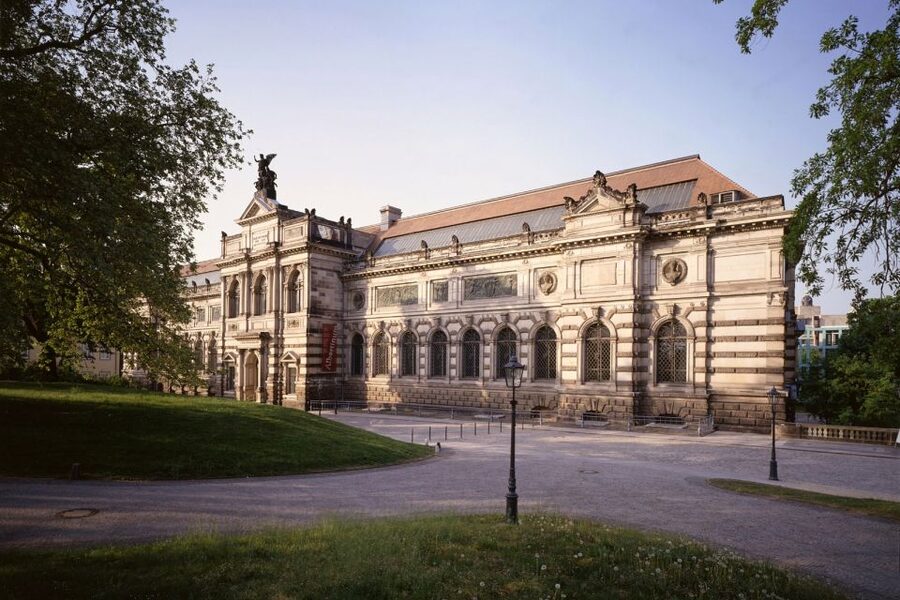
The Albertinum brings together the Galerie Neue Meister, or New Masters Gallery, and the Skulpturensammlung, or Sculpture Collection. The first covers painting from the nineteenth century to the present, while the sculpture collection includes works from 1800 onward.
That division is useful, but do not treat the two collections as separate islands. The museum’s real strength is the connection between them. A painting may make you think about the body as an image. A sculpture turns that body into an object with weight and volume. A Romantic painting may present nature as a powerful emotional experience. A later sculpture may use industrial or recycled materials to ask what modern life looks like.
I would let the works set the pace rather than trying to see every object. The collection spans a long period, and a one-day ticket gives you flexibility. You can make one careful visit, take a break elsewhere in Dresden, and return later the same day if the opening arrangements allow it.
The information provided does not promise a specific route, guided tour, or audio guide. For that reason, I would plan to read the wall labels carefully and give yourself time to stop at works that catch your eye. The museum experience depends more on your own pace than on a scheduled sequence.
How long to plan for your visit
The ticket is valid for one day, but no fixed visit length is supplied. That flexibility is helpful because art museums can take thirty minutes or several hours, depending on your interests.
If Rodin is your priority, you can make a focused visit around The Thinker and the Sculpture Collection. If Friedrich matters most, give yourself enough time to sit with the paintings and then compare them with later works. If you want the full arc from Romanticism to contemporary art, plan for a slower visit.
I would wear comfortable shoes. The museum covers painting and sculpture from a wide period, and you will get more from it if you do not feel pushed to leave because your feet hurt. A camera is also listed as something to bring, but you should follow the museum’s own photography rules inside the galleries.
The second floor is scheduled to close for technical construction from April 7 through April 17. That is the most important timing issue in the supplied information. If your visit falls within those dates, check the official museum website before you go and understand that part of the collection may not be available.
Opening hours can also change. Check the local partner’s official website for the latest times before setting your day around the Albertinum.
Who gets the best value from the $16 price
At $16, this ticket makes sense for anyone who wants a substantial art stop in Dresden without paying for a guided experience. You are paying for access to two major collections, a long period of European art, and works by artists including Friedrich, Rodin, Lehmbruck, Diecker, and Cragg.
The value is strongest if you enjoy variety. You can see a famous sculpture, study German Romantic painting, and then move into contemporary work without arranging separate admissions. The range also makes this a good choice for couples or families with different tastes.
The value is less clear if you want only one named masterpiece. Museum displays can change, and the provided information does not guarantee that every specific work will be on view at every visit. Check current details if one painting or sculpture is the main reason you are booking.
Children under 17 can enter the exhibition free when accompanied by an adult, but you still need to book a child ticket. That makes the museum more practical for families, especially if adults want a serious art stop without adding a full adult admission for each child.
The ticket also includes free cancellation up to 24 hours in advance and a reserve-now, pay-later option. Those terms add useful flexibility when your Dresden plans are still shifting. They do not change the museum experience itself, but they reduce the risk of booking too early.
Access and practical comfort
The Albertinum is wheelchair accessible, an important point for visitors who need step-free museum access. The supplied information does not provide further details about lifts, seating, restrooms, or gallery routes, so contact the local partner or museum directly if you need a specific access arrangement.
The lack of a listed guide means you should not expect a person leading a group through the collections. That is not a problem for everyone. I often prefer being able to stop at one painting for several minutes or move quickly past a work that does not speak to me.
Still, a guide or audio explanation can add context, especially for the contemporary pieces. If you want a more interpretive visit, read about the artists before arriving or check whether the museum offers current interpretive services on its official website.
Is this Albertinum ticket right for you?
I would book this ticket if you want a flexible, self-guided visit that covers German Romanticism, modern sculpture, and contemporary art in one place. It is especially well suited to anyone interested in Caspar David Friedrich, Auguste Rodin, or the changing meaning of the human figure.
I would think twice if your schedule is extremely tight, if you dislike moving between very different artistic periods, or if you need a guided explanation for every work. The Albertinum rewards attention, but it does not promise a simple, single-theme route.
For most Dresden art lovers, the $16 price is fair. You get a broad collection, important names, and enough variety to make the visit feel worthwhile even if one section appeals more than another. Check the floor closure dates and current hours first, then give the museum the time it deserves.
FAQ
How much does the Albertinum entry ticket cost?
The ticket costs $16 per person.
How long is the ticket valid?
The ticket is valid for one day. Check availability for the available starting times.
What kinds of art can I see at the Albertinum?
You can see paintings and sculptures from the Romanticism period through contemporary art. The Sculpture Collection includes works from 1800 onward.
Can I see Caspar David Friedrich’s art?
Yes. The Albertinum includes masterworks by the German Romantic artist Caspar David Friedrich. Check the official museum information if you need to confirm which individual works are currently displayed.
Is the Albertinum wheelchair accessible?
Yes, the experience is listed as wheelchair accessible.
Are children admitted for free?
Children under 17 can enter free when accompanied by an adult. You must still book a child ticket.
Is any part of the museum closed on certain dates?
The second floor is scheduled to be closed for technical construction from April 7 through April 17. Check the local partner’s official website for current details and opening hours.
Just added around Dresden
- Dresden Sightseeing Treasure Hunt★ 5.0 · 57 reviews
- Test Drive Electric Vehicles from the VW brand (ID. model)★ 4.8 · 190 reviews
- SRF CoBi | City Tour by ConferenceBike★ 4.7 · 38 reviews
- Dresden: Scavenger Hunt to Elbe River & Castles★ 4.7 · 15 reviews
- Dresden: Bike Rental – City Bike with Option Children Seat★ 4.5 · 13 reviews
- Moritzburg: Scavenger Hunt Self-Guided Walking Tour★ 4.8 · 12 reviews
- Historical tour of the old town including a Saxon dinner★ 4.7 · 23 reviews
- Climb the mountains together with goats★ 4.8 · 8 reviews
Museums, compared.


Skip-the-Line: Berlin Wall Museum at Checkpoint Charlie
Read our review →
Browse the lists this tour appears in