
Reviewed · MUSEUMS
Dresden: Ticket + Tour Gallery Old Masters
Art makes more sense when someone shows you how to look. This two-hour tour of Dresden’s Old Masters Picture Gallery turns famous paintings into readable stories, using X-rays, digital images, videos, and real pigment samples. I especially like the close look at Raphael’s Madonna and the chance to see what lies beneath Titian’s Sleeping Venus. The main drawback is clear: the tour takes place in German only.
I also like the way the guide begins with basic ideas rather than rushing straight to the biggest names. You first learn how paintings were made, why artists chose certain materials, and how to spot clues in religious scenes. Guide Thomas has earned praise for his lively explanations and for showing links between artists, though two hours may leave art lovers wishing for more time.
In This Review
- Key Points at a Glance
- Starting Below the Ticket Point
- Five Paintings That Teach You How to Look
- Raphael’s Madonna and the Power of Context
- Titian, Giorgione, and the Dresden Sleeping Venus
- A German Tour with Real Art-History Depth
- Is Two Hours Enough for Dresden’s Old Masters?
- What You Get for $44
- Who Should Book This Gallery Tour?
- Practical Details Before You Go
- Should You Book It?
- FAQ
- Where does the tour begin?
- How early should I arrive?
- How long does the tour last?
- Is admission to the gallery included?
- Is the tour available in English?
- Which artists may be discussed?
- Will I definitely see every named painting?
- Is the tour wheelchair accessible?
- Can I bring luggage or a large bag?
Key Points at a Glance
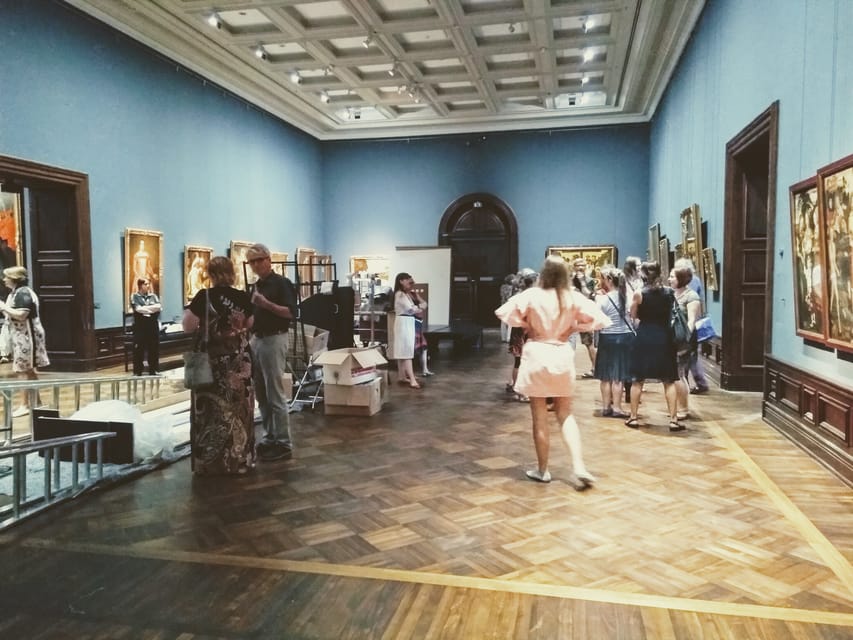
- Raphael, Titian, Rembrandt, and Vermeer: The tour brings major European painters into one focused route through the gallery.
- X-rays reveal hidden changes: You examine the inside of Sleeping Venus and see how the painting developed.
- Rare pigments become touchable: Historic color samples make technical art history easier to grasp.
- Five quick opening examples: The first section builds your visual skills before the detailed painting discussions begin.
- German-speaking guide only: This is a strong choice for German speakers, but not for anyone needing English commentary.
- Two hours with gallery admission included: At $44 per person, the value depends largely on how much you want guided interpretation.
Starting Below the Ticket Point
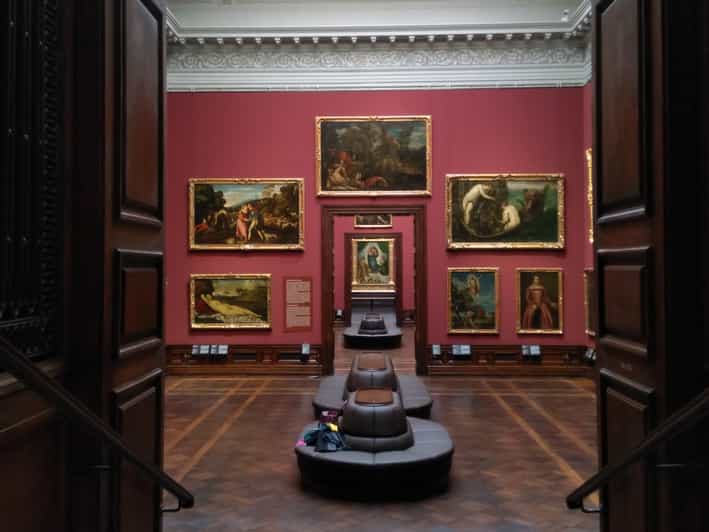
Your meeting point is inside the Old Masters Picture Gallery, in the cloakroom downstairs from the ticket point. From the ticket area, take a right through the door, then use the stairs on the right. Your guide waits there, so arrive about 10 minutes early.
This arrangement is practical because you do not need to search for a street-side meeting point in Dresden’s historic center. It also means you should plan ahead if you are carrying bags. Large luggage and large bags are not allowed, and the information provided does not promise storage for them.
Admission to the gallery is included, as are the guide’s license fees. The tour also skips the ticket line, which matters most when the museum is busy. You still need to arrive at the correct cloakroom meeting point, since the tour does not begin at the main ticket counter itself.
The activity returns to the same place after two hours. That makes it easy to continue exploring the gallery on your own, provided you have enough energy and time left for another look.
More Museums in Dresden
- Dresden: Church of Our Lady Guided Tour of Gallery
★ 4.7 · 2,421 reviews - Dresden: Zwinger Museum Entry Ticket
★ 4.7 · 1,436 reviews - Dresden: Guided Walking Tour and Chocolate Museum Ticket
★ 4.5 · 385 reviews
Five Paintings That Teach You How to Look
The opening section is short but useful. You examine five paintings for only a couple of minutes each, with every work representing a different type or category. This is not designed as a full discussion of five masterpieces. Instead, it gives you a set of visual tools.
You begin to notice how an artist guides your eye, how a scene is arranged, and how material choices affect the finished work. Religious paintings become less mysterious because the guide explains how to read gestures, symbols, figures, and details that can be easy to miss when you are standing alone in a large gallery.
I like this teaching method. Many museum tours simply point at famous names and repeat dates. Here, the early examples prepare you for the major works later in the visit. You are not just collecting facts about Raphael or Titian. You are learning why a particular detail matters.
The tour also introduces early oil paintings and works made with gold. These examples give you a useful sense of how European painting changed over time. The references to Jan van Eyck, Botticelli, Raphael, Rembrandt, and Vermeer place the gallery’s collection within a wider story of European art.
The pace may feel brisk for anyone who wants to inspect every brushstroke. Five paintings in a short opening session are meant to establish a method, not satisfy every curiosity. If you already know a great deal about painting technique, you may find this portion familiar. For many people, though, it is the part that makes the rest of the tour easier to follow.
Raphael’s Madonna and the Power of Context
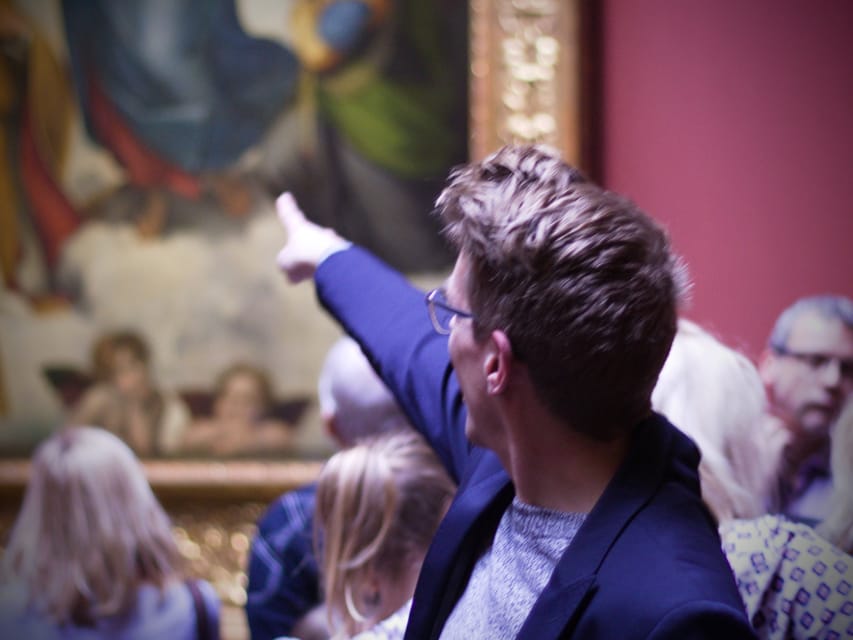
The tour then gives more time to Raphael’s famous Madonna. This is where the earlier visual lessons begin to pay off.
Rather than treating the painting as a famous object that needs no explanation, the guide discusses why it was created and how you can read its visual choices. The goal is to help you understand the work as a constructed image, not just a beautiful surface.
That approach is especially useful with religious art. Without context, a Madonna can seem remote to anyone unfamiliar with the symbols and traditions behind it. With guidance, the figures, expressions, and arrangement become clues. You start to understand how the painter shaped the viewer’s response.
The technical side matters too. The tour explains basic materials and methods in plain language, supported by digital imagery and videos. You may find that a short visual comparison tells you more than a long lecture.
This is also where guide quality matters. Thomas is praised for combining art history with connections between painters. That kind of comparison can help you see how artists responded to one another, even when they worked in different places or periods. His style is described as both passionate and entertaining, which is a welcome fit for a two-hour museum visit.
Titian, Giorgione, and the Dresden Sleeping Venus
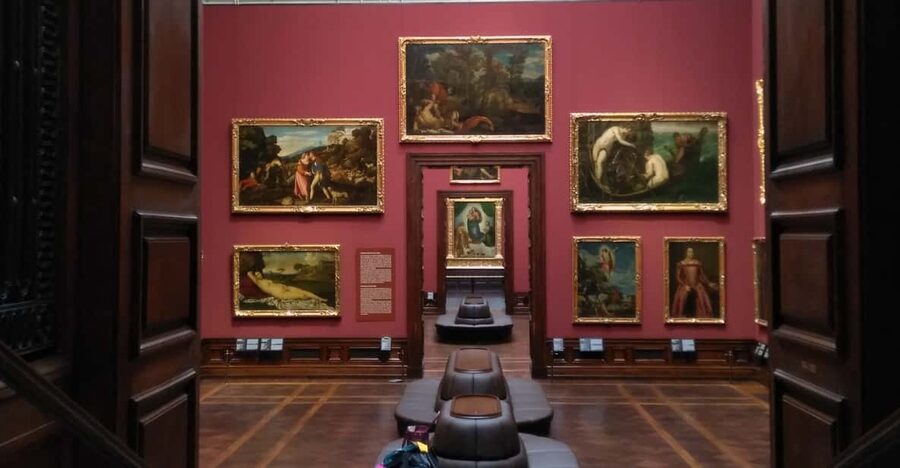
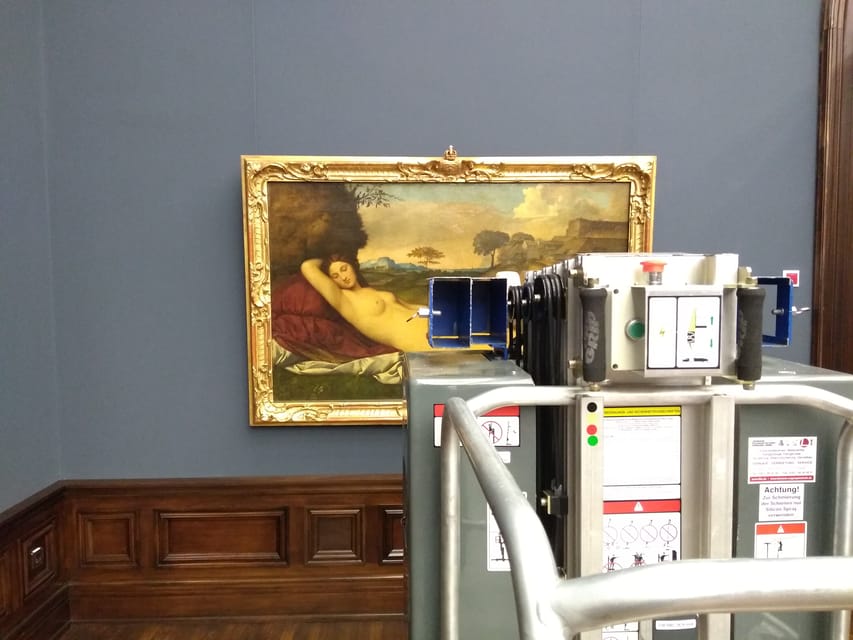
The tour’s central section focuses on two Renaissance stars, Titian and Giorgione, with special attention to Dresden’s Sleeping Venus. The work is presented as the first and finest nude painting of a woman in modern art, and the guide explains why its place in art history is so important.
The interesting part is not simply the claim that the painting is famous. You also hear about its background and the surprising decisions behind it. The painting becomes a record of changing ideas about the human body, beauty, subject matter, and artistic invention.
The X-ray images add a different kind of evidence. You see the painting from the inside, including changes made during its creation. This helps you understand that a finished masterpiece was not always fixed from the first brushstroke. Artists revised, adjusted, and solved problems as they worked.
That is one of the strongest features of this experience. An X-ray can reveal something your eyes cannot. You may look at a smooth, settled image on the wall, then see evidence of earlier choices beneath it. The painting becomes less like a sealed historical object and more like a working process.
The inclusion of rare historic pigment samples gives the technical discussion a physical element. You can touch samples of old color materials rather than hearing only abstract descriptions of them. I find that especially helpful for anyone who has trouble connecting chemistry with art.
The tour uses digital imagery and videos as well, so the explanations are not limited to the painting surface in front of you. These tools can make difficult scientific ideas easier to follow without turning the visit into a laboratory lesson.
A few more Dresden trips worth comparing
- Dresden: Semperoper Tickets and Guided Tour
★ 4.7 · 12,102 reviews - Dresden Castle General Admission Ticket
★ 4.6 · 1,328 reviews - Dresden: Hop-On Hop-Off Sightseeing Bus Tickets
★ 4.5 · 1,036 reviews - Dresden: Virtual Reality Time Travel Experience Ticket
★ 4.5 · 748 reviews
A German Tour with Real Art-History Depth
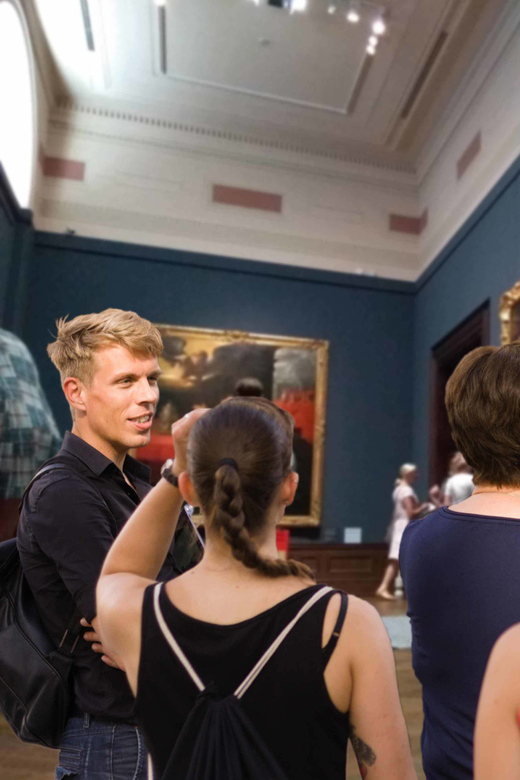
The guide speaks German only. That point should shape your booking decision more than the gallery’s famous names or the strong rating.
If you understand German well, the format offers a lively way to study art. The guide explains why the works were commissioned, how they were made, and how artists influenced one another. You also get the pleasure of hearing the discussion unfold naturally, with room for humor and spontaneous connections.
If you do not speak German, admission alone will not provide the same experience. You may still see the paintings, but the key value of this booking is the commentary, visual demonstrations, X-rays, and pigment discussion. It is not an audio-free sightseeing ticket.
The guide’s tone appears to be an important part of the experience. Thomas is singled out for clear, passionate teaching, while another account praises a guide for being interesting, funny, and informed. That combination matters in a museum, where a flat delivery can make even great art feel like homework.
The tour also seems well suited to people who want to understand art without needing a specialist background. Scientific points are explained in an easy way, and the five-painting introduction gives you a basic framework before the more detailed works appear.
Is Two Hours Enough for Dresden’s Old Masters?
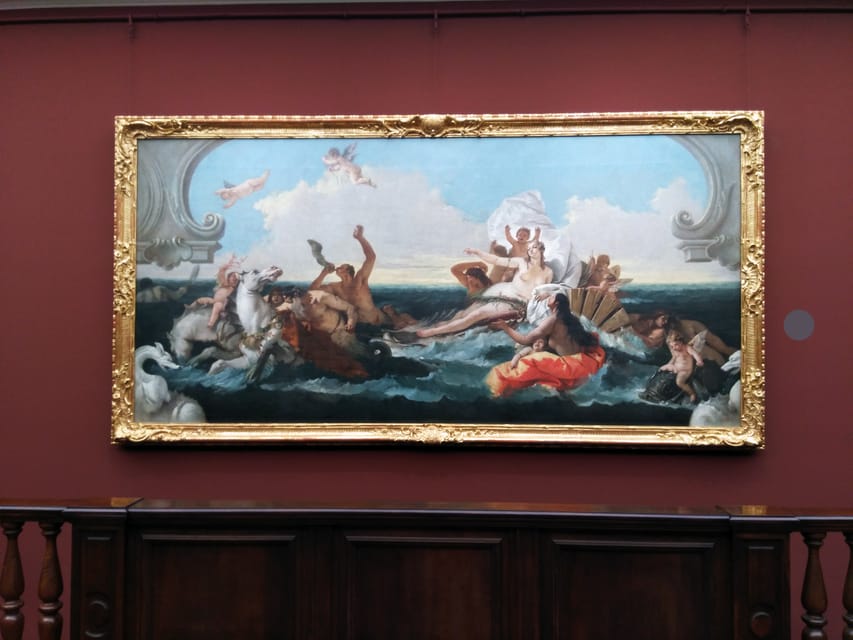
Two hours is a sensible length for a guided introduction. You get a focused route rather than an exhausting march through every room. The structure moves from orientation, to short examples, to detailed studies of major works.
Still, the gallery has more to offer than this route can cover. The tour ends back at the starting point, so you can continue independently if you have a separate admission arrangement or enough time remaining. The included ticket covers the guided visit, but the available information does not promise an extended post-tour visit policy, so check the current conditions before planning a long second session.
The pace is likely to suit you if you prefer depth over quantity. You will not spend equal time on every artist named in the program. Botticelli, Raphael, Jan van Eyck, Rembrandt, and Vermeer appear among the examples, while Raphael, Titian, and Giorgione receive more detailed attention.
That balance is sensible. A complete survey of the collection would take far longer, and a two-hour tour that tried to cover everything would produce a blur of names. Here, the famous paintings serve as anchors for bigger ideas about materials, symbolism, artistic choices, and technical change.
Some art lovers may want a longer version. One person found the tour so engaging that two more hours would have been welcome. I understand that reaction, especially if you enjoy art history and want more time for comparisons. For a first visit, though, the focused format should leave you with useful questions rather than a head full of dates.
What You Get for $44
At $44 per person, this is not the cheapest way to enter an art museum. The price includes admission, a live German-speaking guide, license fees, and the skip-the-line benefit.
The real value lies in the material you would not get from simply walking in. X-ray views, pigment samples, digital imagery, videos, and the explanation of artistic purpose add a layer of access. You are paying for interpretation and technical insight, not just a route through the rooms.
I would consider the price fair if you speak German and have a genuine interest in Old Master painting. It is especially good value if this is your main art visit in Dresden and you want an organized introduction rather than trying to decode a large collection alone.
The value drops sharply if you cannot follow German. In that case, the ticket-line benefit and gallery access remain, but the central teaching element is lost. Check availability for the starting time before booking, since the tour lasts two hours and the schedule varies.
Free cancellation up to 24 hours before the activity and reserve-now, pay-later terms give you some flexibility. The tour is also wheelchair accessible, which makes the format practical for more visitors, though large bags and luggage are not permitted.
Who Should Book This Gallery Tour?
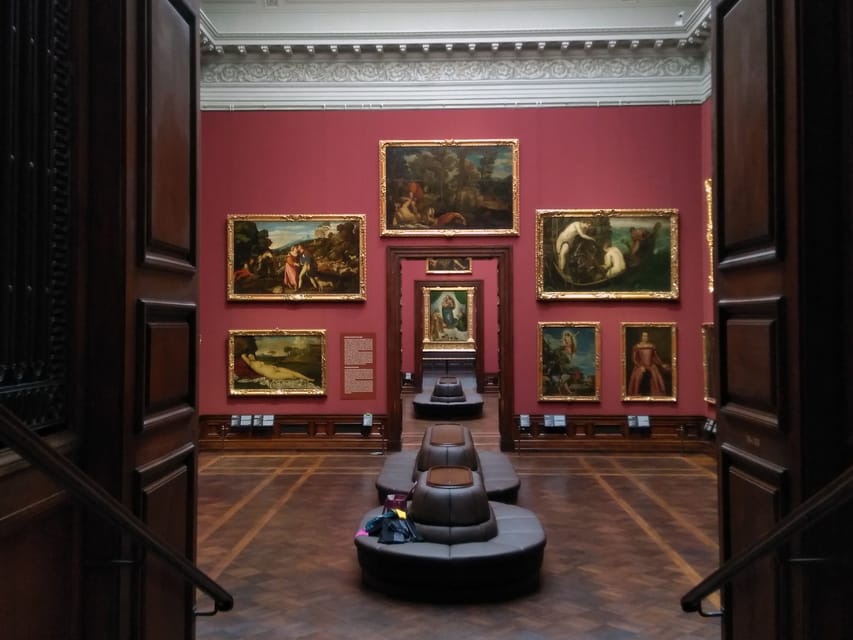
I would recommend it to German-speaking visitors who want more than a list of artists and dates. It suits curious beginners because the guide starts with basic visual ideas, but it also has enough technical material to interest people who already know the broad outline of Renaissance and Dutch painting.
It is a good pick for anyone fascinated by how paintings are made. The first oil paintings, gold-based works, pigment samples, and X-rays give you a strong material focus. You learn to look at the painting as an object with layers, revisions, and physical ingredients.
It also works well for visitors who appreciate a lively guide. Thomas receives particular praise for his art-historical links and clear enthusiasm. A strong guide can help you connect Raphael with later or earlier painters in a way that labels on the wall rarely manage.
I would skip it if you need English commentary, dislike guided pacing, or want to spend long stretches with one painting. The tour is designed to be entertaining and accessible, but it still asks you to move along with the group.
Practical Details Before You Go
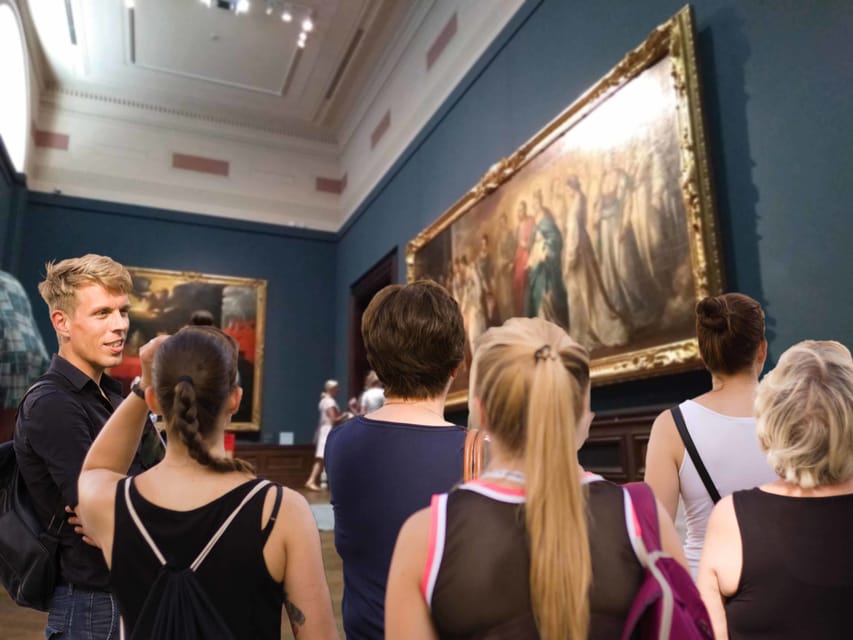
Plan to arrive about 10 minutes early at the downstairs cloakroom. Follow the route from the ticket point carefully, since the guide waits below rather than at the main entrance.
Bring your attention, not your luggage. Large bags and suitcases are not allowed. Wear or carry whatever you need for two hours without depending on a large daypack.
The exact paintings can change. The museum may remove a work for restoration, lend it to another institution, or take it off display for other reasons. If a named painting is unavailable, the guide adjusts the route with equivalent or additional works.
That flexibility is worth accepting. A museum collection changes, and a responsible guide should respond to what is actually on the walls. You may not see every single name listed in the planned program, but the subject and level of discussion should remain intact.
Should You Book It?
Book this tour if you speak German and want the Old Masters Picture Gallery to become easier to read. The combination of major paintings, X-rays, rare pigments, and a guide who explains connections between artists gives you far more than a quick look at famous canvases.
At $44, it is best for an interested museum visitor rather than someone seeking a cheap entrance ticket. Choose it for clear interpretation, technical details, and a focused two-hour route. Skip it if German is not comfortable for you or if independent, slow viewing matters more than guided explanation.
FAQ
Where does the tour begin?
It begins at the Old Masters Picture Gallery. Your guide waits in the cloakroom downstairs from the ticket point. Go right through the door, then take the stairs on the right-hand side.
How early should I arrive?
Arrive about 10 minutes before the activity begins.
How long does the tour last?
The guided tour lasts two hours. Starting times vary, so check availability when booking.
Is admission to the gallery included?
Yes. Gallery admission and all license fees are included in the price.
Is the tour available in English?
No. The tour takes place in German only and includes a live German-speaking guide.
Which artists may be discussed?
The program includes works connected with Botticelli, Raphael, Jan van Eyck, Rembrandt, Vermeer, Titian, and Giorgione. The exact paintings shown can change.
Will I definitely see every named painting?
No. The museum can remove paintings for restoration, loan them to another museum, or take them off display. The guide adjusts the program with equivalent or additional works.
Is the tour wheelchair accessible?
Yes, the activity is listed as wheelchair accessible.
Can I bring luggage or a large bag?
No. Luggage and large bags are not allowed.
Just added around Dresden
- Dresden Sightseeing Treasure Hunt★ 5.0 · 57 reviews
- Test Drive Electric Vehicles from the VW brand (ID. model)★ 4.8 · 190 reviews
- SRF CoBi | City Tour by ConferenceBike★ 4.7 · 38 reviews
- Dresden: Scavenger Hunt to Elbe River & Castles★ 4.7 · 15 reviews
- Dresden: Bike Rental – City Bike with Option Children Seat★ 4.5 · 13 reviews
- Moritzburg: Scavenger Hunt Self-Guided Walking Tour★ 4.8 · 12 reviews
- Historical tour of the old town including a Saxon dinner★ 4.7 · 23 reviews
- Climb the mountains together with goats★ 4.8 · 8 reviews
Museums, compared.




Skip-the-Line: Berlin Wall Museum at Checkpoint Charlie
Read our review →
Browse the lists this tour appears in