
Reviewed · DUISBURG TOURS
Duisburg Landscape Park GPS treasure hunt in old ironworks
Old ironworks, new-fashioned treasure hunting. This two-hour outdoor game takes you through Duisburg Landscape Park, where GPS coordinates guide you around a former industrial site and a road book supplies the puzzles. I like the mix of industrial heritage and hands-on play, and I also like that you can choose a difficulty level for children or adults. The main caution is that access to parts of the route can change, and one recent outing had a closed station and a puzzle that could not be solved cleanly.
You pick up your road book at the visitor center, then set off with your own GPS device, smartphone, or rental equipment. The activity costs $15 per person and includes one road book per group plus one treasure per person. I find that a fair price for families who want a self-guided activity, though the experience depends heavily on clear route access and well-maintained clues.
In This Review
- Key points at a glance
- Starting at the Duisburg visitor center
- Following coordinates through an old ironworks
- How the two-hour route works
- Choosing the right difficulty level
- When competition makes sense
- The puzzle quality is the key variable
- What the $15 price includes
- Who should book this activity
- Helpful planning advice before you go
- Should you book the Duisburg GPS treasure hunt?
- FAQ
- Where does the GPS treasure hunt begin?
- How long does the activity take?
- How much does it cost?
- What is included in the price?
- How many difficulty levels are available?
- Can I use my own GPS device or smartphone?
- Is the activity available all year?
- What language is the activity in?
- Is the treasure hunt suitable for everyone?
Key points at a glance

- Three difficulty levels: Choose a road book suited to younger children, older children, or adults.
- A former ironworks as your playing field: GPS searching takes place around the old factory grounds and casting halls.
- Two hours outdoors: You control your start time during visitor-center opening hours.
- A prize for every participant: Each person receives a treasure connected to the park and ironworks.
- Up to six competing teams: Groups can turn the activity into a friendly race.
- German-language instructions: The road book and support at the visitor center are in German.
Starting at the Duisburg visitor center
Your first stop is the visitor center, where you collect the road book for your group. This is not a guided tour with a fixed departure time. You choose when to begin, as long as you arrive during visitor-center opening hours.
That flexibility matters. You can fit the hunt around the rest of your visit to Duisburg Landscape Park instead of arranging your day around a guide. It also lets you decide how much energy your group has for puzzles. A family with young children may want to start early, while an adult group might prefer to make the hunt one part of a longer visit.
You receive one road book for the group, not one per person. Read it together before setting off and make sure everyone understands the basic plan. If you have a smartphone with GPS, you can use it. You can also bring your own GPS device or choose rental equipment when ordering. The supplied information does not specify the rental price, so check that cost before booking if you need equipment.
The activity is in German, including the instructor support. You do not need a guide walking beside you, but you should be comfortable reading German instructions and solving German-language clues. For a mixed-language group, this point may matter more than the GPS technology.
A few more Germany trips worth comparing
- Torchlight tour of the old ironworks
★ 4.7 · 164 reviews - Hut tour Duisburg-Nord Landscape Park
★ 4.8 · 41 reviews - Schimmi tour pure (without catering)
★ 4.9 · 19 reviews
Following coordinates through an old ironworks
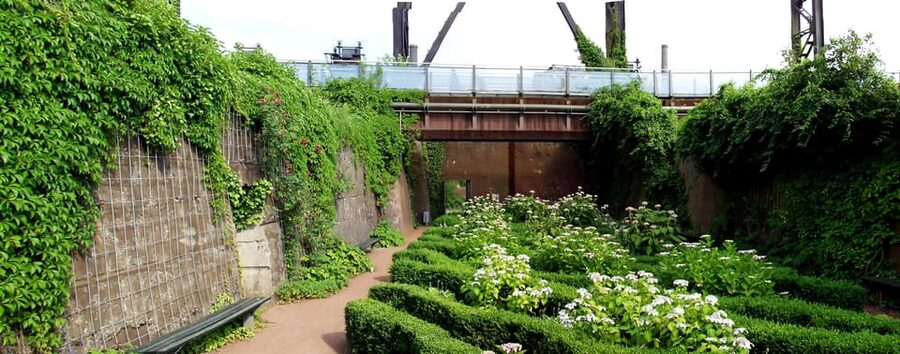
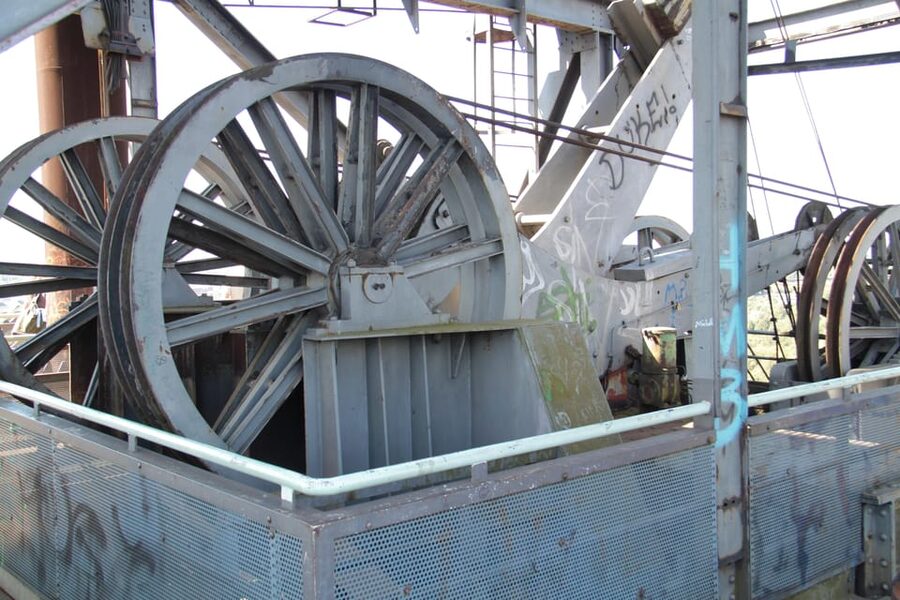
The appeal of this hunt comes from the setting. The route takes you through an old ironworks where iron once flowed through the casting halls. Instead of simply reading about industrial production, you use the site as part of a game.
The GPS element gives you a reason to pay attention to your surroundings. You are not just walking from one broad area to another. You search for specific locations, use the road book, and work out what each clue is asking. The old factory grounds become a large outdoor puzzle board.
That combination works especially well for families. Children who might lose interest during a standard heritage visit get a clear task to follow. Adults still have to think, compare answers, and keep the group moving. The activity connects the place with the game, rather than treating the ironworks as scenery in the background.
You should expect a self-guided route, not a detailed lecture about the site. The main information comes through the road book and the locations you reach. If your top priority is learning the full story of Duisburg’s industrial past from an expert, this is not the best format. If you want a playful way to get to know the site while moving outdoors, it makes more sense.
How the two-hour route works

The exact stations are not listed, so I would not book this expecting a published stop-by-stop itinerary. The basic rhythm is clear, however: collect the book, enter the coordinates, find a location, solve the task, and use the result to continue.
At some points, the challenge may be simple enough for children. At others, you may need to count, compare, calculate, or test an answer more than once. The three road books let you choose a level that fits your party. That choice is important. A puzzle that feels satisfying to adults could frustrate a seven-year-old, while an easy child-focused route may leave experienced puzzle solvers wanting more.
Plan on about two hours, but remember that your group’s pace will shape the experience. A large family group may take longer to agree on answers. A competitive team may move quickly, then spend extra time checking a difficult clue. Since the start is flexible, you can choose a time that suits your children and avoid making the activity feel like a race against the clock.
The route is outdoors, so comfortable shoes are a must. The activity can be carried out all year, but that does not mean every season will feel the same. Cold, rain, or wet ground can make a two-hour puzzle hunt less pleasant. The provider specifically asks you to bring comfortable shoes, and I would take that advice seriously.
Choosing the right difficulty level
The three road books are one of the best features of the experience. They give families a practical way to match the game to the ages and patience levels in the group.
The activity is suitable for ages 7 and up. That does not mean every seven-year-old will enjoy every version. If you are bringing children, choose the level intended for their age rather than selecting the hardest book to make the activity feel more challenging.
For adults, the more difficult road book should provide more satisfying problems. For families, the easiest version may work best if the goal is to let children take the lead. You can also divide responsibilities: one person handles the GPS, another reads the clue, and children help search for the correct place or answer.
This shared work is part of the value. A GPS hunt can become too technical if one adult holds the phone and makes every decision. Give children a real job. Let them read the next instruction, identify a location, or check the group’s answer.
Still Germany, at a slower pace:
- Berlin: Reichstag, Dome and Government District Guided Tour
★ 4.7 · 18,288 reviews - Berlin: 1-Hour City Tour by Boat with Guaranteed Seating
★ 4.3 · 16,993 reviews - Hamburg: Sex and Crime in St. Pauli Tour for Ages 18+
★ 4.7 · 15,447 reviews - Hamburg: 1.5-Hour Harbor and Speicherstadt Day Cruise
★ 4.6 · 14,200 reviews
When competition makes sense
Up to six teams can compete against each other. That makes the hunt suitable for a family gathering, school-related outing, or group of friends who enjoy a little pressure.
Competition can sharpen the experience, but it can also change its tone. A family with small children may prefer to solve the route together without worrying about speed. Older children and adults may enjoy comparing progress and seeing which team reaches the finish first.
The information provided does not explain the exact scoring system, so do not assume that the fastest team automatically wins. The road book may involve correct answers, completed tasks, or a final solution. If you are arranging several teams, ask at the visitor center how the competition is handled before you begin.
With several teams, agree on a meeting point and make sure each group has the same basic equipment. One road book is supplied per group. If teams are sharing phones or GPS units, that could slow things down, so plan your equipment in advance.
The puzzle quality is the key variable
The strongest part of the concept is the pairing of place and puzzle. The main weakness is that the route needs accurate access and clear answers to work well.
A recent outing found that part of the route was closed, making one station impossible to visit. At another station, the group repeatedly tried the available calculation but could not reach a result, so they had to estimate. That is more than a minor annoyance in a treasure hunt. If a station cannot be reached or a clue has no dependable solution, the group loses confidence in the whole route.
This is worth considering if you are booking during a period of construction, maintenance, or changing site access. Ask at the visitor center whether all stations are currently open. The staff member who assisted one group was described as friendly and helpful, and that kind of support can make a real difference when a clue or route point causes trouble.
I would also leave enough time to report a problem rather than simply abandoning the hunt. If a route is blocked, the visitor center may be able to explain a detour or provide an answer. The experience is designed to be self-guided, but that does not mean you should be left without help when the site itself prevents you from completing a task.
What the $15 price includes
At $15 per person, the cost is reasonable if everyone in your group likes puzzles and outdoor activities. You receive one road book for the group and one treasure per person. The individual prize gives the finish a clear purpose, especially for children.
The value is less convincing for someone who wants a traditional guided tour. You are paying for the game, the route design, the road book, and the personal treasure, not for two hours of live commentary. Your own smartphone or GPS device may be enough, but rental equipment may cost extra, depending on the option you choose.
For a family, the price compares well with many short paid activities because it fills about two hours and keeps the group active. You also have control over the start time, which can save you from wasting part of your day waiting for a departure.
I would judge the value by your group’s attitude. If your children enjoy finding clues and adults are willing to help, $15 per person is a fair spend. If one person expects to do all the navigation while everyone else watches, the activity may feel thin. The reward is a nice touch, but the real value is in the shared problem-solving and the chance to see the old ironworks with a purpose.
Who should book this activity

I would recommend it most strongly to families with children aged 7 and older, especially those who enjoy scavenger hunts, maps, or simple logic problems. It also suits adults who want a low-key team activity rather than a formal tour.
You should be reasonably comfortable outdoors for around two hours and wear shoes suitable for walking around an industrial site. The activity is not suitable for wheelchair users or visually impaired people. Those limits are important because the route depends on reaching outdoor locations and reading or interpreting the road book.
The German-only format may also rule it out for some international visitors. If nobody in your group reads German, the puzzles could be difficult to follow. A German-speaking family member or friend may be able to make the activity work, but the supplied details do not promise materials in another language.
Helpful planning advice before you go
Before booking, decide who will handle the GPS and who will read the clues. Give children an active role, and choose the road book difficulty with care.
At the visitor center, ask whether every station is open that day. This is especially sensible if recent work, closures, or events may affect access. A blocked station can turn a good family activity into a guessing game for the wrong reason.
Bring comfortable shoes and dress for the weather. The hunt operates all year, but the outdoor format means conditions will affect your comfort. You should also check the visitor center’s opening hours because that is where you collect the road book and get help if needed.
The activity offers free cancellation up to 24 hours before the start, and you can reserve now and pay later. Those terms help if your plans depend on weather or a shifting family schedule, but they do not fix a route problem on the day.
Should you book the Duisburg GPS treasure hunt?
Book it if you want an active, self-guided way to explore Duisburg Landscape Park and your group enjoys solving puzzles together. The old ironworks setting, three difficulty levels, flexible start, and personal treasure make this more engaging than a basic walk around the site.
Think twice if you need wheelchair access, non-German instructions, a fully guided history tour, or a route with no risk of changing access. The 3.9 rating reflects a worthwhile idea with some practical weaknesses, especially when a station is blocked or a clue does not produce a clear answer.
My advice is to confirm route conditions at the visitor center and choose the difficulty level carefully. With those checks in place, the hunt offers good family value and a playful way to see an important industrial site.
FAQ
Where does the GPS treasure hunt begin?
It begins at the visitor center in Duisburg Landscape Park.
How long does the activity take?
The activity lasts about two hours.
How much does it cost?
The price is $15 per person.
What is included in the price?
You receive one road book per group and one treasure per person.
How many difficulty levels are available?
You can choose from three road books with different difficulty levels.
Can I use my own GPS device or smartphone?
Yes. You can use your own GPS device, your own smartphone, or rental equipment.
Is the activity available all year?
Yes. The treasure hunt can be carried out throughout the year.
What language is the activity in?
The activity and instructor support are in German.
Is the treasure hunt suitable for everyone?
It is suitable for ages 7 and up, but it is not suitable for children under 7, wheelchair users, or visually impaired people.
Just added around Germany
- Private Walking Tour in Berlin: Hitler’s Germany & WWII★ 5.0 · 7 reviews
- The History of Berlin: WWII PRIVATE Walking Tour With Locals★ 5.0 · 209 reviews
- Berlin: Private Bike Tour of the Berlin Wall and Third Reich★ 5.0 · 23 reviews
- Private Berlin WWII and Cold War History Tour with Local Expert Guide★ 5.0 · 28 reviews
- Private Walking Tour Berlin 3 hours: Brandenburg, Historic Center★ 5.0 · 7 reviews
- Berlin: Guided Private Bike Tour to Explore the Highlights★ 5.0 · 12 reviews
- Berlin Photography Masterclass – Private Photography Lesson★ 4.5 · 23 reviews
- Group Driving Tour 1 to 6 people. Berlin Shore Excursion incl pick-up at Port★ 5.0 · 8 reviews
Duisburg Tours, compared.




Browse the lists this tour appears in