
Reviewed · CONCENTRATION CAMP MEMORIAL VISITS
From Munich: Dachau Memorial Site Tour in Spanish
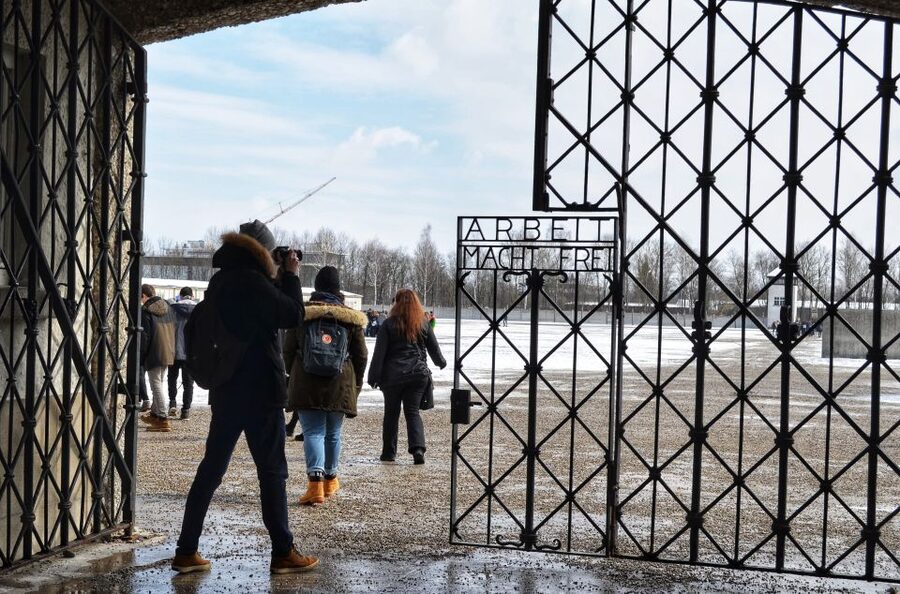
Memory begins with a difficult place. This five-hour visit to the Dachau Concentration Camp Memorial Site gives you a serious, carefully guided look at the permanent exhibition, original buildings, reconstructions, and memorials. I like the official Spanish-speaking guide, who provides the historical setting and explains the stories of victims clearly. I also like that the tour covers the main parts of the memorial rather than leaving you to piece the site together alone.
The main drawback is simple: this is not a casual outing. The subject is painful, the walking takes time, and children under 13 cannot join the guided tour. You also need to buy your own transport ticket, and the tour requires at least four participants to operate.
In This Review
- Key points to know before booking
- Why this Dachau visit matters
- Meeting under the Karlstor arch in Munich
- The train journey from Munich to the memorial
- Starting with the permanent exhibition
- Roll-call area, bunkers, and barracks
- The crematorium and the hardest part of the visit
- International and religious memorials
- What the Spanish guide adds
- Price, pace, and practical value
- Who should book this Dachau tour
- Should you book it?
- FAQ
- Is this Dachau tour conducted in Spanish?
- How long does the tour last?
- Where do I meet the guide in Munich?
- Is transportation included in the price?
- Can children join the guided tour?
- What should I bring to Dachau?
Key points to know before booking
- Meet at Munich’s Karlstor Gate: Find the guide under the arch at Karlsplatz 10 minutes before departure. Do not look for a bus.
- Travel by train to Dachau: The journey begins in Munich and continues to the memorial site with the guide.
- Spanish only: This tour is designed exclusively for Spanish speakers, and non-Spanish speakers should not book it.
- Five hours at a serious memorial: Allow enough time for the exhibition, historical buildings, roll-call area, bunkers, barracks, crematorium, and memorials.
- A guide makes a real difference: The visit includes historical context and accounts connected to the camp and its victims.
- Plan lightly: Bring comfortable shoes, but do not bring pets, food, luggage, or large bags.
Why this Dachau visit matters
Dachau is not a sightseeing stop in the usual sense. You do not come for entertainment or pretty views. You come to face a place connected to terrible events and to give serious attention to the people who suffered there.
That is why a guided visit can be useful. The memorial site contains buildings, traces, exhibits, and memorials, but simply walking from one point to another will not explain how they fit together. A guide gives you a path through the site and helps connect what you see with the history presented in the exhibition.
I especially value the focus on victims. The tour is not limited to architecture or dates. It includes stories and historical background, helping you understand the human cost behind the remaining buildings and reconstructed sections.
The visit is described as moving and emotionally difficult, and you should take that seriously. The guide’s role is not to make the subject easy. It is to handle it with care, respect, and enough explanation for you to reflect on what you are seeing.
Other memorial sites open to visitors:
- Berlin: Sachsenhausen Concentration Camp Tour in English
★ 5.0 · 5,711 reviews - Dachau Concentration Camp Memorial Site Tour from Munich by Train
★ 4.5 · 5,637 reviews - Berlin: Sachsenhausen Concentration Camp Memorial Tour
★ 4.7 · 3,716 reviews
Meeting under the Karlstor arch in Munich
Your day begins at Karlstor Gate, under the arch at Karlsplatz. Arrive 10 minutes before the scheduled start. This detail matters because the meeting point is easy to misunderstand: you are not joining a bus excursion.
Look for the guide waiting beneath the Karlstor arch. Do not search for buses or get on one. The group travels by train to Dachau, and the transport ticket is not included in the $40 price.
That cost makes the tour reasonably priced for anyone who wants a guided visit without hotel pickup or a private vehicle. You pay less than you might for a private arrangement, but you handle the initial meeting and transport yourself. If you prefer an all-inclusive outing with a car waiting outside your hotel, this will not fit your plans.
The company operating the activity is Bayern a medida GmbH & Co KG. The guide accompanying the group is an official Dachau Memorial guide and speaks Spanish.
The train journey from Munich to the memorial
The train ride is part of the practical setup rather than a featured attraction. Still, beginning in central Munich and traveling together gives the guide a chance to orient the group before arrival.
Since your transport ticket is not included, check the exact ticket needs before departure. The supplied information does not specify the ticket type or fare, so keep that small extra cost in mind when planning your budget.
The five-hour duration includes the journey and the visit. That makes this a substantial half-day commitment, not a quick stop squeezed between lunch and another Munich attraction. I recommend keeping the rest of your schedule light, especially because the memorial visit may leave you wanting quiet time afterward.
Starting with the permanent exhibition
At the memorial site, the permanent exhibition provides the main historical framework. It presents an overview of Dachau Concentration Camp and helps you understand the place before you move through the remaining structures.
This order is valuable. You first receive context, then see the physical traces connected to it. Without that background, a barracks or bunker can seem like an empty structure. With the exhibition and guide’s explanation, the buildings carry a clear meaning.
The exhibition also supports the tour’s attention to victims. You are not only looking at surviving structures. You are learning about the people affected by the camp and the events represented at the memorial.
The quality of the Spanish explanation is one of the strongest reasons to choose this particular outing. Recent feedback praises the guide’s patience, clarity, kindness, and ability to explain a great deal while caring for the whole group. No individual guide name is provided, but the consistent praise points to the value of having a calm Spanish-speaking professional at such a serious site.
Still Germany, at a slower pace:
- Berlin: Reichstag, Dome and Government District Guided Tour
★ 4.7 · 18,288 reviews - Berlin: 1-Hour City Tour by Boat with Guaranteed Seating
★ 4.3 · 16,993 reviews - Hamburg: Sex and Crime in St. Pauli Tour for Ages 18+
★ 4.7 · 15,447 reviews - Hamburg: 1.5-Hour Harbor and Speicherstadt Day Cruise
★ 4.6 · 14,200 reviews
Roll-call area, bunkers, and barracks
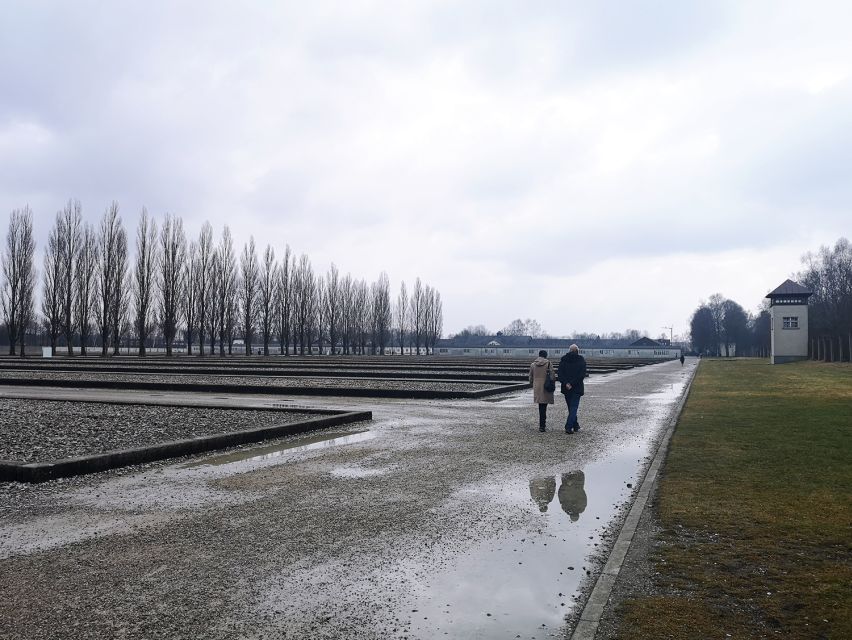
The tour continues through important areas of the former camp, including the roll-call area, bunkers, and barracks. These are not isolated photo stops. Together, they show how the memorial site preserves and presents different parts of the camp.
The roll-call area gives the visit a particularly stark focus. It is a place connected to the daily organization and control of prisoners, and the guide’s explanation helps you understand why it is included in the tour.
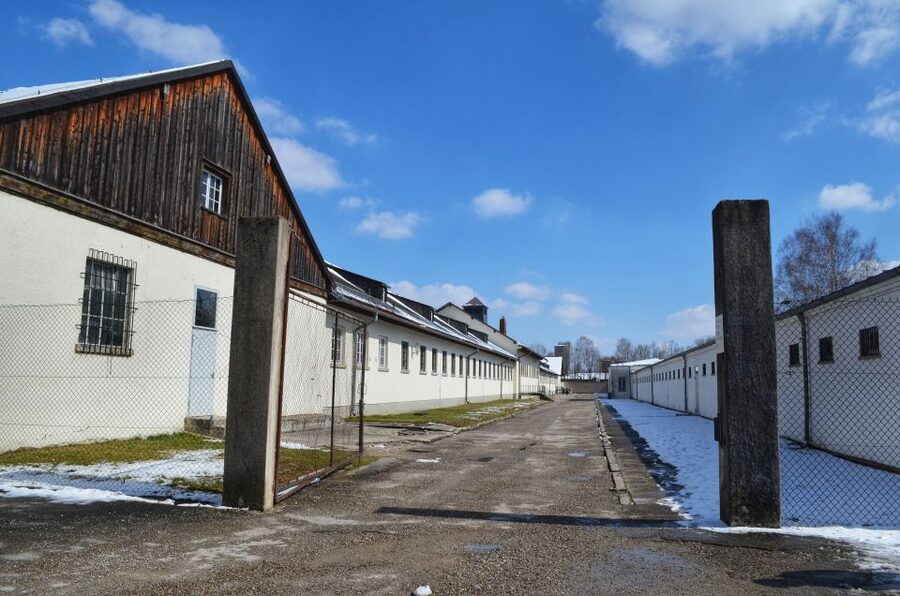
The bunkers and barracks provide further physical evidence of the camp. Some buildings are original, while others are reconstructions. That distinction is important. You should not assume every structure you see has survived unchanged. The tour helps explain the remaining traces and the role of reconstructions in keeping the site understandable.
I like that the itinerary does not reduce Dachau to one building or one exhibit. You see a group of locations, each contributing a different part of the story. The drawback is that the subject can become emotionally heavy as the tour progresses. You may need to slow down mentally, listen carefully, and accept that this is not a light afternoon activity.
The crematorium and the hardest part of the visit
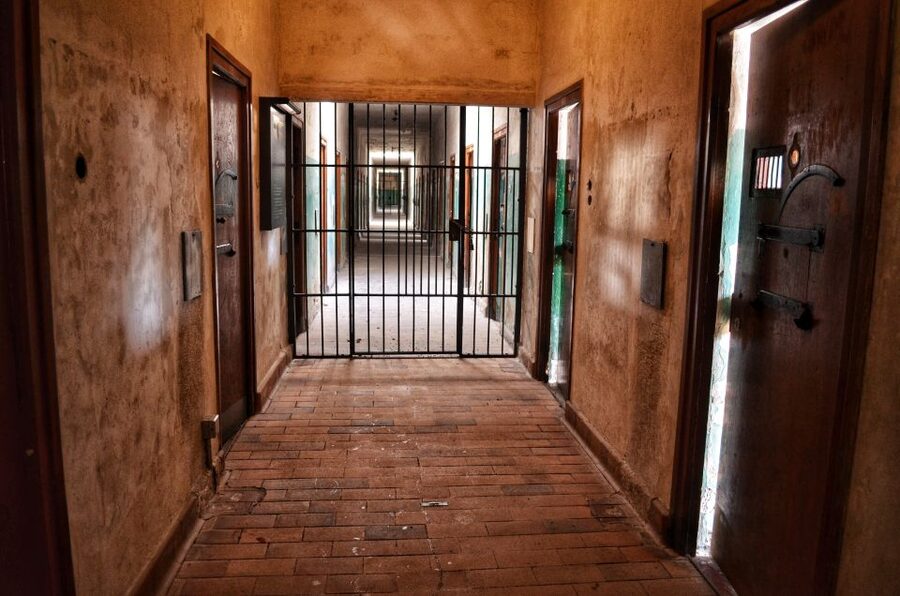
The crematorium is among the most difficult areas included in the tour. Its presence makes the scale and cruelty of the camp’s history impossible to treat as an abstract lesson.
Your guide provides the historical background and explains what you are seeing. The value of that explanation is restraint. A respectful guide does not need theatrical language to make the place powerful. Clear facts, careful pacing, and attention to the victims are more appropriate here.
This is also where you should think honestly about your own readiness. If you know that memorial sites are especially difficult for you, prepare for an intense visit. The tour does not offer a softened version of the subject, and that is part of its purpose.
Food is not allowed during the tour, and there is no food or drink included. You should plan around those rules rather than expecting a snack break within the memorial grounds.
International and religious memorials
The International Memorial and the other religious memorials provide another important layer to the visit. They show how the site has become a place of remembrance and reflection, not only a collection of historical remains.
The International Memorial is a central part of the memorial landscape, while the religious memorials offer additional forms of remembrance. Seeing them after the exhibition and former camp buildings gives the visit a broader focus. You move from historical evidence toward the ways people continue to honor those who suffered.
I appreciate this balance. The tour does not end with buildings alone. It includes the memorials that shape how the site is understood today. For you, that can make the visit feel less like a museum tour and more like a guided act of remembrance.
What the Spanish guide adds
The most praised feature is the guide’s explanation. The Spanish language is not a minor convenience here. For a place with complex history and painful subject matter, understanding the details in your strongest language can make a major difference.
The guide covers the history of the camp, the victims, the buildings, and the memorials. Clear explanations are especially useful when the site includes both original structures and reconstructions. You can ask yourself what remains, what has been rebuilt, and why each part is shown.
Recent feedback repeatedly highlights patience, friendliness, and clear explanations. One Spanish-speaking participant described the guide as very attentive to the entire group, which is useful on a walking tour through a large and emotionally demanding site.
Do not book this tour simply because it is available in Spanish. Book it because you want a Spanish-only visit. Non-Spanish speakers are not permitted to participate, and the format works best when the whole group can follow the same explanations without translation.
Price, pace, and practical value
At $40 per person, the tour offers solid value if you want an official guide and a structured five-hour visit. The fee includes the Spanish-speaking Dachau Memorial guide, which is the central service being sold.
The price does not include your transport ticket, hotel pickup, hotel drop-off, food, or drinks. Those omissions are easy to understand for a train-based tour, but they mean your final cost will be slightly higher than $40.
I see the strongest value in the official guidance. You could visit the memorial site without this tour, but you would need to organize the journey and interpret the exhibition and buildings on your own. If you speak Spanish and want the historical material explained in that language, the guided format makes the extra cost worthwhile.
The tour has a 4.9 rating from 300 reviews, with particularly strong praise for the guide’s patience, clarity, and care. That high score does not make the subject easier, but it does suggest that the service is meeting its main goal: helping Spanish speakers understand and process the memorial site respectfully.
Who should book this Dachau tour
This outing suits adults and older teenagers who want historical context, a Spanish-speaking guide, and a serious visit rather than a quick photo stop. It is also a good choice if you prefer traveling from Munich by train with a guide rather than handling every detail alone.
You should book it if:
- You speak Spanish comfortably.
- You want an official Dachau Memorial guide.
- You want to see the exhibition, former camp buildings, crematorium, and memorials in one visit.
- You can spend five hours on a serious, emotionally difficult subject.
- You are comfortable buying your own transport ticket.
- You can walk in comfortable shoes and travel without large bags.
This is not suitable for children under 13. It is also a poor match for anyone looking for a relaxed excursion, a flexible private itinerary, or a tour with hotel pickup.
The minimum group requirement is four participants. If fewer than four people book, the local partner will contact you and offer an alternative. That condition is worth noting if your Munich schedule is tight.
Should you book it?
Book this tour if you want to visit Dachau with clear Spanish-language guidance and enough time to understand the permanent exhibition, buildings, crematorium, and memorials. The patient explanations and careful treatment of the victims are the main reasons to choose it.
Skip it if you do not speak Spanish, if you are traveling with a child under 13, or if you want an easygoing half-day away from Munich. Dachau asks for attention and respect. For the right visitor, this tour offers a well-organized way to face the site and learn from it.
FAQ
Is this Dachau tour conducted in Spanish?
Yes. The live guide speaks Spanish, and the tour is exclusively for Spanish speakers. Non-Spanish speakers should not book it.
How long does the tour last?
The activity lasts five hours, including travel from Munich to Dachau and the guided visit at the memorial site.
Where do I meet the guide in Munich?
Meet under the Karlstor Gate at Karlsplatz 10 minutes before the activity begins. Look for the guide under the arch, not for a bus.
Is transportation included in the price?
The group travels by train, but the transport ticket is not included. Hotel pickup and drop-off are also not included.
Can children join the guided tour?
Children under 13 are not allowed to participate.
What should I bring to Dachau?
Wear comfortable shoes. Pets, food, luggage, and large bags are not allowed on the tour.
Just added around Germany
- Private Walking Tour in Berlin: Hitler’s Germany & WWII★ 5.0 · 7 reviews
- The History of Berlin: WWII PRIVATE Walking Tour With Locals★ 5.0 · 209 reviews
- Private Berlin WWII and Cold War History Tour with Local Expert Guide★ 5.0 · 28 reviews
- Private Walking Tour Berlin 3 hours: Brandenburg, Historic Center★ 5.0 · 7 reviews
- Berlin: Private Bike Tour of the Berlin Wall and Third Reich★ 5.0 · 23 reviews
- Berlin: Guided Private Bike Tour to Explore the Highlights★ 5.0 · 12 reviews
- Berlin Photography Masterclass – Private Photography Lesson★ 4.5 · 23 reviews
- Group Driving Tour 1 to 6 people. Berlin Shore Excursion incl pick-up at Port★ 5.0 · 8 reviews