
Reviewed · CONCENTRATION CAMP MEMORIAL VISITS
Berlin: Sachsenhausen Concentration Camp Tour in English
History here is impossible to keep at arm’s length. This five-and-a-half-hour trip from Berlin to Sachsenhausen combines train travel, a guided walk through the memorial, and clear background on Nazi Germany. I especially like the English-speaking historians and the way the tour connects the camp to the wider political and racial ideology of the Third Reich. I also like that the entry fee is included and that €3 from each booking goes to the Sachsenhausen Memorial. The main drawback is simple: this is a long, outdoor day with a lot of walking, limited shelter, and no food stop.
Sachsenhausen is not a sightseeing attraction in the usual sense. You are visiting a place of imprisonment, forced labor, murder, and remembrance. The guides, including highly praised leaders such as Georgia, Daniel, Tina, Gregor, Will, and Ariel, are expected to handle that subject with care while still giving you enough context to understand what happened. Bring water, food, warm clothing, and shoes that can manage roughly 10,000 steps.
In This Review
- Key points to know before you book
- Why Sachsenhausen belongs on a Berlin history itinerary
- Meeting near Friedrichstraße and heading to Oranienburg
- A short walk through Oranienburg
- Inside Sachsenhausen Memorial and Museum
- What the day feels like in practical terms
- Does the $36.16 price offer good value?
- The strongest part is the human explanation
- Who should book this Sachsenhausen tour?
- Should you book it?
- FAQ
- Where does the Sachsenhausen tour start?
- How long does the tour last?
- Is the tour conducted in English?
- Is admission to Sachsenhausen included?
- Do I need to buy a train ticket separately?
- Is hotel pickup included?
- Is food available during the tour?
- Is the tour suitable for people with limited mobility?
- What happens if the weather is poor or I need to cancel?
Key points to know before you book
- The tour begins near Friedrichstraße Station: Meet at Reichstagufer 17 at 10:00 a.m., arriving 15 minutes early.
- The train ride is part of the lesson: Your guide helps with the ABC transport ticket and explains Berlin and Oranienburg along the way.
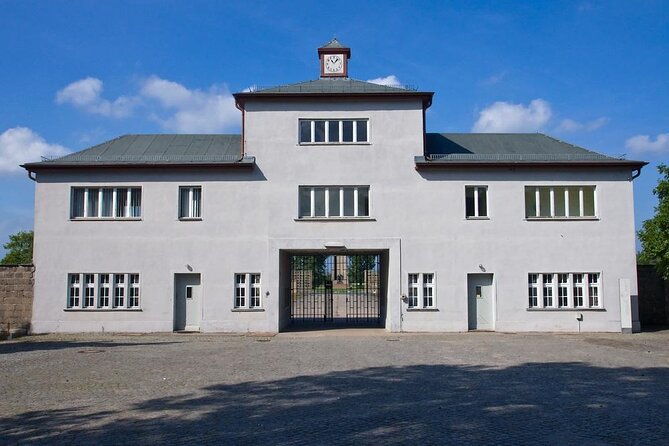
- You visit the main memorial areas: These include the barracks, punishment cells, camp kitchen, infirmaries, pathology center, Station Z, the crematorium, and Tower A.
- The setting is physically demanding: Expect extensive walking, outdoor exposure, and few places to shelter from rain or cold.
- The extra transport cost matters: The advertised price is $36.16 per person, but you also need a Berlin ABC ticket costing about €9 to €10.
- This suits serious history travelers: It is especially useful if you want the site explained in English rather than trying to make sense of it alone.
Why Sachsenhausen belongs on a Berlin history itinerary
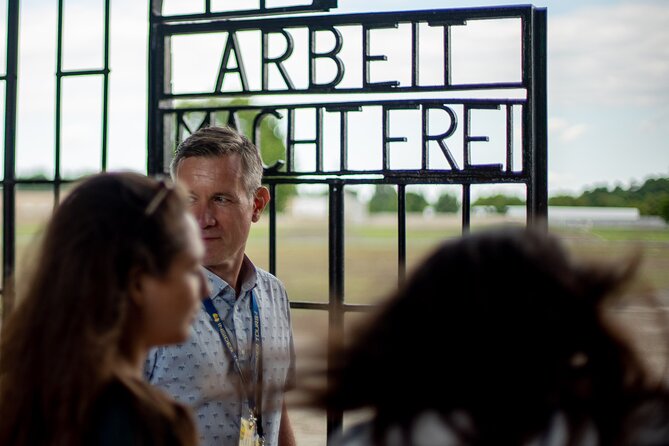
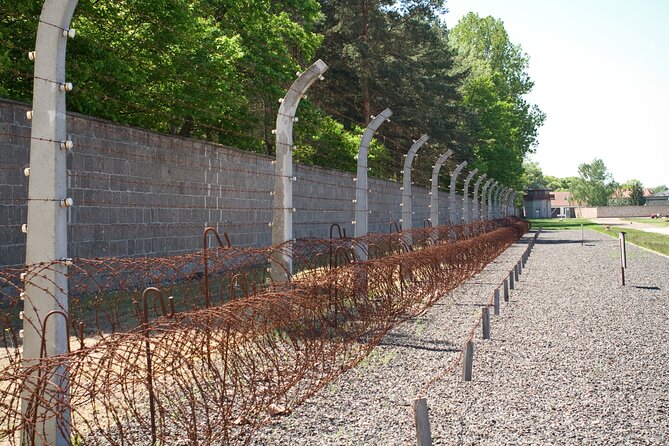
Berlin has no shortage of museums about the Nazi period, but Sachsenhausen gives that history a physical setting. You can see the layout of a camp built specifically for this purpose, not a prison or military site adapted later. That helps you understand how the system operated: control from the guard tower, confinement in barracks, punishment in prison cells, forced work, medical abuse, executions, and the disposal of bodies.
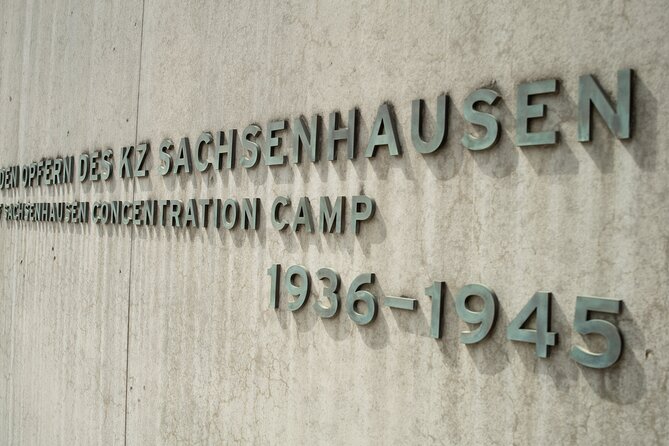
More than 200,000 people were imprisoned at Sachsenhausen between 1936 and 1945. Political opponents of the Nazi regime were among the first prisoners. Later, the camp held people whom the National Socialists classified as racially or biologically inferior, along with many citizens from countries occupied by Germany.
Tens of thousands died from starvation, disease, forced labor, mistreatment, and systematic extermination by the SS. When the camp was evacuated in April 1945, thousands more died on death marches. Around 3,000 sick prisoners, along with doctors and nurses who remained behind, were freed by Soviet and Polish soldiers.
A guide gives those facts a human shape. The best moments of this tour are not just lists of dates and buildings. They are the explanations of how rules worked, how prisoners were treated, how the camp fitted into Nazi policy, and how individual people tried to survive. Several guides have been praised for using survivor testimony and stories of prisoner courage alongside the larger political story.
That balance matters. The visit is grim, but it is not presented as a parade of horrors. A thoughtful guide can help you see both the cruelty of the system and the courage of people caught inside it.
Other memorial sites open to visitors:
- Berlin: Sachsenhausen Concentration Camp Memorial Tour
★ 4.7 · 3,716 reviews - Sachsenhausen Concentration Camp Bus Tour in English from Berlin
★ 5.0 · 1,962 reviews - Berlin: Sachsenhausen Concentration Camp Tour in English
★ 4.8 · 1,889 reviews
Meeting near Friedrichstraße and heading to Oranienburg
The day begins at Reichstagufer 17, near S+U Friedrichstraße, at 10:00 a.m. You should arrive 15 minutes early. This is not the moment to arrive breathless from another part of Berlin. The group must gather, introductions must be handled, and the train journey to Oranienburg needs to stay on schedule.
The ABC transport ticket is not included. You need one for the round trip from Berlin to the memorial, with the stated cost around €9 to €10 per person. Your guide can help with the ticketing system, which is useful if Berlin’s fare zones are unfamiliar.
The train ride makes the excursion feel like a proper day trip rather than a quick museum visit. Along the way, the guide can explain Berlin’s wartime background and the role of Oranienburg. Guides such as Georgia and Daniel have been praised for answering questions during the journey and offering useful suggestions for the rest of your time in Berlin.
The group size can reach 29 people, although one account described a group of 36 and found it difficult to hear at times. That is worth keeping in mind. A guide with a strong voice and a well-organized group can make the tour work smoothly, but you may want to stay within listening range during the outdoor sections.
A short walk through Oranienburg
After arriving at Oranienburg S-Bahn station, you spend about 15 minutes walking through the town before reaching the memorial. This short section is easy to overlook, but it adds important context.
The guide discusses how local people were connected to the camp and points out places where inmates once worked. You begin to see Sachsenhausen not as an isolated site in empty countryside, but as part of a functioning town and regional system.
That context can be uncomfortable, and it should be. Camps depended on transport, administration, supplies, labor, and people who lived nearby. The Oranienburg walk helps you think about that connection before you enter the former camp itself.
It is not a long town tour, so do not expect a detailed exploration of Oranienburg. Its value lies in framing the main visit. The brief walk also gives you a little time to adjust emotionally before the most difficult part of the day.
Inside Sachsenhausen Memorial and Museum
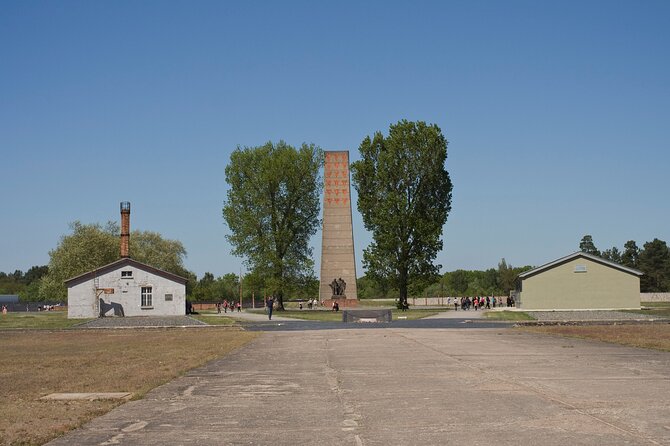
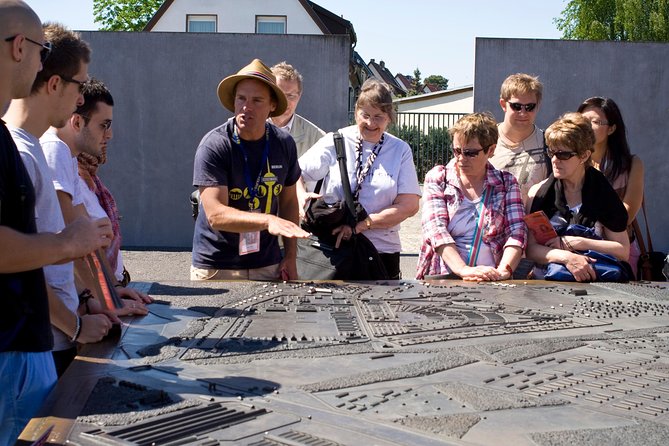
The main guided visit lasts about two and a half hours. You enter the former camp and walk through the surviving sections and memorial spaces with the guide explaining what happened at each point.
The layout is one of the most important things to notice. Tower A, the main guard tower, helped control the camp entrance and central area. From there, the arrangement of barracks and other facilities shows the deliberate order imposed on a system built around imprisonment and forced labor.
You visit old barracks, the camp kitchen, punishment cells, and torture cells. The punishment area is especially important because it shows that violence was not limited to the mass killing facilities. Discipline, humiliation, confinement, and physical abuse were part of daily camp control.
The infirmaries and pathology center add another layer. These places reveal how medicine could be used within the camp system, both for care and for harmful purposes. The guide’s explanation is valuable here because the buildings alone cannot tell you how prisoners were treated or why these spaces mattered.
The most difficult areas include Station Z, where mass executions took place, along with the gas chamber, crematorium, gallows, and burial pits. The visit is direct, but the tone should remain respectful. This is a memorial site, not a place for casual photographs or entertainment.
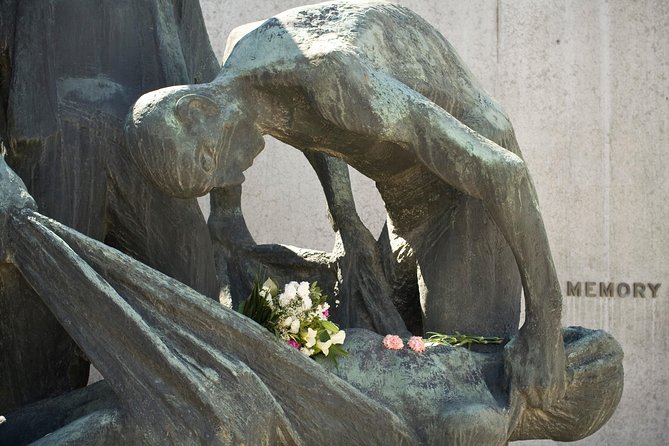
You will hear about the atrocities carried out by the SS, but also about prisoners who resisted, helped one another, or showed courage under brutal conditions. That wider view prevents the site from becoming only a catalogue of death. It restores some attention to the people who lived there and made choices under impossible conditions.
The guide’s role is crucial. Several guides have been praised for making difficult material understandable without turning it into a performance. Georgia has been singled out for thorough answers and repeated meeting instructions. Tina has been praised for speaking about real people with compassion. Gregor was noted for offering a balanced and morally serious account, while Ariel was praised for patience, care, and helping the group catch the correct train afterward.
You are not guaranteed a particular guide, but the range of positive feedback suggests that the company places real weight on preparation and subject knowledge.
A few more Berlin trips worth comparing
- Berlin: Reichstag, Dome and Government District Guided Tour
★ 4.7 · 18,288 reviews - Berlin: 1-Hour City Tour by Boat with Guaranteed Seating
★ 4.3 · 16,993 reviews - Berlin: Boat Tour Along the River Spree
★ 4.4 · 11,252 reviews - Discover Berlin Half-Day Walking Tour
★ 5.0 · 9,624 reviews
What the day feels like in practical terms
The advertised duration is about five hours and 30 minutes, but you should protect most of the day for it. Some accounts describe a schedule running roughly from 10:00 a.m. to 4:00 p.m., depending on the train and the pace of the group.
There is no food stop built into the visit, and there is nowhere at the memorial to rely on for a meal. Pack food and water before leaving Berlin. This small bit of planning makes a big difference, especially because the tour lasts through lunch.
Weather can shape the day. The site is largely outdoors, with limited shelter. In cold weather, the open spaces feel even harsher, and in rain you may spend long periods exposed. Wear warm layers, bring an umbrella, and use sturdy walking shoes. On a freezing day, the tour can still be worthwhile, but you will enjoy it more if you dress for a long period outside.
The walking pace is generally manageable. One guide was praised for walking slowly enough for the group, but the physical demand remains real. One person estimated completing about 10,000 steps. If you have limited mobility or a walking impairment, this tour is not recommended.
The memorial requires a respectful attitude. You may find the emotional weight comes in waves. Some parts are factual and structured, while others are harder to process. Allow yourself quiet time afterward. The return train to Berlin gives you a natural chance to think about what you have seen.
Does the $36.16 price offer good value?
At $36.16 per person, the tour is fairly priced for a guided half-day excursion, especially because memorial entry and an English-language guide are included. You are also paying for the return trip organization, the guide’s historical preparation, and help with Berlin’s transport system.
The true cost is closer to $45 or more once you add the ABC train ticket, depending on the exact fare you purchase. Food and drinks are extra, and there is no hotel pickup or drop-off.
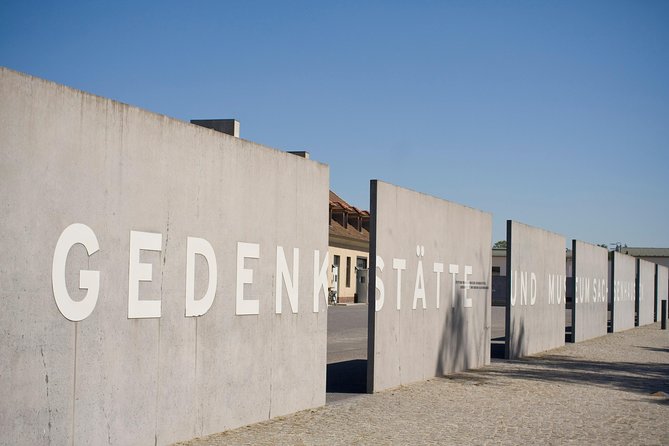
You could visit the memorial independently, but the site has many layers that are easy to miss without explanation. The guided walk gives you a clear route through the prison, punishment areas, medical buildings, execution site, and crematorium. It also links Sachsenhausen to Nazi racial policy, political repression, occupied Europe, and the final death marches.
That makes the tour good value if you want historical interpretation rather than simply access to the grounds. It is less appealing if you prefer to read at your own pace, avoid group travel, or spend a full day at the memorial without a fixed schedule.
The company also donates €3 per person to the Sachsenhausen Memorial. That does not transform the price calculation, but it is a useful detail when comparing guided options.
The strongest part is the human explanation
The most highly praised feature is not the train ride or the ticket help. It is the guide.
Good guiding matters at Sachsenhausen because the subject is both complex and emotionally heavy. You need dates and facts, but you also need someone who can explain how ideology became policy and how policy became daily suffering.
The strongest guides appear to do several things well:
- They explain the camp within the history of Nazi Germany.
- They answer questions without rushing.
- They repeat meeting times and train instructions clearly.
- They use survivor accounts and stories about real prisoners.
- They keep a respectful tone without becoming cold or mechanical.
- They help you return to Berlin and, in some cases, offer further city advice.
Names praised include Georgia, Daniel, Tina, Gregor, Will, Hannah, Mikhail, Emma, Scott, and Ariel. That does not mean every departure will feature one of them, but it shows the kind of guiding the company aims to provide.
One practical concern is audibility. If the group is large, stay close enough to hear clearly, especially outside where wind and distance can interfere. A guide can be excellent and still be difficult to hear from the back.
Who should book this Sachsenhausen tour?
I would choose this tour if you are visiting Berlin for its 20th-century history and want a structured introduction to Sachsenhausen. It is also a strong option if you do not speak German and want detailed explanations in English.
You will get the most from it if you are comfortable with difficult historical material and prepared to walk for several hours. Students, history-focused visitors, and first-time Berlin visitors can all benefit from the wider explanation of the Third Reich and the camp system.
I would think twice if you have limited mobility, dislike group schedules, or are looking for a light day away from central Berlin. This is not a cheerful outing, and the subject cannot be softened without losing its meaning.
Because the tour requires good weather, poor conditions may lead to a new date or a full refund. Free cancellation is available up to 24 hours before the start time. Cancellations or changes made less than 24 hours ahead are not refunded or accepted.
Should you book it?
Yes, if you want Sachsenhausen explained rather than merely visited. The train journey, Oranienburg context, memorial entry, and guided route through the camp create a useful and serious half-day from Berlin.
Book it knowing what you are choosing: a long day, about 10,000 steps, outdoor exposure, no dependable food stop, and an emotionally difficult site. Pack lunch, water, warm clothing, and an umbrella. If you do, the added cost over independent entry buys something worthwhile: a clear path through the memorial and a guide who can connect the buildings to the people and policies behind them.
FAQ
Where does the Sachsenhausen tour start?
The meeting point is at Reichstagufer 17, near S+U Friedrichstraße in Berlin. The scheduled start time is 10:00 a.m., and you should arrive 15 minutes early.
How long does the tour last?
The stated duration is approximately five hours and 30 minutes. This includes the train journey between Berlin and Oranienburg, the walk through Oranienburg, and the guided memorial visit.
Is the tour conducted in English?
Yes. The tour includes an English-language guide.
Is admission to Sachsenhausen included?
Yes. Entry to the Sachsenhausen Memorial and Museum is included in the tour price.
Do I need to buy a train ticket separately?
Yes. You need a Berlin ABC transport ticket for the round trip between the meeting point and the memorial. The stated cost is approximately €9 to €10 per person.
Is hotel pickup included?
No. Hotel pickup and drop-off are not included. You must reach the meeting point near Friedrichstraße independently.
Is food available during the tour?
Food and drinks are not included. There is no reliable place to buy food during the visit, so bring your own food and water.
Is the tour suitable for people with limited mobility?
No. The tour requires a moderate level of physical fitness, includes extensive walking, and is not recommended for people with limited mobility or walking impairments.
What happens if the weather is poor or I need to cancel?
The experience requires good weather. If the operator cancels because of poor weather, you can choose another date or receive a full refund. You can cancel for a full refund up to 24 hours before the scheduled start time.
Just added around Berlin
- Private Walking Tour in Berlin: Hitler’s Germany & WWII★ 5.0 · 7 reviews
- The History of Berlin: WWII PRIVATE Walking Tour With Locals★ 5.0 · 209 reviews
- Private Berlin WWII and Cold War History Tour with Local Expert Guide★ 5.0 · 28 reviews
- Private Walking Tour Berlin 3 hours: Brandenburg, Historic Center★ 5.0 · 7 reviews
- Berlin: Private Bike Tour of the Berlin Wall and Third Reich★ 5.0 · 23 reviews
- Berlin: Guided Private Bike Tour to Explore the Highlights★ 5.0 · 12 reviews
- Berlin Photography Masterclass – Private Photography Lesson★ 4.5 · 23 reviews
- Group Driving Tour 1 to 6 people. Berlin Shore Excursion incl pick-up at Port★ 5.0 · 8 reviews