
Reviewed · CONCENTRATION CAMP MEMORIAL VISITS
Berlin: Sachsenhausen Concentration Camp Memorial Tour
Some places ask you to slow down. Sachsenhausen is one of them. This five-hour tour from Berlin combines a guided train journey, careful historical explanation, and a structured visit to one of Nazi Germany’s most important former concentration camps. I especially like the door-to-door guidance from Alexanderplatz, since the trip involves an ABC zone train ticket and a change of setting far beyond central Berlin. I also like the chance to stay longer at the memorial after the formal tour.
The main consideration is emotional rather than practical: this is a difficult place, and much of the visit takes place outdoors. Comfortable shoes, snacks, and clothing suited to the weather matter. The site is also not suitable for wheelchair users or people with mobility impairments.
In This Review
- Key points to know before booking
- Why Sachsenhausen belongs on a Berlin itinerary
- Meeting at Alexanderplatz and taking the train north
- Tower A and the first view of the camp
- Barracks 38 and 39: cramped evidence of daily life
- Punishment cells and the camp’s system of control
- The infirmary, morgue, and medical crimes
- The prisoner kitchen and Station Z
- The Soviet memorial and competing memories
- What the guides add to the experience
- Timing, walking, and the practical realities
- Staying longer or returning to Berlin
- Is $21 a good value?
- Who should book this Sachsenhausen tour?
- Should you book it?
- FAQ
- Where does the Sachsenhausen tour meet in Berlin?
- How long does the experience last?
- Is the train ticket included?
- Is the Sachsenhausen entrance fee included?
- Which languages are available?
- Can I return to Berlin with the guide?
- Can I stay longer at Sachsenhausen?
- What should I bring?
- Is the tour suitable for wheelchair users?
Key points to know before booking
- The journey begins at Alexanderplatz: Your guide meets you by the World Time Clock and accompanies the group by train to Sachsenhausen.
- The tour covers major memorial areas: You visit Tower A, Barracks 38 and 39, the punishment cells, infirmary and morgue, prisoner kitchen, Station Z, and the Soviet memorial.
- The guide remains useful beyond the train ride: Guides help with tickets, transfers, navigation, questions, and the return journey.
- The price is low for a five-hour guided visit: The $21 cost includes the professional guide, memorial entrance fee of $3, and the guided site visit, but not your ABC train ticket.
- You can choose your ending: Return to Berlin with the guide or remain at Sachsenhausen to explore more independently.
- Respectful presentation is central: Guides such as Peter, Richard, Walid, Felipe, Amelia, and Paul have been praised for clear explanations and a serious approach to the subject.
Why Sachsenhausen belongs on a Berlin itinerary
Berlin has no shortage of museums and memorials connected with Nazi Germany and the Second World War. Sachsenhausen adds something different: you leave the city, travel toward Oranienburg, and walk through the actual grounds of a former concentration camp.
The setting helps you understand the camp as a planned system, not just a collection of isolated buildings. Your guide explains its origins, purpose, and role as a model camp within the Nazi concentration camp system before you begin the main walk. That introduction matters because the memorial contains monuments created at different times and under different political ideas.
You are not simply looking at old structures. You are also seeing how later generations chose to explain, commemorate, or interpret the site. The tour gives you a framework for understanding those layers instead of leaving you to piece them together alone.
I would not book this as a casual morning outing between shopping and a museum. It is a serious visit. But if you want to understand more about Nazi Germany, persecution, imprisonment, and the way memorial sites preserve difficult evidence, it is a valuable part of a Berlin trip.
Other memorial sites open to visitors:
- Berlin: Sachsenhausen Concentration Camp Tour in English
★ 5.0 · 5,711 reviews - Sachsenhausen Concentration Camp Bus Tour in English from Berlin
★ 5.0 · 1,962 reviews - Berlin: Sachsenhausen Concentration Camp Tour in English
★ 4.8 · 1,889 reviews
Meeting at Alexanderplatz and taking the train north
The group meets next to the World Time Clock at Alexanderplatz. Look for the guide wearing Buendía accreditation. This is a sensible meeting point because Alexanderplatz is easy to find, but give yourself enough time to locate the clock and gather before departure.
The train ride is part of the learning experience. Your guide begins explaining the camp’s background on the way, so the journey is not dead time. Several people have particularly praised guides for checking that everyone had the right ticket, keeping the group together, and explaining which train to take home.
You must buy an ABC zone train ticket before the activity. It is not included in the $21 tour price. You can buy it from a station ticket machine or online through the Berliner Verkehrsbetriebe website. This is the one detail most likely to cause stress if ignored, so handle it before meeting the group.
Public transport can involve delays or cancellations. One guide, Felipe, was specifically praised for navigating such problems and still helping the group reach the memorial. That kind of practical support is one of the strongest reasons to take a guided trip instead of attempting the visit alone.
Tower A and the first view of the camp
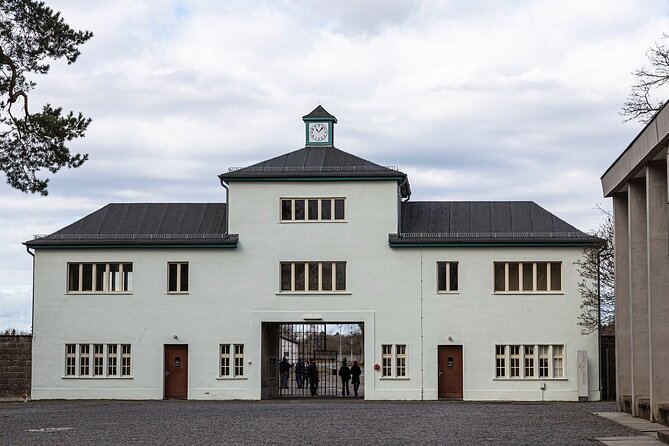
At Sachsenhausen, the tour begins at Tower A, the main entrance. The gate carries the infamous Arbeit macht Frei sign, a phrase that became one of the most recognizable symbols of Nazi concentration camps.
This first moment can feel stark. The entrance looks orderly, but the history attached to it is not. A good guide helps you understand how the camp’s design, rules, and language were used to control prisoners and disguise cruelty behind official systems.
The tour does not rush straight through. Your guide explains what you are seeing and sets the memorial site within the wider history of Nazi Germany. Several accounts praise this part of the visit for making the facts easier to follow without softening what happened.
The subject matter is severe, but the guides are expected to approach it with respect for the victims. That tone is important. The best moments of the tour come when the guide is clear and direct, while allowing the place itself to carry some of the emotional weight.
Barracks 38 and 39: cramped evidence of daily life
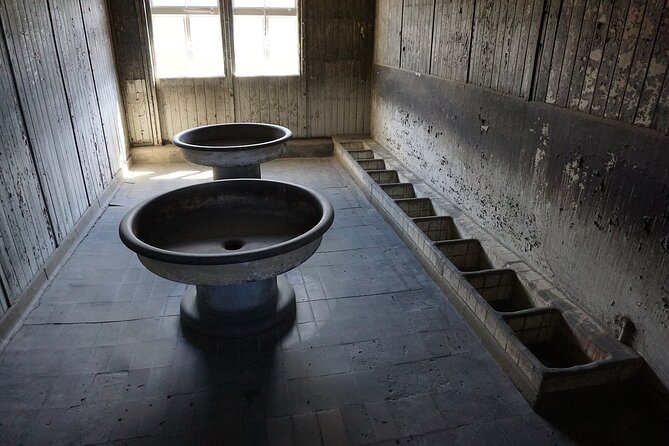
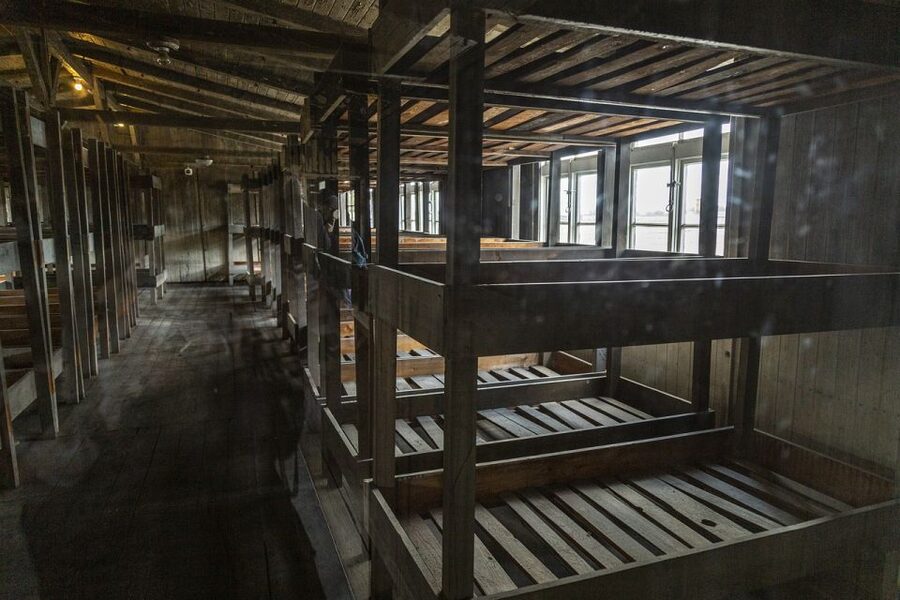
Barracks 38 and 39 were used to hold Jewish prisoners. The tour includes the museum in Barracks 38, where you can learn about prisoners’ daily lives and the extremely cramped conditions in which they were held.
This stop gives the visit a human scale. The camp’s layout can otherwise feel abstract, especially when you first see the open grounds and remaining structures. The barracks help you think about the people who slept, ate, waited, and suffered in those spaces.
The museum setting also gives you a break from walking outdoors. In cold weather, that matters. Recent winter visits describe bitter temperatures, and one account noted that the group spent less time outside because everyone was cold. Bring warm layers in winter and do not count on the buildings alone to keep you comfortable.
The tour provides interpretation rather than leaving you to inspect the rooms without direction. Guides including Richard and Amelia have been praised for giving historical context and explaining terrible facts with care and accuracy.
A few more Berlin trips worth comparing
- Berlin: Reichstag, Dome and Government District Guided Tour
★ 4.7 · 18,288 reviews - Berlin: 1-Hour City Tour by Boat with Guaranteed Seating
★ 4.3 · 16,993 reviews - Berlin: Boat Tour Along the River Spree
★ 4.4 · 11,252 reviews - Discover Berlin Half-Day Walking Tour
★ 5.0 · 9,624 reviews
Punishment cells and the camp’s system of control
The original punishment cells show how prisoners could be detained for minor offenses. This part of the route helps explain that imprisonment was not limited to one form of punishment. The camp operated through layers of orders, surveillance, threats, and arbitrary discipline.
Your guide’s explanation makes the cells more meaningful than a quick look at an empty room. You learn how punishment fitted into the wider structure of the camp. The stop is brief in physical size but heavy in meaning.
This is also where the quality of the guide matters most. The group feedback repeatedly praises Peter, Richard, Walid, and other guides for answering questions without sensationalizing the material. They are described as clear, friendly, and respectful, with enough detail to make the system understandable.
A little humor may appear during the train ride or while managing logistics, but the subject itself is treated seriously. That balance can help you stay focused through five demanding hours.
The infirmary, morgue, and medical crimes
The former infirmary and morgue are included in the tour, along with discussion of cruel medical experiments. This is among the hardest material on the route.
You should expect the guide to explain what took place rather than offer a graphic performance. The purpose is historical understanding: how medicine was abused within the camp system and how prisoners were treated as subjects instead of people.
If you are visiting with older children or students, think carefully about whether this level of detail is appropriate. One group of students and teachers found the tour highly useful as a learning experience, but the material remains upsetting. There is no need to force yourself to look closely at every display. Listening, reflecting, and moving at your own pace are all reasonable responses.
The prisoner kitchen and Station Z
The former prisoner kitchen now houses a museum focused on key moments in the camp’s history. This stop adds another angle to daily life and the organization of the camp. It is not just about the barracks or the entrance. Food, work, punishment, medical care, and administration were all part of the machinery of imprisonment.
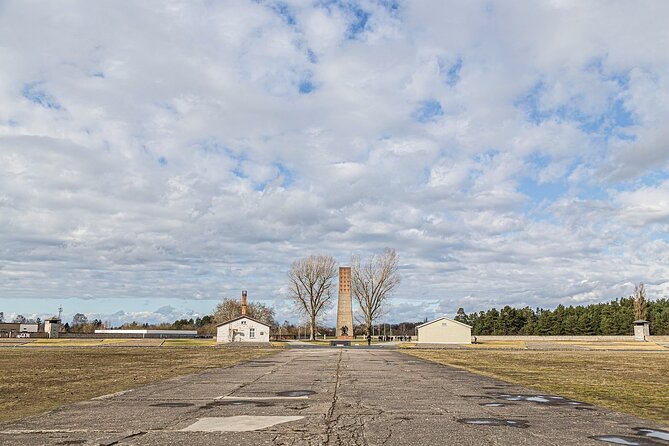
The remains of Station Z are another major stop. Many executions took place there. The site can be difficult to absorb because the physical remains are limited, while the historical meaning is immense. This is a place where a guide’s words provide necessary context.
You may find the formal route efficient rather than exhaustive. The tour is designed to cover important areas in roughly three hours at the memorial, leaving some material for later independent exploration. That is a sensible arrangement for a five-hour trip, though anyone wanting to read every display will likely need extra time.
The Soviet memorial and competing memories
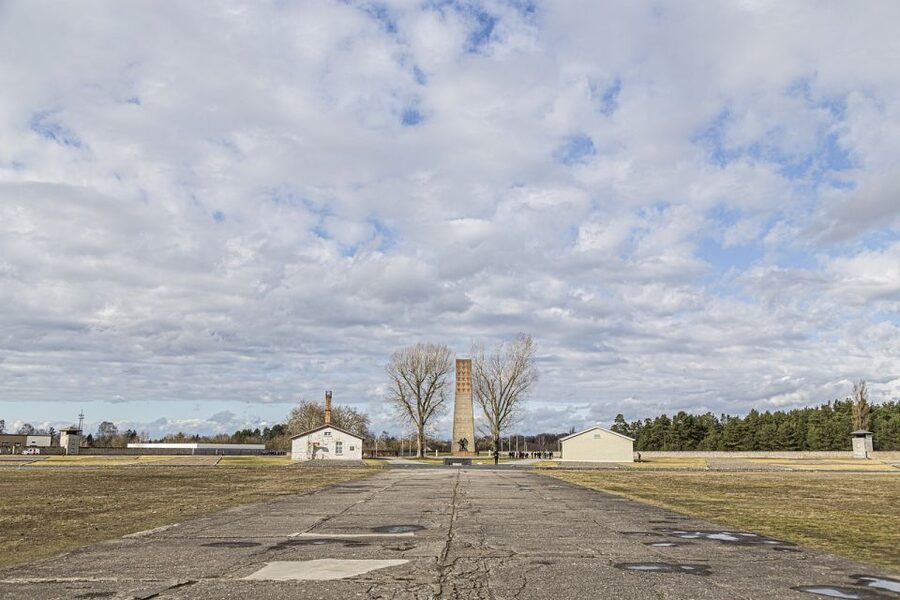
The tour ends at the Soviet memorial built in 1961. It reflects the camp’s role after the Second World War and adds another period to the story of the site.
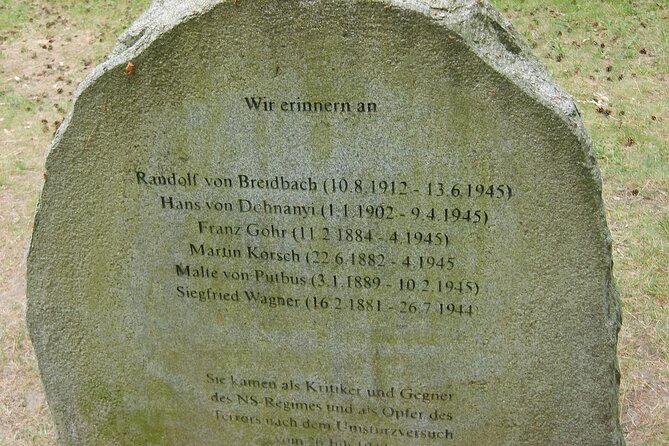
This is one of the most interesting features of the visit because Sachsenhausen is not presented through one single memorial style. Different monuments were placed at different times and for different political reasons. Your guide helps you notice those changes and consider how memory itself can be shaped by later governments and ideologies.
That wider view keeps the visit from becoming a simple list of Nazi-era buildings. You are also learning how Germany and the Soviet Union represented the past after the war. The guides aim to explain these differences clearly and without turning the tour into a political argument.
What the guides add to the experience
The guide is the main value of this tour. The site is accessible by public transport, but navigating the train, ticket zones, memorial grounds, and return journey requires attention. A guide gives you a clear route and keeps the group moving.
The strongest praise has gone to guides who combine facts with calm delivery. Peter is repeatedly described as thorough, helpful, and strong on transport details. Richard is praised for his historical depth, organization, and respectful explanations. Walid is described as engaging and friendly, with an appropriate sense of humor. Felipe receives special credit for helping with train changes and answering questions.
Other guides named in the feedback include Amelia, Paul, Hugo, Mathis, Roshana, and Filipe. The overall rating is 4.7 from 3,716 reviews, which supports the view that guide quality is usually a major strength, although your exact guide and group dynamic can vary.
Languages offered are Spanish, English, German, French, and Italian. If you book in English, the guide should be comfortable explaining complex events and answering questions, but exact language assignments depend on availability.
Timing, walking, and the practical realities
The total duration is five hours, with about three hours commonly spent at the memorial according to the tour description and visitor accounts. You will walk between several areas, spend time outdoors, and encounter uneven or demanding conditions that make the tour unsuitable for people with mobility impairments and wheelchair users.
Wear comfortable shoes. Bring snacks because the visit takes up much of the day and food is not included. You should also plan for the weather. Winter can be bitterly cold, and the open memorial grounds offer little comfort if you arrive underdressed.
Restroom opportunities may be limited during the route. One useful piece of advice is to use the facilities when your guide gives you the chance. It is a small point, but it can make a long and emotional visit easier.
Group size may vary. One recent account refers to a group of 28, large enough that organization matters. The guides are praised for counting people, handling train transfers, and making sure nobody is left behind. Still, larger groups can make questions and close viewing less personal.
Staying longer or returning to Berlin
At the end, you have two choices. You can return to Berlin by train with help from the guide, or stay at Sachsenhausen and continue exploring at your own pace.
I like this flexible ending. Three hours is enough for a guided overview, but the memorial contains more to read and consider. Staying longer suits people who want to examine museum displays carefully or take a quieter pause after the group has left.
If you remain, you are responsible for your own return. The train route is described as easy to navigate, and the guide can explain it before leaving. If you prefer not to manage public transport alone, return with the group.
Is $21 a good value?
At $21 per person, this is good value for a five-hour experience. The fee includes a professional guide, a $3 entrance fee, and a guided explanation of the memorial. The only required extra is the ABC train ticket.
The value is not in luxury or convenience. You are paying for historical structure, transport assistance, and a human guide who can connect the buildings, museums, and monuments. Several people describe the experience as among the best money they spent in Berlin, especially because the guide made difficult material clear.
You can visit a memorial independently for less than the cost of a guided excursion, depending on transport and other arrangements. But you would need to organize the train, understand the ABC ticket, plan your route, and supply your own historical context. For many people, the guide is worth the modest extra cost.
Free cancellation up to 24 hours before the activity and reserve-now, pay-later booking add flexibility. These terms are useful if your Berlin schedule is still changing.
Who should book this Sachsenhausen tour?
I recommend it for adults interested in German history, Second World War history, memorial culture, or the structure of Nazi concentration camps. It also suits students and teachers who want a guided educational visit rather than a quick photo stop.
It is less suitable if you want a light half-day activity, dislike long walks, have mobility limitations, or are not prepared for upsetting subject matter. Families should decide based on the age and maturity of their children, since the tour includes executions, punishment, medical crimes, and cramped imprisonment.
Should you book it?
Book this tour if you want help making sense of Sachsenhausen and prefer not to handle the train journey alone. The combination of a low price, multilingual professional guides, included memorial entry, and the option to stay longer gives you a useful balance of structure and freedom.
Skip it only if you already have a strong plan for an independent visit and want to spend the entire day reading at your own pace. For most first-time visitors to Sachsenhausen, I would choose the guided option. Just buy your ABC ticket first, wear good shoes, bring a snack, and give the subject the time and respect it deserves.
FAQ
Where does the Sachsenhausen tour meet in Berlin?
The guide meets you next to the World Time Clock at Alexanderplatz. The guide will be wearing Buendía accreditation.
How long does the experience last?
The full experience lasts five hours. Starting times vary, so you need to check availability when booking.
Is the train ticket included?
No. You must purchase an ABC zone train ticket before the activity. Tickets are available from station ticket machines or online through the Berliner Verkehrsbetriebe website.
Is the Sachsenhausen entrance fee included?
Yes. The $3 entrance fee to Sachsenhausen Concentration Camp Memorial is included in the tour price.
Which languages are available?
The live tour guide is available in Spanish, English, German, French, and Italian.
Can I return to Berlin with the guide?
Yes. You can return to Berlin by train with assistance from the guide at the end of the tour.
Can I stay longer at Sachsenhausen?
Yes. You may remain at the memorial after the guided visit and explore independently.
What should I bring?
Bring comfortable shoes and snacks. Clothing suited to the weather is also sensible because parts of the visit take place outdoors.
Is the tour suitable for wheelchair users?
No. The activity is not suitable for wheelchair users or people with mobility impairments.
Just added around Berlin
- Private Walking Tour in Berlin: Hitler’s Germany & WWII★ 5.0 · 7 reviews
- The History of Berlin: WWII PRIVATE Walking Tour With Locals★ 5.0 · 209 reviews
- Private Berlin WWII and Cold War History Tour with Local Expert Guide★ 5.0 · 28 reviews
- Private Walking Tour Berlin 3 hours: Brandenburg, Historic Center★ 5.0 · 7 reviews
- Berlin: Private Bike Tour of the Berlin Wall and Third Reich★ 5.0 · 23 reviews
- Berlin: Guided Private Bike Tour to Explore the Highlights★ 5.0 · 12 reviews
- Berlin Photography Masterclass – Private Photography Lesson★ 4.5 · 23 reviews
- Group Driving Tour 1 to 6 people. Berlin Shore Excursion incl pick-up at Port★ 5.0 · 8 reviews