Reviewed · BERLIN TOURS
Get In: The Ultimate Berlin Club Tour
Berlin’s clubs tell the city’s story. Get In: The Ultimate Berlin Club Tour links queer history, punk, techno, migration, activism, and gentrification across nine important venues and neighborhoods. I like its small cap of 10 people, and I like that guide Jeff uses photos, video, audio, quizzes, and augmented reality instead of relying on a long talk. The main drawback is that the tour runs in daylight and club access depends on availability, so you should not expect a night out or guaranteed entry everywhere.
The $81.98 price is fair if you want context before going clubbing on your own. You will not simply collect venue names. You will learn why Berlin clubs matter, how to improve your chances at the door, and why some venues are treated as cultural institutions. Bring a public transport ticket, comfortable shoes, and an open mind.
In This Review
- Key points to know before booking
- Why this Berlin club tour is different
- SchwuZ and the queer roots of Berlin nightlife
- SO36, punk, and West Berlin counterculture
- Tresor and the sound of post-wall Berlin
- KitKatClub and the city’s permissive side
- Club Commission and nightlife as public policy
- Kater Blau, Holzmarkt, and the cost of gentrification
- YAAM and the music of migration
- Berghain, anonymity, and the famous door
- RAW-Gelände and the final view of alternative Berlin
- What the $81.98 price gets you
- Who should book this experience?
- Final recommendation
- FAQ
- How long does the Berlin club tour last?
- Where does the tour begin?
- What time does the tour start?
- Where does the tour end?
- How many people can join the tour?
- Is public transportation included?
- Does the tour include entry to Berlin clubs?
- Is the tour suitable for most people?
- What happens if I need to cancel?
Key points to know before booking
- Nine stops across Berlin: The route connects SchwuZ in Neukölln with RAW-Gelände near Warschauer Straße, giving you a broad look at the city’s club culture.
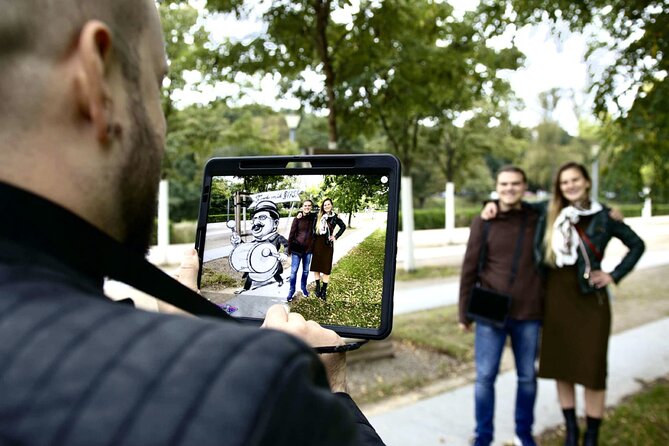
- Jeff’s media-led guiding: An iPad presentation includes more than 200 photos, videos, quotes, and audio clips, plus quizzes and augmented reality features.
- A strong queer and political focus: LGBTQ+ clubs, safer spaces, AIDS activism, refugee support, pride events, and resistance to the far right all have a place in the story.
- A genuinely small group: The maximum of 10 people makes it easier to ask questions and keep up during the walking and public transport portions.
- Useful Berghain advice: The tour explains how Berlin’s clubs operate and includes practical orientation for people hoping to go out later.
- A daytime introduction, not a club crawl: You visit club locations and may receive behind-the-scenes access to a world-famous venue, but entry is subject to availability.
Why this Berlin club tour is different
Most city tours point you toward museums, palaces, or famous squares. This one treats nightlife as part of Berlin’s civic and cultural identity. That is a smart approach because the city’s clubs are tied to far more than music. They connect to the fall of the Berlin Wall, queer freedom, immigration, protest, artistic experimentation, and fights over urban development.
I like that the tour does not present Berlin clubbing as a simple party recommendation. You get the backstory behind the door policies, music styles, venues, and communities. A club may be a place to dance, but it may also be a safer space, a political meeting point, or one of the few places where people can test new ideas about identity.
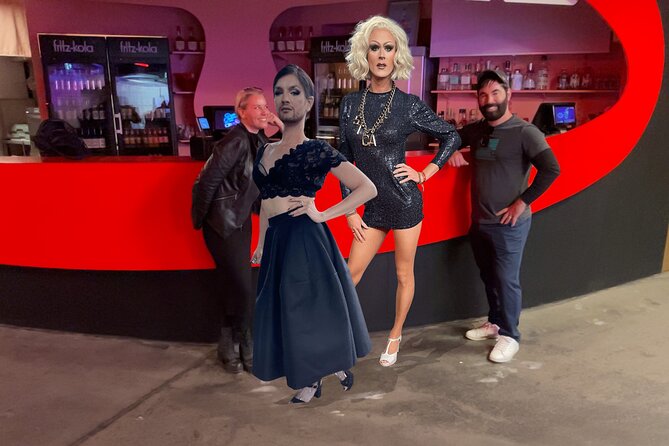
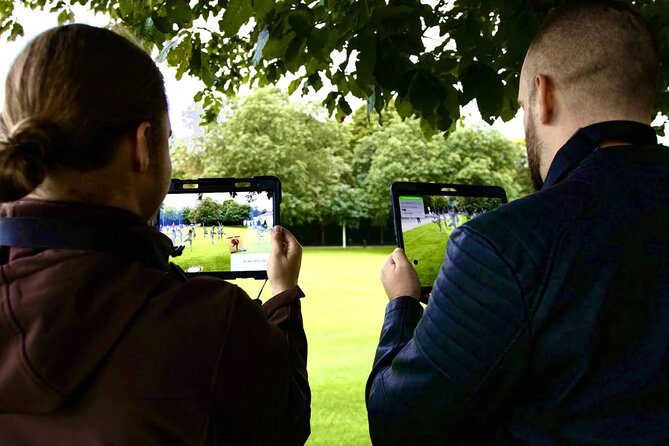
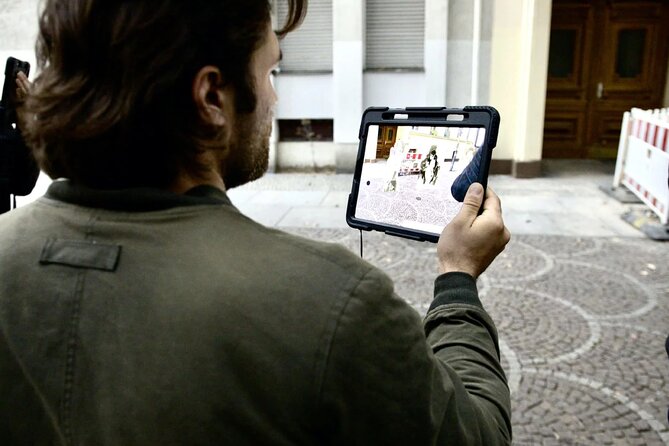
The multimedia format adds useful variety. Jeff uses an iPad to show historic images and footage, play audio, and ask quiz questions. Augmented reality brings selected celebrities and clubs into the presentation, and the Mixies feature lets you make personalized photos with AR elements. You may be skeptical about a screen on a walking tour, but here it gives the guide a way to show places and people that are no longer visible.
The route lasts about three hours and 30 minutes. The group limit of 10 matters. This is a subject with plenty of detail, and a small group allows room for discussion without turning every stop into a crowded sidewalk lecture.
A few more Berlin trips worth comparing
- Berlin: Reichstag, Dome and Government District Guided Tour
★ 4.7 · 18,288 reviews - Berlin: 1-Hour City Tour by Boat with Guaranteed Seating
★ 4.3 · 16,993 reviews - Berlin: Boat Tour Along the River Spree
★ 4.4 · 11,252 reviews
SchwuZ and the queer roots of Berlin nightlife
The tour begins at SchwuZ on Rollbergstraße in Neukölln at 11:30 a.m. This is a fitting starting point because SchwuZ is one of Berlin’s best-known LGBTQ+ clubs and a useful doorway into the city’s nightlife story.
Here you learn how the Berlin Wall divided the city and shaped nightlife on both sides. The story includes Romy Haag, a trans pioneer whose work helped change the nightclub scene in the 1970s. You also hear how gay clubs and venues such as Metropol helped prepare the ground for the techno movement that later became Berlin’s international calling card.
The stop also covers activism during the AIDS crisis. That matters because it places club culture in a larger social setting. These venues were not only places to meet and dance. They could also offer community, visibility, mutual support, and a public response to discrimination.
You spend about 20 minutes here, with admission included. That is enough time for a focused introduction, though not enough for a full history of queer Berlin. I see this as a strong opening rather than a complete treatment.
SO36, punk, and West Berlin counterculture
The next stop is SO36, a club strongly linked to West Berlin in the 1970s. The discussion turns to economic hardship and the way difficult conditions helped create a rough, inventive club culture.
SO36 became associated with punk, feminism, and counterculture. The tour also connects the venue to music figures such as David Bowie and Iggy Pop. Those names add star power, but the more useful point is how the club functioned as part of a wider network of people resisting conventional social rules.
You also learn about SO36’s role in Berlin’s Turkish community. Events connected to Kreuzberg CSD and Mad & Disabled Pride show how the club has continued to broaden its idea of who belongs. This is one of the tour’s recurring themes: inclusion is not a decorative slogan. It is part of how certain venues have survived and remained relevant.
The stop takes about 20 minutes, and admission is free. Since this is an exterior visit or brief venue-focused stop rather than a full club night, you should treat it as a lesson in place and history.
Tresor and the sound of post-wall Berlin
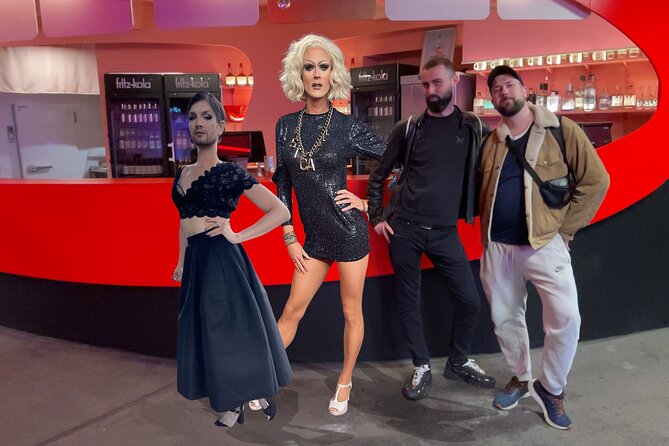
Tresor represents the techno chapter. The club occupies a former GDR power plant, and its setting helps explain why abandoned or neglected buildings became so important after the Berlin Wall fell.
The tour explores how empty industrial sites offered room for new forms of music and social life. The fall of the Wall did not simply open borders. It also left behind buildings and spaces that could be used in unexpected ways. Clubs such as Tresor turned those spaces into gathering points for a new Berlin identity.
A key part of this stop is the role of Detroit’s Black techno DJs. Their music and ideas had a lasting effect on Berlin’s sound. That connection is essential, since Berlin techno did not develop in isolation. It grew through an exchange between cities, scenes, and communities.
You spend about 15 minutes at Tresor. That is brief, but the stop works well as part of the larger route. It gives you the background to appreciate techno as an international cultural exchange rather than a purely German invention.
Still Berlin, at a slower pace:
- Discover Berlin Half-Day Walking Tour
★ 5.0 · 9,624 reviews - Berlin: Hop-on Hop-off Bus Tour with Live Commentary
★ 4.3 · 8,579 reviews - Berlin: Government District around the Reichstag Guided Tour
★ 4.7 · 8,447 reviews - Berlin: Reichstag, Plenary Chamber, Cupola & Government Tour
★ 4.6 · 8,422 reviews
KitKatClub and the city’s permissive side
KitKatClub brings the conversation toward sexuality, identity, and freedom of expression. Its roots reach back to Berlin’s cabaret culture of the 1920s, while its modern reputation comes from avant-garde parties and a deliberately provocative atmosphere.
The guide explains how the club challenges ordinary rules about dress, behavior, sexuality, and public identity. You should understand that this is not a standard sightseeing stop. The venue’s subject matter is adult and frank, and its importance lies in how it creates room for people who want to question social conventions.
The visit lasts about 15 minutes. You will not be attending one of its parties during the daytime tour. Instead, you gain a clearer idea of the type of atmosphere and values the venue represents. If you are curious about Berlin’s more unconventional nightlife, this stop adds useful perspective. If you prefer a traditional historical tour, it may feel outside your comfort zone.
Club Commission and nightlife as public policy

At Club Commission, the tour shifts from individual venues to the organization working to protect Berlin’s club culture. This is where you consider clubs as part of the city’s political and cultural infrastructure.
You learn how nightclubs can function as safer spaces for marginalized communities and as centers of activism. The discussion includes protests against the far-right AfD and support for LGBTQ+ rights. It also explains why club closures and development projects can become political issues.
This 10-minute stop helps answer a basic question: why should anyone care if a club disappears? The answer is that a club can provide a meeting place for artists, activists, migrants, queer communities, and young people who may not feel at home elsewhere.
The subject is especially valuable if you want to understand present-day Berlin rather than simply its past. Club culture here is still tied to arguments about who gets to use the city and which kinds of public life deserve protection.
Kater Blau, Holzmarkt, and the cost of gentrification
The tour continues to Kater Blau and Holzmarkt, areas connected to the fight against gentrification. Berlin’s alternative venues often depend on unusual sites, flexible rules, and relatively affordable space. As development pressures increase, those conditions become harder to maintain.
At this stop, you look at how clubs try to preserve a sense of authenticity while facing commercial pressure. The issue is not simply that new buildings appear. It is that the social and creative networks built around clubs can disappear when rents rise or land is redeveloped.
The visit is only about five minutes, so expect a quick explanation rather than a long discussion. Still, it puts later stops into context. Berlin’s club culture is famous partly because it grew in places that were overlooked. Once those places become fashionable, the qualities that made them special can be threatened.
YAAM and the music of migration
YAAM introduces the role of the Black Caribbean community in Berlin’s music scene, with particular attention to reggae. This is a useful correction to the idea that Berlin nightlife is only techno, industrial spaces, and strict door policies.
YAAM has served as a place for cultural exchange and community building. Its work includes support for tolerance, youth empowerment, refugees, and other marginalized groups. Music is central, but the venue also represents a social message about welcome and participation.
You spend around five minutes here. Again, the stop is short, but it broadens the tour’s view of Berlin. The city’s nightlife has been shaped by people and sounds from many places, and YAAM makes that clear.
Berghain, anonymity, and the famous door
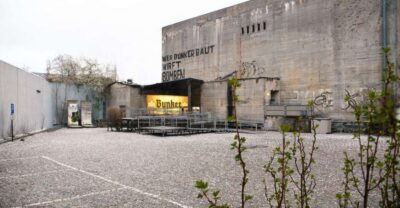
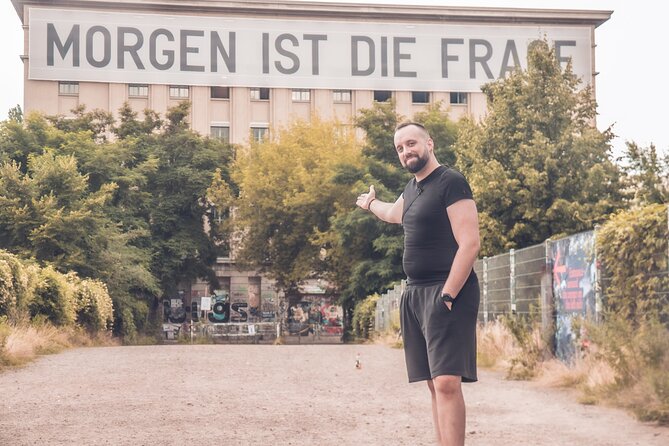
No club needs much introduction in Berlin, but Berghain gets a careful one. The tour covers its history in a former bunker and its rise into one of the world’s best-known techno venues.
You learn why the strict no-photo rule matters. It protects anonymity and helps create a space where people can behave differently from how they might in ordinary public life. The tour also discusses Berghain’s approach to sexual exploration and gender expression, along with ideas associated with Judith Butler and Michel Foucault.
This is not a promise that you will enter Berghain. Admission is free at this stop, and the schedule is not a nighttime club visit. The value is in understanding the club’s rules, reputation, and place in Berlin’s culture before you try it yourself.
One practical tip from the tour is especially useful: Berghain can operate for very long periods, and Sunday morning may offer a better chance of getting inside than a busy Saturday night. This is not a guarantee, but it is the kind of timing advice that can save you from guessing.
You spend about 20 minutes here, making it one of the longer stops. If Berghain is high on your Berlin list, this section alone may justify the tour.
RAW-Gelände and the final view of alternative Berlin
The tour ends at RAW-Gelände on Revaler Straße, close to Warschauer Straße station. This former industrial area contains venues including Suicide Circus, Haubentaucher, and Astra Kulturhaus, and it gives the route a fitting final chapter.
Here you consider the effect of gentrification on RAW and on clubs that have closed, including Watergate and Grießmuehle. You also hear about the pressure facing venues such as ://aboutblank. The point is not nostalgia for its own sake. It is a look at how quickly nightlife can change when the city’s land becomes more valuable.
The discussion also covers Berlin’s long tradition of open-air raves. These events helped reclaim spaces and keep techno culture moving beyond conventional club walls. At RAW, the connection between abandoned industrial land, alternative culture, and nightlife becomes easy to see.
The final stop lasts about 10 minutes. You finish near a major train stop, which is convenient if you want to continue exploring Friedrichshain or head back toward central Berlin.
What the $81.98 price gets you
At $81.98 per person, this is not a cheap orientation walk. The price makes more sense when you consider what is included: a three-and-a-half-hour small-group experience, an expert guide, multimedia material, an AR component, and possible behind-the-scenes access to a famous Berlin club.
You are paying for interpretation and organization. Without a guide, you could visit some of these venues or search for their histories online, but you would not easily see how SchwuZ, Tresor, Berghain, YAAM, and RAW fit into one connected story.
The value is strongest for first-time Berlin clubbers, visitors who want historical context, and people interested in queer culture or urban politics. If you already know Berlin’s clubs well, the route may still bring new details, but the price may feel high for a refresher.
Group discounts are available. A public transport ticket is not included, so bring one. The route covers several parts of Berlin, and public transportation is part of the practical rhythm of the day.
Who should book this experience?
I would choose this tour if you want to go clubbing but feel unsure about the scene. It gives you names, history, etiquette, timing tips, and a clearer sense of which venues match your interests.
It also suits anyone who sees nightlife as culture rather than just entertainment. The focus on queer communities, Black music, activism, refugees, and the fight against development gives the tour real substance.
You may want to skip it if you want actual dancing, drinks, or late-night entry. Most stops are short, and the tour begins at 11:30 a.m. It is a walking and storytelling experience with club access subject to availability, not a guaranteed night at Berlin’s best-known venues.
The experience is also a good fit for solo visitors and small groups. With no more than 10 people, you have a better chance to ask Jeff questions and meet others who are curious about Berlin’s unusual nightlife.
Final recommendation
Book Get In: The Ultimate Berlin Club Tour if you want a smart introduction to the forces behind Berlin’s clubs. Jeff’s presentation style, personal approach, and use of media keep a serious subject lively, while the route gives you far more than a list of famous doors.
Keep your expectations realistic. You are not buying guaranteed entry to Berghain or KitKatClub, and the tour requires a public transport ticket and good weather. But if you want to understand why Berlin nightlife matters, learn how to plan your own club night, and see the links between music, identity, and politics, this is a strong use of half a day.
FAQ
How long does the Berlin club tour last?
The tour lasts approximately three hours and 30 minutes.
Where does the tour begin?
It begins at SchwuZ, Rollbergstraße 26, 12053 Berlin, Germany.
What time does the tour start?
The scheduled start time is 11:30 a.m.
Where does the tour end?
The tour ends at RAW-Gelände, Revaler Straße 99, 10245 Berlin, near Warschauer Straße train station.
How many people can join the tour?
The group is limited to a maximum of 10 people.
Is public transportation included?
No. You need to bring your own public transport ticket.
Does the tour include entry to Berlin clubs?
It includes admission at SchwuZ and possible behind-the-scenes access to a world-famous Berlin club, subject to availability. Several other stops list free admission, but the experience is not presented as a guaranteed nighttime club entry.
Is the tour suitable for most people?
Most people can participate, and service animals are allowed. The tour is near public transportation.
What happens if I need to cancel?
You can receive a full refund if you cancel at least 24 hours before the local start time. Cancellations or changes made less than 24 hours ahead are not accepted for a refund. If bad weather or too few bookings causes cancellation, you will be offered another date or experience, or a full refund.
Just added around Berlin
- Private Walking Tour in Berlin: Hitler’s Germany & WWII★ 5.0 · 7 reviews
- The History of Berlin: WWII PRIVATE Walking Tour With Locals★ 5.0 · 209 reviews
- Private Walking Tour Berlin 3 hours: Brandenburg, Historic Center★ 5.0 · 7 reviews
- Berlin: Private Bike Tour of the Berlin Wall and Third Reich★ 5.0 · 23 reviews
- Private Berlin WWII and Cold War History Tour with Local Expert Guide★ 5.0 · 28 reviews
- Berlin: Guided Private Bike Tour to Explore the Highlights★ 5.0 · 12 reviews
- Berlin Photography Masterclass – Private Photography Lesson★ 4.5 · 23 reviews
- Group Driving Tour 1 to 6 people. Berlin Shore Excursion incl pick-up at Port★ 5.0 · 8 reviews
Berlin Tours, compared.
Reichstag, Dome and Government District Guided Tour
Read our review →
1-Hour City Tour by Boat with Guaranteed Seating
Read our review →
Government District around the Reichstag Guided Tour
Read our review →
Reichstag, Plenary Chamber, Cupola & Government Tour
Read our review →