
Reviewed · HISTORICAL TOURS
Güstrow: Guided tour of the historic city center
Güstrow keeps its old face remarkably well. This 90-minute walk brings together five centuries of largely undamaged old-town streets, the brick Gothic cathedral, and the unusual Floating figure by Ernst Barlach. I like the way the tour connects buildings with the people who shaped the town, from Wallenstein and Tsar Peter the First to Barlach and Uwe Johnson.
I also like the price: $10 per person, with a free city museum visit before or after the walk. The main consideration is focus. The cathedral receives plenty of attention, and some visitors wanted more stops around the wider town center. The guide may also run beyond 90 minutes when questions and discussion take over.
Güstrow-Information, at Franz-Parr-Platz 10, is an easy place to begin. The tour is offered in German, led by a live guide, and is wheelchair accessible. A 4.6 rating from 12 bookings suggests a consistently strong experience, especially for people who enjoy history explained by someone who clearly cares about the town.
In This Review
- Key points to know before booking
- Starting at Franz-Parr-Platz 10
- A town shaped by rulers, artists, and writers
- Güstrow’s old town and its mixed architecture
- Güstrow Cathedral and Barlach’s Floating figure
- The Renaissance castle under restoration
- The market square and its layers of style
- How the guide affects the experience
- Is $10 a good value?
- Who should book this Güstrow walk?
- Practical details for a smooth visit
- Should you book the Güstrow guided tour?
- FAQ
- Where does the Güstrow city tour begin?
- How long does the guided tour last?
- What language is the tour conducted in?
- Is the tour wheelchair accessible?
- What are the main sights on the route?
- Is the Renaissance castle fully open during the tour?
- Is museum admission included?
- Can I cancel the booking for a full refund?
Key points to know before booking
- Ernst Barlach’s Floating figure is the tour’s most distinctive sight, housed inside Güstrow Cathedral.
- The old town survived largely intact for about 500 years, giving the walk a strong sense of place.
- The Renaissance castle is a major architectural highlight, though it is currently under restoration.
- The market square packs several styles together, including the town hall, parish church, and historic town houses.
- The guide’s historical knowledge is a major strength, though the amount of information may feel heavy for some people.
- The free city museum adds value and can be visited before or after the 90-minute tour.
Starting at Franz-Parr-Platz 10
Your meeting point is Güstrow Information, operated by Güstrow-Information, at Franz-Parr-Platz 10. This makes the tour simple to find and keeps the practical side of the experience tidy: you arrive at the town’s official information point, meet the guide, and set off on foot.
The walk lasts about 1.5 hours. That is long enough to build a useful picture of Güstrow without taking over an entire day. You should wear comfortable shoes, since the route follows winding streets and historic squares rather than a straight modern grid.
The walk is wheelchair accessible, an important advantage in a historic center where older paving and narrow streets can sometimes cause problems. Still, if you need very specific information about surfaces or access inside individual buildings, ask Güstrow Information before booking.
The guide speaks German. That matters most here because the tour depends on stories, explanation, and local context rather than simply pointing out facades. If you do not understand German, this particular tour may not be the right fit.
More History Tours in Germany:
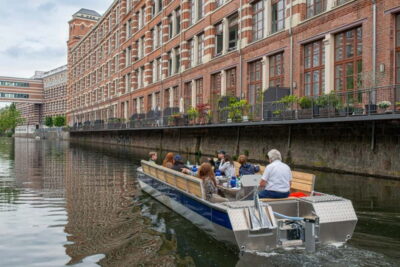
- Leipzig: City History Canal Sightseeing Tour on a Motorboat
★ 4.7 · 6,232 reviews - Berlin: Natural History Museum Entrance Ticket
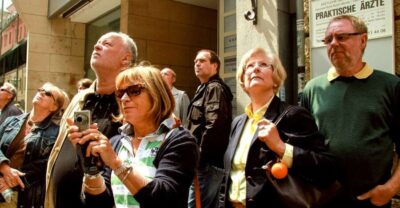
★ 4.6 · 3,382 reviews - Leipzig: 1.5-Hour Historical Walking Tour in German
★ 4.7 · 2,217 reviews
A town shaped by rulers, artists, and writers
Güstrow was once a residential town and an administrative center. That past left it with an unusually broad mix of buildings and associations. You will hear about political figures, nobles, artists, and writers who passed through or worked here.
The named figures include Wallenstein, August the Strong, Tsar Peter the First, Georg Friedrich Kerting, John Brinkmann, Ernst Barlach, and Uwe Johnson. That list gives you a clue about the tour’s approach. It is not only an architecture walk. The guide uses the streets and buildings to explain how Güstrow developed and how different people left their mark.
This is especially useful in a town that may not be as familiar to international visitors as larger northern German destinations. Without a guide, you can admire the old facades and still miss why the town mattered. With one, the market square, cathedral, castle, and civic buildings become parts of one story.
I would expect a good deal of spoken information in a relatively short time. The strongest guides make that material lively and connect it to what you are seeing. In one particularly warm account, the guide was praised for combining extensive knowledge with patient answers and an engaging manner. That is exactly the quality you want on a city walk.
Güstrow’s old town and its mixed architecture
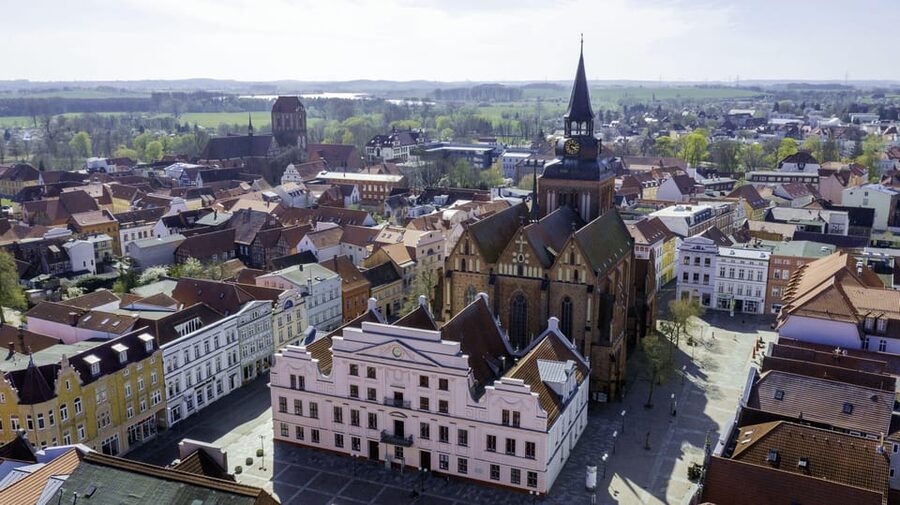
The historic center is the main setting for the experience. Güstrow’s old town is described as largely undamaged for 500 years, which gives the walk an unusual visual advantage. You are not simply looking at a few preserved monuments among modern buildings. You get a more continuous sense of an older town.
The architecture includes classicist town houses, Renaissance buildings, and brick Gothic structures. That variety rewards a slower pace. Look up as you walk. The details are not limited to grand monuments, since ordinary town houses also show how the center changed over time.
The winding streets and historic squares help the tour feel like a walk through a real town rather than a sequence of isolated photo stops. You will pause for sightseeing and explanations, but the route also lets you see how the buildings relate to one another.
There is a tradeoff. Some people may want more individual stops in the town center, especially if they prefer a quick-moving route with frequent photo opportunities. The guide’s enthusiasm can mean that a few locations receive long explanations. One person specifically wanted to see more of the center, while another noted that the guide continued beyond the planned time. I see that as a good sign for history fans, but less so if your schedule is tight.
Güstrow Cathedral and Barlach’s Floating figure
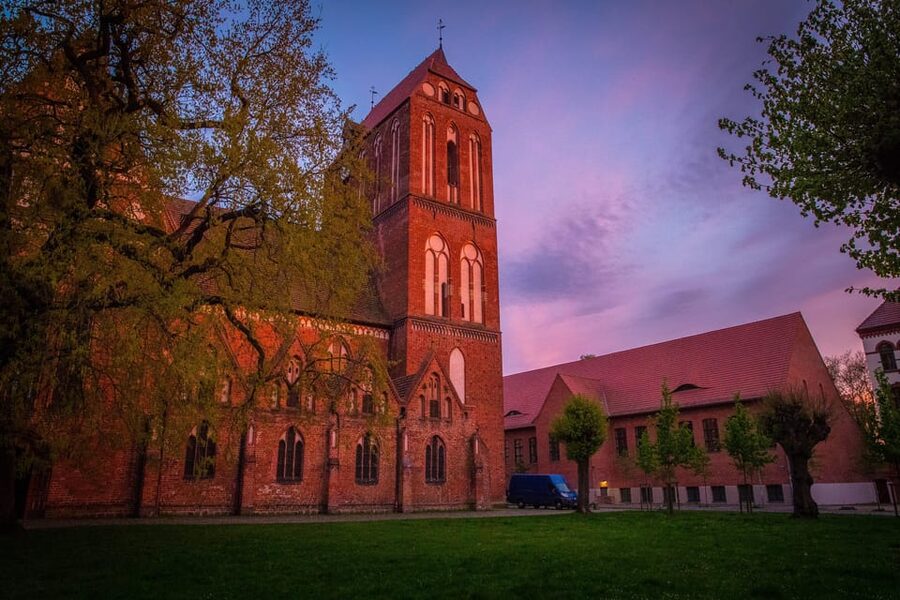
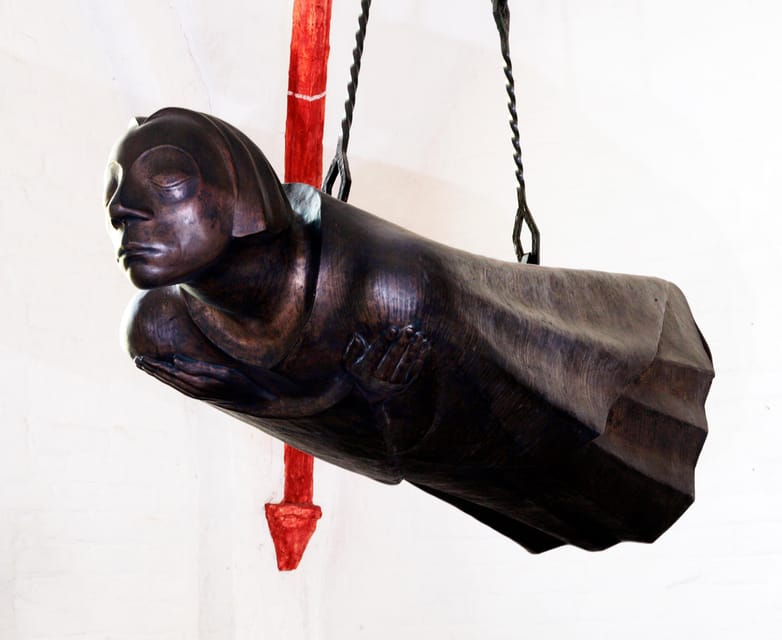
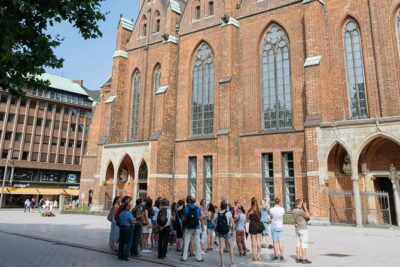
The cathedral is the emotional center of the walk. It is a brick Gothic building, and the tour gives it serious attention. The architecture alone makes it worth entering, but the main reason many people will remember the visit is Ernst Barlach’s sculpture Floating.
Barlach’s work gives the cathedral a modern artistic presence within its medieval setting. The unusual figure is not just another object on a sightseeing checklist. It changes the mood of the building and adds a question for you to consider: how can a place of old brick, stone, and religious tradition hold a work of modern sculpture so powerfully?
This is where a guide earns the $10 cost. A quick look at the sculpture tells you what it is, but the guide can explain its place in Barlach’s work and why it matters in Güstrow. The available comments show that the cathedral explanation is a highlight for some people, though one person felt that too much of the tour centered on the cathedral.
My advice is simple: if Barlach interests you, welcome the extra time. If your priority is seeing as many streets and buildings as possible, you may find the cathedral section long. The balance depends partly on the guide and partly on your own interests.
The cathedral also gives the walk a useful change of pace. After outdoor streets and squares, you move into a space where the guide can slow down and let the art and architecture do some of the work. Even when you do not agree with every interpretation, the setting makes the stop memorable.
More City Tours in Germany:
- Berlin: 1-Hour City Tour by Boat with Guaranteed Seating
★ 4.3 · 16,993 reviews - Cologne: Panoramic City Cruise
★ 4.3 · 5,698 reviews - Berlin: City Sightseeing Hop-On Hop-Off Bus Tour
★ 4.1 · 4,233 reviews - Potsdam: City and Castles Tour
★ 4.7 · 3,721 reviews
The Renaissance castle under restoration
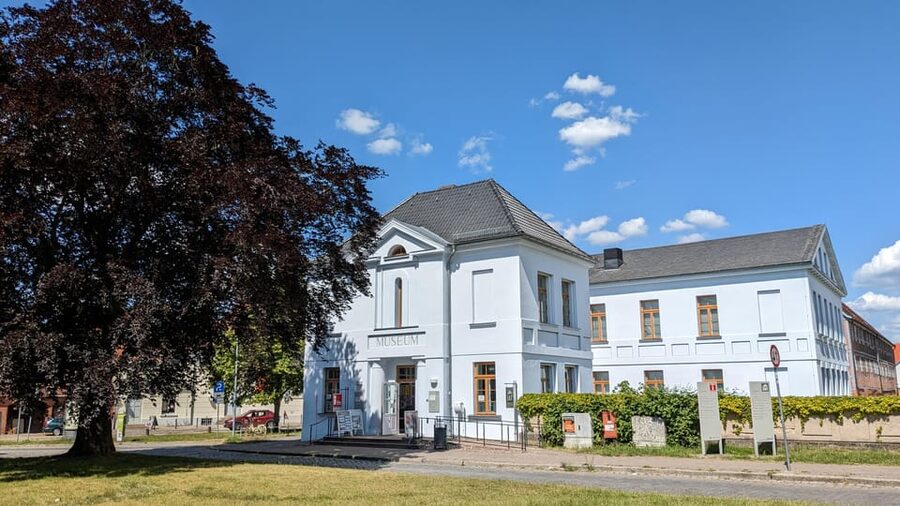
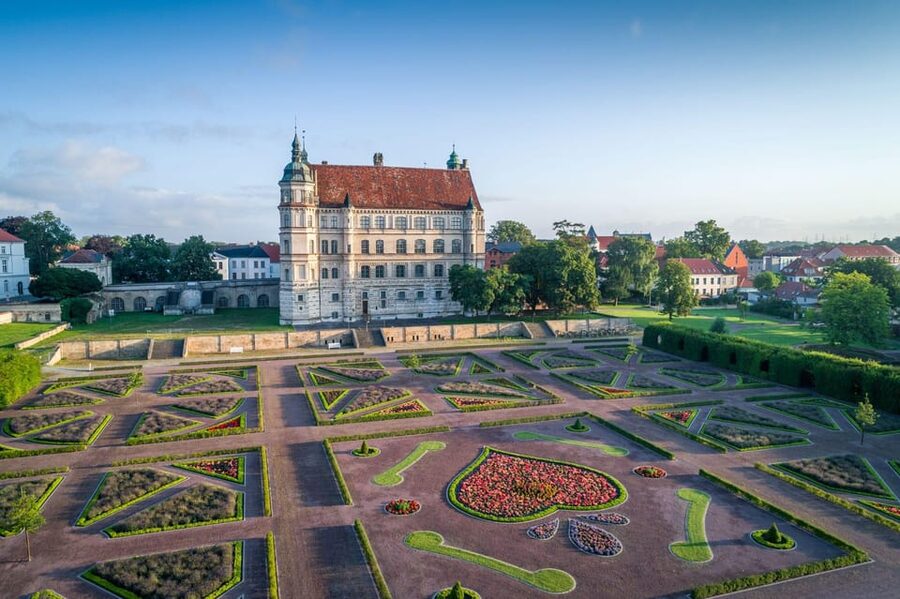
Güstrow’s Renaissance castle is another major reason to take the tour. It is described as one of the most important Renaissance castles in Northern Europe, though it is currently under restoration.
That restoration status matters. You should not book this experience expecting every part of the castle to be fully available for an extended interior visit. Instead, treat the castle as a key piece of the town’s story and architecture, with the guide explaining its role and significance as you view it during the walk.
The castle adds a different architectural note from the cathedral. The cathedral represents brick Gothic design, while the castle points to the ambitions and tastes of the Renaissance period. Seeing both in one short route helps you understand that Güstrow was not frozen in a single era. It changed as its rulers, officials, and residents changed.
The castle is also useful context for the town’s former role as a residence and administrative center. A building of this scale tells you that Güstrow was more than a small provincial stop. It had enough political importance to attract major patrons and produce architecture on a northern European scale.
Because the building is under restoration, the guide’s explanation becomes more important. A closed or partly restricted site can be disappointing when you expect a full palace visit. Here, the tour works better as an architectural and historical introduction than as a complete castle admission.
The market square and its layers of style
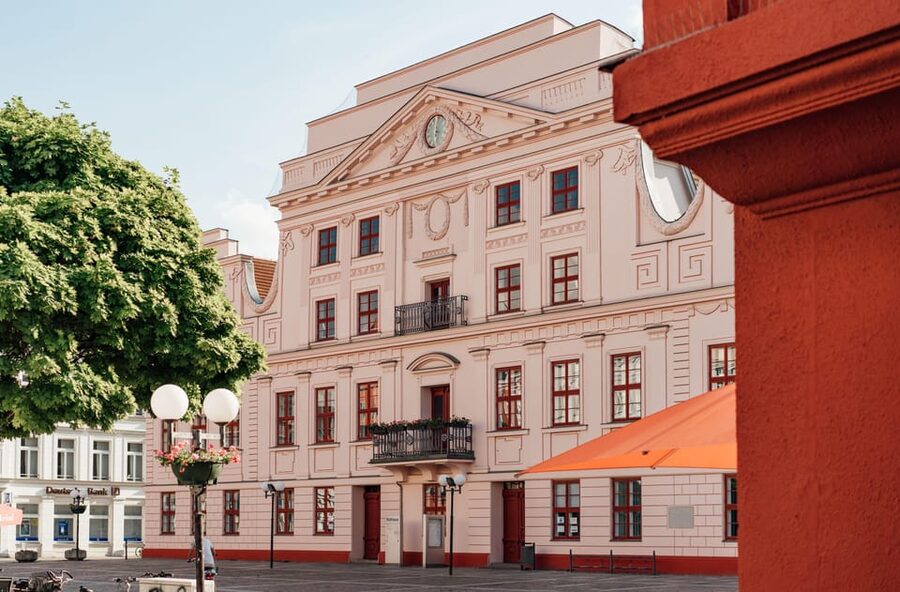
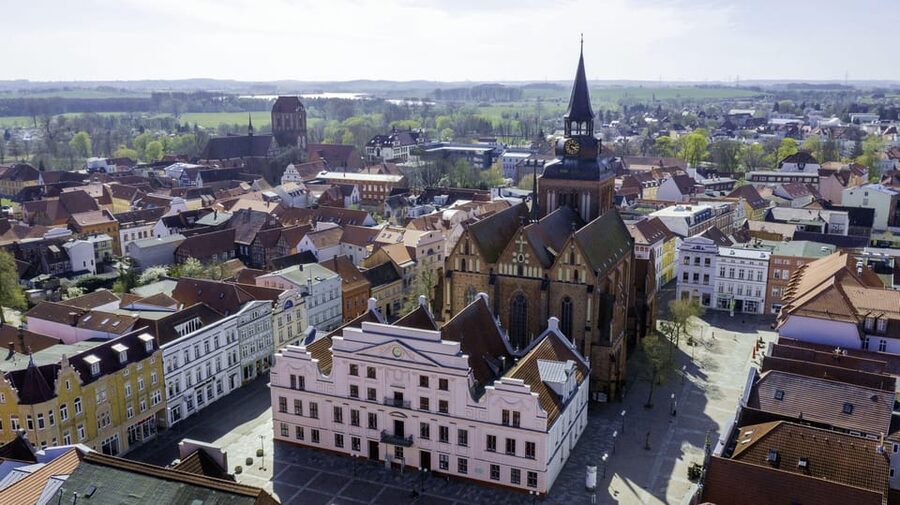
The market square brings several parts of Güstrow together. Here you can see the town hall, the parish church, and town houses from different periods. It is the sort of place where a guide can explain how civic, religious, and domestic life shared the same urban space.
The square is also a good setting for understanding the visual mix of Güstrow. Classicist facades may sit near older forms, while brick Gothic details remind you of northern Germany’s building traditions. The point is not to memorize every style. It is to learn how to read the town as you continue exploring on your own.
This stop should suit you if you enjoy small details and comparisons. A guide might point out how a building’s shape, materials, or decoration reflects its period. The information is more useful than a string of dates because it gives you a method for looking at other German towns.
The square also makes a practical photo stop. You can frame several important buildings in one area, although the tour’s pace may not allow unlimited time with a camera. One person admitted being so absorbed in the explanation that they forgot to take photographs. That says something about the tour’s conversational pull, though photography fans may want to return later.
How the guide affects the experience
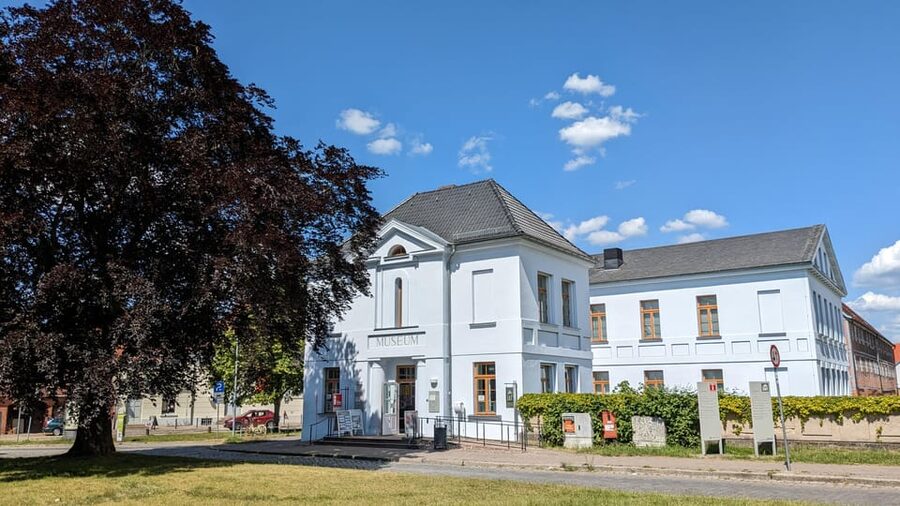
The guide is the heart of this activity. The strongest praise centers on personal attention, deep subject knowledge, and an engaging style. One booking received what was described as a very personal guiding experience, with a friendly and capable guide who explained the material in a lively way.
That personal quality may be especially noticeable when the group is small. One person described being alone on the tour and still receiving a full, enthusiastic presentation. A small group can make it easier to ask questions and adjust the pace.
You should also expect the guide to answer questions patiently. That is valuable in Güstrow because the architecture and personalities cover several centuries. A rushed explanation would leave you with a list of names. A patient guide can show how the names connect to actual places.
The downside is information density. One person wanted more of the town and less input about the cathedral. Another wished for an extra stop or two, even while praising the guide’s extensive knowledge. If you prefer a relaxed stroll with short comments, the amount of material may feel like a lot.
The tour has a strong average rating of 4.6 from 12 ratings, with several top scores and a few fours. One three-star rating points to the same issue: the desire to see more of the center. I would read that not as a problem with accuracy or friendliness, but as a question of balance and personal taste.
Is $10 a good value?
At $10 per person, this is a good-value introduction to Güstrow. You receive a 90-minute guided walk and free admission to the city museum before or after the tour. That museum option makes the price even more attractive, especially if you want additional context without paying for another activity.
The tour is particularly good value if you are new to Güstrow. You get the main historic sights in one organized route, plus names and background that would be hard to assemble from a casual walk. The guide also helps you decide which places deserve a return visit.
Entrance fees are not included. That means you should allow for possible charges if you want to enter sites beyond what is covered by the walk. The activity is best viewed as a guided orientation and history experience, not a package covering every interior.
The flexible booking terms also reduce the risk. You can cancel up to 24 hours before the start for a full refund, and you can reserve now while paying later. Those details are useful if your northern Germany plans are still shifting.
Who should book this Güstrow walk?
I would recommend it to you if you enjoy old towns, architecture, public squares, and stories about the people behind the buildings. It is also a strong choice if Barlach’s Floating figure is high on your list or if you want an introduction before exploring Güstrow independently.
The tour suits history-minded visitors who are comfortable listening in German. It may also work well for anyone using Güstrow as a day stop and wanting a focused 90-minute overview rather than a full-day program.
You may want to skip it if you need an English-language tour, want extensive castle interiors, or prefer a fast route with many brief stops. The castle is under restoration, the cathedral receives substantial attention, and the guide may spend extra time answering questions.
If you have room in your schedule, I would pair the walk with the free city museum visit. Take the tour first if you want a framework for what you see. Visit the museum first if you prefer to arrive with background and then use the guide to connect it to the streets.
Practical details for a smooth visit
Meet at Güstrow Information, Franz-Parr-Platz 10, 18273 Güstrow. Check the available starting times when booking, since the 1.5-hour duration does not identify a single daily departure.
The live tour is in German. The route is wheelchair accessible, and comfortable footwear is sensible for winding historic streets. Allow a little flexibility after the scheduled finish, since an enthusiastic guide may continue beyond 90 minutes.
The free city museum can be visited before or after the tour. Entrance fees to other attractions are not included, so confirm what you want to enter before setting your budget.
Should you book the Güstrow guided tour?
Book this walk if you want local explanation rather than a quick monument checklist. The cathedral, Barlach’s Floating figure, old-town streets, market square, and Renaissance castle create a strong 90-minute route, and the $10 price is easy to justify with the museum visit included.
Go in knowing that the tour may spend a generous amount of time on the cathedral and historical background. If you want a broader sweep of the center, tell the guide early. If you enjoy thoughtful explanations and do not mind a little extra time, this is one of the better ways to get acquainted with Güstrow.
FAQ
Where does the Güstrow city tour begin?
The meeting point is Güstrow Information, Franz-Parr-Platz 10, 18273 Güstrow.
How long does the guided tour last?
The tour lasts 1.5 hours, or 90 minutes.
What language is the tour conducted in?
The live tour guide speaks German.
Is the tour wheelchair accessible?
Yes, the activity is listed as wheelchair accessible.
What are the main sights on the route?
The tour includes Güstrow Cathedral, Ernst Barlach’s Floating figure, the historic old town, the Renaissance castle, the market square, the town hall, the parish church, and historic town houses.
Is the Renaissance castle fully open during the tour?
The Renaissance castle is under restoration. The tour includes information about the castle, but entrance fees are not included.
Is museum admission included?
Yes, free admission to the city museum is included before or after the tour.
Can I cancel the booking for a full refund?
Yes. You can cancel up to 24 hours in advance for a full refund. You can also reserve now and pay later.
Just added around Germany
- Private Walking Tour in Berlin: Hitler’s Germany & WWII★ 5.0 · 7 reviews
- The History of Berlin: WWII PRIVATE Walking Tour With Locals★ 5.0 · 209 reviews
- Private Berlin WWII and Cold War History Tour with Local Expert Guide★ 5.0 · 28 reviews
- Private Walking Tour Berlin 3 hours: Brandenburg, Historic Center★ 5.0 · 7 reviews
- Berlin: Private Bike Tour of the Berlin Wall and Third Reich★ 5.0 · 23 reviews
- Group Driving Tour 1 to 6 people. Berlin Shore Excursion incl pick-up at Port★ 5.0 · 8 reviews
- Berlin: Guided Private Bike Tour to Explore the Highlights★ 5.0 · 12 reviews
- Berlin Photography Masterclass – Private Photography Lesson★ 4.5 · 23 reviews
Historical Tours, compared.
City History Canal Sightseeing Tour on a Motorboat
Read our review →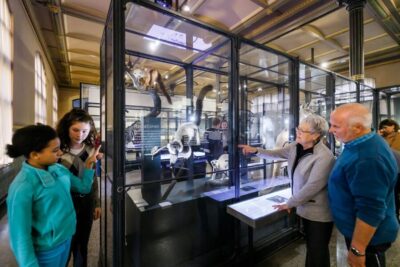
Browse the lists this tour appears in