
Reviewed · HISTORICAL TOURS
Historical city tour in the African Quarter in Berlin
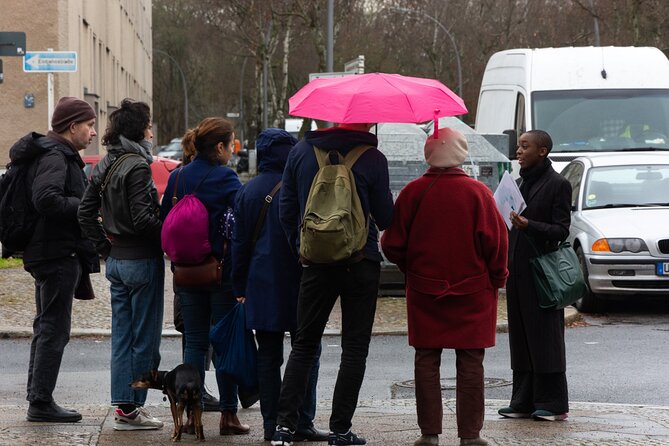
Colonial history is written into Berlin’s street signs. This two-hour walk through the African Quarter connects names such as Swakopmunder Straße, Anna-Mungunda-Allee, Manga-Bell-Platz, and Kongostraße with Germany’s role in Africa. I like the tour’s focused two-hour format and its clear change of viewpoint, which asks you to look at familiar city streets through the experience of colonized countries. I also like the small group size, capped at 20 people, because that should give the guide room to explain difficult subjects and take questions.
The main consideration is that this is a serious history tour, not a sightseeing stroll packed with grand monuments. You will spend much of the time examining street names, historical references, and the meaning behind public memorials. The 3.7 rating from six published reviews suggests the experience may not suit everyone, but the strongest praise calls it a must-do historical tour and highlights the guide’s engaging presentation.
In This Review
- Key points to know before you book
- Why Berlin’s African Quarter matters
- Swakopmunder Straße and Germany’s role in Namibia
- Anna-Mungunda-Allee and the question of renaming
- Manga-Bell-Platz and the figures behind the names
- Kongostraße and the 1884 Congo Conference
- What the two-hour format really gives you
- Group size, guide style, and the overall tone
- Is $33.57 a fair price?
- Who should book this African Quarter walk?
- Final verdict: book it for the questions, not the landmarks
- FAQ
- How long does the African Quarter tour last?
- How much does the tour cost?
- Where does the tour begin?
- Where does the tour end?
- Is the ticket available on a phone?
- How many people can join the tour?
- What places are visited during the walk?
- Does the tour discuss the Congo Conference?
- Are service animals allowed?
- Can I cancel for a full refund?
Key points to know before you book
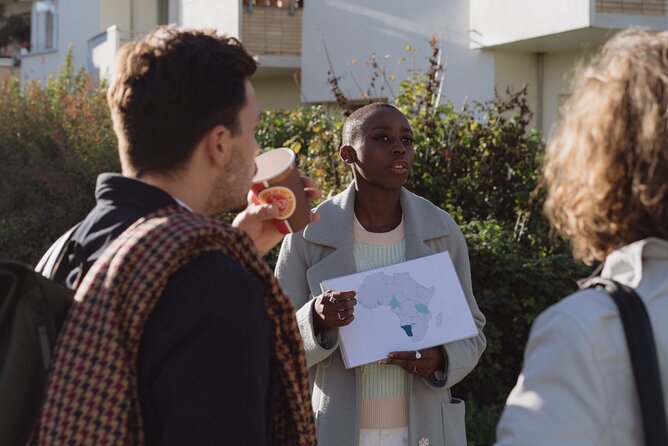
- Four stops make the history easy to follow: Swakopmunder Straße, Anna-Mungunda-Allee, Manga-Bell-Platz, and Kongostraße each raise a different question about German colonial rule.
- The 1884 Congo Conference is central: You will look at Africa before and after the Berlin conference and consider why African representatives were absent.
- Street names are the main exhibits: The African Quarter contains 22 streets named after African countries, European cities, or figures linked to the colonial era.
- This is a perspective-changing tour: The focus is not only on what Germany did, but also on how colonial power shaped the naming of Berlin’s public spaces.
- The group is limited to 20 people: That is a useful size for a discussion-based walking tour.
- The price is $33.57 per person: For about two hours of guided historical interpretation, the value depends on how much you want context rather than major sights.
Why Berlin’s African Quarter matters
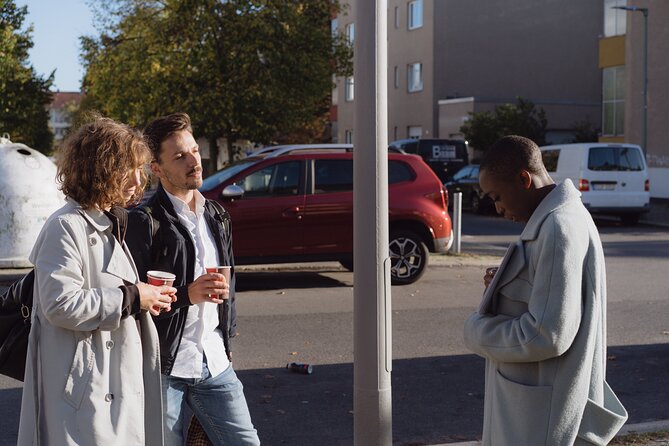
Berlin’s African Quarter is not a separate museum or a preserved colonial settlement. It is an urban area made up of 22 streets whose names point toward Africa, European cities, and former imperial officials. That makes the neighborhood itself the source material.
As you walk, ordinary signs become prompts for larger questions. Why was a street given a particular name? Who chose it? What did Germany hope to gain in Africa? How should a city deal with names connected to colonial violence and imperial ambition?
That approach gives the tour a useful advantage. You are not simply memorizing dates in a classroom. You are seeing how political ideas can remain present in daily life, sometimes in a place as ordinary as a residential street.
The tour focuses on the German colonial period from the 20th century, while also looking back to events in the late 19th century. The subject is not often part of a standard Berlin sightseeing route, so this walk fills a real gap for anyone who wants more than the usual wall, palace, and museum circuit.
I also appreciate the stated aim of encouraging a change in perspective. That does not mean ignoring German history. It means asking you to consider African countries and people as more than background to European decisions.
More City Tours in Berlin
- Berlin: 1-Hour City Tour by Boat with Guaranteed Seating
★ 4.3 · 16,993 reviews - Berlin: City Sightseeing Hop-On Hop-Off Bus Tour
★ 4.1 · 4,233 reviews - Potsdam: City and Castles Tour
★ 4.7 · 3,721 reviews
Swakopmunder Straße and Germany’s role in Namibia
The walk begins at Swakopmunder Straße 44, in the 13351 Berlin postal area. The first stop takes about five minutes and asks a direct question: what does Swakopmund have to do with Berlin?
That question opens the door to Germany’s role in Namibia. Swakopmund is a place name connected to German colonial activity, and the street name lets the guide connect a Berlin neighborhood with events far beyond Germany.
You should expect this stop to work as an introduction rather than a long lecture. The point is to establish the method used throughout the walk: read the city’s names, then investigate the political history behind them.
For me, this is a strong opening because it makes the topic concrete quickly. You do not begin with a long list of dates. You begin with a street sign and a place connection, then move toward the question of how Germany’s colonial past is remembered.
The stop is listed as free admission, as are the other stops. That simply means there are no separate entry tickets along the route. Your payment covers the guided walking experience rather than admission to a museum or monument.
Anna-Mungunda-Allee and the question of renaming
The second stop is Anna-Mungunda-Allee, reached after the opening section. Here the tour asks about Petersallee, the person it was named after, and whether the street should be renamed.
This is one of the most practical parts of the walk because it brings history into a current civic debate. A street name is not only a record of the past. It is also a public choice made in the present, repeated every day on maps, signs, addresses, and directions.
The stop gives you a chance to consider how Berlin handles names tied to the colonial era. Should a city preserve a name as a reminder, replace it as a rejection of colonial honor, or explain it with added context? The tour does not reduce that issue to a simple sightseeing fact.
The stop is planned for about five minutes, so you should not expect a full political debate at the location. Still, it offers one of the clearest examples of how the tour connects historical research with modern urban life.
I like this section because it helps you understand why the African Quarter is still relevant. The story is not locked in the 20th century. It reaches into questions of memory, responsibility, and public space.
Manga-Bell-Platz and the figures behind the names
At Manga-Bell-Platz, the guide asks who Gustav Nachtigal was and why the central square of the African Quarter carries his name. This stop shifts the focus from a location associated with Namibia to an individual connected with the colonial era.
The question matters because names can make historical figures seem neutral or admirable. A square may look like a simple geographic marker, but its name can carry a political judgment about who deserves public honor.
This is also where the structure of the quarter becomes clearer. African countries, European cities, and imperial officials are not random references scattered across Berlin. Together, they create a public record of the way colonial power was understood and presented.
The tour gives you a chance to ask how that record should be read today. Should you see the names as evidence of a past ideology, as memorials to victims and resistance, or as signs that need explanation and possible replacement? The walk’s change of perspective is especially useful here.
Again, the scheduled stop is about five minutes. That makes the tour efficient, but it also means you may want to continue reading about the people and places after the walk if this topic catches your interest.
More History Tours in Berlin
- Berlin: Natural History Museum Entrance Ticket
★ 4.6 · 3,382 reviews - Berlin: World Heritage Cruise to Potsdam
★ 4.5 · 1,435 reviews - Berlin Historical Highlights Walking Tour
★ 4.9 · 657 reviews - Berlin Private Complete History All Day Walking Tour
★ 5.0 · 474 reviews
Kongostraße and the 1884 Congo Conference
The fourth listed stop is Kongostraße. This section asks what happened in Berlin in 1884 and explains the Congo Conference, also known as the Berlin Conference.
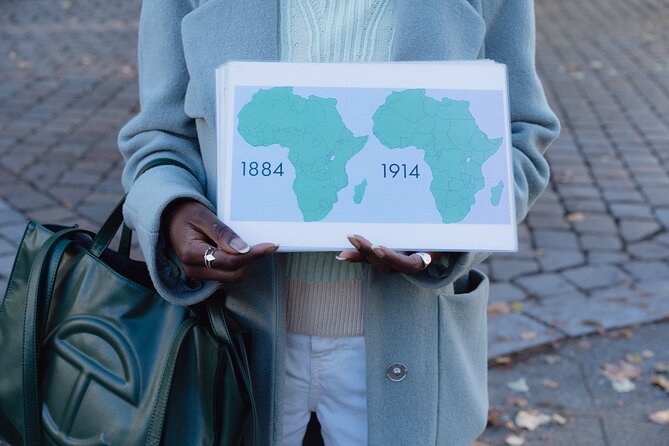
The most important detail is that you will be shown a map of Africa before and after the conference. That visual comparison can make the subject easier to grasp than words alone. It helps you consider how European decisions affected borders, claims, and control across the continent.
The tour also asks why no one from Africa was present at the conference. That question is the heart of the stop. It points to the unequal power structure of the meeting and shows why the event remains so important when discussing European colonial rule.
For a short walking tour, this is a strong use of time. The conference is not treated as an isolated diplomatic meeting. It becomes part of the story of how Berlin participated in decisions about Africa without African representation.
The stop takes approximately five minutes, according to the schedule. You should therefore expect a concise explanation and a visual aid, not a complete course on the colonial partition of Africa. The value is in getting a clear framework that you can use when visiting museums or reading more later.
What the two-hour format really gives you
Two hours is long enough to create a connected story but short enough to fit into a busy Berlin visit. You are not committing half a day to a distant excursion. The route remains within the African Quarter and ends at Rehberge, at the 13349 Berlin postal address.
The listed stops are each about five minutes, but the full experience lasts around two hours. That means time is also used walking between locations and explaining the wider context. The walk should feel more like a guided neighborhood study than four isolated talks.
I see that as a benefit. The pauses between stops give you time to process the subject and notice how the street names function in the real city. At the same time, anyone hoping for a nonstop sequence of major landmarks may find the pace less exciting.
The route begins at Swakopmunder Str. 44 and finishes at Rehberge. The starting point is near public transportation, which makes arrival easier, though the information provided does not specify a particular train, tram, or bus line.
You receive a mobile ticket, and confirmation is provided when you book. Keep your phone ready at the meeting point and allow enough time to reach the correct address, especially because the tour begins in a residential neighborhood rather than at one of Berlin’s best-known attractions.
Group size, guide style, and the overall tone
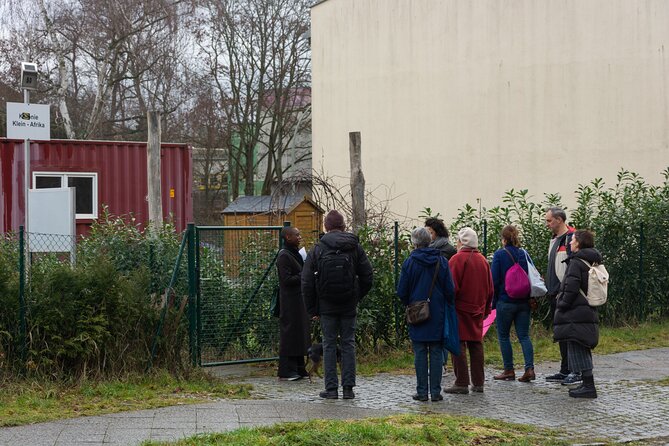
The maximum group size is 20 people. That is not a private tour, but it is small enough for a guide to address questions without speaking to a crowd of dozens.
The best available praise focuses on the guide’s engaging delivery and strong command of the subject. That matters here because colonial history can become dry when presented as a chain of names and dates. The tour needs a guide who can explain why the information matters, not just recite it.
You should expect a thoughtful and serious tone. The route is built around questions about German responsibility, colonial rule, and the naming of streets. It is not designed as light entertainment, and that is part of its appeal.
The published rating is 3.7 from six reviews, so I would not present the tour as a guaranteed hit for every person. The limited number of ratings also means the score gives only a small picture. The most enthusiastic response describes the experience as a must-do historical tour and praises the guide’s engaging approach, which is a useful sign for people who enjoy discussion-led history walks.
Is $33.57 a fair price?
At $33.57 per person, this is not the cheapest way to spend two hours in Berlin. You are paying for interpretation, local context, and a route built around a subject that is easy to miss if you explore the city alone.
There are no paid museum entries included because the stops are on public streets and admission is free. That may make the price look high at first glance. But a self-guided walk would give you the street names without the explanations about Namibia, Petersallee, Gustav Nachtigal, and the Congo Conference.
I would consider it fair value if you want a focused history lesson and prefer to learn through a local neighborhood. I would be less likely to recommend it if you mainly want grand buildings, panoramic views, or a long list of famous Berlin sights.
The tour’s value also depends on your interest in colonial history. If the topic is new to you, the walk can provide a useful starting point. If you already know the subject well, the real benefit may be the way the guide connects it to street names and public memory in Berlin.
Who should book this African Quarter walk?
I would recommend this tour to you if you enjoy history that appears in everyday places. It suits people who want to understand Berlin’s relationship with Africa and who are willing to spend two hours considering uncomfortable questions rather than simply photographing attractive buildings.
It is also a good choice if you have already seen Berlin’s major sights and want a less familiar subject. The tour offers a different side of the city without requiring a long journey outside central Berlin.
Students, history-focused visitors, and people interested in colonial memory should find plenty to discuss. The small group limit may also appeal to you if you prefer a more personal setting than a large coach tour.
You may want to skip it if your Berlin schedule is very tight, if you dislike walking tours centered on political history, or if you want information presented in a light and casual way. The route is specific in purpose, and its strength is that focus.
The experience requires good weather, and it may be canceled if conditions are poor or if the minimum number of participants is not met. In either case, you are offered a different date or experience, or a full refund. You can also cancel for a full refund up to 24 hours before the start time. Changes or cancellations made less than 24 hours ahead are not accepted for a refund.
Final verdict: book it for the questions, not the landmarks
Book this tour if you want Berlin to explain itself through street names. The route gives you a clear introduction to Germany’s colonial connection with Africa, from Swakopmund and Namibia to Petersallee, Gustav Nachtigal, and the 1884 Congo Conference.
The experience is best seen as a compact historical conversation on foot. It will not replace a museum visit or provide every detail of German-African history, but it can change how you read the African Quarter after the guide has finished.
At $33.57, I would call it a worthwhile choice for curious history-minded visitors, especially those who value an engaging guide and a small group. I would not choose it simply to fill spare time. Choose it because you want to ask who gets remembered in Berlin’s public spaces, and why.
FAQ
How long does the African Quarter tour last?
The walking tour lasts approximately two hours.
How much does the tour cost?
The listed price is $33.57 per person.
Where does the tour begin?
The meeting point is Swakopmunder Str. 44, 13351 Berlin, Germany.
Where does the tour end?
The tour ends at Rehberge, 13349 Berlin, Germany.
Is the ticket available on a phone?
Yes. The experience includes a mobile ticket.
How many people can join the tour?
The group has a maximum of 20 participants.
What places are visited during the walk?
The listed stops are Swakopmunder Straße, Anna-Mungunda-Allee, Manga-Bell-Platz, and Kongostraße.
Does the tour discuss the Congo Conference?
Yes. The tour explains what happened in Berlin in 1884, discusses the Congo Conference, and includes a map showing Africa before and after the conference.
Are service animals allowed?
Yes. Service animals are allowed on the tour.
Can I cancel for a full refund?
Yes. You can cancel at least 24 hours before the experience start time for a full refund. Cancellations made less than 24 hours before the start time are not refunded.
Just added around Berlin
- Private Walking Tour in Berlin: Hitler’s Germany & WWII★ 5.0 · 7 reviews
- The History of Berlin: WWII PRIVATE Walking Tour With Locals★ 5.0 · 209 reviews
- Private Berlin WWII and Cold War History Tour with Local Expert Guide★ 5.0 · 28 reviews
- Private Walking Tour Berlin 3 hours: Brandenburg, Historic Center★ 5.0 · 7 reviews
- Berlin: Private Bike Tour of the Berlin Wall and Third Reich★ 5.0 · 23 reviews
- Berlin: Guided Private Bike Tour to Explore the Highlights★ 5.0 · 12 reviews
- Berlin Photography Masterclass – Private Photography Lesson★ 4.5 · 23 reviews
- Group Driving Tour 1 to 6 people. Berlin Shore Excursion incl pick-up at Port★ 5.0 · 8 reviews
Historical Tours, compared.
City History Canal Sightseeing Tour on a Motorboat
Read our review →
Browse the lists this tour appears in