Reviewed · BERLIN TOURS
Hitler’s Berlin – the rise and fall (Small Group)
Berlin remembers everything. This 2.5-hour small-group walk connects the capital’s Nazi-era sites with the political choices, persecution, resistance, and final battles that shaped modern Germany. You begin at Brandenburg Gate and finish at the Topography of Terror, with stops at memorials, government buildings, and Hitler’s bunker site along the way.
I like the serious, clear focus on how the Nazi Party gained power, not just on battlefield dates. I also like the small-group format, capped at 15 people, which gives you room to ask questions. The main drawback is the amount of information packed into a short walk. Some visitors found the history demanding to follow, and outdoor noise can make a guide difficult to hear.
In This Review
- Key points to know before booking
- What this Berlin history walk is really about
- Starting at Brandenburg Gate and the Reichstag
- Remembering Sinti and Roma victims
- The Soviet Memorial and the Battle of Berlin
- The Holocaust Memorial and its difficult questions
- A brief stop at the homosexuals’ memorial
- The Führerbunker site and Hitler’s final days
- Johann Georg Elser and German resistance
- The Aviation Ministry and the machinery of power
- Ending at the Topography of Terror
- The guides make or break this subject
- Comfort, weather, and group size
- Who will get the most from this walk?
- Should you book Hitler’s Berlin?
- FAQ
- Where does the tour start?
- Where does the tour end?
- How long does the tour last?
- What language is the tour offered in?
- What is the maximum group size?
- Are admission tickets included?
- What should I wear?
Key points to know before booking
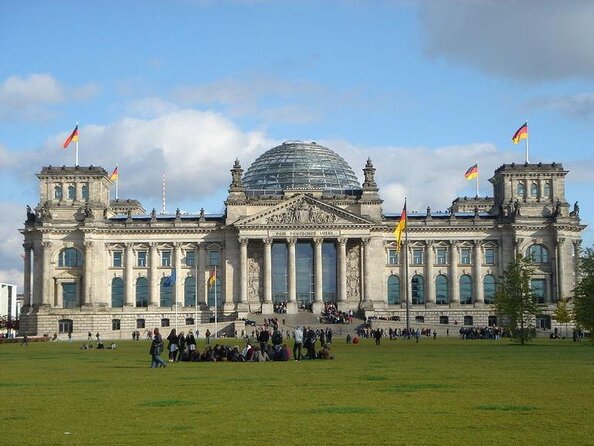
- Nine important sites in central Berlin: The route includes the Reichstag, Holocaust Memorial, Führerbunker site, Soviet Memorial, and Topography of Terror.
- A history-led walking tour: An academically trained guide uses historic maps and Then & Now photographs to explain how Berlin changed.
- Small group, maximum 15 people: The format allows discussion and personal attention, though groups may still reach around 11 people.
- A serious and sensitive subject: The tour covers Nazi persecution, the Holocaust, war, resistance, and the destruction of Berlin.
- Mostly outdoors: You need comfortable shoes, moderate fitness, and clothing for rain, cold, or other poor weather.
- Good value at $54.44: With free entry at every stop, the price pays mainly for the guide’s research, structure, and interpretation.
What this Berlin history walk is really about
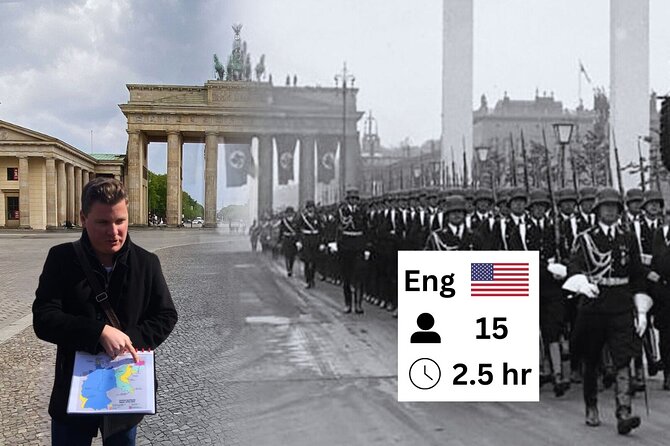
This is not a general sightseeing walk with a few Nazi-era facts sprinkled in. It is a focused lesson in how a democracy was weakened, how Nazi rule expanded, how persecution became mass murder, and how the regime ended in Berlin’s ruins.
That focus makes the tour useful even if you already know the broad outline of the Second World War. The route places major events close together. You can move from the German Parliament to memorials for persecuted groups, then to the site of Hitler’s last days and the former Gestapo headquarters.
I like that the walk treats the subject as political and human, not merely military. You hear about elections and government institutions, but also about Sinti and Roma victims, Jewish victims, homosexual victims, and Germans who tried to resist Hitler.
The tour is offered in English and costs $54.44 per person. Since admission is free at all listed stops, you are paying for the guide rather than tickets. That is fair value if you want a well-organized explanation of the area. It is less appealing if you prefer to read museum panels at your own speed or already have a strong grasp of Nazi Germany.
The pace is described as approximately two hours and 30 minutes. The listed talks add up to less than that, so the remaining time is used for walking, transitions, questions, and discussion. The route is compact, described by one reviewer as covering roughly four or five city blocks, but you still need to walk on different surfaces and remain upright for much of the tour.
A few more Berlin trips worth comparing
- Berlin: Reichstag, Dome and Government District Guided Tour
★ 4.7 · 18,288 reviews - Berlin: 1-Hour City Tour by Boat with Guaranteed Seating
★ 4.3 · 16,993 reviews - Berlin: Boat Tour Along the River Spree
★ 4.4 · 11,252 reviews
Starting at Brandenburg Gate and the Reichstag
The meeting point is Brandenburg Gate at Pariser Platz. This is a practical starting place because the gate is one of Berlin’s best-known landmarks, yet the tour quickly shifts your attention from grand architecture to the fragile political system that once operated nearby.
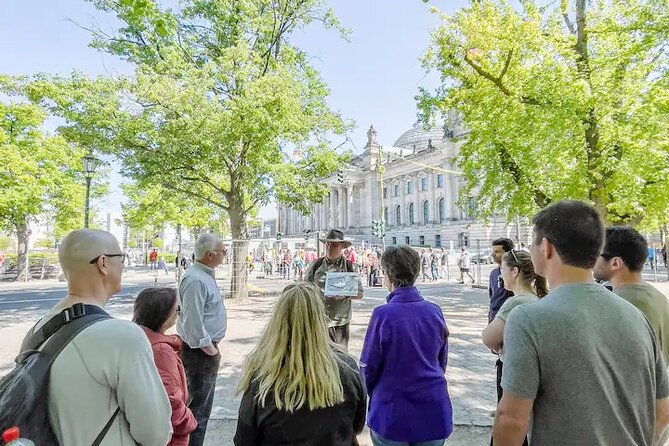
At the Reichstag, you learn how the Nazi Party was elected into power and how Adolf Hitler became Führer. This is one of the most valuable parts of the walk because it deals with a question many visitors carry home: how could such a regime take control of Germany?
Your guide’s job here is to explain the process in a way that connects political events to physical places. The stop lasts about 15 minutes, so it is not a full seminar. Still, it gives the rest of the tour a useful framework. You are not just looking at buildings where history happened. You are considering how institutions were used, weakened, and transformed.
The Reichstag stop also sets the tone for the tour’s modern relevance. One review specifically appreciated being able to compare the past with current events and think about how to oppose fascism today. That kind of discussion depends heavily on the individual guide, but the route gives it a natural starting point.
Remembering Sinti and Roma victims
The first formal stop is the Memorial to the Sinti and Roma Victims of National Socialism. The talk lasts about 10 minutes and explains the persecution of Roma and Sinti communities under the Third Reich.
This stop matters because public memory can easily narrow the Holocaust to one victim group. The Nazi system classified, isolated, deported, and murdered people according to brutal racial theories. Learning about Sinti and Roma victims helps you see how those theories worked across more than one community.
The memorial is also a reminder that the tour will not treat Nazi persecution as a single event at the end of the war. It follows the progression from hateful ideas and state policy to organized violence. That is an important distinction, especially for anyone visiting Berlin with a teenager or family member who needs the history explained in clear stages.
The Soviet Memorial and the Battle of Berlin
At the Soviet Memorial in Tiergarten, the subject shifts to the final fighting. You discuss the Battle of Berlin, described here as the third bloodiest operation of the Second World War, along with the way the battle has been remembered after 1945.
This stop adds military context to a route that otherwise focuses heavily on politics and persecution. You hear about the brutal struggle for Berlin and the human cost of the city’s capture. The memorial itself also raises questions about how nations remember victory, sacrifice, and occupation.
The scheduled talk is about 15 minutes. There is no admission charge, but this is still not a quick photo stop. You should expect your guide to use the site as a prompt for explanation rather than simply pointing out the monument and moving on.
Still Berlin, at a slower pace:
- Discover Berlin Half-Day Walking Tour
★ 5.0 · 9,624 reviews - Berlin: Hop-on Hop-off Bus Tour with Live Commentary
★ 4.3 · 8,579 reviews - Berlin: Government District around the Reichstag Guided Tour
★ 4.7 · 8,447 reviews - Berlin: Reichstag, Plenary Chamber, Cupola & Government Tour
★ 4.6 · 8,422 reviews
The Holocaust Memorial and its difficult questions
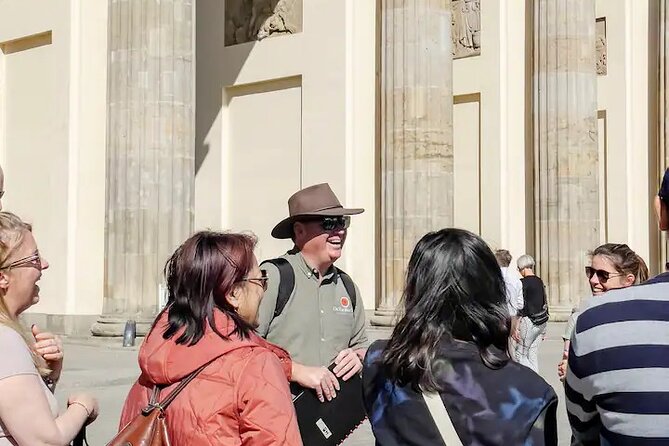
The Memorial to the Murdered Jews of Europe receives another 15-minute discussion. This is the largest memorial on the route and one of Berlin’s most emotionally powerful places.
Here, the tour builds on the earlier stop about Nazi social theories. The focus is on the Jewish victims of the Third Reich, the largest group targeted by the Nazis, and on what the memorial means. You have the chance to discuss its design and your own response instead of treating it as a backdrop for photographs.
That guided conversation is a strong reason to choose this tour over a self-guided walk. The memorial can feel abstract if you do not know what it is asking you to confront. A good guide helps connect the physical space with the scale and structure of the murder of Europe’s Jews.
The subject is heavy, and the tour does not try to make it comfortable. That is appropriate. At the same time, the discussion format means you should listen closely and allow space for other people. This is not a stop for quick jokes or casual sightseeing.
A brief stop at the homosexuals’ memorial
The Monument to Homosexuals Persecuted Under National Socialist Regime receives about five minutes. It is the shortest stop on the route, but it widens the picture of Nazi persecution.
The monument remembers people targeted because of their sexuality. The short timing means you should not expect a long lecture, but the inclusion of this site is important. It shows that the tour is tracing a network of victims rather than telling a single story of wartime politics.
For some people, this will be one of the more useful stops because it may be less familiar than the Holocaust Memorial. If you want a long discussion about this particular group, you may need to ask questions during the walk or explore further afterward.
The Führerbunker site and Hitler’s final days
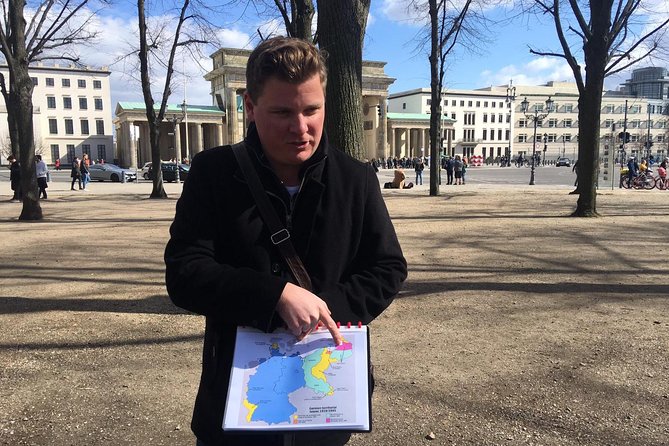
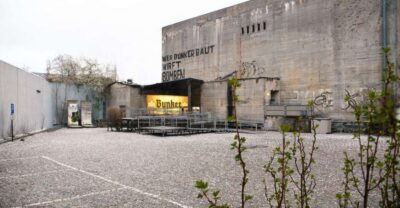
At the Führerbunker site, the guide explains where Hitler spent his final days of the war. The stop lasts around 15 minutes.
Do not expect a dramatic underground attraction. The value here is historical explanation, not a preserved interior or theatrical presentation. The site is important precisely because the physical remains do not offer a conventional monument to visit. Your guide helps you understand what happened there and why the place is handled with restraint.
This part of the walk also closes the arc that began at the Reichstag. You start with Hitler’s rise through the political system and later arrive at the place associated with the regime’s collapse. The contrast is stark: a movement that once filled the state with its symbols ended in a bunker beneath a ruined capital.
That connection is one of the tour’s strongest teaching tools. You are not studying Hitler as an isolated dictator. You are following a chain from public power to private desperation.
Johann Georg Elser and German resistance
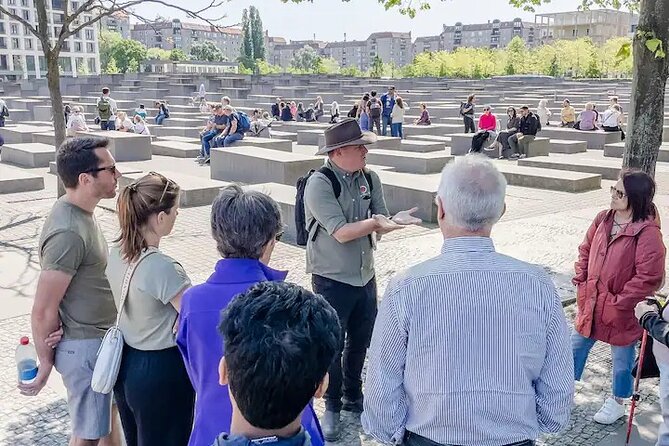
The Johann Georg Elser Memorial introduces one of the tour’s most compelling individual stories. Elser attempted to assassinate Hitler and is discussed alongside other efforts to oppose the Nazi regime.
This stop helps correct the simple idea that all Germans supported Hitler or remained passive. Resistance was dangerous, divided, and often unsuccessful, but it existed. Elser’s story gives the subject a human scale and forces you to think about the risks involved in acting against a dictatorship.
The talk lasts about 15 minutes. It is a useful pause after the bunker because it shifts the question from how the regime fell to who tried to challenge it before the end. If you are interested in moral choices under dictatorship, this may be one of the best sections of the route.
The Aviation Ministry and the machinery of power
The former Aviation Ministry is a shorter stop, about five minutes. When it was built, it was the largest office building in Europe, and it housed the German Ministry of Aviation under Hermann Göring.
The building gives you a direct look at the scale of Nazi administration. The regime was not run only from famous speeches and battlefields. It depended on offices, ministries, paperwork, policy, and people carrying out orders.
Because the talk is brief, the building works mainly as a visual reminder of that bureaucracy. You see how much of the Nazi state occupied ordinary urban space. Berlin’s government quarter was not a distant stage set. It was a working center of power.
Ending at the Topography of Terror
The tour ends at the Topography of Terror on Niederkirchnerstraße. The site once held the headquarters of the Gestapo, the SS, and other central Nazi security offices. Here you can take a break, get tea or coffee, and use the restrooms.
This is a sensible place to finish. After walking through memorials and discussing Nazi rule in broad terms, you arrive at a site tied directly to the institutions of terror. The end point gives you a chance to continue learning independently, though the tour itself ends there.
Ask your guide for the best connection to your next destination. The end point is not the same as the start, so plan your onward route rather than assuming you will return to Brandenburg Gate.
One practical issue deserves attention: the Topography of Terror stop is scheduled for about 20 minutes, including a break. If you want to study the exhibitions carefully, you will need extra time after the tour. The walk gives you orientation and context, but it is not a substitute for exploring the full museum at your own pace.
The guides make or break this subject
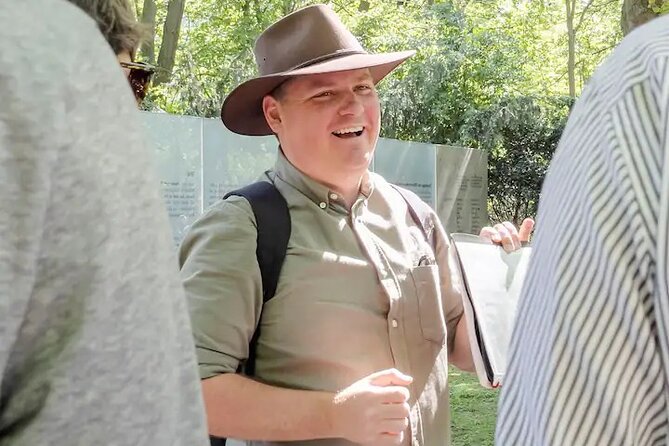
The strongest praise is directed at the guides’ command of the material and their ability to explain a difficult subject with care. Scott is repeatedly described as clear, engaging, interactive, and able to adjust the discussion to the group. Johan, Roshana, Jochen, and Matt are also singled out for strong presentations, good answers, or lively discussion.
That range of names matters because the exact personality of your guide can shape the day. The available information does not promise one specific guide, so you should not book expecting Scott or any other individual. Still, the pattern suggests that the company uses guides who can handle both factual detail and emotional weight.
You need to listen carefully. One person noted that there is a lot of information, while another felt the guide’s voice was hard to hear beside street noise. A microphone might help in those moments, but it is not listed as part of the tour. Stay close to the guide and speak up if you miss an important point.
The best guides on this route will do more than recite dates. They will answer questions, use the maps and Then & Now photographs, and help you connect one stop to the next. Some tours reportedly run beyond the scheduled time when the group has many questions. That can be a welcome bonus, but leave some flexibility in your plans.
Comfort, weather, and group size
The maximum group size is 15 people. That is small enough for questions and personal attention, though it is not a private walk. An 11-person group is still called small group, but you may occasionally need to position yourself so you can hear.
You should have moderate physical fitness. The walk is not described as strenuous, but it involves several outdoor stops, different surface types, and limited chances to sit. One useful tip is simple: wear comfortable shoes and dress warmly. A cold day can make a two-and-a-half-hour history lesson feel much longer.
The tour operates in all weather conditions, with a stated requirement for good weather. If poor weather cancels the experience, you are offered another date or a full refund. If the minimum number is not reached, the same options apply.
Food and drinks are not included. Since you can take a short break for tea or coffee at the Topography of Terror, bring your own budget for that stop. The walk ends there, so it is easy to continue with the museum or find a meal afterward.
Who will get the most from this walk?
I would choose this tour if you want a serious introduction to Berlin’s Nazi-era history and prefer a guide to explain the connections between sites. It suits history fans, families with older children or teenagers, and anyone who wants to understand how dictatorship grew through politics, administration, propaganda, and violence.
It is also useful early in a Berlin visit. The route gives you a map of the central historic area, and the guide’s explanations can make later museum visits easier to understand.
I would think twice if you dislike extended outdoor talks or want a relaxed city walk. The subject is emotionally difficult, the information comes quickly, and you may spend much of the time standing. It is also not the best choice if you want extensive time inside the Topography of Terror or a detailed study of one memorial.
The tour receives a 4.9 rating from 179 reviews, with 97 percent recommending it. Those figures suggest a consistently strong experience, while the few negative comments point to the real risks: a language barrier with one guide, a group larger than expected, and occasional problems hearing outdoors.
Should you book Hitler’s Berlin?
Book it if you want a compact, serious route through central Berlin with a guide who can explain both the rise and fall of Nazism. The best value comes from the links between the stops: elections at the Reichstag, persecution at the memorials, resistance at Elser’s memorial, and collapse at the Führerbunker.
At $54.44, the cost is reasonable for a small-group walk lasting about two and a half hours, especially since the guide, historic maps, photographs, and discussion do the teaching work. Bring warm clothing, good shoes, and the patience to listen closely.
Skip it if you prefer to explore silently or need frequent seating. For most visitors who want to face Berlin’s hardest history with care and context, this is a worthwhile introduction.
FAQ
Where does the tour start?
The tour starts at Brandenburg Gate on Pariser Platz, 10117 Berlin, Germany.
Where does the tour end?
The tour ends at the Topography of Terror, Niederkirchnerstraße 8, 10963 Berlin, Germany.
How long does the tour last?
The tour lasts approximately two hours and 30 minutes.
What language is the tour offered in?
The tour is offered in English.
What is the maximum group size?
The group can include a maximum of 15 people.
Are admission tickets included?
All listed stops have free admission. The tour includes guided visits, historic maps, Then & Now photographs, and opportunities for questions and reflection.
What should I wear?
You should wear comfortable shoes and dress appropriately for the weather. The tour operates outdoors in all weather conditions, and a moderate level of physical fitness is required.
Just added around Berlin
- Private Walking Tour in Berlin: Hitler’s Germany & WWII★ 5.0 · 7 reviews
- The History of Berlin: WWII PRIVATE Walking Tour With Locals★ 5.0 · 209 reviews
- Private Berlin WWII and Cold War History Tour with Local Expert Guide★ 5.0 · 28 reviews
- Private Walking Tour Berlin 3 hours: Brandenburg, Historic Center★ 5.0 · 7 reviews
- Berlin: Private Bike Tour of the Berlin Wall and Third Reich★ 5.0 · 23 reviews
- Group Driving Tour 1 to 6 people. Berlin Shore Excursion incl pick-up at Port★ 5.0 · 8 reviews
- Berlin: Guided Private Bike Tour to Explore the Highlights★ 5.0 · 12 reviews
- Berlin Photography Masterclass – Private Photography Lesson★ 4.5 · 23 reviews
Berlin Tours, compared.
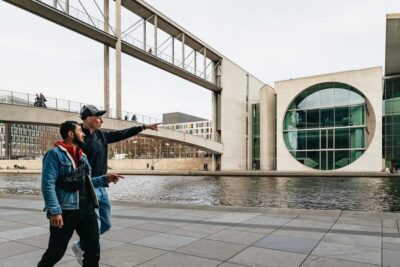
Reichstag, Dome and Government District Guided Tour
Read our review →
1-Hour City Tour by Boat with Guaranteed Seating
Read our review →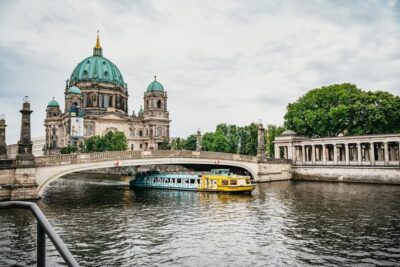
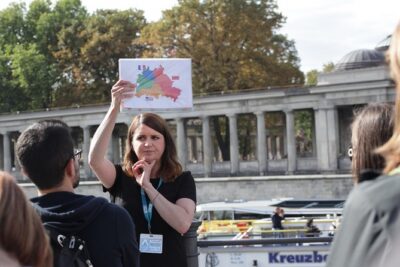
Government District around the Reichstag Guided Tour
Read our review →
Reichstag, Plenary Chamber, Cupola & Government Tour
Read our review →