
Reviewed · THIRD REICH HISTORY TOURS
Munich City Walking Tour, includes Third Reich & Viktualienmarkt
Munich reveals itself on foot. This 3-hour-15-minute walk links the city’s grand churches, medieval gates, royal squares, beer culture, and difficult 20th-century past with a local guide who also explains how to get around. I like the way the tour mixes major sights with everyday Munich, especially the stop at Viktualienmarkt for a Bavarian snack and beer. I also like the practical advice on transport, city customs, food, and saving money at other attractions. The main drawback is the amount of standing while the guide talks, which can feel long in cold or snowy weather.
The tour costs $31.78 per person and is offered in English, with a maximum of 20 people. That is fair value for a long orientation walk, particularly if you take it near the start of your stay. Ozzie receives especially warm praise for his humor, personal style, and wide-ranging explanations, though Patrick may also lead the group. Just know that this is more than a quick photo stop tour: it favors stories and context over racing from sight to sight.
In This Review
- Key points to know before you book
- Why this Munich walking tour works best early in your stay
- Frauenkirche and the first look at Munich’s character
- Hofbräuhaus, Isartor, and Munich’s beer culture
- Marienplatz and the city center’s big theatrical moment
- Royal Munich at Max-Joseph-Platz and the Maximilianeum
- St. Michael’s and St. Peter’s, two very different churches
- Odeonsplatz and the difficult history of Munich
- Karlsplatz and the walk toward food
- Viktualienmarkt: the tastiest part of the route
- What the $31.78 price really buys you
- Who should take this tour?
- Should you book the Munich walking tour?
- FAQ
- How long is the Munich City Walking Tour?
- What language is the tour offered in?
- How much does the tour cost?
- Is food included in the tour price?
- What landmarks does the tour visit?
- Where does the tour start and finish?
- How large is the group?
Key points to know before you book
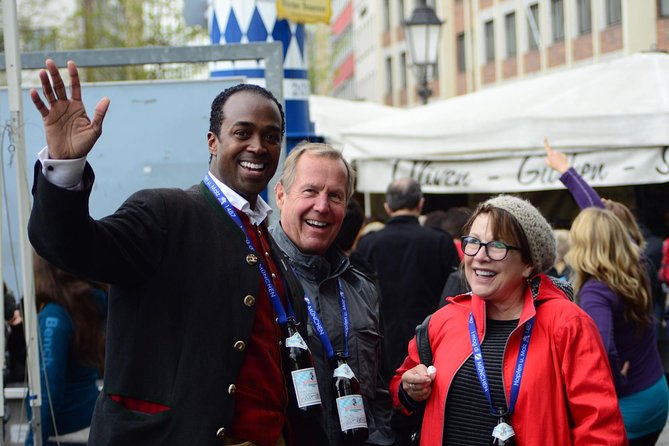
- Viktualienmarkt gives the tour a proper Bavarian pause: Plan for a market snack and beer, with food and drinks purchased separately.
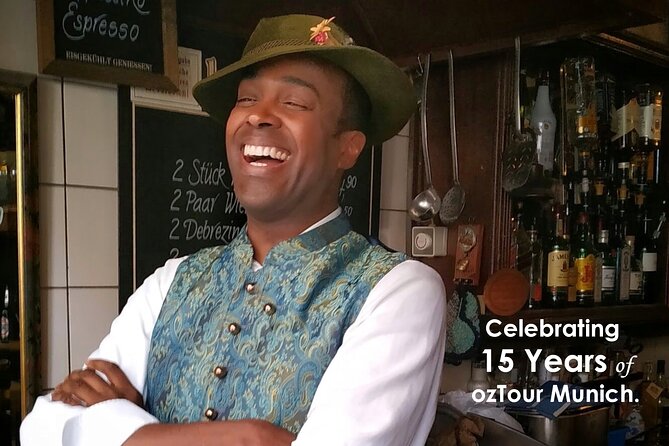
- Ozzie is a major part of the experience: His lively talks cover Munich, Bavaria, current affairs, city planning, and practical local advice.
- The Third Reich material is handled as part of a wider city story: The focus is not only on famous sights, but on how Munich’s past still shapes the city.
- You cover a lot of central Munich: Frauenkirche, Marienplatz, Hofbräuhaus, St. Peter’s, Odeonsplatz, Karlsplatz, and more appear along the route.
- This is a talk-heavy walking tour: You need comfortable shoes, weather-ready clothing, and patience for longer explanations.
- It works best on your first day: You finish with a clearer sense of the center and ideas for exploring on your own.
Why this Munich walking tour works best early in your stay
I would book this tour on my first full day in Munich, or as close to arrival as your schedule allows. The route gives you a useful mental map of the historic center, while the guide explains how Munich works beyond the postcard views.
That practical side comes up again and again. You get tips on navigating the city, visiting other sights, understanding local customs, and making sensible choices with your time and money. One particularly useful feature is the connection between history and present-day life. You are not simply told when a building was completed. You get help understanding what it means in Munich today.
The group limit of 20 people is small enough for a personal feel, though the exact experience depends on attendance and the guide’s ability to keep everyone together. Ozzie is praised for remembering to make the tour social, asking about the people in his group, and keeping children involved. Patrick is also described as an excellent guide, so the tone may vary slightly from one departure to another.
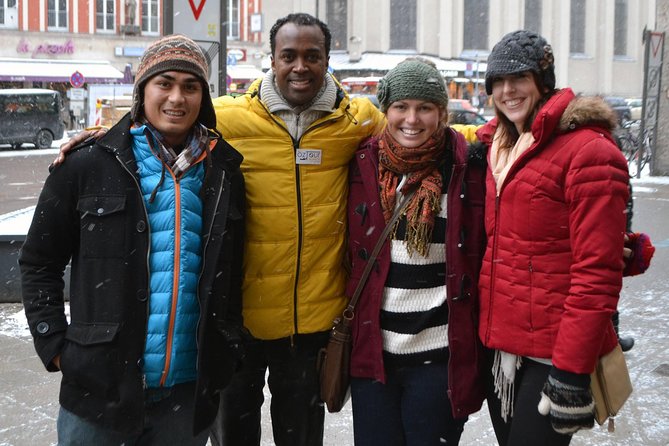
Expect a steady central-city walk rather than a fitness challenge. One account describes the pace as calm, but the tour still lasts more than three hours and includes extended outdoor talks. Wear shoes you can walk in and dress for the forecast. In winter, the cold matters. Some groups have stood outside in freezing or snowy conditions while listening to lengthy explanations.
More City Tours in Munich
- Munich: Old Town & Viktualienmarkt City Walk in German
★ 4.7 · 2,304 reviews - Munich: City Bus Tour & FC Bayern Munich Allianz Arena Tour
★ 4.5 · 2,071 reviews - Munich City Hop-on Hop-off Tour
★ 3.5 · 1,233 reviews
Frauenkirche and the first look at Munich’s character
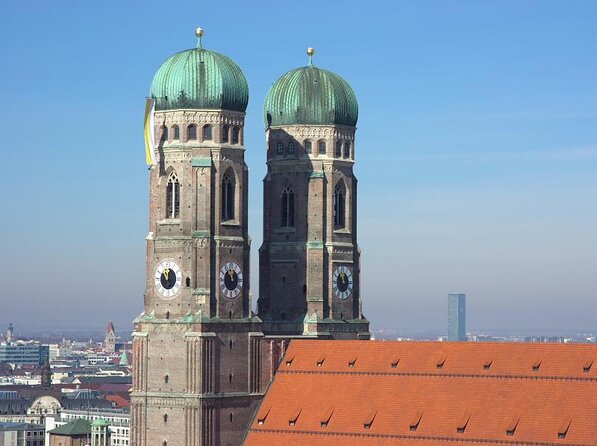
The tour includes Frauenkirche, Munich’s instantly recognizable cathedral with its twin towers. Built in the 15th century, it is a late Gothic landmark and the seat of the Archbishop of Munich and Freising.
You may hear about the cathedral’s large interior, historic crypt, and the famous Devil’s Footstep. The listed visit is about 10 minutes, so think of this as a guided introduction rather than a long church visit. If you want to study the interior in peace, you may need to return later on your own.
The opening section also covers the German Hunting and Fishing Museum, housed in a former Augustinian church. Its exhibits include stuffed wildlife, antique weapons, and Bavarian Wolpertinger creatures, those odd legendary animals that add a touch of local folklore. The museum has 3,000 square meters of displays, though the tour information does not promise a full museum visit or admission.
This early part sets the tone. Munich is presented as a city where church history, royal power, local humor, food, and modern civic life sit close together.
Hofbräuhaus, Isartor, and Munich’s beer culture
A short stop at the Staatliches Hofbräuhaus introduces one of Munich’s most famous institutions. The beer hall dates to 1589 and began as a royal brewery. Today it is known for Bavarian beer, hearty food, traditional music, and grand halls filled with energy.
The tour allows about 10 minutes here, so do not expect a full meal or a long table session at Hofbräuhaus. Its value is the explanation of beer culture and the role this place plays in Munich’s public life. If you have imagined Munich as steins, music, and shared tables, this is where that picture gets some useful context.
At Isartor, you see one of the last medieval city gates. Built in 1337, it was part of Munich’s defensive walls and has a central tower and historic frescoes. The gate also houses the Valentin-Karlstadt Museum, connected with Bavarian comedian Karl Valentin.
The five-minute stop is brief, but Isartor helps you read the city plan. Munich was once a fortified medieval town, and the surviving gates show where the old center began and ended. That kind of orientation is more useful than another isolated photo stop.
Marienplatz and the city center’s big theatrical moment
Marienplatz has been Munich’s central square since 1158. This is the heart of the old center, with the New Town Hall, its famous Glockenspiel, and the Mariensäule column.
The 25-minute visit gives the guide enough time to explain the square rather than simply point at the buildings. You can look up at the ornate New Town Hall, watch the movement around the square, and learn how nearby shopping streets fit into the central plan.
If your visit lines up with the Glockenspiel performance, you may get an extra bit of spectacle, but the supplied tour details do not guarantee a particular show time. The square can feel crowded, especially at popular hours, so stay close to the guide and listen for meeting instructions.
This is one of the tour’s strongest stops for first-time visitors. You get the picture-book Munich, but you also learn how the square functions as a meeting place, transport reference, and starting point for independent wandering.
More Third Reich History Tours in Munich
- Munich: Third Reich & WWII Walking Tour
★ 4.6 · 6,181 reviews - Third Reich Walking Tour Munich
★ 4.5 · 4,291 reviews - Munich: Birthplace of the Third Reich Guided Walking Tour
★ 4.6 · 771 reviews - Munich World War II Sites Including Dachau Concentration Camp
★ 4.5 · 570 reviews
Royal Munich at Max-Joseph-Platz and the Maximilianeum

Max-Joseph-Platz shifts the story from medieval trade to royal power and neoclassical design. The square is named after King Maximilian Joseph and is framed by the National Theatre and Munich Residenz.
The stop lasts about five minutes, so the guide is likely to focus on the square’s place in Munich’s royal and cultural story rather than take you through the Residenz. If you want palace rooms, royal collections, or a longer look at the opera house, plan a separate visit.
The route also brings in the Maximilianeum, the grand building above the Isar River. King Maximilian II founded it in 1852 to support gifted students. Since 1949, it has housed the Bavarian State Parliament.
That detail helps connect the old monarchy with modern Bavaria. The building is not just an impressive facade. It also gives you a useful reminder that Munich is a political center, not only a museum city.
Platzl adds a more intimate historic-center setting. Cobblestones, older buildings, restaurants, and the Hofbräuhaus create a traditional Bavarian feel. You may find this area touristy, but the guide’s explanation helps separate local culture from the sales pitch aimed at visitors.
St. Michael’s and St. Peter’s, two very different churches
St. Michael’s Church is Munich’s largest Renaissance church. Built in the late 16th century as a center for the Jesuit order, it has a powerful facade and a vast barrel-vaulted ceiling with early Baroque elements.
The tour allows about 10 minutes here. You may learn about the royal crypt, where Bavarian rulers are buried, and see how the interior differs from Frauenkirche. Three churches in one city walk might sound repetitive, but these stops show changing styles and competing forms of power: Gothic, Renaissance, Jesuit, royal, and civic.
St. Peter’s Church, known locally as Alter Peter, is Munich’s oldest parish church. Its history reaches back to the 12th century, and the interior includes Gothic, Baroque, and Rococo features.
The listed stop is only about five minutes. The famous 91-meter tower is associated with broad city views, but climbing the tower is not part of the guided visit. If you want that view, treat it as a separate activity and check opening details yourself.
The Wolfsbrunnen fountain offers a small surprise between the larger monuments. Created in 1904 by Heinrich Düll and Georg Pezold, it shows Little Red Riding Hood and a wolf in bronze. The Wolf family commissioned it to honor their name.
This is exactly the sort of detail a guide can make memorable. Without context, it is a fountain you might walk past. With the story, it becomes a quick lesson in Munich’s habit of mixing public art, family names, folklore, and humor.
Odeonsplatz and the difficult history of Munich
Odeonsplatz is one of Munich’s grandest squares, designed in the early 19th century by Leo von Klenze. The Theatine Church, Feldherrnhalle, and Residenz give it an Italian-inspired look, and Ludwigstraße begins here.
This is also where the tour’s Third Reich discussion matters most. The experience is not presented as a narrow political-history lecture, but the guide connects Munich’s buildings and public spaces with the city’s role in Germany’s 20th-century story. Ozzie is especially praised for treating the subject carefully while explaining how the past relates to current German politics and public life.
That approach suits you if you want context rather than a checklist of infamous locations. It may disappoint if you booked this mainly for a long, focused Third Reich route with extensive time at every related site. One person felt the tour covered less of that subject than expected. The title suggests the topic is important, but much of the walk remains a broad introduction to Munich.
The guide’s wider explanations can also run long. I would listen for the connections, but remember that the tour’s value depends on enjoying stories and discussion. If you prefer quick facts, constant movement, and lots of interior visits, this may feel slow.
Karlsplatz and the walk toward food
Karlsplatz, called Stachus by locals, is another useful city marker. It grew after Munich’s medieval walls were removed and includes the historic Karlstor gate. A fountain appears in summer, while winter brings an ice rink.
The 15-minute stop gives you a chance to understand how Munich expanded beyond its medieval core. It also provides a practical reference point for shopping and public transport, though the tour information does not specify particular transit connections.
From there, the walk reaches Viktualienmarkt, the tour’s main break and one of its best features.
Viktualienmarkt: the tastiest part of the route
Viktualienmarkt began as a farmers’ market in the early 19th century. It now offers produce, Bavarian specialties, handmade goods, a beer garden, and the well-known Maypole.
The planned break is about 30 minutes. A sample food choice includes one Bavarian bratwurst, such as regular, spicy, or cheese, or Bavarian potato salad with a pretzel. You can also have one Bavarian beer. A reusable beer bottle holder is listed with the sample menu.
Read the payment details carefully. The guided tour itself includes the guide, while snacks are not included. The supplied description says the group pauses for freshly made Bavarian food, but it does not state that the meal is covered by the $31.78 price. Budget separately for your food and drink.
I like this stop because it gives you a chance to taste Munich in a working market instead of sitting through a formal restaurant meal. You can see what the guide recommends, eat something simple, and ask questions in a more relaxed setting. The market also gives you a useful place to return later if you want produce, prepared food, or another beer.
The break can be a practical reset, but it is not a long lunch. If you need a full meal, use the market as an introduction and return after the tour.
What the $31.78 price really buys you
At $31.78 per person, this is not the cheapest way to see Munich’s center, since you can walk past many of these landmarks for free. The value comes from the interpretation, route planning, local advice, and food-culture stop.
The tour lasts more than three hours, covers a broad set of central locations, and limits the group to 20 people. That is a reasonable price if the guide’s style matches what you want. The strongest reports praise Ozzie for making history fun, explaining city planning, discussing Bavarian identity, and giving advice that helps with the rest of a Munich visit.
The cost is less attractive if you want paid museum entries, extended church visits, a meal included in the ticket, or a tightly focused Third Reich tour. You are paying for a guided orientation, not admission to a collection of attractions.
The high 4.9 rating from 459 reviews and 98 percent recommendation rate suggest a very reliable experience overall. Still, the less favorable experiences point to two real concerns: long outdoor talks in bad weather and the need to stay with the group during breaks. One family reported being separated from the guide after stepping into another shop near a beer stop. Keep the group in sight, ask where to regroup, and do not assume the guide will notice immediately if you move away.
Who should take this tour?
I would recommend it to first-time visitors who want Munich explained, not merely photographed. It is also a good fit if you enjoy history, current affairs, Bavarian culture, food, and city-planning stories delivered by a lively guide.
Families may appreciate the humor and personal interaction, though younger children may tire during longer talks. People who prefer museums, interiors, or a brisk pace should check their expectations. This is mainly an outdoor walking experience.
It suits solo visitors and couples who like meeting people in a small group. It also works well for anyone arriving in Munich without a plan, since you leave with a clearer idea of where to return and what to do next.
The tour is offered in English only. Most people can participate, and service animals are allowed. It begins at Schützenstrasse 11 and ends at Odeonsplatz, with Odeonsplatz also appearing as a major stop in the route details. Confirm the exact end point and regrouping instructions with the guide at the start.
Free cancellation is available up to 24 hours before the local start time. Changes or cancellations inside that window are not accepted for a refund.
Should you book the Munich walking tour?
Book it if you want a lively, story-driven introduction to Munich and plan to explore more on your own afterward. I especially like it as a first-day activity because it combines orientation, serious history, Bavarian food, and practical city advice in one half-day.
Skip it if you want a short highlights walk, lots of indoor sightseeing, or a dedicated Third Reich tour with long visits at specific historical sites. Also think twice if you dislike standing in the cold while listening.
For most first-time visitors, the $31.78 fee is a sensible investment. Dress well, wear good shoes, bring extra money for the Viktualienmarkt stop, and stay close to the group. If Ozzie is leading, expect a big dose of personality and a lot of information. That is the reason to book this tour, and also the reason it will not suit every style of sightseeing.
FAQ
How long is the Munich City Walking Tour?
The tour lasts approximately 3 hours and 15 minutes.
What language is the tour offered in?
The tour is offered in English.
How much does the tour cost?
The listed price is $31.78 per person.
Is food included in the tour price?
The guided tour is included, but snacks are not listed as included. The group pauses at Viktualienmarkt, where a sample menu includes bratwurst or potato salad with a pretzel, plus Bavarian beer. Plan to pay separately for food and drinks.
What landmarks does the tour visit?
The route includes Frauenkirche, the German Hunting and Fishing Museum area, Hofbräuhaus, Isartor, Marienplatz, Max-Joseph-Platz, the Maximilianeum, Platzl, St. Michael’s Church, St. Peter’s Church, Wolfsbrunnen, Odeonsplatz, Karlsplatz, and Viktualienmarkt.
Where does the tour start and finish?
The meeting point is Schützenstrasse 11, 80335 Munich. The listed end point is Odeonsplatz, Odeonsplatz 3, 80539 Munich.
How large is the group?
The tour has a maximum of 20 participants.
More Walking Tours in Munich
- Munich: Night Watchman Walking Tour
★ 4.7 · 2,092 reviews - Munich Ghosts and Spirits Evening Walking Tour
★ 5.0 · 1,900 reviews - Munich Old Town Walking Tour
★ 4.5 · 1,287 reviews - Munich: Walking Tour Old Town and Viktualienmarkt
★ 4.7 · 839 reviews
Just added around Munich
- Pub crawl incl. Oktoberfest museum guided tour with beer tasting (private)★ 5.0 · 5 reviews
- South Tyrolean specialties and wine tasting★ 5.0 · 5 reviews
- Size Matters Beer Tour Munich★ 4.6 · 105 reviews
- Short & sweet: Tasting the Viktualienmarkt★ 4.8 · 37 reviews
- Secret Food Tours Munich★ 4.8 · 5 reviews
- Munich: Romantic Wine Experience for Two at Viktualienmarkt★ 4.2 · 14 reviews
- Residence of Munich private tour with skip the line ticket★ 5.0 · 4 reviews
- Munich: Resistance against Hitler – Historical Walking Tour★ 5.0 · 5 reviews