
Reviewed · CONCENTRATION CAMP MEMORIAL VISITS
Munich: Dachau Concentration Camp Memorial Site Tour by Car
Dachau forces you to slow down and listen. This five-hour tour makes the visit easier to manage, with hotel pickup from Munich and a small group capped at four people. I like the private car ride and the careful, human approach of guide Markus, who earned praise for giving clear historical context. The main concern is reliability: one published booking reported that the driver never arrived.
I also like that the visit allows about three hours at the memorial, enough time for the roll-call area, barracks, bunker, crematorium, and exhibitions without rushing every stop. At $371 per person, it is costly, especially for solo visitors, but the price includes transport, drinks, water, entrance fees, and a guided visit in English or Spanish.
In This Review
- Key points to know before you book
- Why Dachau deserves serious time
- The 30-minute drive from Munich
- Three hours inside the Dachau Memorial
- The roll-call area and camp layout
- The bunker, punishment, and SS control
- Barracks, forced labor, and human suffering
- The crematorium area
- What makes the guiding worthwhile
- Is $371 per person a fair price?
- Who should choose this Dachau tour?
- Should you book it?
- FAQ
- How long does the Dachau tour from Munich last?
- How do I get to Dachau on this tour?
- How many people can join the tour?
- What languages are available?
- Is food provided at the memorial?
- What should I wear?
- Can children join the tour?
Key points to know before you book
- A five-hour trip from central Munich: Expect about 30 minutes each way by Jeep or SUV, plus three hours at the memorial.
- A very small group: The vehicle and tour are limited to four participants, which allows for direct questions and a quieter visit.
- Markus receives strong praise: His detailed explanations helped people understand the site rather than simply walk through it.
- The visit is mostly outdoors: Wear firm walking shoes, dress for the weather, and bring water.
- This is not suitable for young children: Participants must be at least 14 years old.
- The service record is mixed: The published rating is 3 out of 5 from four ratings, including one report of a missed pickup.
Why Dachau deserves serious time
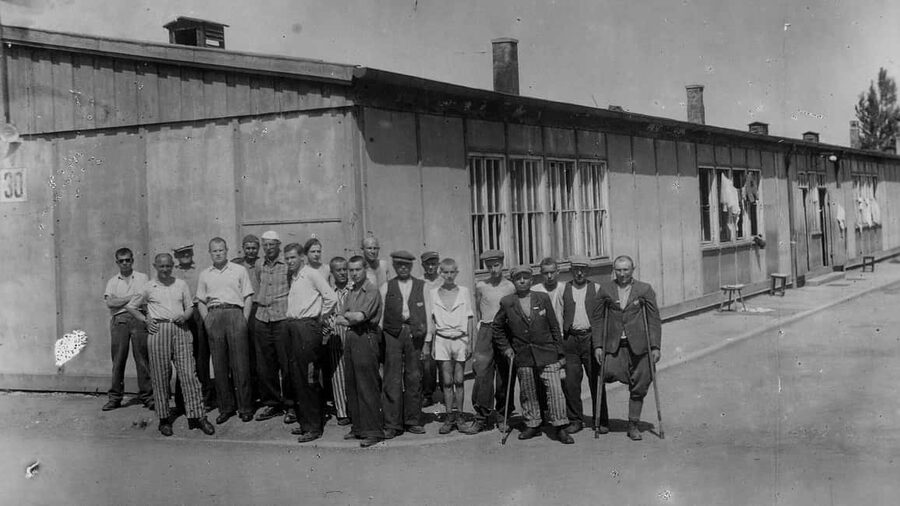
Dachau is not a sightseeing stop in the usual sense. It is a memorial built on the site of the first Nazi concentration camp, opened in 1933 soon after Adolf Hitler became German chancellor. The camp first held political prisoners, but its purpose and population soon widened as Nazi persecution spread.
The site later became a training center for the SS. The memorial describes it as a school of violence, a place where methods of control, punishment, forced labor, and terror were developed and passed on to other camps.
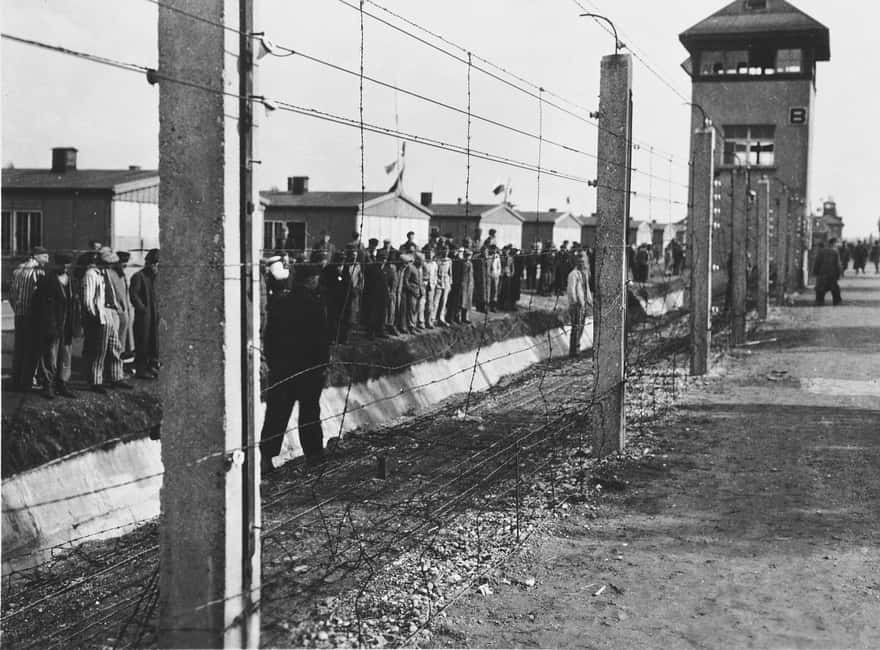
Over its 12 years, Dachau became the center of a system with nearly 100 sub-camps. More than 200,000 people from across Europe were imprisoned there, and about 41,500 are estimated to have been killed. People held at Dachau included Jews, political opponents, artists, intellectuals, Romani, and homosexual men.
That range matters. Dachau was not only a place where one group suffered. It was part of a wider Nazi system aimed at removing people the regime considered politically dangerous, racially inferior, socially unacceptable, or simply inconvenient.
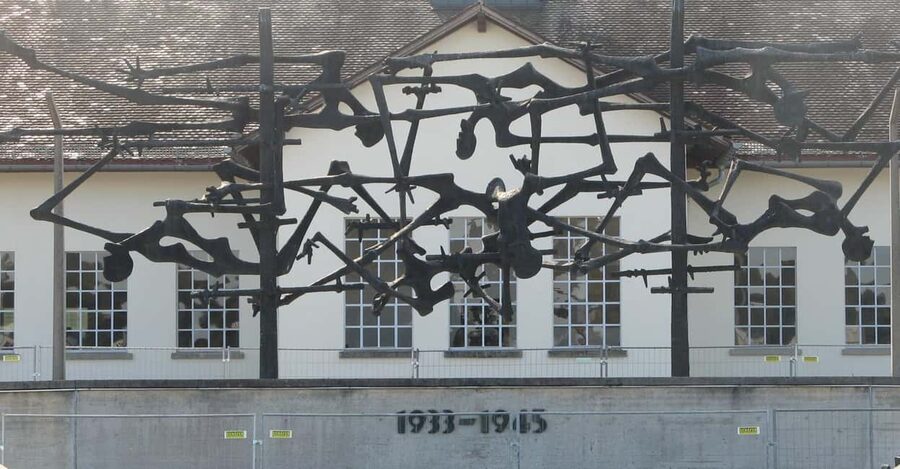
The main camp was liberated by U.S. forces on April 29, 1945. In 1965, survivors helped create the memorial on the former camp grounds. Today, the site receives nearly 800,000 visitors a year, but its purpose is not entertainment. You go to remember, learn, and confront what happened.
Other memorial sites open to visitors:
- Berlin: Sachsenhausen Concentration Camp Tour in English
★ 5.0 · 5,711 reviews - Dachau Concentration Camp Memorial Site Tour from Munich by Train
★ 4.5 · 5,637 reviews - Berlin: Sachsenhausen Concentration Camp Memorial Tour
★ 4.7 · 3,716 reviews
The 30-minute drive from Munich
The tour begins with pickup in Munich and a drive of about 30 minutes each way. Private transportation is a major part of the price. You avoid figuring out the train, local connections, and transport to the memorial entrance, and you return directly to Munich at the end.
That convenience matters most if your schedule is tight or you are traveling with a small family group. It also makes the trip less tiring on a day when the memorial itself requires several hours of walking and standing.
The vehicle is described as a Jeep or SUV, and the group is limited to four participants. That is a useful size for a serious subject. You can ask questions without addressing a crowd, and the guide can adjust the pace to the group.
Still, confirm the pickup details before the day of the tour. A published booking reported that the driver never showed up. The supplied contact number is +49 151 57490411 on WhatsApp, and you are specifically asked to contact the provider with questions before booking and before the tour. I would do that, especially if a missed pickup would disrupt a short Munich stay.
Three hours inside the Dachau Memorial
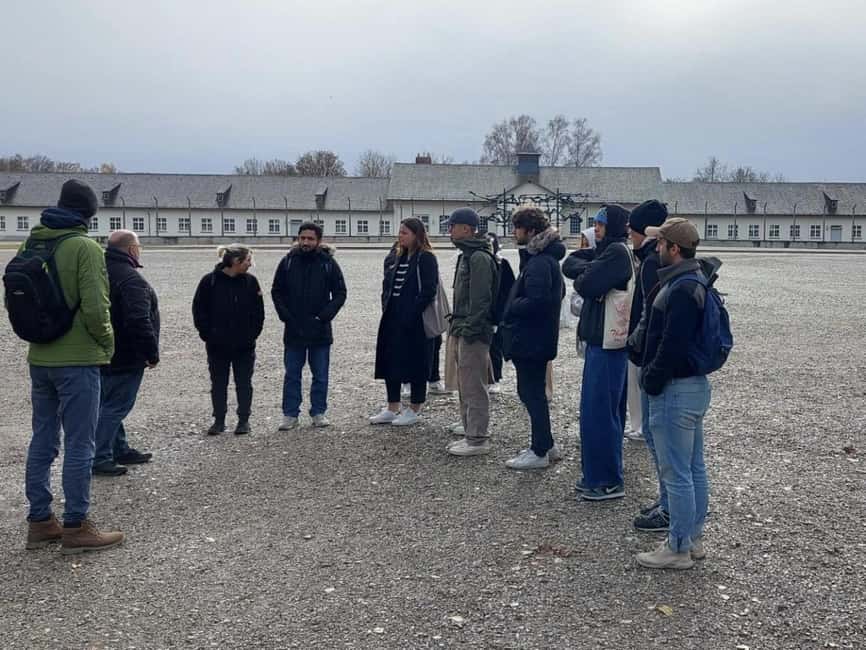
You receive about three hours at the Dachau Concentration Camp Memorial Site. The visit combines a guided tour with time for self-guided viewing, and an audio guide is available.
The main strength here is context. A former camp can otherwise feel confusing and visually bare. The original structures, reconstructions, memorial buildings, and open spaces do not explain themselves. A trained guide helps connect each area to the larger Nazi system.
You can expect to visit:
- The roll-call area
- The bunker
- The barracks
- The camp street
- The crematorium
- Memorial and exhibition areas
Much of the tour takes place outside. You will walk across the former camp grounds, so good footwear is not a minor suggestion. Rain, cold, heat, or wind can affect the visit, and the site calls for quiet attention rather than a quick indoor museum stop.
Food cannot be bought or eaten on the memorial grounds. Drinks and water are included with the tour, but bring your own water as well. Plan to eat before or after the visit, not during it.
The roll-call area and camp layout
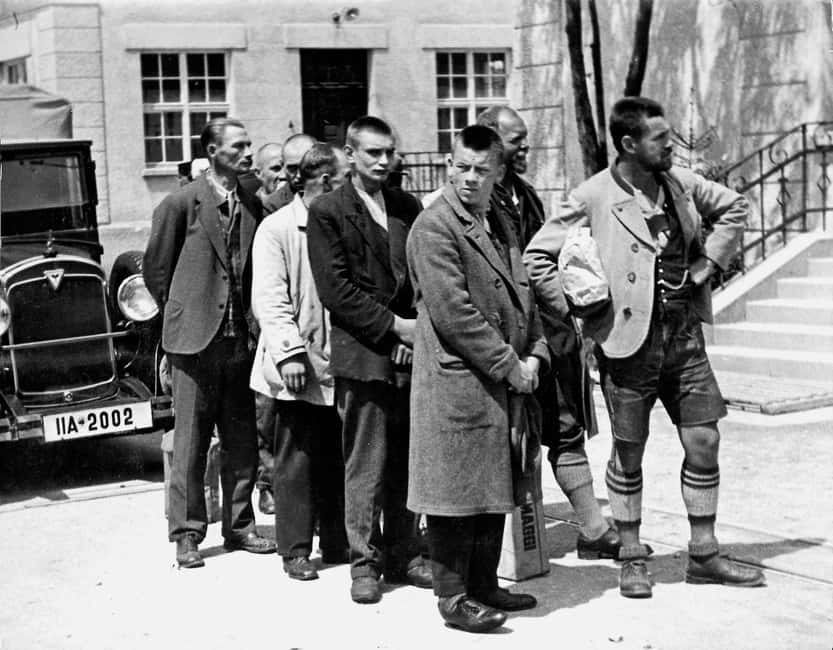
The roll-call area helps you understand the daily control imposed on prisoners. This broad open space was used to count and organize prisoners, often under harsh conditions.
From there, the camp street and barracks show how the site was arranged. Some buildings are original, while others are reconstructed. That distinction is important. You are not looking at an untouched camp, but the surviving structures and carefully presented reconstructions still make the physical system easier to grasp.
A guide can point out how the camp was organized and explain what different buildings were used for. Without that help, you could easily mistake the site for a collection of empty rooms and foundations.
The setting can feel deceptively plain. That is part of the difficulty. There is no need for dramatic decoration. The facts, the layout, and the names of the people imprisoned there carry the weight.
Still Germany, at a slower pace:
- Berlin: Reichstag, Dome and Government District Guided Tour
★ 4.7 · 18,288 reviews - Berlin: 1-Hour City Tour by Boat with Guaranteed Seating
★ 4.3 · 16,993 reviews - Hamburg: Sex and Crime in St. Pauli Tour for Ages 18+
★ 4.7 · 15,447 reviews - Hamburg: 1.5-Hour Harbor and Speicherstadt Day Cruise
★ 4.6 · 14,200 reviews
The bunker, punishment, and SS control
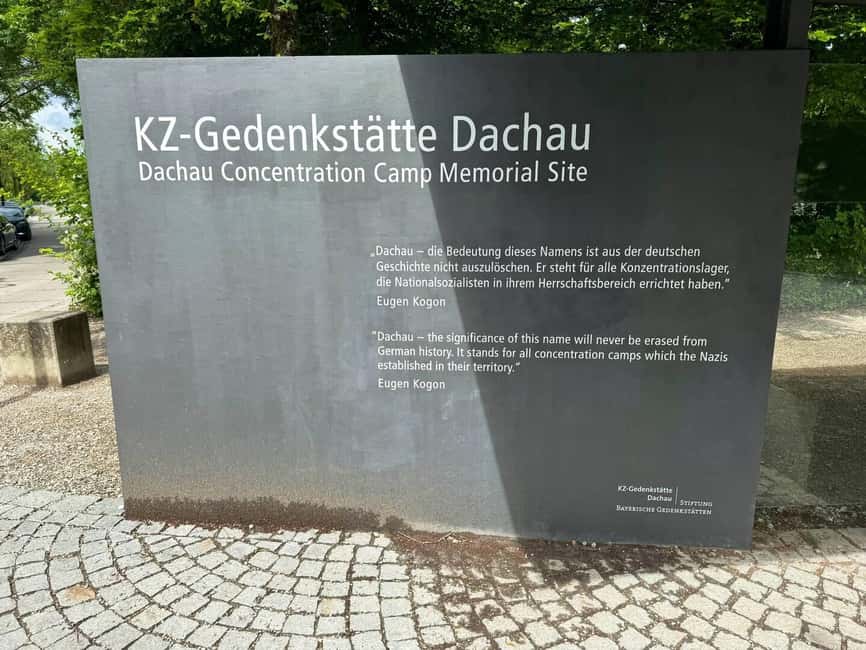
The bunker was the camp prison. It represents the system of punishment within the larger camp system, where imprisonment itself was not considered enough.
At Dachau, control worked through rules, surveillance, forced labor, beatings, torture, and arbitrary punishment. The guide’s role is especially useful here because the physical rooms alone cannot show the full extent of what happened.
The site also explains Dachau’s role in SS training. Guards learned methods that could then be used elsewhere. This helps you see the camp not as an isolated place, but as a working model for later camps and sub-camps.
The subject matter is disturbing. The tour covers medical experiments, torture, mass executions, malnutrition, disease, and overwork. You should not expect a light or casual afternoon. The age limit of 14 is sensible, and adults should also think about how much difficult material they are ready to face.
Barracks, forced labor, and human suffering
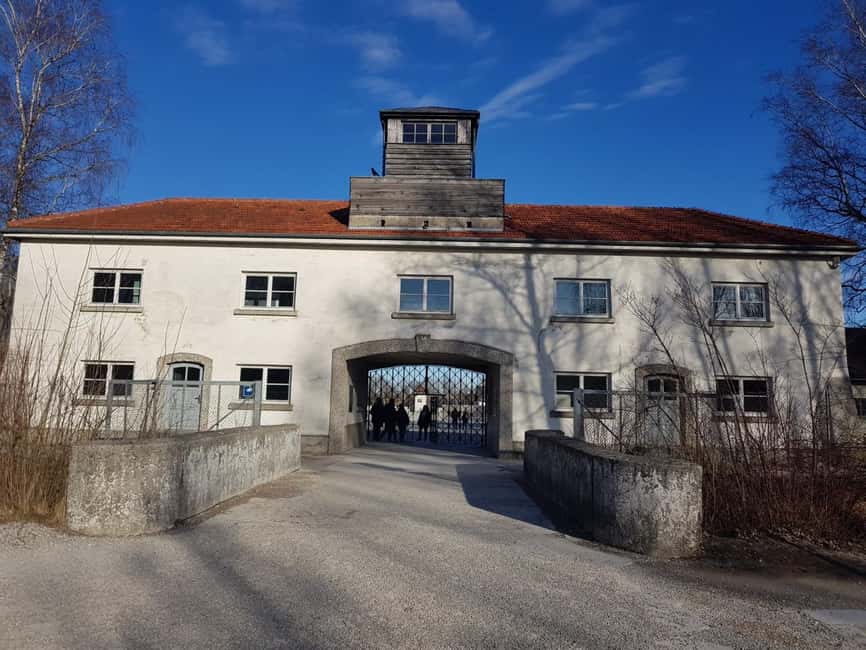
The barracks are among the places where the scale of daily life becomes easier to imagine. People were confined, deprived, worked beyond endurance, and exposed to disease and malnutrition.
Thousands of Jews died at Dachau, but the camp also imprisoned many other groups. Political prisoners, artists, intellectuals, Romani, and homosexual men were among those targeted by the Nazi regime.
The guide can help you connect individual suffering to the broader structure. The camp was not simply a prison with poor conditions. It was designed to strip people of dignity, freedom, health, and eventually life.
I would allow the full three hours if you can. The visit may feel emotionally heavy, but rushing through it makes the place harder to understand. You do not need to linger at every display, yet you should leave time for the memorial spaces and the information presented beyond the main buildings.
The crematorium area
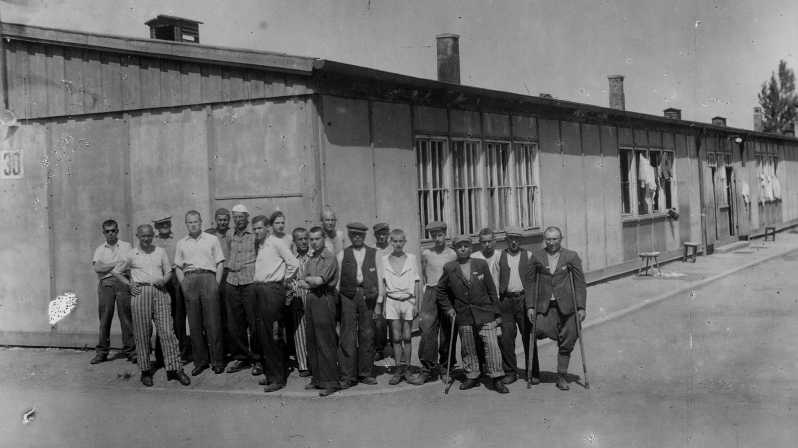
The crematorium area is one of the most difficult parts of the visit. It brings the killing and disposal of bodies into direct view, alongside the broader evidence of disease, starvation, executions, and forced labor.
This is not a place for hurried photographs or casual conversation. The tour is designed to approach the subject with dignity and respect for the victims, and you should match that tone.
The crematorium area also makes an important point about the camp’s changing role. Dachau began as a camp for political prisoners, but Nazi persecution expanded and became more murderous over time. The site’s history cannot be reduced to one purpose or one victim group.
What makes the guiding worthwhile
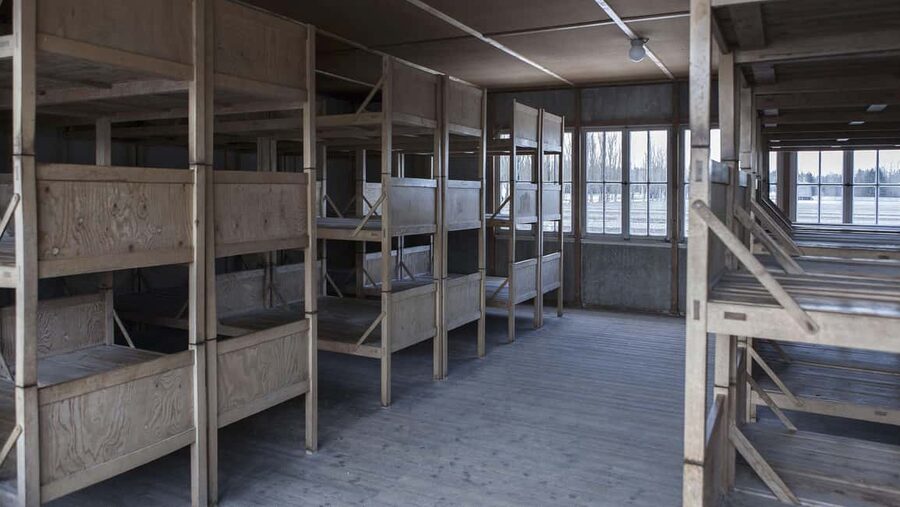
The strongest part of this tour is the human explanation provided by the guide. Markus received especially strong praise for offering detailed information and moving a small group through the exhibitions with more context than people might gather alone.
That does not mean a self-guided visit is impossible. The memorial has information displays, and an audio guide is available. If you are comfortable reading at your own pace, you can learn a great deal independently.
The guide adds structure. You do not have to decide which building to visit first, how the camp developed, or how separate events connect. You can ask questions as they arise, and the small group format makes that practical.
The tour is offered in English and Spanish. Confirm your preferred language when arranging the trip. The guided portion lasts three hours, within a total outing of five hours.
Is $371 per person a fair price?
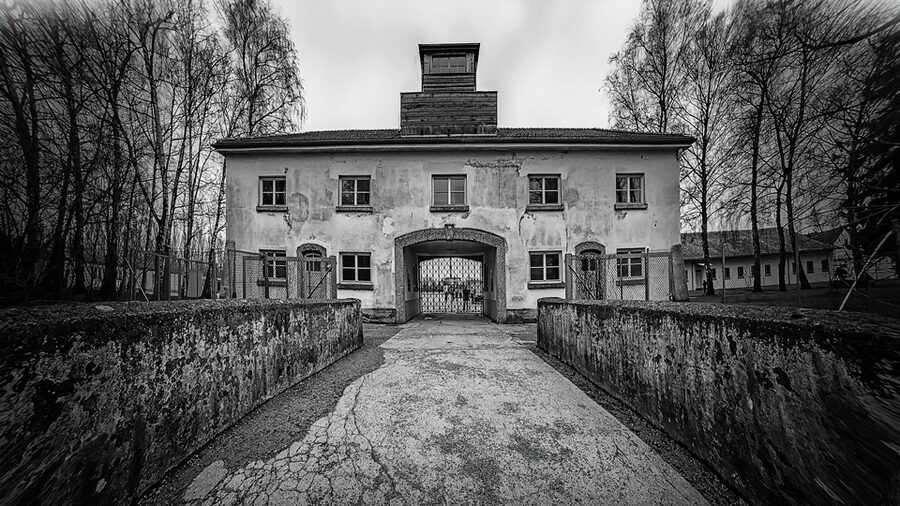
At $371 per person, this is a premium excursion. The cost includes private transportation, Munich hotel pickup and drop-off, all fees, drinks, water, and a three-hour guided visit.
For one person, the price is hard to call inexpensive. The value improves for a group of two to four people who would otherwise need to arrange their own transport and pay for a separate guide. You are also paying for time saved and for a direct ride back to Munich.
The price is less attractive if you are happy using public transportation, reading the memorial material on your own, and managing the visit independently. Dachau is only about 20 kilometers northwest of Munich, so the distance itself does not justify a high fee.
The real question is how much you value a private vehicle and a guide who can explain a difficult site in detail. If those are important, the cost may be reasonable for a small group. If your budget is tight, this is the first place to look for savings.
Who should choose this Dachau tour?
I would recommend it to adults and older teenagers who want a guided, serious visit without dealing with transport. It suits first-time visitors to Dachau, small groups, and people who want to ask questions as they move through the site.
It is also a good fit for anyone with only a few days in Munich. The five-hour schedule leaves part of the day available, although the emotional weight of the memorial may make it hard to jump straight into cheerful sightseeing afterward.
I would think twice if you prefer complete independence, dislike guided pacing, or are looking for a low-cost outing. I would also avoid booking it for children under 14, since they are not permitted.
Wear comfortable shoes, dress for changing weather, and bring water. Contact the provider through WhatsApp before the day of the tour, confirm pickup, and keep the number handy. A little planning matters here.
Should you book it?
Book this tour if you want the ease of a private car and the help of a guide who can explain Dachau with care. Markus appears to be a real strength, and the small group makes the three-hour visit more personal and focused.
Do not book it blindly. The $371 price is high, and the published score of 3 out of 5 includes one serious pickup problem. Confirm the meeting details in advance. If the provider responds clearly and dependable transport matters to you, this can be a powerful and well-organized way to visit Dachau. If not, an independent visit may offer better value.
FAQ
How long does the Dachau tour from Munich last?
The full tour lasts five hours. The drive takes about 30 minutes each way, and the visit at the Dachau Memorial Site lasts about three hours.
How do I get to Dachau on this tour?
Private transportation by Jeep or SUV is provided. Pickup and drop-off are included at hotels in Munich.
How many people can join the tour?
The tour is limited to four participants, making it a small-group experience.
What languages are available?
The live guide is available in English and Spanish. An audio guide is also available.
Is food provided at the memorial?
Drinks and water are included, but food cannot be bought or consumed on the memorial grounds. Bring water and eat before or after the visit.
What should I wear?
The tour is mostly outdoors and includes walking. Wear suitable walking shoes and clothing appropriate for the weather.
Can children join the tour?
No. Children under 14 years old are not permitted on this tour.
Just added around Germany
- Private Walking Tour in Berlin: Hitler’s Germany & WWII★ 5.0 · 7 reviews
- The History of Berlin: WWII PRIVATE Walking Tour With Locals★ 5.0 · 209 reviews
- Private Berlin WWII and Cold War History Tour with Local Expert Guide★ 5.0 · 28 reviews
- Private Walking Tour Berlin 3 hours: Brandenburg, Historic Center★ 5.0 · 7 reviews
- Berlin: Private Bike Tour of the Berlin Wall and Third Reich★ 5.0 · 23 reviews
- Berlin: Guided Private Bike Tour to Explore the Highlights★ 5.0 · 12 reviews
- Berlin Photography Masterclass – Private Photography Lesson★ 4.5 · 23 reviews
- Group Driving Tour 1 to 6 people. Berlin Shore Excursion incl pick-up at Port★ 5.0 · 8 reviews