
Reviewed · MUSEUMS
Munich: Deutsches Museum Entry Ticket
Science gets wonderfully practical here. Munich’s Deutsches Museum turns big subjects such as aviation, chemistry, atomic physics, and space travel into hands-on exhibits you can test and watch. I like the broad range of subjects, and I especially like that the museum includes live demonstrations, historic machines, and interactive stations rather than rows of untouchable objects. The main consideration is size: with 20 permanent exhibitions across about 20,000 square meters, one day may not be enough for a careful look at everything.
The central island location makes this an easy addition to a Munich sightseeing day, and the $17 admission is fair if you plan to spend several hours inside. This is not a general museum of Bavarian art or city history, though. If science and technology do not interest you, the experience may feel focused to the point of being narrow.
In This Review
- Key points to know before you go
- Why the Deutsches Museum is worth your Munich time
- What your one-day visit looks like
- Twenty exhibitions with very different personalities
- The collection: 125,000 objects, with only a fraction on display
- Demonstrations that break up the walking
- Hands-on learning for adults and children
- How much time should you allow?
- Is the $17 ticket good value?
- Access, comfort, and practical planning
- Who will enjoy this museum most?
- Should you book the Deutsches Museum?
- FAQ
- Where is the Deutsches Museum located?
- How long is the ticket valid?
- What does the ticket include?
- Is the Deutsches Museum wheelchair accessible?
- Must children be accompanied by an adult?
- Can I cancel the booking for a refund?
Key points to know before you go

- Twenty permanent exhibitions cover the full story of science and technology, from aviation and astronautics to chemistry and atomic physics.
- Hands-on stations and experiments make the museum suitable for families, curious adults, and anyone who learns best by seeing how things work.
- The collection includes more than 125,000 objects, including the first diesel engine, historic printing presses, a lunar rover, and notable airplanes.
- The model railway, microscopy theater, and chemistry demonstrations add scheduled or staged moments to the self-guided visit.
- The museum is barrier-free from the entrance to the restrooms, making the main visitor route wheelchair accessible.
- The downloadable multilingual audio guide gives you an optional way to add context without joining a guided group.
Why the Deutsches Museum is worth your Munich time

The Deutsches Museum is one of Munich’s major attractions for a simple reason: it explains how the modern world works. Founded in 1903 by Oskar von Miller, the museum was created to give the public a broad view of natural science and technology.
That mission still shapes the visit. You are not looking at one narrow subject, such as cars, aviation, or computers. Instead, the museum moves across fields that affect daily life, industry, travel, medicine, communication, and space exploration.
The main museum sits on Museumsinsel, a small island in the Isar River. Its address is Museumsinsel 1, 80538 Munich, and the central location makes it convenient to pair with other sights in the city center. You enter through the main entrance and finish back at the same museum location, with no separate meeting point or transport arrangement to manage.
I particularly value the museum’s mix of old and new. The historic objects show where technology came from, while the experiments help you understand how scientific ideas work now. That combination gives the visit more substance than a collection of impressive machines alone.
More Museums in Munich
- Munich: Beer and Food Tour with Dinner & Oktoberfest Museum
★ 4.7 · 1,086 reviews - Munich: FC Bayern Museum + Arena View
★ 4.5 · 944 reviews - Munich: FC Bayern Museum Entry Ticket
★ 4.6 · 193 reviews
What your one-day visit looks like
Your ticket is valid for one day, and the museum is open daily from 9:00 to 17:00. Last admission is at 16:30, so do not plan to arrive at the final half hour and expect a full visit.
At the entrance, you can use your ticket to access all the exhibitions. The museum is large enough that it helps to decide what interests you most before you start. If you try to see every room in equal detail, you may spend the day moving quickly and remembering very little.
A good approach is to choose two or three priority subjects, then add other displays as time and energy allow. Families may want to begin with the hands-on stations. Science enthusiasts might head first to the aircraft, space, physics, or chemistry areas. The downloadable Deutsches Museum App includes a multilingual audio guide, giving you another way to organize your visit.
The museum does not require a traditional guided tour. That is a benefit if you like to set your own pace, pause at an experiment, or skip a section that does not hold your attention. It also means you need to manage your time. The ticket gives you access, but it does not create a fixed route through the building.
Twenty exhibitions with very different personalities
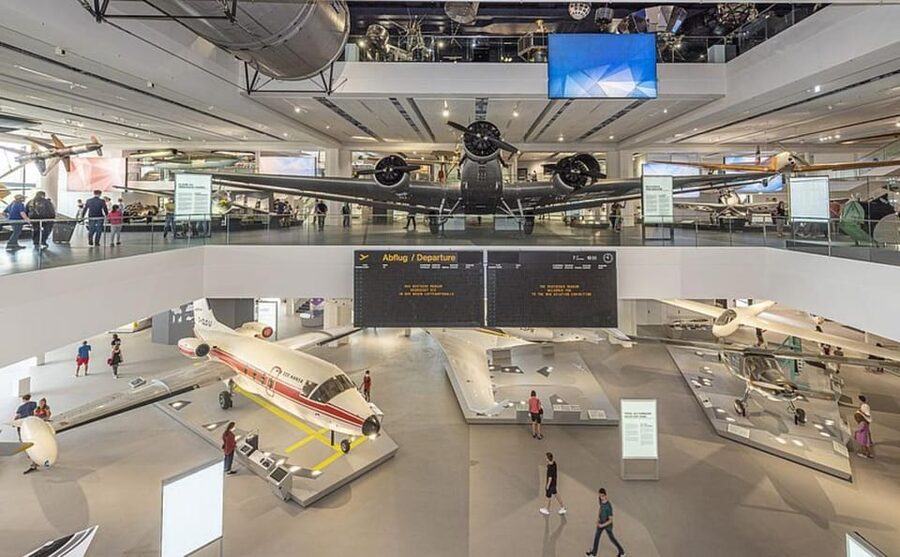
The 20 permanent exhibitions are the heart of the experience. The subjects range from aviation and astronautics to atomic physics and chemistry, so the museum can feel like several smaller museums gathered under one roof.
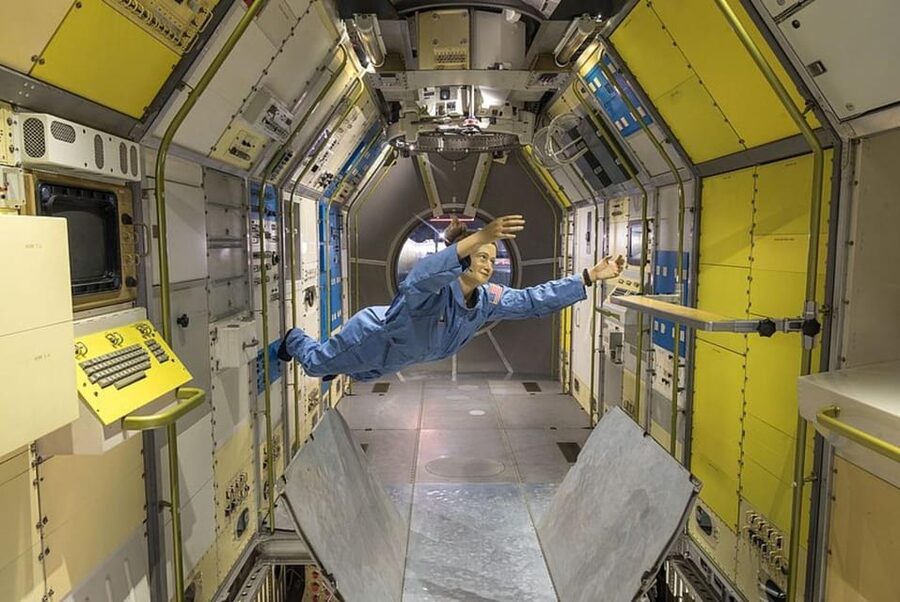
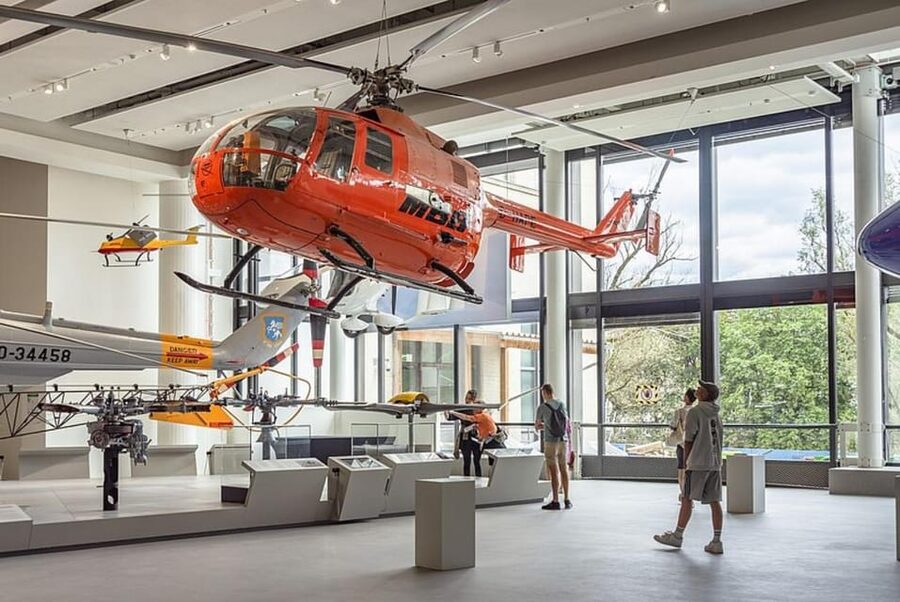
The aviation and astronautics displays are likely highlights for many people because large aircraft and space-related objects make an immediate impression. A lunar rover connects abstract space exploration with a physical object you can actually see. Historic airplanes show how quickly flight technology developed from early experiments to complex aircraft.
The atomic physics and chemistry sections offer a different kind of experience. These subjects can seem difficult in a textbook, but demonstrations and interactive displays help turn principles into something visible. If you are visiting with children, hands-on elements can make the difference between a long explanation and a memorable discovery.
The printing presses are another useful reminder that technology is not limited to engines and spacecraft. Printing changed how information could be produced and shared. Seeing historic equipment beside modern scientific subjects helps you understand technology as a chain of changes, not a series of isolated inventions.
The first diesel engine is one of the collection’s signature objects. It represents a major step in industrial power and gives the museum a strong link to the machinery that changed transport and manufacturing. Objects such as this also make the collection feel connected to ordinary life, not just laboratories and research centers.
The collection: 125,000 objects, with only a fraction on display
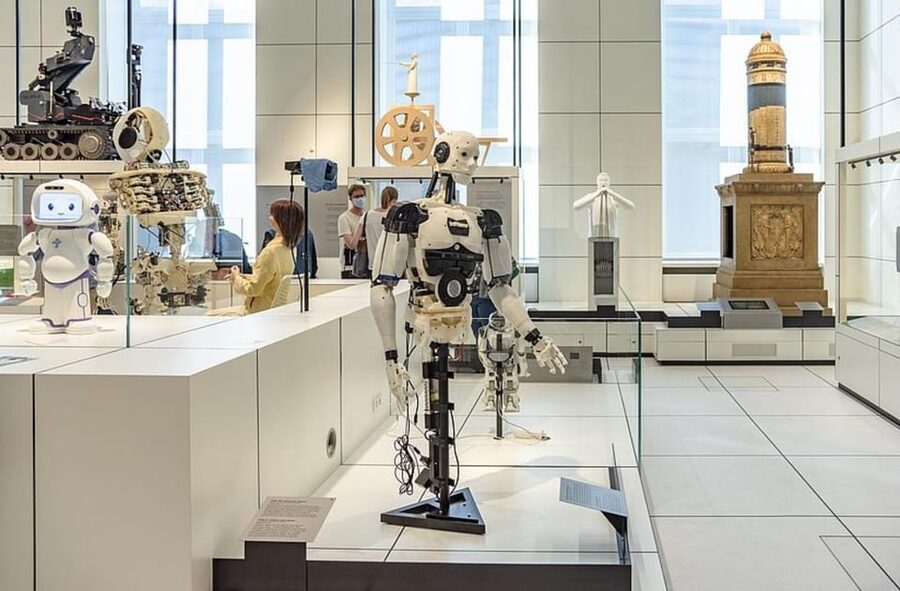
The Deutsches Museum holds more than 125,000 objects, although the public sees only part of that total during a visit. The number matters because it shows the scale of the institution and its role in preserving scientific and technological culture.
You will find major objects such as the first diesel engine, old printing presses, a lunar rover, and iconic airplanes. These are not simply decorative pieces. They give you a physical sense of the materials, size, and engineering behind inventions that are often reduced to photographs or diagrams.
The museum also preserves Germany’s largest museum library and a leading special archive devoted to the history of science and technology. You probably will not spend your sightseeing day working in the library or archive, but their presence adds value behind the scenes. The museum is not only a place to look at exhibits. It also protects documents and objects used to study how science and technology developed.
For you, this means the displays have a wider purpose. The museum is presenting public exhibits while also helping preserve the record of scientific work. That gives the visit more weight than a short-term exhibition assembled only for entertainment.
A few more Munich trips worth comparing
- Munich Hop-On Hop-Off Tour: 1-Day or 2-Day Ticket
★ 4.3 · 4,161 reviews - Munich: Studio of Wonders Entry Ticket
★ 3.9 · 602 reviews - Munich: Nymphenburg Palace Entry Ticket
★ 3.9 · 327 reviews - Munich: Law Library Guided Visit with Entry Tickets
★ 4.6 · 297 reviews
Demonstrations that break up the walking
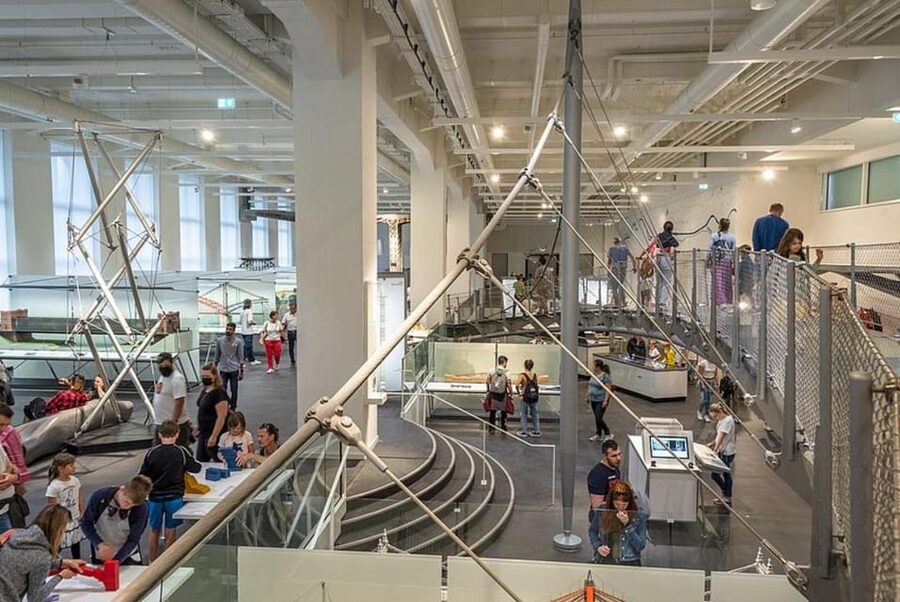
Large museums can become tiring. The Deutsches Museum helps vary the pace with demonstrations and shows, including the model railway, microscopy theater, and chemistry presentations.
The model railway offers an accessible way to watch systems working together. Railways depend on timing, movement, signals, and coordination, so a model can show several ideas at once. It is also the sort of display that can hold the attention of children who may not want to read long panels.
The microscopy theater shifts the scale completely. Instead of looking at a large machine, you are shown a closer view of material that normally cannot be seen with the naked eye. That change in scale is useful because science often asks us to think about both enormous systems and tiny structures.
Chemistry demonstrations provide another change of pace. Watching a scientific principle presented in a live format can make the subject easier to remember than reading a label. Since exact demonstration times are not provided here, check the museum’s current schedule when you arrive or use the app if details are available.
These activities are important for planning. Do not assume every demonstration runs continuously throughout the day. If one is a priority, allow time to check when it takes place. Otherwise, you may encounter it by chance while moving through the exhibitions.
Hands-on learning for adults and children
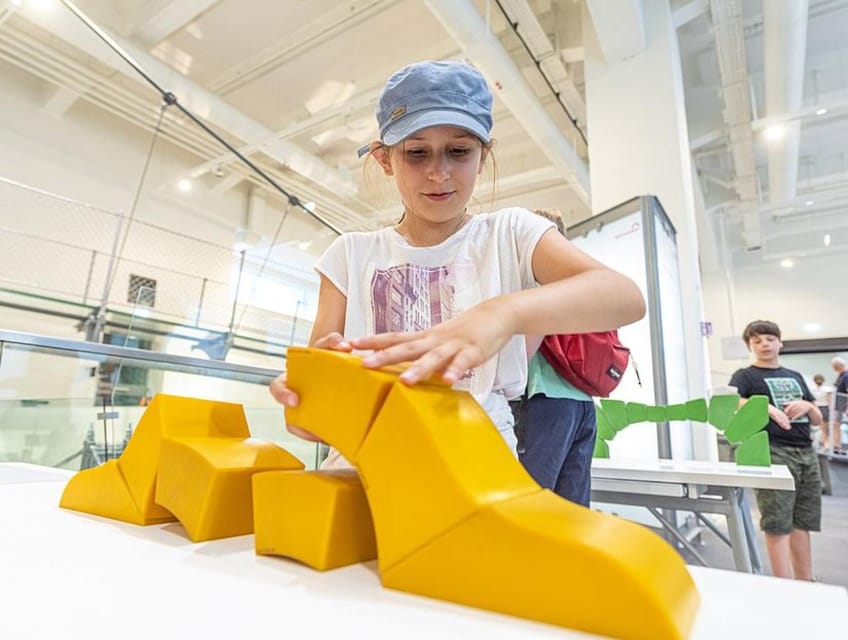
The museum’s interactive stations are not just a bonus for families. They make difficult subjects easier to understand for anyone who prefers a practical example over a technical paragraph.
You can test ideas, observe results, and connect a scientific principle with a visible effect. That method helps turn the museum from a passive viewing experience into an active one. It also gives families a natural way to share the visit, since adults and children can react to the same experiment at different levels.
Children under 12 must be accompanied by an adult. That rule is worth noting when planning a family visit, especially because the museum is large and the exhibits cover complex subjects. The museum is family-friendly in its use of experiments, but it is still a serious science museum rather than a simple children’s attraction.
I would also avoid promising young children that they will see everything. Give them a few subjects to choose from, then let the interactive stations guide the day. A shorter visit with time to try things will usually work better than a rushed march through every exhibition.
How much time should you allow?
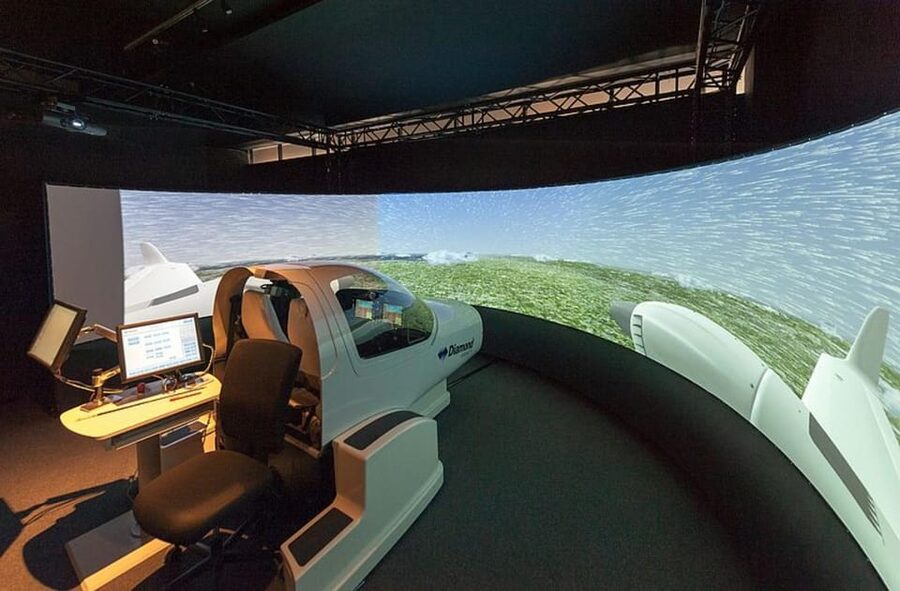
The ticket is valid for one day, but the museum does not give a fixed visit duration. Your timing depends on how many exhibitions you choose and how long you spend with the experiments and demonstrations.
A quick visit could focus on the major objects and a few favorite sections. A longer visit lets you read more, try additional stations, and wait for demonstrations. With 20 exhibitions and about 20,000 square meters of exhibition space, you should treat the museum as a substantial half-day or full-day activity rather than a one-hour stop.
I would plan the day around your interests. If aviation, space, machinery, or chemistry matters to you, allow more time. If you are adding the museum between other Munich sights, select a small group of exhibitions and accept that you will leave areas unseen.
The daily hours are practical, but the 16:30 last admission matters. Arriving late may still work for a short look, but it is poor value if you have paid for a full day and want to use the interactive displays.
Is the $17 ticket good value?
At $17 per person, the entry fee is reasonable for the amount of material available. You receive access to all exhibitions for one day, along with a downloadable multilingual audio guide through the Deutsches Museum App.
The value improves if you spend several hours inside. A short visit can still be worthwhile, but you will not make full use of the ticket’s main advantage, which is broad access rather than a single featured display.
There are also reduced admission categories. Pupils, trainees, full-time students, and severely disabled adults should select Youth when booking. For severely disabled adults, the accompanying person is free. Severely disabled children and young people from 6 to 17 years old, along with companions of severely disabled visitors with the registered B designation, can select Child for free admission as specified in the ticket information.
Because prices and eligibility can change, check the booking choices carefully before paying. The listed adult price is $17, and the reserve-now, pay-later option lets you hold a place without paying immediately. Free cancellation is available up to 24 hours in advance for a full refund, which is useful when Munich weather or family plans remain uncertain.
Access, comfort, and practical planning
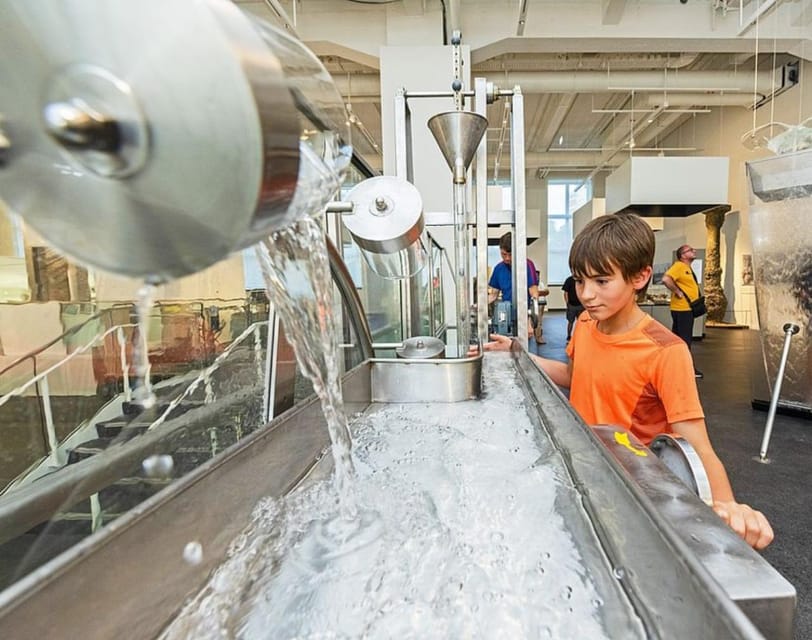
The museum is wheelchair accessible, with barrier-free access from the entrance to the restrooms. That is a meaningful advantage in a building this size, especially if you need a route without steps or are visiting with someone who has limited mobility.
The information provided does not give details about every exhibit, lift, seating area, or route inside individual galleries. If you have a specific access requirement, confirm the current arrangements with the museum before your visit.
The audio guide is downloadable and multilingual, so you can choose whether to use it throughout the museum or only for selected objects. I like this flexible approach because it avoids forcing every member of your group into the same level of detail.
Wear comfortable shoes and keep your plan realistic. That is simple advice, but a museum spread over 20,000 square meters rewards patience and punishes an overambitious checklist. Leave room to stop when an experiment catches your attention.
Who will enjoy this museum most?
The Deutsches Museum suits science fans, engineering enthusiasts, families, students, and curious adults who want more than a quick look at famous objects. It is especially good for people who like to understand how machines and scientific ideas work.
It also works well on a rainy Munich day because the main attraction is indoors and offers enough material for several hours. The central Museumsinsel address makes it easy to build into a city itinerary.
You may want to choose another attraction if you are mainly interested in painting, royal history, religious art, or traditional Bavarian culture. The museum does not try to cover those subjects. Its focus is firmly on natural science and technology, and that focus is both its strength and its limitation.
The rating of 4.7 from 189 reviews reflects the museum’s broad appeal. The praise centers on the chance to understand how almost everything around us works, along with the location on a small river island close to Munich’s center. One four-star assessment makes the fair point that this is a science and technology-only museum. Know that before you go, and you are more likely to enjoy it.
Should you book the Deutsches Museum?
Book it if you want a substantial, self-guided museum visit with working demonstrations, historic machines, interactive exhibits, and subjects ranging from engines to space travel. The $17 price is good value when you can give the museum at least several hours.
I would be especially happy to recommend it to families with older children, students, and adults who enjoy learning by seeing and doing. Use the app, pick your priority exhibitions, and check demonstration times so the large building does not dictate your whole day.
Skip it if your Munich plans are already packed with art and historic sights, or if science museums rarely hold your interest. The Deutsches Museum is focused, large, and sometimes demanding. For the right visitor, that focus is exactly what makes it worthwhile.
FAQ
Where is the Deutsches Museum located?
The museum is at Museumsinsel 1, 80538 Munich, on Museumsinsel in the center of Munich.
How long is the ticket valid?
The entry ticket is valid for one day. The museum is open daily from 9:00 to 17:00, with last admission at 16:30.
What does the ticket include?
The ticket includes entry, access to all exhibitions, and a downloadable multilingual audio guide through the Deutsches Museum App.
Is the Deutsches Museum wheelchair accessible?
Yes. The museum is barrier-free from the entrance to the restrooms and is wheelchair accessible.
Must children be accompanied by an adult?
Yes. Children under 12 must be accompanied by an adult.
Can I cancel the booking for a refund?
Yes. You can cancel up to 24 hours in advance for a full refund. The reserve-now, pay-later option also lets you book without paying on the day of reservation.
Just added around Munich
- Pub crawl incl. Oktoberfest museum guided tour with beer tasting (private)★ 5.0 · 5 reviews
- South Tyrolean specialties and wine tasting★ 5.0 · 5 reviews
- Size Matters Beer Tour Munich★ 4.6 · 105 reviews
- Short & sweet: Tasting the Viktualienmarkt★ 4.8 · 37 reviews
- Secret Food Tours Munich★ 4.8 · 5 reviews
- Munich: Romantic Wine Experience for Two at Viktualienmarkt★ 4.2 · 14 reviews
- Residence of Munich private tour with skip the line ticket★ 5.0 · 4 reviews
- Munich: Resistance against Hitler – Historical Walking Tour★ 5.0 · 5 reviews
Museums, compared.



Skip-the-Line: Berlin Wall Museum at Checkpoint Charlie
Read our review →
Browse the lists this tour appears in