
Reviewed · THIRD REICH HISTORY TOURS
Munich: Third Reich Guided City Walking Tour
Munich’s past is impossible to ignore. This 2.5-hour walking tour links Marienplatz, Hofbräuhaus, Haus der Kunst, Führerbau, and Königsplatz into one clear account of how Hitler and the Nazi movement took root here. I like the route because it connects political events to real city streets, and I like the attention given to German resistance figures such as Georg Elser and the White Rose.
The tour also earns praise for its friendly guide and steady pacing, which matter when a subject this heavy comes packed with names and dates. The main caution is simple but important: the tour is conducted only in Spanish, and it will not run unless at least four people are booked.
In This Review
- Key points before you book
- Why this Munich history walk matters
- Starting at Marienplatz with Munich’s political past
- Hofbräuhaus and the Beer Hall Putsch
- Haus der Kunst and Nazi control of art
- Georg Elser, the White Rose, and German resistance
- Führerbau and the Munich Agreement
- Finishing at Königsplatz
- Spanish language and group requirements
- What the $23 price really includes
- Who should book this walk?
- Should you book the Munich Third Reich tour?
- FAQ
- Where does the Munich Third Reich tour start?
- How long does the walking tour last?
- What language is the tour conducted in?
- Can people who do not speak Spanish join?
- What sites does the tour visit?
- Does the tour cover the Beer Hall Putsch?
- Are children allowed to join?
- What should I bring?
- Can I cancel the tour for a refund?
- Will the tour operate with only a few participants?
Key points before you book
- Marienplatz is the starting point: Meet in front of the Tourist Information Office, right in Munich’s central square.
- The route follows the Nazi movement’s rise: You move through locations tied to Hitler’s political beginnings, the Beer Hall Putsch, propaganda, and Nazi diplomacy.
- Hofbräuhaus is part of the story: The famous beer hall is used to explain the early Nazi Party and Hitler’s failed coup.
- Haus der Kunst shows the regime’s cultural control: The building introduces Nazi propaganda and the campaign against so-called degenerate art.
- The tour includes resistance history: Georg Elser and the White Rose receive attention, giving the walk a wider moral frame.
- It ends at Königsplatz: The final stretch includes Führerbau, where the Munich Agreement was signed in 1938.
Why this Munich history walk matters
Munich is often sold through beer halls, royal buildings, museums, and handsome squares. Those are worthwhile, but they tell only part of the city’s story. Munich was also an early center of the Nazi movement, and this tour helps you see how that political rise unfolded in ordinary public places.
I find a walking tour especially useful for this subject because the locations are spread through the city center. A book can explain the Beer Hall Putsch or Nazi cultural policy, but standing outside the buildings gives the events a firmer sense of place. You are not simply memorizing dates. You are following a route.
The tone is serious, as it should be. This is not a tour that treats Hitler as a colorful celebrity or turns Nazi history into spectacle. Its focus is on political beginnings, propaganda, repression, resistance, and the damage caused by the regime.
At $23 per person, the price is reasonable for two and a half hours with a live guide. You are paying for interpretation, not admission tickets, food, or drinks. That makes the value depend heavily on the guide’s ability to explain complicated events clearly. The strongest praise for this experience centers on a friendly manner, solid command of the subject, and a well-paced presentation.
More City Tours in Munich
- Munich: Old Town & Viktualienmarkt City Walk in German
★ 4.7 · 2,304 reviews - Munich: City Bus Tour & FC Bayern Munich Allianz Arena Tour
★ 4.5 · 2,071 reviews - Munich City Hop-on Hop-off Tour
★ 3.5 · 1,233 reviews
Starting at Marienplatz with Munich’s political past
You meet your guide in front of the Tourist Information Office at Marienplatz. This is a practical meeting point because it is easy to identify and sits at the heart of central Munich.
The square itself is one of the city’s most familiar sights, which creates a useful contrast. You begin in a place many people visit for architecture and city views, then shift toward Munich’s role in the Third Reich. That change in focus is one of the tour’s strengths.
From here, the guide traces the political origins of Adolf Hitler and the Nazi movement. The exact wording and depth will depend on the guide, but you should expect a chronological walk through major events rather than a collection of unrelated anecdotes.
The walk also gives you a basic framework for the rest of your Munich sightseeing. Once you understand the city’s role in the movement’s early years, later visits to museums or memorial sites can make more sense. I would take notes if this topic matters to you, since the tour covers a lot in a limited time.
Hofbräuhaus and the Beer Hall Putsch
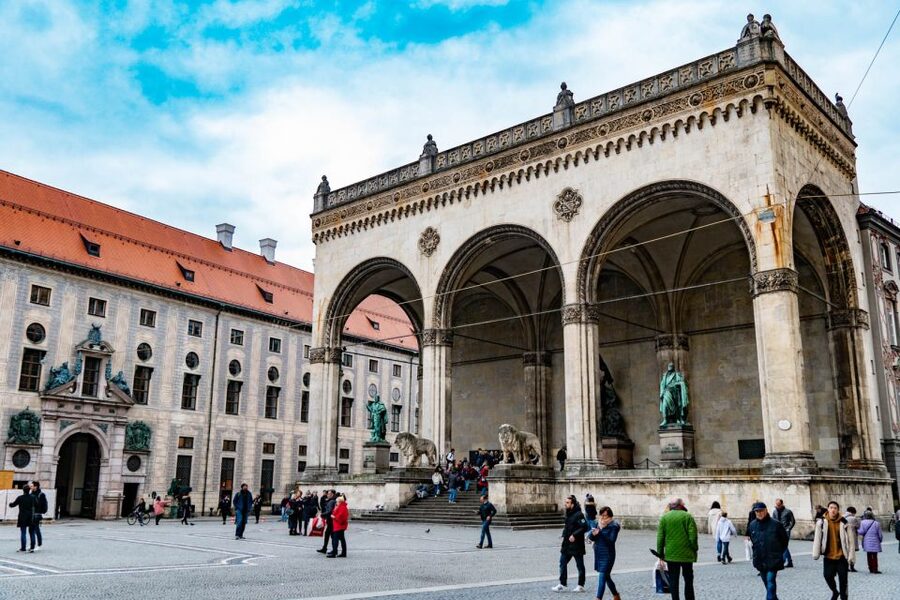
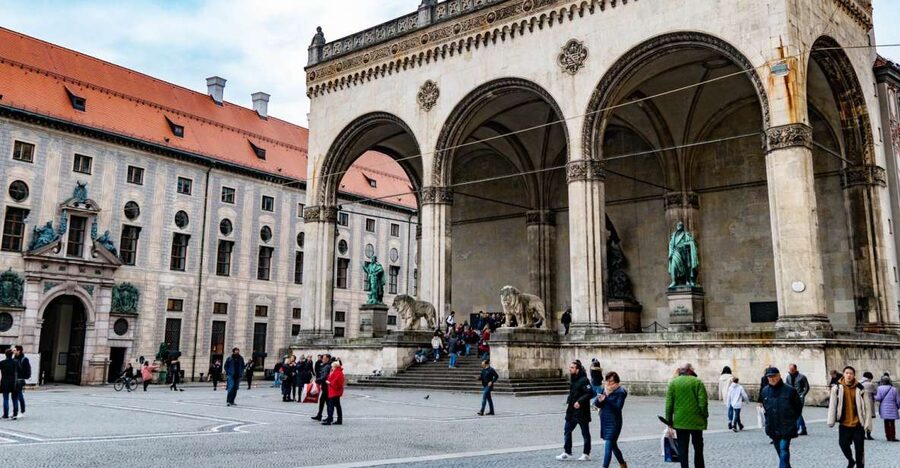
The route continues toward Odeonsplatz and includes Hofbräuhaus. Munich’s famous beer hall is best known today for traditional food, beer, and tourist crowds, but here it becomes a setting for political history.
You learn about Hitler’s putsch, also known as the Beer Hall Putsch, and the early development of the National Socialist German Workers’ Party. This part is important because it explains how a failed attempt to seize power became part of the Nazi movement’s later political mythology.
The stop should help you separate two different points: the coup itself failed, but the movement learned how to use publicity, organization, and political theater. That distinction makes this section more useful than a simple date-and-name recital.
Hofbräuhaus is still a working restaurant and public venue, not a preserved museum site devoted only to the Nazi era. That means the experience here is about the guide’s explanation outside or around the location, not about entering a dedicated historical exhibit. You should not expect food or drinks to be included. If you want to eat at the beer hall, plan that separately.
Haus der Kunst and Nazi control of art
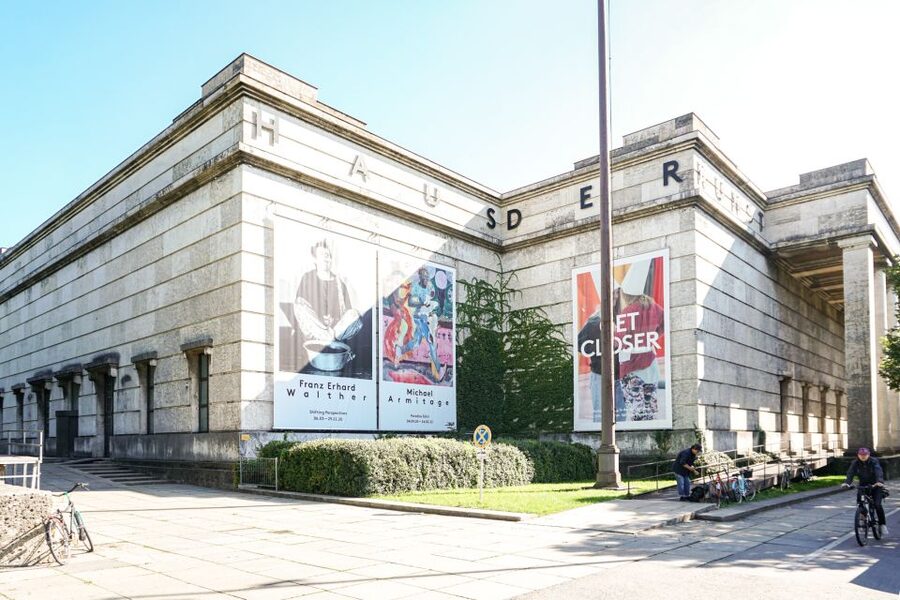
The walk then reaches the front of Haus der Kunst. The building is presented as the first propaganda building in Nazi Germany, making it a key stop for understanding how the regime tried to shape public taste and political loyalty.
The guide explains the influence of the Nazi government on art, including the banning of art labeled degenerate. This is one of the most useful parts of the route because it widens the subject beyond rallies, uniforms, and political violence.
Dictatorships do not control only elections and police forces. They also try to control what people see, praise, teach, and display. At Haus der Kunst, you get a clearer picture of how the Nazi regime used architecture and cultural policy to present its values as official truth.
I also like that this stop offers a change of pace. After the political story around Hofbräuhaus, the focus shifts to culture and propaganda. The subject remains grim, but the tour becomes more varied and gives you another way to understand how power worked.
The tour visits the front of the building, so you should not assume that an interior museum visit is included. If you want to explore Haus der Kunst beyond the tour stop, you will need to arrange that on your own.
More Third Reich History Tours in Munich
- Munich: Third Reich & WWII Walking Tour
★ 4.6 · 6,181 reviews - Third Reich Walking Tour Munich
★ 4.5 · 4,291 reviews - Munich: Birthplace of the Third Reich Guided Walking Tour
★ 4.6 · 771 reviews - Munich World War II Sites Including Dachau Concentration Camp
★ 4.5 · 570 reviews
Georg Elser, the White Rose, and German resistance
A major strength of this walk is its attention to German resistance. The tour includes Georg Elser and the White Rose, two subjects that help correct the idea that all Germans accepted or supported the Nazi regime.
Georg Elser attempted to kill Hitler with a bomb in 1939. The White Rose was a student resistance group that opposed Nazi rule and distributed anti-Nazi leaflets. Their inclusion gives the tour a more complete moral and political picture.
This section matters because it shows that resistance took different forms. One person acted alone with a direct attack, while the White Rose used writing and organized protest. Neither story is presented as a simple adventure tale. Both reveal the high personal risk involved in opposing the regime.
For me, this is the point where the walking route becomes more than a study of Hitler’s rise. You also learn about people who recognized the danger and chose to act against it. That balance is essential on any Third Reich tour.
The supplied details do not identify individual guides by name, so I cannot tell you who will lead your departure. The useful guide qualities to look for are clear explanations, a respectful tone, and the ability to keep these connected stories understandable within the tour’s time limit.
Führerbau and the Munich Agreement
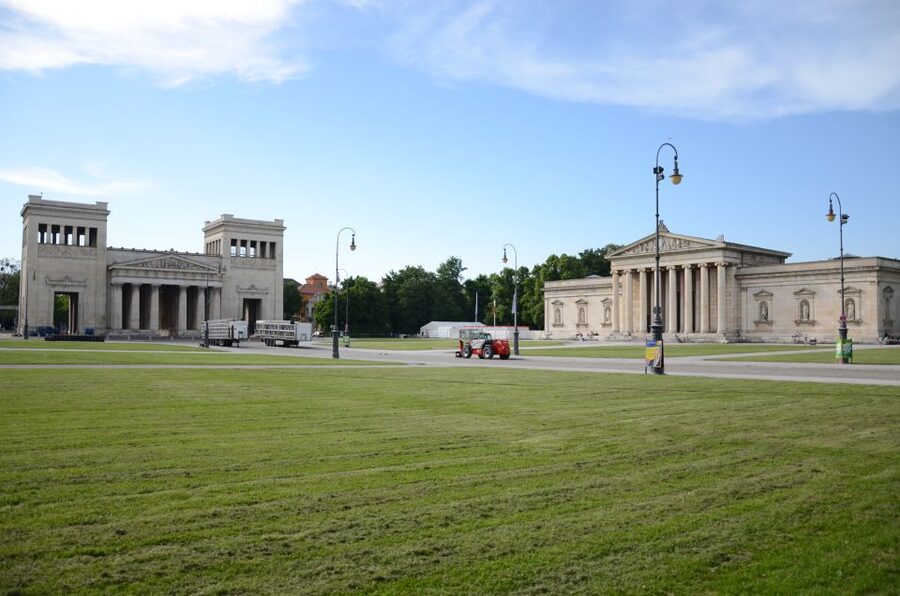
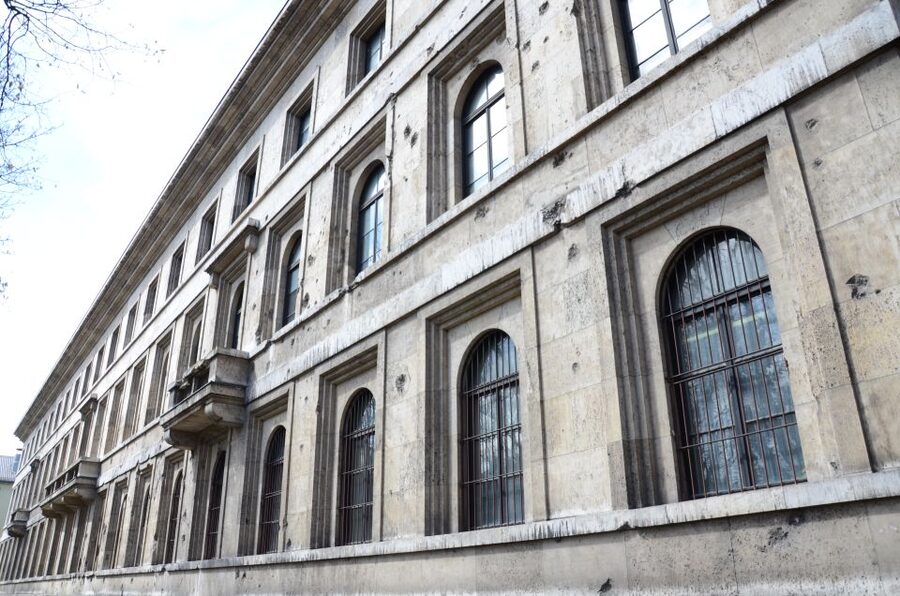
The route continues to Führerbau, the building associated with the signing of the Munich Agreement in 1938. This is one of the tour’s most politically important stops because the agreement is tied to the international response to Hitler’s expansion.
The location gives the guide a chance to explain Nazi diplomacy and the atmosphere surrounding the agreement. Even if you already know the basic story, seeing the place where the document was signed adds a physical anchor to an event often reduced to a paragraph in a textbook.
This stop also shows why Munich’s Third Reich story cannot be treated as only a local tale. The movement began with political activity in Bavaria, but its effects soon reached far beyond Germany. The buildings in the city center connect local streets with decisions that affected Europe.
You should expect interpretation from outside the building rather than a formal indoor visit. The tour is a city walk, and the value comes from the guide tying the site to the wider events.
Finishing at Königsplatz
The tour concludes at Königsplatz. This broad ceremonial area is an appropriate final point because it brings together the scale and symbolism of the Nazi period.
By the end, you have followed a route from political beginnings to attempted seizure of power, cultural propaganda, resistance, and international diplomacy. Königsplatz gives the walk a strong closing setting, even though the activity ends back at the original meeting point according to the tour information.
That return detail is worth checking when planning your day. The listed end point is back at Marienplatz, while Königsplatz is the final historical location described on the route. Ask the guide or local operator how the final transfer back is handled on your departure, especially if you have a timed reservation afterward.
The overall walk lasts 2.5 hours. That is long enough for a serious overview but short enough to fit into a day of sightseeing. You will be on your feet for most of it, so comfortable shoes are essential. Munich’s central streets are easy to walk in, but a history tour loses its value if you spend the second half worrying about sore feet.
Spanish language and group requirements
This point deserves bold treatment: the tour is only for Spanish speakers. The live guide conducts the tour in Spanish, and the activity is not open to people who do not speak Spanish.
That limitation is also the reason the tour may be a good choice for Spanish-speaking visitors who want a historical walk without relying on an English-language presentation. You can follow the explanations directly and ask questions in the language used by the guide.
The tour requires at least four participants to operate. If that minimum is not reached, the local partner will contact you and offer an alternative. I would avoid building an unchangeable schedule around this walk until the departure is confirmed.
Children under 13 cannot join. That rule makes sense given the subject matter and the length of the walk. The tour deals with Nazi ideology, political violence, propaganda, and resistance, so it is best suited to older teenagers and adults who can engage with difficult material.
What the $23 price really includes
The $23 price covers the guide and the walking tour. It does not include food or drinks, and no attraction admission is listed as part of the experience.
That is a fair price if you value a structured explanation of Munich’s Nazi-era sites. You could walk between many of these locations on your own, but you would lose the connections between them. The guide is what turns separate buildings into a coherent story.
I would compare this cost with your own interests. If you already plan to read extensively or visit several museums about the period, the tour can serve as a useful orientation. If you want a quick, casual look at Munich’s main landmarks, this may feel too serious and information-heavy.
The pace appears to be one of the tour’s best features. The available feedback describes it as full of important historical information while still being well paced. That is a valuable combination because two and a half hours can feel very long when a guide races through details or stops too often.
Free cancellation is available up to 24 hours before the activity for a full refund, and you can reserve while paying later. Those terms give you some flexibility, especially because the four-person minimum could affect whether the tour runs.
Who should book this walk?
I would recommend it most strongly to Spanish-speaking adults and older teenagers with a serious interest in modern European history. It is also useful if you want to understand Munich beyond its royal buildings and beer culture.
You will get the most from it if you already know a little about Hitler’s rise but want to connect the main events to places in Munich. The tour also works for beginners, since it follows a clear route and introduces the political origins of the movement before moving into its wider effects.
I would not choose it for children under 13, anyone who does not speak Spanish, or anyone looking for a light sightseeing stroll. The subject is difficult, and the tour is built around explanation rather than entertainment.
Bring comfortable shoes and arrive at Marienplatz with enough time to find the Tourist Information Office. Since food and drinks are not included, you can plan a meal before or after the walk rather than expecting a refreshment break during it.
Should you book the Munich Third Reich tour?
Book it if you want a focused Spanish-language account of Munich’s Nazi past, especially one that includes both the regime’s rise and the German resistance against it. The route covers a lot: Hitler’s early political activity, the Beer Hall Putsch, Nazi art policy, Georg Elser, the White Rose, and the Munich Agreement.
At $23, the tour offers good value for a clear guide-led framework. Its main weaknesses are the Spanish-only format, the four-person minimum, the lack of included food or admission tickets, and the need to walk for 2.5 hours.
I would make this an early Munich activity if the subject is a priority. It gives you context for later visits and helps you see the city’s central streets with more historical awareness. Just confirm the language, minimum group requirement, and meeting arrangements before you commit your day.
FAQ
Where does the Munich Third Reich tour start?
The tour starts in front of the Tourist Information Office at Marienplatz.
How long does the walking tour last?
The tour lasts 2.5 hours. Starting times vary, so you need to check availability for your preferred date.
What language is the tour conducted in?
The live guided tour is conducted in Spanish.
Can people who do not speak Spanish join?
No. The tour is not open to people who do not speak Spanish.
What sites does the tour visit?
The route includes Marienplatz, Odeonsplatz, Hofbräuhaus, the front of Haus der Kunst, Führerbau, and Königsplatz.
Does the tour cover the Beer Hall Putsch?
Yes. The guide explains Hitler’s putsch and the beginnings of the National Socialist German Workers’ Party at Hofbräuhaus.
Are children allowed to join?
Children under 13 are not allowed to participate.
What should I bring?
Bring comfortable shoes because the activity is a 2.5-hour walking tour. Food and drinks are not included.
Can I cancel the tour for a refund?
Yes. You can cancel up to 24 hours in advance for a full refund.
Will the tour operate with only a few participants?
The tour requires at least four participants. If that minimum is not met, the local partner will contact you and offer an alternative.
More Walking Tours in Munich
- Munich: Night Watchman Walking Tour
★ 4.7 · 2,092 reviews - Munich Ghosts and Spirits Evening Walking Tour
★ 5.0 · 1,900 reviews - Munich Old Town Walking Tour
★ 4.5 · 1,287 reviews - Munich: Walking Tour Old Town and Viktualienmarkt
★ 4.7 · 839 reviews
Just added around Munich
- Pub crawl incl. Oktoberfest museum guided tour with beer tasting (private)★ 5.0 · 5 reviews
- South Tyrolean specialties and wine tasting★ 5.0 · 5 reviews
- Size Matters Beer Tour Munich★ 4.6 · 105 reviews
- Short & sweet: Tasting the Viktualienmarkt★ 4.8 · 37 reviews
- Secret Food Tours Munich★ 4.8 · 5 reviews
- Munich: Romantic Wine Experience for Two at Viktualienmarkt★ 4.2 · 14 reviews
- Residence of Munich private tour with skip the line ticket★ 5.0 · 4 reviews
- Munich: Resistance against Hitler – Historical Walking Tour★ 5.0 · 5 reviews