
Reviewed · CONCENTRATION CAMP MEMORIAL VISITS
Never Again Berlin – Sachsenhausen Concentration Camp
History here refuses to stay quiet. I like the later start time, which suits anyone who does not want to race out of Berlin at dawn, and I like the careful route from Potsdamer Platz through Oranienburg to Sachsenhausen. The visit connects the camp to Nazi politics, SS control, forced labor, medical crimes, and today’s far right.
The main caution is that guide quality and involvement may vary. Siobhan has been praised for clear, passionate explanations and for keeping the train and bus journey stress-free, but another account describes a guide who stayed outside for much of the visit. Also, your train ticket is extra, and Sachsenhausen itself is free to enter, so much of the $38 price pays for the guide and organization.
In This Review
- Key points before you book
- Why Sachsenhausen deserves a full half-day
- From Oranienburg station to the camp gates
- The SS compound and the camp commander’s home
- Tower A and the mechanics of daily terror
- Barracks, the kitchen, and the danger of forgetting
- Station Z and the machinery of mass murder
- The infirmary and Nazi medical crimes
- How the guiding affects the value
- Practical advice for the train, weather, and food
- Who will get the most from this visit?
- Should you book Never Again Berlin?
- FAQ
- Where does the Sachsenhausen tour meet?
- Is the train ticket included?
- How long does the full experience last?
- Is the tour conducted in English?
- Can children join the tour?
- What should I bring?
Key points before you book
- Start at Potsdamer Platz: Meet in front of Espresso House, where the guide carries a small yellow flag.
- Allow 270 minutes: The outing includes roughly 35 minutes by train each way, bus connections, and about four hours at the memorial.
- Buy an ABC ticket first: The Berlin ABC train ticket to Oranienburg is not included in the tour price.
- Expect difficult material: The visit covers mass murder, forced labor, sexual exploitation, racist medical experiments, and the killing of Soviet prisoners.
- Bring food and water: There are only two food options at the camp, and they may not be open.
- English and wheelchair accessible: The tour is conducted in English and is not suitable for children under 12.
Why Sachsenhausen deserves a full half-day
Sachsenhausen is in Oranienburg, north of Berlin, not inside the city itself. That distance matters. You do not simply walk from a central Berlin hotel into a museum room and leave an hour later. The train ride, the bus connection, and the walk toward the memorial create time to prepare yourself for a serious place.
The tour begins at Potsdamer Platz, a convenient central meeting point. Look for the guide in front of Espresso House and the small yellow flag. From there, you take a train for about 35 minutes, followed by a bus ride of roughly 10 minutes.
The total listed duration is 270 minutes. In practice, much of the day is spent at Sachsenhausen, with about four hours for the visit, then the same bus and train route back to Potsdamer Platz. I would keep the rest of your day fairly light. This is not a quick attraction squeezed between shopping and dinner.
The tour’s name, Never Again, fits the subject. The guide does not treat Sachsenhausen as a collection of grim buildings disconnected from the wider story. You begin with Hitler’s rise to power, the Nazi system of concentration camps, and the reasons this site was chosen.
You also hear about Oranienburg during the war. The city suffered bombing, while the camp itself was left untouched. That detail forces a difficult question about what was visible, what was known, and what people chose not to confront.
Other memorial sites open to visitors:
- Berlin: Sachsenhausen Concentration Camp Tour in English
★ 5.0 · 5,711 reviews - Dachau Concentration Camp Memorial Site Tour from Munich by Train
★ 4.5 · 5,637 reviews - Berlin: Sachsenhausen Concentration Camp Memorial Tour
★ 4.7 · 3,716 reviews
From Oranienburg station to the camp gates
The trip from Berlin is straightforward, but you need the correct ticket. Purchase a Berlin ABC ticket in advance because it is not included in the $38 tour price. The tour price does include entrance, though the memorial is free for anyone to visit, making the guide’s interpretation and the group logistics the main part of what you are paying for.
After the train and bus, the walk leads to the visitors’ center. This is where the scale and design of Sachsenhausen begin to make sense. Models show how the camp was laid out, with structures arranged to control prisoners and reinforce Nazi ideas of hierarchy and superiority.
A guided explanation here is useful because the site can otherwise feel confusing. Buildings, foundations, open spaces, and reconstructed areas do not tell their own story. You need help understanding how movement was restricted, how surveillance worked, and how architecture supported terror.
The route also points out the former SS training camp, now used by the Brandenburg police academy. That modern use is unsettling. The location has not been frozen in 1936, and the contrast between the present institution and the crimes once directed from nearby makes the visit more complicated than a standard museum tour.
The SS compound and the camp commander’s home
One of the sharpest parts of the visit is the contrast between the SS compound and the prisoners’ world. Officers trained, worked, and lived close to the camp while prisoners endured hunger, violence, forced labor, and constant control.
The head of the camp’s house is especially disturbing because it presents the domestic side of the perpetrators. Officers could spend time with their families while suffering continued nearby. I find this kind of evidence more revealing than a simple list of crimes. It shows how ordinary routines and family life could exist beside organized cruelty.
The tour also addresses the sexual exploitation of female prisoners. This is an important subject that can be missed on a rushed visit. Female prisoners were forced into sex work, while reporters, ambassadors, and humanitarian organizations came through the camp at different times.
That history raises the question of who knew what was happening. The tour does not let you reduce the camp to a story about a few hidden criminals. It asks you to think about visibility, silence, and the people who encountered the system without stopping it.
Tower A and the mechanics of daily terror
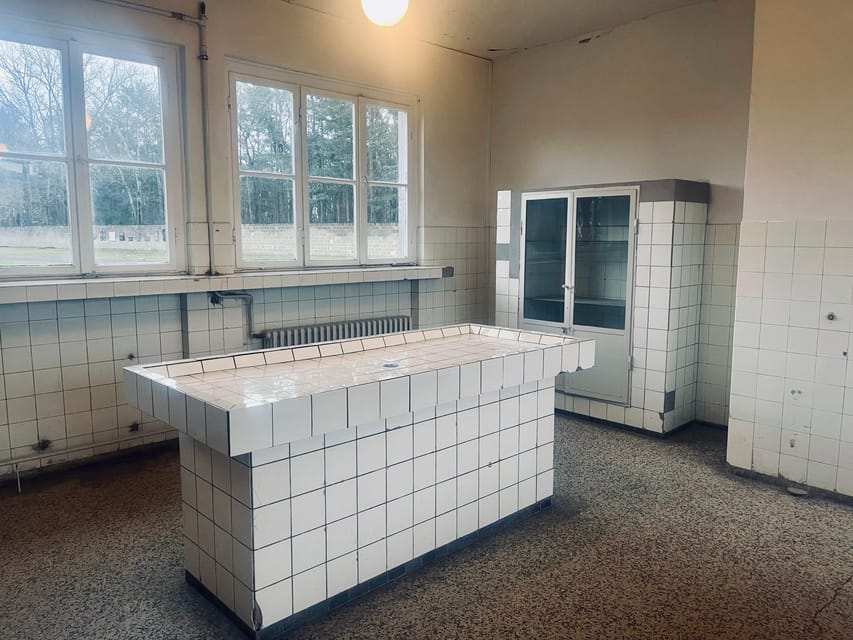
Tower A is the camp’s main entrance area and home to the Perpetrators’ Room exhibition. Here, the focus shifts directly to the SS, their training, their beliefs, and the ways Nazi propaganda turned prisoners into categories rather than people.
Portraits of SS officers help show how indoctrination worked. You see faces attached to the system, not just anonymous uniforms. The point is not to excuse their actions. It is to understand how a state trained people to accept cruelty as duty.
Daily roll calls were a major tool of control. Prisoners could be forced to stand for long periods, regardless of weather or physical condition. The tour explains how these procedures turned time, order, and exhaustion into weapons.
Another grim subject is the shoe-testing track. Prisoners from the lowest categories were forced to walk long distances while testing shoes for German companies. The Nazis profited from their labor and pain.
This is one of the tour’s most useful connections between ideology and business. The camp was not only a site of imprisonment and killing. It was also part of an economic system that extracted labor from people the regime had marked as disposable.
Still Germany, at a slower pace:
- Berlin: Reichstag, Dome and Government District Guided Tour
★ 4.7 · 18,288 reviews - Berlin: 1-Hour City Tour by Boat with Guaranteed Seating
★ 4.3 · 16,993 reviews - Hamburg: Sex and Crime in St. Pauli Tour for Ages 18+
★ 4.7 · 15,447 reviews - Hamburg: 1.5-Hour Harbor and Speicherstadt Day Cruise
★ 4.6 · 14,200 reviews
Barracks, the kitchen, and the danger of forgetting
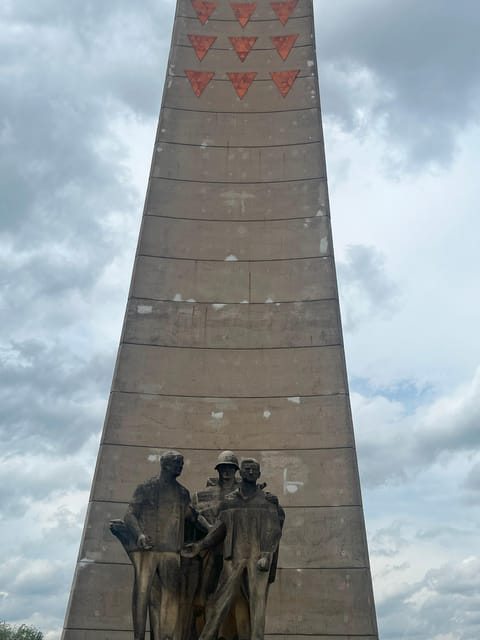
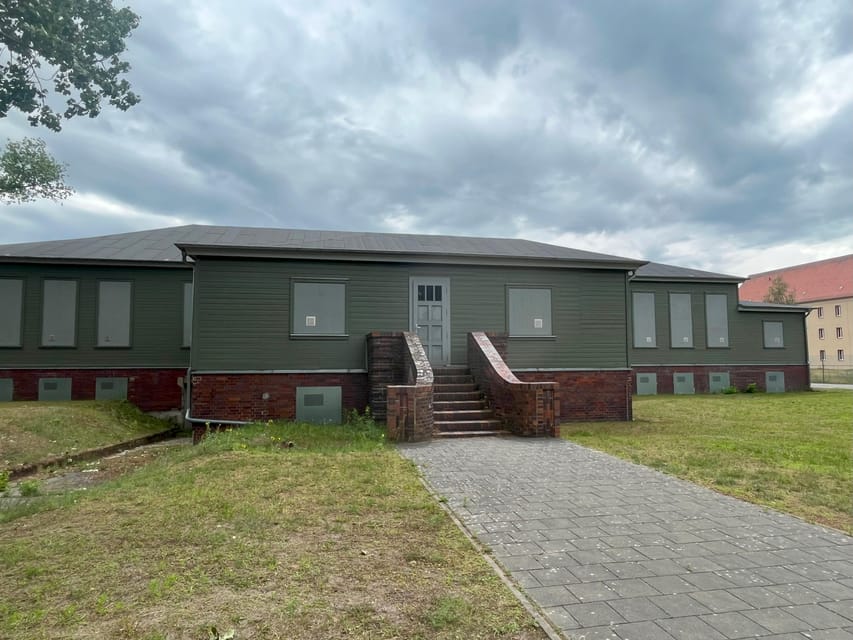
From Tower A, you explore parts of the prisoners’ barracks and the camp kitchen. Some parts of the visit are guided closely, while other areas are explored independently. That arrangement gives you time to look at the site, but it also means you should pay close attention when the guide sets the context.
The barracks help you understand crowding, discipline, and the loss of privacy. The kitchen, meanwhile, points to the basic systems that controlled daily survival. Food was not simply nourishment. It was another way to reward, punish, weaken, and dominate.
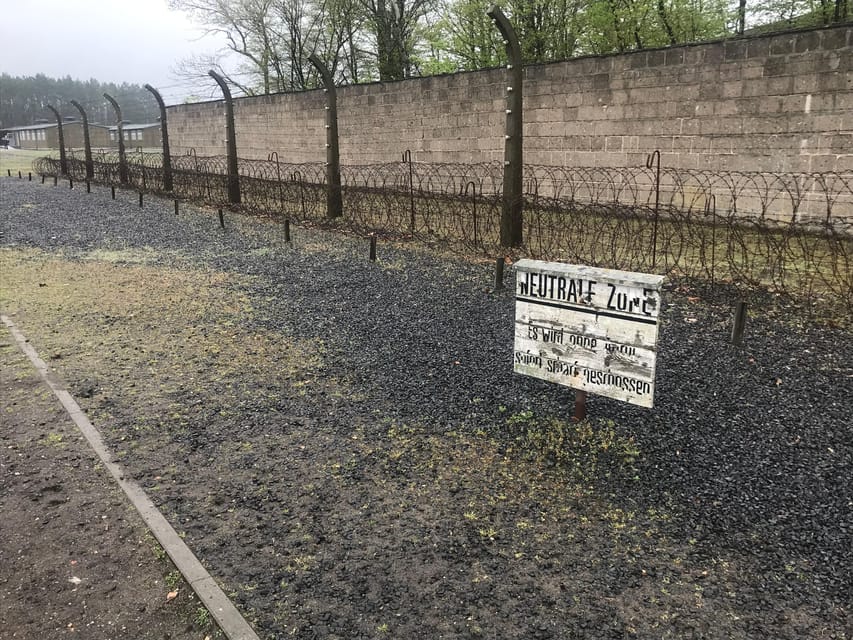
The site has also been attacked by neo-Nazis who deny the Holocaust. That fact brings the memorial into the present. The buildings are not only historical evidence. They remain targets in an ongoing fight over truth.
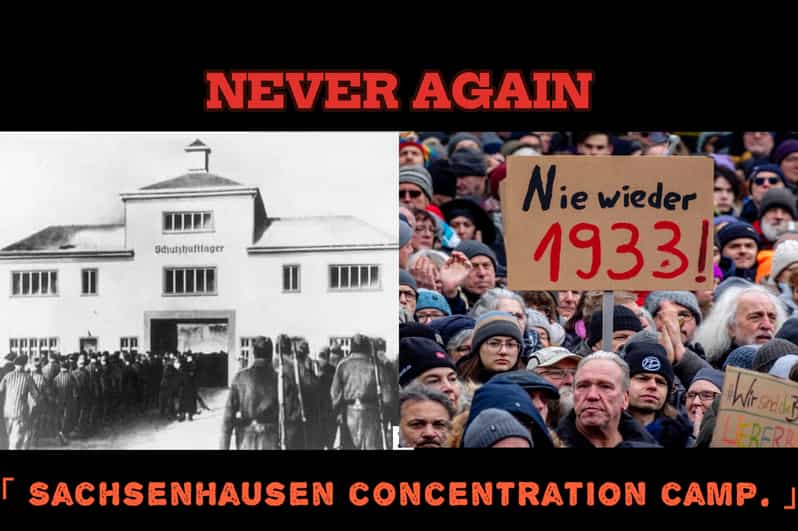
The tour links this issue to the rise of the AfD, a German far-right political group. The connection should not be treated as a claim that every AfD supporter shares Nazi beliefs. The valuable point is broader: Sachsenhausen is not safely sealed in the past, and political arguments about racism, nationalism, and historical memory still shape Germany today.
Station Z and the machinery of mass murder
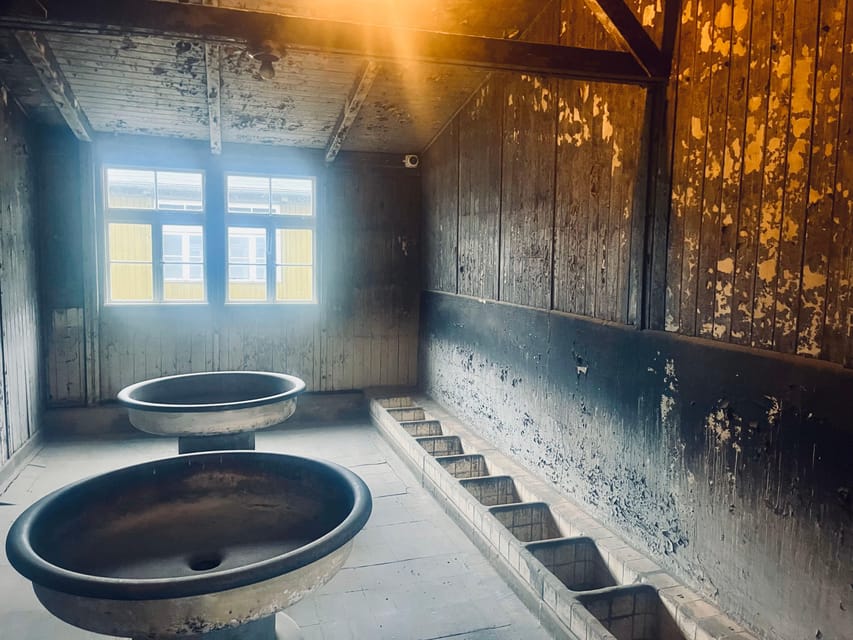
Station Z is among the hardest stops. It explains the murder of Soviet prisoners, including child soldiers, and shows how the gas chamber and crematorium operated.
The name itself carries a grim logic. The camp began at one end with Tower A and ended at Station Z, a reference to the final stage of a prisoner’s life. The site presents murder as an organized process, not a sudden act of uncontrolled violence.
You learn how Soviet prisoners were killed and how the crematorium dealt with the bodies. The subject is painful, and the tour does not soften it. Bring water, wear comfortable clothes, and be honest with yourself about how much emotional weight you can handle in one day.
This stop also shows why a guided visit can add value even when the memorial can be entered without paying admission. A guide can explain the function of the buildings, connect them to Nazi policy, and help you understand the scale without turning the visit into a list of shocking facts.
The infirmary and Nazi medical crimes
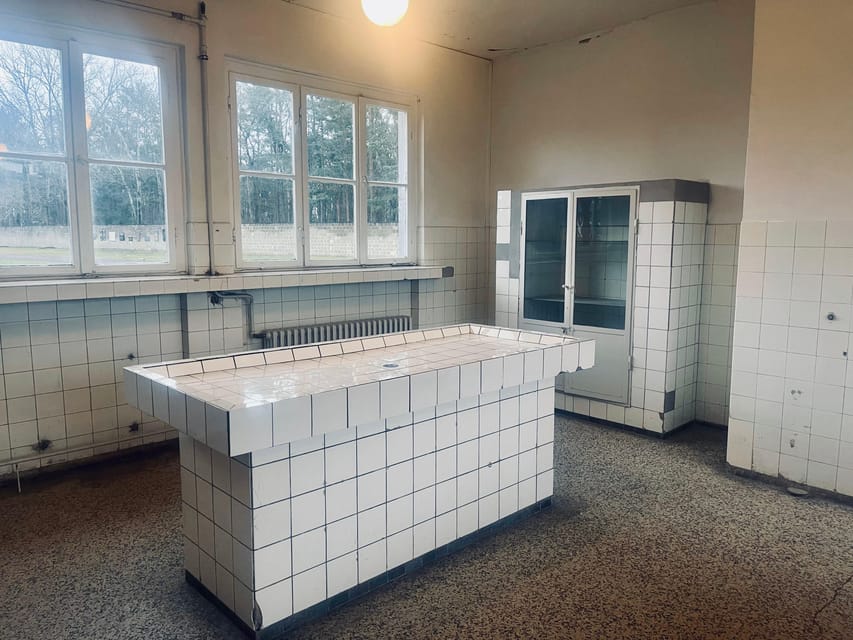
The infirmary reveals another part of the camp system: racism presented as science. The tour covers eugenics, control over women’s bodies, and experiments carried out on prisoners.
The phrase lab rats is not too strong here. Prisoners were treated as research material, while Nazi doctors used the camp to advance their careers. The topic is especially important because it shows how professional status and medical language could be used to disguise abuse.
You will also encounter the regime’s obsession with racial categories and reproduction. Women’s bodies were controlled as part of Nazi population policy, while people considered undesirable were subjected to coercion, experimentation, and death.
This section requires patience. It is not just about what happened in one room. It explains how institutions, doctors, police, soldiers, and political leaders worked together. It also helps you see why the phrase never again requires more than remembering victims. It requires noticing the language and systems that make human beings easier to harm.
How the guiding affects the value
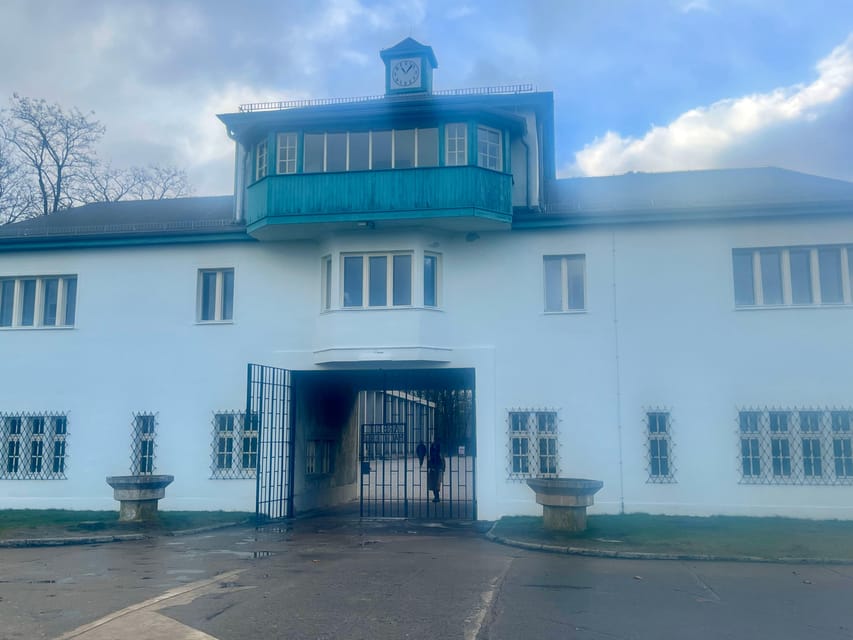
At $38 per person, plus the ABC train fare, this is not the cheapest way to visit Sachsenhausen. The memorial itself is free, so you should decide if you want interpretation, transport coordination, and a structured route rather than simply arriving on your own.
I think the price can make sense for a first visit. The route covers the camp’s layout, SS buildings, prisoners’ areas, Station Z, and the infirmary, while also connecting Sachsenhausen to Nazi politics and present-day extremism. Getting from central Berlin to Oranienburg and back is less stressful when someone handles the group movement.
The strongest guide experience appears to come from someone who can explain difficult material clearly and adjust to the group. Siobhan has been singled out for detailed explanations, warmth, and practical help after a group made a mistake during the journey. That kind of calm organization matters on a long and emotionally demanding outing.
But you should know that the experience may not be equally strong every time. One account describes a guide who accompanied the group for only a small part of the visit, saying the memorial was uncomfortable with guides inside, and who gave vague answers. Another concern is that two languages may sometimes be handled at once, which can slow the pace and make explanations less focused.
If you book, ask at the start how the four-hour visit will work. Find out which sections the guide will explain directly and which you will explore on your own. That simple question can help you set expectations.
Practical advice for the train, weather, and food
Wear comfortable shoes. The day includes a train, a bus, walking from the station area, and several hours on the memorial grounds. Comfortable clothing is also sensible because the visit is long and emotionally tiring.
Bring water and snacks. The camp has only two food options, and they are not always open. Do not count on buying lunch there, especially if you need a regular meal or have dietary restrictions.
The meeting point is in front of Espresso House at Potsdamer Platz. Arrive with enough time to find the guide and buy the required ABC ticket before the group leaves. The guide carries a mini yellow flag, which should make the meeting easier.
The tour is conducted in English and is wheelchair accessible. The available information does not describe every surface or route condition, so if you use a wheelchair, confirm the day’s precise route before booking. Children under 12 are not accepted, which is sensible given the subject matter.
Free cancellation up to 24 hours before departure and the reserve-now, pay-later option give you useful flexibility. Those policies are helpful, but they do not change the need to plan the transport ticket and prepare for a serious day.
Who will get the most from this visit?
I would recommend this tour to an adult or older teenager who wants a structured introduction to Sachsenhausen and prefers not to manage the trip from Berlin alone. It suits people who want the camp explained within the wider Nazi system, rather than seeing only the surviving structures.
It is also a good choice if you value a later departure. One of the appealing details is that it starts later than some similar visits, which can make the morning less rushed.
You may prefer an independent visit if you are comfortable with public transport, want to move at your own speed, or mainly want to see the memorial without paying for guiding. Since entry is free, the guided option is a convenience and interpretation purchase, not an admission bargain.
I would not choose this as a casual family outing or a quick stop between Berlin attractions. The material includes mass murder, forced labor, sexual exploitation, child prisoners, medical abuse, and political extremism. Give it the time and attention it deserves.
Should you book Never Again Berlin?
Book it if you want the logistics from Potsdamer Platz organized and you value a guide who can connect Sachsenhausen to Nazi ideology, SS life, forced labor, medical crime, and the far right today. The four-hour memorial visit gives you enough time to see the major areas without treating the camp like a checklist.
Think twice if you object to paying $38 when the memorial itself is free, or if you need a fully guided visit at every stop. The extra ABC train ticket also raises the total cost.
My call: this is a worthwhile, serious option for a first Sachsenhausen visit, provided you confirm how much of the memorial your guide will accompany you through. Bring food, buy the correct ticket, wear good shoes, and leave room afterward to process what you have seen.
FAQ
Where does the Sachsenhausen tour meet?
Meet in front of Espresso House at Potsdamer Platz. The guide carries a small yellow flag.
Is the train ticket included?
No. You need to buy a Berlin ABC train ticket before the tour. The train journey to Oranienburg takes about 35 minutes each way.
How long does the full experience last?
The listed duration is 270 minutes. This includes the train and bus connections and about four hours at the Sachsenhausen Memorial.
Is the tour conducted in English?
Yes. The live tour guide speaks English.
Can children join the tour?
No. The experience is not suitable for children under 12.
What should I bring?
Bring comfortable shoes, water, snacks, and comfortable clothing. Food and drink choices at the camp are limited, and the available options may not be open.
Just added around Germany
- Private Walking Tour in Berlin: Hitler’s Germany & WWII★ 5.0 · 7 reviews
- The History of Berlin: WWII PRIVATE Walking Tour With Locals★ 5.0 · 209 reviews
- Private Berlin WWII and Cold War History Tour with Local Expert Guide★ 5.0 · 28 reviews
- Private Walking Tour Berlin 3 hours: Brandenburg, Historic Center★ 5.0 · 7 reviews
- Berlin: Private Bike Tour of the Berlin Wall and Third Reich★ 5.0 · 23 reviews
- Berlin: Guided Private Bike Tour to Explore the Highlights★ 5.0 · 12 reviews
- Berlin Photography Masterclass – Private Photography Lesson★ 4.5 · 23 reviews
- Group Driving Tour 1 to 6 people. Berlin Shore Excursion incl pick-up at Port★ 5.0 · 8 reviews