
Reviewed · CITY TOURS
Nuremberg: Tunnels and Secret Passages in the City Wall Tour
Nuremberg keeps its best defenses underground. This one-hour walk takes you through the Imperial Castle walls and the cramped passages built to protect the city from attack. I like the clever military design, and I like that a local guide turns old stone into a clear story. The main drawback is physical: expect steep ramps, many uneven stairs, low ceilings, and narrow spaces.
For $14, this is one of Nuremberg’s better-value history experiences. Guides such as Alan, Tom, Andreas, Martin, Ralf, and Penny have been praised for humor, clear English, and lively explanations. I also like that the tour works for families, though children and adults alike need steady feet and comfortable shoes.
The meeting point is easy to find at the Historischer Kunstbunker, Obere Schmiedgasse 52, right by the castle area. Bring warm clothing, skip sandals and food, and use the toilet before you start because there are no breaks underground.
In This Review
- Key points at a glance
- Meeting the castle defenses at Obere Schmiedgasse 52
- Following the routes used by castle defenders
- Seeing the moat from the firing corridors
- Comparing medieval walls with sixteenth-century bastions
- Discovering weapons hidden inside the walls
- What the tunnels feel like inside
- Why the guide matters more than the stone
- Is $14 a good price for one hour?
- How to fit it into your Nuremberg day
- Who should book this castle-wall tour?
- Should you book the Nuremberg tunnels tour?
- FAQ
- How long does the Nuremberg tunnels tour last?
- How much does the tour cost?
- Where is the meeting point?
- What languages are available?
- What should I wear?
- Are there toilet breaks during the tour?
- Is the tour suitable for wheelchair users?
- Can someone with claustrophobia take the tour?
Key points at a glance
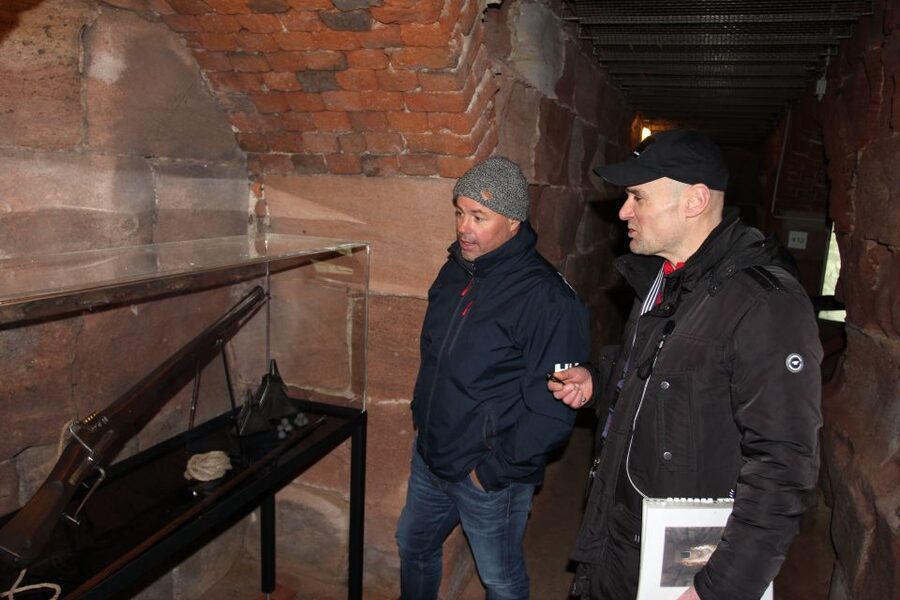
- A one-hour route below the castle: You enter defensive corridors and secret passages that are not available for ordinary sightseeing.
- Medieval defense made practical: Learn how soldiers used firing positions, ramps, chambers, and the moat to protect Nuremberg.
- Sixteenth-century cannon defenses: The later bastions were built to withstand gunfire, showing how warfare changed over time.
- A cool, confined setting: The tunnels can be damp, muddy, narrow, and less than 1.5 meters high in places.
- Strong guide-led experience: The best part is the storytelling, with guides inviting questions and explaining how the structures worked.
- Good value at $14: It is a short tour, but it gives you access to areas you cannot visit on your own.
Meeting the castle defenses at Obere Schmiedgasse 52
Start in front of the Historischer Kunstbunker at Obere Schmiedgasse 52. This location puts you close to Nuremberg’s castle complex, so you are already in the right historical setting before the tour begins.
The guide gathers the group and introduces the basic problem medieval Nuremberg faced: how do you protect an important city, a powerful castle, and the people inside them? The answer was not one wall or one weapon. It was a layered system of walls, moats, stone chambers, ramps, and carefully placed openings.
Your guide leads in English or German. The strongest reports describe guides who speak clearly, welcome questions, and adjust their style for mixed groups. Martin and Andreas have been singled out for keeping the facts lively, while Tom and Alan are praised for humor and an easy way with families.
This matters because underground architecture can look like a collection of dark corridors without context. A good explanation helps you see the purpose behind each turn, wall opening, and change in level.
More City Tours in Nuremberg
- Nuremberg: City Tour with the Bimmelbahn Train
★ 4.4 · 2,475 reviews - City tour through Nuremberg with the Bimmelbahn
★ 4.5 · 145 reviews - City tour of Nuremberg
★ 4.0 · 64 reviews
Following the routes used by castle defenders
The first major pleasure is the feeling of moving through a working fortress rather than simply looking at one from the outside. You tread the same types of routes that defenders used when they needed to reach a wall position quickly.
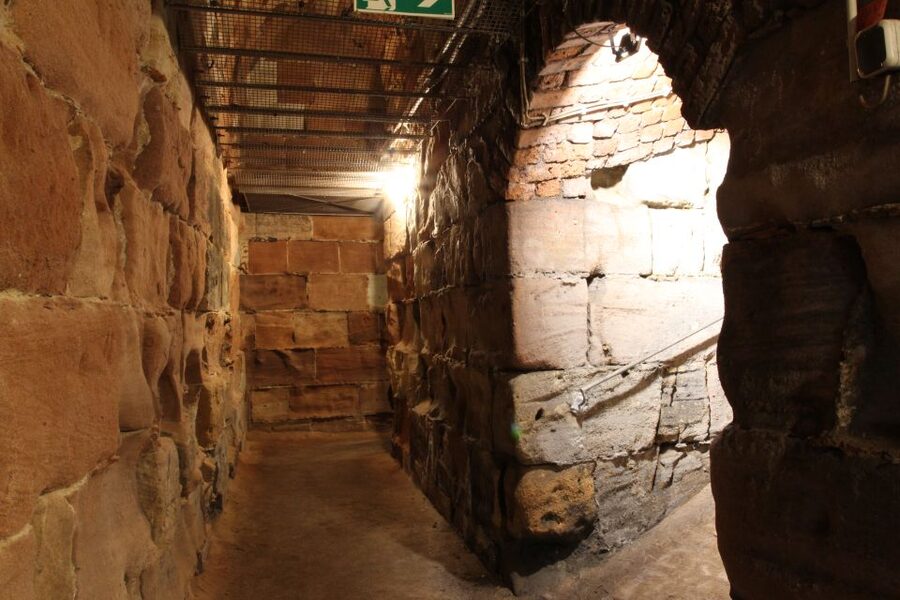
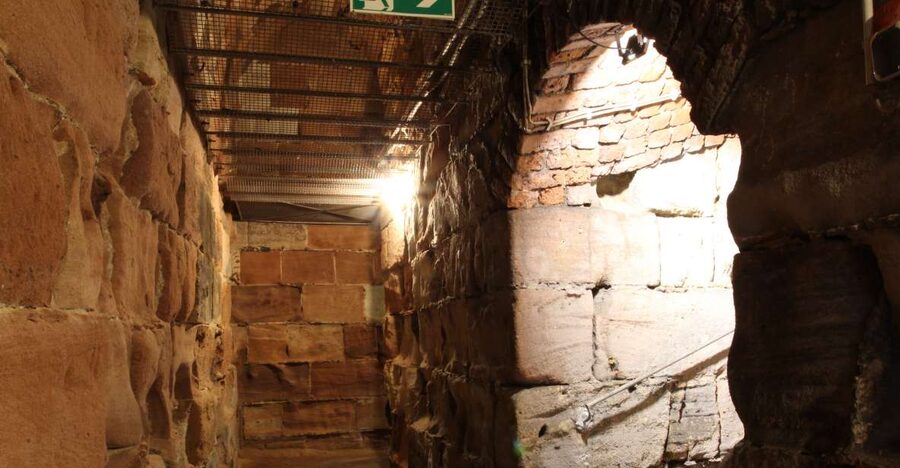
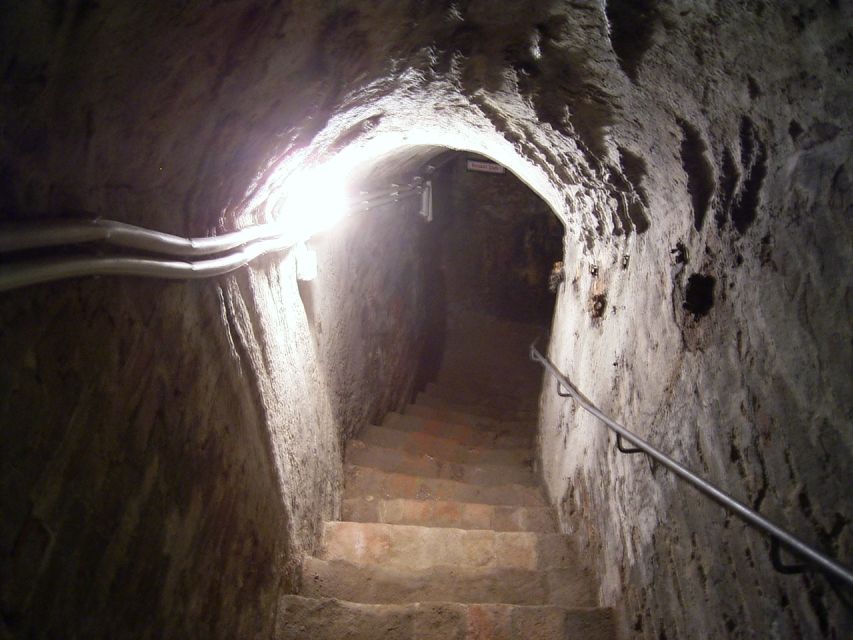
The paths are not smooth museum walkways. You climb old stairways and ramps, then move through stone corridors that can feel tight. Some passages are low, with one account noting sections below 1.5 meters. You may need to watch your head, your footing, and the person ahead of you at the same time.
That physical setting adds meaning. A defensive passage was built for speed, cover, and a good view of an enemy, not for sightseeing comfort. The awkward steps help you understand why moving weapons and supplies through a fortress required planning.
I especially like the way this part connects the castle to the people who served it. The tour explains how knights and other defenders worked together, rather than presenting medieval protection as the work of one heroic figure. Nuremberg’s safety depended on a coordinated system.
The route also gives you a different view of the city. Above ground, Nuremberg’s walls and castle look solid and imposing. Below ground, you see the labor and planning that made those walls useful.
Seeing the moat from the firing corridors
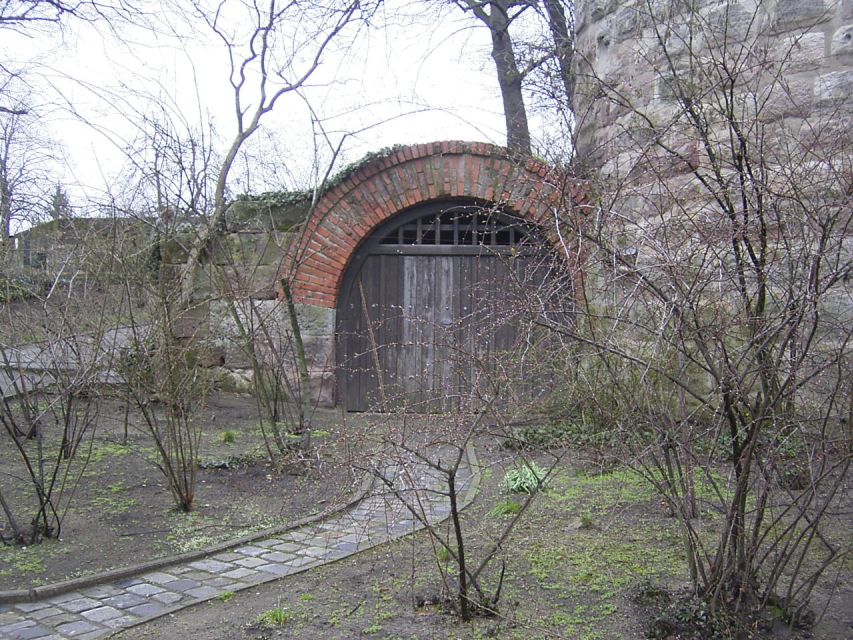
The underground route is designed around the moat, which gave attackers another major obstacle to cross. Instead of leaving one section of the moat unprotected, the fortifications used a maze of corridors and firing points that allowed defenders to attack from several directions.
Your guide explains how these positions worked. The idea was simple but effective: anyone crossing the moat could be exposed to fire from more than one angle. From inside the wall, defenders could stay under cover while watching the vulnerable approaches.
This is where the tour moves beyond castle romance. Medieval and early modern fortifications were systems of angles, visibility, and controlled movement. You learn to look at a wall not just as a barrier, but as a tool that directed an attacker toward places where defenders had the advantage.
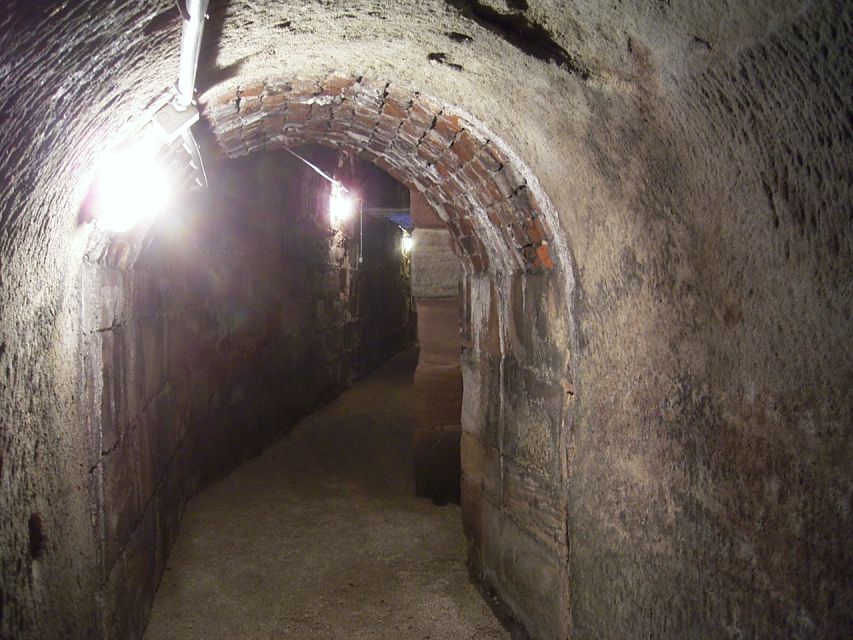
The narrow chambers and high-vaulted spaces also show how the rock beneath the castle was used. These were not random holes cut into the ground. They were built into the defensive plan, with corridors that connected the city wall to positions near the castle.
Some guides use questions to get the group thinking about why a chamber was built in a particular way. That can make the tour more engaging, especially for children, although a few people may prefer direct answers rather than several rounds of guessing. If you enjoy a guide who involves the group, you will probably appreciate this approach. If you want a fast lecture, it may feel slightly slow at moments.
Comparing medieval walls with sixteenth-century bastions
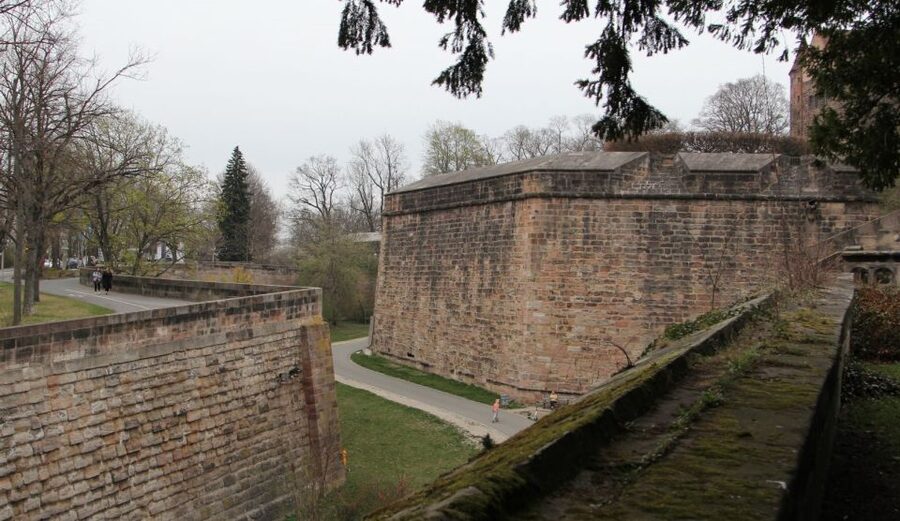
Nuremberg’s defenses changed as weapons changed. The tour points out modern bastions added in the sixteenth century, when cannon fire made older wall designs less useful.
These bastions were broader and more heavily shaped to absorb or resist artillery. The shift tells an important story about military design. A wall that could repel ladders and hand weapons needed a different form when attackers could strike it with cannonballs.
I like this section because it gives the tour a clear timeline. You are not only seeing medieval passages. You are also seeing how the city adapted its defenses over several periods.
The guide connects the visible stonework outside with the corridors below. That makes the castle easier to read once you leave the underground route. You begin to notice why some sections are thick, why certain shapes project outward, and how defenders could cover the moat.
The tour does not require you to be a specialist in military history. Guides explain the basics in plain language, and the best ones use small details to keep the subject from becoming a list of dates.
Still Nuremberg, at a slower pace:
- Nuremberg: Old Town Guided Walking Tour
★ 4.6 · 2,416 reviews - Nuremberg: Medieval Dungeons Guided Tour
★ 4.8 · 1,726 reviews - Nuremberg: Walking Tour of Former Nazi Party Rally Grounds
★ 4.7 · 1,665 reviews - Medieval Tour in Nuremberg in Spanish
★ 5.0 · 1,374 reviews
Discovering weapons hidden inside the walls
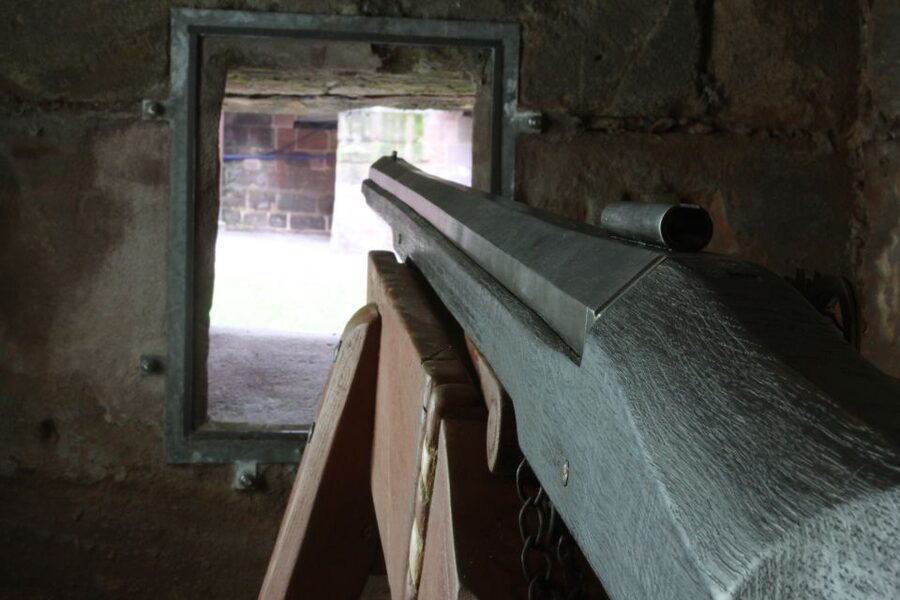
Another highlight is learning about the weapons and defensive equipment kept within the city walls. The point is not simply that weapons existed, but that they had to be placed where defenders could reach them quickly.
The passages were part of a larger emergency plan. Soldiers needed routes to move, positions from which to fire, and a way to coordinate their response. The architecture shows how much preparation went into defending the city before an attack ever began.
This also adds a human scale to the tour. You are not only hearing about kings and castles. You are considering the daily work of guards, soldiers, and support staff who maintained a defensive machine.
The guide may ask you to think about what a particular opening or chamber was for. I find that useful when it leads to a clear explanation. You can come away with a practical picture of how the walls functioned, rather than a vague sense that they were simply very old and very thick.
What the tunnels feel like inside
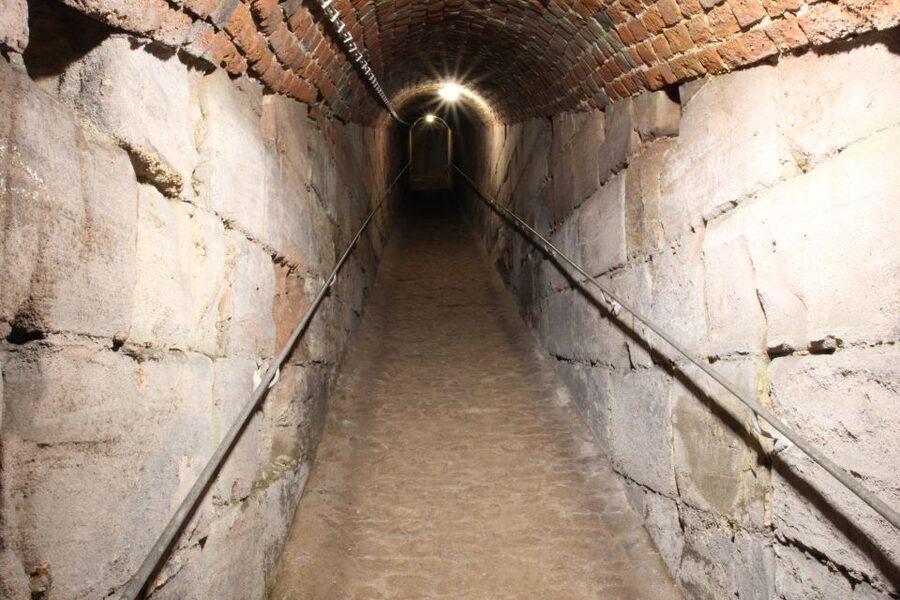
The tunnels are the heart of the experience, but they are also the part that demands the most preparation. They can be cool, damp, muddy, and dark. Warm clothing is sensible even in summer, and one person found the underground route a welcome break from hot weather.
Wear firm, non-slip shoes. Several sections involve climbing down old steps and ramps, and sandals or flip flops are not allowed. Rainy weather can make the entrance and underground surfaces feel less forgiving.
Claustrophobia is a real concern. The route includes narrow corridors and low sections, so you should not book this simply because you like castles. You need to be comfortable in enclosed spaces and able to manage uneven stairs.
The tour is not suitable for wheelchair users or people with mobility impairments. It is also not a good fit for anyone who needs frequent toilet access, since there are no bathroom breaks during the one-hour route.
Families can enjoy it, especially if children like castles, weapons, and puzzles. An eight-year-old and a ten-year-old were able to stay engaged with the explanations, and a 12-year-old enjoyed the experience too. Still, parents should judge the stairs, low ceilings, and confined passages for their own children.
Why the guide matters more than the stone
The physical setting is unusual, but the guide makes the difference between a worthwhile hour and a confusing walk through old masonry. The strongest guides explain clearly, answer questions, and keep the group moving without rushing.
English-language guiding has generally been well received. Guides have been described as understandable, friendly, funny, and good at adapting explanations for adults and children. Andreas, in particular, has been praised for his facts and humor, while Ralf was appreciated for explaining the route order so the group knew what it would see next.
A small-group setting can make it easier to ask questions. It also helps you hear the explanation in tight spaces. Still, one person found a soft-spoken guide difficult to hear, so stay near the front if you want every detail.
Guide styles differ. Some use questions to involve the group, and others give a more direct account. A few people have wished the tour lasted longer, which is fair. There is a lot to cover, from medieval construction to later cannon defenses, and one hour passes quickly.
That short length is also a strength. You get a focused look at one part of Nuremberg without giving up half a day. It fits neatly beside a castle visit, a walk through the Old Town, or a museum stop.
Is $14 a good price for one hour?
At $14 per person, the tour offers good value because the price includes entry to the defensive corridors in the city walls and the secret passages beneath the Imperial Castle. You are paying for access to places you cannot explore independently, plus a live explanation of how they worked.
The tour is not a complete castle visit. If you want grand rooms, royal collections, or a long architectural tour, you will need another activity. This experience focuses on military engineering and underground access.
For a short city break, that narrow focus works well. You get a memorable setting, a clear subject, and a modest price. It is especially useful if you have already seen Nuremberg’s main streets and want to understand what lies behind the walls.
Free cancellation up to 24 hours before the start and the option to reserve without paying immediately make it easier to fit into a changing schedule. Availability can be limited, so a short-notice booking may not always work, even though some people have secured places only a couple of days ahead.
How to fit it into your Nuremberg day
The meeting point near the castle makes this easy to combine with other central sights. Plan to arrive with enough time to find the Historischer Kunstbunker entrance and meet the guide promptly.
Wear your walking shoes from the start. Changing footwear or carrying extra items is not practical once you enter the corridors. Leave food and drinks behind, and allow time for a bathroom stop before gathering.
The tour lasts one hour, but you may want a little extra time afterward to look again at the castle walls. The underground explanations can change how you see the stonework above ground.
A rainy day is not necessarily a problem because much of the route is sheltered. However, damp conditions may make steps and ramps slicker, so the footwear advice matters even more.
Who should book this castle-wall tour?
I would choose this for anyone interested in fortifications, medieval cities, castle engineering, or the everyday mechanics of defense. It also suits people who want something different from a standard Old Town walk.
Families with older children can have a good time, especially if the children enjoy questions and practical stories about weapons. The guide-led format keeps the hour active rather than turning it into a silent inspection of walls.
I would think twice if you have trouble with stairs, dislike low ceilings, or feel uneasy in tight underground spaces. This is not a gentle stroll, and the old surfaces are part of the experience.
History enthusiasts may wish the tour were longer. At the same time, the one-hour format keeps it manageable and affordable. You get a concentrated lesson instead of a full morning devoted to military architecture.
Should you book the Nuremberg tunnels tour?
Yes, if you want an unusual look at Nuremberg and can handle steep stairs, ramps, low passages, and a confined setting. The strongest reasons to go are the access to the secret corridors, the clear explanation of the moat and firing positions, and the chance to picture real defenders moving through the walls.
I would book it early if the timing matters, but the reserve-now, pay-later option gives you some flexibility. Arrive in warm clothing and non-slip shoes, stay close enough to hear the guide, and use the toilet first.
At $14, this is an easy recommendation for active history fans and curious families. Skip it only if mobility limits or claustrophobia would make the tunnels stressful rather than enjoyable.
FAQ
How long does the Nuremberg tunnels tour last?
The tour lasts one hour. Check the available start times when booking.
How much does the tour cost?
The price is $14 per person.
Where is the meeting point?
Meet in front of the entrance to the Historischer Kunstbunker at Obere Schmiedgasse 52.
What languages are available?
The tour is offered in English and German with a live guide.
What should I wear?
Bring warm clothing and wear sturdy, non-slip shoes. Sandals and flip flops are not allowed.
Are there toilet breaks during the tour?
No. There are no toilet breaks during the one-hour tour, so use the bathroom before it begins.
Is the tour suitable for wheelchair users?
No. The route includes many old stairways and ramps and is not suitable for wheelchair users or people with mobility impairments.
Can someone with claustrophobia take the tour?
The tour is not suitable for people with claustrophobia because it includes narrow, low, underground passages.
Just added around Nuremberg
- Tour en español al Campo Zeppelin★ 5.0 · 8 reviews
- Stein: Public guided tour of the “Old Mine” museum★ 4.5 · 18 reviews
- “Rotes Bier” and “Blaue Zipfel”. A historical-culinary walk★ 4.4 · 190 reviews
- Nuremberg: Old Town Guided Tour By Bus★ 4.4 · 198 reviews
- Nürnberg kennenlernen: Highlights in der Altstadt★ 4.7 · 189 reviews
- Nuremberg: Bar and Club Tour with Free Shots and Free Entry★ 3.8 · 23 reviews
- Nürnberg Bachelor(ette) Party with Night PubCrawl★ 4.2 · 5 reviews
- Nuremberg: WWII Tour, Courtroom 600 and 3rd Reich Sites★ 4.6 · 94 reviews
City Tours, compared.

1-Hour City Tour by Boat with Guaranteed Seating
Read our review →
City History Canal Sightseeing Tour on a Motorboat
Read our review →





Browse the lists this tour appears in