
Reviewed · NUREMBERG TOURS
Medieval Tour in Nuremberg in Spanish
Medieval Nuremberg still has secrets. This Spanish walking tour makes the city’s overlooked stories easy to follow, from witch trials and strange legends to the executioner’s trade. I like the small-group limit of 30 people and the route’s clear finish at Nuremberg Castle. I also like that guide Fede has earned special praise for his humor, preparation, and help finding the meeting point. The main drawback is that the tour is entirely on foot, and some stops receive only five or ten minutes.
The $19.60 price is fair for two and a half hours with a Spanish-speaking guide, especially since you visit ten important places without paying separate admission fees. You should arrive ready for outdoor weather, though. One account describes an enjoyable afternoon despite rain, which is a useful reminder to bring a waterproof layer.
In This Review
- Key points to know before you go
- Why this Nuremberg walk feels different
- Hauptmarkt begins the story at 3:30 pm
- St. Lorenz reveals a church with stories
- Heilig-Geist-Spital brings in Till Eulenspiegel
- The Weißer Turm marks an early city wall
- Ehekarussell turns marriage into a fountain
- Unschlitthaus introduces Kaspar Hauser
- Hangman’s Bridge explains a feared profession
- Weißgerbergasse keeps the medieval street plan visible
- Beim Tiergärtnertor explains Nuremberg’s walls
- Kaiserburg ends the route with darker legends
- What $19.60 buys you
- Timing, weather, and who should book
- Booking details worth keeping in mind
- Should you book this Spanish medieval tour?
- FAQ
- How long does the Medieval Tour in Nuremberg in Spanish last?
- Where does the tour begin?
- What time does the tour start?
- Where does the tour end?
- Is the guide included in the price?
- Can I cancel for a full refund?
Key points to know before you go
- A Spanish tour with a strong storytelling focus: The route looks past the usual Dürer, Christmas market, and castle highlights to explore legends, crimes, trades, and odd characters.
- Ten stops in 2 hours 30 minutes: You walk from Hauptmarkt through the old center and finish at Kaiserburg, Nuremberg’s imperial castle.
- Fede may be your guide: He has been praised for contacting people before the tour, helping them locate him, and making the afternoon lively with jokes and historical detail.
- The price covers guiding, not refreshments: At $19.60 per person, you pay for the Spanish-speaking walking tour. Soda and other drinks are not included.
- No castle admission is included: The route ends at Kaiserburg, but the supplied details do not include an interior visit or entrance ticket.
- A flexible booking option: You can cancel for a full refund up to 24 hours before the start time, subject to the minimum-group condition.
Why this Nuremberg walk feels different
Nuremberg is often reduced to a few familiar sights: Albrecht Dürer, the Kaiserburg, the half-timbered Weinstadel, and the Christkindlesmarkt. Those places matter, but they do not tell the whole story.
This route looks at the city through its stranger and more human subjects. You hear about witchcraft, an executioner, Kaspar Hauser, medieval trades, foolishness, marriage, death, and legends involving the devil and flying horses. That gives you a less polished picture of old Nuremberg, one shaped by fear, work, gossip, punishment, and superstition.
I like this approach because the city becomes easier to remember. A church is no longer only a church. A bridge recalls the man who carried out executions. A fountain becomes a warning about marriage. A narrow street points to the trades that once filled the old town.
The guide in Spanish is the heart of the experience. The strongest praise has gone to Fede, who is described as well prepared, funny, and helpful when meeting arrangements became confusing. That combination matters on a walking tour. Dates and names are useful, but a good storyteller helps you picture the people behind them.
The group can reach 30 people, so this is not a private walk. You may not get a long personal conversation with the guide at every stop. Still, the group size remains limited enough for an organized city walk, and the route moves steadily through central Nuremberg.
A few more Nuremberg trips worth comparing
- Nuremberg: City Tour with the Bimmelbahn Train
★ 4.4 · 2,475 reviews - Nuremberg: Old Town Guided Walking Tour
★ 4.6 · 2,416 reviews - Nuremberg: Tunnels and Secret Passages in the City Wall Tour
★ 4.8 · 2,334 reviews
Hauptmarkt begins the story at 3:30 pm
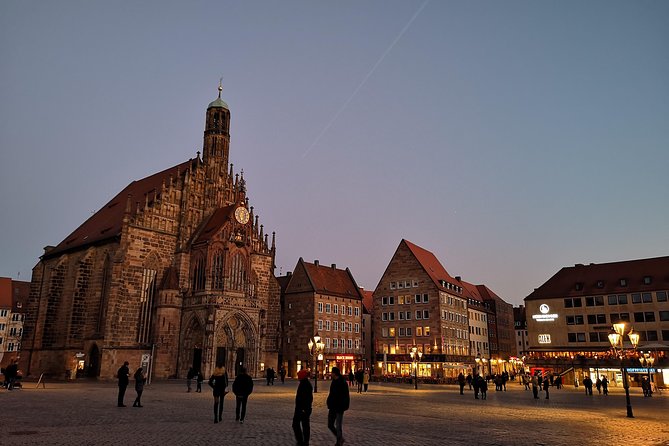
The meeting point is Hauptmarkt 14, in the heart of Nuremberg. The tour begins at 3:30 pm, a useful time for fitting the walk after a morning museum visit, an arrival by train, or lunch in the old town.
The opening stop gives you a short history of Nuremberg. You have about ten minutes here, so expect an introduction rather than a full lecture. This is where the guide sets up the city’s role and explains why its streets contain so many stories.
Hauptmarkt is also a practical meeting place. It is central, near public transportation, and easy to use as a starting point for your own sightseeing before or after the tour. Arrive a little early and look for the guide rather than assuming the group will be obvious. Fede’s habit of contacting participants and helping them find him is especially useful here.
St. Lorenz reveals a church with stories
The walk continues to St. Lorenz, where the guide discusses the church’s construction and particular tales connected with it. The scheduled stop lasts about ten minutes.
You should think of this as a focused explanation of the building and its place in Nuremberg, not as an extended church tour. The attraction here is the story attached to the setting. The route uses major landmarks as doorways into less familiar subjects, rather than treating them as isolated photo stops.
If you want a long interior visit, you may need to return on your own. The walking tour is designed to keep moving, and the church is one piece of a much broader route.
Heilig-Geist-Spital brings in Till Eulenspiegel
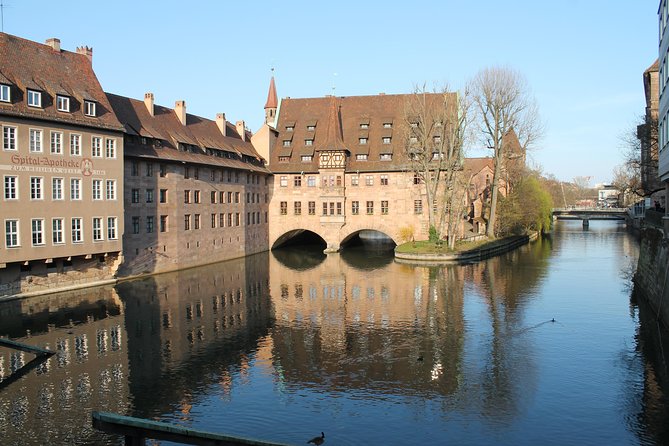
At Heilig-Geist-Spital, the subject shifts to Till Eulenspiegel, a famous trickster figure of medieval German storytelling. You get around ten minutes for this tale.
This is one of the tour’s more playful turns. Not every stop is about punishment, death, or political intrigue. Stories about a clever or foolish character help you see how humor and popular tales shaped medieval life.
The stop also shows the tour’s basic method. You are not simply given a list of architectural facts. Instead, the guide connects a place with a character, a local legend, or a social habit. That makes the walk a good match for you if you prefer stories to dates alone.
Still Nuremberg, at a slower pace:
- Nuremberg: Medieval Dungeons Guided Tour
★ 4.8 · 1,726 reviews - Nuremberg: Walking Tour of Former Nazi Party Rally Grounds
★ 4.7 · 1,665 reviews - Nuremberg: Historischer Kunstbunker WWII Art Bunker Tour
★ 4.8 · 921 reviews - Nuremberg: PLAYMOBIL®- FunPark
★ 4.7 · 863 reviews
The Weißer Turm marks an early city wall
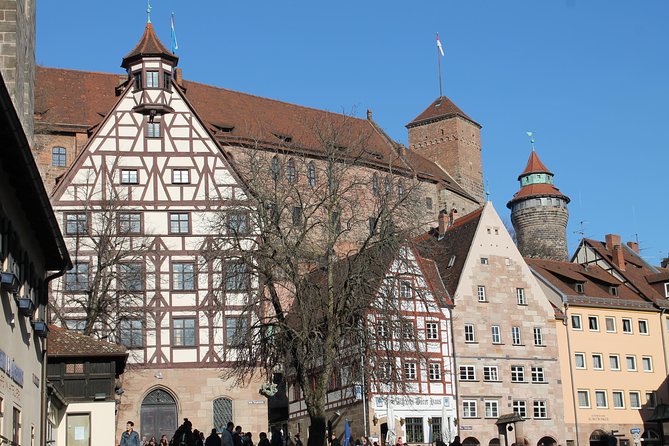
The Weißer Turm receives only five minutes. It is identified as a tower from the first city wall, so the guide uses this brief stop to explain Nuremberg’s defenses and growth.
Do not expect time for a detailed study of the tower. Its value is in helping you understand the shape of the old city. Later, the route returns to the subject of walls near Beim Tiergärtnertor, where you hear more about their hidden history and coordinates.
The two wall-related stops work together. The first gives you a quick physical marker. The later stop adds context about how the city was protected and organized.
Ehekarussell turns marriage into a fountain
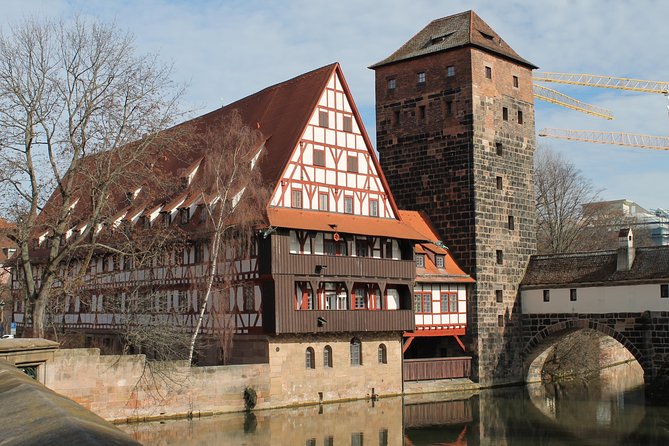
The Ehekarussell, or marriage carousel, is one of the most memorable stops because it presents married life through a fountain. The tour allows about ten minutes here and describes it as a source of the delights of married life.
The wider tour also refers to fountains of madness, love, and death, including the Fountain of Fools. That theme gives the route a slightly mischievous edge. Medieval and later city art could be blunt about pleasure, suffering, foolishness, and domestic conflict.
This stop may appeal to you if you enjoy public art with a story attached. It is also a good point to slow down and look carefully, since a fountain can communicate more through its figures and scenes than through a single historical date.
Unschlitthaus introduces Kaspar Hauser
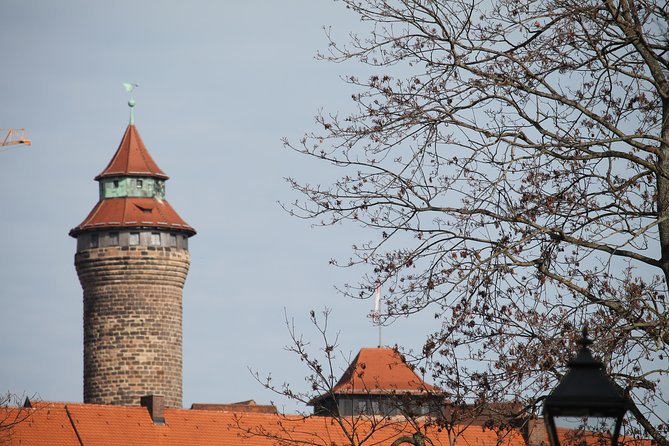
At Unschlitthaus, the subject changes to Kaspar Hauser, described here as the orphan of Europe and one of Europe’s most mysterious figures. The guide gives this story about ten minutes.
Kaspar Hauser’s tale is tied to palace intrigue, which gives the walk a strong shift from medieval legend to a later mystery. The stop reminds you that Nuremberg’s unusual stories did not end with the Middle Ages. The city continued to attract questions about identity, power, and hidden lives.
This is also a good example of why the tour is called medieval and hidden rather than simply medieval. Some subjects fit the Middle Ages directly, while others show how the old city continued to collect strange episodes over the centuries.
Hangman’s Bridge explains a feared profession
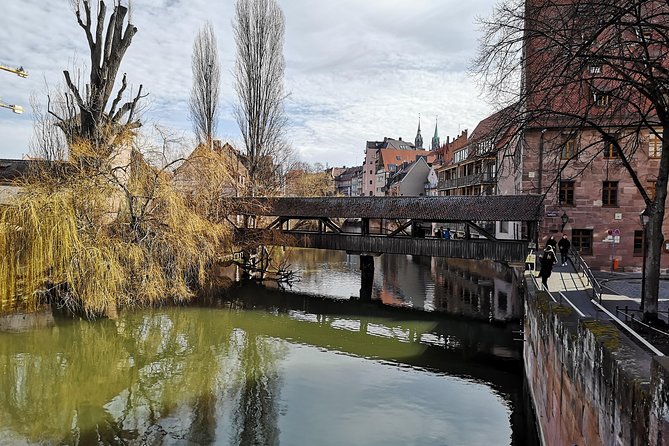
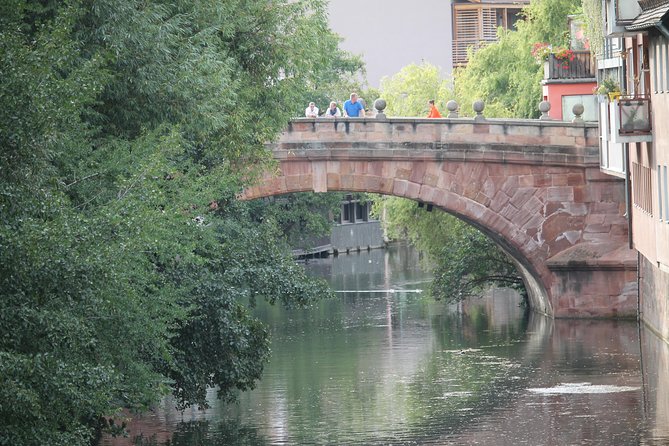
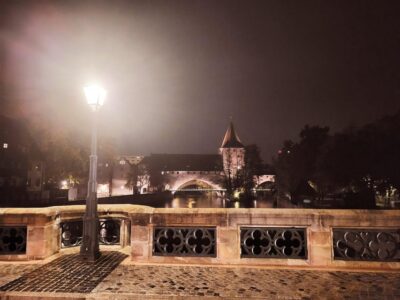
At Hangman’s Bridge, you learn about Nuremberg’s executioner, his trade, and his achievements. The stop lasts roughly ten minutes.
The executioner was necessary to the city but socially feared. That tension gives the story its force. A walking route can make this subject more vivid because you are standing at a real bridge connected with the work, rather than hearing about it in an abstract museum display.
The tour also presents execution as a trade, placing it beside other medieval occupations. That wider view matters. Old cities depended on many kinds of work, including jobs that respectable society preferred not to discuss.
This will suit you if you enjoy the less comfortable side of urban history. If you want only pretty streets and grand monuments, this part may feel darker than expected.
Weißgerbergasse keeps the medieval street plan visible
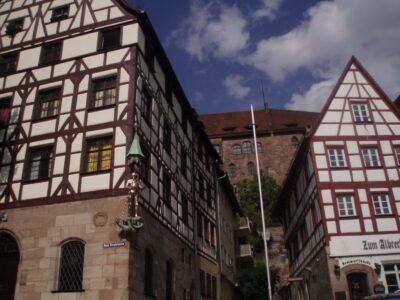
Weißgerbergasse is described as the most medieval street in Nuremberg. You receive about ten minutes here, enough for the guide to explain the street and its place in the old town.
This is one of the clearest visual stops. Instead of focusing only on a single object, you look at the street itself and consider how trades shaped daily life. The tour specifically includes medieval trades and refers to Mendel’s book, a source connected with the working lives of craftspeople.
The street helps tie the whole route together. Witchcraft, execution, fountains, walls, and legends can feel like separate subjects. Here, the guide brings you back to ordinary urban life, where people worked, sold goods, formed families, and lived close together.
You will want comfortable shoes. The route covers many central sights in a relatively short time, and the guide keeps the group moving toward the castle.
Beim Tiergärtnertor explains Nuremberg’s walls
Near Beim Tiergärtnertor, the group returns to the city walls and their lesser-known stories. This stop lasts about five minutes.
It is brief, but it helps you read the old center as a defended city rather than a collection of attractive buildings. The mention of the city’s coordinates adds an unusual detail, suggesting that the guide does more than repeat the standard sightseeing script.
Because this stop is short, listen closely and ask questions when the guide pauses. The tour has a full route to complete, so some topics receive a quick explanation rather than a long discussion.
Kaiserburg ends the route with darker legends
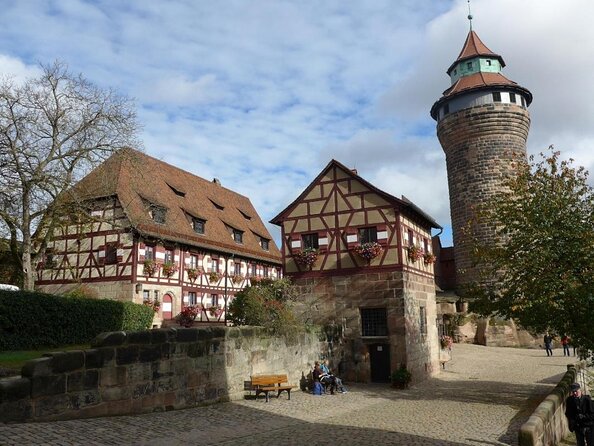
The walk finishes at Kaiserburg, located at Burg 17. This is one of Nuremberg’s most important attractions and a strong endpoint for a city tour.
The castle segment lasts around 15 minutes and includes darker stories, from flying horses to women of bad life. These tales return you to the tour’s central mood: Nuremberg is not only a city of emperors and grand architecture. It is also a place where rumor, morality, superstition, and legend gathered around powerful buildings.
The end point is practical. You can continue exploring the castle area after the guide leaves, take photographs, or use the location to plan your next visit. However, the tour information does not include admission to the castle interior. Treat the ending as an exterior orientation and storytelling stop unless you arrange any entry separately.
What $19.60 buys you
At $19.60 per person, the tour offers 2 hours and 30 minutes of guided sightseeing in Spanish. That works out to a modest cost for a route covering ten stops and a wide range of subjects.
You are paying for interpretation, not tickets. Every listed stop has free admission, and no museum, fountain, church, or castle entrance is included. Soda and other pop are also excluded, so carry money or a drink if you need one during the afternoon.
The price is strongest for you if Spanish is your preferred language and you want context at each stop. A self-guided walk would cost less, but it would require you to research the legends, find the correct locations, and connect the stories yourself. The guide does that work while you walk.
The group limit of 30 keeps the experience from being unlimited in size, but it does not promise an intimate private tour. If you want a personal guide who can adapt every minute to your interests, this may not be the right format. If you want a structured introduction at a low price, it is a sensible choice.
Timing, weather, and who should book
The afternoon start at 3:30 pm is convenient, but it leaves little room for delay if you are arriving from outside Nuremberg. Plan to be at Hauptmarkt before the start time, especially if you need to locate the guide.
The tour runs outdoors through central streets. Rain can affect your comfort, so bring suitable clothing and shoes. One especially useful detail from the available feedback is that Fede kept an afternoon enjoyable even in rainy conditions, using information and humor to maintain the mood. That does not change the weather, but it suggests the guide can keep the experience engaging when conditions are less than ideal.
I would recommend this walk to:
- Spanish-speaking adults who enjoy local legends and unusual history
- First-time visitors who want orientation before exploring the castle independently
- People who prefer a guide to a phone audio tour
- Families with older children who can manage 2 hours and 30 minutes of walking
- Anyone curious about medieval work, punishment, superstition, and city life
You may want another type of visit if your priority is entering museums, spending long periods inside churches, or focusing mainly on Nuremberg’s twentieth-century history. This route is about old streets, stories, and characters.
Booking details worth keeping in mind
Confirmation arrives when you book, and the tour operates near public transportation. Service animals are allowed, and most people can take part.
The booking record shows a five-star rating with 1,374 ratings and a 100 percent recommendation figure. Fede is the only guide name supplied, so he may not lead every departure. If you are especially interested in his style, check the guide details close to booking.
You can cancel up to 24 hours before the local start time for a full refund. Changes made inside that window are not accepted, and a minimum number of participants is required for the experience to operate. If the provider cancels because that minimum is not reached, you are offered another date or experience, or a full refund.
Should you book this Spanish medieval tour?
I would book it if you want Nuremberg explained through memorable stories rather than a standard list of monuments. The route covers a lot in 2 hours and 30 minutes, the cost is reasonable, and the castle finish makes it easy to continue sightseeing afterward.
Book with realistic expectations. You will walk, stand outside, share the guide with as many as 29 other people, and hear some subjects only briefly. You will not receive castle admission or drinks.
For Spanish-speaking visitors, the combination of Fede’s lively guiding style, unusual subjects, and a low per-person price makes this a strong introduction to Nuremberg’s older streets. Bring good shoes, allow time to find Hauptmarkt, and keep your afternoon open after Kaiserburg if you want to explore the castle on your own.
FAQ
How long does the Medieval Tour in Nuremberg in Spanish last?
The tour lasts approximately 2 hours and 30 minutes.
Where does the tour begin?
It begins at Hauptmarkt 14, 90403 Nürnberg, Germany.
What time does the tour start?
The scheduled start time is 3:30 pm.
Where does the tour end?
The tour ends at the Imperial Castle of Nuremberg, at Burg 17, 90403 Nürnberg, Germany.
Is the guide included in the price?
Yes. A guide in Spanish is included.
Can I cancel for a full refund?
Yes. You can cancel up to 24 hours before the experience start time for a full refund. Cancellations made less than 24 hours before the start time are not refunded.
Just added around Nuremberg
- Tour en español al Campo Zeppelin★ 5.0 · 8 reviews
- Stein: Public guided tour of the “Old Mine” museum★ 4.5 · 18 reviews
- “Rotes Bier” and “Blaue Zipfel”. A historical-culinary walk★ 4.4 · 190 reviews
- Nuremberg: Old Town Guided Tour By Bus★ 4.4 · 198 reviews
- Nürnberg kennenlernen: Highlights in der Altstadt★ 4.7 · 189 reviews
- Nuremberg: Bar and Club Tour with Free Shots and Free Entry★ 3.8 · 23 reviews
- Nürnberg Bachelor(ette) Party with Night PubCrawl★ 4.2 · 5 reviews
- Nuremberg: WWII Tour, Courtroom 600 and 3rd Reich Sites★ 4.6 · 94 reviews
Nuremberg Tours, compared.

Tunnels and Secret Passages in the City Wall Tour
Read our review →
1.5-Hour Private Tour through Historical Old Town
Read our review →Browse the lists this tour appears in