
Reviewed · NUREMBERG TOURS
Nuremberg: Medieval Dungeons Guided Tour
History gets grim underground. Beneath Nuremberg’s Old City Hall, you’ll walk through vaulted medieval cellars where prisoners awaited judgment, confession, or death. I like the original dungeon furnishings and the way the tour explains medieval justice, not just the machinery of torture. The 45-minute length also makes it easy to fit between major sights.
The main drawback is that the site is small. You see twelve cramped cells and a torture chamber, not a large museum packed with displays. The rooms are dark, tight, and reached by stairs, so claustrophobia and limited mobility are real concerns. Children under 10 cannot enter, and the subject matter is disturbing.
In This Review
- Key points to know before you go
- Entering the cellars beneath Old City Hall
- Twelve cells and a harsh form of justice
- The torture chamber and the darker side of the tour
- What the guiding adds in 45 minutes
- Why the small scale can be a strength
- The physical setting: stairs, cold, and tight rooms
- A good fit for history-minded visitors
- How to plan the visit
- Should you book the Nuremberg dungeons?
- FAQ
- Where does the Nuremberg Medieval Dungeons tour begin?
- How long does the tour last?
- What languages are available?
- How much does the tour cost?
- Are children allowed to visit?
- Is the dungeon suitable for people with mobility impairments?
- What should I bring?
Key points to know before you go
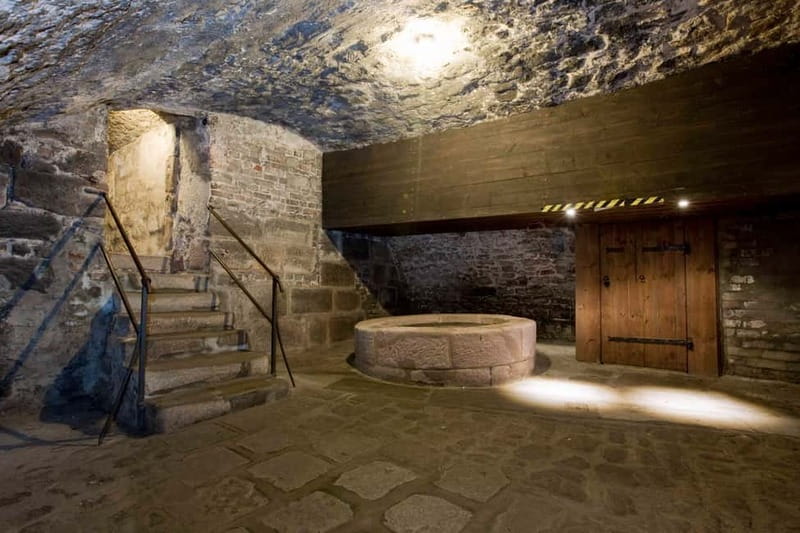
- Fourteenth-century prison: The vaulted cellars served as a remand prison for people awaiting judgment.
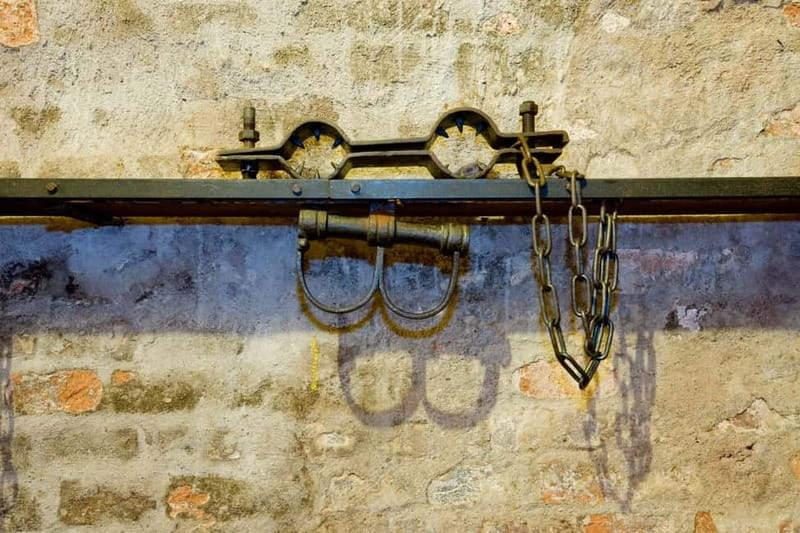
- Twelve cramped cells: Most retain original furnishings, giving the rooms a stark, immediate feel.
- Torture chamber: The tour explains medieval interrogation and punishment in direct, sometimes graphic terms.
- Short and affordable: At about $11 per person, the 45-minute visit offers a useful history lesson for a modest price.
- Strong guiding: Guides such as Alex, Nick, Wolfgang, Mariana, Dimitri, and Dejan Grasser have been praised for clear explanations, humor, and good English.
- Not for everyone: The dungeon is unsuitable for children under 10, people with mobility impairments, and people with claustrophobia.
Entering the cellars beneath Old City Hall
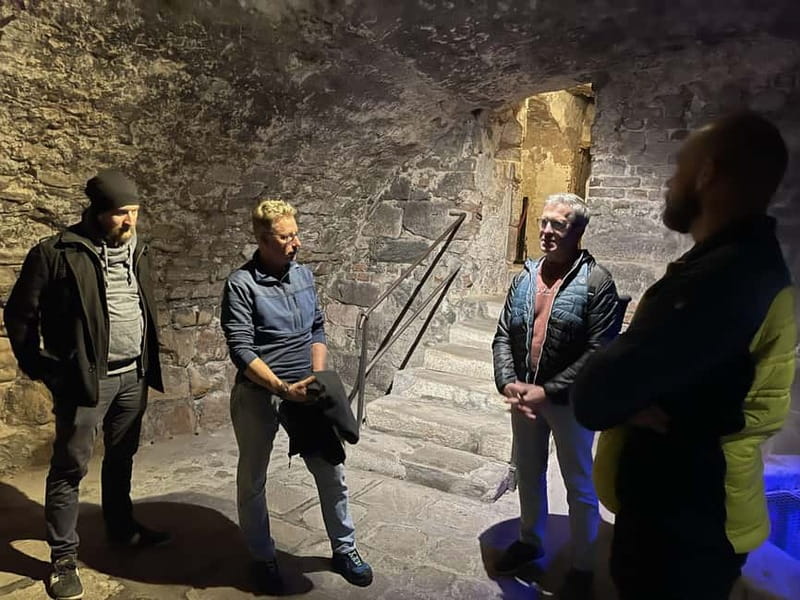
Your meeting point is outside Nuremberg’s Old City Hall, near the middle entrance. Wait outdoors rather than going inside first. From there, the visit leads below the historic center into the vaulted cellars that once held prisoners.
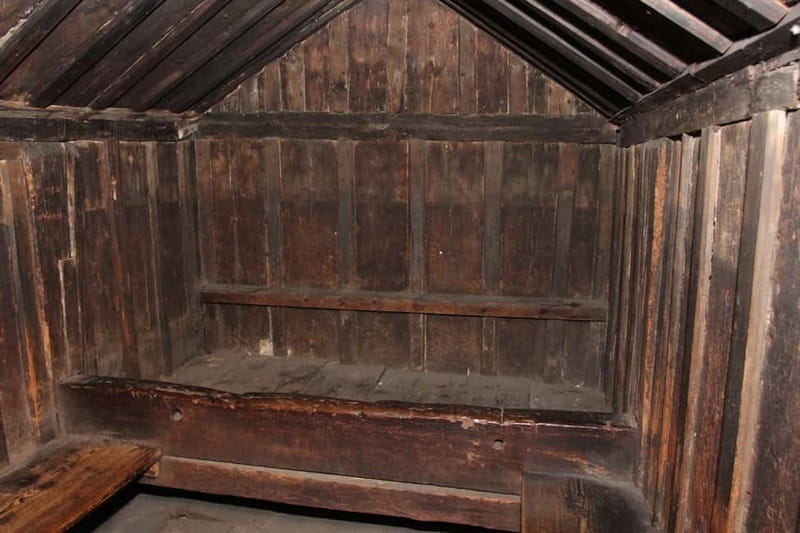
That first step underground changes the mood quickly. You are not entering a recreated attraction built from scratch. The dungeon’s layout and much of its furnishing are described as mostly original, which gives the visit its force. Bare rooms and low, enclosed spaces need very little decoration to make their purpose clear.
The dungeons were used from the fourteenth century to hold and question prisoners before judgment. These were not long-term prison cells in the modern sense. They functioned as a remand prison, a place where accused people were kept while authorities tried to establish guilt.
That distinction matters. The tour is not only about cruel devices. It shows how law, suspicion, punishment, and confinement worked together in medieval Nuremberg. You learn why being thrown into a dungeon could amount to a death sentence, even before any formal punishment had been carried out.
A few more Nuremberg trips worth comparing
- Nuremberg: City Tour with the Bimmelbahn Train
★ 4.4 · 2,475 reviews - Nuremberg: Old Town Guided Walking Tour
★ 4.6 · 2,416 reviews - Nuremberg: Tunnels and Secret Passages in the City Wall Tour
★ 4.8 · 2,334 reviews
Twelve cells and a harsh form of justice
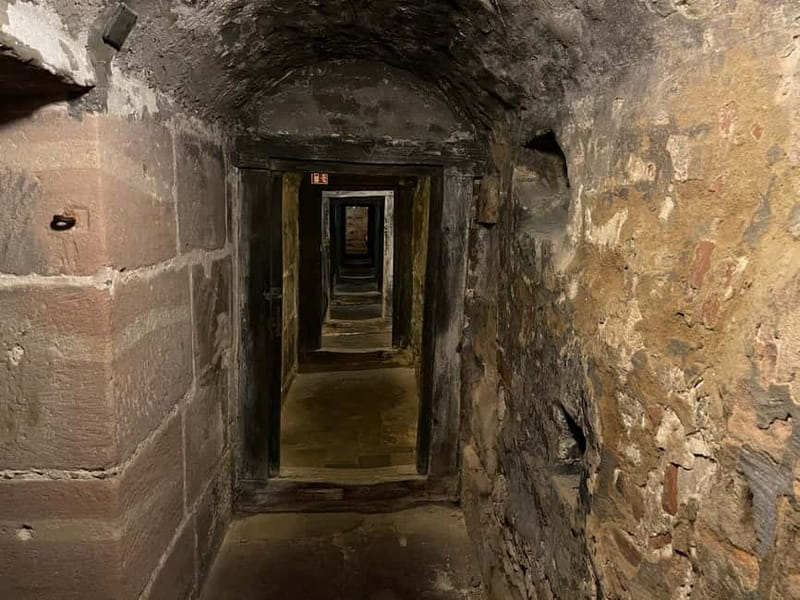
The route takes you through twelve small cells. Their size is one of the most important parts of the experience. You do not need a long display panel to understand that these were bleak places. The tight rooms help you picture the physical conditions faced by people held there.
The tour explains what prisoners endured while waiting to confess, guilty or not. Medieval authorities often treated confession as the key to establishing the truth. That meant an accused person could face pressure to admit guilt even when the evidence was weak or the accusation was wrong.
I like this part of the visit because it gives the dungeon a human focus. You are not simply looking at old stone walls. You are considering the plight of people caught in a justice system that had very different ideas about evidence, guilt, and acceptable punishment.
The mostly original furnishings add weight to the explanation. They are not presented as an enormous collection, and there may be less to see than you expect if you are picturing a full museum. Still, the limited number of objects suits the place. The rooms themselves are the main exhibit.
A guide can also connect the cells with wider aspects of life in medieval Nuremberg. Several guides have been praised for explaining not only torture, but also the people who operated the dungeon and the way the justice system worked. That broader context helps keep the tour from becoming a parade of gruesome stories.
The torture chamber and the darker side of the tour
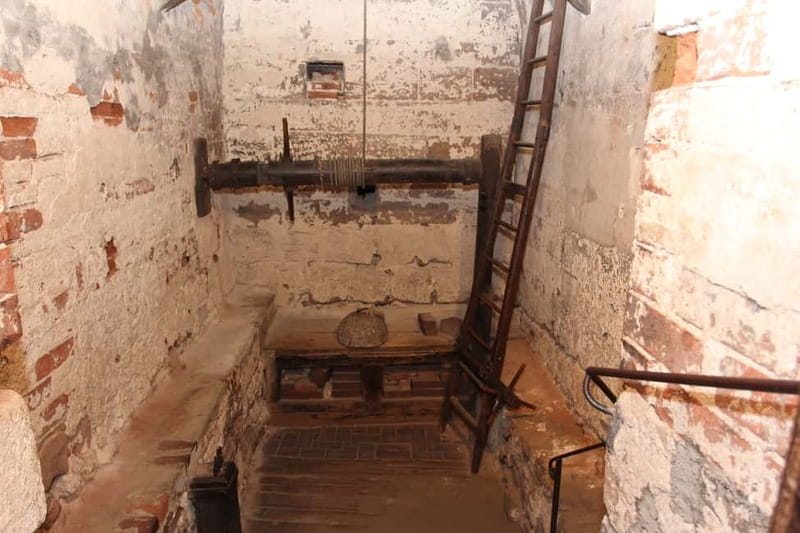
The torture chamber is the emotional center of the visit. Here, you learn what forms of punishment and interrogation were used during the Middle Ages and what prisoners were expected to endure.
The subject is serious and can be graphic. The tour includes reports of torture, so I would not book it casually for a young child or anyone who finds violent historical detail upsetting. One particularly useful point is the explanation that torture was used as a means of seeking a confession, rather than simply as a sentence after guilt had been proven.
That idea can be difficult to absorb. The system claimed to be searching for truth, but its methods could produce a confession from an innocent person. The dungeon makes that contradiction easier to grasp because the explanation takes place in the very rooms where such proceedings occurred.
The best guides handle the material with care. Nick has been praised for telling gory stories without making them overwhelming. Alex was noted for balancing humor with the seriousness of the subject, while Dimitri was praised for using an appropriate tone and taking care with his presentation.
Humor may sound surprising in a torture chamber, but a good guide uses it to keep the group attentive, not to make light of suffering. Reports about guides such as Luke, Wolfgang, Mariana, Hannes, and Dejan Grasser also point to a consistent strength: clear storytelling that brings the setting to life and leaves room for questions.
What the guiding adds in 45 minutes
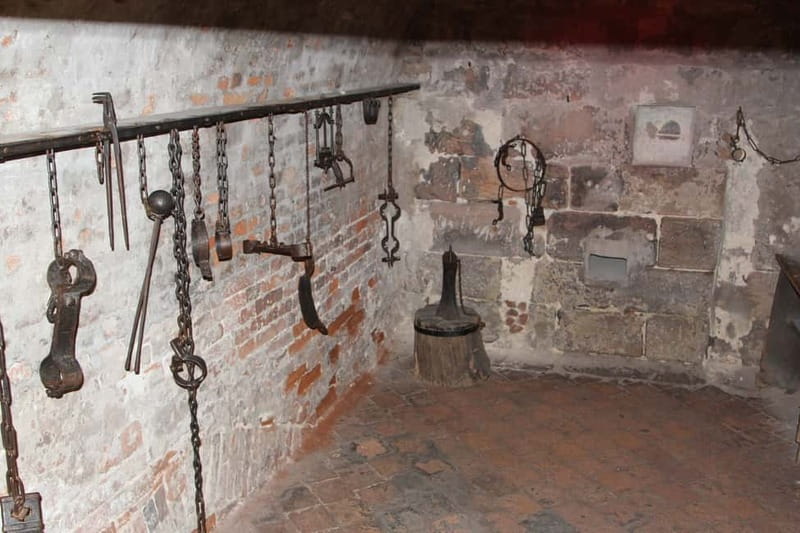
This is a short visit, usually about 45 minutes. That is enough time to move through the cells, visit the torture chamber, and hear the main story without turning the experience into a long, heavy lecture.
The strongest part of the presentation is its directness. You receive an explanation of medieval judgment, the role of confession, the treatment of prisoners, and the work of the people who ran the dungeon. The guides are also reported to speak very good English, which is important for a tour built around spoken storytelling.
The experience is offered in English and German. The activity details also refer to an audio guide, while the practical information identifies a live guide. If the distinction matters to you, confirm the format when selecting your time. Either way, bring a charged smartphone, as this is listed among the items to have with you.
A few practical points can affect your enjoyment:
- The tour can move at a steady pace, so you may not have much time for photographs.
- One account described the route as a little fast for taking many pictures.
- Guides generally make the history accessible and answer questions, but the tour is designed to keep moving through a compact site.
- Warm clothing is important because the underground rooms can feel cold.
- Food and drinks are not allowed inside.
The visit ends back at the Old City Hall meeting point. That makes it simple to continue sightseeing in central Nuremberg after the tour.
Still Nuremberg, at a slower pace:
- Nuremberg: Walking Tour of Former Nazi Party Rally Grounds
★ 4.7 · 1,665 reviews - Medieval Tour in Nuremberg in Spanish
★ 5.0 · 1,374 reviews - Nuremberg: Historischer Kunstbunker WWII Art Bunker Tour
★ 4.8 · 921 reviews - Nuremberg: PLAYMOBIL®- FunPark
★ 4.7 · 863 reviews
Why the small scale can be a strength
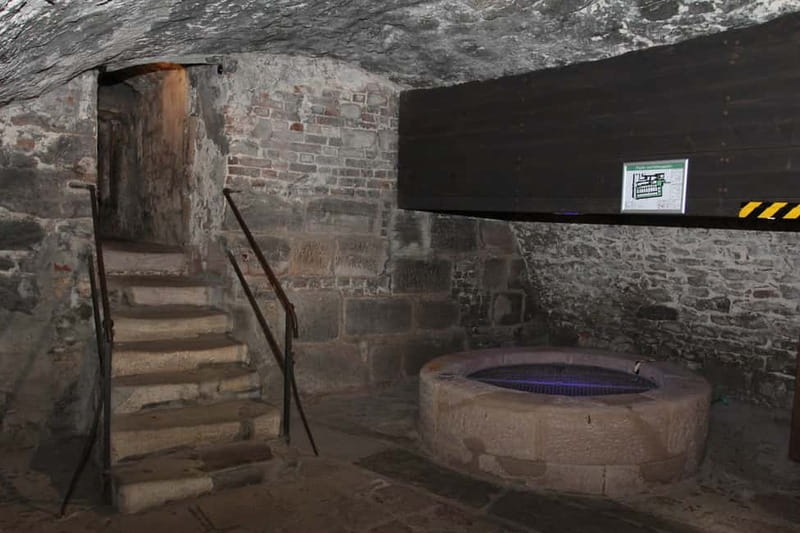
At first glance, the limited number of rooms may seem like a weakness. One visitor expected a museum full of torture devices and displays and felt that the amount to see was modest for a €10 price. That is a fair warning if you prefer large collections with many objects and long exhibit panels.
I would frame the value differently. The dungeons are a focused historical site, not a half-day museum. You pay for access to an unusual place and for the explanation that gives the cells meaning. At around $11 per person, the cost is reasonable if you want a compact introduction to medieval law and punishment.
The 45-minute format is especially useful on a packed sightseeing day. You can fit it around a visit to Nuremberg’s Old Town, rather than giving up a large part of your schedule. On a rainy day, the underground setting also offers a practical indoor stop, though the cold rooms mean you should not leave your jacket behind.
The price feels strongest for visitors who enjoy guided interpretation. If you only want to look at objects, the site may seem sparse. If you want a guide to explain why these rooms existed and what happened inside them, the short visit offers good value.
The physical setting: stairs, cold, and tight rooms
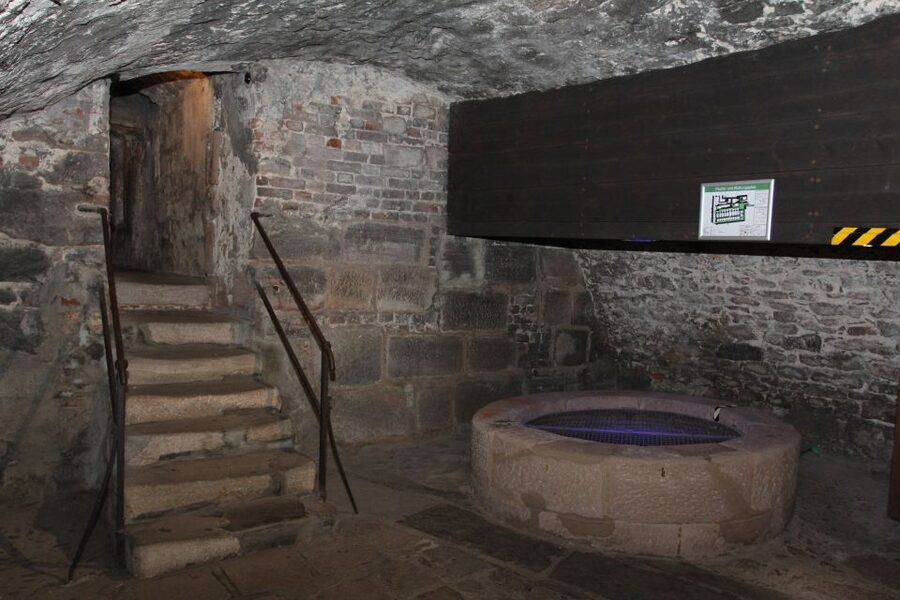
You should treat the access warnings seriously. The tour is not suitable for people with mobility impairments, and the dungeon contains lots of stairs and cramped spaces. The exact route details are not provided, so you should ask the provider if you need specific information about steps or access.
Claustrophobia is another major concern. The cells are small, and the underground setting can feel enclosed. One guide was considerate toward a person struggling with claustrophobia, but that kindness cannot change the basic nature of the site. If tight, dark rooms make you uneasy, choose another Nuremberg attraction.
Warm clothing is recommended. Even if the weather above ground is mild, the vaulted cellars can feel chilly. Comfortable shoes are also a sensible choice because you will be walking through the cells and using stairs, although the supplied information does not specify a dress code beyond warm clothing.
The age rule is clear: children under 10 are not allowed. Older children and teenagers may find the tour fascinating, but the material is not gentle. One family found it suitable for ages 12 and 15, while another guide suggested it was best for people around 13 and older who are not squeamish or claustrophobic. Use your own judgment, especially for younger teenagers.
A good fit for history-minded visitors
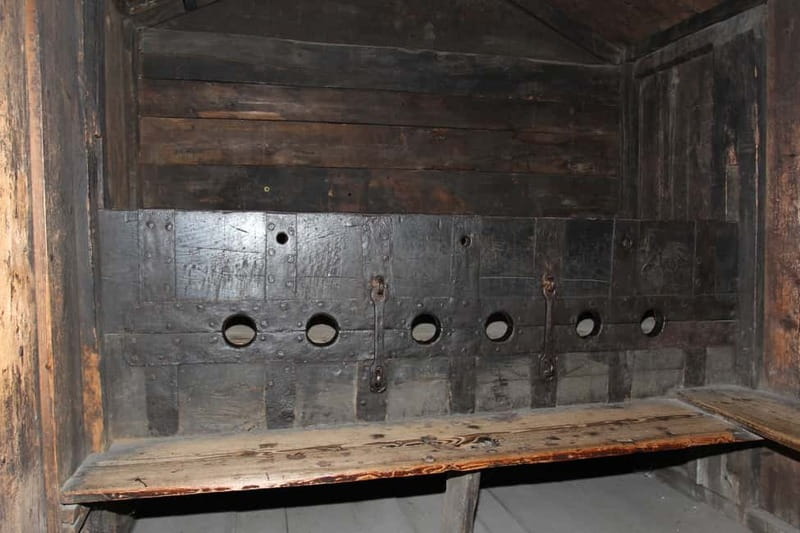
I would recommend this tour to you if you like history that is tied to a real place. The dungeon offers a direct look at how medieval authorities handled accusations and prisoners. You leave with a better sense of how different the period’s idea of justice was from modern legal standards.
It also suits visitors who want a short activity with a clear focus. You do not need to commit a full morning. The route is compact, the meeting point is central, and the visit returns to where it began.
The tour is a good choice for:
- Adults interested in medieval law and punishment
- Older teenagers who can handle disturbing subject matter
- Visitors seeking an indoor activity on a rainy day
- People who enjoy guided storytelling more than large museums
- Anyone curious about the less polished side of Nuremberg’s past
It is a poor match for anyone expecting a large collection of torture instruments. It is also wrong for visitors who cannot manage stairs, feel uncomfortable in enclosed rooms, or want a lighthearted family outing for small children.
How to plan the visit
Allow a little extra time to find the middle entrance of the Old City Hall. The meeting instructions say to wait outside, so do not assume the group will gather in an interior lobby.
Check the available starting times before booking because the tour schedule can vary. The duration is listed as 45 minutes, though one description placed a visit closer to 45 to 60 minutes. I would leave a small buffer if you have another timed activity afterward.
You can cancel up to 24 hours in advance for a full refund, and the reserve-now, pay-later option keeps your plans flexible. Those terms are useful in Nuremberg, where weather and day-trip schedules can change quickly.
Bring:
- Warm clothing
- A charged smartphone
- Comfortable footwear for stairs and enclosed floors
Do not bring food or drinks into the dungeons. Most important, arrive ready for frank descriptions of torture. The subject is central to the visit, not a minor detail.
Should you book the Nuremberg dungeons?
I would book it if you want a short, well-led look at medieval justice in an authentic setting. The strongest reasons are the original-feeling cells, the clear explanation of how prisoners were treated, and the guides’ ability to make difficult material understandable without losing its seriousness.
I would skip it if you want a large exhibition or if underground spaces cause real discomfort. At about $11, the tour is good value for a focused 45-minute experience, but the price will feel less attractive if you expect dozens of objects and elaborate displays.
For most history-minded adults and older teenagers, this is a smart addition to a Nuremberg day. Go in with realistic expectations: you are visiting a small, cold, grim set of rooms, not a full museum. That is also why the place can leave such a strong impression.
FAQ
Where does the Nuremberg Medieval Dungeons tour begin?
Meet outside the Old City Hall, or Altes Rathaus, near the middle entrance. Wait outside at the meeting point.
How long does the tour last?
The listed duration is 45 minutes. Some descriptions place the visit at about 45 to 60 minutes.
What languages are available?
The tour is available in English and German. The activity information identifies a live tour guide and also refers to an audio guide, so confirm the format when booking if that matters to you.
How much does the tour cost?
The listed price is $11 per person.
Are children allowed to visit?
Children under 10 are not allowed to enter the dungeons. The tour also includes reports of torture, so it may not suit younger or sensitive children.
Is the dungeon suitable for people with mobility impairments?
No. The activity is listed as unsuitable for people with mobility impairments. The route includes stairs and cramped spaces.
What should I bring?
Bring warm clothing and a charged smartphone. Food and drinks are not allowed inside the dungeons.
Just added around Nuremberg
- Tour en español al Campo Zeppelin★ 5.0 · 8 reviews
- Stein: Public guided tour of the “Old Mine” museum★ 4.5 · 18 reviews
- “Rotes Bier” and “Blaue Zipfel”. A historical-culinary walk★ 4.4 · 190 reviews
- Nuremberg: Old Town Guided Tour By Bus★ 4.4 · 198 reviews
- Nürnberg kennenlernen: Highlights in der Altstadt★ 4.7 · 189 reviews
- Nuremberg: Bar and Club Tour with Free Shots and Free Entry★ 3.8 · 23 reviews
- Nürnberg Bachelor(ette) Party with Night PubCrawl★ 4.2 · 5 reviews
- Nuremberg: WWII Tour, Courtroom 600 and 3rd Reich Sites★ 4.6 · 94 reviews
Nuremberg Tours, compared.


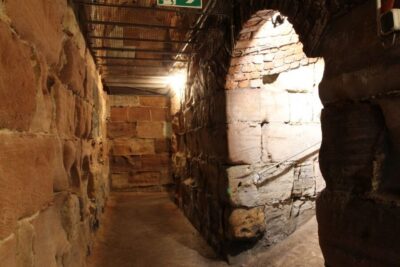
Tunnels and Secret Passages in the City Wall Tour
Read our review →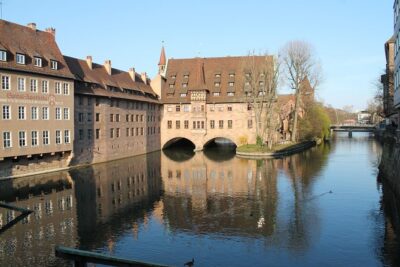

1.5-Hour Private Tour through Historical Old Town
Read our review →Browse the lists this tour appears in