Reviewed · BERLIN TOURS
Path of Resistance: Berlin’s Hidden Holocaust Stories
History speaks softly here. This 2.5-hour Berlin walk follows Jewish memorials, resistance sites, and ordinary people who challenged Nazi rule, often at great personal risk. Led in English by a World War II specialist, the tour moves through the old Jewish quarter and central Berlin, connecting plaques, courtyards, workshops, and public squares to the people behind them.
I especially like the focus on lesser-known acts of resistance, including the women of Rosenstraße and Otto Weidt, who protected blind and deaf Jewish workers. I also like the use of Then and Now photographs, maps, and discussion rather than a nonstop lecture. The main consideration is emotional weight: deportation, genocide, antisemitism, and silence are central subjects, so this is not a light sightseeing stroll.
In This Review
- What makes this Berlin history walk worthwhile
- Starting near the former Imperial Post Office
- New Synagogue and the Moses Mendelssohn School
- Grosse Hamburger Strasse and the city’s vanished community
- Otto Weidt’s workshop and quiet courage
- The Block of Women and the Rosenstraße protest
- Museum Island and Neue Wache
- Bebelplatz and the May 10, 1933 book burning
- Trains to Life, Trains to Death
- Timing, walking, group size, and weather
- Is $56 a fair price?
- Who should book this experience?
- Should you book Path of Resistance?
- FAQ
- How long does the Path of Resistance tour last?
- What language is the tour conducted in?
- Where does the tour start?
- Where does the tour finish?
- Is public transport needed?
- What sites are included?
- Is the tour wheelchair accessible?
- What should I bring?
- Can I cancel the booking?
What makes this Berlin history walk worthwhile
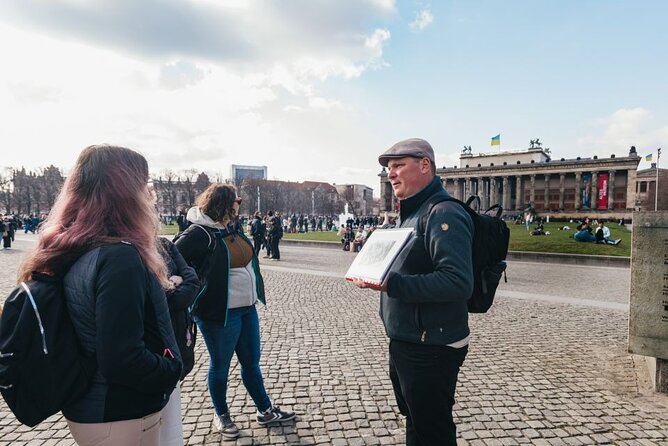
- Otto Weidt’s workshop: Hear how one Berlin employer tried to shield Jewish workers with disabilities from Nazi persecution.
- Rosenstraße protest: Learn about German women who publicly demanded the release of their Jewish husbands.
- Bebelplatz book burning site: See where the May 10, 1933 book burning attacked free thought and intellectual life.
- Small English-speaking group: The group is advertised as limited to 10 participants in one section, with a maximum of 15 stated elsewhere, so confirm the exact size when booking.
- A human-scale route: The tour links personal stories to memorials, schools, cemeteries, deportation sites, and government buildings.
- Practical ending point: The route finishes near Berlin Friedrichstraße station according to the stop sequence, although the meeting information also says the activity ends back at the meeting point. Confirm the final location before setting your next appointment.
Starting near the former Imperial Post Office
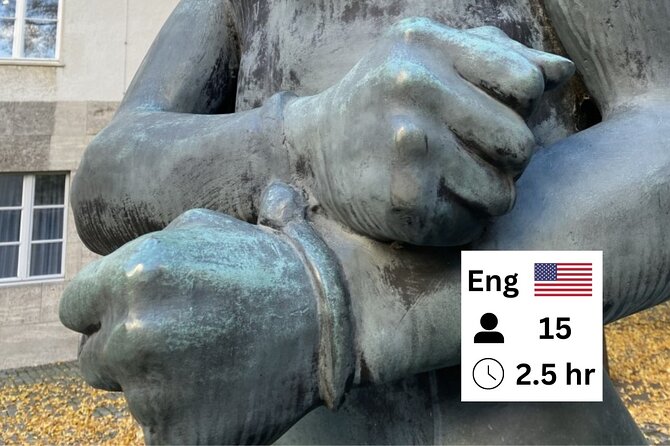
You meet at the former Imperial Post Office and should arrive 10 minutes early. The guide waits at the main entrance with a blue umbrella, a useful detail in a city where several large buildings can look alike.
The tour begins in central Berlin, but its purpose is not simply to point out famous buildings. Your guide sets up the larger story of Nazi racial ideology, including the belief in Aryan superiority and the Nazi classification of people into supposed racial sub-groups. This matters because the later arrests, deportations, and killings were not random acts of wartime violence. They grew from an organized system of antisemitism, legal exclusion, propaganda, and state power.
The opening also gives you a chance to understand the tour’s main question: why did some ordinary Germans resist, while others complied or looked away? The answer is not presented as a simple division between heroes and villains. Resistance could mean hiding a person, falsifying paperwork, refusing an order, joining a public protest, or offering help in a private workshop. In other cases, people did nothing, and that silence had consequences.
A few more Berlin trips worth comparing
- Berlin: Reichstag, Dome and Government District Guided Tour
★ 4.7 · 18,288 reviews - Berlin: 1-Hour City Tour by Boat with Guaranteed Seating
★ 4.3 · 16,993 reviews - Berlin: Boat Tour Along the River Spree
★ 4.4 · 11,252 reviews
New Synagogue and the Moses Mendelssohn School
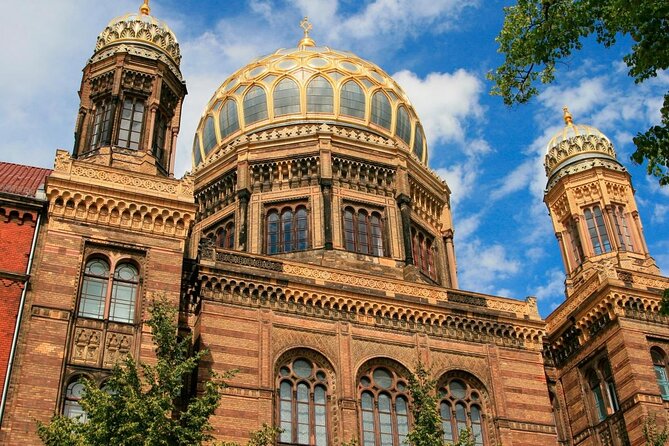
The first major stop is the New Synagogue Berlin Jewish Centre. You spend about 15 minutes here with a guided explanation of the site and its place in Berlin’s Jewish life.
The synagogue is an important starting point because it helps you see Jewish Berlin as a living community, not only as a subject connected to persecution. The walk then continues to the Jüdisches Gymnasium Moses Mendelssohn, where you spend about 10 minutes.
A school stop adds a useful dimension. Nazi persecution reached into ordinary institutions where children studied, families worked, and communities built their futures. It also helps explain what was lost when Jewish pupils, teachers, and families were pushed out of public life.
I would pay close attention to how your guide separates Jewish identity and culture from the Nazi racial system. The Nazis treated Jewishness as a racial category, regardless of personal belief or religious practice. That distinction is essential for understanding how the regime targeted people who may not have considered themselves religious at all.
Grosse Hamburger Strasse and the city’s vanished community
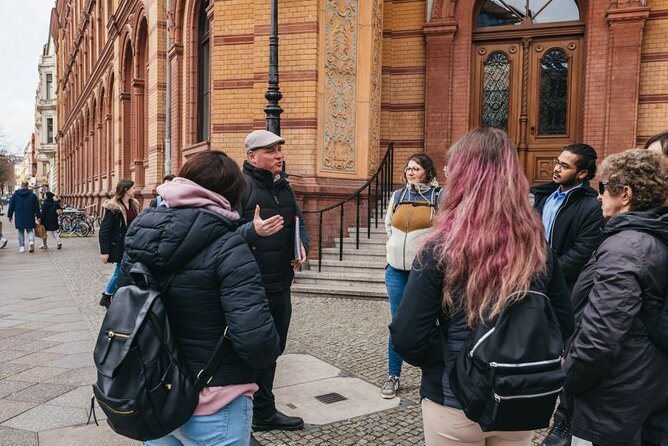
At Grosse Hamburger Strasse Cemetery, the tour turns toward memory and absence. You spend roughly 15 minutes at the cemetery, where the setting encourages a slower pause than a normal city sightseeing stop.
This part of the walk connects Berlin’s old Jewish quarter with the people who once lived there. The guide’s use of maps and historical photographs can help you picture streets before deportation and destruction broke apart families and neighborhoods.
You should expect a serious tone here. The tour asks you to consider how removal worked step by step: identifying people, excluding them from society, taking their homes, gathering them at deportation centers, and sending them away. Seeing those stages in a real neighborhood makes the subject more concrete than a timeline in a museum.
The walk through the old quarter is also one of the best reasons to book this experience. You are not only visiting a large memorial with a formal design. You are moving through places where Jewish families once lived and where small markers still point to lives interrupted.
Otto Weidt’s workshop and quiet courage
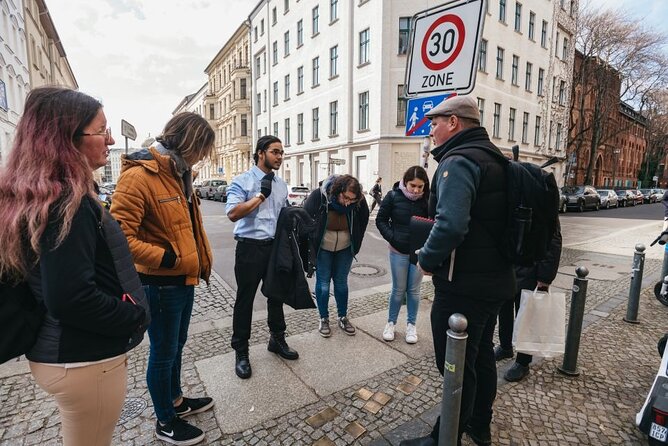
Otto Weidt’s Workshop for the Blind is likely to be the emotional center of the tour. You spend about 15 minutes at the workshop, hearing how Weidt tried to protect Jewish workers who were blind or deaf.
The value of this stop lies in its scale. It is not the story of a government, army, or famous resistance network. It is the story of an employer using his workshop and personal connections to help people facing persecution.
That does not make the situation simple or safe. The Nazi state controlled jobs, housing, police records, transport, and deportation. Any attempt to protect Jewish workers carried danger. Your guide can show how resistance sometimes took place inside ordinary routines, through work, paperwork, concealment, and personal loyalty.
This is also where a small group matters. A large crowd would make a modest workshop harder to absorb. The tour provider says it uses small groups, and one guide, Tom, is praised for explaining sensitive subjects in a friendly and clear way. Hannah is also singled out for her passion and for bringing forward people who are not usually treated as household names.
Still Berlin, at a slower pace:
- Discover Berlin Half-Day Walking Tour
★ 5.0 · 9,624 reviews - Berlin: Hop-on Hop-off Bus Tour with Live Commentary
★ 4.3 · 8,579 reviews - Berlin: Government District around the Reichstag Guided Tour
★ 4.7 · 8,447 reviews - Berlin: Reichstag, Plenary Chamber, Cupola & Government Tour
★ 4.6 · 8,422 reviews
The Block of Women and the Rosenstraße protest
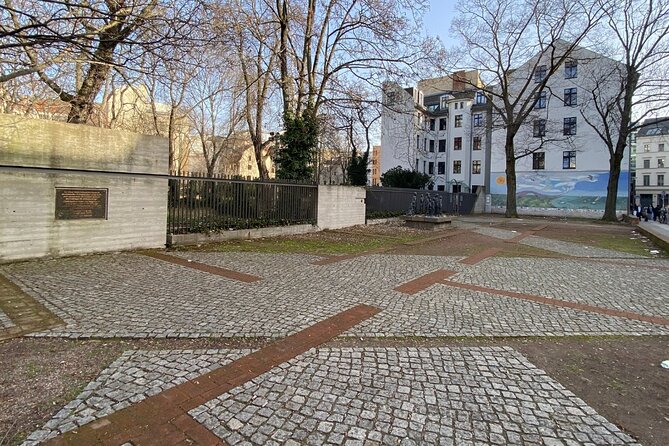
At the Block of Women, you spend another 15 minutes learning about the Rosenstraße Protest. German women gathered there to demand the release of their Jewish husbands, who had been arrested by the Nazi authorities.
This story is especially important because it complicates the usual picture of resistance. The protesters were not operating from a distant underground network. They were using public pressure in the middle of Berlin, despite the danger of challenging the regime.
The site also raises difficult questions about how Nazi officials responded to pressure, and why some detainees were released while other Jewish people across Europe were being deported and murdered. Your guide should help place this event within the wider machinery of persecution rather than presenting it as proof that public protest was generally safe or successful.
I like this stop because it gives you a clear example of collective action. Otto Weidt’s efforts show private courage. Rosenstraße shows people acting together. The two stories make the point that resistance had no single form.
Museum Island and Neue Wache
The route continues through Museum Island, with about 20 minutes of guided walking and sightseeing. This is the longest timed section, and it provides room to connect the Jewish quarter with Berlin’s broader political and cultural center.
You do not come here simply to admire grand architecture. The guide uses the central setting to explain how Nazi power operated in a city filled with state institutions, cultural buildings, memorial spaces, and public ceremonies. The contrast between monumental Berlin and the small personal stories from earlier stops is useful.
At Neue Wache, you spend about 15 minutes. This memorial is a place to consider how Germany remembers war, dictatorship, and the dead. It also gives the group a quiet moment before the tour reaches the book burning site.
The route involves steady walking over city streets and cobblestones. Comfortable shoes are a must. The tour is listed as wheelchair accessible, but the exact condition of every surface and entrance is not described, so anyone needing detailed access information should ask before booking.
Bebelplatz and the May 10, 1933 book burning
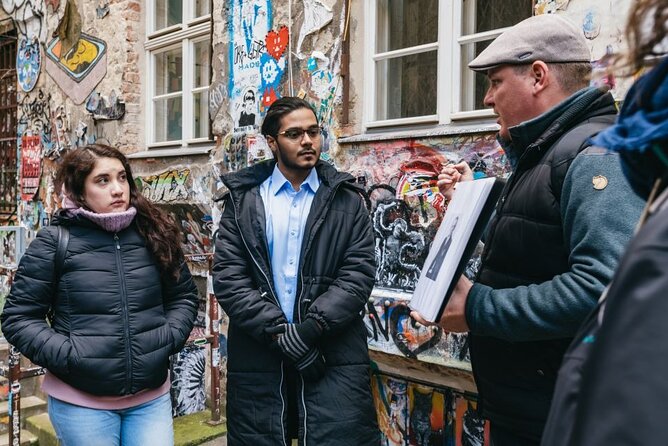
Bebelplatz is one of the most recognizable stops on the walk. About 10 minutes are set aside for the memorial to the May 10, 1933 Nazi book burning.
The event signaled an attack on intellectual freedom and free expression. Books were selected for destruction because they were associated with Jewish writers, political opponents, or ideas the Nazis rejected. The site is a useful reminder that persecution began not only with arrests and deportations, but also with propaganda, censorship, public intimidation, and the removal of ideas from public life.
Your guide can help you read the place as part of a wider pattern. First came the effort to define who belonged. Then came the effort to control what people could read, teach, publish, and say. The book burning belongs to that early stage of Nazi rule, before the full scale of genocide was known to much of the world.
The stop is brief, so you may want to ask your questions while you are there. The tour includes interactive discussion and time for questions, and this is a natural point to ask about the relationship between censorship, antisemitism, and later state violence.
Trains to Life, Trains to Death
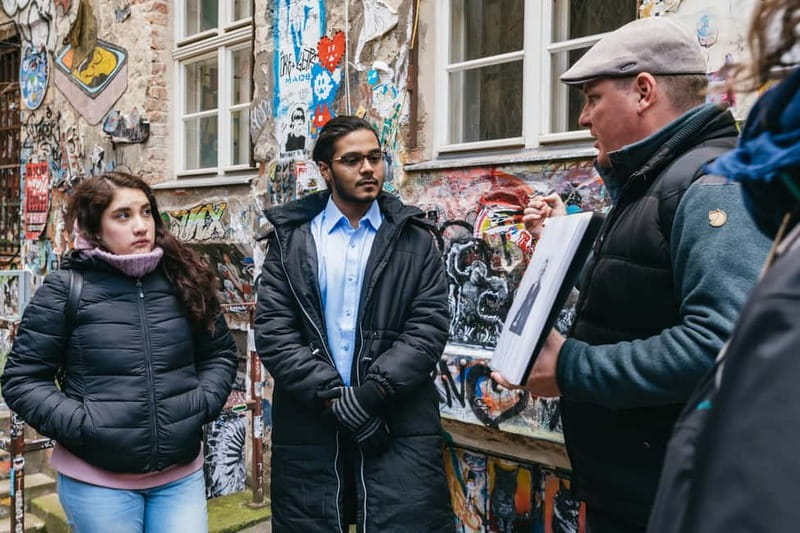
The final listed site is Trains to Life, Trains to Death, a memorial that brings the subject back to children and forced removal. The tour also covers Nicholas Winton, the British organizer who helped hundreds of Jewish children escape the Holocaust.
Winton’s story adds an international thread to an otherwise Berlin-centered route. It shows that rescue could involve organization, paperwork, transport, and persistence, not only dramatic acts performed in secret. It also brings attention to children separated from their parents and communities.
The tour then finishes near Berlin Friedrichstraße station according to the stop order. The meeting details supplied for the experience say it ends back at the starting point, so I would confirm the exact finish location before you book a restaurant, train, or museum entry immediately afterward.
Timing, walking, group size, and weather
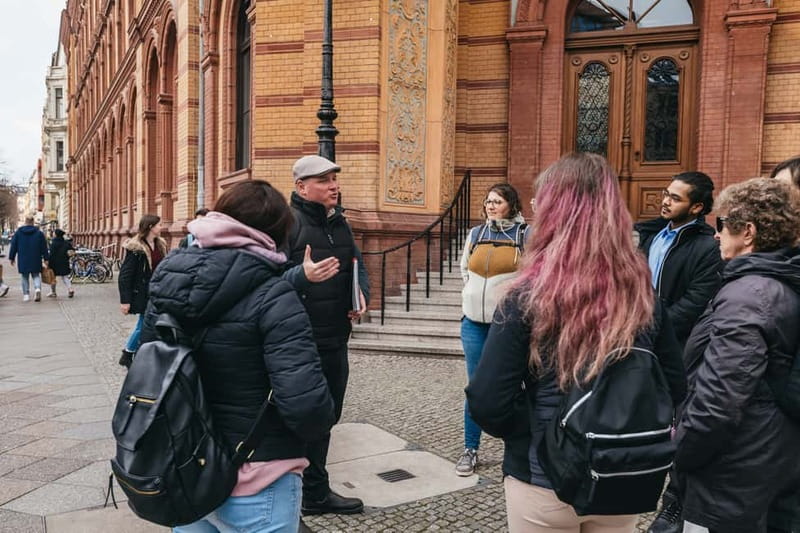
The tour lasts 2.5 hours and does not require public transport. That makes it easy to fit into a day focused on central Berlin, especially if you want a guided introduction before visiting museums on your own.
The itinerary includes many short stops, generally 10 to 20 minutes each. This keeps the walk moving, but it also means you will not receive a long visit inside every location. The experience is best understood as a connected outdoor route with selected memorial and museum access, not as a full museum tour.
It runs in all weather. Bring water, an umbrella, and protection from rain or sun. Berlin’s weather can change quickly, and several stops are outside. Alcohol and drugs are not allowed, which is hardly surprising for a respectful memorial walk but still part of the stated conditions.
The group size needs clarification. The activity information says small groups limited to 10 participants, while another detail gives a maximum of 15. Either size is more suitable than a large coach group, but ask the provider for the current limit if personal discussion is important to you.
Is $56 a fair price?
At $56 per person, this is not the cheapest way to walk around central Berlin. You are paying for a specialist English-language guide, a planned route, museum and memorial entry, historical maps, Then and Now images, and time for questions.
I consider the price reasonable if you want context rather than a list of dates. The route covers a wide range of subjects, from Jewish community life and Nazi racial ideology to censorship, deportation, rescue, and public protest. A self-guided walk could take you to several of these sites, but it would be harder to connect them and locate the less obvious memorials.
The value depends heavily on the guide. Tom is praised for his clear handling of sensitive material, while Hannah is praised for her passion and for highlighting lesser-known people. One guide is also described as patient, professional, and willing to answer every question from a very small group. Those qualities matter more here than flashy presentation.
You do not receive food, drinks, or public transport tickets, although transport is not needed for the route. Free cancellation up to 24 hours before the start and reserve-now, pay-later booking add useful flexibility.
Who should book this experience?
I would recommend this tour to you if you want a serious, human-centered look at Berlin’s Holocaust history. It suits first-time visitors who need a clear introduction, as well as history enthusiasts who want stories beyond the city’s best-known memorials.
It is particularly good for people interested in moral choices. The tour does not only ask what the Nazi state did. It also asks what neighbors, workers, spouses, teachers, employers, and officials chose to do.
You should think twice if you want a relaxed city walk, extensive time inside museums, or a tour with little discussion of genocide. The subject matter is painful, and the pace leaves limited time for private reflection at each stop.
Should you book Path of Resistance?
Book it if you want Berlin’s Holocaust history explained through individual lives and acts of resistance. Otto Weidt, the Rosenstraße women, Nicholas Winton, and the victims named by memorials give the walk a strong human focus.
I would choose this over a broad introductory sightseeing tour if you have already seen the major central landmarks and want to understand what happened in the streets around them. Confirm the group size and ending point first, arrive early, wear proper shoes, and bring rain protection. At $56, it offers solid value for a small-group history walk led by a serious specialist.
FAQ
How long does the Path of Resistance tour last?
The walking tour lasts 2.5 hours.
What language is the tour conducted in?
The live tour guide speaks English.
Where does the tour start?
It starts at the former Imperial Post Office. Arrive 10 minutes early and look for the guide at the main entrance with a blue umbrella.
Where does the tour finish?
The listed route finishes at Berlin Friedrichstraße station. The meeting information also says the activity ends back at the meeting point, so confirm the final location before booking other plans.
Is public transport needed?
No. Public transport tickets are not included, but public transport is not required for this walking tour.
What sites are included?
Stops include the New Synagogue Berlin Jewish Centre, Jüdisches Gymnasium Moses Mendelssohn, Grosse Hamburger Strasse Cemetery, Otto Weidt’s Workshop for the Blind, the Block of Women, Museum Island, Neue Wache, the May 10, 1933 book burning memorial, and Trains to Life, Trains to Death.
Is the tour wheelchair accessible?
The activity is listed as wheelchair accessible.
What should I bring?
Bring comfortable shoes, water, and an umbrella. Dress for the weather because the tour runs in rain or sunshine.
Can I cancel the booking?
You can cancel up to 24 hours in advance for a full refund. Reserve-now, pay-later booking is also available.
Just added around Berlin
- Private Walking Tour in Berlin: Hitler’s Germany & WWII★ 5.0 · 7 reviews
- The History of Berlin: WWII PRIVATE Walking Tour With Locals★ 5.0 · 209 reviews
- Private Berlin WWII and Cold War History Tour with Local Expert Guide★ 5.0 · 28 reviews
- Private Walking Tour Berlin 3 hours: Brandenburg, Historic Center★ 5.0 · 7 reviews
- Berlin: Private Bike Tour of the Berlin Wall and Third Reich★ 5.0 · 23 reviews
- Berlin: Guided Private Bike Tour to Explore the Highlights★ 5.0 · 12 reviews
- Berlin Photography Masterclass – Private Photography Lesson★ 4.5 · 23 reviews
- Group Driving Tour 1 to 6 people. Berlin Shore Excursion incl pick-up at Port★ 5.0 · 8 reviews
Berlin Tours, compared.
Reichstag, Dome and Government District Guided Tour
Read our review →
1-Hour City Tour by Boat with Guaranteed Seating
Read our review →
Government District around the Reichstag Guided Tour
Read our review →
Reichstag, Plenary Chamber, Cupola & Government Tour
Read our review →