
Reviewed · HISTORICAL TOURS
Alternative tour, History off the beaten path
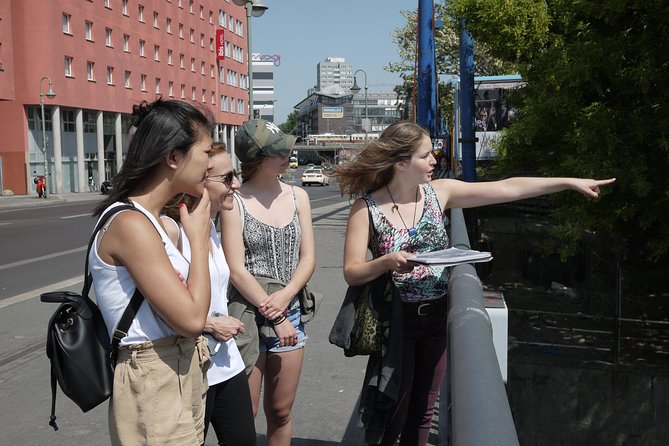
Berlin rewards curiosity. This three-hour walking experience looks beyond the postcard sights, using football, architecture, street life, and the Berlin Wall to explain how the city grew into its unusual self. I like the small maximum of 10 people, and I like that guide Annabelle brings warmth, personal energy, and local feeling rather than simply reciting dates.
I also like the route’s eastern Berlin setting, from Ostbahnhof to Mariannenplatz, where you can connect history with present-day neighborhoods. The main consideration is that the published itinerary gives only a brief named stop at YAAM, so the exact sequence of places may vary. You should book this for the guide and the offbeat storytelling, not for a long checklist of monuments.
In This Review
- Five things to know before you book
- Why this Berlin tour feels different
- Starting at Ostbahnhof in eastern Berlin
- YAAM and the first taste of alternative Berlin
- Reading Berlin through football and local identity
- The Berlin Wall away from the standard stops
- Squats, vacant ground, and Berlin’s changing neighborhoods
- A small group makes the storytelling work
- Three hours on foot, with a social finish
- What the $100.93 price means
- Who should book this experience
- Booking flexibility and cancellation
- FAQ
- How long does the Berlin alternative history tour last?
- Where does the tour begin?
- Where does the tour end?
- How many people can join the tour?
- Is the tour offered in English?
- What happens if the weather is poor?
- Should you book Annabelle’s Berlin walk?
Five things to know before you book
- Football is part of the Berlin story: The tour uses the sport as a way to explore the city, its communities, and its changing neighborhoods.
- Annabelle is the guide to look for: Her style is lively, personal, and full of street-level stories about Berlin.
- The route favors unusual places: Expect discussion of squats, former no-man’s-land areas, the Wall, and green spaces rather than only famous landmarks.
- YAAM provides a quick early passage: The itinerary includes a 10-minute express visit, with admission included.
- The group stays small: A maximum of 10 people gives you a better chance to hear the guide and ask questions.
- Plan for a drink afterward: Snacks are not included, and the experience expects extra money for a drink at the end.
Why this Berlin tour feels different
Many Berlin walks focus on the Brandenburg Gate, Reichstag, Checkpoint Charlie, and the Holocaust Memorial. Those places matter, but they can leave you with a polished version of the city. This experience takes another route.
The focus here is Berlin as a lived-in place. You learn how history affected streets, neighborhoods, buildings, and the people who claimed space after major political changes. Football gives the tour a less formal entry point. Instead of approaching the city only through kings, wars, and governments, you get a look at identity, community, and urban life.
That makes the tour a good choice if you have already seen the central sights, or if you prefer local stories to a standard introduction. It can also work well near the beginning of a Berlin stay because the route gives you a sense of how the city’s eastern districts fit together.
The strongest feature is Annabelle. The supplied information identifies her as the guide, and the experience is repeatedly praised for her enthusiasm, warmth, and ability to connect historical facts with the streets around you. That matters on a walking tour. A guide can know the dates and still make three hours feel flat. Annabelle appears to bring enough personality and flexibility to make the material feel like a conversation.
More History Tours in Berlin
- Berlin: Natural History Museum Entrance Ticket
★ 4.6 · 3,382 reviews - Berlin: World Heritage Cruise to Potsdam
★ 4.5 · 1,435 reviews - Berlin Historical Highlights Walking Tour
★ 4.9 · 657 reviews
Starting at Ostbahnhof in eastern Berlin
You meet at Ostbahnhof, Koppenstraße 3, in Berlin’s Friedrichshain area. The station is served by the S3, S5, S7, and S9 lines, so you can reach the starting point by S-Bahn from several parts of the city.
The meeting point is practical, but allow time to find the exact spot. Ostbahnhof is a transport hub, not a small village square where a guide is easy to spot. Keep the booking confirmation on your phone, and arrive ready to walk.
Starting near Ostbahnhof also sets the tone. This is not a tour that begins with Berlin’s grandest official buildings. You start in the former East Berlin orbit, where rail lines, old industrial traces, postwar changes, and newer cultural projects overlap.
That setting helps explain why Berlin can feel unfinished in the best sense. A fashionable café, a rough wall, a repurposed building, and a memorial may appear within the same short walk. The city’s past is not tucked into one museum district. It often sits beside ordinary daily life.
YAAM and the first taste of alternative Berlin
The route includes a short express passage to YAAM, with about 10 minutes allotted and admission included. That is a brief stop, so you should not expect a full venue visit or a long period to explore independently.
Still, YAAM is a useful opening clue. The place is associated with alternative culture, music, art, and community life, which fits the wider purpose of the experience. A quick look can show you a side of Berlin that does not appear in conventional sightseeing programs.
The short timing is both a strength and a limitation. It keeps the tour moving and prevents one venue from taking over the afternoon. On the other hand, if you are hoping for a detailed visit inside YAAM, this tour is not designed for that. Think of it as a brief stop that helps frame the rest of the walk.
From there, the experience appears to move through less familiar parts of Berlin, using the streets themselves as teaching material. Exact stops are not fully listed, so the route may change. That flexibility can be useful in a city where access, weather, and local activity affect what a guide can show.
Reading Berlin through football and local identity
The football angle is one of the most unusual parts of the experience. The supplied description says you explore Berlin on football, but it does not spell out a full football itinerary. You should therefore expect football to be a theme or lens rather than a match-day event.
That distinction matters. This is not advertised as a stadium tour, a ticket to a game, or a lesson in club statistics. Instead, football helps open a discussion about Berlin’s communities and the emotional ties people build to particular places.
Used well, sport can explain a city better than a list of monuments. It shows who gathers together, how neighborhoods express identity, and why certain spaces matter to local people. You may find that the football thread makes the historical material easier to remember because it connects political change with everyday culture.
I would recommend this angle to anyone who enjoys seeing how a city works beyond its official story. If you want only military history or a tightly dated account of the Wall, a specialist memorial tour may serve you better. If you like history mixed with people, streets, and local character, this format should suit you.
Still Berlin, at a slower pace:
- Berlin: Reichstag, Dome and Government District Guided Tour
★ 4.7 · 18,288 reviews - Berlin: 1-Hour City Tour by Boat with Guaranteed Seating
★ 4.3 · 16,993 reviews - Berlin: Boat Tour Along the River Spree
★ 4.4 · 11,252 reviews - Discover Berlin Half-Day Walking Tour
★ 5.0 · 9,624 reviews
The Berlin Wall away from the standard stops
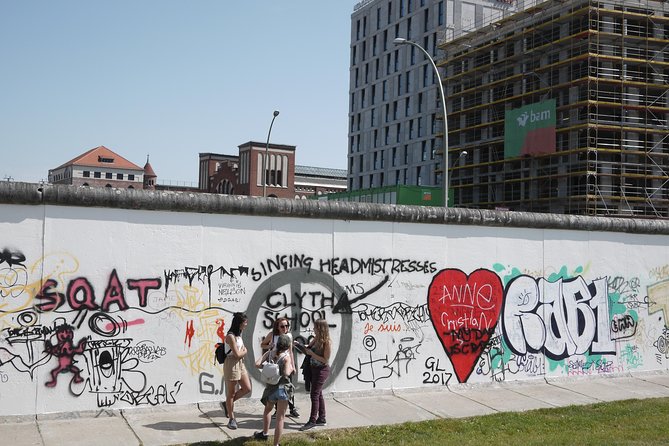
One of the most valuable themes is the Berlin Wall away from the busiest memorial sites. The route is described as showing the Wall in a different way, including places connected to the old no-man’s-land and a green corridor that has grown in its wake.
That idea gives you a more complete picture of the border. The Wall was not only a concrete structure with painted panels. It also created empty strips, blocked streets, separated neighbors, and shaped the physical growth of the city for decades.
When a guide points out where a border once ran through an ordinary part of town, the history can feel more immediate. You begin to notice how a path, open space, or change in building pattern may relate to the former division. The experience appears to focus on those connections rather than sending you from one famous photo point to another.
There is a practical tradeoff. A less familiar route can be harder to picture without maps, markers, or large surviving sections of Wall. You will get the most from it if you listen closely and ask questions. Annabelle’s strength, based on the available descriptions, is making those less obvious places meaningful through anecdotes and explanation.
Squats, vacant ground, and Berlin’s changing neighborhoods
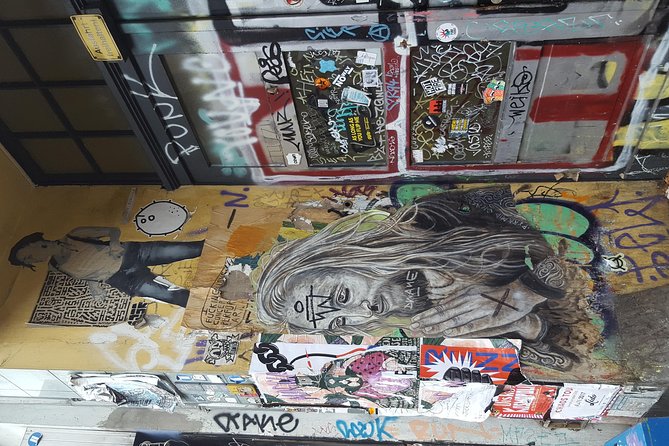
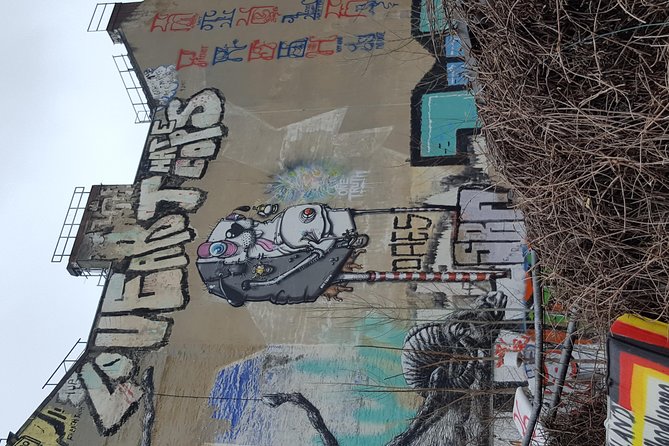
The tour also touches on the historical roots of squats. That is a strong subject for understanding Berlin because squatting was not simply an odd local habit or a tourist curiosity. It reflected housing pressures, political ideas, unused buildings, and a desire to create alternative communities.
The experience appears to place those stories in their physical setting. You may learn why certain buildings or districts became associated with squats, and how those spaces fit into the city’s wider changes. The point is not to romanticize every abandoned building or present every alternative project as perfect. The value lies in seeing how ordinary people helped shape Berlin after periods of upheaval.
This is where the tour can offer something a standard sightseeing route cannot. You are not just looking at architecture. You are asking who used a building, who fought over it, and what happened when the city changed around it.
The green corridor linked to the former no-man’s-land adds another useful layer. Berlin’s old border zone has not vanished into a simple historical line. In places, former division has become open space, a path, or a different kind of urban edge. That change says something about how the city handles memory and redevelopment.
You should keep your expectations realistic. The information provided does not list every squat, building, or green area you will visit. The guide’s commentary is likely to be more important than the number of exact locations.
A small group makes the storytelling work
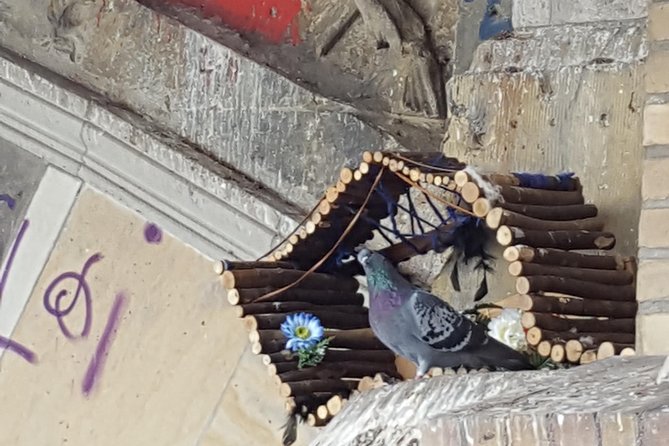
The maximum group size is 10 people. That is a meaningful advantage for this kind of walk.
A small group makes it easier to hear Annabelle on ordinary streets, where traffic and city noise may compete with her voice. It also gives you more room to ask about details that catch your attention. If you are curious about Berlin’s Wall history, football culture, or squatting, you do not have to wait behind a crowd of 30 people.
Small groups also suit the personal tone described for this experience. Annabelle is praised for being personable and for speaking from genuine interest rather than delivering a stiff script. That style works best when the group can respond and interact.
There is one caveat. A small-group tour can feel more social than a private walk, but the quality of the group still depends on who books that day. The good news is that the experience ends in a setting where you can continue meeting the other participants over a drink. That social finish is optional in spirit, but it seems to be part of the charm.
Three hours on foot, with a social finish
The duration is about three hours. That is long enough to build a connected story, but short enough to fit into a full Berlin day.
You should wear comfortable shoes and expect to spend much of the experience outdoors. The exact walking distance is not provided, so I would not plan a demanding museum visit immediately afterward. The route begins at Ostbahnhof and ends at Mariannenplatz, near the Friedrichshain-Kreuzberg district.
The endpoint is useful for continuing your day. You can reach the area from Kottbusser Tor on the U8, while Ostbahnhof is served by several S-Bahn lines. The walk therefore links two parts of eastern Berlin rather than returning you to the start.
The final drink is not included. Snacks are also not included, and you should bring extra money if you want to join the group for a beverage. The supplied descriptions also refer to a meal and beer at the finish, but the formal inclusion details only promise the tour itself and indicate that a drink costs extra. Treat food as optional and budget separately.
That ending suits the experience. Berlin’s stories often make more sense when you have time to talk about them afterward, and an informal drink can turn a guided walk into a friendly shared afternoon.
What the $100.93 price means
At $100.93 per person, this is not a bargain-priced city walk. You are paying for a small group, an English-language guide, a three-hour experience, and a route built around less obvious parts of Berlin.
The value depends heavily on what you want from a tour. If you want a quick introduction to the famous sights, the price is harder to justify. You can see several major landmarks on foot or by public transport at little cost.
If you want a personal route with local interpretation, the calculation changes. A group capped at 10 people gives you more attention than a large city tour. The guide’s role also matters more because the sights are not all self-explanatory. A former border strip, a street linked to squatting, or a changing neighborhood needs context, and that context is what you are buying.
GST is included. Drinks, snacks, and any food at the end are extra. The price is best for someone who values stories and access to unusual parts of the city more than a long list of admissions.
Who should book this experience
I would choose this tour for:
- First-time visitors who want an alternative introduction to Berlin
- Returning visitors who have already seen the central monuments
- People interested in the Berlin Wall beyond the main memorials
- Football fans who want sport connected to urban culture
- Anyone curious about squats, alternative communities, and changing neighborhoods
- Solo visitors who enjoy meeting a small group at the end
- Visitors who prefer an enthusiastic guide to a formal lecture
I would be more cautious if you need a fully fixed itinerary. Only YAAM and the main start and finish points are clearly specified, so the experience is not ideal for someone who wants every stop listed in advance.
I would also think twice if bad weather is likely. The experience requires good weather, and poor conditions can lead to a different date or a full refund. Since this is an outdoor walking tour, a forecast with steady rain could affect both comfort and the guide’s ability to explain places properly.
Confirmation arrives when you book. Service animals are allowed, the experience is near public transportation, and most people can participate. Since no detailed accessibility information is provided, contact the operator if you need specific information about surfaces, walking distance, or access at individual stops.
Booking flexibility and cancellation
You can cancel for a full refund up to 24 hours before the experience begins. Changes or cancellations made less than 24 hours before the start time are not accepted for a refund.
The cut-off follows local Berlin time. If poor weather forces the operator to cancel, you are offered another date or a full refund. That policy is helpful here because the experience depends on being outside and moving through public streets.
FAQ
How long does the Berlin alternative history tour last?
The experience lasts approximately three hours.
Where does the tour begin?
The tour begins at Ostbahnhof, at Koppenstraße 3, 10243 Berlin, Germany.
Where does the tour end?
The tour ends at Mariannenplatz, Mariannenplatz, in the Berlin Friedrichshain-Kreuzberg district.
How many people can join the tour?
The group has a maximum of 10 participants.
Is the tour offered in English?
Yes. The experience is offered in English and uses a mobile ticket.
What happens if the weather is poor?
The experience requires good weather. If it is canceled because of poor weather, you can choose another date or receive a full refund.
Should you book Annabelle’s Berlin walk?
Book it if you want Berlin explained through its neighborhoods, football culture, former Wall spaces, squats, and local stories. The strongest reason to go is Annabelle’s energetic, personal guiding style, paired with a small group and a route that avoids the usual sightseeing script.
Skip it if you want a precise list of major monuments, a stadium visit, or a low-cost overview of central Berlin. At $100.93, you should be comfortable paying for interpretation rather than admissions.
For the right person, this is a thoughtful way to see how Berlin’s past still shapes its streets. Bring comfortable shoes, a charged phone, and a little extra money for the final drink. You may finish at Mariannenplatz with fewer famous photographs than on a standard city tour, but with a better sense of why this city feels so distinct.
Just added around Berlin
- Private Walking Tour in Berlin: Hitler’s Germany & WWII★ 5.0 · 7 reviews
- The History of Berlin: WWII PRIVATE Walking Tour With Locals★ 5.0 · 209 reviews
- Private Berlin WWII and Cold War History Tour with Local Expert Guide★ 5.0 · 28 reviews
- Private Walking Tour Berlin 3 hours: Brandenburg, Historic Center★ 5.0 · 7 reviews
- Berlin: Private Bike Tour of the Berlin Wall and Third Reich★ 5.0 · 23 reviews
- Berlin: Guided Private Bike Tour to Explore the Highlights★ 5.0 · 12 reviews
- Berlin Photography Masterclass – Private Photography Lesson★ 4.5 · 23 reviews
- Group Driving Tour 1 to 6 people. Berlin Shore Excursion incl pick-up at Port★ 5.0 · 8 reviews
Historical Tours, compared.
City History Canal Sightseeing Tour on a Motorboat
Read our review →
Browse the lists this tour appears in