
Reviewed · WALKING TOURS
Berlin: 2.5-Hour Walking Tour through Kreuzberg 61
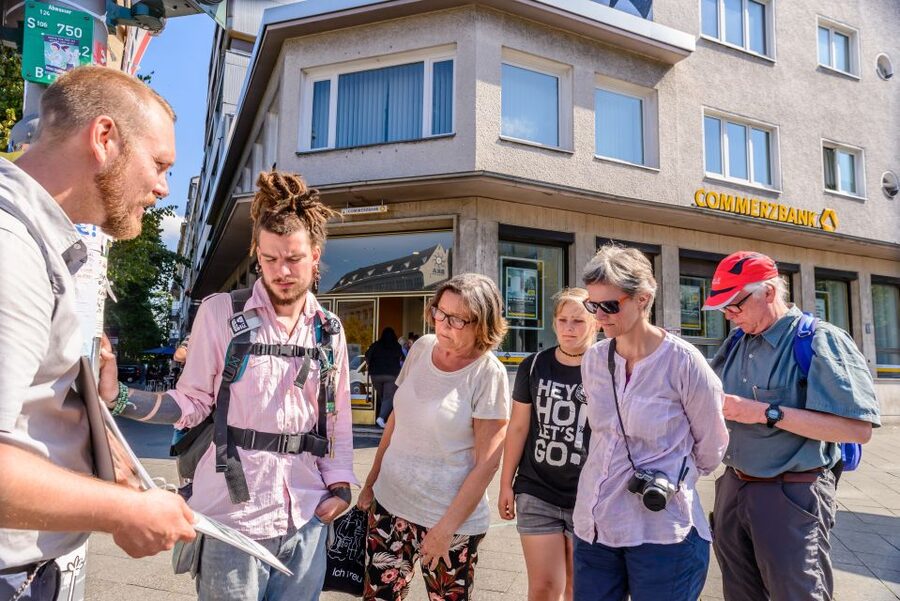
Kreuzberg rewards curious walkers. This 2.5-hour tour trades Berlin’s headline sights for 19th-century architecture, quiet courtyards, and local stories between Platz der Luftbrücke and Mehringdamm. I like the thoughtful route and the way it links grand monuments with ordinary residential streets. I also like the excellent value at $23, especially if you want more than a quick photo stop.
The main consideration is simple: this is a walking tour, not a gentle sightseeing ride. You will cover several streets, parks, and uphill sections, with most of the time spent outdoors. The guide makes the difference, and past tours led by Tobias Schwabe have been especially praised for friendly stories about history, politics, architecture, and everyday German life.
In This Review
- Five good reasons to consider this Kreuzberg walk
- Why western Kreuzberg deserves two and a half hours
- Starting at Platz der Luftbrücke
- Small monuments and overlooked corners
- Viktoriapark and the climb to Kreuzberg
- Riehmers Hofgarten and the beauty of the courtyard
- Sarottihöfe and the district’s changing uses
- Bergmannstraße: shops, food, and daily life
- Fachwerkhof and Chamissoplatz
- Riehmers Hofgarten and Chamissoplatz for architecture fans
- Marheineke Markthalle and the practical finish
- The guides and the tone of the walk
- Who should book this tour?
- Should you book the Kreuzberg 61 walk?
- FAQ
- How long is the Kreuzberg 61 walking tour?
- How much does the tour cost?
- Where does the tour begin?
- Can I request a special meeting point?
- Which languages are available?
- Does the tour include a professional guide?
- Does the route visit Viktoriapark?
- Does the tour include Bergmannstraße?
- Can I cancel for a refund?
Five good reasons to consider this Kreuzberg walk
- Kreuzberg’s namesake hill: Reach the Prussian Monument for the Liberation Wars and take in broad views across Berlin.
- A different side of the district: See western Kreuzberg beyond the usual artists-and-Turkish-restaurants shorthand.
- Viktoriapark’s waterfall: Spend about 35 minutes among paths, greenery, scenic views, and the park’s central waterfall.
- Architecture at walking speed: Study Riehmers Hofgarten, Chamissoplatz, the Fachwerkhof, and former industrial spaces up close.
- A useful final neighborhood stop: Finish near Bergmannstraße and Marheineke Markthalle, where you can continue exploring after the guide leaves.
Why western Kreuzberg deserves two and a half hours
Kreuzberg is often reduced to a few familiar images: street art, nightlife, kebab shops, and political slogans. Those parts exist, but Kreuzberg 61, the western section covered here, has another face. It includes formal 19th-century apartment blocks, military-era buildings, leafy courtyards, small squares, and carefully preserved streets.
I like tours that explain how a neighborhood fits together rather than simply pointing at isolated sights. This route does that. It moves from Platz der Luftbrücke through Viktoriapark and into the residential district around Bergmannstraße, so you can see how monuments, housing, parks, businesses, and public spaces share one area.
The tour is also useful for repeat visitors and Berlin residents. Several people who already knew the city still found unfamiliar corners along the route. That is a good sign for anyone who has already seen the Brandenburg Gate, Museum Island, and the Berlin Wall memorials.
At $23 per person, the cost is modest for 2.5 hours with a live guide in English or German. You are paying for interpretation, not admission tickets or transport. If your interest is architecture, urban planning, or Berlin’s social history, the price is particularly fair. If you want only major landmarks and dramatic photo opportunities, a standard central Berlin tour may give you more immediate impact.
More Walking Tours in Berlin
- Discover Berlin Half-Day Walking Tour
★ 5.0 · 9,624 reviews - Berlin: Third Reich and Cold War 2 Hour Walking Tour
★ 4.9 · 6,830 reviews - Berlin: Discover Berlin Walking Tour
★ 4.9 · 5,998 reviews
Starting at Platz der Luftbrücke
The walk begins at or near Mehringdamm 129, depending on the option booked. Check the exact meeting details carefully, since the meeting point can vary. A special date, time, and meeting point can also be arranged for a group on request.
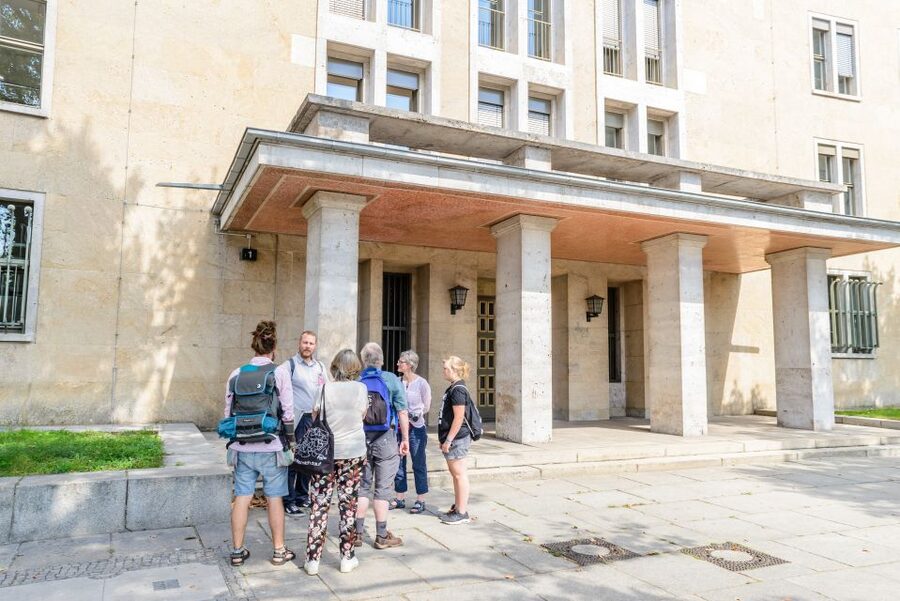
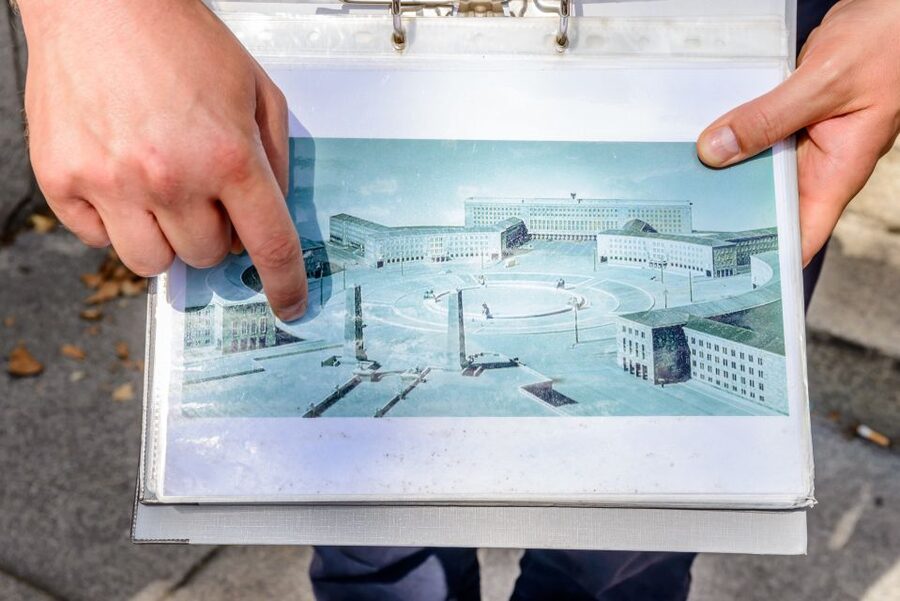
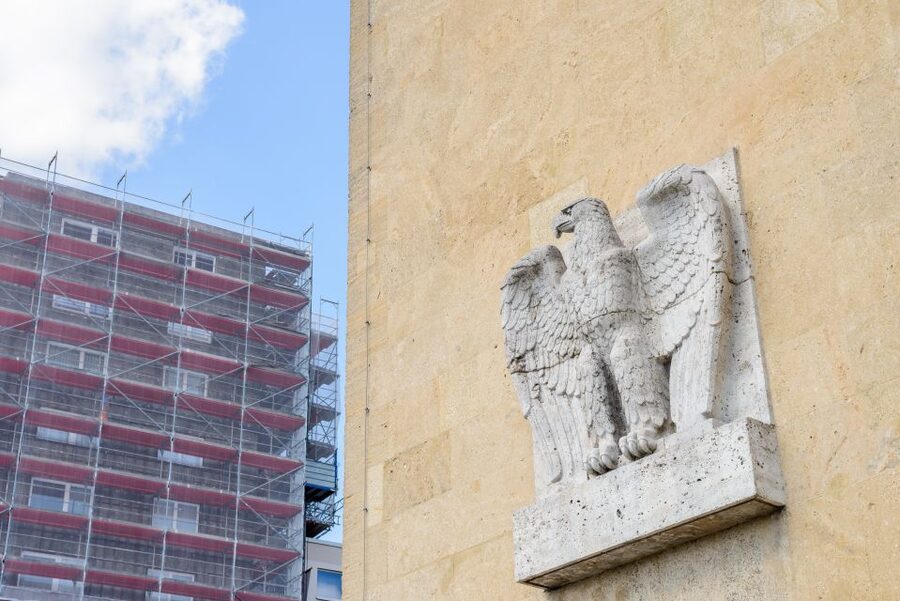
Platz der Luftbrücke sets the tone. It connects the tour to Berlin’s military and political past, but the route does not stop at familiar Cold War stories. The opening section lasts about 25 minutes and gives your guide time to explain the square, its buildings, and the setting around the former airport area.
You should expect a guided walk and passing views rather than a long indoor visit. That matters on a cold or rainy day. The tour continues through streets and open spaces, so wear shoes suited to steady walking and bring weather protection.
Small monuments and overlooked corners
One appealing feature of this tour is its attention to places that are easy to miss. The Verband der deutschen Buchdrucker monument receives about 10 minutes, along with an explanation from the guide. A stop like this may not appear on a first-time Berlin checklist, yet it can reveal how work, organized labor, and public memory shaped the city.
The stop at Sixtusgarten takes another 10 minutes and includes time for photographs. The route here is less about ticking off a famous sight and more about learning how to look. Your guide can point out details in buildings, streets, and public spaces that you might otherwise walk past without a second thought.
That approach earned strong praise from people who wanted more than the usual Berlin circuit. One past participant described being taken to places that would have gone unnoticed even if they had been directly in front of them. That is the central promise of this walk, and the route appears well suited to deliver it.
Viktoriapark and the climb to Kreuzberg
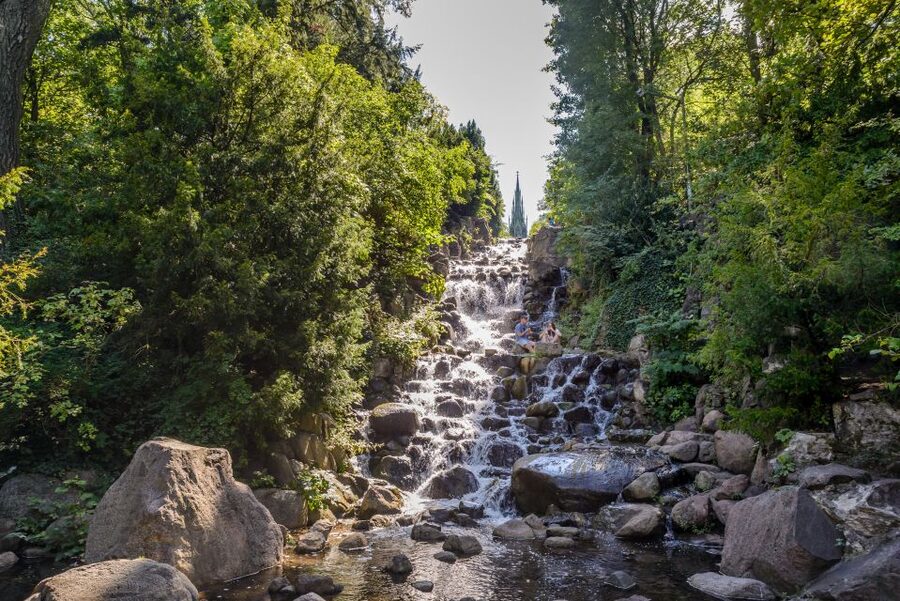
Viktoriapark is the scenic center of the tour. The visit takes about 35 minutes, the longest single stop, and includes a waterfall, walking paths, photo opportunities, and views along the way.
The park gives you a welcome change from apartment blocks and city traffic. It also explains the district’s name. Above the surrounding buildings rises Kreuzberg, the hill that lends its name to the neighborhood. At the top is Schinkel’s national monument, the Prussian Monument for the Liberation Wars.
The monument stop lasts about 10 minutes and includes scenic views. The hilltop perspective helps you understand Berlin’s broad, low city form. Instead of seeing the capital as a collection of separate sights, you get a sense of how the western neighborhoods spread around this elevated point.
The climb is also the part to consider if you have limited mobility or dislike uphill walking. The supplied information does not specify an accessibility plan, and this is plainly an outdoor walking route with a hill. Ask the provider before booking if you need a detailed accessibility answer.
Viktoriapark is more than a pause for photographs. It provides a quiet interval in a tour filled with historical explanation. I like that balance. Berlin’s past can become heavy when every stop concerns war, division, and politics. A park, a waterfall, and a city view give the story some breathing room.
Still Berlin, at a slower pace:
- Berlin: Reichstag, Dome and Government District Guided Tour
★ 4.7 · 18,288 reviews - Berlin: 1-Hour City Tour by Boat with Guaranteed Seating
★ 4.3 · 16,993 reviews - Berlin: Boat Tour Along the River Spree
★ 4.4 · 11,252 reviews - Berlin: Hop-on Hop-off Bus Tour with Live Commentary
★ 4.3 · 8,579 reviews
Riehmers Hofgarten and the beauty of the courtyard
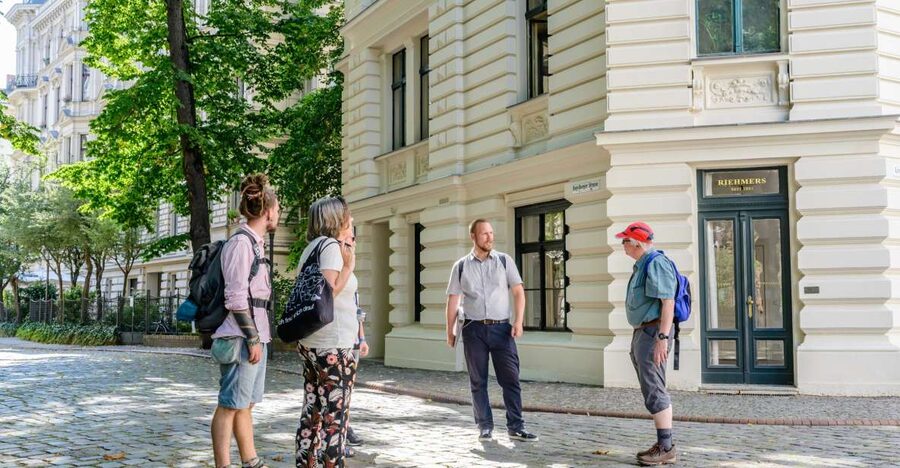
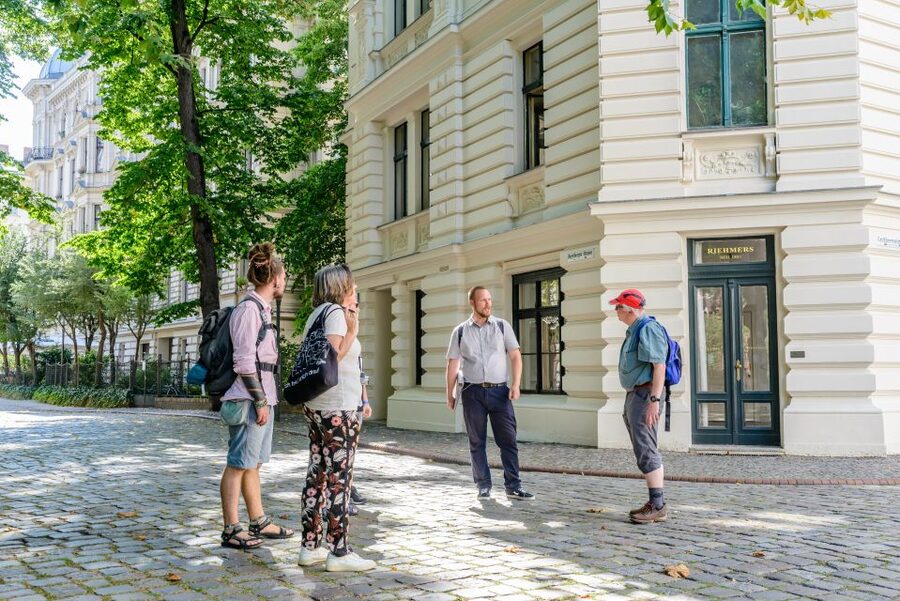
After the park, the route turns toward residential western Kreuzberg. Riehmers Hofgarten receives about 10 minutes and offers another look at the district’s older housing.
The name points to a courtyard setting, and that is important to the experience. Berlin apartment blocks can appear plain from the street, while their inner spaces often reveal a more deliberate design. Courtyards help you see the relationship between façades, shared space, and city living in the 19th century.
This is where the tour’s architecture focus becomes especially useful. You are not just hearing dates and names. You are learning to compare building styles and notice how older housing differs from later developments.
The route does not present Kreuzberg as frozen in time. It moves between preserved buildings and places that have been adapted for new uses. That mixture is one reason the walk works for both architecture fans and people interested in modern Berlin.
Sarottihöfe and the district’s changing uses
Schmelzwerk in the Sarottihöfen is another 10-minute stop with time for photographs and explanation. The location adds an industrial and commercial layer to the neighborhood.
The name Sarottihöfe connects the area with Berlin’s former confectionery industry, while Schmelzwerk suggests a later use and transformation. The supplied tour description does not promise an indoor museum visit, so think of this as an exterior stop and a lesson in how urban spaces change over time.
I find this kind of stop valuable because it keeps the tour from becoming a parade of pretty façades. A neighborhood is also shaped by factories, workplaces, production, and redevelopment. Your guide can connect the site to the wider story of Kreuzberg’s changing economy and population.
The short format also keeps the pace moving. You are unlikely to spend long enough at any one place to become tired of it, though anyone wanting extensive time for photography may find the schedule brisk.
Bergmannstraße: shops, food, and daily life
The tour spends about 20 minutes along Bergmannstraße, one of the liveliest parts of the route. Here the focus includes shopping, sightseeing, and walking through the street.
Bergmannstraße is a useful counterpoint to the formal spaces earlier in the tour. It brings you back to present-day Kreuzberg, where local commerce and a multicultural atmosphere shape the street. The tour does not treat the neighborhood as a museum. It shows you a district where people live, shop, eat, and move through their daily routines.
Do not expect a long meal break here. The schedule allows guided sightseeing and passing through the area rather than a dedicated restaurant stop. If you want to eat afterward, Bergmannstraße gives you a practical place to continue, but the tour itself is educational rather than culinary.
A strong guide matters here. Berlin’s neighborhoods can be flattened into clichés, especially when outsiders describe them only by food or nightlife. This route aims to give you a wider view, combining culture, politics, architecture, older buildings, and current businesses.
Fachwerkhof and Chamissoplatz
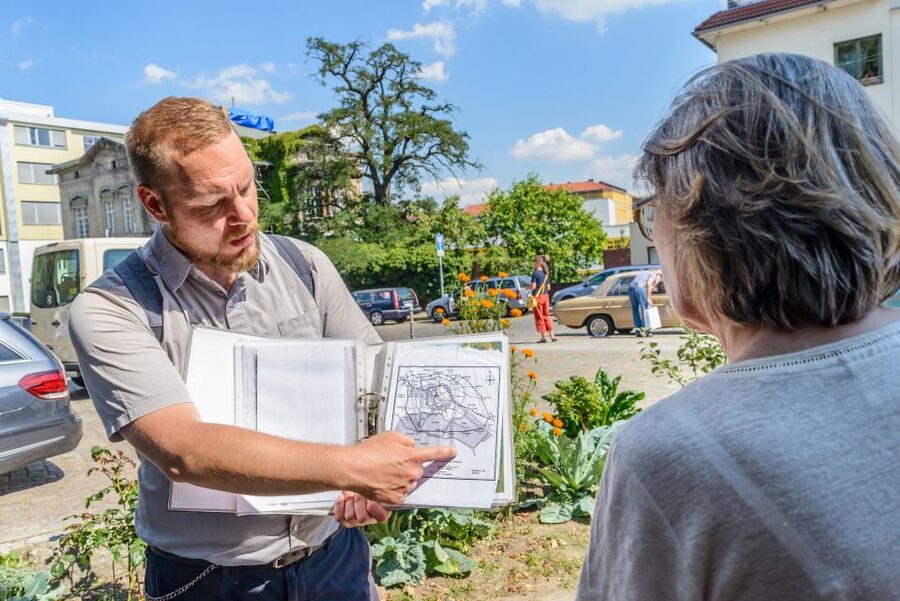
The Fachwerkhof in Berlin Kreuzberg takes about five minutes and includes a photo stop, sightseeing, and shopping nearby. It is a small stop, but the timber-framed architecture offers a visual change from the grander apartment blocks and courtyard buildings.
Chamissoplatz follows, with about five minutes of guided sightseeing. The square is noted for its well-preserved architecture and charming atmosphere. This is the kind of place that rewards a slow glance: look up at the façades, notice the proportions of the buildings, and watch how the square differs from the larger streets nearby.
Because the stop is short, listen closely while the guide is speaking. You may want to return later if you are interested in architecture or photography. The tour gives you context and orientation, but it is not designed to provide long free periods at every location.
Riehmers Hofgarten and Chamissoplatz for architecture fans
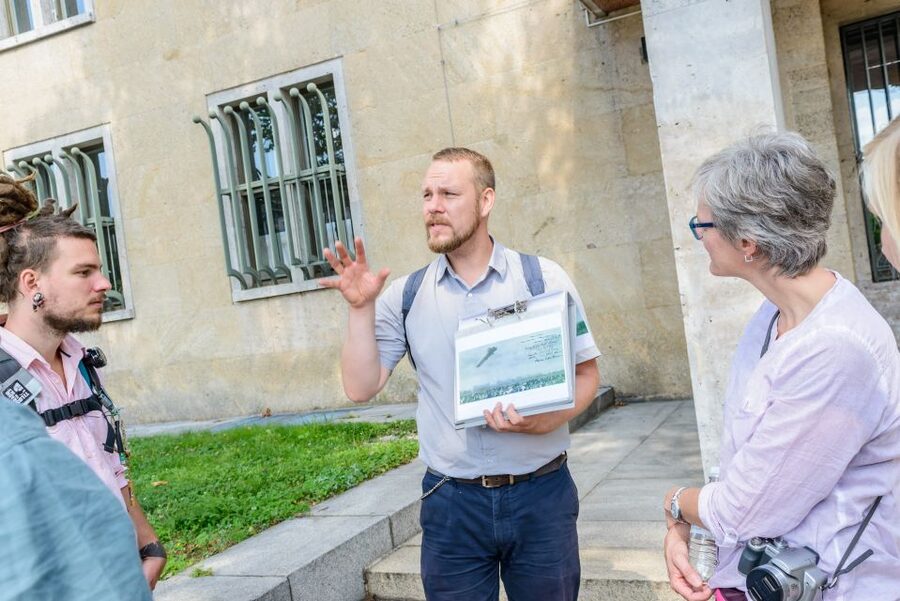
Architecture is the tour’s most consistent strength. A past participant who had lived in Berlin for four years still found new places along this route and particularly recommended it to architecture fans. That recommendation makes sense because the walk includes several building types rather than one famous structure.
You will see military-era surroundings, formal monuments, residential courtyards, industrial conversions, timber framing, and preserved square-front housing. The value is in comparison. A guide can explain why these places look different and what their designs reveal about the people and institutions that built them.
The tour also reaches beyond the two most common Berlin historical subjects, World War II and the Cold War. Those periods remain part of Berlin’s identity, but Kreuzberg’s story includes labor, housing, urban design, immigration, commerce, politics, and local memory.
If you prefer architecture explained through human stories, this should suit you. If you want a tour built around entering major buildings, this will be less satisfying because the information provided emphasizes walking, passing sights, and outdoor photo stops.
Marheineke Markthalle and the practical finish
The final stop is Marheineke Markthalle. The schedule allows about five minutes and includes a short break, guided sightseeing, shopping, and walking.
That ending is practical. You finish in an area where you can continue exploring instead of being left beside an isolated monument. The market hall can help you extend the neighborhood visit, though the tour does not promise a full food tasting or a dedicated market meal.
The route also finishes near the Bergmannstraße area, so you can return to a shop, look for a meal, or simply keep walking through Kreuzberg on your own. A past participant wished for a brief refreshment stop during the walk. That is useful advice: bring water, and plan your coffee or lunch for before or after the tour.
The final stop is short, so do not treat it as a full market visit. Think of it as an orientation point and a convenient place to continue your afternoon.
The guides and the tone of the walk
The tour is offered in English and German with a live professional guide. Tobias Schwabe is the guide name most closely associated with the experience, and past participants describe him as friendly, thoughtful, entertaining, and well prepared. Other guide descriptions praise clear explanations of German life as well as Berlin’s architecture and politics.
That range matters. A good neighborhood walk should not feel like a memorized list of building dates. The best moments come when the guide connects a courtyard, monument, business, or street to wider changes in the city.
The tour has also worked well for private-feeling groups. One booking had only two people, which made the afternoon feel personal. Group size is not specified, so do not assume every departure will be that small. Still, the option to arrange a special meeting point, date, and time for your own group may appeal to families, friends, or local organizations.
The rating is 4.9 from 525 reviews, with repeated praise for the guides’ historical and architectural explanations. The pattern is clear: people value the content and the personal delivery more than spectacle.
Who should book this tour?
I would choose this tour if you fit one or more of these descriptions:
- You have already seen Berlin’s central landmarks and want a less familiar district.
- You enjoy architecture, urban history, or local political context.
- You like walking through residential streets rather than moving only between headline sights.
- You want a guided introduction to Kreuzberg before exploring Bergmannstraße independently.
- You live in Berlin and want a fresh route through a neighborhood you think you know.
I would hesitate if you want a food tour, an indoor museum visit, a fast list of famous sights, or a guaranteed small group. The route is educational and outdoors, with a hill and several short stops. Winter can be cold, as one February participant discovered, though the stories helped keep the walk engaging.
The language choice is useful for international visitors and German speakers. The guide can speak English or German, but confirm your chosen language when booking.
Cancellation is flexible up to 24 hours before the start for a full refund, and you can reserve now and pay later. Those terms are helpful if your Berlin plans are still shifting, though you should still check the exact meeting point and departure time for your selected option.
Should you book the Kreuzberg 61 walk?
Book it if you want Berlin explained at street level. For $23, you get a substantial guided route through parks, monuments, courtyards, preserved architecture, former industrial spaces, Bergmannstraße, and Marheineke Markthalle.
I especially recommend it for repeat visitors and architecture fans. First-time visitors can also benefit, but I would place it after a central Berlin overview so the district’s contrasts make more sense.
Bring comfortable shoes, allow for outdoor weather, and arrive ready to pay attention to details rather than chase famous photo stops. If that sounds like your kind of afternoon, this is a smart, good-value way to meet Kreuzberg 61 beyond the clichés.
FAQ
How long is the Kreuzberg 61 walking tour?
The tour lasts 2.5 hours.
How much does the tour cost?
The listed price is $23 per person.
Where does the tour begin?
The listed starting location is Mehringdamm 129. The exact meeting point may vary depending on the option booked.
Can I request a special meeting point?
Yes. A special meeting point, date, and time can be arranged for you and your group upon request. Provide those details when booking.
Which languages are available?
The live tour guide is available in English and German.
Does the tour include a professional guide?
Yes. A professional live tour guide is included.
Does the route visit Viktoriapark?
Yes. The tour spends about 35 minutes at Viktoriapark, including guided sightseeing, a photo stop, walking, and scenic views.
Does the tour include Bergmannstraße?
Yes. The route spends about 20 minutes on Bergmannstraße for guided sightseeing, walking, and passing views. Shopping is also part of this section.
Can I cancel for a refund?
You can cancel up to 24 hours in advance for a full refund. You can also reserve now and pay later.
Just added around Berlin
- Private Walking Tour in Berlin: Hitler’s Germany & WWII★ 5.0 · 7 reviews
- The History of Berlin: WWII PRIVATE Walking Tour With Locals★ 5.0 · 209 reviews
- Berlin: Private Bike Tour of the Berlin Wall and Third Reich★ 5.0 · 23 reviews
- Private Berlin WWII and Cold War History Tour with Local Expert Guide★ 5.0 · 28 reviews
- Private Walking Tour Berlin 3 hours: Brandenburg, Historic Center★ 5.0 · 7 reviews
- Berlin: Guided Private Bike Tour to Explore the Highlights★ 5.0 · 12 reviews
- Berlin Photography Masterclass – Private Photography Lesson★ 4.5 · 23 reviews
- Group Driving Tour 1 to 6 people. Berlin Shore Excursion incl pick-up at Port★ 5.0 · 8 reviews
Walking Tours, compared.
Old Town & Viktualienmarkt City Walk in German
Read our review →Browse the lists this tour appears in