
Reviewed · WALKING TOURS
Berlin: Gay Berlin Out in Schöneberg Walking Tour
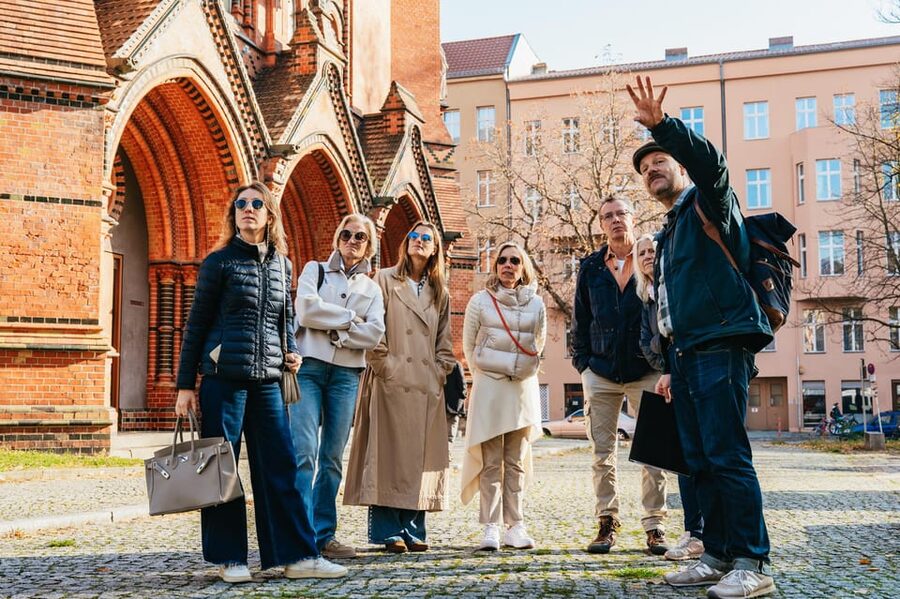
Berlin’s queer past is written into its streets. This 2.5-hour walk around Schöneberg and Nollendorfplatz connects vanished clubs, early gay-rights activism, literary history, and the neighborhood’s modern LGBTQIA+ life. I especially like the focus on real locations, including the former El Dorado cabaret and Nationalhof, and the way the route includes lesbian, trans, intersex, and gender-nonconforming stories. The main consideration is simple: this is an outdoor walking tour, so cold, rain, or heat can affect your comfort.
Tobias is the guide most often named by guests, and his mix of research, humor, personal stories, and archive images gives the tour a human feel. I also like the price: at $23 per person, you get a substantial two-and-a-half-hour introduction to a part of Berlin that standard city tours often skip. Just confirm the meeting point carefully, since it can change with the option you book.
In This Review
- Key points to know before you go
- Why Schöneberg matters to Berlin’s queer story
- Starting around Nollendorfplatz
- Motzstraße and the lost El Dorado
- Christopher Isherwood’s Nollendorfstraße address
- From Nazi repression to postwar silence and renewal
- Schwerin Straße and the lesbian quarter
- Eisenacher Straße and the neighborhood today
- Tobias’s guiding style
- Is $23 a fair price?
- Practical advice for a better walk
- Who should book this Schöneberg tour?
- Should you book it?
- FAQ
- How long does the Gay Berlin Out in Schöneberg Walking Tour last?
- How much does the tour cost?
- Which languages are available?
- Is the walking tour wheelchair accessible?
- What is included in the price?
- Can I cancel the booking for a refund?
Key points to know before you go
- 1920s Berlin takes center stage: Learn how Schöneberg became a major center of queer life before the Nazi rise to power.
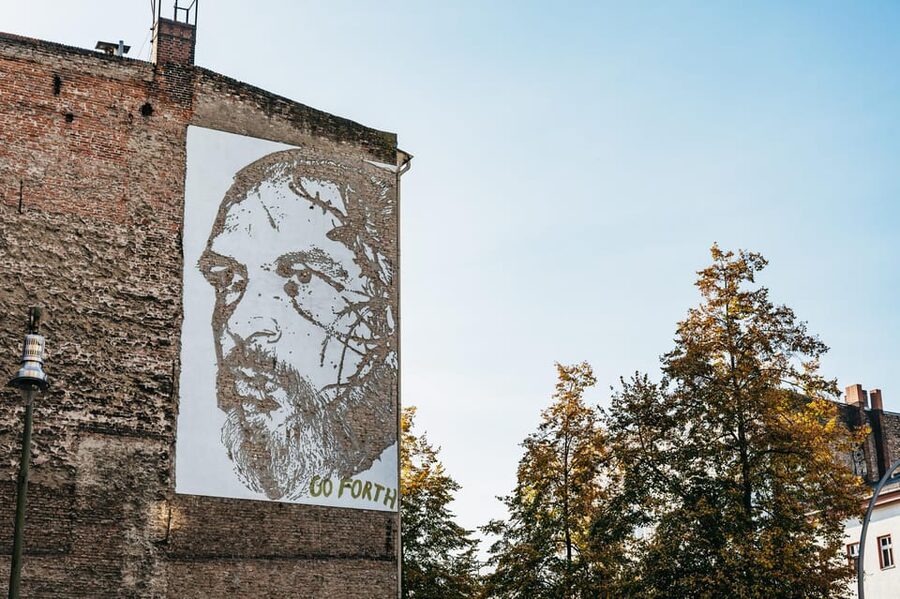
- You visit places that no longer look the way they once did: The former Nationalhof, Hollandais club, Kleist Casino, and El Dorado cabaret are now historical sites rather than preserved attractions.
- Christopher Isherwood adds a literary thread: The walk stops at the novelist’s former home on Nollendorfstraße.
- The route reaches beyond gay male history: Schwerin Straße brings in the lesbian quarter, while the wider story includes trans, intersex, and gender-nonconforming lives.
- Tobias uses visual material: Archive photographs and texts help you picture the clubs, people, and streets of earlier Berlin.
- The tour is accessible and flexible: It is wheelchair accessible, offered in German or English, and can sometimes be arranged at a special time for a private group.
Why Schöneberg matters to Berlin’s queer story
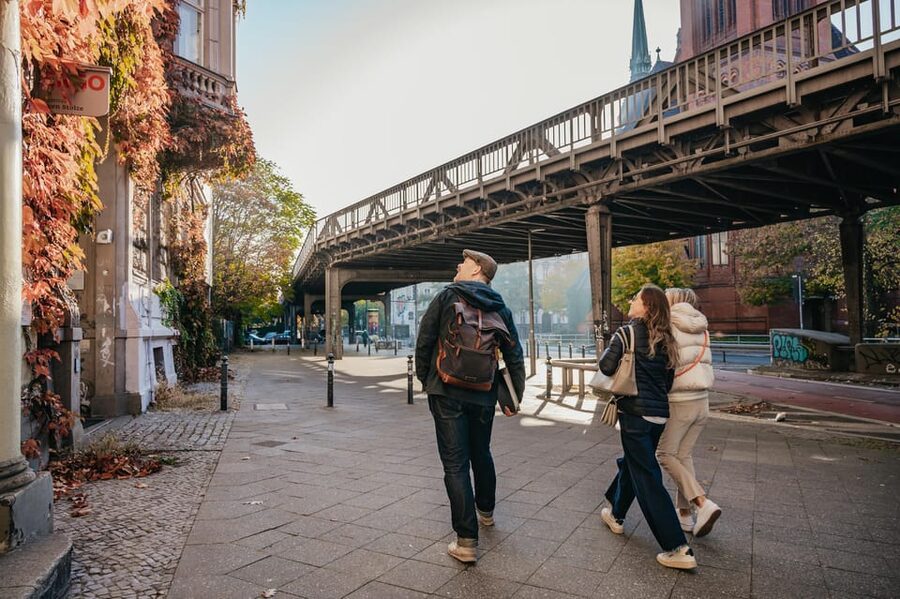
Schöneberg is not simply a district with a few LGBTQIA+ bars. It is the setting for several different chapters of queer life in Berlin, and the tour’s strength is the way it links them together.
The key period is the time between the end of World War I and the early 1930s. Berlin’s gay scene expanded during these years, with clubs, meeting places, performers, writers, campaigners, and ordinary residents forming a visible community. The area around Nollendorfplatz became one of its main centers.
That freedom was fragile. The Nazi accession in the early 1930s brought a brutal end to the open culture that had developed. The tour does not treat the period as a simple party story. It places nightlife beside politics, persecution, and the work of people who pushed for gay rights before the modern movement had its current language.
I find that approach useful because it keeps the past from becoming a museum display. A club such as El Dorado was a place of entertainment, but it also belonged to a wider social world. A street address can tell you about architecture, famous residents, community organizing, and the danger that followed.
More Walking Tours in Berlin
- Discover Berlin Half-Day Walking Tour
★ 5.0 · 9,624 reviews - Berlin: Third Reich and Cold War 2 Hour Walking Tour
★ 4.9 · 6,830 reviews - Berlin: Discover Berlin Walking Tour
★ 4.9 · 5,998 reviews
Starting around Nollendorfplatz
The tour explores the streets around Nollendorfplatz, an area that still has a clear connection to Berlin’s LGBTQIA+ community. Your guide uses the neighborhood itself as the visual aid. You are not only listening to dates and names indoors. You are standing where clubs and meeting points once operated.
The route includes the sites of the Hollandais club, the Kleist Casino, and Nationalhof. These are important precisely because they are not presented as untouched historic attractions. Their significance comes from the people who gathered there and the role the venues played in the life of the district.
The former Nationalhof is described as the heart of the gay-rights movement. That makes it one of the most important stops, since it shifts the focus from nightlife to organized activism. You learn about the local movement of the 1920s and the people who tried to create greater acceptance and legal change.
This is also where a good guide matters. Tobias is repeatedly praised for bringing historical figures to life rather than simply reciting information. His English is described as fluent, and his style combines facts with humor and personal anecdotes. That balance should suit you if you want serious history without a lecture-room mood.
Motzstraße and the lost El Dorado
Motzstraße gives the tour one of its most recognizable stops: the former location of El Dorado. The cabaret club became an emblem of Berlin’s interwar queer nightlife, yet the building or site must be understood through explanation rather than a preserved club interior.
That distinction matters. You are not visiting a working museum with costumes, props, or a restored stage. You are seeing a present-day street and using the guide’s photographs, texts, and storytelling to imagine what once happened there.
I like this kind of stop because it encourages you to look harder at an ordinary-looking city block. Berlin has many places where war, political change, redevelopment, and time have erased the original scene. The tour helps put those missing places back into the city’s story.
The El Dorado stop also shows the range of the interwar scene. Cabaret was not only about drinking or spectacle. It offered a public space where identities and social roles could be tested, displayed, and shared. The exact emphasis can vary with the guide and the group, but the overall route connects nightlife with the broader push for visibility and rights.
Christopher Isherwood’s Nollendorfstraße address
On Nollendorfstraße, you stop outside the former home of Christopher Isherwood. The novelist’s work later became important to the Gay Liberation movement, so his connection gives the walk a literary angle as well as a local one.
You should not expect a literary museum or an interior visit. The value is in linking Isherwood’s writing to the streets and social world that shaped it. His former address becomes a way to think about how queer lives were recorded, imagined, and later used by activists and readers.
For me, this is one of the route’s most useful features. It shows that queer history is not only made by politicians or organizations. Writers, performers, club owners, campaigners, and neighbors all help create a public culture. Isherwood’s presence adds another layer to the story without turning the tour into a general biography.
Still Berlin, at a slower pace:
- Berlin: Reichstag, Dome and Government District Guided Tour
★ 4.7 · 18,288 reviews - Berlin: 1-Hour City Tour by Boat with Guaranteed Seating
★ 4.3 · 16,993 reviews - Berlin: Boat Tour Along the River Spree
★ 4.4 · 11,252 reviews - Berlin: Hop-on Hop-off Bus Tour with Live Commentary
★ 4.3 · 8,579 reviews
From Nazi repression to postwar silence and renewal
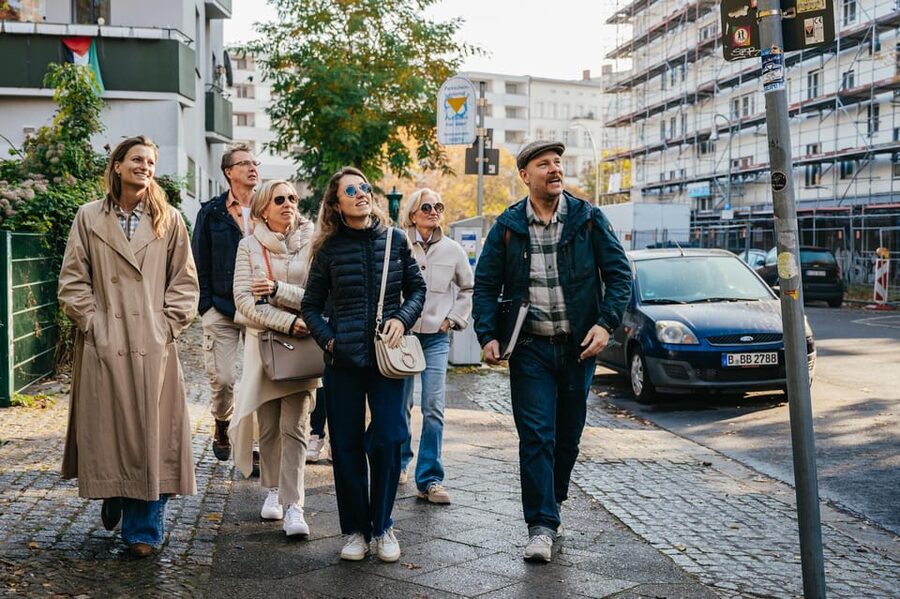
The walk gives particular attention to the end of Schöneberg’s interwar heyday when the Nazi Party came to power. This is necessary context. A tour about the famous clubs of the 1920s would feel shallow if it ignored how quickly public queer life could be attacked and dismantled.
The supplied details do not set out every stop or event in this section, so you should expect the guide to frame the change through the neighborhood’s people and places rather than through a full survey of German history. Tobias’s style, based on the available descriptions, is personal and story-driven, with room for questions.
The tour then follows the area’s resurgence from the end of the 1960s. Schöneberg became West Berlin’s only gay district during this period, and the walk traces how the community formed again after earlier destruction and repression.
That recovery is one of the strongest reasons to take the tour. You see queer Berlin not as a single golden age followed by decline, but as a place that has repeatedly rebuilt itself. The route moves from early rights activism to modern community life, giving you a better sense of continuity.
Schwerin Straße and the lesbian quarter
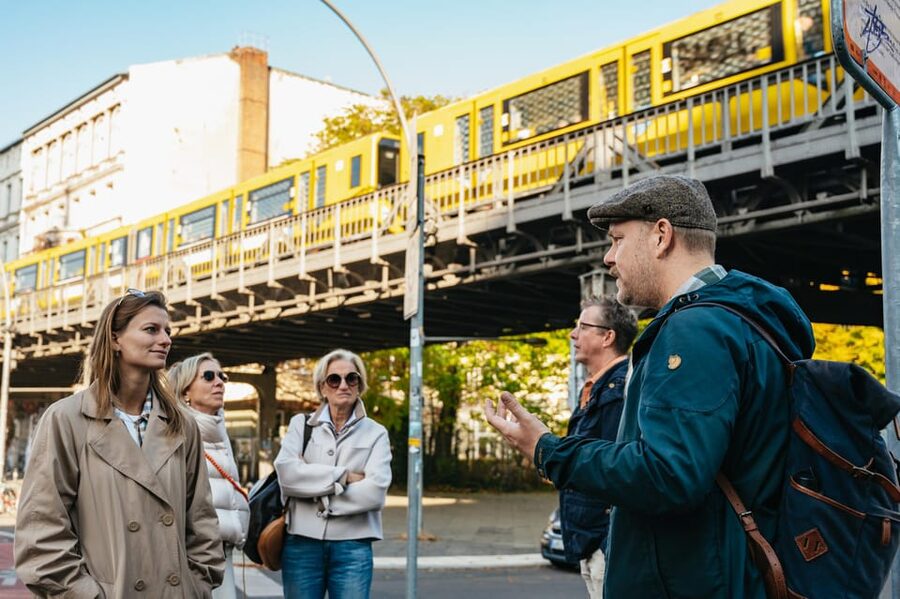
A major plus is the inclusion of Schwerin Straße and the lesbian quarter. Many queer-history tours focus too heavily on gay men, especially when discussing cabarets and the 1920s. This route makes room for women’s experiences and for a wider range of LGBTQIA+ identities.
The descriptions also point to trans, intersex, and gender-nonconforming stories. That does not mean every subject receives the same amount of time, but it does signal an effort to present the district in broader terms.
This part of the walk is especially valuable if you want more than a tour of famous male writers and clubs. You can ask questions as the walk continues, and Tobias is often described as open, attentive, and sensitive when handling difficult subjects.
Eisenacher Straße and the neighborhood today
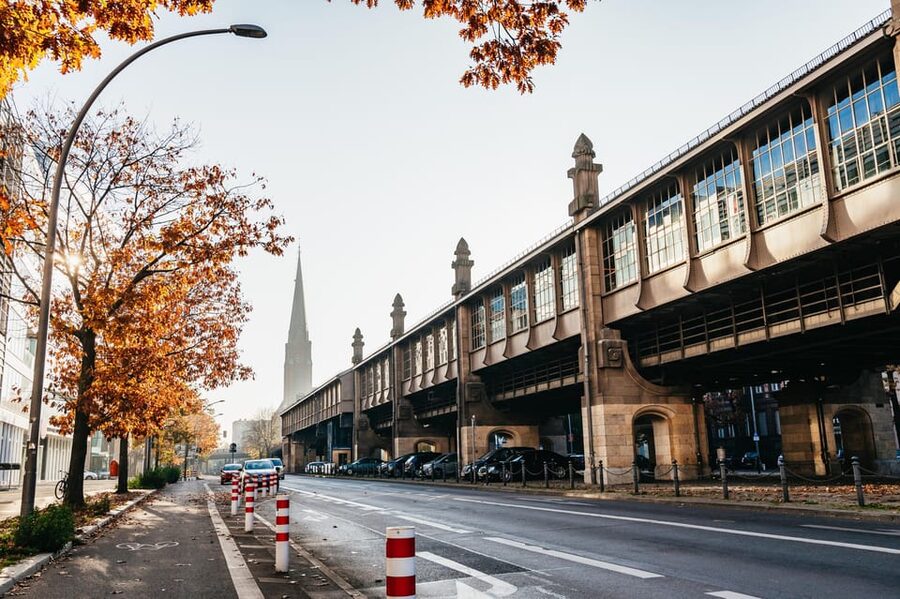
The route continues along Eisenacher Straße, which still reflects the varied life of Schöneberg’s LGBTQIA+ district. Here, the tour shifts from vanished landmarks to a neighborhood that remains connected to queer culture.
That contrast gives the walk a satisfying shape. You begin with places that survive mainly through memory, then finish among streets where community life continues. The experience is not stuck in the 1920s. It shows how a historic district changes while retaining links to its past.
You may also hear about present-day architecture, street art, cafés, shops, and key local figures. Those details help you understand Schöneberg as a lived-in neighborhood, not a theme park built around one historical identity.
Some people have continued afterward to a nearby queer café and bookshop. This is not included in the tour, and food and drinks are not covered, but it can be a sensible way to keep the conversation going and support local businesses. One practical warning: a café recommendation is not guaranteed to be a highlight. One person found the customer service at the suggested café poor, so treat it as an optional stop rather than part of the tour itself.
Tobias’s guiding style
Tobias receives the strongest praise throughout the supplied feedback. The recurring description is of a guide who is friendly, funny, patient, passionate, and extremely well prepared. He is also connected to the community being discussed, which allows him to add personal viewpoints without losing sight of the historical material.
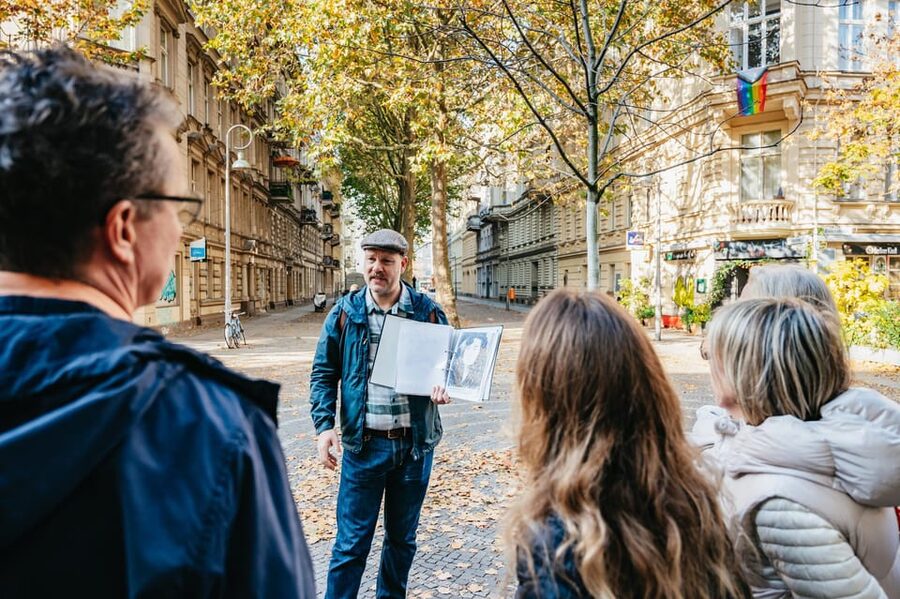
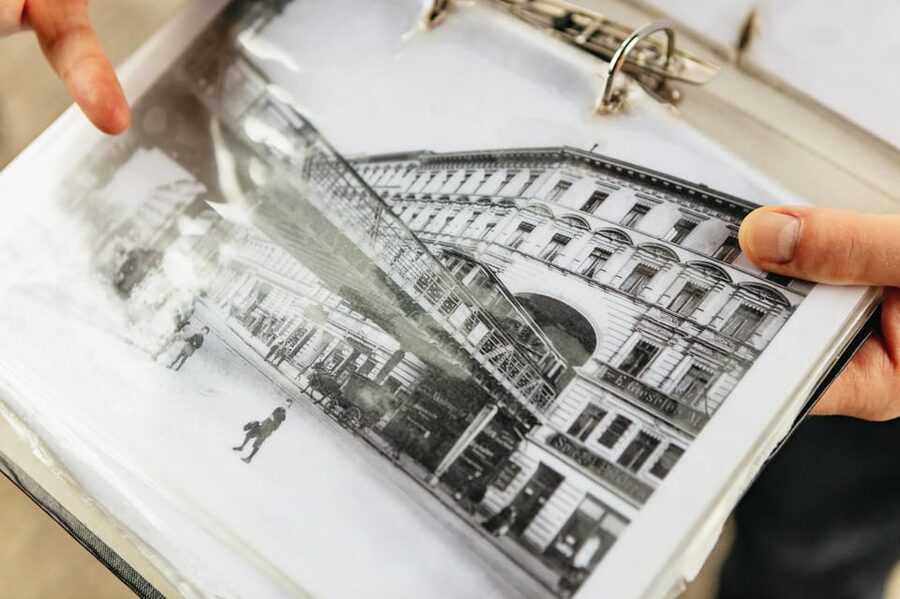
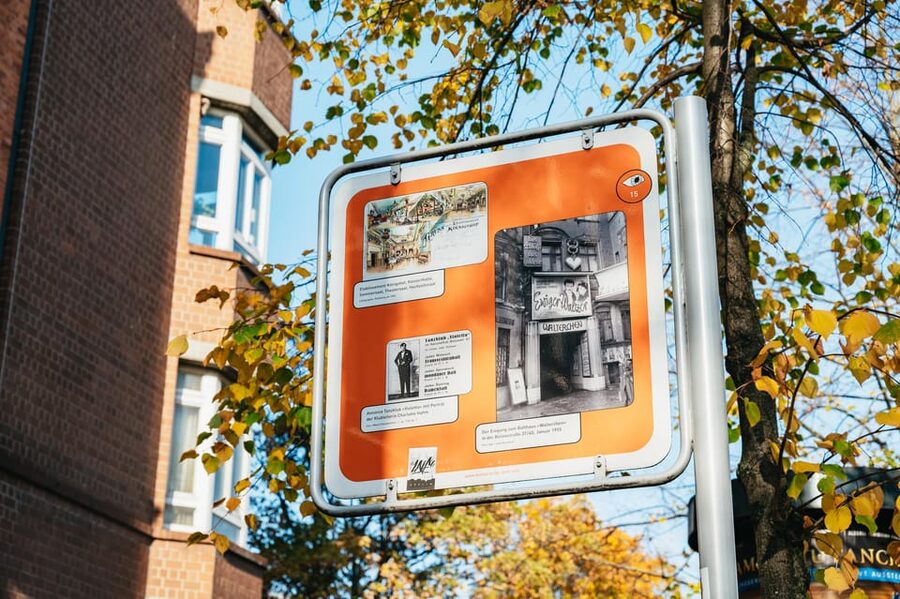
His use of archive pictures and texts is a real advantage. Old images can make a former club or address easier to picture, particularly when no obvious trace remains on the street. They also give faces to the people discussed, which helps prevent the story from becoming a list of institutions and dates.
The tone seems relaxed but not careless. Tobias mixes humor with serious subjects and has been willing to adjust for cold weather, transport delays, and the pace of the group. Comfort stops are built into the walk, and the route includes chances to pause, ask questions, and take in the architecture.
That flexibility may depend on the group and the day. Still, the consistent pattern suggests that you will get more from this tour if you take part in the conversation. Come ready with questions about specific people, the clubs, Berlin’s modern queer scene, or the place of lesbian and trans history in the wider story.
Is $23 a fair price?
At $23 per person, this is a strong value for a 2.5-hour guided walk. You are paying for a specialist subject, a prepared route, a live guide, and access to context you would be unlikely to get by simply walking around Nollendorfplatz with a guidebook.
The price is especially fair if queer history is one of your main interests. It also works well as a first introduction to the subject because the route covers several periods: the interwar years, the Nazi takeover, the postwar era, the resurgence from the late 1960s, and the present day.
The value is lower if you want a general sightseeing tour of Berlin. You will not be visiting major monuments, galleries, or interiors. This is a focused neighborhood walk, and its success depends on your interest in social history, local stories, and the meaning of places that may look quite ordinary today.
Food and drinks are not included. That is hardly a serious drawback at this price, but plan for your own refreshments, especially if you book in cold or wet weather.
Practical advice for a better walk
The tour lasts two and a half hours, so wear comfortable shoes and dress for the forecast. Berlin weather can change quickly, and several people have taken the walk in cold, rain, or snow. Tobias has adapted the route and made comfort stops, but warm clothing remains your responsibility.
Check the meeting point when you book. It may vary depending on the option selected. If you are arranging a special date, time, or meeting place for your group, provide those details when you telephone.
The tour is wheelchair accessible, which makes it more usable than many older-city walking routes. Still, because the route takes place on public streets, you may want to confirm the exact meeting point and arrangements for your particular booking.
English and German are available. The guide’s English has been praised as fluent and easy to follow, so English-speaking visitors should feel comfortable with the historical detail.
Free cancellation is available up to 24 hours before the start for a full refund. You can also reserve now and pay later, which helps if you are still adjusting your Berlin plans.
Who should book this Schöneberg tour?
I would recommend it to anyone interested in LGBTQIA+ history, Berlin’s social past, literary connections, or the city’s interwar culture. It is also a good choice for visitors who have already seen the Brandenburg Gate and Museum Island and want a more local, human-scale experience.
The tour suits first-time visitors because it provides a clear foundation. It also suits returning visitors who know Berlin’s major sights but have not spent time around Nollendorfplatz, Motzstraße, Schwerin Straße, and Eisenacher Straße.
You may want to skip it if you dislike walking, need a fast overview of all Berlin, or expect preserved club interiors and large museum displays. The tour asks you to use imagination. You look at today’s streets while Tobias explains the people and places that once made them central to queer Berlin.
Should you book it?
Yes, if you want a focused, thoughtful walk with strong local storytelling. The route covers important sites such as Nationalhof, El Dorado, and Isherwood’s former home, but its real value lies in the links between them.
Book it especially if you appreciate a guide who can combine archive material, humor, personal experience, and careful treatment of difficult subjects. At $23, the tour offers a lot of substance for the time and price. Pack for the weather, verify the meeting point, and leave room afterward for a café or bookshop stop if you want to continue exploring Schöneberg’s queer community.
FAQ
How long does the Gay Berlin Out in Schöneberg Walking Tour last?
The tour lasts 2.5 hours.
How much does the tour cost?
The listed price is $23 per person.
Which languages are available?
The tour is offered in German and English.
Is the walking tour wheelchair accessible?
Yes, the activity is described as wheelchair accessible.
What is included in the price?
A guided walking tour and a live guide are included. Food and drinks are not included.
Can I cancel the booking for a refund?
Yes. You can cancel up to 24 hours in advance for a full refund. The activity also offers a reserve-now, pay-later option.
Just added around Berlin
- Private Walking Tour in Berlin: Hitler’s Germany & WWII★ 5.0 · 7 reviews
- The History of Berlin: WWII PRIVATE Walking Tour With Locals★ 5.0 · 209 reviews
- Private Berlin WWII and Cold War History Tour with Local Expert Guide★ 5.0 · 28 reviews
- Private Walking Tour Berlin 3 hours: Brandenburg, Historic Center★ 5.0 · 7 reviews
- Berlin: Private Bike Tour of the Berlin Wall and Third Reich★ 5.0 · 23 reviews
- Berlin: Guided Private Bike Tour to Explore the Highlights★ 5.0 · 12 reviews
- Berlin Photography Masterclass – Private Photography Lesson★ 4.5 · 23 reviews
- Group Driving Tour 1 to 6 people. Berlin Shore Excursion incl pick-up at Port★ 5.0 · 8 reviews
Walking Tours, compared.
Old Town & Viktualienmarkt City Walk in German
Read our review →Browse the lists this tour appears in