
Reviewed · WALKING TOURS
Berlin: Hitler’s Berlin The Rise & Fall Guided Walking Tour
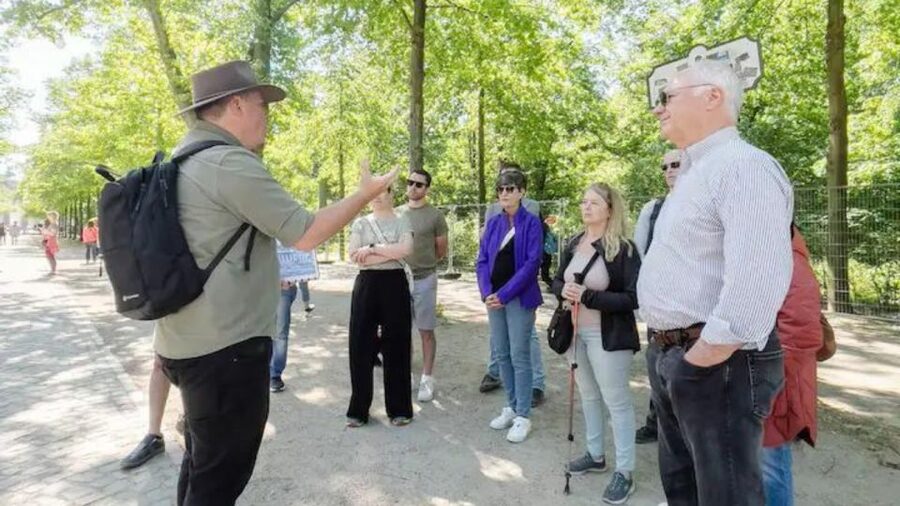
Berlin’s darkest story unfolds outdoors. I like the clear timeline, which links the Nazi rise to power with the terror and destruction that followed, and I like the use of historic maps and Then & Now photographs to make vanished buildings and changed streets easier to understand. The main drawback is the pace: 150 minutes on foot, mostly outside, can feel demanding in cold, rain, or summer heat.
This $47 tour is best for you if you want more than a quick look at Berlin’s famous memorials. Guides such as Scott, Hannah, Matthew, Mark, and Ben have earned praise for explaining difficult subjects in plain English, welcoming questions, and adding human detail without turning the tour into a theatrical show. Bring good shoes, water, and weather protection. There is no hotel pickup, food, drink, or indoor museum entry.
In This Review
- Key points to know before you book
- Why this Berlin walking tour works
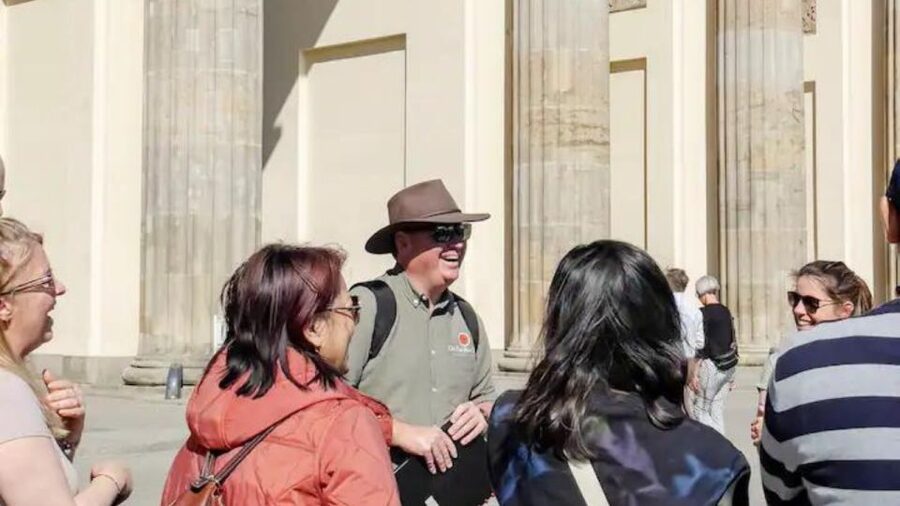
- Meeting at Brandenburg Gate and entering the story
- Reichstag: democracy dismantled in plain sight
- Soviet War Memorial and the battle for Berlin
- The Holocaust Memorial and the limits of words
- Hitler’s bunker site and the end of the regime
- Johann Georg Elser: resistance inside Germany
- The German Finance Ministry and the machinery of power
- Topography of Terror and the nerve center of repression
- What the guides do best
- Price, pace, and practical comfort
- Who should book this experience?
- Should you book Hitler’s Berlin?
- FAQ
- Where does the tour meet?
- Where does the tour finish?
- How long does the walking tour last?
- What language is the tour in?
- Is the tour indoors or outdoors?
- What should I bring?
- Is the tour wheelchair accessible?
- Can I cancel or pay later?
Key points to know before you book
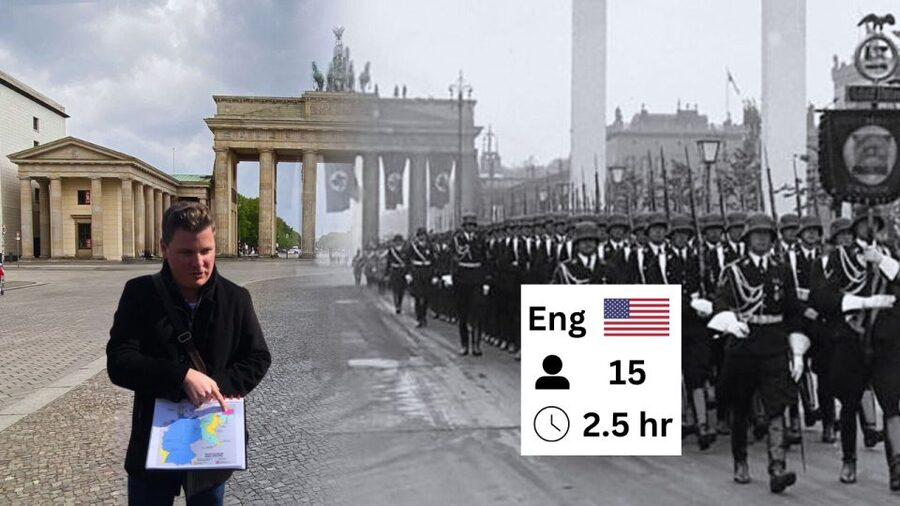
- A full Nazi-era timeline: The tour connects Hitler’s election, the destruction of democracy, dictatorship, war, genocide, and defeat in 1945.
- Berlin’s central symbols: You visit the Brandenburg Gate, Reichstag, Holocaust Memorial, Hitler’s bunker site, and the former centers of Nazi terror.
- Outdoor history lesson: The experience takes place on city streets and at memorials, not inside museum exhibitions.
- Strong guide-led discussion: Scott, Hannah, Matthew, Mark, and other guides are praised for clear explanations, patience, and detailed answers.
- A serious but approachable tone: The guides focus on facts and context rather than gimmicks or dramatic performance.
- Flexible booking: You can cancel up to 24 hours before the tour for a full refund and reserve without paying immediately.
Why this Berlin walking tour works
Berlin can make Nazi history feel scattered. One memorial sits beside a government building, a surviving section of wartime architecture appears around the corner, and an empty patch of ground marks a site that once carried enormous power. Without context, these places can blur together.
This tour gives you a chronological thread. You begin with the political world Hitler entered and finish with the regime in ruins. That structure matters because it shows that dictatorship did not arrive fully formed. The guide explains how the Nazis seized power, removed opposition, used fear and propaganda, and made persecution part of government.
I value that approach for first-time students of the subject. You do not need a background in German history to follow the story. At the same time, the tour seems suitable for people who already know the broad outline of World War II. Several past participants with a strong interest in the war still found new details in the political and local Berlin context.
The tone is serious, as it should be. Yet the experience is not presented as a lecture delivered at you. Guides invite questions and keep talking as the group walks between sites. Scott is repeatedly praised for his clear delivery and friendly manner. Hannah is noted for heartfelt stories and for presenting events from more than one angle. Matthew is praised for answering detailed questions and, on some occasions, allowing extra time so the group could grasp the subject properly.
More Walking Tours in Berlin
- Discover Berlin Half-Day Walking Tour
★ 5.0 · 9,624 reviews - Berlin: Third Reich and Cold War 2 Hour Walking Tour
★ 4.9 · 6,830 reviews - Berlin: Discover Berlin Walking Tour
★ 4.9 · 5,998 reviews
Meeting at Brandenburg Gate and entering the story
The meeting point is the Tourist Office at Brandenburg Gate. Look for the blue umbrella, a simple detail that matters in a busy central area.
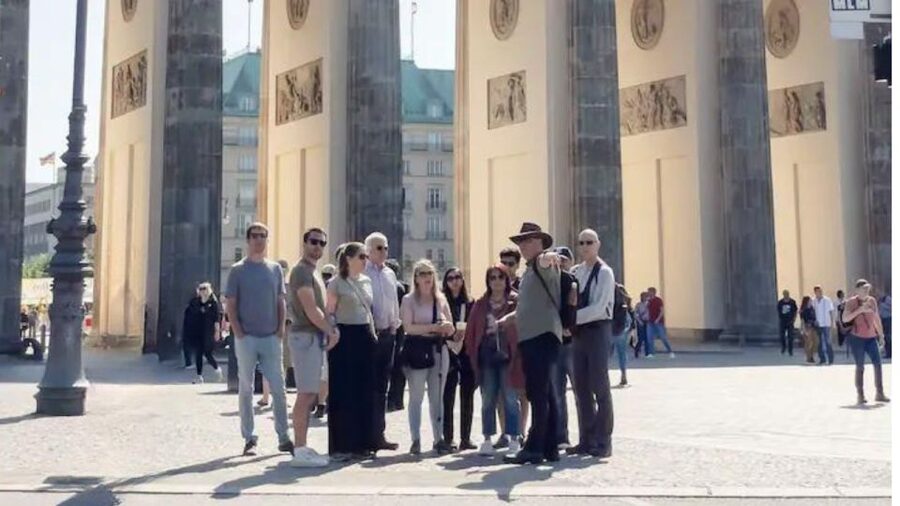
The Brandenburg Gate is a fitting starting point. It is one of Berlin’s best-known symbols, but its importance changes depending on the period being discussed. Here, the guide uses it to frame Berlin as a city of power, public ceremony, political change, and later division and reunification.
The planned stop lasts about 10 minutes. That is enough for an introduction and photographs, but not enough for a long architectural study. You should listen closely from the beginning because the guide is setting up the political story that will make the later stops easier to place.
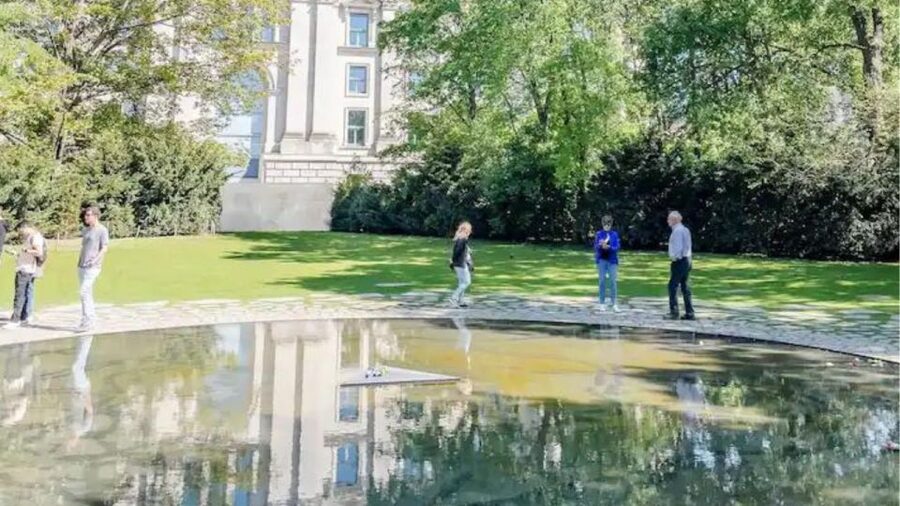
From here, the walk moves to the Memorial to the Sinti and Roma Victims of National Socialism. This is a valuable inclusion. The Nazi persecution of Sinti and Roma is sometimes left out of general World War II tours, even though it was part of the regime’s racial policy and mass murder.
Expect about 10 minutes with the guide. The stop is brief, but it widens the story beyond the most familiar subjects and reminds you that Nazi persecution targeted several groups.
Reichstag: democracy dismantled in plain sight
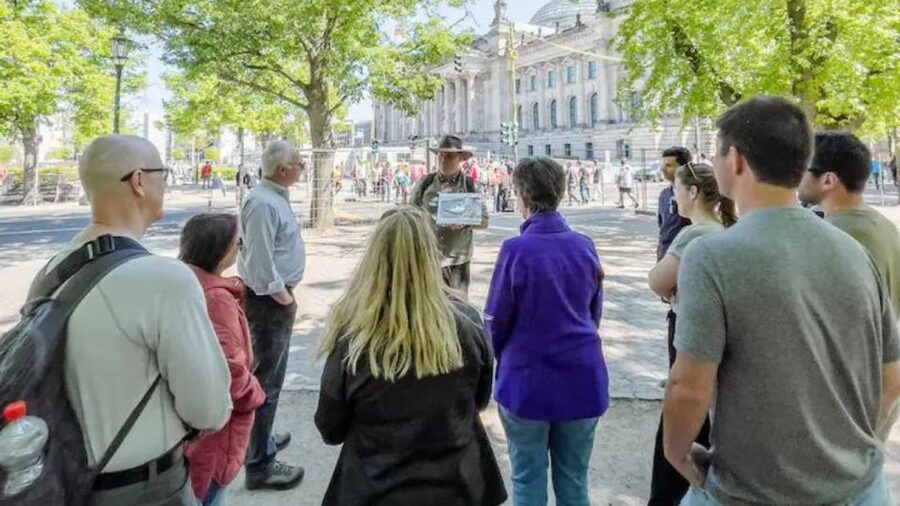
The Reichstag receives around 20 minutes. Its value is not simply the building itself. The guide uses it to discuss the fragile transition from elected government to dictatorship.
You will hear how the Nazis moved from political power toward total control, and how democratic institutions were weakened and stripped of meaning. This is one of the tour’s strongest ideas: the Reichstag is not just a handsome government building, but a place where the tension between democracy and dictatorship becomes concrete.
The description also treats the Reichstag as a symbol of unity. That lets the guide connect the Nazi period with the later rebuilding of German democracy. You are not only looking backward at 1933. You are also considering how Berlin and Germany dealt with what came after.
The stop is listed as a visit and guided sightseeing, but the tour is outdoors. You should not expect entry into the Reichstag or access to its interior rooms. That distinction is important when planning your day.
Soviet War Memorial and the battle for Berlin
The Soviet War Memorial in Tiergarten is given about 20 minutes. This stop shifts the focus from Nazi rule and persecution to the military collapse of the regime.
The memorial recalls the brutal Battle of Berlin in 1945, when the war in Europe reached its final stage. The guide can use the site to explain the scale of the fighting and the destruction that surrounded the city as Soviet forces closed in.
This is also a useful reminder that the end of Nazi Germany was not a neat political change. Berlin became a battlefield. Civilians, soldiers, prisoners, and forced laborers were caught in a violent final phase that left the city shattered.
You will have time for photographs and questions. The memorial is outdoors, so the weather can affect how long you want to linger. The walking route does include pauses, and past experiences suggest that good guides allow people to rest while continuing the explanation. Still, you should not treat this as an easy stroll with only occasional steps between attractions.
Still Berlin, at a slower pace:
- Berlin: Reichstag, Dome and Government District Guided Tour
★ 4.7 · 18,288 reviews - Berlin: 1-Hour City Tour by Boat with Guaranteed Seating
★ 4.3 · 16,993 reviews - Berlin: Boat Tour Along the River Spree
★ 4.4 · 11,252 reviews - Berlin: Hop-on Hop-off Bus Tour with Live Commentary
★ 4.3 · 8,579 reviews
The Holocaust Memorial and the limits of words
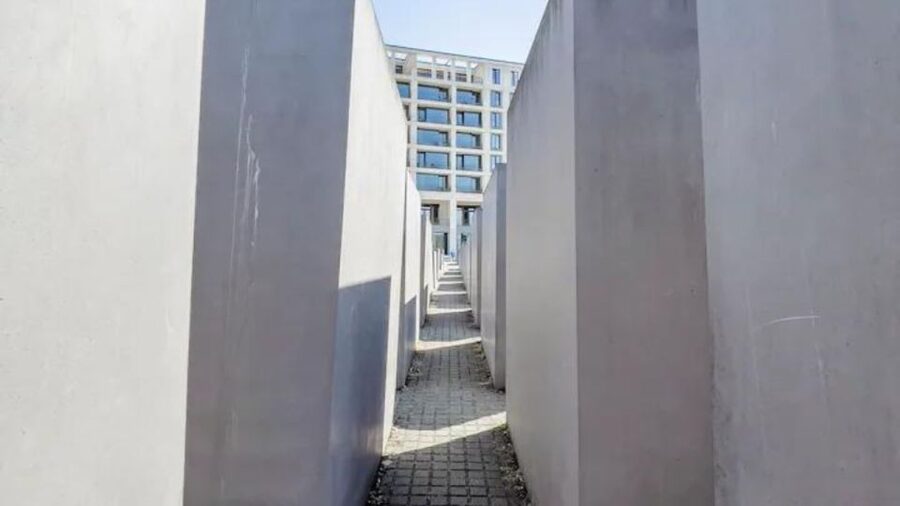
The Memorial to the Murdered Jews of Europe receives roughly 20 minutes. This is one of the tour’s most important stops, but it is also a place where a guide’s judgment matters.
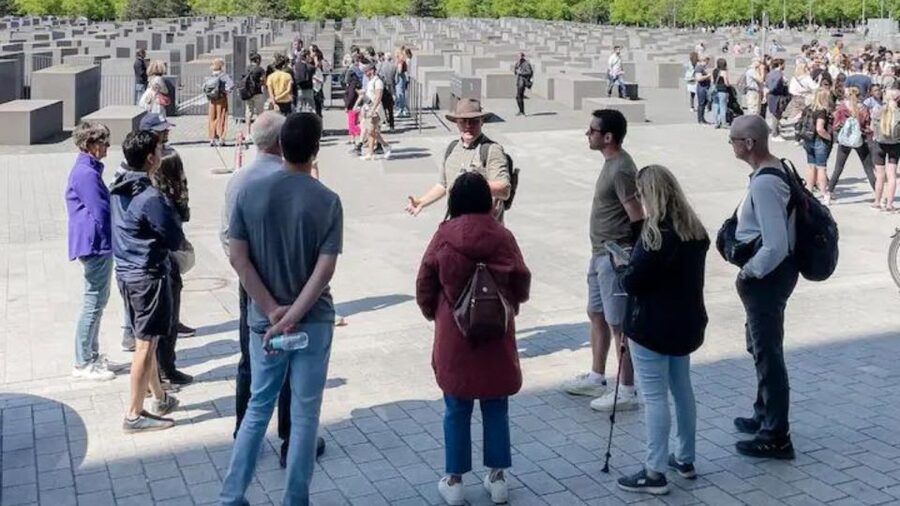
The memorial is a field of concrete blocks near Berlin’s central government district. The guide helps you think about the site and its purpose rather than rushing through it as a photo stop. The wider story concerns the systematic persecution and murder of Europe’s Jewish population, and the way antisemitism became state policy.
I appreciate the fact that this stop appears within the political and military sequence. The Holocaust is not treated as an isolated subject disconnected from the rest of Nazi rule. You learn how ideology, law, propaganda, bureaucracy, police power, and war worked together.
The outdoor format has one limit. The tour does not include entry to the memorial’s underground information center or other indoor exhibitions. If you want survivor testimony, family histories, and a larger documentary display, plan a separate museum visit.
Hitler’s bunker site and the end of the regime
The former location of Hitler’s bunker is covered for about 15 minutes. There is no grand ruin to enter and no dramatic structure waiting below ground. The site is marked in a deliberately understated way, and that is part of its importance.
Here, the guide explains the final days of the war in Europe and the collapse of Nazi power in Berlin. You stand near the place where Hitler spent his last days while the city around him was being destroyed.
This is a good moment to correct the popular image of the bunker as a mysterious lost headquarters. The historical value lies in what happened there and in the decisions made during the regime’s final hours, not in visible architecture.
The stop can feel short, especially if you have a strong interest in the end of the war. The guide has to balance the bunker story with the larger route, so use the question period well. A focused question about the final days, the battle, or the destruction of the government quarter should produce more value than simply expecting a longer visit.
Johann Georg Elser: resistance inside Germany
The Johann Georg Elser Memorial is a particularly worthwhile addition. Elser attempted to kill Hitler in 1939 with a bomb at the Bürgerbräukeller in Munich. The attempt failed because Hitler left earlier than planned, and Elser was later murdered by the Nazi regime.
The stop lasts about 10 minutes. It gives the tour a needed reminder that opposition existed inside Germany, even though it was dangerous and often isolated.
This memorial also prevents the story from becoming too simple. The tour is not saying that every German supported Hitler or that resistance was absent. Instead, it shows how difficult resistance could be under a police state, and how the regime dealt with those who challenged it.
Because this is a shorter stop, your guide will likely connect Elser with the broader system of fear and repression. You can expect a compact explanation rather than a complete study of German resistance movements.
The German Finance Ministry and the machinery of power
The German Finance Ministry is a short, five-minute stop. At first glance, it may seem less dramatic than a memorial or battlefield site, but it helps show how Nazi control relied on institutions and administration.
The building is associated with the former Nazi-era Ministry of Aviation. The guide uses the location to connect Berlin’s architecture with the machinery of government, war, and repression.
Five minutes is enough to establish the point, but not enough for a detailed architectural tour. Think of this as a link in the chain rather than a main attraction. It keeps the walk moving toward the former Gestapo and SS headquarters while showing that terror depended on offices, orders, files, and officials as well as prisons and weapons.
Topography of Terror and the nerve center of repression
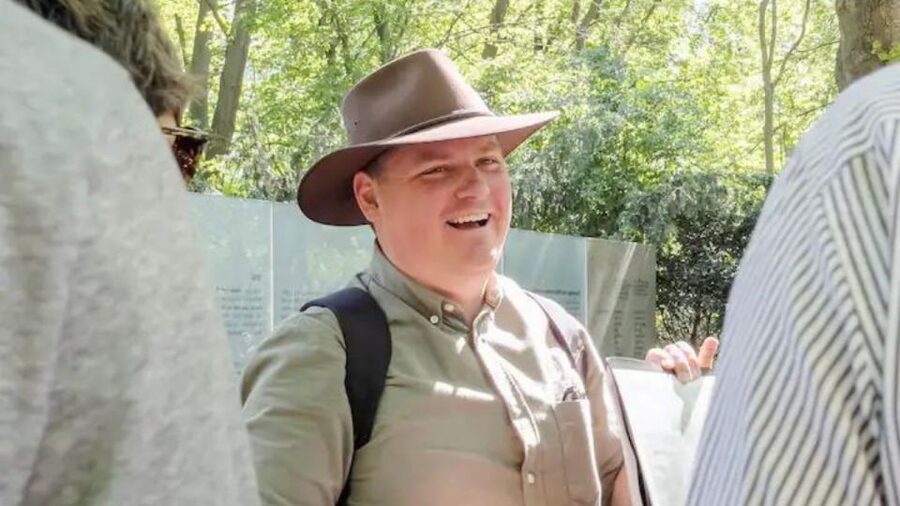
The tour ends at the Topography of Terror after about 15 minutes there. This location marks the former headquarters of the Gestapo and SS, the organizations that helped direct Nazi terror across Germany and occupied Europe.
The site is especially useful because it brings the discussion back to the working system of dictatorship. You have already considered elections, propaganda, racial policy, war, and resistance. Here, those themes meet the police and security agencies that enforced the regime.
The outdoor tour ends here, so you can choose to continue on your own at the Topography of Terror museum. Indoor exhibitions are not included, but the museum is an obvious follow-up for anyone who wants documents, photographs, and a more extended look at the institutions of persecution.
Ending here works well. You finish with the structures of terror rather than with a sensational image of Hitler. That keeps attention on the system and the people who operated it.
What the guides do best
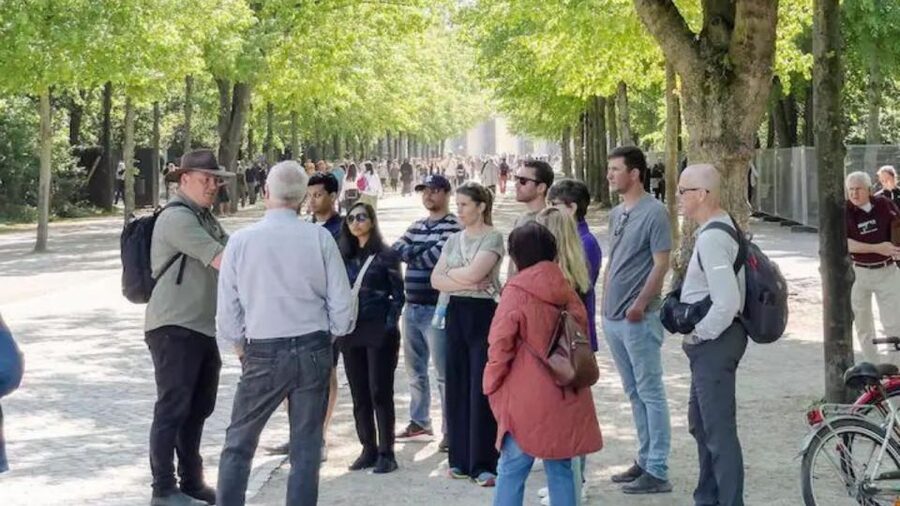
The most strongly praised part of this experience is the guiding. Scott is repeatedly described as engaging, friendly, and precise. Hannah is praised for bringing the subject to life through personal and thoughtful stories. Matthew is noted for making complex material easy to remember and for welcoming questions. Mark, Ben, Jörg, and other guides also receive strong praise for their clear explanations and warm manner.
The best detail from the feedback is how often guides adjust to the group. They explain difficult points in simple language, check that people understand, and go into more detail when someone asks a focused question. One guide even supplied umbrellas during rain, though you should still bring your own weather protection.
That flexibility is important on a history tour. Nazi Germany involves political terms, military events, changing borders, and a large number of organizations. A guide who can explain the subject without showing off is worth paying for.
The experience is in English only. The guide is described as having an academic background in World War II history, and the company presents itself as focused on Second World War tours. The format is designed for conversation rather than a staged performance.
Price, pace, and practical comfort
At $47 per person, the tour is not the cheapest way to walk through central Berlin. It is reasonable value if you want a connected explanation from a specialist guide, especially because the route covers several important locations in one outing.
You are paying mainly for interpretation. The Brandenburg Gate, Reichstag, Holocaust Memorial, and Topography of Terror can all be visited without this tour. What you cannot easily recreate is the order, context, historic maps, Then & Now photographs, and chance to ask questions while moving through the city.
The 150-minute length is long enough to create a useful framework without taking your entire day. The route includes many stops, though several are short. You should expect steady walking with pauses, not long museum visits.
Wear comfortable shoes and dress for the forecast. Bring water. Since the tour is outside, an umbrella or waterproof layer is sensible, even though personal umbrellas are not included. The tour is wheelchair accessible, but the considerable amount of walking still makes stamina and weather planning important.
Small-group arrangements are intended to make the experience more personal and interactive. The exact group size is not provided, so I would not assume an intimate private tour. The format should still give you a better chance to ask questions than a large coach excursion.
Free cancellation up to 24 hours before departure gives you useful flexibility, and the reserve-now, pay-later option can help when your Berlin schedule is still changing.
Who should book this experience?
I would choose this tour for a first or second day in Berlin if Nazi-era history is a major reason for your visit. It gives you a framework that can make later museum visits easier to understand.
It also suits families with older teenagers. One past experience specifically notes that teenagers enjoyed the tour, and the guide style appears conversational rather than academic in the stiff sense.
You should book it if you want:
- A clear explanation of how the Nazis gained and kept power
- A guided look at central Berlin’s Nazi-era sites
- Time for questions in English
- A serious history lesson without gimmicks
- A useful introduction before visiting indoor museums
You might skip it if you dislike walking tours, need frequent indoor breaks, or want extensive time inside museums. You may also find the tour too introductory if you expect a highly specialized military analysis of every battle.
Should you book Hitler’s Berlin?
Yes, if you want the political, human, and military story tied together in one well-paced walk. The route includes major memorials, but its real value is the explanation between them.
The strongest reason to book is the quality of the guiding. Scott, Hannah, Matthew, Mark, and the other named guides are praised for being clear, friendly, patient, and deeply prepared. That matters more here than flashy presentation.
Book with realistic expectations. You will walk for 150 minutes in an outdoor setting, and you will not enter indoor museum exhibitions. With good shoes and weather protection, the $47 price is fair for a focused introduction to Berlin under Nazism and the city’s destruction in 1945.
FAQ
Where does the tour meet?
Meet your guide at the Tourist Office at Brandenburg Gate. Look for the blue umbrella.
Where does the tour finish?
The tour finishes at the Topography of Terror.
How long does the walking tour last?
The tour lasts 150 minutes, or two and a half hours.
What language is the tour in?
The live guided tour is conducted in English.
Is the tour indoors or outdoors?
The tour takes place outdoors and includes walking between sites. Indoor museum exhibitions are not included.
What should I bring?
Wear comfortable shoes and suitable clothing for the weather. Bring a water bottle and personal rain protection if needed.
Is the tour wheelchair accessible?
Yes, the activity is listed as wheelchair accessible.
Can I cancel or pay later?
You can cancel up to 24 hours in advance for a full refund. You can also reserve your place and pay later.
Just added around Berlin
- Private Walking Tour in Berlin: Hitler’s Germany & WWII★ 5.0 · 7 reviews
- The History of Berlin: WWII PRIVATE Walking Tour With Locals★ 5.0 · 209 reviews
- Private Berlin WWII and Cold War History Tour with Local Expert Guide★ 5.0 · 28 reviews
- Private Walking Tour Berlin 3 hours: Brandenburg, Historic Center★ 5.0 · 7 reviews
- Berlin: Private Bike Tour of the Berlin Wall and Third Reich★ 5.0 · 23 reviews
- Berlin: Guided Private Bike Tour to Explore the Highlights★ 5.0 · 12 reviews
- Berlin Photography Masterclass – Private Photography Lesson★ 4.5 · 23 reviews
- Group Driving Tour 1 to 6 people. Berlin Shore Excursion incl pick-up at Port★ 5.0 · 8 reviews
Walking Tours, compared.

Old Town & Viktualienmarkt City Walk in German
Read our review →Browse the lists this tour appears in