
Reviewed · WALKING TOURS
Berlin: Sightseeing Walking Tour of the Top 20 Attractions
Berlin’s past is written on every corner. This three-hour walking tour links the Brandenburg Gate, Reichstag, Berlin Wall sites, Museum Island, and major Nazi and Cold War memorials into one brisk route, with a local guide supplying the connections that a map cannot. I especially like the strong historical range, from Prussian Berlin to reunification, and the personal guiding style, including dry humor and stories from guides such as Carlos, Carlo, Antonella, and Max. The main drawback is simple: six kilometers on foot is a lot, and the pace can feel tiring by the final stops.
You meet at the Paul-Löbe-Haus near the German Chancellery at either 10:00 AM or 2:00 PM. The $94 price is not bargain-basement, but a private or small-group guide, three hours of focused sightseeing, and plenty of local context make it fair for a first day in Berlin. Bring good shoes, water, and a camera. Berlin weather does not ask permission.
In This Review
- Key points at a glance
- Why this route works for a first look at Berlin
- Starting at Paul-Löbe-Haus and the government quarter
- Brandenburg Gate and the weight of the Holocaust Memorial
- Potsdamer Platz and Berlin’s rebuilt center
- Checkpoint Charlie and the Wall story
- Martin-Gropius-Bau and the Topography of Terror
- Gendarmenmarkt, Bebelplatz, and Prussian Berlin
- Lustgarten, the New City Palace, and Museum Island
- The final walk to Friedrichsbrücke
- Guiding style, group size, and walking demands
- Is $94 a fair price?
- Who should book this walking tour?
- Should you book it?
- FAQ
- How long does the Berlin sightseeing walking tour last?
- What time does the tour start?
- Where does the tour meet?
- Where does the tour finish?
- Which languages are available?
- Is the tour private or shared?
- Is the tour wheelchair accessible?
- What sights are included?
- Can I cancel or pay later?
Key points at a glance
- A six-kilometer history lesson: The route covers Prussian power, Nazi terror, the Berlin Wall, reunification, and modern government.
- The best first-day orientation: You see the central sights in one sweep, from the government district to Museum Island.
- More than a standard postcard tour: Checkpoint Charlie, the Topography of Terror, longer Wall sections, and Bebelplatz add serious historical weight.
- Guide-led, not lecture-heavy: Local stories, dry Berlin humor, and personal memories help make the streets easier to understand.
- A brisk but flexible format: The guide can adapt to your interests, yet three hours is still a tight schedule for so many landmarks.
- Good access for many visitors: The tour is wheelchair accessible, runs in all weather, and is offered in English, Spanish, and German.
Why this route works for a first look at Berlin
Berlin is not a city you understand by checking off monuments. Its key sights are spread across former royal, Nazi, East German, and modern government districts. This tour makes that geography useful by walking you through the city’s central story in a logical west-to-east progression.
You begin beside the modern government quarter, then move toward the Reichstag and Brandenburg Gate before crossing through sites tied to the Holocaust, the Cold War, and Prussian rule. The final stretch reaches Museum Island and Friedrichsbrücke. You get a sense of how Berlin’s center changed from royal capital to divided city and then to reunited capital.
I like this format for a first or second day because it helps you decide where to return later. You can mark the Holocaust Memorial for a quieter visit, return to the Topography of Terror museum, or plan extra time on Museum Island. The tour itself does not take you inside every building, so think of it as a street-level orientation rather than a museum tour.
The advertised route covers the top 20 sights, though several are viewed as part of the same district or walking stretch rather than as separate formal stops. That is normal for a city walk, but you should not expect twenty long visits. The strength is the broad sweep, not extended time at each monument.
More Walking Tours in Berlin
- Discover Berlin Half-Day Walking Tour
★ 5.0 · 9,624 reviews - Berlin: Third Reich and Cold War 2 Hour Walking Tour
★ 4.9 · 6,830 reviews - Berlin: Discover Berlin Walking Tour
★ 4.9 · 5,998 reviews
Starting at Paul-Löbe-Haus and the government quarter
The meeting point is in front of the main entrance to Paul-Löbe-Haus, at Konrad-Adenauer-Straße 1, opposite the Federal Chancellery. Look for a TourguideMe guide. Starting here puts you right beside the modern heart of German government.
The German Chancellery and Paul-Löbe-Haus offer a useful opening contrast. Berlin’s political center is clean-lined and modern, while the city’s older monuments sit only a short walk away. Your guide can help explain how Berlin became the national capital again after reunification and why this area was reshaped so heavily.
The Reichstag comes next. Its recognizable dome is one of Berlin’s best-known images, but the tour focuses on exterior sightseeing and explanation rather than a dome visit. That matters because entry to the building is not listed as part of this experience. You see the Reichstag in context, hear about its role, and keep moving.
The pace here is usually easy, but the group may pause for photographs. One useful tip is to have your camera ready before the guide begins the next story. The route has many strong photo points, and stopping too long at each one can make the later walking feel more rushed.
Brandenburg Gate and the weight of the Holocaust Memorial
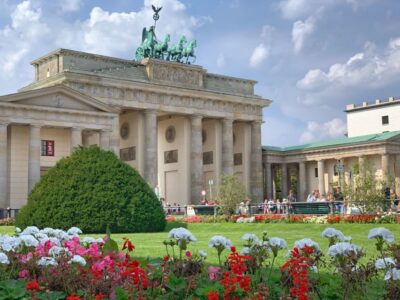
The Brandenburg Gate is the tour’s emotional and visual centerpiece. Once a royal city gate, it later became a symbol of division and then reunification. Your guide uses the monument to connect Berlin’s older political power with its twentieth-century upheavals.
This is one of the places where a local explanation adds real value. On your own, you see a grand neoclassical gate. With context, you can place it within the story of Prussia, the Nazi period, the Wall years, and the celebrations that followed the Wall’s fall.
The Holocaust Memorial nearby changes the tone. The field of concrete blocks invites you to walk among them, and the tour includes guided sightseeing with some free time. That pause matters. You are not simply given a date and sent onward. You have a moment to experience the space for yourself.
The memorial can be disorienting, especially as the ground changes and the blocks rise around you. Keep your attention on your footing and respect the quiet mood. This is not a place for a rushed group photograph. If you want to visit the underground information center, you will need to return outside the tour, since an interior visit is not specified.
Potsdamer Platz and Berlin’s rebuilt center
Potsdamer Platz shows another side of Berlin. The area is linked to the city’s division and rebuilding, and it now presents a modern urban face. It helps you see how dramatically the center changed after the Wall and the war.
I find this stop useful because it prevents the tour from becoming only a parade of old monuments. Berlin is a city of empty spaces, new construction, restored façades, and buildings that point to different eras. Potsdamer Platz makes that visible in a single stop.
There is a practical trade-off here. Modern architecture rarely demands as much time as the Holocaust Memorial or Brandenburg Gate, yet it gives the guide a chance to explain the physical gaps and political choices that shaped central Berlin. Listen for those links rather than treating the stop as only a quick photo break.
Still Berlin, at a slower pace:
- Berlin: Reichstag, Dome and Government District Guided Tour
★ 4.7 · 18,288 reviews - Berlin: 1-Hour City Tour by Boat with Guaranteed Seating
★ 4.3 · 16,993 reviews - Berlin: Boat Tour Along the River Spree
★ 4.4 · 11,252 reviews - Berlin: Hop-on Hop-off Bus Tour with Live Commentary
★ 4.3 · 8,579 reviews
Checkpoint Charlie and the Wall story
Checkpoint Charlie is one of the most famous Cold War locations in Berlin. The former crossing point represents the division between East and West, and it remains a popular place for photos. The tour uses it as a springboard for explaining how the city was controlled and how crossing worked during the Wall years.
Do not expect the original checkpoint experience to survive intact. The area is highly visited and has a commercial feel. Its value comes from the explanation, not from assuming every visible prop or reconstruction is original.
The route also includes longer sections of the Berlin Wall, giving you more than a single famous signpost. This is important because the Wall was not just one checkpoint. It cut through neighborhoods, separated families, and shaped daily life over a wide area.
Several guides have personal connections to Berlin’s recent past. Carlos is described as having lived through the Wall’s fall, and Carlo was praised for bringing personal stories to a group of nine friends. Those details can make the political history feel closer and less abstract. Still, guide assignments vary, so do not book expecting one particular person unless the operator confirms it.
Martin-Gropius-Bau and the Topography of Terror
Martin-Gropius-Bau provides a visual pause in the route, with its ornate historic façade and major exhibition role. The tour’s focus is sightseeing from the outside, not entry to a current exhibition. If you are interested in the building’s interior or a particular show, plan a separate visit.
The Topography of Terror is one of the route’s most important stops. It sits on the grounds of the former Gestapo and SS headquarters, making the site itself part of the lesson. Here, the Nazi period is not treated as a vague chapter in a textbook. The location connects the machinery of persecution to a real address in central Berlin.
The tour includes guided sightseeing at the memorial. You should expect a serious tone and a useful explanation of what happened here, but not a full museum visit in three hours. If the subject matters deeply to you, return later with more time for the documentation center.
This is also where the route proves more substantial than a basic top-sights walk. You are not only seeing attractive buildings. You are being asked to read the city’s difficult spaces and understand why they were preserved.
Gendarmenmarkt, Bebelplatz, and Prussian Berlin
Gendarmenmarkt shifts the focus to architecture and royal Berlin. Its grand buildings and open square show the city’s Prussian ambitions. Your guide can help you read the square as more than a pretty stop, explaining how power, religion, culture, and urban design came together here.
Bebelplatz carries a much darker memory. It is associated with the Nazi book burning, and the square’s calm appearance can make the story feel especially unsettling. The tour uses the site to show how public spaces can carry several layers of meaning at once.
This section is a good test of the guide’s style. Dates alone can make Berlin’s story feel heavy. The best guides add clear links, small facts, and restrained humor without making light of suffering. The feedback about Carlos, Antonella, Max, and Carlo repeatedly points to warm, personal delivery and strong historical explanation. That consistency is one of the tour’s biggest strengths.
The itinerary also includes a stop listed without a separate name, followed by Lustgarten. Treat this as part of the continuous walk through Berlin’s historic center rather than expecting a distinct attraction with a long visit.
Lustgarten, the New City Palace, and Museum Island
Lustgarten opens the view toward the cathedral and Museum Island. It is an excellent place to understand how Berlin’s royal and cultural center was arranged. The nearby New City Palace adds another layer, showing how the city has rebuilt and reinterpreted major historic sites.
The New City Palace is not simply an untouched survivor. Its presence raises questions about reconstruction, memory, and what a modern city chooses to restore. A guide’s explanation is especially useful here because the building’s appearance alone does not tell you the full story.
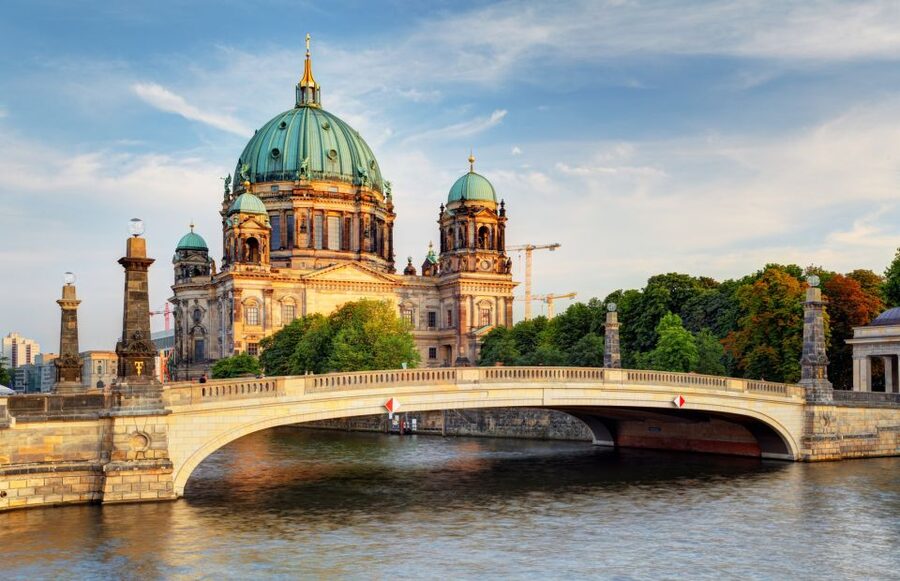
Berlin Cathedral is one of the route’s most impressive exterior sights. Its dome and scale dominate the area, and the guide can place it within the former royal district. The tour does not include a cathedral interior visit, so return later if you want to see the inside or climb for views.
Museum Island then brings the route to Berlin’s group of major museums. The walk includes the island, Alte Nationalgalerie, and the surrounding architecture, but museum admission is not listed. This is a preview, not a substitute for a museum day.
I recommend saving Museum Island for another visit if you have any interest in art or archaeology. Three hours gives you enough time to understand the setting and choose a museum. It does not give you enough time to explore the collections properly.
The final walk to Friedrichsbrücke
The tour finishes at Friedrichsbrücke, a practical location near Museum Island and the river. By then, you have crossed a large section of central Berlin and covered roughly six kilometers. You should feel oriented, but probably ready to sit down.
The finish is useful for continuing independently. You can stay near the cathedral, explore a museum, or use the central location to reach another part of Berlin. Ask your guide for food, nightlife, and neighborhood suggestions. Local recommendations are included as part of the experience, though the exact advice will depend on your interests and guide.
The route does not finish at the starting point, so plan accordingly. That is not a problem in central Berlin, but it is worth knowing if you have a timed reservation elsewhere. A 10:00 AM start leaves your afternoon open. The 2:00 PM option works well if you want a slower morning, though your final stops will come later in the day.
Guiding style, group size, and walking demands
This tour is sold as private or small-group, which can make a major difference. A smaller group gives you more room to ask questions and makes it easier for the guide to adjust the explanation. One couple once received a private experience because they were the only people booked for that departure, with extra time for photographs.
The guide quality is a major part of the value. Carlos is praised for warmth, care, and personal insight. Carlo is praised for extending the tour by at least thirty minutes for a group that wanted more. Antonella and Max also received strong marks for friendly, engaging service. These examples suggest a guiding culture that values conversation rather than a memorized speech, though individual experiences will vary.
The tour may run over its three-hour frame if the group has many questions. That can be a bonus, but do not count on extra time if you have a firm appointment. The stated duration is 180 minutes, so schedule with that limit in mind.
You need the ability to walk for three hours and cover about six kilometers. The experience is listed as suitable for all ages and fitness levels and wheelchair accessible, but cobblestones, weather, and the length of the route can still affect comfort. Wear supportive shoes and carry water. The tour runs in all weather, and one guide kept spirits up during continuous rain and wind, even stopping for a hot drink.
Is $94 a fair price?
At $94 per person, this is not the cheapest way to see Berlin. You can walk past many of these sights for free. The question is what you want from the route.
I think the price makes sense if you are new to Berlin, have only a short stay, or prefer a guide to explain the city as you go. You are paying for a concentrated route, a live local voice, historical connections, and the chance to ask questions. The private or small-group format improves the value, especially for couples, families, or friends who want a more personal outing.
The value is weaker if you already know central Berlin well or plan to spend hours reading at each memorial and museum. You will still see the sights, but the route may move too quickly for a detailed study. In that case, a self-guided walk followed by longer individual visits could suit you better.
Who should book this walking tour?
I would choose this tour for a first-time visitor who wants a clear map of central Berlin without spending a full day inside museums. It also suits families and small groups who want history explained in an approachable way, rather than delivered as a dry list of dates.
It works well for couples and friends who enjoy asking questions, taking photographs, and picking up local suggestions for the rest of the trip. The available English, Spanish, and German departures make it accessible to a broad range of visitors.
I would think twice if you dislike long walks, need frequent seated breaks, or want extended time at each memorial. Berlin’s central sights are not light sightseeing, and the final hour may feel demanding. Comfortable shoes are not optional here.
Should you book it?
Book this tour if you want Berlin’s major sights tied together by one clear story. The combination of Brandenburg Gate, the government district, Checkpoint Charlie, the Topography of Terror, Bebelplatz, and Museum Island gives you a serious introduction in a short period.
Skip it if you prefer to wander alone, spend a long time inside museums, or already understand Berlin’s central districts. For most first-time visitors with three hours to spare, the $94 cost is justified by the route and the guide’s local perspective. Just arrive ready to walk, bring water, and leave room in your schedule for the tour to stretch a little if the conversation is good.
FAQ
How long does the Berlin sightseeing walking tour last?
The tour lasts three hours, or 180 minutes. The route covers approximately six kilometers on foot.
What time does the tour start?
Departures are available daily at 10:00 AM and 2:00 PM.
Where does the tour meet?
You meet in front of the main entrance to Paul-Löbe-Haus, opposite the Federal Chancellery, at Konrad-Adenauer-Straße 1 in Berlin.
Where does the tour finish?
The walk finishes at Friedrichsbrücke near Museum Island.
Which languages are available?
The tour is offered in English, Spanish, and German.
Is the tour private or shared?
Private and small-group options are available.
Is the tour wheelchair accessible?
Yes, the activity is listed as wheelchair accessible.
What sights are included?
The route includes the German Chancellery, Reichstag, Brandenburg Gate, Holocaust Memorial, Potsdamer Platz, Checkpoint Charlie, Martin-Gropius-Bau, Topography of Terror, Gendarmenmarkt, Bebelplatz, Lustgarten, Berlin Cathedral, Museum Island, Alte Nationalgalerie, and the New City Palace, along with additional landmarks on the walk.
Can I cancel or pay later?
You can cancel up to 24 hours before the tour for a full refund. Reserve-now, pay-later booking is also available.
Just added around Berlin
- Private Walking Tour in Berlin: Hitler’s Germany & WWII★ 5.0 · 7 reviews
- The History of Berlin: WWII PRIVATE Walking Tour With Locals★ 5.0 · 209 reviews
- Private Berlin WWII and Cold War History Tour with Local Expert Guide★ 5.0 · 28 reviews
- Private Walking Tour Berlin 3 hours: Brandenburg, Historic Center★ 5.0 · 7 reviews
- Berlin: Private Bike Tour of the Berlin Wall and Third Reich★ 5.0 · 23 reviews
- Berlin: Guided Private Bike Tour to Explore the Highlights★ 5.0 · 12 reviews
- Berlin Photography Masterclass – Private Photography Lesson★ 4.5 · 23 reviews
- Group Driving Tour 1 to 6 people. Berlin Shore Excursion incl pick-up at Port★ 5.0 · 8 reviews
Walking Tours, compared.
Old Town & Viktualienmarkt City Walk in German
Read our review →Browse the lists this tour appears in