
Reviewed · WALKING TOURS
Berlin: The Time of National Socialism Walking Tour
Berlin keeps its hardest truths in plain sight. This two-hour walk links major Nazi-era sites with specific stories of propaganda, resistance, and wartime power, rather than treating the city as one giant monument. I especially like the small group limit of 10 and the chance to follow a native Berliner who can explain how the places fit together.
I also like the route’s range, from the Brandenburg Gate and Reichstag to Soviet tanks, the Holocaust Memorial, and the Topography of Terror. The main consideration is the pace: you cover a serious amount of ground in two hours, mostly outdoors, so cold, rain, heat, or slippery streets can affect your comfort.
In This Review
- Key points to know before you book
- Why this two-hour route works in Berlin
- Starting at Pariser Platz and the Brandenburg Gate
- The Reichstag and Hitler’s rise to power
- Soviet tanks in the Tiergarten
- The Holocaust Memorial and the former bunker area
- The government district during the dictatorship
- Resistance and the Johann Georg Elser Memorial
- The Topography of Terror and the former SS headquarters
- What the guide adds to the experience
- Price, group size, and comfort
- Who should book this Berlin walk?
- Should you book the Time of National Socialism Walking Tour?
- FAQ
- How long does the walking tour last?
- Where does the tour begin?
- Where does the tour finish?
- What language is the tour conducted in?
- What locations are included?
- Will I see the location of Hitler’s bunker?
- Is the tour wheelchair accessible?
- What happens if the weather is bad?
Key points to know before you book
- The route begins at the Brandenburg Gate: This famous landmark becomes a lesson in how the Nazi regime used public space and mass marches for propaganda.
- You see wartime traces rather than only museum displays: Soviet T-34 tanks and artillery remain at the Tiergarten memorial, while former Nazi government sites are marked by their present-day buildings and public spaces.
- The Holocaust Memorial is part of the walking route: You receive historical context for the memorial to Europe’s murdered Jews, not just a quick photo stop.
- Resistance receives real attention: The Johann Georg Elser Memorial introduces the story of a German opponent who tried to kill Hitler, while the guide also discusses wider resistance to dictatorship.
- The final stop is the Topography of Terror: This documentation center occupies the former area of the SS, Gestapo, and Reich Security Main Office, giving the tour a strong historical finish.
- German is the stated tour language: The guide is described as certified and multilingual, but the listed live language is German, so confirm that this suits you before booking.
Why this two-hour route works in Berlin
Berlin’s Nazi-era story is spread across the central city. That makes a walking tour useful. You are not simply looking at isolated plaques. You are moving from the ceremonial heart of the capital to the government district, military memorials, the former bunker area, and the offices that helped run the dictatorship.
The route also shows how much of the past is visible without dramatic ruins. Some sites are open public spaces. Others are modern buildings on the footprints of old ministries. The guide’s job is to connect those ordinary-looking places to the decisions made there.
At $43 per person, the tour is not the cheapest way to walk around central Berlin. You can reach most of these places on your own. The value comes from the guide’s explanation, the tight route, and the historical links between sites that can otherwise feel scattered.
A small group of no more than 10 people is a real advantage. You should be able to hear the guide clearly and ask questions without trying to speak over a large crowd. When attendance is very low, the experience can feel almost private. Carlo, also referred to as Carlos by some German-speaking participants, is repeatedly praised for his enthusiasm, clear explanations, and willingness to answer questions.
The tour is conducted in all weather and on public holidays. That is practical for scheduling, but you need to dress for a genuine outdoor walk. Wear suitable shoes, and take the forecast seriously. One especially cold outing involved icy streets, and Carlo took care to help the group through the difficult conditions. That is a useful reminder that Berlin weather is not a footnote here.
More Walking Tours in Berlin
- Discover Berlin Half-Day Walking Tour
★ 5.0 · 9,624 reviews - Berlin: Third Reich and Cold War 2 Hour Walking Tour
★ 4.9 · 6,830 reviews - Berlin: Discover Berlin Walking Tour
★ 4.9 · 5,998 reviews
Starting at Pariser Platz and the Brandenburg Gate
Meet directly outside the exit of the S+U Brandenburger Tor station, exit B, in the direction of Pariser Platz and Straße des 17. Juni. Look for the guide carrying the Get Your Guide, You in Berlin flag.
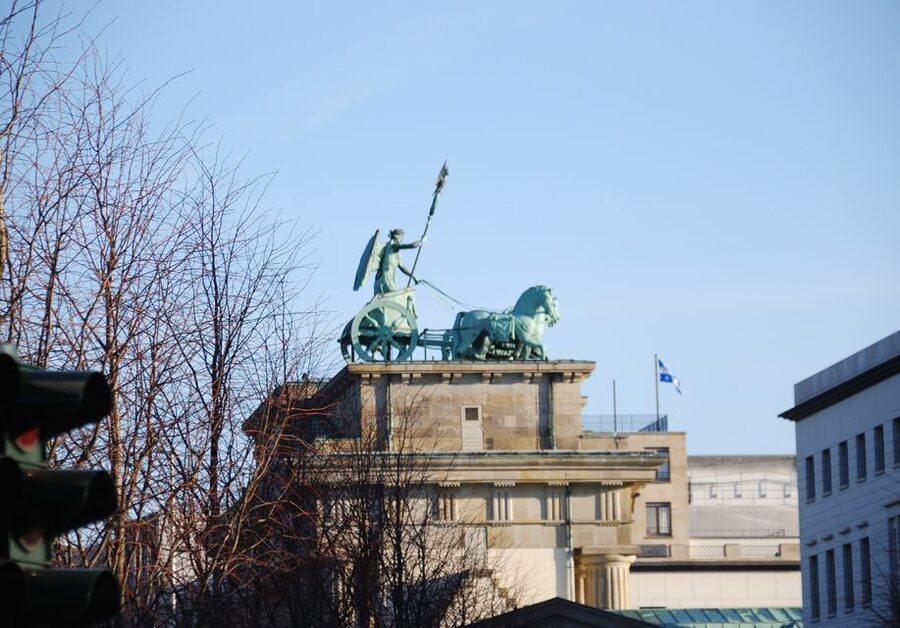
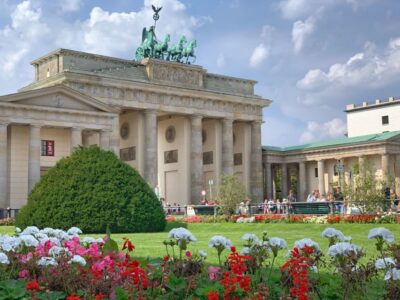
Pariser Platz is one of Berlin’s most recognizable public squares, and it gives the tour a strong opening. The Brandenburg Gate is usually treated as a symbol of Berlin, German unity, or the end of the Cold War. On this walk, you see its role during National Socialism, when the Nazis used the gate and nearby ceremonial spaces for propaganda marches.
That change in emphasis matters. The building itself did not become a Nazi creation, but the regime used familiar national symbols to give its rule a sense of authority and spectacle. A good guide helps you separate the older history of the gate from the political uses imposed on it later.
This is also a busy part of central Berlin, with modern traffic, public transport, and visitors moving through the square. Do not expect a quiet memorial atmosphere. The contrast is part of the lesson: places once staged for political theater now function as everyday city spaces.
The Reichstag and Hitler’s rise to power
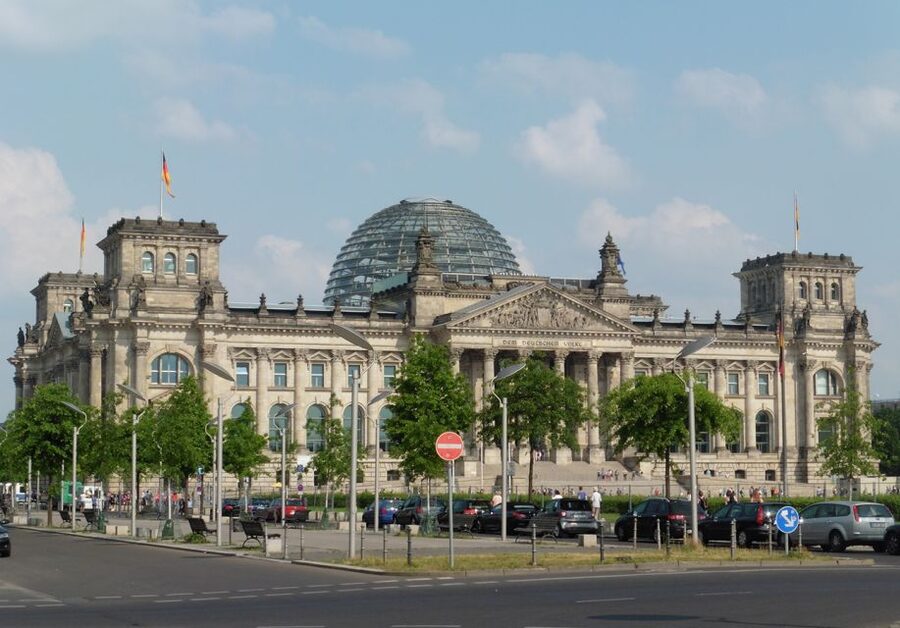
From the Brandenburg Gate, the group walks toward the Reichstag, now the seat of the German Parliament. The building carries several layers of German political history, but this tour focuses on the events surrounding the Nazi Party, or NSDAP, and Adolf Hitler’s rise to power in 1933.
The guide explains the Reichstag’s place in that transition. You are looking at a working political institution, not a preserved Nazi headquarters, so the story depends heavily on spoken context. This makes the guide particularly important at this stop.
The route does not promise a visit inside the parliament building or its dome. The itinerary lists sightseeing and walking here, so plan on learning from the exterior and surrounding area. If seeing the dome is on your Berlin wish list, treat that as a separate activity.
I like this early stop because it prevents the tour from becoming a parade of military hardware and dark ruins. It begins with the political machinery that allowed dictatorship to take hold. That gives the later memorials and former headquarters a clearer frame.
Soviet tanks in the Tiergarten
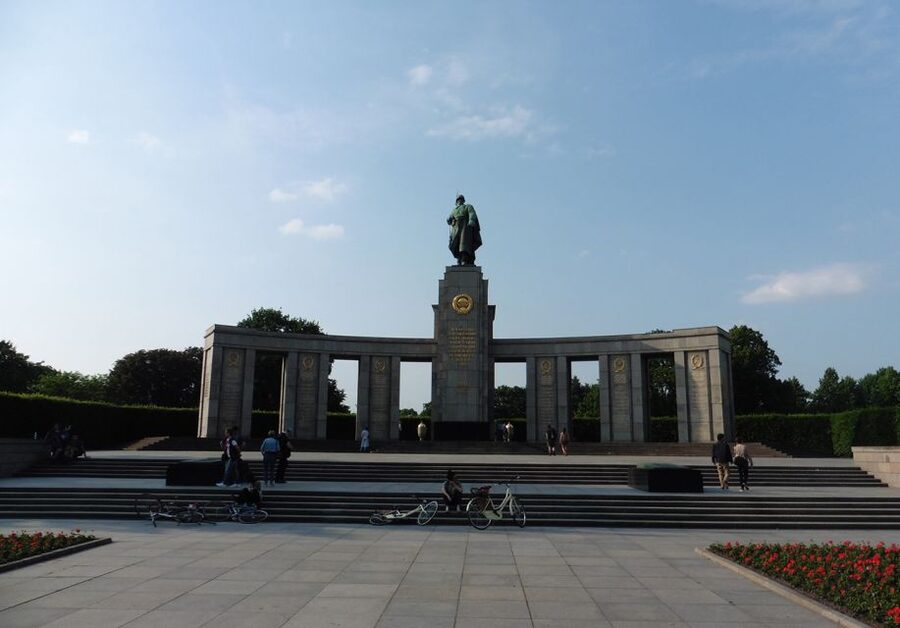
The walk continues into the Tiergarten, Berlin’s large inner-city park, to the Soviet War Memorial. Here you see Soviet T-34 tanks and artillery from World War II.
This is one of the route’s most concrete wartime traces. Instead of hearing only about battles on a map, you encounter the weapons as physical objects in the city. The memorial also opens a discussion of the Soviet role in the defeat of Nazi Germany and the way postwar Berlin marked that victory.
The tanks make this a visually memorable stop, but the subject is not simple. A walking tour has limited time to explain the memorial’s political setting, wartime meaning, and later place in Berlin’s public memory. Listen for how the guide handles those layers rather than treating the site as a military display.
The Tiergarten section also offers a brief change from dense streets and official buildings. Still, it is not a rest stop in the usual sense. You remain on a schedule, and the group continues through the park before reaching the central memorial sites.
Still Berlin, at a slower pace:
- Berlin: Reichstag, Dome and Government District Guided Tour
★ 4.7 · 18,288 reviews - Berlin: 1-Hour City Tour by Boat with Guaranteed Seating
★ 4.3 · 16,993 reviews - Berlin: Boat Tour Along the River Spree
★ 4.4 · 11,252 reviews - Berlin: Hop-on Hop-off Bus Tour with Live Commentary
★ 4.3 · 8,579 reviews
The Holocaust Memorial and the former bunker area
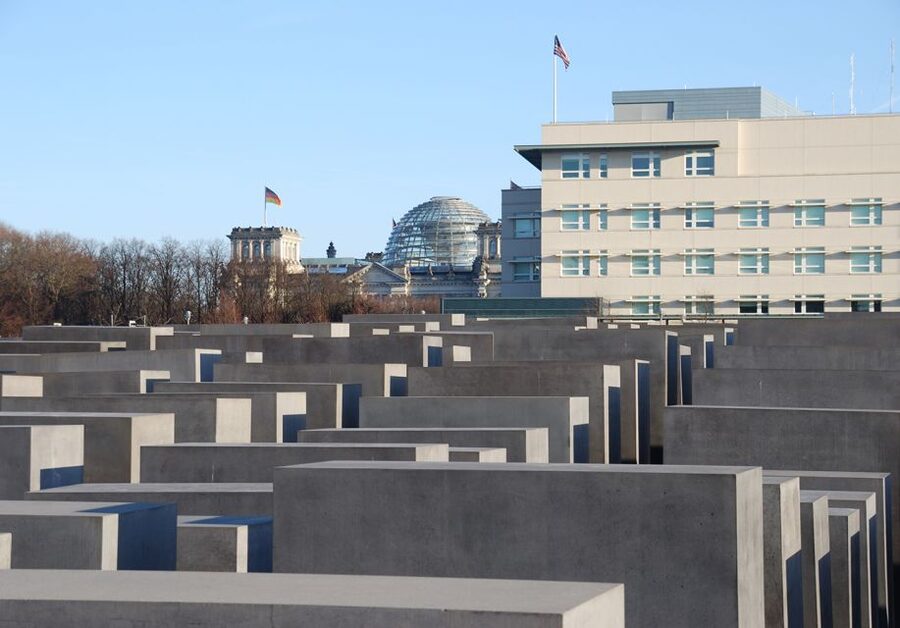
The Memorial to the Murdered Jews of Europe is one of Berlin’s most powerful and debated sites. The tour brings you there as part of the route and explains its connection to the Nazi murder of Europe’s Jews.
The memorial’s field of concrete slabs invites you to move through it, but the tour’s value is the historical setting supplied around the experience. A quick independent visit can leave you with a strong visual impression but little sense of how it fits into the surrounding government quarter. Here, the guide connects the memorial to the city’s former centers of power.
The route then reaches the area where Hitler’s bunker and the New Reich Chancellery were located. The significance lies partly in what is no longer visible. Berlin does not offer a grand, preserved bunker museum at this location. You are instead shown the site and given the historical explanation needed to understand its role at the end of the war.
That can feel anticlimactic if you expect a dramatic ruin. It is also the point. The setting looks like part of a modern city, and the absence of a monumental structure leaves you considering how a place connected to dictatorship has been handled after 1945.
This section is emotionally serious. It combines the victims of Nazi persecution with the final headquarters of the regime responsible for it. The guide needs to keep those subjects distinct and connected, and the positive comments about Carlo’s lively, focused storytelling suggest that this human delivery is a major part of the experience.
The government district during the dictatorship
The tour moves through the government district as it existed during the Nazi period. This helps you see the regime not only as a collection of rallies and battle scenes, but as an administrative system with offices, ministries, security agencies, and military planners.
The walk is especially useful for visitors who have already seen Berlin’s major monuments and want to understand the city’s political geography. You begin to notice how close the buildings and institutions were to one another. Decisions made in offices could lead to persecution and mass murder far beyond Berlin, yet the route keeps bringing you back to ordinary streets and civic spaces.
Some buildings have been replaced, renamed, or assigned new uses. The guide identifies the locations and explains what happened there. This is less visually obvious than the Brandenburg Gate or the memorial field, so you should expect to listen closely.
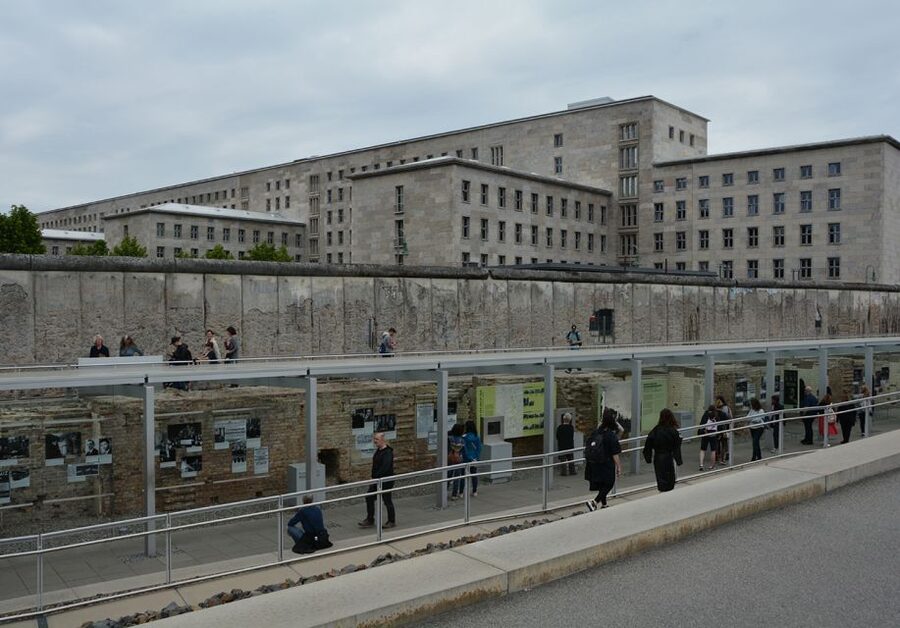
One stop is the Detlev-Rohwedder-Haus, a major government building with wartime connections. The itinerary includes sightseeing here rather than a stated interior visit. That means the building’s importance comes through the guide’s account of its former role and the changing uses of government space in Berlin.
Resistance and the Johann Georg Elser Memorial
The Johann Georg Elser Memorial adds an important human perspective. Elser attempted to assassinate Hitler in 1939, making him one of the clearest examples of individual German opposition to the regime.
His story helps correct a common, overly tidy picture of German society under National Socialism. The dictatorship relied on mass support, fear, pressure, and control, but not everyone accepted it. The tour also includes stories of the German Resistance more broadly, giving you a sense of the dangers faced by people who opposed Hitler.
A memorial to one person can make a vast political subject easier to grasp. Instead of hearing only about institutions, you consider the choice and risk involved in taking action against them. The stop is brief, but it gives the walk moral and personal balance.
This is also a good place to ask questions. The group is small, and the guide’s role is not limited to reciting dates. Carlo is praised for responding carefully and for offering extra suggestions for exploring Berlin, which can make the tour more useful if you want to continue studying the subject afterward.
The Topography of Terror and the former SS headquarters
The final stop is the Topography of Terror Documentation Center. The site is connected to the former headquarters of the SS, the Secret State Police, the Reich Security Main Office, and the Reich Aviation Ministry during World War II.
That list explains why this is a strong ending. The tour has moved from public propaganda and political power to the institutions that enforced Nazi rule. The Topography of Terror gives the guide a clear setting for explaining how surveillance, policing, persecution, and administration worked together.
The itinerary identifies the center as the endpoint, but it does not state that admission or an indoor guided visit is included. You should view the walking tour and the documentation center as related but separate plans unless your booking details say otherwise.
If you have time, the center may deserve a return visit at your own pace. The two-hour walk can introduce the location and its importance, but no tour of this length can cover every document, case, and historical detail connected with the site. The final stop gives you a useful next step rather than pretending the subject has been exhausted.
Ending here also keeps the route practical. You finish at the Topography of Terror instead of returning to the Brandenburg Gate, so you can continue sightseeing from that part of central Berlin or arrange your next activity nearby.
What the guide adds to the experience
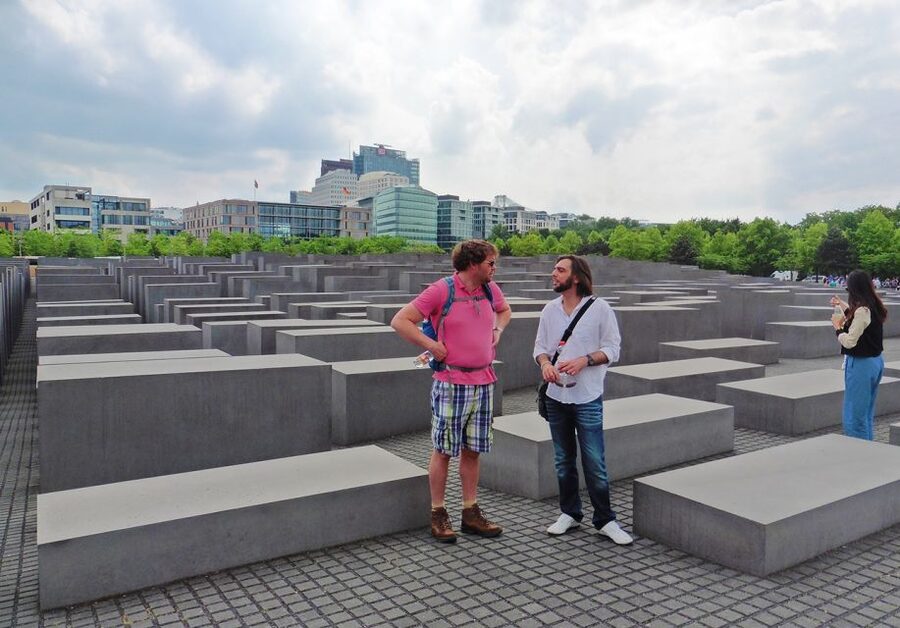
The most praised part of this tour is the guide’s delivery. Carlo is described as highly informed, enthusiastic, lively, and able to hold attention even in wet and cold weather. That matters because several stops are places where you see little more than a building, a plaque, or an open public site.
A guide who simply lists dates would make this route feel flat. The stronger approach is to explain why each location mattered, how the institutions related to one another, and what changed after the war. The available feedback points to that kind of storytelling, including answers to questions and extra Berlin suggestions.
The stated language is German. The guide is described as certified and multilingual in the main highlights, but the activity details list German as the live tour language. If you need another language, ask before paying. This is the single practical point most likely to affect your enjoyment.
The content is serious but suitable for older teenagers as well as adults. One recent family outing specifically considered the tour a good fit for teens and young adults. I agree with that assessment, provided they are ready for the subject matter and a focused two-hour walk.
Price, group size, and comfort
At $43 per person, you are paying for structure and interpretation rather than transport or admission to a major attraction. The guide leads you between important places, supplies context, and helps you see connections that are easy to miss on a self-guided walk.
The price is easier to justify if you have limited time in Berlin, want to ask questions, or find the Nazi-era sites emotionally and historically difficult to organize alone. It is harder to justify if you already know the subject well and are happy reading signs and walking independently.
The group is limited to 10 people, which improves the odds of a personal experience. Several outings became effectively private because only one or two people attended. That is not guaranteed, but a small maximum is still preferable to a large city group for a subject that benefits from quiet attention.
The tour is wheelchair accessible, according to the activity details. You should still prepare for two hours outside in changing weather. Wear suitable clothing and shoes, and allow for the fact that the walk takes place even on public holidays.
Free cancellation up to 24 hours before the start and a reserve-now, pay-later option make the $43 commitment less rigid. Check the available start times before booking, since the duration is fixed at two hours but the departure time can vary.
Who should book this Berlin walk?
I would recommend it to a first-time Berlin visitor who wants a clear introduction to the city’s Nazi-era sites without spending a full day in museums. It also suits anyone who has seen the central landmarks and now wants the political and wartime context behind them.
Families with older teenagers may find the route especially useful. The subject is grim, but the combination of public spaces, resistance stories, and visible wartime objects gives the history several entry points.
You should think twice if you want a relaxed sightseeing stroll. This is not a light city orientation tour. You cover serious material at a steady pace, and the weather can be uncomfortable.
It may also not suit you if you require English or another language. Confirm the language first, because German is the stated option even though the guide is described as multilingual.
Should you book the Time of National Socialism Walking Tour?
Book it if you want a focused, guide-led introduction to Nazi Berlin, especially with a small group and a native Berliner explaining sites that are easy to overlook. The strongest reasons are the route’s clear progression, the attention given to resistance, and the combination of famous landmarks with less obvious government and wartime locations.
Skip it if you prefer to explore at your own speed, need a non-German tour, or dislike walking outdoors in uncertain weather. For most visitors who want historical context in a short window, $43 is fair value, and the high praise for Carlo’s storytelling makes this more than a simple march between landmarks.
FAQ
How long does the walking tour last?
The tour lasts two hours.
Where does the tour begin?
Meet at the exit of the S+U Brandenburger Tor station, exit B, in the direction of Pariser Platz and Straße des 17. Juni. Look for the guide with the Get Your Guide, You in Berlin flag.
Where does the tour finish?
The walk finishes at the Topography of Terror.
What language is the tour conducted in?
The listed live tour language is German. The guide is also described as certified and multilingual, so confirm language availability before booking if you need another language.
What locations are included?
The route includes Pariser Platz, the Brandenburg Gate, the Reichstag, the Soviet War Memorial in the Tiergarten, the Holocaust Memorial, the Johann Georg Elser Memorial, Detlev-Rohwedder-Haus, and the Topography of Terror.
Will I see the location of Hitler’s bunker?
Yes. The tour visits the area where Hitler’s bunker and the New Reich Chancellery were located.
Is the tour wheelchair accessible?
Yes, the activity is listed as wheelchair accessible.
What happens if the weather is bad?
The tour operates in all weather conditions and on public holidays. You should wear suitable clothing and shoes for an outdoor walking tour.
Just added around Berlin
- Private Walking Tour in Berlin: Hitler’s Germany & WWII★ 5.0 · 7 reviews
- The History of Berlin: WWII PRIVATE Walking Tour With Locals★ 5.0 · 209 reviews
- Private Berlin WWII and Cold War History Tour with Local Expert Guide★ 5.0 · 28 reviews
- Private Walking Tour Berlin 3 hours: Brandenburg, Historic Center★ 5.0 · 7 reviews
- Berlin: Private Bike Tour of the Berlin Wall and Third Reich★ 5.0 · 23 reviews
- Berlin: Guided Private Bike Tour to Explore the Highlights★ 5.0 · 12 reviews
- Berlin Photography Masterclass – Private Photography Lesson★ 4.5 · 23 reviews
- Group Driving Tour 1 to 6 people. Berlin Shore Excursion incl pick-up at Port★ 5.0 · 8 reviews
Walking Tours, compared.
Old Town & Viktualienmarkt City Walk in German
Read our review →Browse the lists this tour appears in