
Reviewed · HISTORICAL TOURS
Berlin Uncensored: A History of Sex & Freedom
Berlin keeps its secrets in plain sight. Berlin Uncensored brings sex, science, repression, nightlife, and queer culture into one thoughtful walking tour led by Jeff, a sociologist and certified sex educator. Over about three and a half hours, you move from Nollendorfplatz to historic sites in Schöneberg and Tiergarten, then return to Nollendorfplatz.
I like the small group limit of 10, which gives you room to ask frank questions without shouting across a crowd. I also like the use of rare photos, videos, and augmented reality to connect today’s streets with the people and places once found there. The main consideration is simple: this is an adult history tour, not a general sightseeing walk, and some subjects involve persecution, sex work, Nazi violence, and sexual health.
In This Review
- Five things to know before you book
- Why Berlin’s sex history needs a wider lens
- Starting at Nollendorfplatz with nudism and body freedom
- Magnus-Apotheke and the lost Institute for Sexual Science
- The LGBTQ memorial and Nazi persecution
- Kurfürstenstraße and the city’s working sex culture
- Schwerinstraße 9 and Berlin’s lesbian world
- Christopher Isherwood and the city behind Cabaret
- Eldorado and the many faces of 1920s nightlife
- Divided Berlin, FKK, and the AIDS crisis
- Returning to Nollendorfplatz and Berlin today
- How the AR tools affect the experience
- Price, timing, and practical value
- Who will get the most from Berlin Uncensored
- Should you book it?
- FAQ
- Where does Berlin Uncensored begin?
- What time does the tour start?
- How long does the experience last?
- Where does the tour end?
- How many people can join the tour?
- Is there a minimum age?
- What happens if bad weather cancels the tour?
Five things to know before you book
- Magnus Hirschfeld’s institute is the historical heart: Learn about Berlin’s pioneering work in sexology, gender identity, contraception, and sexual health.
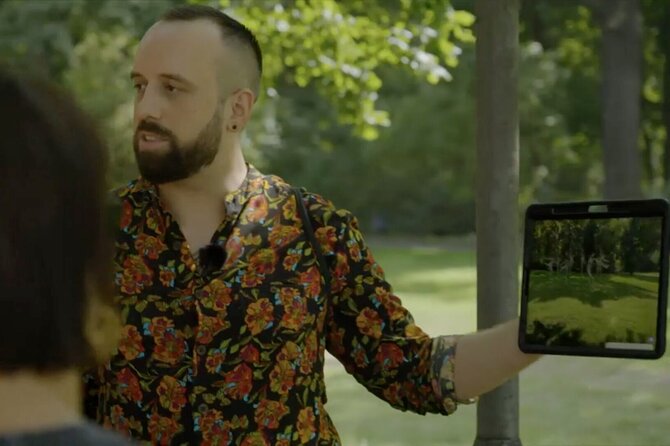
- Jeff brings academic knowledge and a calm tone: His training as a sociologist and certified sex educator helps keep difficult subjects clear and respectful.
- The group never exceeds 10 people: That matters when the tour invites questions about intimate or complicated topics.
- The route links past and present: You connect 1920s cabaret and queer nightlife with Berghain, KitKat, Folsom Europe, and modern sex-positive culture.
- AR adds faces and images to the streets: The technology can make lost places easier to picture, though it may feel less essential at some stops.
- Plan for outdoor walking: The tour begins at 2:00 pm, ends where it starts, and may be canceled in heavy rain or storms.
Why Berlin’s sex history needs a wider lens
This tour is not simply about famous clubs or colorful anecdotes. It looks at the forces that shaped Berlin’s sexual culture: medical research, changing laws, nightlife, gender identity, censorship, fascism, divided-city politics, and the AIDS crisis.
That wider view is the tour’s real value. You learn why Berlin became associated with sexual freedom, but you also see how fragile that freedom was. The city’s open culture did not develop in a straight line. It expanded, was violently suppressed, returned in new forms, and continues to change.
I especially like that the tour gives space to sexual science. Many people know Berlin for cabaret and nightlife, but fewer know about Magnus Hirschfeld and the Institute for Sexual Science. That missing chapter helps explain why Berlin mattered far beyond its bars and clubs.
The tone is educational rather than sensational. Jeff’s background gives the subject structure, and the small group makes it easier to ask questions. One particularly useful strength is the respectful, trauma-informed approach used when discussing persecution and sexual violence.
More History Tours in Berlin
- Berlin: Natural History Museum Entrance Ticket
★ 4.6 · 3,382 reviews - Berlin: World Heritage Cruise to Potsdam
★ 4.5 · 1,435 reviews - Berlin Historical Highlights Walking Tour
★ 4.9 · 657 reviews
Starting at Nollendorfplatz with nudism and body freedom
The tour begins at Alnatura Super Natur Markt on Else-Lasker-Schüler-Straße 18, near Nollendorfplatz. After introductions, you hear about FKK, the German body-free movement often associated with public nudism.
The subject reaches back to the 19th century and continues into modern life at Berlin’s lakes and parks. This opening gives you a useful correction to the usual nightclub-focused image of Berlin. Sexual freedom here is also tied to attitudes toward the body, nature, health, and social rules.
The first stop lasts only about 10 minutes, so expect a brisk introduction rather than a long lecture. It sets up a central idea for the rest of the walk: Berlin’s sexual culture has included both public freedom and private rebellion, and those ideas have not always meant the same thing to everyone.
Magnus-Apotheke and the lost Institute for Sexual Science
The stop at Magnus-Apotheke is one of the most important parts of the experience. Berlin was home to the world’s first Institute for Sexual Science, founded by Magnus Hirschfeld, whose work examined desire, relationships, contraception, and gender identity.
Jeff explains the institute’s discoveries and the wider questions its staff explored. The discussion includes the development of the rubber condom, early work related to Viagra precursors, and advances in sexual health. It also covers some of the first gender affirmation surgeries, including procedures connected with Dora Richter, Lili Elbe, and Karl M. Baer.
The institute was destroyed by the Nazis in 1933. That destruction was not just an attack on a building. It wiped out research, records, and a serious attempt to treat sexual variation and gender identity as subjects worthy of study and care.
This 20-minute stop carries more weight than its short duration suggests. The AR material and archival images are especially useful here because the original institute is gone. You get a stronger sense of what Berlin lost, rather than hearing only an abstract account of political repression.
The LGBTQ memorial and Nazi persecution
At the Monument to Homosexuals Persecuted Under National Socialist Regime, the tour turns sharply darker. The Nazis closed erotic clubs, censored sexual material, and attacked people who did not fit their narrow ideal of sexuality and gender.
You hear about the persecution of LGBTQIA+ people, sex workers, and others labeled degenerate by the regime. Many were arrested and sent to concentration camps, where some were forced to wear pink triangles. That symbol was later reclaimed by LGBTQIA+ rights movements.
The stop also covers Ernst Röhm and the Night of the Long Knives. Röhm was a high-ranking Nazi who was known to be homosexual, yet his position offered no protection once political power and personal suspicion turned against him.
This is not a lighthearted section, and it should not be. The tour works best when it places Berlin’s sexual freedoms beside the consequences of losing them. If you prefer a purely entertaining afternoon, this part may feel heavy. If you want historical context, it is essential.
Still Berlin, at a slower pace:
- Berlin: Reichstag, Dome and Government District Guided Tour
★ 4.7 · 18,288 reviews - Berlin: 1-Hour City Tour by Boat with Guaranteed Seating
★ 4.3 · 16,993 reviews - Berlin: Boat Tour Along the River Spree
★ 4.4 · 11,252 reviews - Discover Berlin Half-Day Walking Tour
★ 5.0 · 9,624 reviews
Kurfürstenstraße and the city’s working sex culture
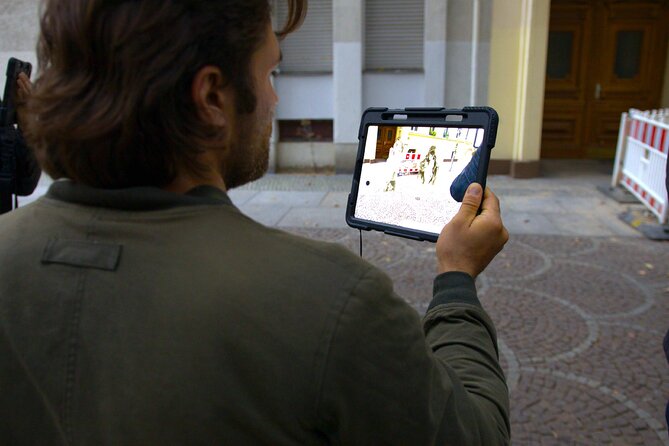
At Kurfürstenstraße, you explore Berlin’s pre-Nazi sex economy and underground nightlife. The area is linked with prostitution, brothels, fetish interests, and kink culture that existed long before such subjects became more visible in popular culture.
The guide’s task here is to explain how these spaces operated within the city, rather than simply point out places associated with scandal. You learn that Berlin’s reputation for sexual experimentation was built through many kinds of people and venues, from commercial sex businesses to private communities.
This stop lasts about 15 minutes. Because the tour is outdoors, you should expect to hear stories while standing on present-day streets rather than entering historic interiors. That can be a limitation, but it also keeps the focus on how the old culture has been layered onto the modern city.
Schwerinstraße 9 and Berlin’s lesbian world
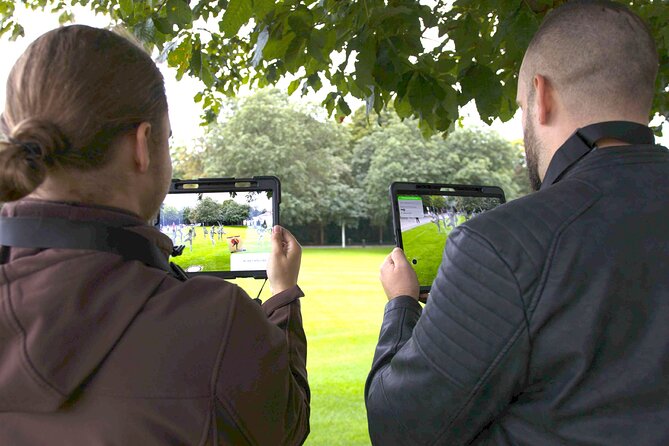
The stop at Schwerinstraße 9 shifts attention to women. In the early 20th century, Berlin had a major lesbian community, with meeting places such as the Toppkeller offering room for women who rejected conventional social roles.
You hear about Claire Waldoff, a cabaret singer known for her lesbian identity, and the Lavender Song, which links music with queer expression. The story of Josephine Baker adds another layer. She was a celebrated Black performer in Berlin, but her fame did not shield her from racial discrimination.
I value this stop because it prevents the tour from becoming a story about gay men alone. Berlin’s queer past included women, performers, migrants, artists, and people negotiating several forms of discrimination at once.
It is a brief 10-minute stop, so the guide cannot cover every figure or institution in detail. Still, it gives you a strong reason to keep exploring Berlin’s queer history after the tour.
Christopher Isherwood and the city behind Cabaret
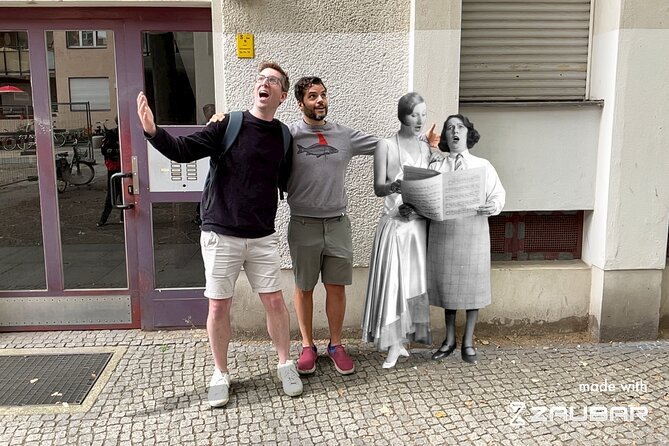
At the residential building associated with Christopher Isherwood, the tour examines the foreign writers and artists drawn to Berlin during the 1920s and early 1930s. Isherwood’s experiences became the basis for work later adapted into Cabaret.
His memoirs offer a personal window into gay nightlife and the sense of possibility that attracted people from across Europe. This stop helps connect literature and popular culture with the actual streets where those stories developed.
You will not be visiting a museum dedicated to Isherwood. Instead, the building and surrounding area serve as a prompt for discussion. That is typical of the tour: the city itself is the display, while Jeff supplies the historical links.
For anyone who knows Cabaret, this section makes the film’s world easier to place. It also reminds you that the famous version of 1920s Berlin is based on real communities, real risks, and real people who did not know how quickly their freedoms would disappear.
Eldorado and the many faces of 1920s nightlife
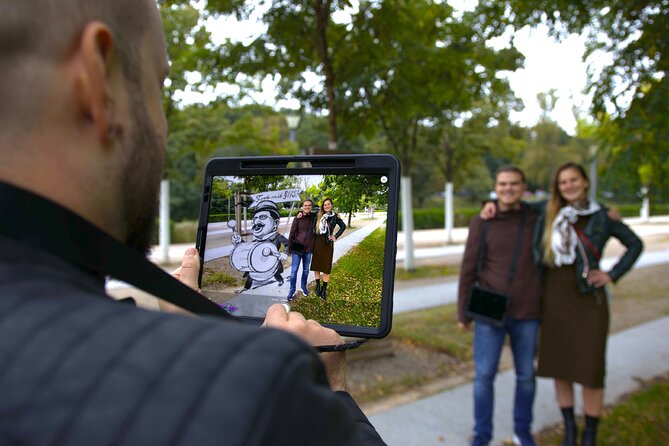
At the site of the former Eldorado Club, you hear about one of Berlin’s best-known nightlife venues. It welcomed drag performers and sexually open patrons, and it was even visited by high-ranking Nazi figures before the regime began attacking what it called degeneracy.
Ernst Röhm was associated with the club, which makes Eldorado a useful place to examine the contradictions of the period. Public openness and private prejudice could exist side by side. People who enjoyed Berlin’s freedoms could also support movements that later destroyed them.
The story of a visiting journalist from Vogue who considered a drag queen the most beautiful woman in Berlin adds a vivid detail. It shows how Eldorado was not merely a local bar. It had an international reputation and helped shape outside ideas about Berlin.
Today, the club is gone, and the stop is located near Denns BioMarkt. That absence is part of the lesson. The tour asks you to picture the venue through archival images and AR rather than expect a preserved interior.
Divided Berlin, FKK, and the AIDS crisis
At Internationale Stele GEGEN DAS VERGESSEN, the story moves into the postwar period. Berlin’s division created two different approaches to sexuality.
In West Berlin, the sexual revolution encouraged more open attitudes toward relationships, pornography, and alternative lifestyles. In East Berlin, personal freedom was restricted in many areas, but public nudism became highly popular. FKK therefore appears again, now as part of the culture of East Germany.
The tour also explains why the Berlin Wall was called the condom of the GDR, a sharp phrase that captures the way the border separated social worlds. You also hear how a conservative politician helped save thousands of lives during the AIDS crisis.
This section adds political context without abandoning the central subject. It shows that sexual culture is shaped by more than personal attitudes. Government policy, borders, public health, and ideology all affect how people live.
Returning to Nollendorfplatz and Berlin today
The final stop returns to Nollendorfplatz and brings the story into the present. You hear about Berghain, known for its strict no-photo policy and hedonistic parties, along with KitKat Club, Insomnia, and Lab.Oratory.
The point is not to promise entry to these clubs. The tour offers background and insider tips about Berlin’s modern sex-positive nightlife and events. That makes it useful if you want to understand the city’s current scene before deciding where to go on your own.
Folsom Europe also receives attention. The event is described as the world’s largest fetish festival and draws thousands of people to Berlin. This is a good example of how older underground interests have become organized public events, complete with international audiences.
The modern section is only about 15 minutes. It gives you a map of ideas and places, but not a complete nightlife guide. You will still need to check current club rules, schedules, and entry requirements separately.
How the AR tools affect the experience
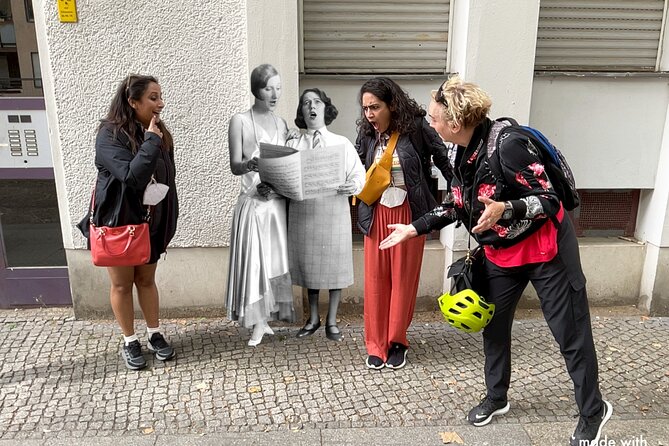
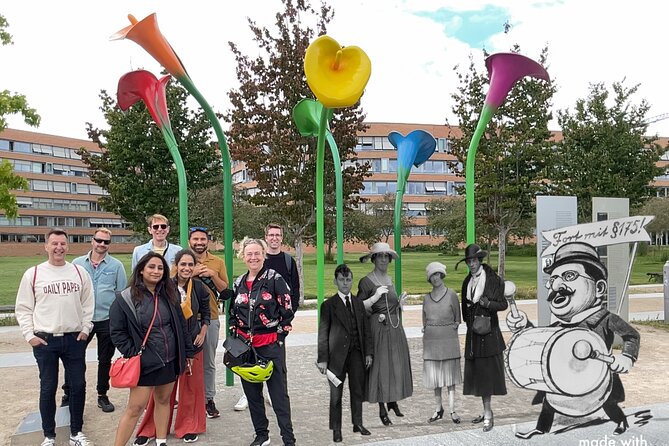
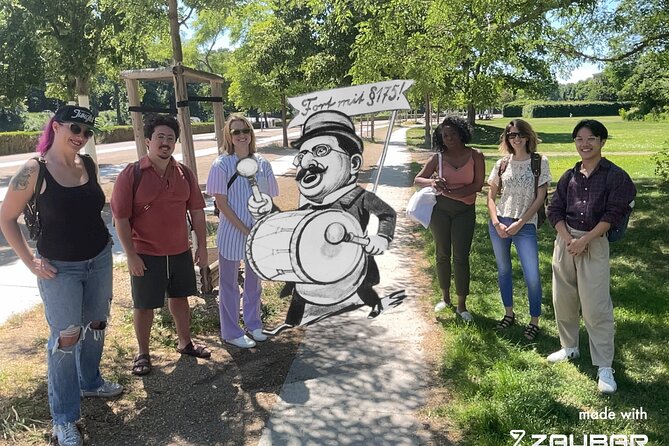
The tour includes more than 200 rare historical photos, videos, and archival materials. AR elements and Mixies let you see history brought into the present streets, and you can take personalized photos using the digital effects.
I like this approach when the original building has vanished. A photograph of Eldorado or the Institute for Sexual Science can make a lost place easier to picture. It also helps put historical figures and performers alongside the streets where they lived or worked.
The technology is not perfect for every moment. Some people may find AR unnecessary during a strong explanation, especially when the surrounding location already gives the story enough atmosphere. The best way to think about it is as an extra layer, not the reason to book the tour.
Price, timing, and practical value
The price is $82.90 per person for about three and a half hours. That is not a budget walking tour, but the value is easier to see when you consider the small maximum group of 10, the specialist guide, the archival material, and the subject’s unusual focus.
You are paying for interpretation, not admission tickets. The listed stops are free, and the tour does not include a coffee or tea if the group takes a café break. Still, Jeff’s academic training and the chance to ask questions can make this more useful than a standard audio guide or a quick look at a memorial.
The tour is offered in English and begins at 2:00 pm. It returns to the meeting point, which makes it easy to continue your evening nearby. It is booked around 38 days ahead on average, so I would not leave it until the last moment if your Berlin dates are fixed.
Group discounts are available. That may improve the value for an organized group, and the tour has already been used for several conference groups. Mobile tickets make arrival simple, and the meeting point is near public transportation.
You must be at least 18. Most people can participate, service animals are allowed, and the activity requires good weather. Heavy rain or a storm can lead to cancellation and a full refund, or you may be offered another date. You can also cancel for a full refund up to 24 hours before the start time.
Who will get the most from Berlin Uncensored
I would choose this tour if you enjoy social history, queer history, medical history, political history, or Berlin’s cultural life beyond the usual museums. It suits curious adults who want to ask questions and are comfortable discussing sex, gender, prostitution, pornography, persecution, and sexual health.
It is also a strong choice if you have already seen the Brandenburg Gate and Museum Island and want a more unusual way to understand the city. The tour links famous names such as Isherwood, Hirschfeld, Baker, and Röhm with streets and memorials that are easy to miss.
I would think twice if you want a fast photo tour, a general overview of Berlin, or a visit inside historic buildings. Much of the experience happens outdoors, and several stops last only 10 or 15 minutes. The subject matter also includes painful history, so it deserves your full attention.
Should you book it?
Book Berlin Uncensored if you want a serious, adult look at how Berlin’s sexual culture was formed, broken, and rebuilt. Jeff’s calm, informed style, the small group, and the visual material make the complicated parts easier to follow.
The $82.90 price is fair for a specialist walking tour with a maximum of 10 people, though it is more than you would pay for a basic city walk. I would book ahead, wear comfortable shoes, and keep the rest of your afternoon flexible. If you want Berlin’s cabaret, queer, scientific, and nightlife stories tied together in one route, this is a worthwhile choice.
FAQ
Where does Berlin Uncensored begin?
The tour begins at Alnatura Super Natur Markt, Else-Lasker-Schüler-Straße 18, 10783 Berlin, Germany.
What time does the tour start?
The tour starts at 2:00 pm.
How long does the experience last?
The walking tour lasts approximately 3 hours and 30 minutes.
Where does the tour end?
The tour ends back at the meeting point.
How many people can join the tour?
The group has a maximum of 10 participants.
Is there a minimum age?
Yes. The minimum age is 18.
What happens if bad weather cancels the tour?
In extreme weather, such as heavy rain or a storm, the tour may be canceled. You will be offered another date or a full refund.
Just added around Berlin
- Private Walking Tour in Berlin: Hitler’s Germany & WWII★ 5.0 · 7 reviews
- The History of Berlin: WWII PRIVATE Walking Tour With Locals★ 5.0 · 209 reviews
- Private Berlin WWII and Cold War History Tour with Local Expert Guide★ 5.0 · 28 reviews
- Private Walking Tour Berlin 3 hours: Brandenburg, Historic Center★ 5.0 · 7 reviews
- Berlin: Private Bike Tour of the Berlin Wall and Third Reich★ 5.0 · 23 reviews
- Berlin: Guided Private Bike Tour to Explore the Highlights★ 5.0 · 12 reviews
- Berlin Photography Masterclass – Private Photography Lesson★ 4.5 · 23 reviews
- Group Driving Tour 1 to 6 people. Berlin Shore Excursion incl pick-up at Port★ 5.0 · 8 reviews
Historical Tours, compared.
City History Canal Sightseeing Tour on a Motorboat
Read our review →
Browse the lists this tour appears in