
Reviewed · HISTORICAL TOURS
Berlin Uncensored: A History of Sex & Freedom
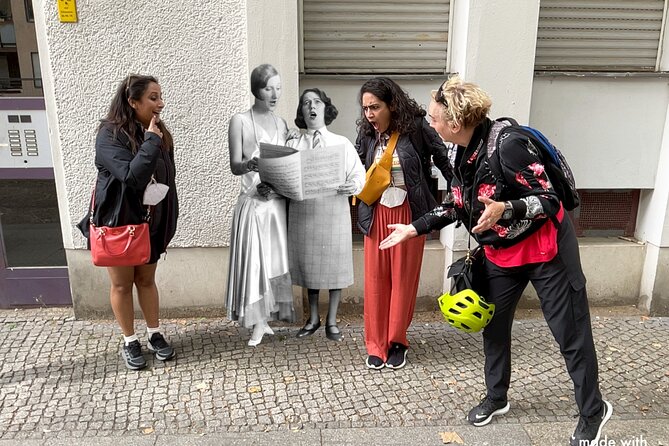
Berlin’s wild side has a long paper trail. This 210-minute walking tour traces sex, freedom, censorship, and queer life from the 1920s to today, using more than 200 archival photos, films, recordings, and quotes. I especially like the way guide Jeff connects major political events to ordinary questions about bodies, relationships, and nightlife. The augmented reality scenes are another strong point, bringing vanished clubs and locations into the streets around you.
I also like the small group of up to 10 people, which gives the discussion room to breathe. Jeff is a sociologist, certified sex educator, and journalist, and his calm, open approach suits a subject that can easily become either silly or overly academic. The main drawback is that you usually view historic sites from outside rather than enter them, and three and a half hours without a scheduled refreshment stop may feel long.
In This Review
- Key points to know before booking
- Why Berlin’s sexual past makes such a good walking tour
- Starting at Nollendorfplatz and the Magnus-Apotheke
- Remembering persecution at the memorial
- Kurfürstenstraße and the working history of sex
- Schwerinstraße and Nollendorfstraße
- The stop at Denns BioMarkt and the value of the pauses
- Prinz Eisenherz and Berlin’s activist culture
- Metropol and the last look at nightlife
- How the augmented reality actually helps
- Price, group size, and what you receive
- Who will enjoy this unusual Berlin walk
- Should you book Berlin Uncensored?
- FAQ
- Where does the tour begin?
- How long does the tour last?
- What language is the tour conducted in?
- Who leads the tour?
- Is the tour wheelchair accessible?
- Are children allowed to join?
- Is public transportation included?
- What happens if I need to cancel?
Key points to know before booking
- The route begins at Nollendorfplatz, outside Alnatura at Else-Lasker-Schüler-Straße 18.
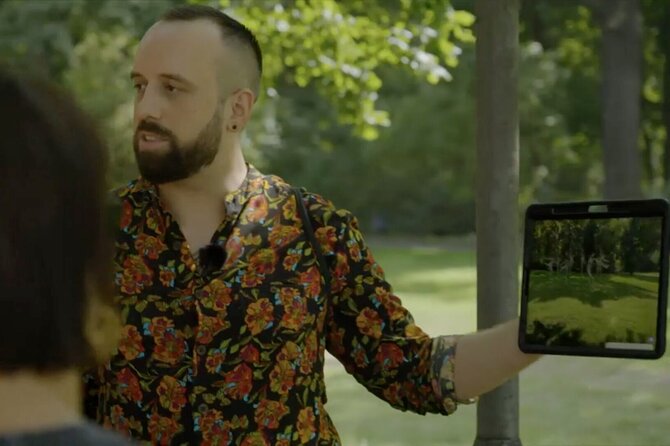
- Jeff leads the walk in English, combining sociology, journalism, archival research, and personal commentary.
- Augmented reality is used as a storytelling tool, not as a constant phone-based distraction.
- The route covers difficult subjects, including Nazi persecution, censorship, prostitution, AIDS, and discrimination.
- The tour is designed for adults only, and children under 18 cannot join.
- Bring a public transport ticket, since transport is not included.
Why Berlin’s sexual past makes such a good walking tour
Berlin is often sold through grand museums, royal buildings, and Cold War landmarks. This tour takes a different route. It asks how people lived, loved, worked, dressed, organized, and resisted control in the same city.
That approach gives you more than a collection of scandalous stories. The walk links sexuality to medicine, religion, law, politics, feminism, queer liberation, war, and the division between East and West Germany. You get a clearer sense of why Berlin developed its reputation for personal freedom, and why that freedom was never guaranteed.
The tone is educational but not stiff. Jeff uses quizzes, questions, images, and short stories to keep the group involved. The subject matter can be provocative, but the tour is built around context rather than shock value. You should expect frank discussion of sex, kink, prostitution, gender, sexual minorities, and erotic culture.
The small-group format matters here. With no more than 10 people, the walk can include conversation without turning into a lecture delivered to a crowd. You may also find that the other members of the group have different reasons for booking, which gives the discussion a wider range of views.
More History Tours in Berlin
- Berlin: Natural History Museum Entrance Ticket
★ 4.6 · 3,382 reviews - Berlin: World Heritage Cruise to Potsdam
★ 4.5 · 1,435 reviews - Berlin Historical Highlights Walking Tour
★ 4.9 · 657 reviews
Starting at Nollendorfplatz and the Magnus-Apotheke
Meet in front of the Alnatura organic supermarket at Nollendorfplatz, at Else-Lasker-Schüler-Straße 18. This is a practical starting point, but do not expect a grand monument or formal tour office. Look for the entrance to the store and arrive ready to walk.
After about five minutes on foot, the group reaches Magnus-Apotheke. The stop lasts around 20 minutes and introduces Berlin’s role in contraception and sexual health. One of the more unusual facts connected with the tour is the invention of the first rubber condom in Berlin.
This opening works well because it sets up a theme that returns throughout the walk: Berlin’s sexual story is not only about clubs. It also involves science, public health, access to contraception, and changing ideas about what people should be allowed to know about their own bodies.
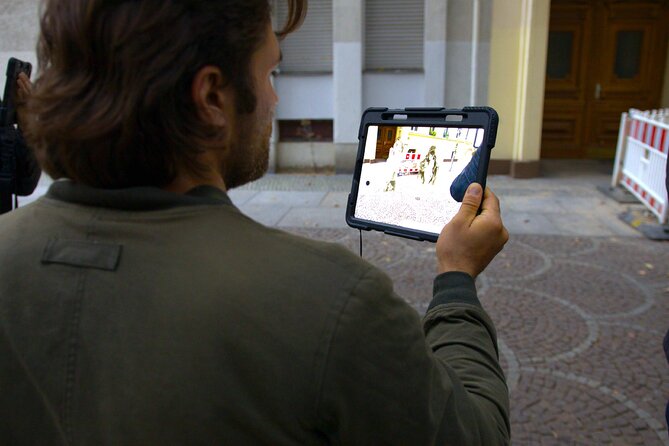
The guide uses archival material to give the story a face and a setting. You may see old images, videos, audio, or printed words on the iPad rather than simply listening to a spoken account. That mix helps the early section feel concrete.
Remembering persecution at the memorial
The route then continues to the Memorial to the Homosexuals Persecuted Under Nazism. The guided portion lasts about 15 minutes.
This is the point where the mood changes. Earlier stories about nightlife, experimentation, and sexual science give way to censorship, criminalization, and persecution. The memorial provides a necessary pause and keeps the tour from treating Berlin’s past as one long party.
You learn how the Nazi regime shut down erotic magazines, cabarets, clubs, and organizations connected to sexual freedom. The tour also addresses the persecution of sexual minorities and the fact that people could be sent to concentration camps because of their sexuality.
The discussion includes the regime’s double standards. That is important, because Nazi sexual policy was not simply a blanket ban on all sexual behavior. It controlled sexuality according to ideology, gender, race, reproduction, and political loyalty. Jeff’s role is useful here: he can place individual stories within larger social systems.
If you prefer light sightseeing, this section may feel heavy. It should. The walk is at its best when it treats sexual history as part of political history, not as a string of amusing anecdotes.
Kurfürstenstraße and the working history of sex
From the memorial, you walk about 10 minutes to Kurfürstenstraße, where the guided discussion lasts around 20 minutes. The area connects the tour to Berlin’s sex trade and to the working realities behind the city’s reputation for sexual freedom.
This stop helps you think about the difference between a city’s image and people’s actual lives. The tour covers sex work, regulation, public attitudes, and the way institutions have shaped the spaces where sexual commerce takes place.
The stories are not presented as simple tales of liberation. Freedom can mean different things depending on your job, gender, legal status, and access to health care. That balance is one reason the tour has more value than a standard nightlife walk.
You should also expect to remain outdoors. The tour visits the locations and explains their importance, but it does not promise entry into historic clubs or private premises. If you imagined a series of indoor visits, adjust your expectations before booking.
Still Berlin, at a slower pace:
- Berlin: Reichstag, Dome and Government District Guided Tour
★ 4.7 · 18,288 reviews - Berlin: 1-Hour City Tour by Boat with Guaranteed Seating
★ 4.3 · 16,993 reviews - Berlin: Boat Tour Along the River Spree
★ 4.4 · 11,252 reviews - Discover Berlin Half-Day Walking Tour
★ 5.0 · 9,624 reviews
Schwerinstraße and Nollendorfstraße
The next stops are Schwerinstraße, for about 15 minutes, and Nollendorfstraße, for about 10 minutes. Together, they extend the story into queer life, lesbian bars, feminist movements, and the social networks that made Berlin a place for sexual experimentation and political organizing.
The tour has covered the 1920s by this stage, including cabarets, clubs, nudism, and the blurred line between performance and sexuality. These streets help show that liberation did not come from nightlife alone. It also came from communities, writers, activists, health workers, and people who challenged accepted ideas about relationships and gender roles.
The period after the Second World War receives careful attention too. West Berlin became a center of sexual liberation, while East Germany developed its own complicated relationship with nudism and social control. The tour explains how East Germany embraced FKK, or Freikörperkultur, while still limiting other forms of sexual expression.
That contrast is one of the most useful parts of the experience. A bare body could be accepted in one setting while private relationships, gender expectations, or public discussion remained restricted. The history is not neat, and the walk does not pretend it is.
The stop at Denns BioMarkt and the value of the pauses
Denns BioMarkt is listed as a 15-minute guided stop. Like the other street locations, it serves as a point for discussion rather than a shopping break or a meal stop.
These pauses are important because the tour carries a lot of information. Jeff draws on more than 200 rare photos, videos, recordings, and quotations, and the group needs time to absorb it. The route is not just a brisk walk between attractions.
Still, pacing is the main practical concern. The full experience lasts 210 minutes, and there is no formal refreshment stop included. One person specifically wished for a reserved lunch or drink break, especially because the subject encourages long conversations.
I would eat beforehand and carry water. If rain begins, the guide has shown that he can adjust the plan and keep the walk going, but comfortable shoes and weather-ready clothing remain sensible choices.
Prinz Eisenherz and Berlin’s activist culture
The 20-minute stop at Prinz Eisenherz brings the tour toward books, publishing, queer expression, and the role of specialist spaces in a city’s social life.
This part is useful for understanding how ideas spread. Sexual freedom depends not only on clubs, but also on people being able to find books, images, health information, political arguments, and other people with similar experiences.
The tour also reaches the AIDS crisis and the changes it forced within Berlin’s sexual communities. That chapter adds public health, grief, activism, and safer-sex education to the story. It prevents the modern section from becoming a simple celebration of partying.
For me, this is where Jeff’s background as a certified sex educator is especially relevant. He can discuss sexual culture without stripping away its health and social consequences. You get a more grounded picture of why education and community support matter.
Metropol and the last look at nightlife

The final major stop is Metropol, with about 20 minutes of guided discussion before the group returns to Alnatura. The building and its history connect to Berlin’s performance culture and nightlife, making it a fitting place to consider the city today.
The modern section includes the KitKat Club, Berghain, Lab.Oratory, Folsom Europe, fetish culture, and the link between electronic music and underground scenes. You learn how Berlin’s current reputation grew from earlier traditions of cabaret, experimentation, queer organizing, and resistance to social control.
The tour does not take you inside those clubs. Instead, it offers context and insider tips about the modern sex-positive scene and related events. That is valuable if you want to understand what these places represent, but it is not a substitute for a club visit.
The return to the starting point keeps the route simple. You finish where you began, rather than needing to find your way across town after a long walk.
How the augmented reality actually helps
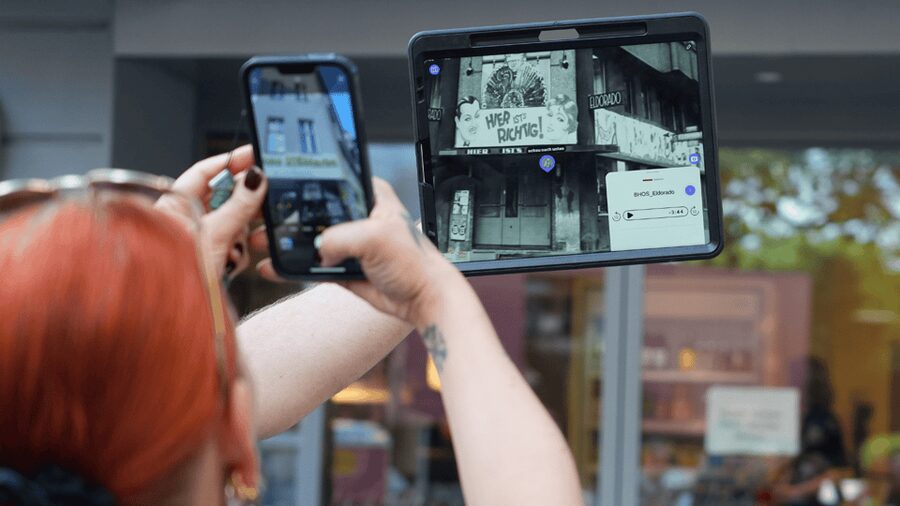
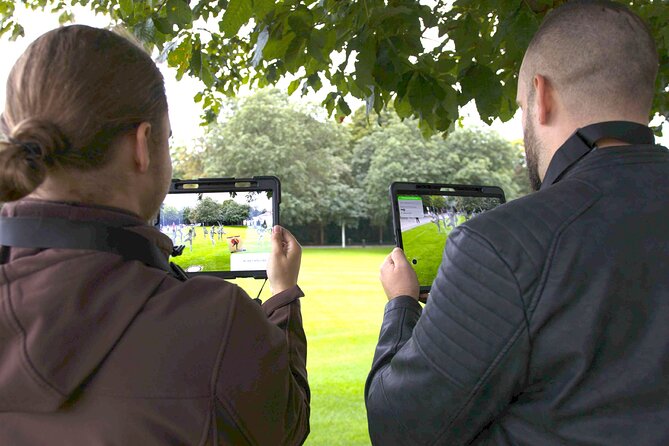
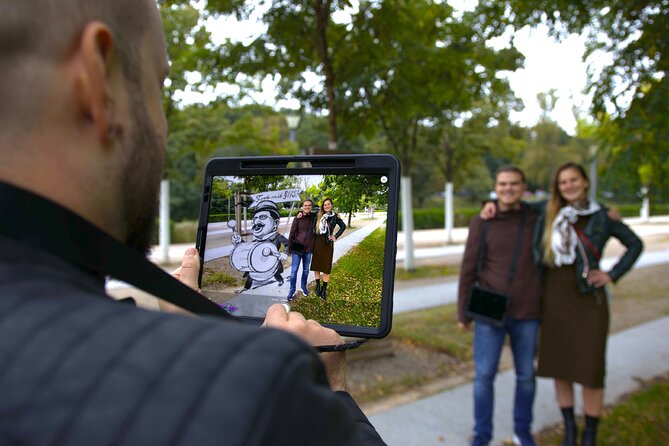
The augmented reality is one of the tour’s main selling points, and expectations matter. You are not handed a headset and sent into a virtual world. Jeff uses an iPad to show vanished clubs, historic scenes, images, video clips, sound, and other material at the places connected with them.
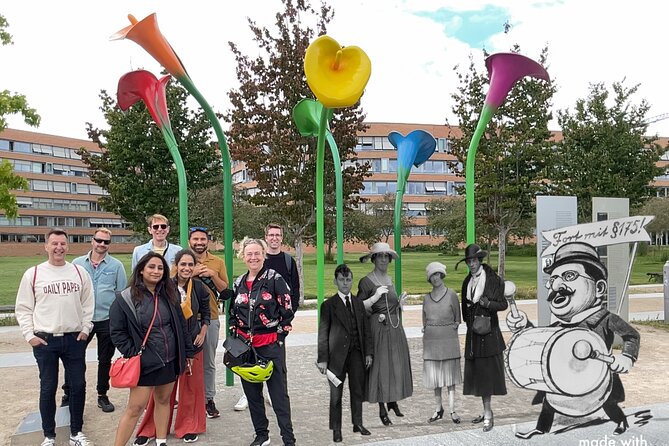
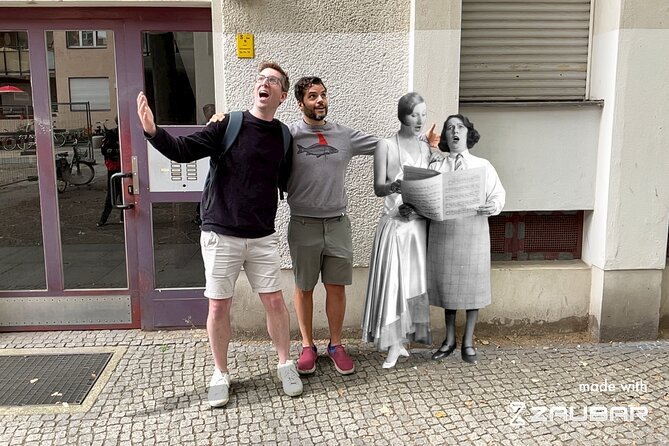
That method has a clear benefit. When a building has changed or a club has disappeared, a photograph alone may feel remote. Seeing the old setting over the present street gives you a better sense of time passing.
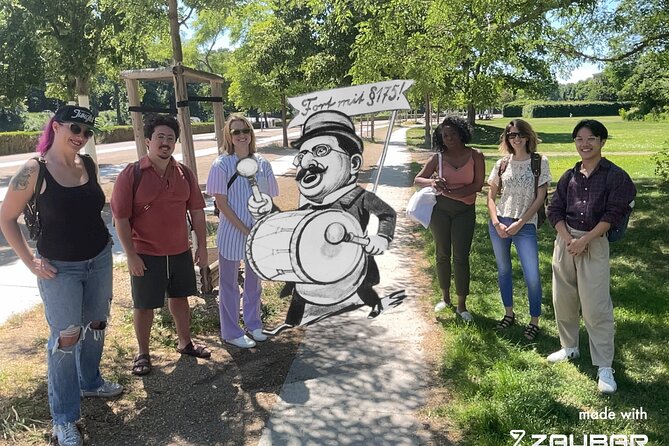
The guide also uses AR for personalized photos, called Mixies. You can take playful images with historical or themed elements, which gives the experience a lighter touch after some of the more serious sections.
The technology is not perfect. One participant expected a more dramatic AR experience and found some of the stops closer to an outdoor talk with visual aids. That is a fair warning. Book this for the stories and interpretation first, then treat the AR as a strong extra.
Another person was initially worried that the technology would become annoying, but found Jeff used it well. That is the best way to think about it. The iPad should support the story, not replace the guide.
Price, group size, and what you receive
At $81 per person, this is not a cheap general sightseeing walk. The value depends on your interest in Berlin’s social history and on how much you enjoy discussion.
You receive three and a half hours with a specialist guide, a small group, extensive archival material, AR presentations, historical locations, and suggestions for modern sex-positive nightlife and events. The experience also covers several eras and difficult subjects that would be hard to understand from a standard city walk.
I think the price is reasonable for someone who wants a focused cultural study rather than a quick orientation tour. It is less convincing if you mainly want to enter clubs, visit museums, or see Berlin’s famous buildings.
Public transport is not included, so bring a valid ticket if you need transit before or after the walk. The tour itself is on foot, and some paths may be bumpy. It is wheelchair accessible, with accessible toilets available by request. English is the tour language, and videos include English, German, or both languages.
The activity is for adults only. It is also worth noting that some parts take place in high-stimulation surroundings with strong sensory input. Visual descriptions can be provided for people with visual disabilities, and mask use indoors can be arranged when needed.
Who will enjoy this unusual Berlin walk
I would recommend it to you if you:
- Want Berlin history beyond palaces, war, and the Wall
- Are interested in queer history, feminist movements, sex work, or sexual science
- Enjoy a guided discussion with room for questions
- Like archival photos, film, audio, and interactive technology
- Want background before visiting Berlin’s modern nightlife
- Prefer a small group to a large city tour
I would think twice if you want a short, relaxed walk with plenty of café time. The subject is adult and sometimes grim, the route lasts 210 minutes, and most historic locations are viewed from the street.
The tour also suits curious couples, friends, and solo visitors who are comfortable discussing personal and political subjects with strangers. It is not designed for children, and it should not be treated as a general party activity.
Should you book Berlin Uncensored?
Book it if you want to understand why Berlin became associated with sexual freedom, not merely where people go out at night. Jeff’s energy, clear explanations, and unusual archive give the walk its strongest qualities, and the group size allows the subject to develop beyond a scripted speech.
Go in with realistic expectations about the AR. It adds useful images and sound, but you will spend much of the time outdoors, listening and discussing rather than entering historic clubs.
For an adult visitor who wants a thoughtful, unusual side of Berlin, the $81 price is justified. Eat first, bring water, wear good shoes, and reserve this tour when you have three and a half hours to give the subject proper attention.
FAQ
Where does the tour begin?
It begins directly outside the entrance to Alnatura Super Natur Markt at Nollendorfplatz, Else-Lasker-Schüler-Straße 18, 10783 Berlin.
How long does the tour last?
The walking tour lasts 210 minutes, or three and a half hours.
What language is the tour conducted in?
The live tour is conducted in English. Videos used during the experience have English, German, or both language options.
Who leads the tour?
Jeff leads the tour. He is a sociologist, certified sex educator, and journalist who has studied Berlin’s sexual history for more than a decade.
Is the tour wheelchair accessible?
Yes. The tour is wheelchair accessible, although some paths may be bumpy. Accessible toilets can be arranged upon request.
Are children allowed to join?
No. The tour is not suitable for children under 18.
Is public transportation included?
No. You need to bring your own public transport ticket.
What happens if I need to cancel?
You can cancel up to 24 hours before the activity for a full refund. You can also reserve your place and pay later, which keeps your plans flexible.
Just added around Berlin
- Private Walking Tour in Berlin: Hitler’s Germany & WWII★ 5.0 · 7 reviews
- The History of Berlin: WWII PRIVATE Walking Tour With Locals★ 5.0 · 209 reviews
- Private Berlin WWII and Cold War History Tour with Local Expert Guide★ 5.0 · 28 reviews
- Private Walking Tour Berlin 3 hours: Brandenburg, Historic Center★ 5.0 · 7 reviews
- Berlin: Private Bike Tour of the Berlin Wall and Third Reich★ 5.0 · 23 reviews
- Berlin: Guided Private Bike Tour to Explore the Highlights★ 5.0 · 12 reviews
- Berlin Photography Masterclass – Private Photography Lesson★ 4.5 · 23 reviews
- Group Driving Tour 1 to 6 people. Berlin Shore Excursion incl pick-up at Port★ 5.0 · 8 reviews
Historical Tours, compared.
City History Canal Sightseeing Tour on a Motorboat
Read our review →
Browse the lists this tour appears in