
Reviewed · HISTORICAL TOURS
Berlin: Urbex Abandoned Places & History Tour
Berlin keeps its darkest rooms outside the guidebook. I like the small group of six and the chance to explore abandoned Stasi hospitals, tunnels, and rooftops with an urban explorer who knows how to make a strange site feel understandable. I also like the mix of history and photography, especially the old documents, original flooring, graffiti, and underground passages. The main drawback is that parts of the site have been damaged, burned, or stripped, and broken glass can make some areas feel less rewarding than the $116 price suggests.
The guide, Yoorii, also listed as Yuriy, receives especially warm praise for his energy, humor, care, and clear explanations. You should expect a physical visit through a decaying site, not a polished museum. Wear clothes you can dirty, leave the large backpack behind, and bring a tripod if you want serious photographs.
In This Review
- Key points before you book
- Why the Stasi hospital matters
- Meeting Yoorii at S-Bahn Buch
- Entering a decaying medical complex
- Going below ground with headlamps
- Rooftops, views, and the photography angle
- What makes the guide worth paying for
- Who should join, and who should skip it
- Practical value, flexibility, and timing
- Should you book the Berlin Urbex Tour?
- FAQ
- Where does the Berlin Urbex Tour meet?
- How long does the tour last?
- What language is the tour offered in?
- Are torches provided?
- Can children or wheelchair users join?
- What should I wear and bring?
Key points before you book
- A former Stasi hospital complex: Learn how East Germany’s secret police created a closed medical system for agents and senior officials.
- Small groups of six: A compact group makes it easier to hear the guide and move through tight, damaged spaces.
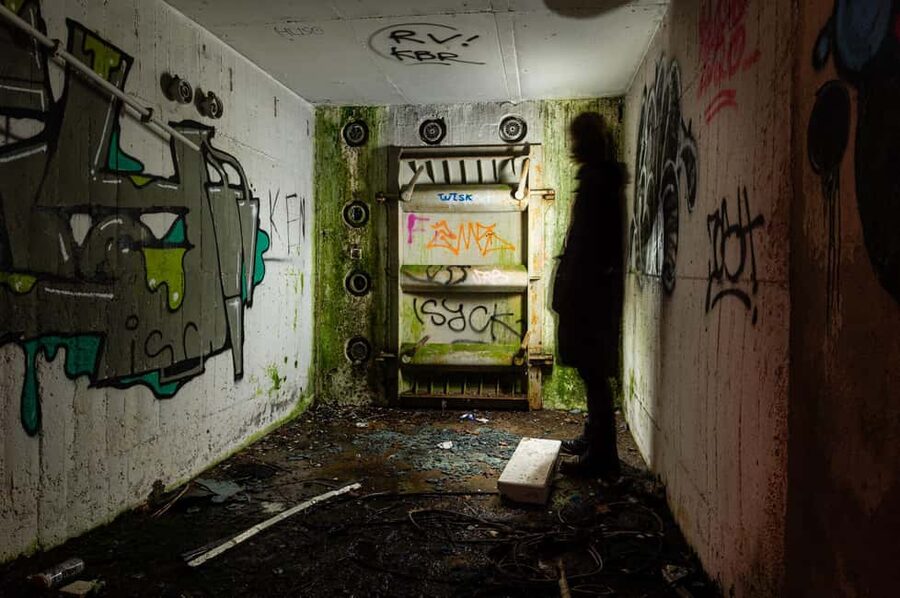
- Tunnels and graffiti underground: Headlamps help you find artwork and passageways in the darker parts of the site.
- Strong guide-led storytelling: Yoorii brings humor, care, and context to a place that could otherwise feel like a jumble of empty rooms.
- A serious photography setting: Old flooring, documents, peeling interiors, graffiti, and rooftop views give you plenty to frame.
- Real limits on participation: The tour is not suitable for children under 10, pregnant women, wheelchair users, people over 130 kilograms, people with high blood pressure, or people over 70.
Why the Stasi hospital matters
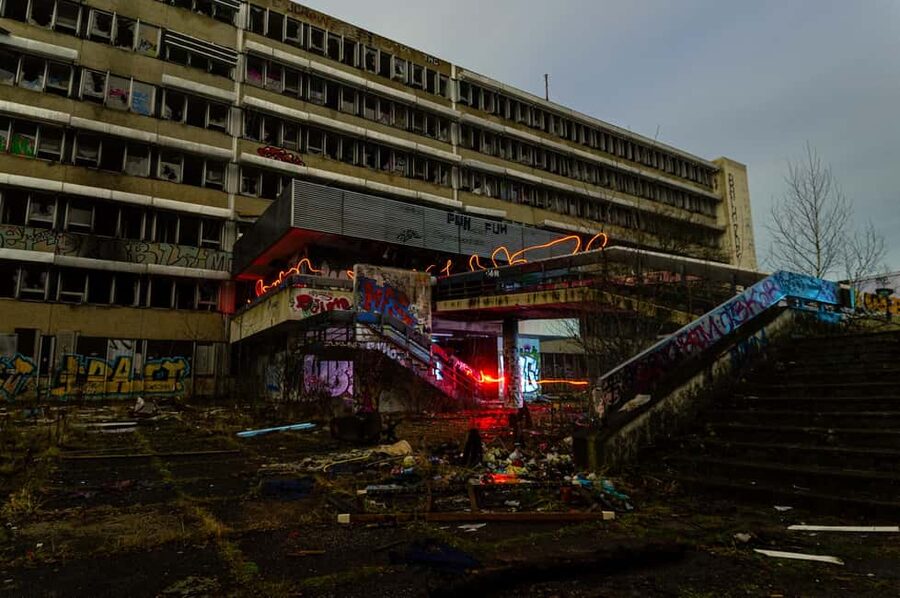
This tour is built around a difficult chapter of Berlin’s 20th-century story. The Stasi, East Germany’s secret police, ran hospitals mainly for its own staff and high-ranking officials. These were not ordinary public hospitals. They formed a private medical network inside a state built on secrecy, surveillance, and control.
The facilities had modern equipment for their time and medical staff bound to silence. They treated agents injured during covert work and were also used for medical experiments away from public attention. Their isolated locations helped keep both ordinary East Germans and Western intelligence services from looking too closely.
After the Berlin Wall fell in 1989 and East Germany collapsed, the hospitals lost their role. The buildings were left to decay. That is what gives the tour its unusual pull. You are not simply looking at an old structure. You are walking through a place that once served a secret state and then became useless almost overnight.
I find this context important because abandoned buildings can become empty shells very quickly. Without a guide, you might see cracked walls and graffiti but miss why the site mattered. The history gives the rooms weight, even where very little remains.
More History Tours in Berlin
- Berlin: Natural History Museum Entrance Ticket
★ 4.6 · 3,382 reviews - Berlin: World Heritage Cruise to Potsdam
★ 4.5 · 1,435 reviews - Berlin Historical Highlights Walking Tour
★ 4.9 · 657 reviews
Meeting Yoorii at S-Bahn Buch
The meeting point is outside the S-Bahn Buch station, on the side facing the Netto supermarket. After coming downstairs from the station, turn left toward Netto. This is a useful detail because Buch is not the sort of place where you want to wander around looking for a group with a torch in hand.
The activity lasts three hours, so allow enough time to reach Buch before the start. Starting times vary, and you need to check availability for your chosen date. The guide speaks English, and the group is limited to six people.
That small size matters here. Abandoned buildings often have narrow routes, awkward corners, and rooms where a large group would spread out or block the view. With six people, you have a better chance of hearing the history, asking questions, and pausing for photographs without turning the visit into crowd control.
The guide also has a practical role. This is not a place where every passage looks different or every interesting feature announces itself. Madison’s visit found the complex large enough that a guide helped the group reach the worthwhile sections without wasting time in empty rooms or getting lost.
Entering a decaying medical complex
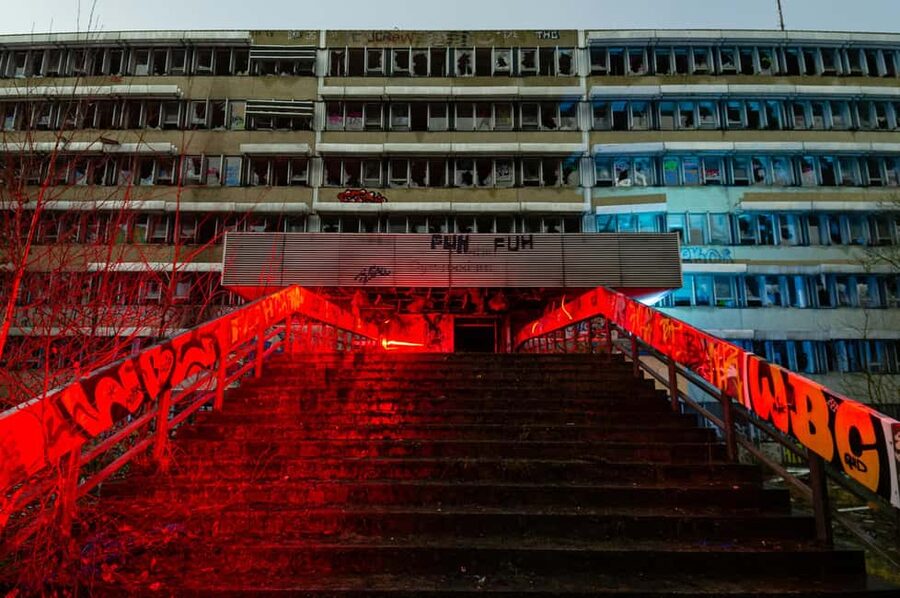
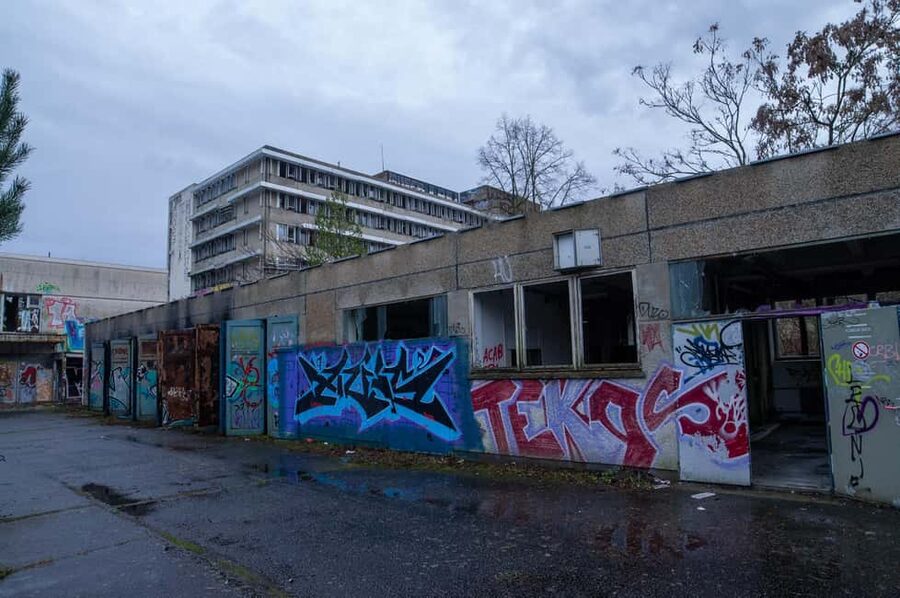
The first part of the visit sets the tone. You move into the abandoned hospital buildings and begin to read the place through its remains. Expect decay, graffiti, damaged interiors, and the uneasy silence that makes urbex appealing in the first place.
Some traces are more useful than others. Old documents and original flooring have survived in places, giving you a direct link to the building’s working life. The flooring may sound like a small detail, but it helps you picture staff and patients moving through the hospital before the site became derelict.
You might also find rooms where fire damage or vandalism has erased much of the original character. This is one reason I would not describe every part of the complex as equally impressive. Some areas may look nearly identical, with little left except exposed surfaces and broken fittings.
Yoorii’s role becomes especially valuable here. He does not simply point at walls. He explains the site, keeps the pace moving, and gives you time to stop and take in the surroundings. Several visitors found his enthusiasm and humor made the visit feel more alive, while his attention to the group helped people feel supported in a rough setting.
Going below ground with headlamps
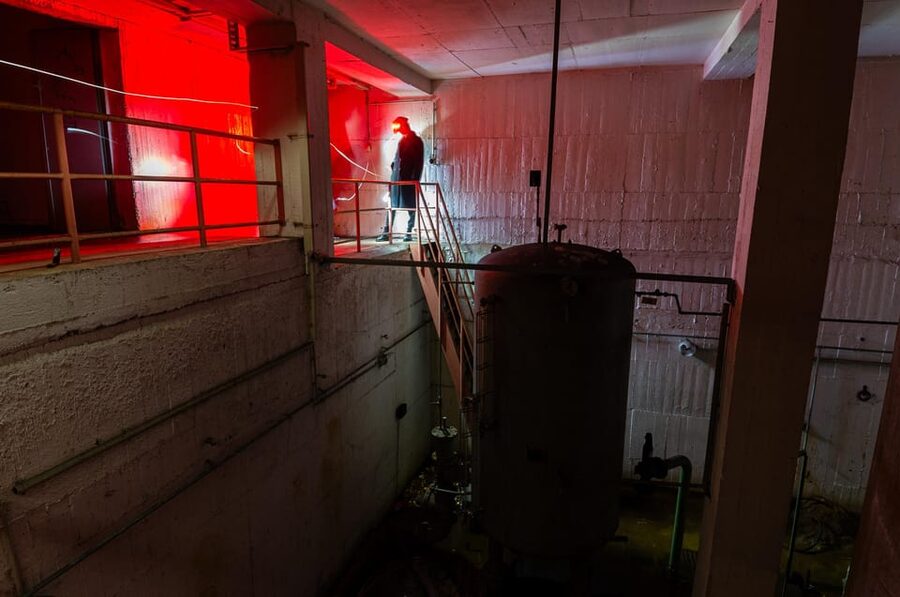
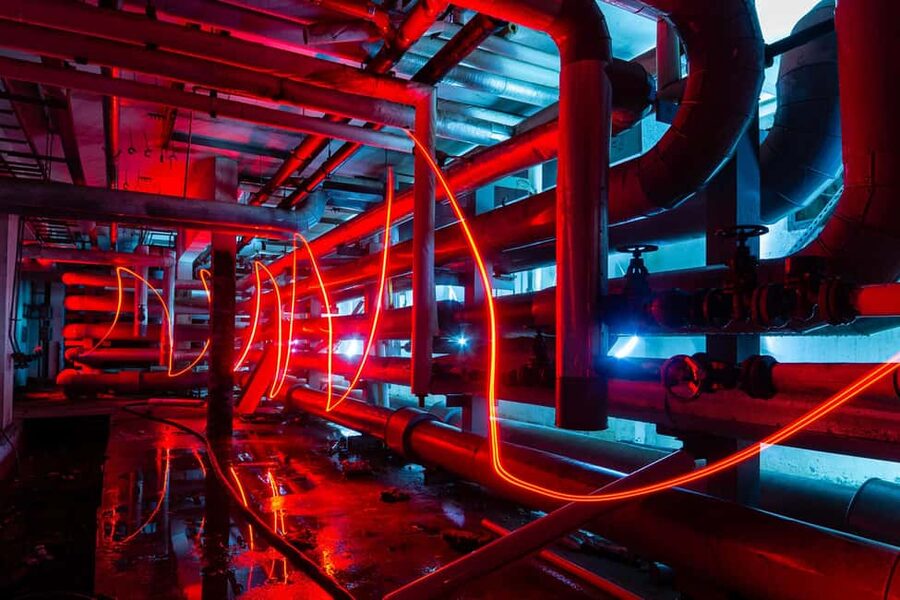
The underground sections are likely to be the most atmospheric part of the tour. Torches are included, and the tour uses headlamps in the darker passages. You may walk through tunnels, look for graffiti in the darkness, and see a side of the complex that is easy to miss from the main rooms.
This is where the experience moves beyond ordinary sightseeing. You are not standing behind a barrier and reading a label. You are using light to find details, checking your footing, and working out how the building functioned below ground.
The graffiti adds a modern layer to the old site. Some of it is simply damage, but some artwork gives the tunnels a strong visual identity. For photographers, the contrast between darkness, concrete, wall art, and torchlight can create memorable frames.
There is an important qualification. Access to underground areas can change, and one visit found the bunker closed. The tour’s advertised highlights include dungeons and abandoned interiors, but you should not assume every tunnel, bunker, or room will be open on your date.
Broken glass is another real concern. Wear sturdy, closed shoes and move carefully. The provider specifically asks you to wear comfortable clothes that can get dirty. That advice is not decorative. You should skip high heels, formal clothes, and anything you would be upset to mark or tear.
Still Berlin, at a slower pace:
- Berlin: Reichstag, Dome and Government District Guided Tour
★ 4.7 · 18,288 reviews - Berlin: 1-Hour City Tour by Boat with Guaranteed Seating
★ 4.3 · 16,993 reviews - Berlin: Boat Tour Along the River Spree
★ 4.4 · 11,252 reviews - Discover Berlin Half-Day Walking Tour
★ 5.0 · 9,624 reviews
Rooftops, views, and the photography angle
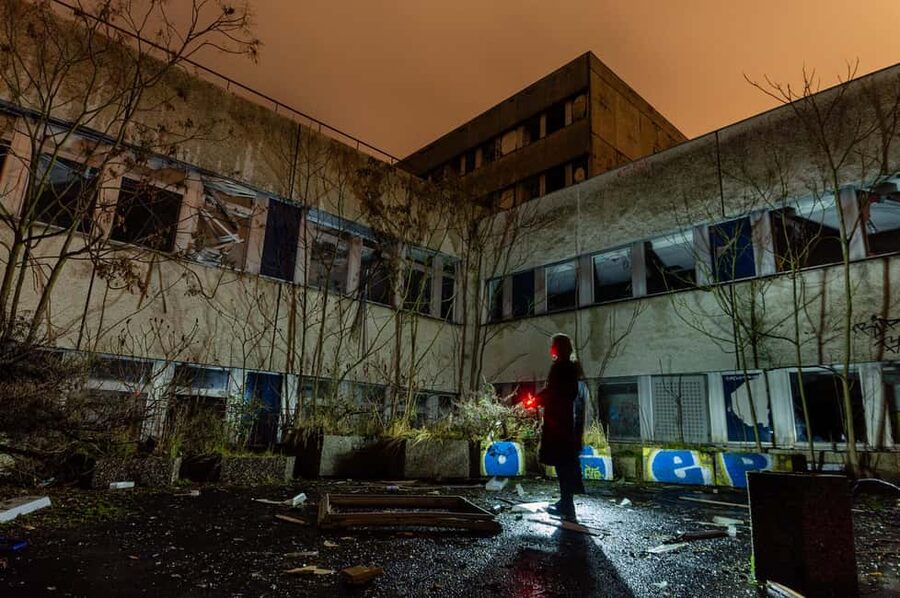
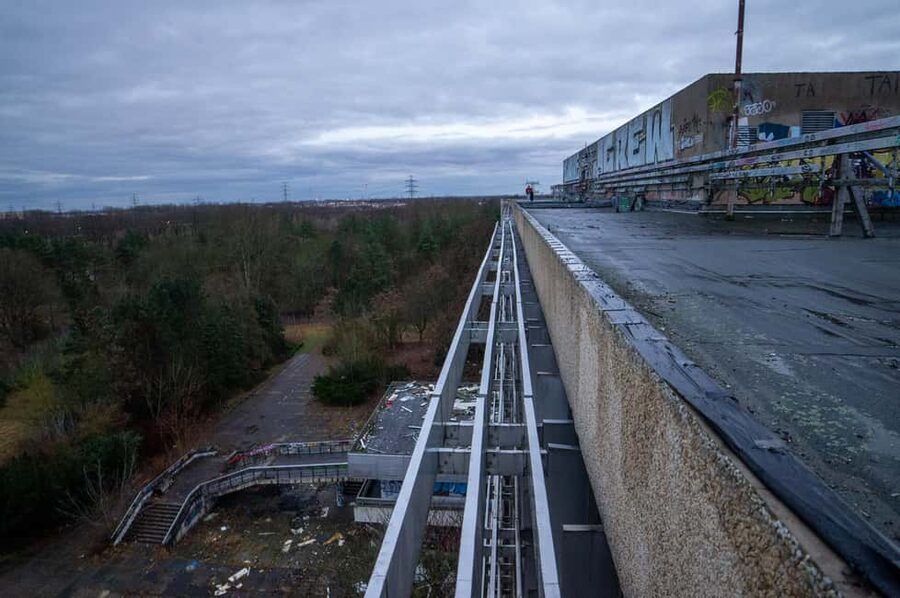
The tour also promises rooftop access and views across the site. These moments give the experience a useful change of pace. After dark corridors and underground passages, looking out from above can help you understand the scale of the abandoned complex.
The elevated viewpoints are also useful for photographs. You can frame the contrast between the decaying buildings and Berlin’s wider urban setting, then return to smaller details such as flooring, documents, peeling walls, and graffiti.
You do not need professional equipment to enjoy the photography side. A phone can capture the broad shapes and textures, though the dim interiors may challenge it. If you want to work slowly with longer exposures, bring a tripod. The tour information specifically recommends one for visitors interested in taking pictures.
Remember that photography can slow a group down. In a small party, you have more room to pause, but you still need to keep moving when the guide leads the group onward. I would arrive with a simple plan: use the first pass to understand the site, then stop for carefully chosen images rather than photographing every broken doorway.
What makes the guide worth paying for
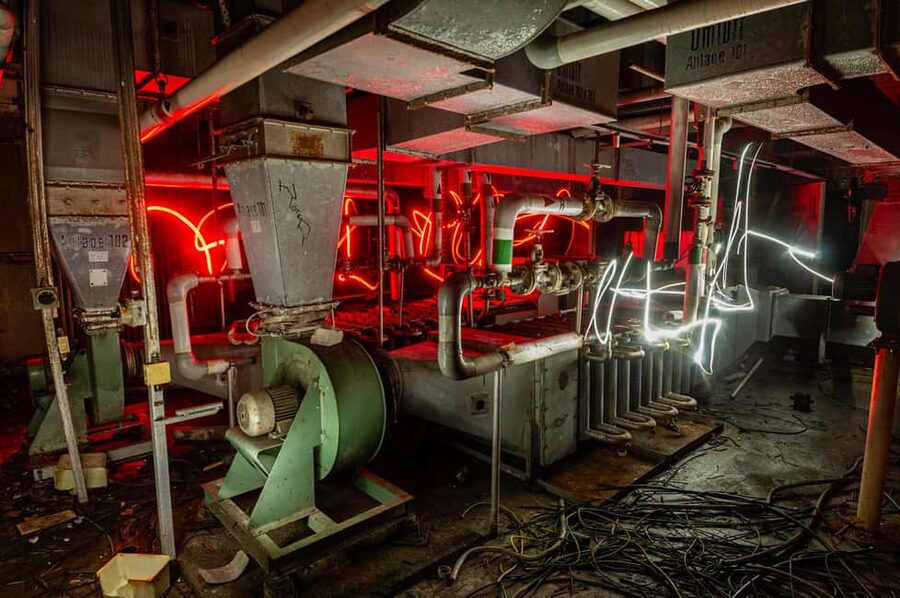
At $116 per person, this is not a cheap way to spend three hours. The price makes more sense if you value access, explanation, small-group attention, and the chance to photograph a difficult site without trying to work it out alone.
A guide can help you identify the remains that matter and avoid wasting time in repetitive spaces. That point matters at a large abandoned complex. Without direction, you could spend much of the visit walking through rooms that look similar, while missing the tunnels, documents, or more striking views.
Yoorii is the biggest reason the experience earns strong praise. He is described as enthusiastic, serious when needed, funny, supportive, and attentive to everyone in the group. Those qualities matter more here than a formal lecture style. Urbex works best when the guide can explain the past while also managing a physical, unpredictable setting.
Still, a good guide cannot restore a damaged building. One visitor felt the property had lost too much of its original character because of youth vandalism, fires, and demolition. The bunker was no longer accessible on that visit, and the remaining features did not feel sufficient for the price.
That criticism is fair. You are paying for an experience built around a specific site, not for a guaranteed collection of preserved rooms. If you need intact interiors and a full museum-style display, you may find the value weak. If you enjoy atmosphere, photography, and the uncertainty of a decaying place, the guide may make the cost easier to accept.
Who should join, and who should skip it
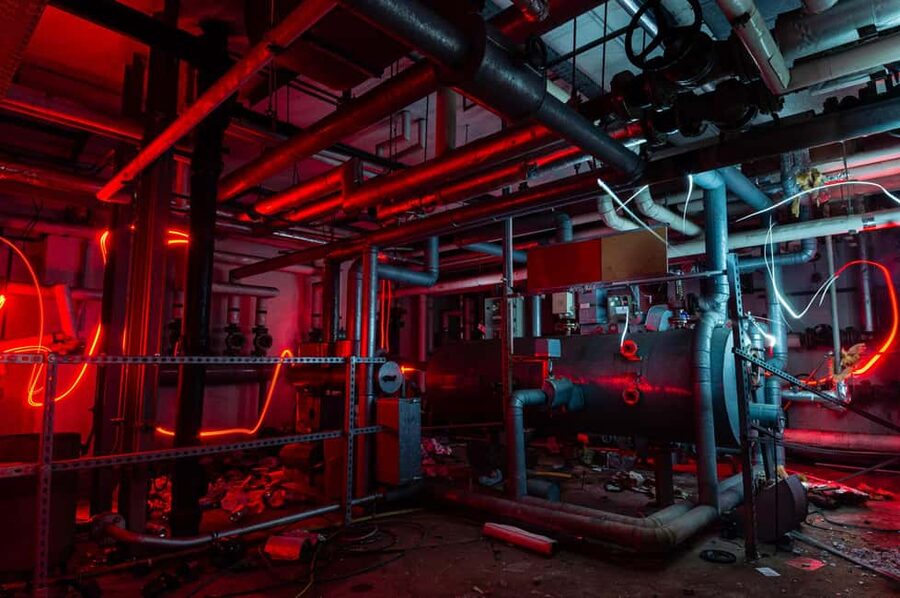
I would recommend this tour to adults who enjoy unusual history, abandoned buildings, street art, and photography. It suits someone who would rather spend an afternoon in a strange former institution than visit another polished attraction.
You should be comfortable walking through rough spaces and possibly getting dirty. The tour is not suitable for children under 10, pregnant women, wheelchair users, people with high blood pressure, people over 70, or anyone over 130 kilograms.
Baby strollers and bikes are not allowed. Alcohol and drugs are also prohibited. Leave the massive backpack at your accommodation, since a bulky bag will be awkward in tight areas and can catch on damaged surfaces.
A cap or other head covering is recommended. That suggests you should prepare for low clearances, dust, or debris overhead. Again, the right clothing makes a real difference. Think practical trousers, a shirt or jacket you do not mind marking, and sturdy shoes.
Practical value, flexibility, and timing
The tour runs for three hours and is offered in English with a live guide. That is long enough to cover several parts of the site without turning the outing into an all-day commitment.
You can cancel up to 24 hours before the start for a full refund. The reserve-now, pay-later option also helps if your Berlin schedule is still shifting. These policies do not change the price, but they reduce the risk of booking an unusual activity too far ahead.
The small group also gives the outing a more personal feel than a standard city tour. You can ask about the Stasi hospital system, the buildings, and the surviving objects without trying to speak over a crowd.
The main practical question is your tolerance for uncertainty. Conditions at abandoned sites change. A passage may be closed, a room may be damaged, and one section may offer less than you hoped. Go for the combination of place, guide, and story, not for a guaranteed checklist of perfect photographic scenes.
Should you book the Berlin Urbex Tour?
Book it if you want a strange, physical, guide-led look at Berlin’s secret-police past, and if the chance to explore tunnels and photograph decay appeals to you. Yoorii’s energy, the six-person limit, and the unusual setting give the tour a personal quality that you will not get from a normal history walk.
Think twice if $116 feels high for a site that may have broken glass, fire damage, demolition, or a closed bunker. This is not a polished attraction, and the condition of the buildings is part of the bargain.
For the best chance of enjoying it, wear clothes you can dirty, use sturdy footwear, bring a tripod if photography matters, and arrive ready for a real urbex outing rather than a tidy museum visit. If that sounds like fun, the tour offers one of Berlin’s more unusual history lessons.
FAQ
Where does the Berlin Urbex Tour meet?
The meeting point is at the exit of S-Bahn Buch, on the side facing the Netto supermarket. After coming downstairs, turn left toward Netto.
How long does the tour last?
The tour lasts three hours. Starting times vary, so you need to check availability for your chosen date.
What language is the tour offered in?
The tour is conducted in English with a live guide.
Are torches provided?
Yes. Torch rental is included. Headlamps are used for the darker underground tunnel areas.
Can children or wheelchair users join?
Children under 10 and wheelchair users cannot join. The experience is also not suitable for pregnant women, people over 70, people with high blood pressure, or people over 130 kilograms.
What should I wear and bring?
Wear comfortable clothes that you do not mind getting dirty, along with practical footwear. Do not bring a massive backpack, and consider wearing a cap or other head covering. A tripod is recommended if you plan to take photographs.
Just added around Berlin
- Private Walking Tour in Berlin: Hitler’s Germany & WWII★ 5.0 · 7 reviews
- The History of Berlin: WWII PRIVATE Walking Tour With Locals★ 5.0 · 209 reviews
- Private Berlin WWII and Cold War History Tour with Local Expert Guide★ 5.0 · 28 reviews
- Private Walking Tour Berlin 3 hours: Brandenburg, Historic Center★ 5.0 · 7 reviews
- Berlin: Private Bike Tour of the Berlin Wall and Third Reich★ 5.0 · 23 reviews
- Berlin: Guided Private Bike Tour to Explore the Highlights★ 5.0 · 12 reviews
- Berlin Photography Masterclass – Private Photography Lesson★ 4.5 · 23 reviews
- Group Driving Tour 1 to 6 people. Berlin Shore Excursion incl pick-up at Port★ 5.0 · 8 reviews
Historical Tours, compared.
City History Canal Sightseeing Tour on a Motorboat
Read our review →
Browse the lists this tour appears in