

Reviewed · WALKING TOURS
Berlin: walking tour about Charité
Medicine has a darker side. This two-hour Berlin walking tour follows the Charité from its beginnings as an 18th-century plague house to its place among Europe’s great university hospitals. I like the focus on Rudolf Virchow, Robert Koch, Emil von Behring, and Ferdinand Sauerbruch, and I like that the tour does not stop at famous discoveries. It also faces the institution’s cooperation with the Nazi regime.
The tour’s best surprise is the Animal Anatomical Theatre, Berlin’s oldest surviving teaching building, reached through a backyard and visited from the inside. The main drawback is clear: you do not enter the Charité Bed House or the hospital grounds, and the tour is offered in German only. If you want hospital interiors or an English guide, this is not the right choice.
In This Review
- Key points about the Charité walk
- Why Berlin’s Charité makes a strong walking-tour subject
- Starting at the Charité Tower
- Walking along Luisenstraße and across the university campus
- The famous doctors behind Berlin medicine
- Facing the Charité’s Nazi-era history
- Finding the Animal Anatomical Theatre
- What you do not see on the tour
- Is $27 a fair price for two hours?
- Who should book this Charité experience?
- Practical advice before you go
- Should you book the Berlin Charité walking tour?
- FAQ
- How long does the Berlin Charité walking tour last?
- What language is the tour offered in?
- Where does the tour start?
- Where does the tour end?
- Can you go inside the Charité Bed House?
- Can the group enter the Charité hospital grounds?
- Is the Animal Anatomical Theatre always open during the tour?
Key points about the Charité walk
- Three centuries in two hours: The tour connects an 18th-century plague house with modern university medicine.
- Famous names, human consequences: You hear about Virchow, Koch, Behring, and Sauerbruch, along with the lives and deaths behind their work.
- A look at medicine’s moral failures: The guide discusses doctors who collaborated with the Nazi regime.
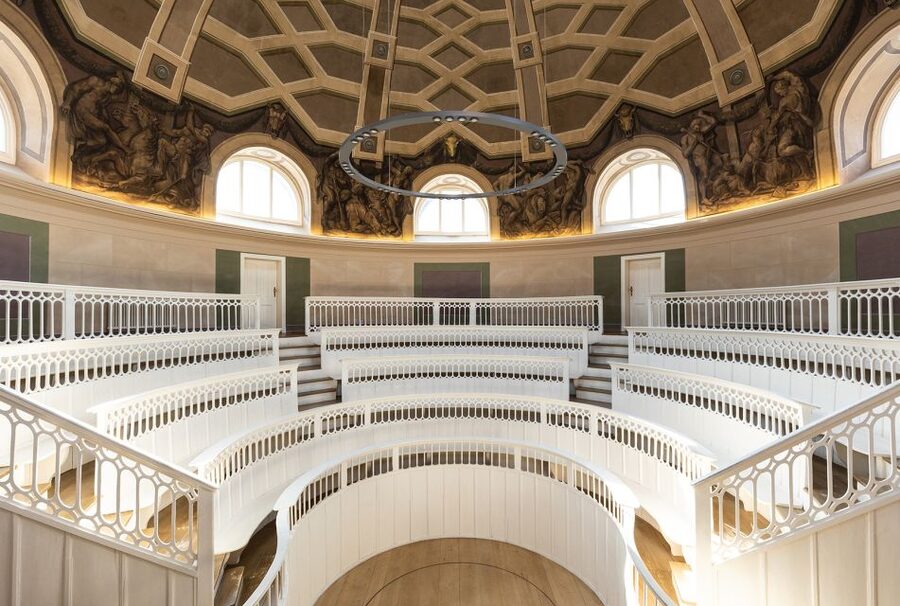
- The Animal Anatomical Theatre: This unusual building, described as Berlin’s oldest surviving teaching building, is the tour’s main interior visit.
- Outside views only at the hospital: You see the Charité Bed House from outside, while the hospital grounds are closed to group tours.
- German-language guiding: You need a good command of German to get the full value from the stories.
Why Berlin’s Charité makes a strong walking-tour subject

The Charité is not simply a hospital with an impressive name. It offers a way to read Berlin through medicine. The institution began in the 18th century as a plague house, then developed into a major center for medical teaching, research, and treatment.
That long timeline gives your guide plenty to work with. You move from fear of epidemic disease to scientific investigation, from new treatments to the ethical limits of medical power. The story is not presented as a smooth march of progress. That is one of the tour’s strengths.
I like this approach because famous medical breakthroughs can seem weightless when reduced to names and dates. Here, the history is tied to actual places in central Berlin. You walk along Luisenstraße, cross the university campus, and finish at a teaching building that helps explain how doctors were trained in earlier centuries.
The tour lasts two hours, which is enough time for a focused introduction without taking up an entire day. You will not see every corner of Charité or cover every chapter of Berlin medicine. Instead, you get a concentrated walk with a clear subject.
The experience is rated 4.4 out of 5 from 537 reviews, and the strongest praise available focuses on its medical background. That makes sense. This is a good fit for you if you enjoy history that depends on a guide’s explanation rather than scenery alone.
More Walking Tours in Berlin
- Discover Berlin Half-Day Walking Tour
★ 5.0 · 9,624 reviews - Berlin: Third Reich and Cold War 2 Hour Walking Tour
★ 4.9 · 6,830 reviews - Berlin: Discover Berlin Walking Tour
★ 4.9 · 5,998 reviews
Starting at the Charité Tower
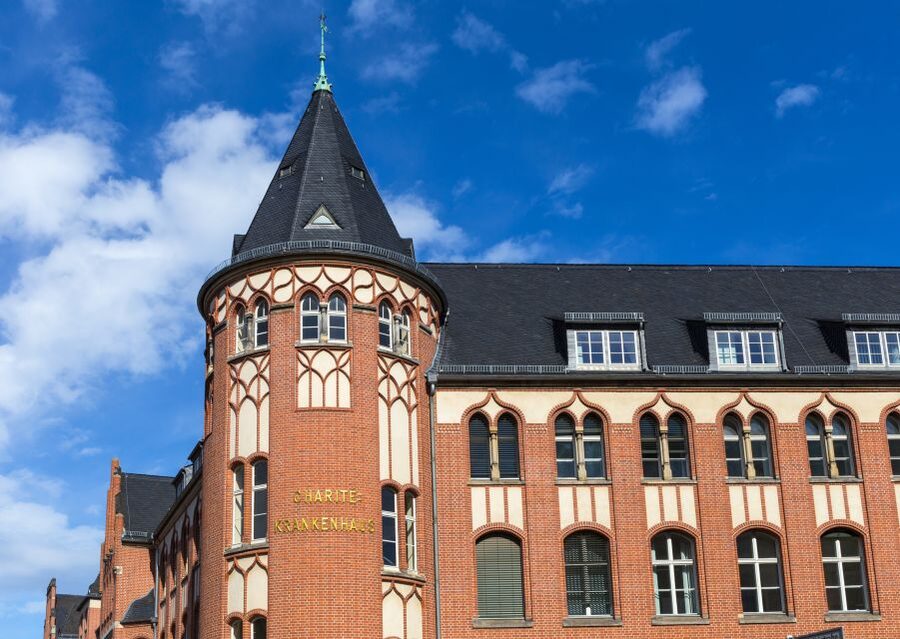
Your meeting point is in front of the Charité Tower, at the crossroads of Schumannstraße, Charitéplatz, and Charitéstraße. Arrive early enough to find the exact spot, because the tour starts on time.
The opening location gives you a practical introduction to the Charité setting. You are near the hospital complex, but the tour does not take you into the Charité Bed House. That building remains a working hospital, so patient care, hygiene, and protection rules limit access.
This is worth knowing before you book. If you picture a guided hospital tour through wards, corridors, or historic rooms inside the main building, adjust your expectations. You see the Bed House from the outside and learn how it fits into the wider institution’s story.
That outside view is still useful. A hospital is not only its architecture. The guide can use the building and its surroundings to explain how the Charité grew and how medical work became tied to Berlin’s university system.
The tour ends back at the meeting point, so you do not need to arrange transportation from a different neighborhood. The route is a walking experience through central Berlin, not a bus tour or a museum visit with a long transfer between sites.
Walking along Luisenstraße and across the university campus

From the starting point, you continue along Luisenstraße and across the university campus. This part of the route matters because it links the Charité to the academic world around it.
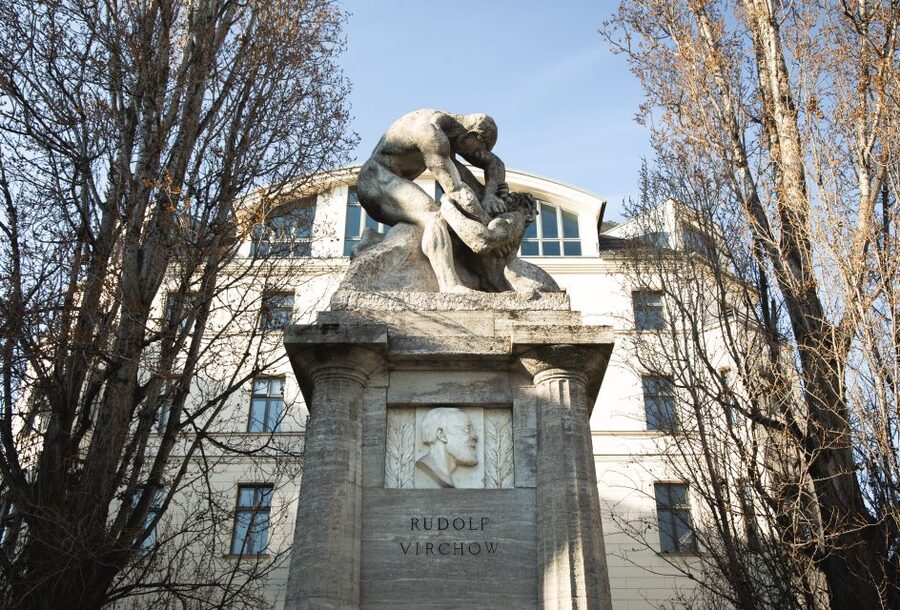
The Charité’s story is closely tied to teaching and research. You hear about doctors and scientists whose work changed medicine, including Rudolf Virchow, Robert Koch, Emil von Behring, and Ferdinand Sauerbruch. These are not just names to memorize. They represent different stages in the growth of modern medical science.
Virchow is especially important to Berlin’s medical identity, while Koch and Behring are associated with major advances in the study and treatment of disease. Sauerbruch represents another chapter in the development of surgery. Your guide uses these figures to show how medicine changed through observation, experiment, teaching, and clinical work.
I appreciate the fact that the tour presents several figures instead of building the whole story around one famous doctor. You get a wider picture of the medical world, including the rivalry, ambition, and uncertainty that can sit behind major discoveries.
The campus walk also gives the tour a sense of place. You are not standing in a single exhibit room while someone talks at you. You move through streets and academic grounds connected to the history being discussed. That makes the two hours feel more like a city walk than a standard museum lecture.
Still, this section depends heavily on the guide. The buildings and streets may not explain themselves clearly. If you speak German well, you can follow the connections between each stop. If your German is limited, the meaning of the route will be harder to grasp.
The famous doctors behind Berlin medicine
The tour’s most obvious draw is its cast of major physicians and Nobel Prize winners. You hear about Rudolf Virchow, Emil von Behring, Robert Koch, and Ferdinand Sauerbruch, along with other important figures in Berlin medicine.
The value here is context. A name on a plaque rarely tells you why a person mattered. A good guide can connect the person to the institution, the period, and the medical problem being addressed.
You also hear stories of life and death at the Charité. That phrase is not decorative. Hospitals deal with both the promise of treatment and the limits of what doctors can do. The tour uses the Charité to explore both sides.
I like that the subject includes scientists as well as practicing physicians. Medicine does not advance through bedside treatment alone. It also depends on laboratories, teaching buildings, anatomical study, and systems that train the next generation.
The tour may be especially rewarding if you have a background in medicine, science, or public health. The available feedback specifically praises the medical background, and that is the part most likely to satisfy a specialist or serious amateur.
You do not need to be a doctor to enjoy it, but you should like history with technical content. This is not a general introduction to Berlin’s famous sights. The focus stays tightly on medicine and the Charité.
Still Berlin, at a slower pace:
- Berlin: Reichstag, Dome and Government District Guided Tour
★ 4.7 · 18,288 reviews - Berlin: 1-Hour City Tour by Boat with Guaranteed Seating
★ 4.3 · 16,993 reviews - Berlin: Boat Tour Along the River Spree
★ 4.4 · 11,252 reviews - Berlin: Hop-on Hop-off Bus Tour with Live Commentary
★ 4.3 · 8,579 reviews
Facing the Charité’s Nazi-era history
A worthwhile medical history tour cannot only celebrate discoveries. This experience also addresses the period when doctors collaborated with the Nazi regime.
That subject gives the tour moral weight. Medical institutions can produce lifesaving work, but doctors are not automatically protected from political pressure, prejudice, or abuse of power. The Charité’s history includes difficult choices and serious failures, not only scientific achievement.
I value this part because it keeps the tour honest. You are encouraged to think about how professional knowledge can be used, and how institutions behave when the political system demands obedience. The discussion also puts the famous names and scientific triumphs into a less comfortable setting.
This section may feel heavy, especially when placed beside stories of Nobel Prize winners and medical progress. That is appropriate. The point is not to create an easy feel-good story about Berlin science.
Your guide’s handling of this material will shape the experience. Because the tour is in German, you should be confident enough to follow discussions about responsibility, collaboration, and the Nazi period. If you understand only basic German, this is one part you may miss in particular.
Finding the Animal Anatomical Theatre
The most distinctive stop is the Animal Anatomical Theatre, also called TAT. It is described as Berlin’s oldest surviving teaching building, and you visit it from the inside.
The building is hidden in a backyard, which gives the stop a sense of discovery without turning it into a gimmick. Its importance comes from its role in medical education. Anatomical theatres were places where students learned through direct observation, and the setting helps you picture how earlier generations of doctors studied the body.
This is the one interior visit that shapes the tour’s final impression. After seeing the Charité Bed House only from outside and walking around the campus, you enter a building tied directly to teaching. It gives you something tangible to remember, not just a list of doctors and dates.
The TAT also helps explain why the Charité became more than a treatment facility. Medical education required dedicated spaces, formal instruction, and close study of anatomy. The building is part of that larger story.
Opening hours can change at short notice because of closed events, and the TAT is closed on public holidays. That is an important practical point. The interior visit is a central part of the route, so check the date carefully before booking. If the building is closed, the tour may need to adjust what you see.
The available information does not promise a particular exhibit or display inside the TAT. I would book it for the building and its historical role, not for a guaranteed set of objects or rooms.
What you do not see on the tour
The limits are easy to understand once you know the Charité is an active hospital.
You do not enter the Charité Bed House. The hospital grounds, known as Charité Campus Mitte, are also not accessible for group tours. This means the walk stays on public streets, campus areas open to the group, and the Animal Anatomical Theatre.
That arrangement protects hospital operations, but it also means the tour is less immersive in a literal sense. You will not walk through historic hospital wards or see the daily workings of the modern Charité.
For some people, this will be a disappointment. If your main interest is architecture or hospital interiors, look carefully at the route before reserving. The tour’s value comes from explanation, outdoor context, and the TAT, not from access to the main hospital complex.
For me, the restriction does not ruin the experience. A working hospital is not a normal sightseeing attraction, and patient privacy must come first. The tour still gives you a close look at the institution’s setting and a meaningful interior stop.
Is $27 a fair price for two hours?
At $27 per person, this is not the cheapest walking tour in Berlin. You are paying for a narrow subject, a live guide, and access to the Animal Anatomical Theatre rather than for a long list of general city sights.
The price makes sense if you have a strong interest in medicine, science, university history, or the ethical questions surrounding doctors and institutions. A two-hour guided explanation can add much more than a quick walk past the buildings on your own.
The value is weaker if you want a broad overview of Berlin. You will not see the city’s major landmarks, enter the main Charité building, or tour the hospital campus. In that case, this should be a specialty tour added to your Berlin plans, not your only guided walk.
I would also consider the language before considering the price. A $27 tour is poor value if you cannot follow German. For a German-speaking visitor with a real interest in medical history, the focused subject and unusual final stop make the cost reasonable.
Free cancellation up to 24 hours before the tour and the option to reserve now and pay later reduce the risk of booking. Still, the TAT’s holiday and event closures matter more than the payment terms. Check the chosen date and starting time before committing.
Who should book this Charité experience?
I would recommend the tour to you if you enjoy:
- Medical history and the development of modern science
- Berlin’s university and research traditions
- Stories about major doctors and Nobel Prize winners
- Difficult history, including professional collaboration with the Nazi regime
- Unusual historic buildings that are not part of the standard sightseeing circuit
- Guided walks in German
It is also a good choice for someone who has already seen Berlin’s main sights and wants a more specialized afternoon. The tour offers a different view of the city, one based on hospitals, laboratories, teaching, and public health.
I would hesitate if you want a relaxed stroll with little technical content. I would also hesitate if your German is not strong enough for a detailed live explanation. The medical background is the heart of the experience, not a small extra.
Families should decide based on the age and interests of the people in the group. The subject includes life, death, disease, anatomy, and the Nazi period. Nothing in the information provided promises a child-focused format.
Practical advice before you go
Meet at the Charité Tower crossroads of Schumannstraße, Charitéplatz, and Charitéstraße. The tour starts on time, so plan to arrive with enough margin to identify the meeting point.
Wear shoes suitable for two hours of walking. The route includes Luisenstraße and a university campus, then returns to the original meeting point. No special transportation is required for the tour itself.
Check the available starting times when you choose your date. The exact schedule is not fixed in the information provided, and the tour duration is two hours.
Keep the TAT closure rule in mind. It does not open on public holidays, and private events can change its hours with little notice. Since this is the principal interior stop, a quick check before departure is sensible.
Finally, remember that the tour is in German. A live guide can explain connections, jokes, and moral questions that a translation app may not handle well. You will get the most from it if you can follow spoken German at a steady pace.
Should you book the Berlin Charité walking tour?
Book it if you want a focused, serious look at Berlin through medicine. The famous doctors, the 18th-century plague-house origins, the Nazi-era chapter, and the Animal Anatomical Theatre give the tour a strong range within two hours.
Do not book it expecting to enter the modern hospital or roam the Charité grounds. You see the Bed House from outside, and the main hospital campus is off limits to group tours. Also confirm that your German is good enough and that the TAT is open on your date.
For the right audience, $27 is a fair price for a specialist walk with a live guide and an unusual historic interior. It is not a general Berlin tour, and that narrow focus is exactly why I would choose it.
FAQ
How long does the Berlin Charité walking tour last?
The tour lasts two hours.
What language is the tour offered in?
The live tour guide speaks German.
Where does the tour start?
It starts in front of the Charité Tower, at the crossroads of Schumannstraße, Charitéplatz, and Charitéstraße.
Where does the tour end?
The activity ends back at the meeting point.
Can you go inside the Charité Bed House?
No. The Charité Bed House is viewed from the outside because it is an active hospital facility with protection and hygiene regulations.
Can the group enter the Charité hospital grounds?
No. The Charité Campus Mitte hospital grounds are not accessible for group tours.
Is the Animal Anatomical Theatre always open during the tour?
No. The Animal Anatomical Theatre can adjust its opening hours for closed events, and it is closed on public holidays.
Just added around Berlin
- Private Walking Tour in Berlin: Hitler’s Germany & WWII★ 5.0 · 7 reviews
- The History of Berlin: WWII PRIVATE Walking Tour With Locals★ 5.0 · 209 reviews
- Private Berlin WWII and Cold War History Tour with Local Expert Guide★ 5.0 · 28 reviews
- Private Walking Tour Berlin 3 hours: Brandenburg, Historic Center★ 5.0 · 7 reviews
- Berlin: Private Bike Tour of the Berlin Wall and Third Reich★ 5.0 · 23 reviews
- Berlin: Guided Private Bike Tour to Explore the Highlights★ 5.0 · 12 reviews
- Berlin Photography Masterclass – Private Photography Lesson★ 4.5 · 23 reviews
- Group Driving Tour 1 to 6 people. Berlin Shore Excursion incl pick-up at Port★ 5.0 · 8 reviews
Walking Tours, compared.






Old Town & Viktualienmarkt City Walk in German
Read our review →Browse the lists this tour appears in