
Reviewed · CITY TOURS
Charlottenburg: 2-Hour City Walking Tour
Berlin’s grandest stories hide in plain sight. This two-hour walk makes Charlottenburg more than a palace stop, linking Prussian power with old village lanes, working-class history, handsome housing, and everyday café life. I like the route for two clear reasons: it reaches corners many visitors miss, and it gives you a useful lesson in how Berlin grew over roughly 800 years. The $23 price is also fair for a guided walk led by a professional museum expert.
I especially like the mix of grand and ordinary. You move from Charlottenburg City Hall and the former Prussian center to Klausener Kiez, where cafés, thrift shops, and corner stores give the district a lived-in feel. The main consideration is language: the live tour guide speaks German, and the route stays outdoors, ending at the palace rather than including a museum visit.
- Charlottenburg City Hall: Begin at an imposing civic landmark and learn why the district became one of Germany’s prosperous communities.
- The medieval village center: See the old nucleus of Charlottenburg before the district became known for palaces and grand avenues.
- Heinrich Zille’s Berlin: Visit streets near the historic Stadtbad linked with the artist’s affectionate, ironic views of working-class life.
- 1786 schoolhouses and urban planning: Study early public buildings and the housing patterns that still shape Berlin.
- Klausener Kiez: Find a pleasant local quarter of cafés, thrift stores, and small shops.
- Charlottenburg Palace finish: End beside the palace and dome-topped Stüler buildings, with museums nearby for a possible next stop.
In This Review
- Why Charlottenburg Deserves Two Hours
- Starting at Rathaus Charlottenburg
- Finding Charlottenburg’s Medieval Nucleus
- Heinrich Zille and the Working-Class City
- Luisenkirche and the Logic of Urban Planning
- Housing, Streets, and the Shape of Berlin
- Klausener Kiez: Charlottenburg’s Local Rhythm
- Villa Oppenheim and Schlossstraße
- Ending at Charlottenburg Palace
- The Guide’s Role and the German-Language Format
- Is $23 Good Value for Two Hours?
- Who Should Book This Charlottenburg Walk?
- Final Verdict: A Smart Way to Read Charlottenburg
- FAQ
- Where does the Charlottenburg walking tour meet?
- How long does the tour last?
- What language is the tour conducted in?
- Is Charlottenburg Palace included as a museum visit?
- Is food or drink included?
- Is hotel pickup and drop-off provided?
- Is the tour wheelchair accessible?
- What should I bring?
Why Charlottenburg Deserves Two Hours
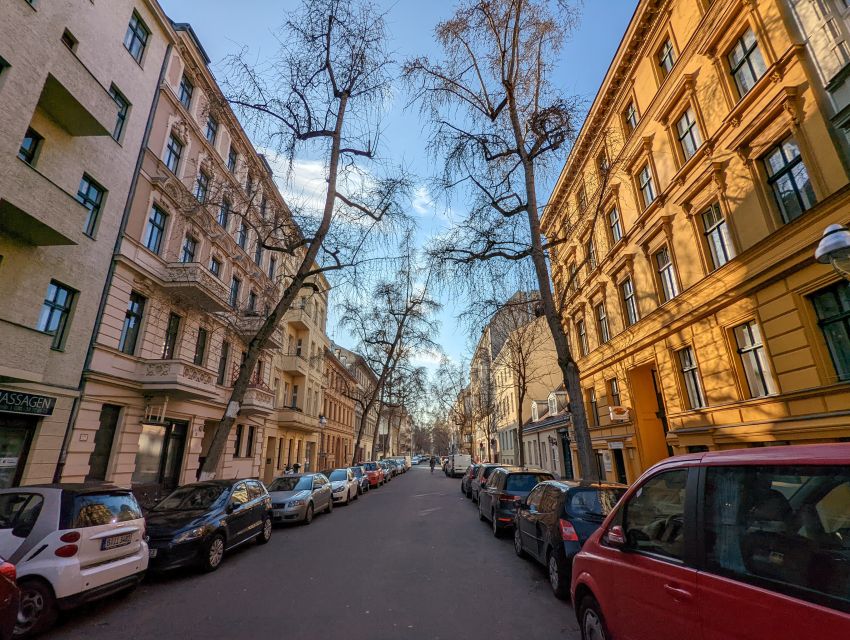
Many first-time visits to Berlin focus on the Brandenburg Gate, Museum Island, the Berlin Wall, and the central boulevards. Charlottenburg gives you a different Berlin. It is less about one famous monument and more about how a city district changes over time.
The route traces a long arc. You begin with local government, move back toward the medieval settlement, then pass through 18th-century planning, pre-war housing, and modern neighborhood life. The palace comes at the end, so its grand scale feels like the final chapter rather than the entire story.
That order matters. If you simply visit Charlottenburg Palace, you see royal display. On this walk, you also see the streets, civic buildings, homes, schools, and commercial corners that made the surrounding district work.
The tour suits you best if you enjoy city history in context. It is less suitable if you want an interior palace tour, a food walk, or a fast list of Berlin’s headline sights. The pace is described as comfortable, and the two-hour length gives the guide room to explain details without turning the outing into an all-day commitment.
Starting at Rathaus Charlottenburg
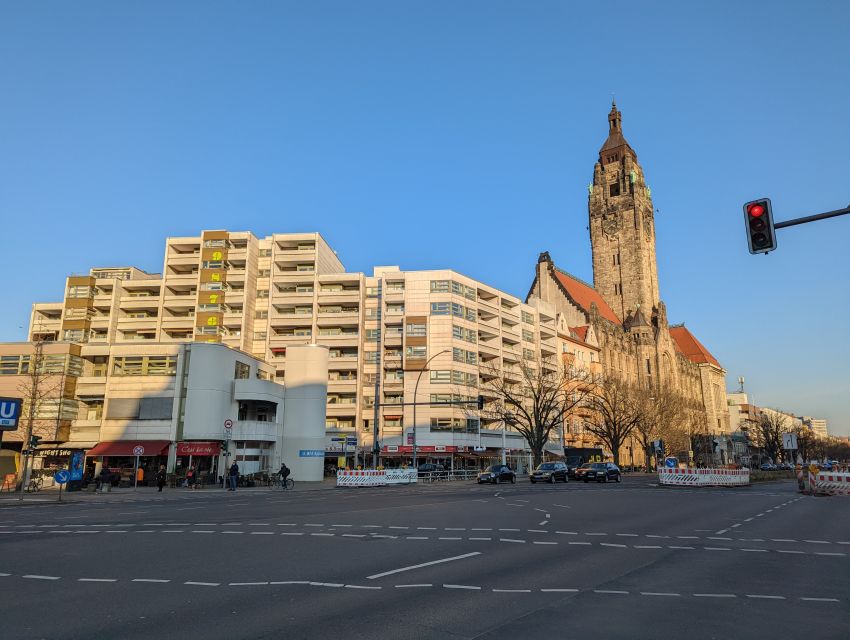
Meet your guide directly in front of the main entrance to Rathaus Charlottenburg, or Charlottenburg City Hall. This is a practical starting point because the building itself helps set the tone for the district.
The city hall represents Charlottenburg as a wealthy and important community. Before Berlin’s modern identity absorbed the district, Charlottenburg had its own civic character and local pride. Beginning here helps you understand that this is not simply a palace suburb added to a larger city.
Your guide introduces the area’s historical development before leading you onward. The walk is conducted in German, so you should be comfortable following spoken German for two hours. The guide’s role is central to the experience, since the value comes from explanations, connections, and anecdotes rather than from entry to a ticketed site.
The meeting point is easy to identify, but allow enough time to reach it without rushing. You will spend the full tour on foot, so comfortable shoes are sensible. The tour runs rain or shine, which means weather-appropriate clothing matters more than usual.
More City Tours in Berlin
- Berlin: 1-Hour City Tour by Boat with Guaranteed Seating
★ 4.3 · 16,993 reviews - Berlin: City Sightseeing Hop-On Hop-Off Bus Tour
★ 4.1 · 4,233 reviews - Potsdam: City and Castles Tour
★ 4.7 · 3,721 reviews
Finding Charlottenburg’s Medieval Nucleus
The next stage takes you toward the old village square, the medieval core of Charlottenburg. This is where the district’s story becomes easier to picture. Before royal building projects and urban expansion, there was a smaller settlement with its own center.
I like this part because it prevents Charlottenburg from seeming like a district created all at once for aristocrats. The older village gives the neighborhood a human scale. It also shows how Berlin’s districts can contain several layers of development within a short walk.
Your guide connects the old settlement with the later Prussian period. You get a sense of how political power, royal patronage, and urban growth changed the area. The walk is not only about dates. It is about seeing how a village center can survive within a much larger city.
Do not expect a preserved medieval town in the style of Rothenburg or a fully intact historic quarter. The appeal is subtler. You are looking at the remaining traces and the street pattern, then using the guide’s explanation to understand what came before.
Heinrich Zille and the Working-Class City
Near the historic Stadtbad, the tour turns toward a more ordinary side of Berlin. This area is linked with Heinrich Zille, the Berlin artist famous for affectionate and sharply observant depictions of working-class life.
Zille found subjects here for scenes that treated Berlin’s poor and working people with humor, sympathy, and a touch of irony. That detail gives the walk emotional range. Charlottenburg is not presented only as a district of royal buildings and comfortable apartments. You also learn about the people who lived, worked, and struggled in the city.
The Stadtbad adds another useful layer. Public bathing facilities reveal something about urban life and public services that grand façades cannot. The stop helps you think about who cities are built for, and how daily needs shaped neighborhood planning.
This is one of the places where a good guide can make a real difference. The information is more interesting when tied to a street, a public building, or a local figure. The guide’s anecdotes keep the historical material from becoming a dry sequence of names and years.
Luisenkirche and the Logic of Urban Planning
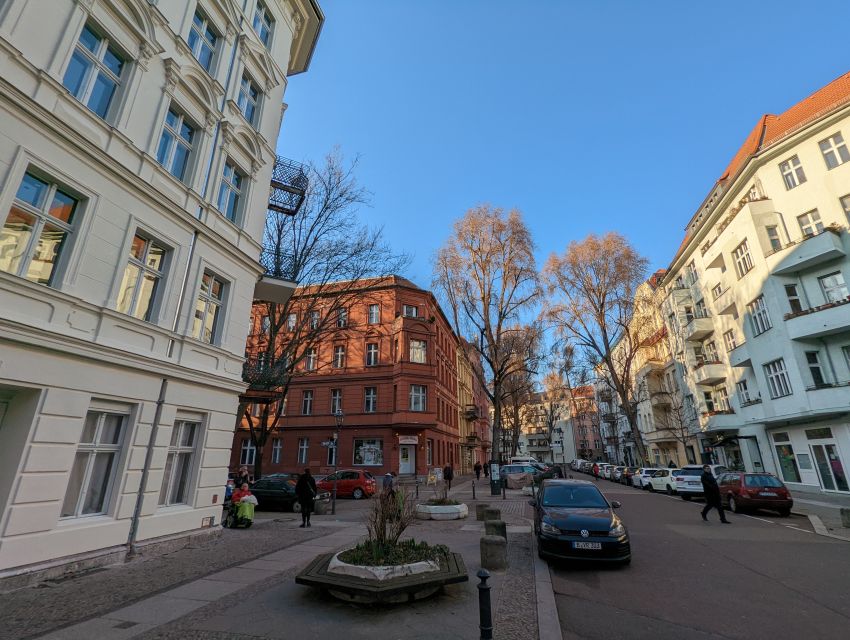
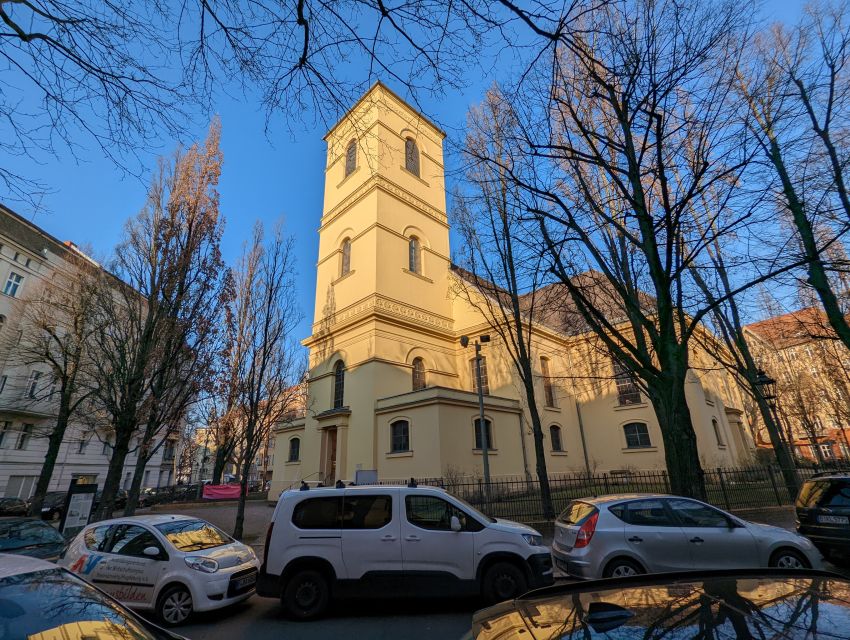
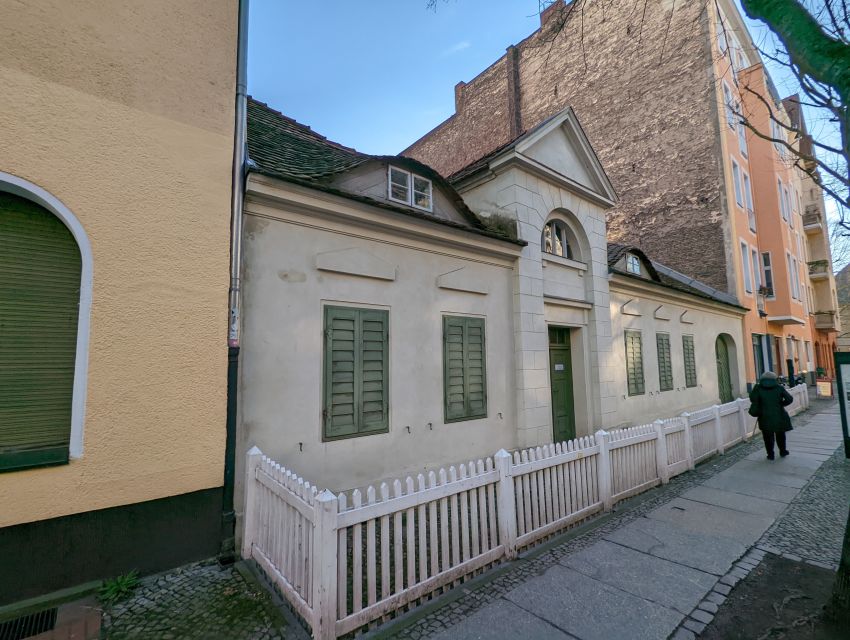
Near Luisenkirche, the focus shifts to architectural history and 18th-century urban planning. You will see examples of housing that remain typical of Berlin’s cityscape, along with the way streets and buildings were organized during a period of expansion.
This section is useful for anyone who wants to understand Berlin beyond individual monuments. Look at the relationship between church, street, apartment blocks, and public buildings. The guide explains how planning choices created a district that still feels coherent, even after many changes.
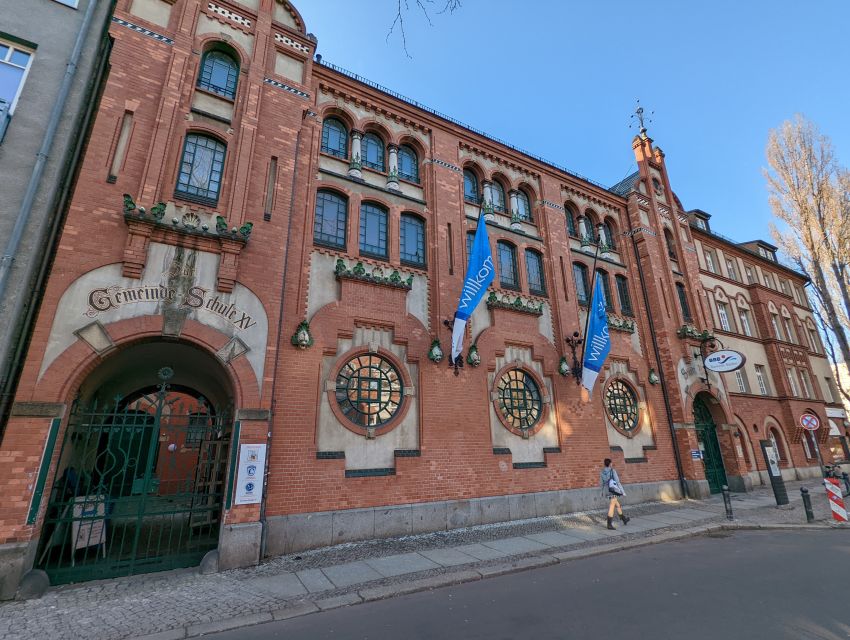
The walk also includes preserved schoolhouses dating from 1786. These buildings offer a rare link to the practical side of older city life. A schoolhouse may not have the visual drama of a palace, but it tells you how a community invested in education and how public architecture looked before modern construction transformed Berlin.
You will also see strong examples of pre-war urban development. This is where the tour’s subject becomes especially clear: Charlottenburg is a record of changing building styles and social needs. The buildings are not just scenery. They show how Berlin housed its population and organized public life.
More Walking Tours in Berlin
- Discover Berlin Half-Day Walking Tour
★ 5.0 · 9,624 reviews - Berlin: Third Reich and Cold War 2 Hour Walking Tour
★ 4.9 · 6,830 reviews - Berlin: Discover Berlin Walking Tour
★ 4.9 · 5,998 reviews - Berlin’s Best: 2 Hour Walking Tour Third Reich and the Cold War
★ 5.0 · 5,486 reviews
Housing, Streets, and the Shape of Berlin
Charlottenburg’s housing stock is one of the walk’s quiet strengths. The route shows forms of housing that still characterize Berlin, helping you recognize patterns you will see elsewhere in the city.
A guided explanation is useful here because apartment buildings can blend into the background when you walk alone. Your guide can point out what belongs to an earlier phase of growth, what reflects pre-war development, and how the district’s appearance relates to its past.
The tour does not promise entry into private buildings, and museum visits are not included. Its strength is the outdoor view: façades, street arrangements, public structures, and the way neighborhoods meet one another.
I like this approach for a first visit to Charlottenburg. It gives you a framework for later wandering. Once you know why certain streets look the way they do, you can explore with sharper eyes instead of simply admiring attractive buildings.
Klausener Kiez: Charlottenburg’s Local Rhythm
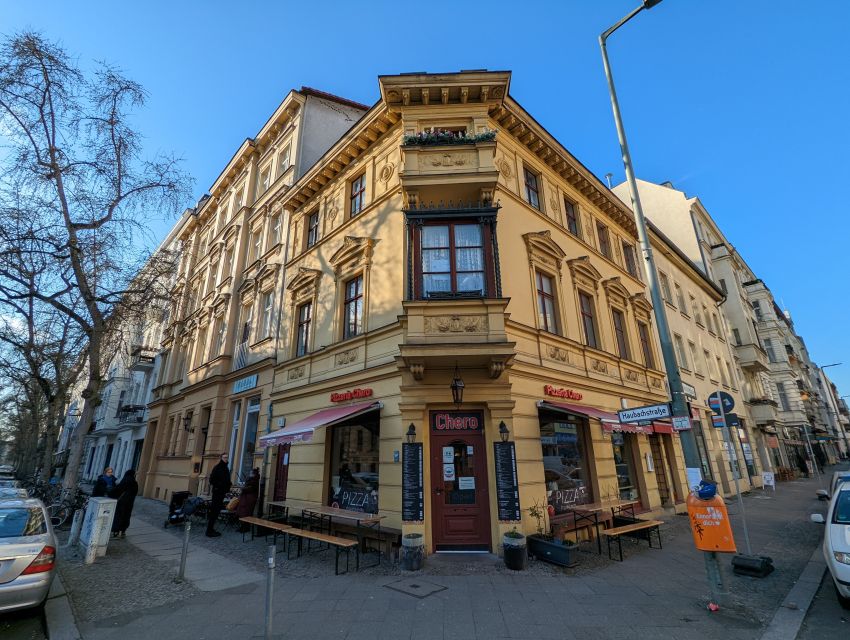
At the corner of Nehringstraße and Christstraße, the walk reaches one of its most appealing neighborhood sections. This is Klausener Kiez, a quarter where local life takes center stage.
Here, cafés, thrift stores, and corner shops replace the formal scale of city hall and palace grounds. You see how residents use the area today, with small businesses and everyday meeting places giving the streets their character.
This stop makes the tour feel grounded. You are not only studying old buildings. You are also watching a working neighborhood function in the present. If you want a break after the tour, this is the sort of area where you might find a café or browse a shop, though food and drinks are not part of the tour.
Klausener Kiez is also a useful contrast with Berlin’s better-known tourist zones. The route deliberately avoids making the entire experience about the most famous sights. That does not mean the district is untouched or secret. It means you are given time to notice the ordinary details that help explain why people live in a place.
The drawback is that the value of this section depends on your interest in neighborhood character. If you want only spectacular monuments, cafés and small shops may feel like a detour. If you enjoy seeing how a city works day to day, this is likely to be one of your favorite portions.
Villa Oppenheim and Schlossstraße
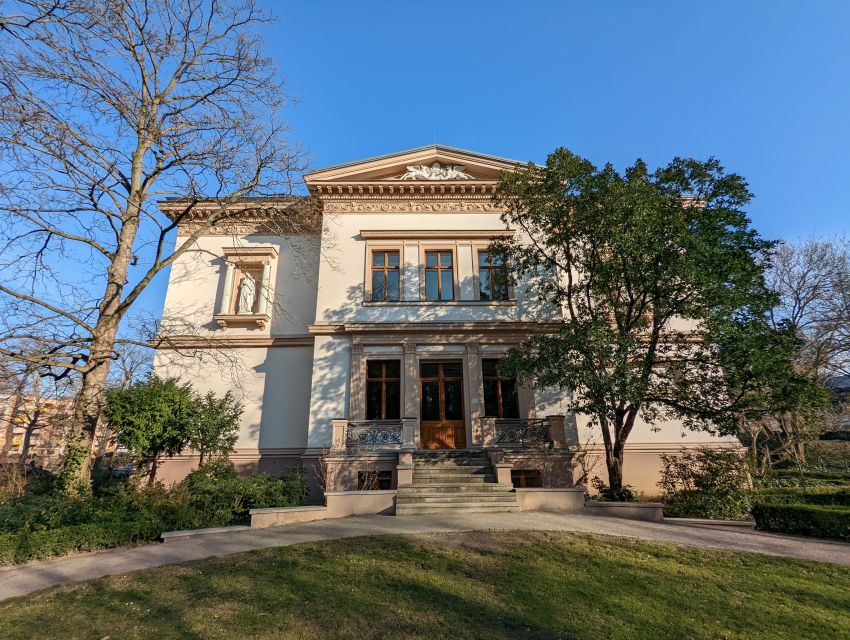
The route continues toward Villa Oppenheim and the grand Schlossstraße. Villa Oppenheim brings another dose of architectural elegance, while Schlossstraße offers a more formal setting and now houses world-class museums.
This portion links private wealth, public culture, and the district’s royal associations. You see how Charlottenburg developed spaces for prominent residents and institutions, not only for ordinary households.
The museums are important to note, but they are not part of the walking tour. You will see the setting and learn why it matters, then finish outdoors. That is a useful arrangement if you have limited time or already have museum plans. It is less satisfying if your main goal is to enter the palace or view collections during the two-hour booking.
I would treat the walk as an introduction. Afterward, you can decide if Villa Oppenheim, Schlossstraße, or the palace deserves a longer visit. The guide gives you the background needed to make that choice instead of sending you into a museum without context.
Ending at Charlottenburg Palace
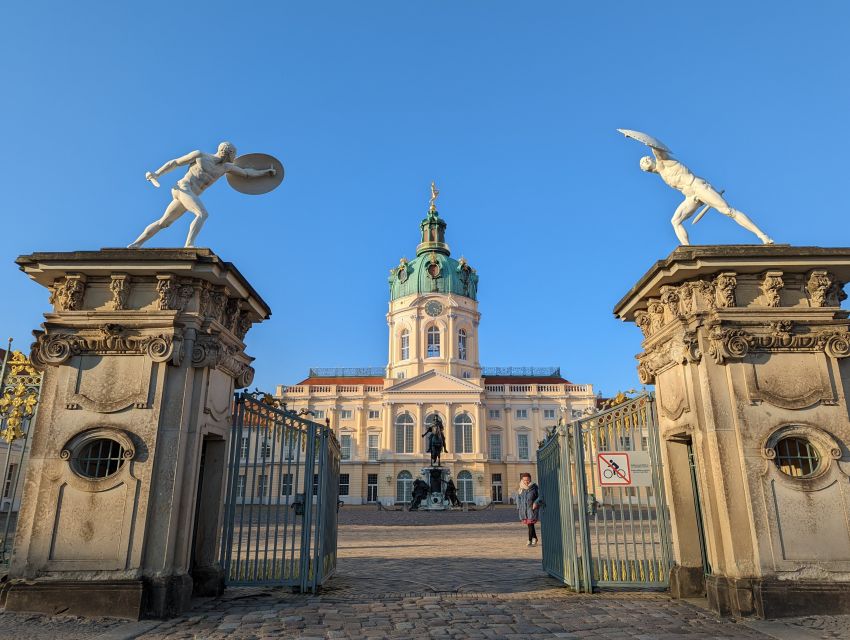
The final stop is Charlottenburg Palace, the district’s grand visual payoff. The former Prussian power center gives the entire route its strongest connection to royal history.
The palace is opulent, but the walk has prepared you to see it in a wider frame. You have already encountered the village, civic government, working-class streets, schools, housing, and modern shops. Now you can consider how royal power shaped the district around it.
The palace is lined with magnificent dome-topped Stüler buildings, adding another strong architectural view at the end. This is an excellent place to continue sightseeing, take photographs, or plan a separate museum visit.
Remember the practical limit: museum visits are not included. The tour ends at the palace rather than taking you through its interiors. That is not a flaw if you want a neighborhood walk, but you should reserve additional time if you want to explore the palace as a museum.
Ending here also makes the route easy to remember. You finish with the most recognizable sight, but you understand it as part of Charlottenburg’s wider development rather than as an isolated royal showpiece.
The Guide’s Role and the German-Language Format
The guide is the main reason to book instead of walking the route alone. The experience is led by a professional museum expert, and the strongest praise focuses on broad historical knowledge, clear explanations, friendly conduct, and an entertaining delivery.
The guide also leaves room for questions. That matters on a history walk because Charlottenburg’s story can lead in many directions, from urban planning to architecture to daily life. A good answer can turn a passing building into a memorable stop.
The language is German. The supplied information identifies German as the tour language, so you should not book this expecting an English explanation. For German speakers, the format appears particularly strong: the historical material is presented in an accessible way, with enough detail for people who want to go beyond the standard Berlin introduction.
Several recent ratings give the tour 5 out of 5, and the overall score is 4.8 from 47 reviews. The praise is consistent rather than focused on one lucky feature: people highlight the organization, the structure, the guide’s expertise, the friendly pace, and the choice to avoid the better-known tourist zone.
Is $23 Good Value for Two Hours?
At $23 per person, this is a reasonable price for a focused, expert-led walk. You are paying for interpretation and local orientation, not transport, food, or admission tickets.
The value is strongest if you would otherwise pass through Charlottenburg without understanding what you are seeing. Two hours can give you a clear map of the district’s history and help you choose where to spend more time afterward.
The price is less attractive if you only want palace admission. Since museum visits are excluded, you will need to pay separately for any interior attractions you add. You also receive no hotel pickup or drop-off, though the central meeting point at the city hall keeps the arrangement simple.
The reserve-now-and-pay-later option can help if your Berlin plans are still changing. Free cancellation is available up to 24 hours before the start time for a full refund. Those policies are useful, but the real question is whether you value a thoughtful neighborhood explanation. If you do, $23 is modest for the amount of historical context packed into two hours.
Who Should Book This Charlottenburg Walk?
I would recommend this tour to:
- German-speaking visitors who want more than Berlin’s central landmarks.
- Repeat Berlin visitors seeking a district with a different feel.
- Architecture fans interested in housing, schools, churches, and urban planning.
- History lovers who want Prussian power placed alongside ordinary city life.
- People who prefer a manageable two-hour walk instead of a long full-day tour.
- Visitors who want to see the palace area before deciding on a museum visit.
Families and older visitors may also appreciate the reasonable duration and wheelchair accessibility. Still, it remains a walking tour, and comfortable shoes are important. Since the tour runs in all weather, bring suitable clothing and be ready to continue if rain arrives.
I would hesitate to recommend it if you need an English-language tour, want substantial time inside Charlottenburg Palace, or prefer a food-focused experience. The route is about streets, buildings, history, and local life.
Final Verdict: A Smart Way to Read Charlottenburg
Book this tour if you want Charlottenburg explained rather than simply photographed. The palace is the headline sight, but the old village square, Zille’s working-class Berlin, the 1786 schoolhouses, Luisenkirche, Klausener Kiez, and the historic housing make the walk worthwhile.
The strongest feature is its balance. You get Prussian grandeur without spending two hours on royal names alone. You also get present-day cafés, shops, and street life without losing the historical thread.
For $23, I think this is a good-value introduction to one of Berlin’s most prosperous and layered districts. Choose it in German, wear practical shoes, dress for the forecast, and save extra time afterward if you want to enter the palace or visit the nearby museums.
FAQ
Where does the Charlottenburg walking tour meet?
Meet your guide directly in front of the main entrance to Rathaus Charlottenburg, or Charlottenburg City Hall.
How long does the tour last?
The walking tour lasts two hours.
What language is the tour conducted in?
The live tour guide speaks German.
Is Charlottenburg Palace included as a museum visit?
No. The tour ends at Charlottenburg Palace, but museum visits are not included.
Is food or drink included?
No. Food and drinks are not included in the tour price.
Is hotel pickup and drop-off provided?
No. Hotel pickup and drop-off are not included. You meet the guide at Rathaus Charlottenburg.
Is the tour wheelchair accessible?
Yes, the activity is listed as wheelchair accessible.
What should I bring?
Bring comfortable shoes and clothing suitable for the weather. The tour operates rain or shine.
Just added around Berlin
- Private Walking Tour in Berlin: Hitler’s Germany & WWII★ 5.0 · 7 reviews
- The History of Berlin: WWII PRIVATE Walking Tour With Locals★ 5.0 · 209 reviews
- Private Berlin WWII and Cold War History Tour with Local Expert Guide★ 5.0 · 28 reviews
- Private Walking Tour Berlin 3 hours: Brandenburg, Historic Center★ 5.0 · 7 reviews
- Berlin: Private Bike Tour of the Berlin Wall and Third Reich★ 5.0 · 23 reviews
- Group Driving Tour 1 to 6 people. Berlin Shore Excursion incl pick-up at Port★ 5.0 · 8 reviews
- Berlin: Guided Private Bike Tour to Explore the Highlights★ 5.0 · 12 reviews
- Berlin Photography Masterclass – Private Photography Lesson★ 4.5 · 23 reviews
City Tours, compared.

1-Hour City Tour by Boat with Guaranteed Seating
Read our review →
City History Canal Sightseeing Tour on a Motorboat
Read our review →
Browse the lists this tour appears in