
Reviewed · WALKING TOURS
East Berlin and the Wall: Walking Tour
Berlin’s old divide still speaks through concrete. This three to three-and-a-half-hour walk connects Potsdamer Platz, the Bernauer Strasse Wall Memorial, Alexanderplatz, and the East Side Gallery into one clear story. I like the way it combines major Cold War sites with ordinary East Berlin life, and I especially like the stop at the former ghost station at Nordbahnhof. The main drawback is that your public transport ticket is not included, and the pace may feel brisk if you prefer long stops at every memorial.
I also like the small-group format, which should make it easier to ask questions than on a large city walk. Guides such as Paolo, Elisa, Claudia, and Catherine have earned praise for their warmth, personal stories, and ability to explain difficult history in plain language. Just note that the private version must be arranged at least 72 hours ahead, and the meeting or hotel pickup details depend on the option you book.
In This Review
- Key points to know before you book
- Why this Berlin Wall walk works
- Starting at Potsdamer Platz
- The eight-minute ride to Nordbahnhof
- Bernauer Strasse and the original death strip
- Alexanderplatz and the pressure of protest
- The TV Tower as an East Berlin symbol
- Finishing at the East Side Gallery
- How the guides shape the experience
- Price, group size, and overall value
- Who should book this walk?
- Should you book East Berlin and the Wall?
- FAQ
- How long does the East Berlin and Wall tour last?
- What locations does the tour visit?
- Is public transportation included?
- Is the tour private?
- Which languages are available?
- Is hotel pickup available?
- Can I cancel the tour?
Key points to know before you book
- The route links five major Cold War locations, from Potsdamer Platz to the East Side Gallery.
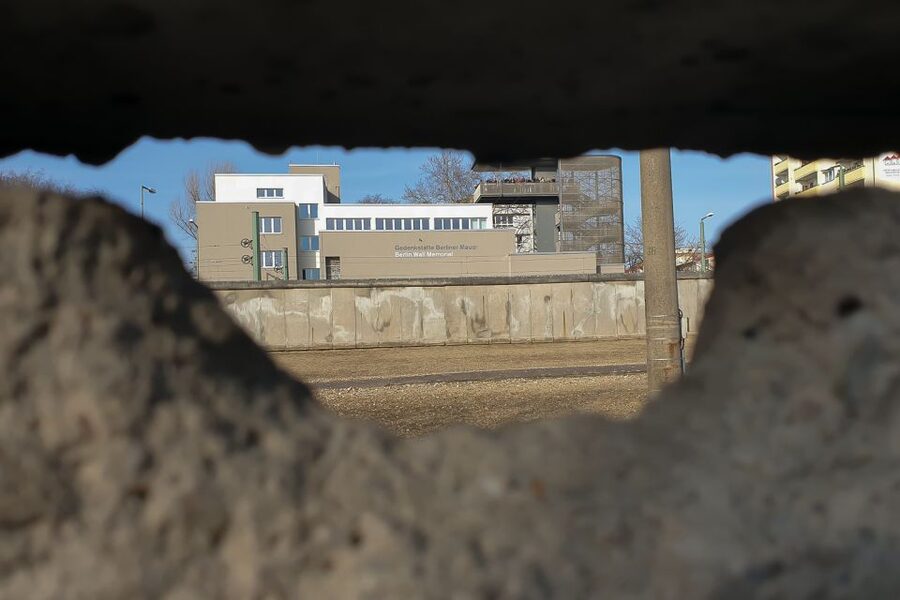
- Bernauer Strasse is the emotional center, with original Wall sections, the former death strip, and stories of escape attempts.
- Nordbahnhof was a ghost station, closed for almost 30 years after the Wall went up.
- Alexanderplatz connects daily life with political change, including the peaceful protests that helped bring down the Wall.
- The price is $351 for up to six people, making the private option more attractive for a small party than for one or two people.
- You need an AB public transport ticket, and comfortable shoes are essential.
Why this Berlin Wall walk works
Berlin’s Cold War story can feel scattered. One memorial sits in the north, another piece of the Wall is farther east, and a grand socialist square tells a different part of the story. This tour gives those places an order and a human thread.
You begin by considering postwar Berlin, the division of the city in 1961, and the two political systems that developed on opposite sides. From there, the route moves through former transport links, border zones, socialist public spaces, and surviving Wall art.
That structure matters. You are not simply looking at slabs of concrete and taking photographs. You are learning why the Wall was built, how it changed daily routines, how people tried to get across it, and how public protest helped bring the system down.
The experience lasts three to three-and-a-half hours. That is long enough to cover the main sites without turning the day into an exhausting full-day history lesson. You will walk, ride the S-Bahn, and use the subway or metro, so allow for a fair amount of movement between stops.
More Walking Tours in Berlin
- Discover Berlin Half-Day Walking Tour
★ 5.0 · 9,624 reviews - Berlin: Third Reich and Cold War 2 Hour Walking Tour
★ 4.9 · 6,830 reviews - Berlin: Discover Berlin Walking Tour
★ 4.9 · 5,998 reviews
Starting at Potsdamer Platz
The tour begins at Potsdamer Platz, although the exact meeting point depends on the option you select. This is a useful place to start because it reflects Berlin’s dramatic physical change.
After World War II and during the city’s division, this area was cut apart by the Wall and became a no-man’s-land of sorts. Today, modern buildings and busy streets make the old division difficult to picture unless someone explains what once ran through the area.
Your guide uses this opening to set the basic timeline. Berlin was divided after the war, and the German Democratic Republic, or GDR, created a socialist state in the eastern part of the city. West Berlin followed a different economic and political path.
The strength of starting here is orientation. You begin with the broad picture before moving into personal stories. The weakness is that Potsdamer Platz itself contains little original Wall fabric compared with Bernauer Strasse. Think of it as the opening chapter, not the main memorial stop.
The eight-minute ride to Nordbahnhof
The short S-Bahn ride to Nordbahnhof is not wasted travel. It helps you understand how the Wall affected Berlin’s transport system.
Nordbahnhof was one of the city’s ghost stations. After the Wall was built, trains from West Berlin passed through certain stations in East Berlin without stopping. These stations were shut and heavily guarded, leaving dark platforms that passengers could glimpse through train windows.
Nordbahnhof remained closed for nearly three decades. That detail brings the division down to street level. The Wall did not only separate families and neighborhoods. It altered the way people moved through their own city.
The train ride lasts about eight minutes, but you need a valid public transport ticket for the AB zones. The ticket is not included in the tour price, so buy the correct pass before setting out or ask your guide how to handle the transport portion.
Bernauer Strasse and the original death strip
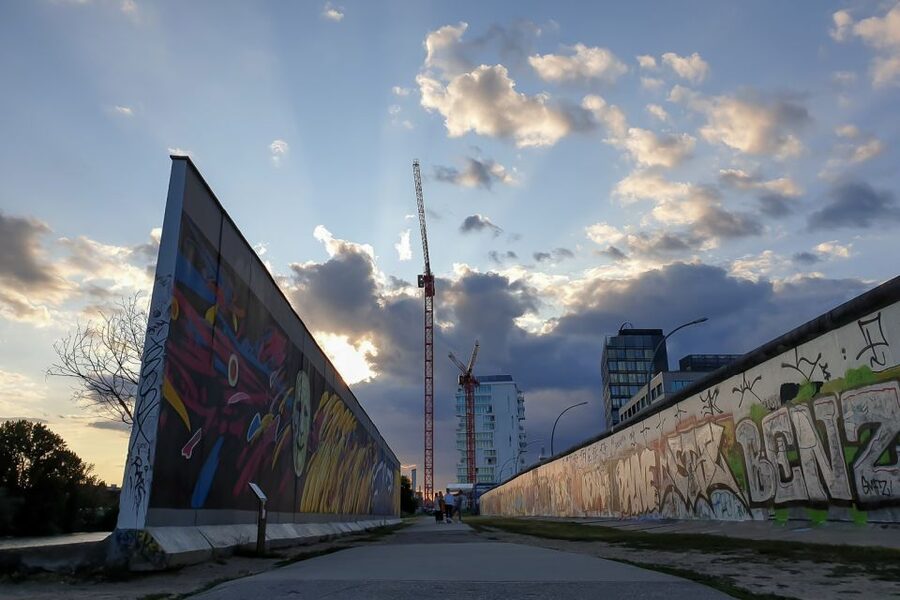
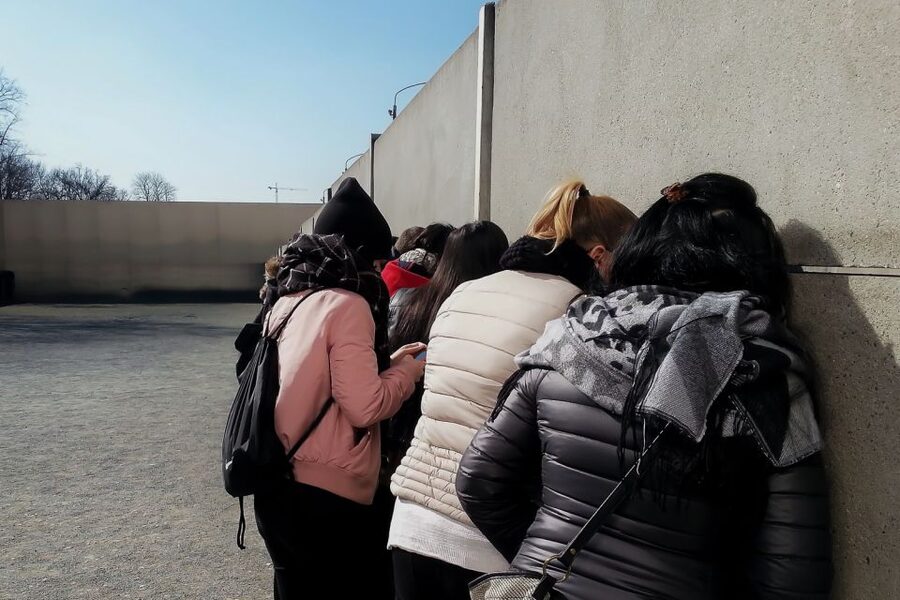
The Berlin Wall Memorial on Bernauer Strasse is the heart of the tour. Plan on about 50 minutes here, which gives your guide time to explain the border system instead of rushing past it.
Bernauer Strasse became famous because the Wall cut directly across the street and separated buildings, sidewalks, entrances, and families. The area preserves original portions of the Wall and parts of the former death strip, giving you a better sense of how difficult crossing the border really was.
This is not a cheerful sightseeing stop. It deals with surveillance, armed border guards, escape attempts, imprisonment, and people who died trying to reach the West. A good guide keeps the focus on real lives rather than treating the Wall as a dramatic backdrop for photographs.
You will also hear about the many methods people used to escape. Some attempts involved tunnels or hidden routes. Others ended in tragedy. The value of this stop is that it shows the Wall as an active system with layers of fencing, patrol areas, and controlled passage, not simply one tall barrier.
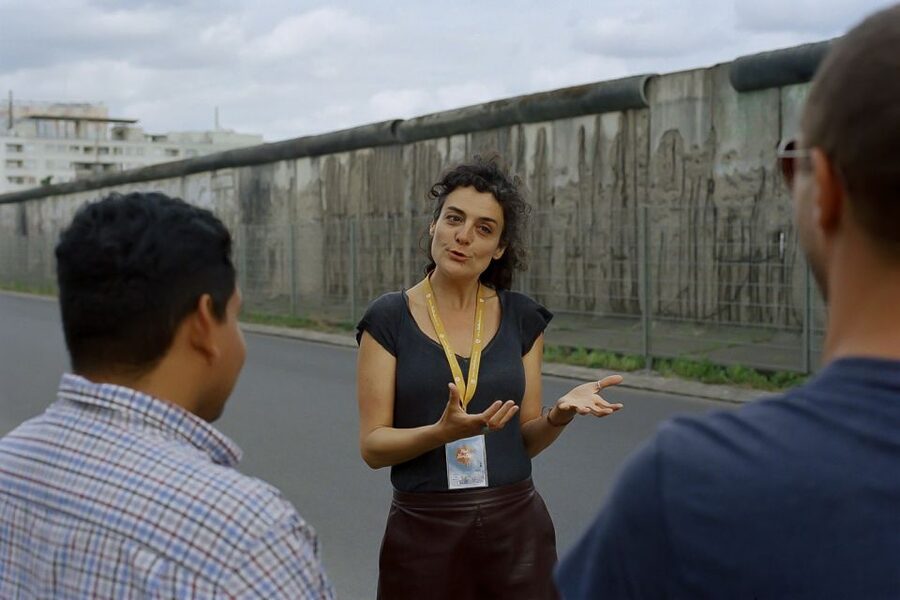
Bernauer Strasse is also the place where personal stories matter most. Catherine, one of the praised guides, added her own testimony to the historical explanation, which made the visit especially personal for some participants. If your guide has a family connection or firsthand experience, take the chance to ask about it. Those details can help you understand how the GDR shaped ordinary decisions at home, at work, and on the street.
Wear comfortable shoes. The tour is not an extreme hike, but it includes outdoor walking and several transfers. The memorial can also feel exposed in bad weather, so dress for the forecast.
Still Berlin, at a slower pace:
- Berlin: Reichstag, Dome and Government District Guided Tour
★ 4.7 · 18,288 reviews - Berlin: 1-Hour City Tour by Boat with Guaranteed Seating
★ 4.3 · 16,993 reviews - Berlin: Boat Tour Along the River Spree
★ 4.4 · 11,252 reviews - Berlin: Hop-on Hop-off Bus Tour with Live Commentary
★ 4.3 · 8,579 reviews
Alexanderplatz and the pressure of protest
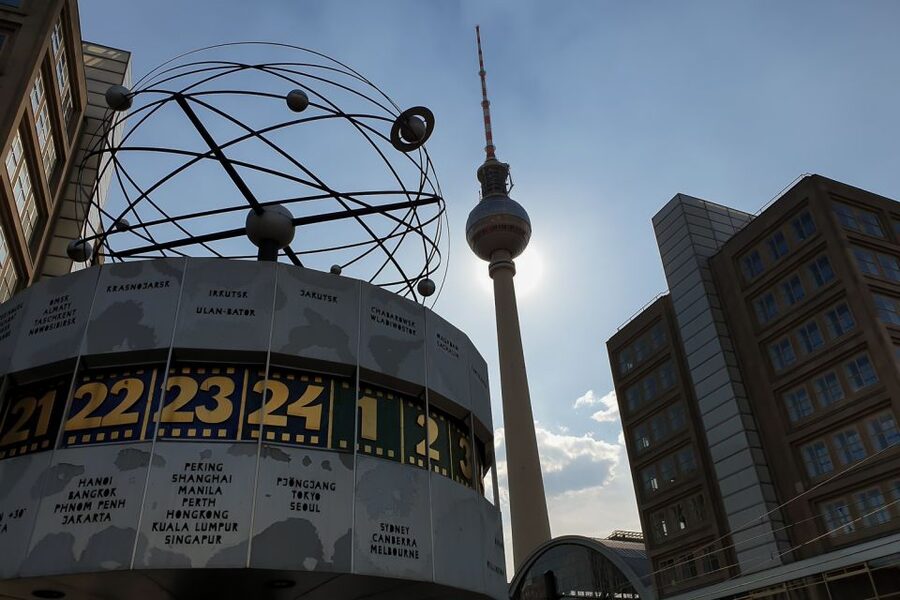
From Bernauer Strasse, the group uses the subway or metro for about ten minutes to reach Alexanderplatz. The transport link gives you a break after the memorial and shifts the story from border control to public life.
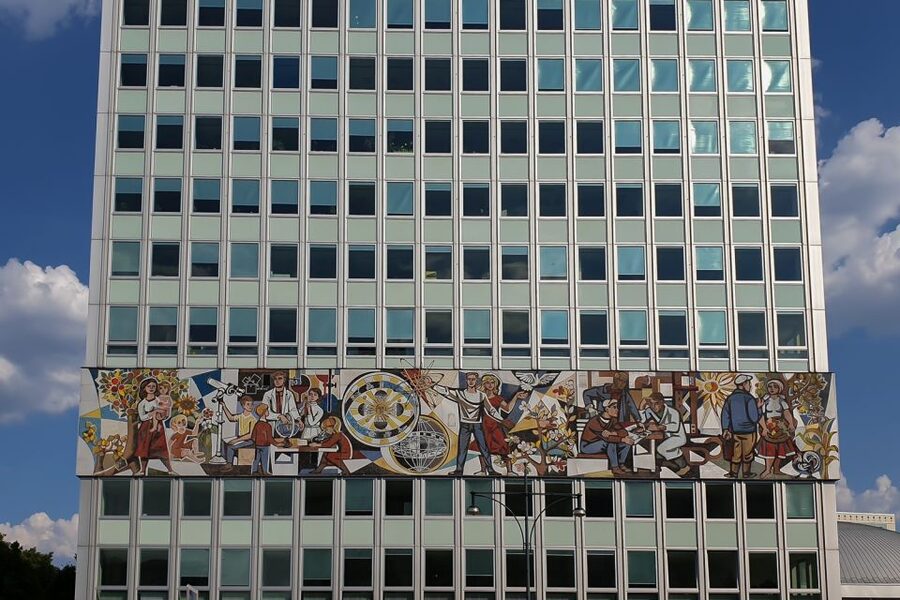
Alexanderplatz is one of the clearest places to see the visual language of East German socialism. Its wide open spaces and monumental buildings were designed to project order, strength, and the authority of the state.
The guide explains how daily life worked under the GDR system, including the political pressure created by the STASI, the state security service. This part is useful because it moves beyond the Wall itself. You learn about the social reality behind the architecture: a society shaped by official ideology, surveillance, restrictions, and limited political choice.
The square also connects to the peaceful demonstrations of 1989. Large protests challenged the government and its repression. Those demonstrations helped create the pressure that led to the Wall’s opening and, soon after, the collapse of the GDR and the wider Soviet bloc.
You receive about ten minutes of guided attention at Alexanderplatz, followed by another ten-minute focus on the TV Tower. That may seem short, but the tour is trying to cover a wide stretch of Berlin. If you want detailed architectural history or time inside the TV Tower, this is not the right product. The tower is viewed as part of the East Berlin setting, not as an observation deck visit.
The TV Tower as an East Berlin symbol
The Fernsehturm, or TV Tower, was built as a prominent symbol of East German modernity. Its height made it visible across the city, and its presence near Alexanderplatz helped define the official center of East Berlin.
Your guide places it within the socialist city rather than treating it as only a sightseeing attraction. The tower shows how governments use architecture to send a message. It was meant to signal technical progress and state confidence, even while ordinary citizens faced strict controls.
Do not book this walk expecting entrance to the TV Tower. The schedule lists a guided stop of about ten minutes, not a visit inside. That is enough for context and photographs, but not for a meal, an observation visit, or a long architectural discussion.
Finishing at the East Side Gallery
The final subway ride takes about ten minutes and leads to the East Side Gallery. Here, the old Wall becomes a public art site.
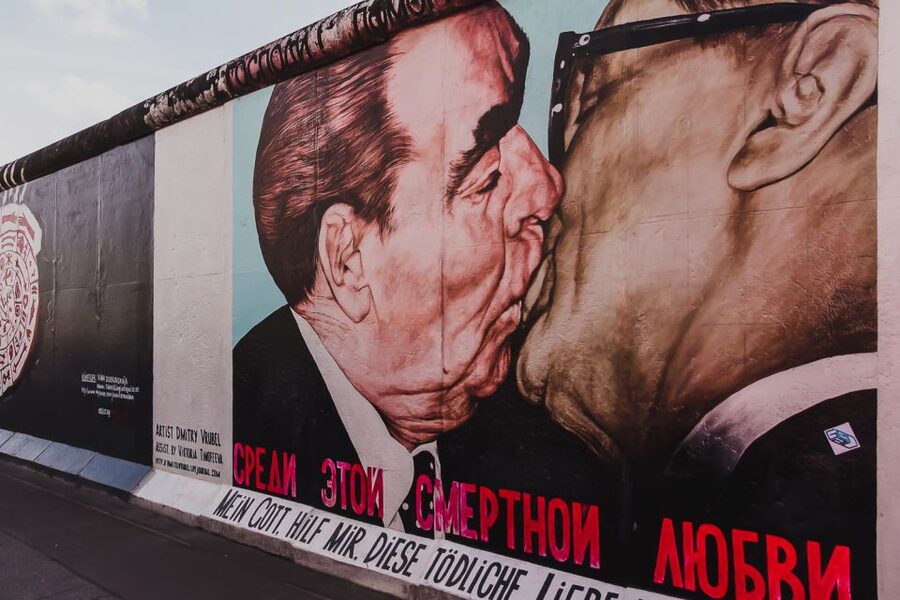
The gallery contains 104 murals painted on a remaining section of the Wall. The best-known image is the kiss between Leonid Brezhnev and Erich Honecker, a satirical depiction of the close relationship between Soviet and East German leaders.
This ending changes the mood. Bernauer Strasse shows the Wall as a tool of control and suffering. The East Side Gallery shows how artists and the public later used parts of it to express political ideas, hope, anger, and humor.
Your guided time here is about 15 minutes. That is enough to identify key murals and explain why the site matters, but it is not enough to study all 104 paintings closely. If the art is important to you, return on your own after the tour and allow extra time.
The East Side Gallery is also more open and visually dramatic than Bernauer Strasse. You will likely take more photos here, but do not let the colorful paintings erase the history of the concrete beneath them. The art has meaning because of what the Wall represented and what happened after it fell.
How the guides shape the experience
The route covers serious material, so the guide matters as much as the stops. The strongest feedback centers on guides who make the history understandable, warm, and personal.
Paolo is praised for being engaging enough that participants wished they could keep listening for hours. Elisa is described as prepared, enthusiastic, and clear in the way she organized the morning. Claudia kept attention alive with interesting anecdotes and was especially well suited to Italian-speaking participants.
Catherine brought personal testimony to the tour, adding an emotional layer beyond dates and political labels. That kind of contribution can make the GDR feel less remote, though the exact guide and style will depend on the day and language you select.
The listed guide languages are English, Italian, French, Spanish, and German. The included-language details also specifically mention Italian, French, and Spanish, so confirm your preferred language when booking. A private group is available, which can help families or friends keep the pace suited to their interests.
Price, group size, and overall value
The price is $351 per group of up to six people. For six participants, that works out to $58.50 each before the transport ticket. For two people, the per-person cost is much higher, so the value depends heavily on your group size.
The price makes more sense if you want a private experience, hotel pickup, or a guide in a particular language. A private guide can adjust explanations, answer more questions, and spend more time on the subjects that matter most to you. If you are traveling alone or as a couple and mainly want a low-cost introduction, a standard group tour may be easier to justify.
Hotel pickup is optional. If you select it, wait in the lobby ten minutes before the scheduled time, and include your hotel name and address in the booking. Contact the provider before the visit to confirm the pickup details and departure time.
The AB public transport ticket costs extra, and food and drinks are not included. The tour does not appear to include a meal break, so eat beforehand and carry water, especially in warm weather.
Free cancellation is available up to 24 hours before the tour, with a full refund. You can also reserve now and pay later, which helps if your Berlin schedule is still shifting. The private option cannot be organized with less than 72 hours of notice, so leave several days between booking and the tour date.
Who should book this walk?
I would choose this tour if you want the Berlin Wall explained as part of a larger political and social story. It suits first-time visitors who find Berlin’s divided past hard to organize, as well as families and small groups who want a guide rather than a museum-only visit.
It is particularly useful for anyone interested in how East Berliners lived under the GDR. The route covers surveillance, transport restrictions, socialist architecture, public protest, and escape attempts. You get more than a collection of Wall photographs.
It may not suit you if you want long, quiet visits at each stop, extensive free time for photographs, or an inside visit to the TV Tower. The public transport connections also mean the experience is not a single continuous walk.
Should you book East Berlin and the Wall?
Book it if you want a focused introduction to divided Berlin with strong human stories and a route that makes geographical sense. Bernauer Strasse is the key reason to go, while Nordbahnhof, Alexanderplatz, and the East Side Gallery fill in the political and cultural picture.
The $351 group price is easiest to justify for four to six people, or for anyone who values private pickup and a guide in a chosen language. Confirm the meeting point, language, pickup plan, and AB ticket before you pay.
For history-minded visitors, this is a well-shaped half-day. It is serious without being dry, personal without losing the facts, and practical enough to fit into a busy Berlin schedule.
FAQ
How long does the East Berlin and Wall tour last?
The tour lasts approximately three to three-and-a-half hours.
What locations does the tour visit?
The route includes Potsdamer Platz, Nordbahnhof, the Berlin Wall Memorial at Bernauer Strasse, Alexanderplatz, the TV Tower, and the East Side Gallery.
Is public transportation included?
No. You need a valid AB-zone public transport ticket for the S-Bahn, subway, or metro rides during the tour.
Is the tour private?
A private group option is available. The price shown is $351 for a group of up to six people.
Which languages are available?
The listed live guide languages are English, Italian, French, Spanish, and German. Confirm your preferred language when booking.
Is hotel pickup available?
Pickup is optional and depends on the selected booking option. If you choose it, wait in your hotel lobby ten minutes before the scheduled time and provide the hotel name and address.
Can I cancel the tour?
You can cancel up to 24 hours in advance for a full refund. The private version must be arranged at least 72 hours before the tour date.
Just added around Berlin
- Private Walking Tour in Berlin: Hitler’s Germany & WWII★ 5.0 · 7 reviews
- The History of Berlin: WWII PRIVATE Walking Tour With Locals★ 5.0 · 209 reviews
- Private Berlin WWII and Cold War History Tour with Local Expert Guide★ 5.0 · 28 reviews
- Private Walking Tour Berlin 3 hours: Brandenburg, Historic Center★ 5.0 · 7 reviews
- Berlin: Private Bike Tour of the Berlin Wall and Third Reich★ 5.0 · 23 reviews
- Berlin: Guided Private Bike Tour to Explore the Highlights★ 5.0 · 12 reviews
- Berlin Photography Masterclass – Private Photography Lesson★ 4.5 · 23 reviews
- Group Driving Tour 1 to 6 people. Berlin Shore Excursion incl pick-up at Port★ 5.0 · 8 reviews
Walking Tours, compared.
Old Town & Viktualienmarkt City Walk in German
Read our review →Browse the lists this tour appears in