Reviewed · TICKETS
Eltville: Eberbach Monastery Entry Ticket
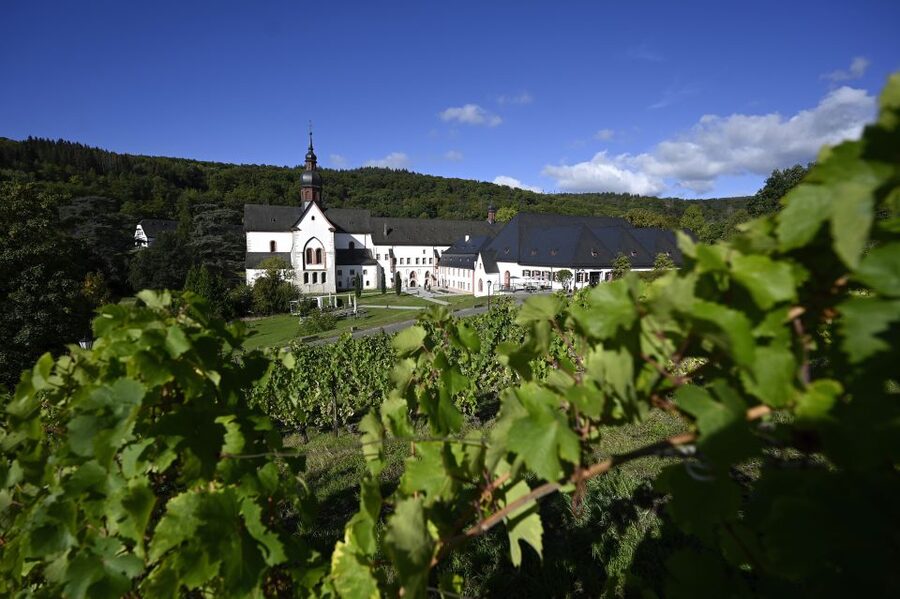
Film sets, wine presses, and quiet cloisters await. Eberbach Monastery gives you a full day to explore one of Hessen’s most atmospheric historic sites, with access to its basilica, cloister, wine cellars, monks’ rooms, and Abbey Museum. I especially like the wine-making history and the chance to connect the rooms with Sean Connery’s The Name of the Rose. The main drawback is practical: parking is limited, public transport takes planning, and the site is not suitable for wheelchair users.
I also like that you can visit at your own pace rather than being tied to a fixed tour. The $18 entry price is reasonable if you take time with the museum, old presses, cellar, and monastic rooms. One small warning: QR ticket problems have occurred at the entrance, so keep your booking confirmation handy and allow a little patience at the admission desk.
In This Review
- Key points to know before you go
- Why Eberbach Monastery feels different from a standard museum
- Entering the basilica and cloister
- Seeing the rooms used in The Name of the Rose
- The Baroque dining hall and giant wine presses
- Down into the cellars
- Walking through the monks’ bedrooms and dining room
- The Abbey Museum and its optical illusions
- How much time should you allow?
- Getting there from Eltville
- The QR-code problem and how to avoid stress
- Is the $18 price good value?
- Who will enjoy Eberbach most?
- Should you book the Eberbach Monastery ticket?
- FAQ
- Where is Eberbach Monastery located?
- How much does entry to Eberbach Monastery cost?
- How long is the ticket valid?
- Is transportation included?
- How can I reach the monastery from Eltville?
- Can I drive to Eberbach Monastery?
- What should I bring?
- Is the monastery suitable for wheelchair users?
- Does the ticket include wine tasting?
- Was The Name of the Rose filmed at Eberbach Monastery?
- What can I see in the Abbey Museum?
Key points to know before you go
- Film location: Several rooms were used for Sean Connery’s The Name of the Rose, giving the visit an extra layer for film fans.
- Historic wine cellars: See enormous wine presses, old barrels, an ice cellar, and a treasure chamber filled with wine bottles.
- Monastic interiors: Walk through the former monks’ bedrooms, dining room, basilica, and cloister.
- Museum collection: The Abbey Museum displays documents, paintings, sculptures, religious objects, and art connected with Eberbach.
- Wine tasting option: Finish at the monastery wine house, where you can try wine grown at the site.
- Transport warning: Bus line 172 runs hourly from Eltville station to the Kloster Eberbach, Barockpforte stop, but on-site parking is limited.
Why Eberbach Monastery feels different from a standard museum
Eberbach Monastery is not just a church with a few display cases. It is a large, walk-through historic setting where the rooms explain how the religious community lived, prayed, worked, and made wine.
That combination is the real strength of the visit. You can admire the basilica, then move into the cloister, then see the practical spaces where wine production supported the monastery. The experience keeps shifting between grand religious architecture and ordinary working life.
I find that useful because the story becomes physical. The monks’ bedrooms tell you about daily routine. The dining hall shows the scale of communal life. The cellar and presses explain how the monastery earned money and became connected with the wine culture of the region.
You are not required to follow a guide or rush from room to room. The ticket is valid for one day, so you can pause, retrace your steps, spend time with the art, and make room for a meal or wine tasting. That flexibility suits independent sightseeing.
A few more Germany trips worth comparing
- Dresden: Semperoper Tickets and Guided Tour
★ 4.7 · 12,102 reviews - Berlin: Jewish Museum Berlin Entrance Ticket
★ 4.5 · 8,393 reviews - Berlin: Berlin Story Bunker Entry Ticket
★ 4.6 · 6,759 reviews
Entering the basilica and cloister
Start with the basilica, one of the monastery’s main visual anchors. Its simple religious character helps you understand the setting before you reach the more practical rooms and cellars.
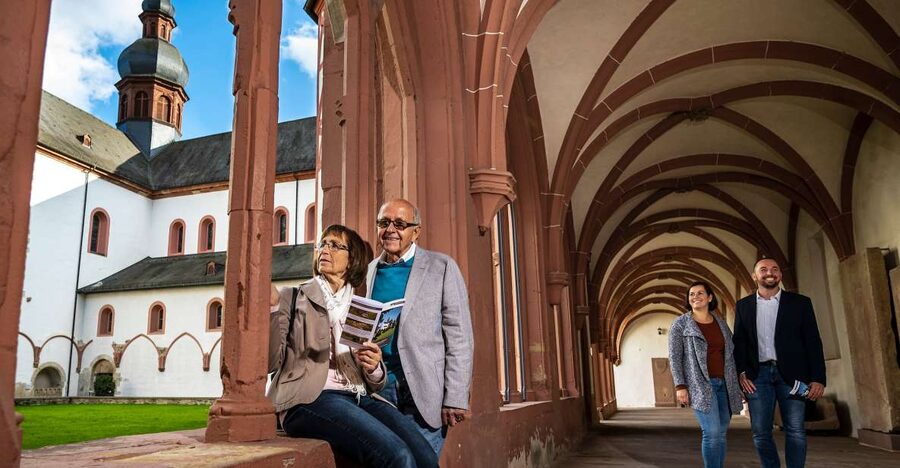
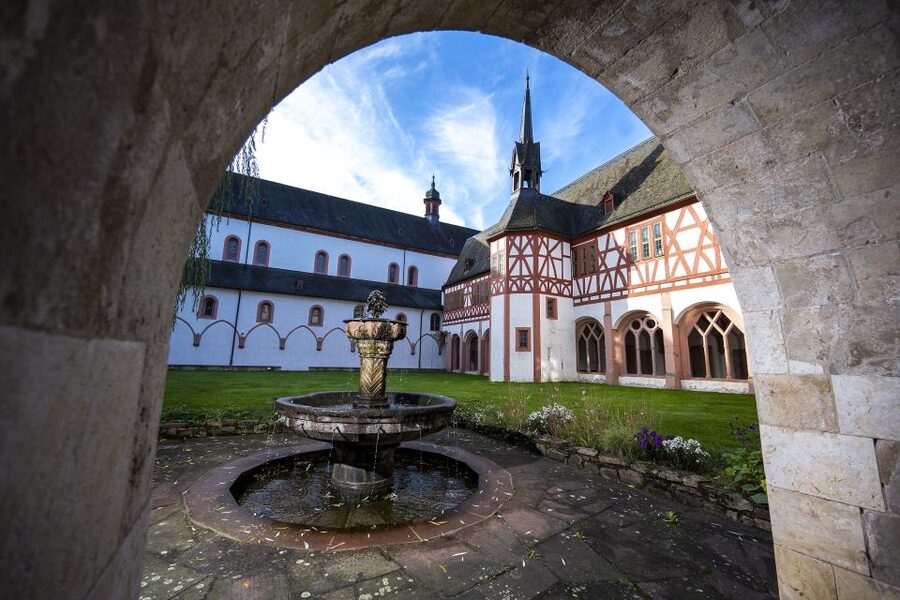
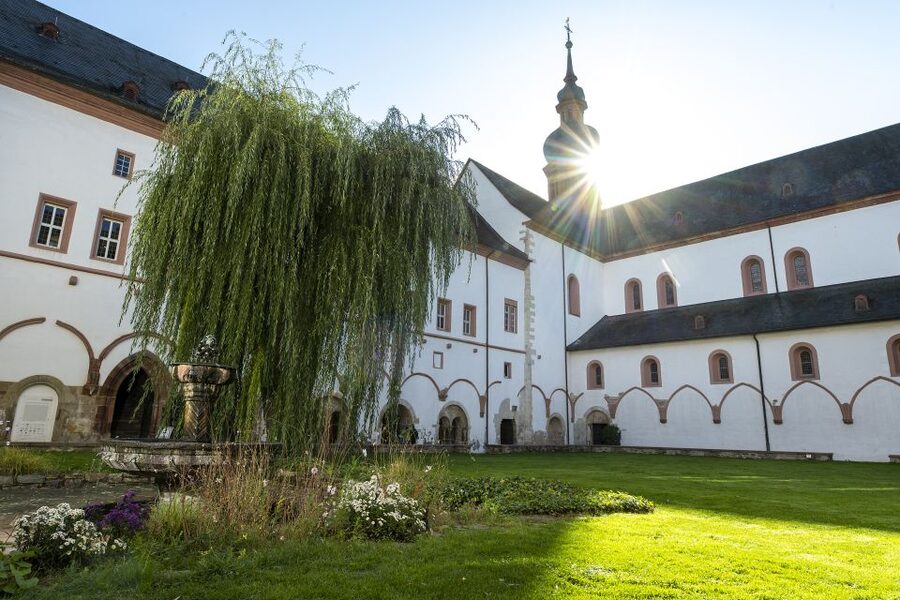
The cloister offers a quieter change of pace. Pay attention to the arcade window designed by Thomas Bayrle, an internationally recognized artist. It brings a modern artistic note into a site shaped by centuries of religious use.
This contrast works well. Eberbach does not present itself as a frozen medieval relic. Older architecture and objects remain central, but the modern addition shows that the monastery is also a living cultural site.
Give yourself time here instead of treating the cloister as a corridor between rooms. The proportions, repeated arches, and changing light are part of the appeal. Comfortable shoes will help, since you are exploring a substantial site rather than making a quick church stop.
Seeing the rooms used in The Name of the Rose
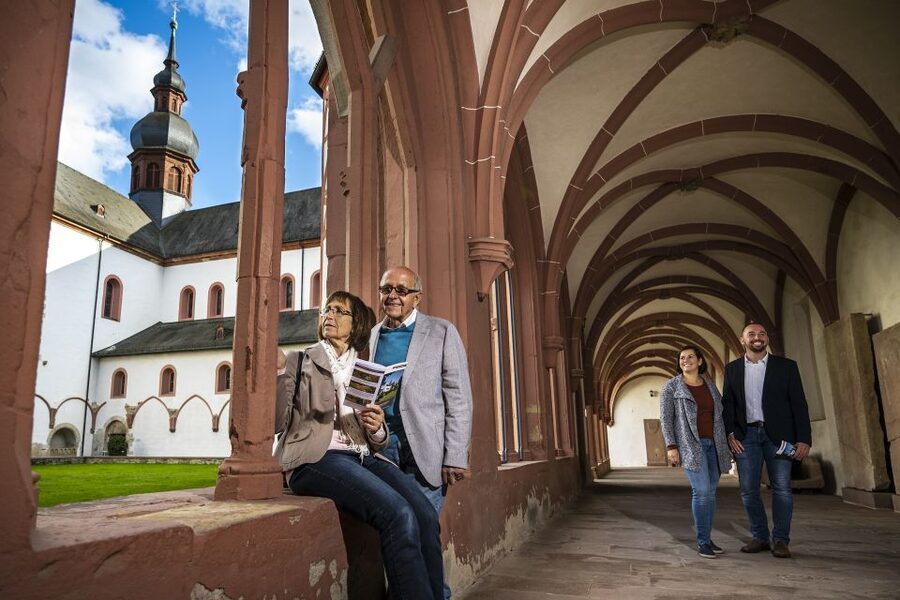
Film fans have a clear reason to visit Eberbach. The monastery served as a filming location for Sean Connery’s The Name of the Rose, and several scenes were shot in its historic interiors.
The film connection is most enjoyable when you let it supplement the site rather than dominate the visit. You still have a real basilica, cloister, dining hall, and cellar to explore, but familiar rooms may suddenly look different when you remember their dark cinematic setting.
A particularly good feature is the chance to connect scenes with actual spaces. The scale, stonework, and secluded rooms create the mood that made the monastery useful on screen. If you have seen the film, prepare for a few satisfying moments of recognition.
If you have not seen it, you will not miss the main value of Eberbach. The architecture and wine history carry the visit on their own. The film simply gives certain rooms an extra story.
The Baroque dining hall and giant wine presses
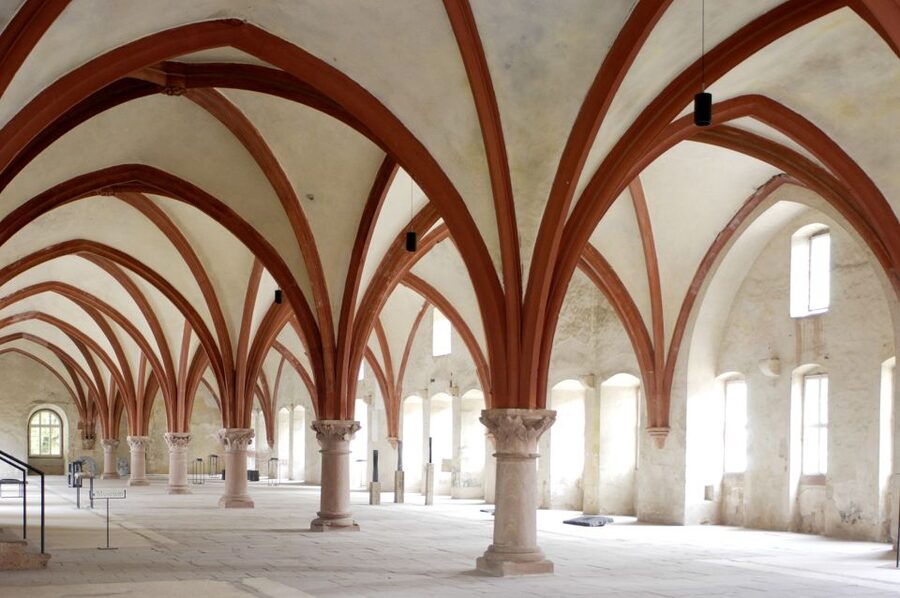
The Baroque dining hall is one of the most memorable stops because it combines decoration with industrial-sized equipment. Giant wine presses occupy the room, making it clear that wine was not a side activity here.
This is where the monastery’s religious and economic roles meet. The monks lived according to a religious routine, but the community also needed food, supplies, buildings, and income. Wine production helped make that life possible.
The old presses are especially effective because they are large and tangible. A written description of wine production is useful, but standing beside the equipment gives you a better sense of the labor involved.
Look around the room before focusing only on the machinery. The setting matters. A Baroque dining hall is not where you expect to find enormous presses, and that surprise makes the stop memorable.
Still Germany, at a slower pace:
- Berlin: Reichstag, Dome and Government District Guided Tour
★ 4.7 · 18,288 reviews - Berlin: 1-Hour City Tour by Boat with Guaranteed Seating
★ 4.3 · 16,993 reviews - Hamburg: Sex and Crime in St. Pauli Tour for Ages 18+
★ 4.7 · 15,447 reviews - Hamburg: 1.5-Hour Harbor and Speicherstadt Day Cruise
★ 4.6 · 14,200 reviews
Down into the cellars
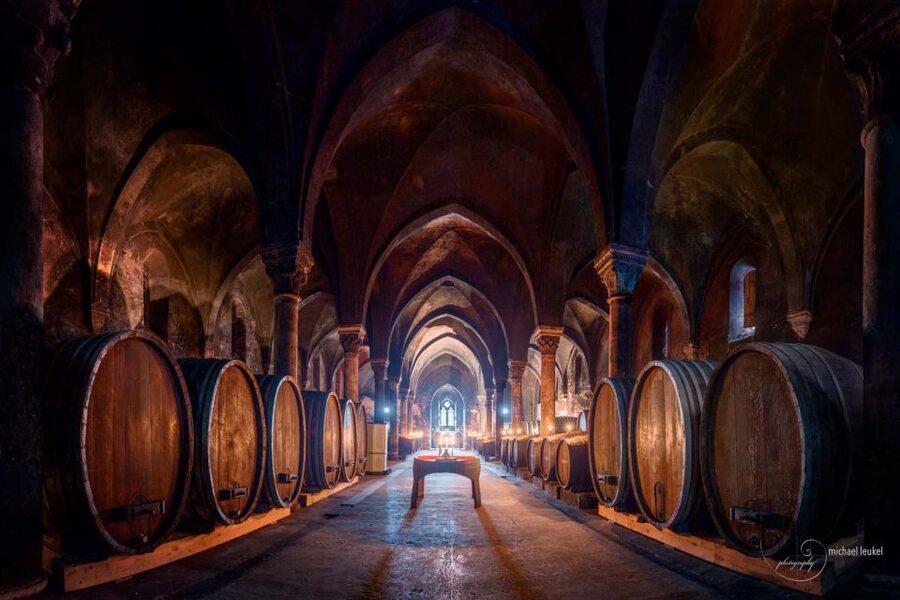
The wine cellars take you below the polished church spaces and into the working side of the monastery. Here you can see historic barrels and learn how strongly wine shaped Eberbach’s identity.
The cellar is also where the visit becomes most clearly tied to the surrounding region. This is not simply a monastery that happens to have wine. Wine is part of the site’s story, its buildings, and its present-day appeal.
You can also look into the ice cellar, an unusual detail that adds a small but useful glimpse into past storage methods. The treasure chamber is another distinctive stop. It is described as a cellar full of wine bottles, and it gives the wine collection a more personal, almost secretive feel.
At the monastery wine house, you can try wine grown at Eberbach itself. The tasting is not included in the $18 entry ticket, so budget for that separately. Still, it is a natural way to finish the cellar section and connect what you have seen with something you can taste.
Walking through the monks’ bedrooms and dining room
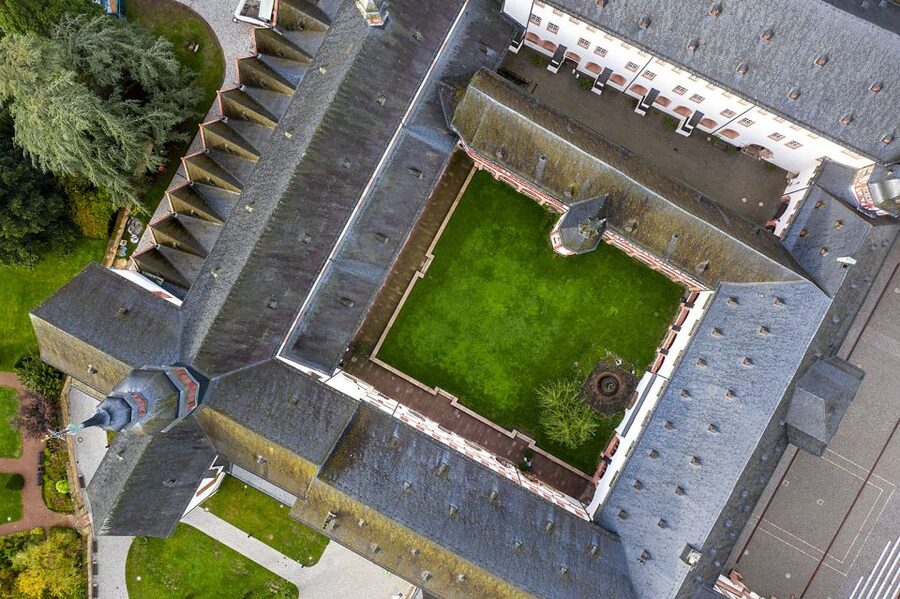
The former monks’ bedrooms and dining room help turn the monastery from an impressive building into a place where people actually lived.
The bedrooms are not presented as luxury interiors. Their value comes from their simplicity and function. As you move through them, consider the contrast between private sleeping space and the shared religious and working areas elsewhere in the complex.
The dining room offers another look at community life. Meals were part of a structured routine, and the room reflects the fact that the monastery operated as a group rather than a collection of isolated individuals.
I like these rooms because they slow down the grand architectural story. The basilica and cloister may catch your eye first, but the living quarters answer more practical questions. Where did the monks sleep? Where did they eat? How did the day feel outside prayer and work?
The site encourages you to imagine those rhythms without turning the visit into a theatrical reenactment. That restraint is helpful. You get enough detail to picture monastic life while still having space to form your own impression.
The Abbey Museum and its optical illusions
The Abbey Museum adds art, documents, and religious objects to the architectural visit. You can see sculptures, paintings, sacral objects, and records connected with Eberbach, along with pieces loaned from public, church, and private collections.
This collection helps explain the monastery through objects rather than rooms alone. A document can show how the institution was recorded and managed. A sculpture or painting can reveal the devotional world surrounding the monks.
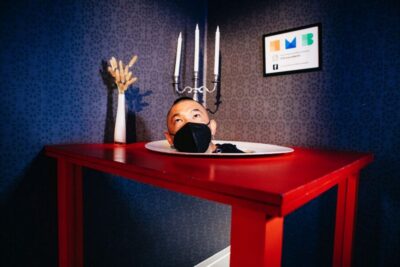
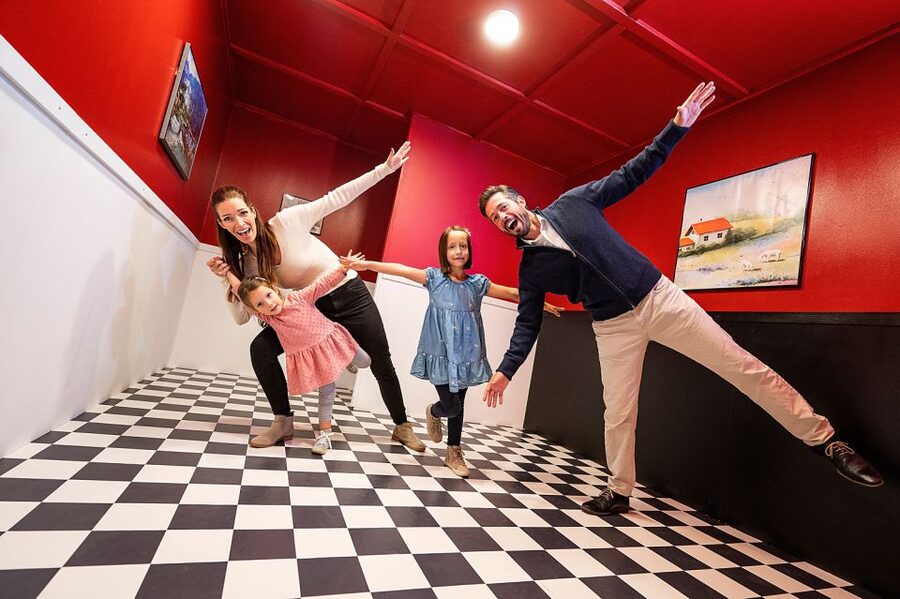
The supplied details also describe a temporary exhibition called VERTRICKST!, focused on optical illusions. Its displays include moving images, kaleidoscopes, mirror rooms, sloping planes, black-light installations, and augmented-reality images that come alive through a smartphone app.
The exhibition includes more than 100 objects and installations, ranging from historical originals to works by Mexican artist Yunuen Esparza and 3-D creations by Martin Hartmann. Room-within-a-room installations can make you feel as if the building is tilting or changing around you.
Because the exhibition is temporary, you should check current dates before relying on it as part of your visit. The monastery itself remains the main attraction, but an illusion exhibition can make the museum more appealing to families and younger visitors who may need a break from religious art and old documents.
How much time should you allow?
The ticket is valid for one day, not just a narrow entry slot. That is useful because Eberbach includes several different sections and is better enjoyed slowly.
A quick visit could cover the basilica, cloister, dining hall, cellar, and museum. If you want to read the displays, connect the site with The Name of the Rose, and stop for wine, plan a much longer outing.
You should also bring water, comfortable clothes, comfortable shoes, and a packed lunch. Those suggestions make sense because transportation is not included and the property is treated as a full-day destination rather than a brief city-center attraction.
A packed lunch gives you control over the day, especially if you are not sure how much time you will spend in the museum or cellar. The wine house is a pleasant addition, but it should not be your only food plan.
Getting there from Eltville
You can drive to Eberbach Abbey or use public transport. From Eltville train station, bus line 172 runs hourly to Kloster Eberbach, Barockpforte.
Check the exact departure and return times for the Kloster Eberbach stop on the Rhein-Main-Verkehrsverbund timetable. Enter the stop name and travel date carefully, since the connection is not something I would leave to guesswork.
Long-distance connections are recommended from Wiesbaden, Mainz, or Frankfurt. If you are staying in one of those cities, plan the outing around the return bus as well as the trip there.
Driving may appear simpler, but parking facilities at the monastery are very limited, particularly during major public events. If your visit falls on a busy date, public transport may save you the frustration of arriving and finding no convenient space.
The entry point is the main entrance. Show a paper or digital copy of your ticket when you arrive.
The QR-code problem and how to avoid stress
There have been reports of digital QR codes failing at the entry barrier, including one case where replacement tickets were issued at the desk. Staff resolved the problem, but the incident shows why you should not rely on a single screen or a weak phone connection.
Keep your booking confirmation available, and if possible carry a paper copy as a backup. The problem may be occasional rather than constant, but a few minutes of preparation can prevent an awkward start.
The admission staff have been described as helpful when problems occurred. Still, it is better to arrive with the ticket details easy to find, especially during a busy event when the entrance could move more slowly.
Is the $18 price good value?
At $18 per person, the ticket is fairly priced if you use it as a full site visit rather than a quick admission to one building.
You get access to the monastery grounds and interiors, the basilica, cloister, historic rooms, wine cellars, presses, barrels, ice cellar, treasure chamber, and Abbey Museum. That is a broad package for a single ticket.
The value becomes stronger if you enjoy several subjects at once: religious architecture, German wine, film locations, museum objects, or historic domestic spaces. You can easily justify the price if you spend much of the day exploring.
The ticket does not include transportation, food, or wine tasting. That matters most for visitors coming from Eltville, since you need to pay for the bus or arrange a car separately. It also means the final cost can rise beyond the entry fee if you add wine and meals.
I would consider the ticket good value for adults who are willing to take their time. It is less compelling if you want only a short photo stop or have no interest in museums, wine, or monastic buildings.
Who will enjoy Eberbach most?
I recommend Eberbach Monastery to film fans, wine enthusiasts, architecture lovers, and anyone who prefers a historic site with several layers to explore.
Families may enjoy the optical illusion exhibition if it is running during the visit. The mirror rooms, sloping spaces, augmented-reality images, and black-light displays offer a more playful counterpoint to the serious museum collection.
The site also suits independent visitors who dislike rigid schedules. You can move at your own pace and decide how long to spend in the cellars, rooms, museum, and cloister.
It is less suitable if mobility is a major concern, since the experience is specifically listed as not suitable for wheelchair users. You should also think carefully about transport if you are not driving, since the bus runs hourly rather than constantly.
Should you book the Eberbach Monastery ticket?
Book it if you want more than a quick church visit. The best reasons are the combination of monastic rooms, wine cellars, historic presses, museum objects, and The Name of the Rose filming locations.
The $18 price works well for a full day, especially if you bring water and lunch and take time with every section. I would pair the visit with a wine tasting at the monastery wine house, while remembering that this costs extra.
Skip it if your schedule is tight, you need wheelchair access, or limited parking and hourly bus service would make the day stressful. For everyone else, Eberbach offers a thoughtful look at how prayer, daily life, art, and wine production once shared the same walls.
FAQ
Where is Eberbach Monastery located?
Eberbach Monastery is in Hessen, Germany, near Eltville.
How much does entry to Eberbach Monastery cost?
The entry ticket costs $18 per person.
How long is the ticket valid?
The ticket is valid for one day.
Is transportation included?
No. Transportation to Eberbach Monastery is not included in the entry ticket.
How can I reach the monastery from Eltville?
Bus line 172 runs hourly from Eltville train station to the Kloster Eberbach, Barockpforte stop.
Can I drive to Eberbach Monastery?
Yes, you can drive to the monastery, but on-site parking is very limited, especially during major public events.
What should I bring?
Bring comfortable shoes, water, comfortable clothes, and a packed lunch.
Is the monastery suitable for wheelchair users?
The experience is listed as not suitable for wheelchair users.
Does the ticket include wine tasting?
No. The entry ticket includes access to Eberbach Monastery, but wine tasting at the monastery wine house is not listed as included.
Was The Name of the Rose filmed at Eberbach Monastery?
Yes. Eberbach Monastery was used as a filming location for Sean Connery’s The Name of the Rose.
What can I see in the Abbey Museum?
The museum includes documents, sculptures, paintings, religious objects, and art connected with Eberbach, including pieces from public, church, and private collections.
Just added around Germany
- Private Walking Tour in Berlin: Hitler’s Germany & WWII★ 5.0 · 7 reviews
- The History of Berlin: WWII PRIVATE Walking Tour With Locals★ 5.0 · 209 reviews
- Private Berlin WWII and Cold War History Tour with Local Expert Guide★ 5.0 · 28 reviews
- Private Walking Tour Berlin 3 hours: Brandenburg, Historic Center★ 5.0 · 7 reviews
- Berlin: Private Bike Tour of the Berlin Wall and Third Reich★ 5.0 · 23 reviews
- Berlin: Guided Private Bike Tour to Explore the Highlights★ 5.0 · 12 reviews
- Berlin Photography Masterclass – Private Photography Lesson★ 4.5 · 23 reviews
- Group Driving Tour 1 to 6 people. Berlin Shore Excursion incl pick-up at Port★ 5.0 · 8 reviews
Tickets, compared.
Munich Hop-On Hop-Off Tour: 1-Day or 2-Day Ticket
Read our review →