
Reviewed · WALKING TOURS
Kreuzberg Private Walking Tour: Immigrants, Artists & Hipsters
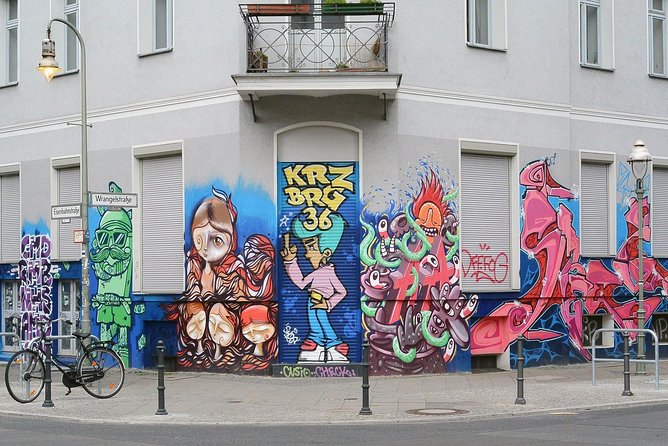
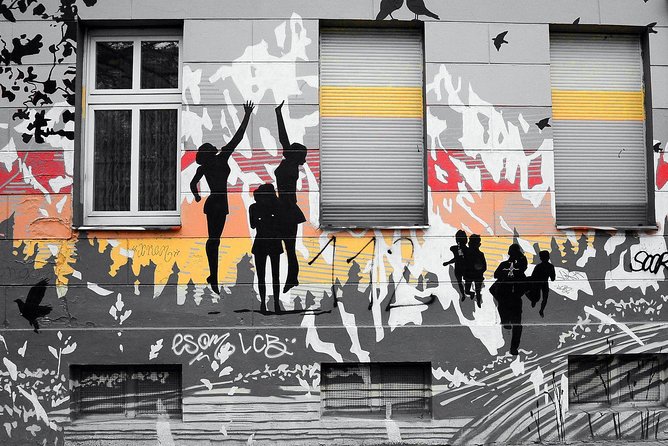
Kreuzberg tells Berlin’s story in street art. This three-hour private walk brings together the district’s Turkish culture and creative scene, from small businesses and cafes to walls covered in bold artwork. I like the way a historian guide connects today’s Kreuzberg with its working-class roots, Cold War years, and uncertain future. I also like the small-group format, which lets you shape the walk around your interests.
The main drawback is that Kreuzberg is spread out, so you’ll need public transport several times. The $450 price is reasonable for a group of up to 10, but it is costly for one or two people. Ask for guide Klaus if he is available. His friendly manner, flexible pace, and tip about excellent spaetzle were especially praised.
In This Review
- Key points to know before you book
- Why Kreuzberg makes a good Berlin walking tour
- Oberbaum Bridge sets the tone
- Berlin Wall fragments and the making of street art
- Oranienstrasse and the SO36 spirit
- Viktoriapark offers a quieter change
- A historian guide changes the experience
- The future of Kreuzberg is part of the route
- Price, transport, and practical value
- Who will enjoy this three-hour walk
- Should you book the Kreuzberg private walking tour?
- FAQ
- How long does the Kreuzberg private walking tour last?
- How many people can join the private tour?
- What is the price of the tour?
- Where does the tour start?
- Where does the tour finish?
- Will I need public transportation?
- Are food and drinks included?
- Is bike rental available?
- Can I cancel for a full refund?
Key points to know before you book
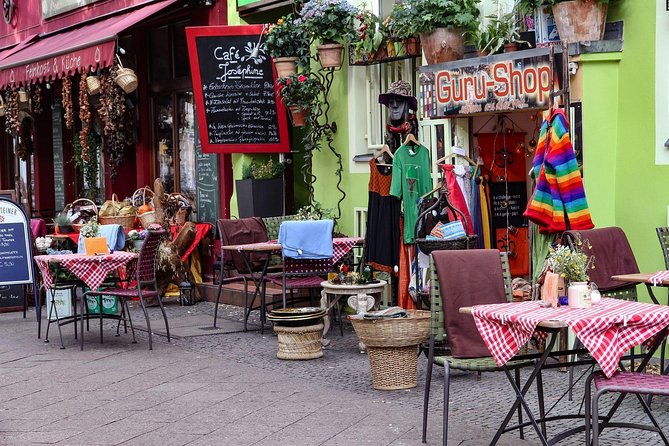
- A private look at SO36: The eastern part of Kreuzberg, once identified by its postal code, is the heart of the walk.
- Street art with a backstory: Abandoned buildings, empty plots, and Cold War division helped create the area’s art scene.
- Turkish influence matters: Local businesses and food are treated as part of Kreuzberg’s identity, not just decoration.
- The route covers major contrasts: You’ll see Oberbaum Bridge, Berlin Wall remnants, Oranienstrasse, and Viktoriapark.
- Public transport is part of the plan: Some sites are too far apart to reach on foot.
- Best value for a group: At the full capacity of 10 people, the price works out to $45 per person.
Why Kreuzberg makes a good Berlin walking tour
Kreuzberg is not a district you understand from a quick photo stop. Its appeal comes from the collision of different eras and communities. It was once a 19th-century workers’ quarter, later part of West Berlin, and then a rough-edged area shaped by immigrants, anarchists, artists, war damage, and Cold War restrictions.
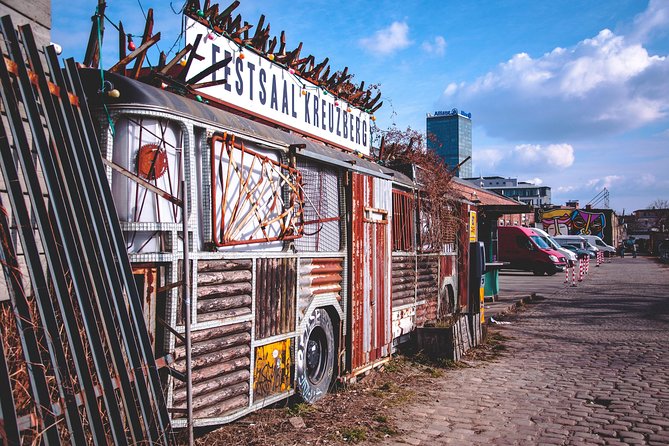
Today, it is known for cafes, bars, galleries, street art, markets, and Turkish businesses. The mix can feel untidy, but that is part of the point. Kreuzberg’s character grew from buildings and spaces that were overlooked, abandoned, or hard to develop. Artists found room to work, immigrant families built businesses, and counterculture groups pushed back against official plans.
I like tours that explain why a place looks the way it does. This walk does that instead of simply pointing at colorful walls. Your guide discusses how the neighborhood formed and why the same qualities that made Kreuzberg attractive to artists now attract investors and higher rents.
That tension gives the tour its main question: how long can Kreuzberg remain Kreuzberg? Riverside development may bring new offices, shops, and housing. It may also speed up gentrification. You will not just see a finished neighborhood. You’ll see one still arguing about its future.
More Walking Tours in Berlin
- Discover Berlin Half-Day Walking Tour
★ 5.0 · 9,624 reviews - Berlin: Third Reich and Cold War 2 Hour Walking Tour
★ 4.9 · 6,830 reviews - Berlin: Discover Berlin Walking Tour
★ 4.9 · 5,998 reviews
Oberbaum Bridge sets the tone
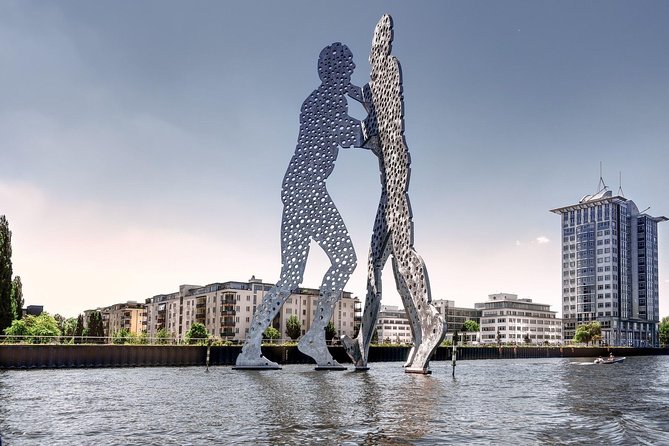
The tour begins around Schlesische Strasse, with Oberbaum Bridge listed as the opening stop. The bridge crosses the Spree on two levels and is one of the area’s most recognizable sights. It also puts you close to the eastern section of Kreuzberg known as SO36.
The bridge is useful as an introduction because it links Berlin’s past and present. From here, your guide can explain the former division of the city and the role of the Spree in the area’s changing development. The setting also makes clear that Kreuzberg is not isolated from Berlin’s larger growth plans.
The route details suggest that the exact order may vary. You should confirm the meeting point and first stop with your guide, since the advertised start is Schlesische Strasse 18 and the bridge is described as the opening point. That small bit of planning will save you from waiting at the wrong corner.
Oberbaum Bridge is also a good place to begin if you enjoy urban views more than formal monuments. It is not a museum visit. You are learning through the streets, buildings, and movement around you.
Berlin Wall fragments and the making of street art
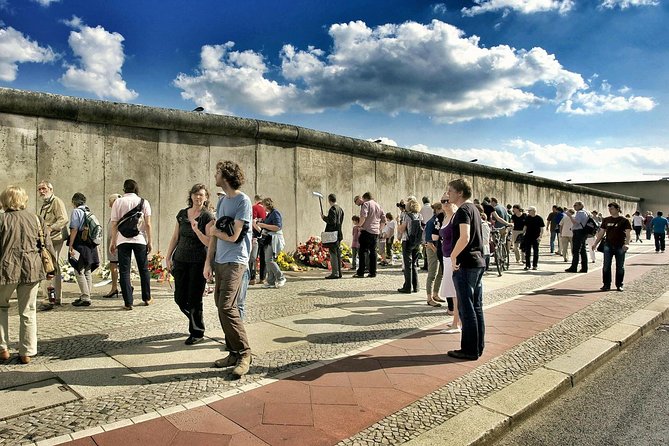
The Berlin Wall memorial portion lasts about 25 minutes. You’ll pause to consider what remains of the wall before continuing through streets marked by artwork, old buildings, and plots that have been turned into creative spaces.
The value here is context. Street art can seem like surface decoration when you see it without explanation. In Kreuzberg, it is tied to the area’s old building stock, empty sites, political history, and long habit of making use of spaces that formal developers ignored.
Your guide can help separate the district’s older identity from its newer image. The same walls that once suggested neglect may now draw photographers and property investors. That contrast is central to the walk.
Do not expect a preserved section of wall on the scale of the best-known Berlin Wall sites. The stop is about fragments and traces, then about the district that grew around them. If you want a full treatment of the Berlin Wall, this tour is not a replacement for a dedicated wall history tour. If you want to see how the division affected an actual neighborhood, it adds useful local detail.
Oranienstrasse and the SO36 spirit
Oranienstrasse receives about 35 minutes, making it one of the more substantial stops. It is one of Kreuzberg’s best-known streets, with cafes, boutiques, and a mix of older local businesses and newer retailers.
The name comes from the Dutch princely House of Orange, but the street’s modern identity is tied to its political and social past. Historic clashes between anarchists and police help explain why SO36 became associated with protest, alternative culture, and resistance to authority.
This is where the tour’s title, immigrants, artists, and hipsters, comes into focus. You’ll see several layers of Kreuzberg in one place. Turkish businesses and food shops reflect decades of immigration. Artists helped give the district its visual style. New cafes and design-minded stores show how the area now attracts a different kind of customer.
I would treat this part as a walking conversation rather than a shopping excursion. The tour does not include food or drinks, but your guide may point out places worth returning to. Klaus was praised for knowing where to find excellent spaetzle, which is a useful reminder that a private guide can add practical food advice along with history.
Because Oranienstrasse is an active city street, conditions may be noisy or crowded. You may spend less time looking at a single sight and more time noticing small details. That suits the district.
Still Berlin, at a slower pace:
- Berlin: Reichstag, Dome and Government District Guided Tour
★ 4.7 · 18,288 reviews - Berlin: 1-Hour City Tour by Boat with Guaranteed Seating
★ 4.3 · 16,993 reviews - Berlin: Boat Tour Along the River Spree
★ 4.4 · 11,252 reviews - Berlin: Hop-on Hop-off Bus Tour with Live Commentary
★ 4.3 · 8,579 reviews
Viktoriapark offers a quieter change

The stop at Viktoriapark lasts about 20 minutes and gives the route a welcome change of pace. After streets filled with murals, businesses, and traffic, this is one of Kreuzberg’s best-known green spaces.
I like the inclusion of a park because it prevents the tour from becoming a nonstop march through commercial streets. It also shows that Kreuzberg is not only concrete and counterculture. The district has room for open space and everyday recreation.
The supplied information does not promise a specific activity in the park, so you should expect a short visit rather than a long break. You’ll discover the park, hear why it matters locally, and continue with the broader story of Kreuzberg.
Comfortable shoes are important. The tour lasts around three hours, and the distance between some stops means you’ll walk and use transit. Viktoriapark may be the easiest place to pause, but this is still a city walk rather than a relaxed park outing.
A historian guide changes the experience
The tour’s strongest feature is the private guide. A historian can add meaning to details you would otherwise miss: a surviving wall fragment, an old building, a converted plot of land, or the difference between eastern and western Kreuzberg.
The private format matters more here than it would on a simple landmark tour. Kreuzberg has no single monument that explains the neighborhood. Its story is scattered across streets and businesses. You need someone to connect the pieces.
The group can include no more than 10 people, and the entire booking is private. That gives you more room to ask about subjects that interest you, such as immigration, street art, architecture, nightlife, or development.
Klaus received particularly warm praise. He was described as friendly, fun, and willing to match the pace and interests of the people on the walk. That flexibility is useful for a family. A parent traveling with a 12-year-old son found the tour engaging and learned about the neighborhood without turning the outing into a dry lecture.
You cannot guarantee Klaus unless the company confirms him. Still, it is worth requesting him when you book. If your guide is not Klaus, mention your priorities in advance. A private tour works best when the guide knows whether you want more social history, art, food, architecture, or current development issues.
The future of Kreuzberg is part of the route

Many neighborhood walks stop with a tidy statement about how wonderful the area is. This one looks at the uncomfortable next chapter. Riverside development may change the parts of Kreuzberg that still feel improvised and independent.
That discussion gives the tour more value than a simple tour of famous murals. Gentrification is not an abstract issue here. It affects rents, shops, public space, and the people who made the district attractive in the first place.
You’ll hear about plans that could bring more development near the river and about the pressure already building around the neighborhood. The guide may not predict exactly what Kreuzberg will become, but the point is to help you read the changes while you are standing in the district.
I appreciate that the tour does not present Kreuzberg as a frozen bohemian set. Artists, immigrants, property owners, city planners, and newer residents all shape the area. The district’s identity is still being negotiated.
Price, transport, and practical value
The price is $450 per group, with up to 10 people. For a full group, that is $45 per person, which is a fair rate for three hours with a private historian. For four people, the cost is $112.50 per person. For two people, it becomes $225 per person, so the value depends heavily on group size.
You’ll also need to pay for public transport during the walk. The tour price does not include food or drinks. An optional bike rental costs $10 per person, but the supplied details do not make clear whether bikes replace the walking route or simply offer another way to cover the district. Ask before choosing that option.
Morning and afternoon departures are available. A morning start may suit you if you want to continue exploring Kreuzberg afterward. An afternoon walk may work well if you prefer a slower start, but the choice depends on your wider Berlin plans.
The tour is usually booked about 10 days ahead. Confirmation comes within 48 hours, subject to availability, so do not leave it until the last minute if your schedule is tight.
Free cancellation is available if you cancel at least 24 hours before the start time. Changes or cancellations inside that window are not accepted for a refund.
Who will enjoy this three-hour walk
I would recommend this tour to you if you have already seen Berlin’s main sights and want a neighborhood with more social and political texture. It also works well as an introduction to Kreuzberg if you prefer local streets to grand museums.
The tour suits:
- Families with older children who enjoy stories about cities and culture
- First-time visitors who want a clear introduction to Kreuzberg
- Repeat visitors looking for Berlin beyond Museum Island and Brandenburg Gate
- People interested in migration, street art, urban change, and Cold War history
- Small groups who want to ask questions and set the pace
It may not suit you if you want a food tour, a formal art tour, or a route entirely on foot. Food and drinks are not included, and public transport is required several times. The district’s story also includes protest, political conflict, and gentrification, so this is not just a pleasant cafe crawl.
Should you book the Kreuzberg private walking tour?
Book it if you want a guided explanation of why Kreuzberg looks and feels the way it does. The combination of SO36, Oranienstrasse, Berlin Wall traces, Turkish businesses, street art, Viktoriapark, and future development gives you a broad view of the district in three hours.
The price makes the most sense for a group of four to 10 people. If you are traveling alone or as a pair, compare the cost with a shared walking tour. If you do book, request Klaus, state your interests, wear comfortable shoes, and budget for transit.
I would choose this experience for travelers who want Berlin’s arguments as well as its attractions. Kreuzberg is changing fast, and a good historian guide helps you notice what is still here before the next round of development changes the view.
FAQ
How long does the Kreuzberg private walking tour last?
The tour lasts approximately three hours.
How many people can join the private tour?
The maximum group size is 10 people.
What is the price of the tour?
The price is $450 per group of up to 10 people.
Where does the tour start?
The listed meeting point is Schlesische Strasse 18, 10997 Berlin, Germany.
Where does the tour finish?
The tour finishes in Berlin, Germany. A specific final street address is not provided.
Will I need public transportation?
Yes. You will need to use public transport several times because some key sites are too far apart to walk between.
Are food and drinks included?
No. Food and drinks are not included unless specifically stated.
Is bike rental available?
Yes. Optional bike rental is available for 10 euros per person.
Can I cancel for a full refund?
Yes, if you cancel at least 24 hours before the experience start time. Cancellations or changes made less than 24 hours in advance are not refunded or accepted.
Just added around Berlin
- Private Walking Tour in Berlin: Hitler’s Germany & WWII★ 5.0 · 7 reviews
- The History of Berlin: WWII PRIVATE Walking Tour With Locals★ 5.0 · 209 reviews
- Private Berlin WWII and Cold War History Tour with Local Expert Guide★ 5.0 · 28 reviews
- Private Walking Tour Berlin 3 hours: Brandenburg, Historic Center★ 5.0 · 7 reviews
- Berlin: Private Bike Tour of the Berlin Wall and Third Reich★ 5.0 · 23 reviews
- Berlin: Guided Private Bike Tour to Explore the Highlights★ 5.0 · 12 reviews
- Berlin Photography Masterclass – Private Photography Lesson★ 4.5 · 23 reviews
- Group Driving Tour 1 to 6 people. Berlin Shore Excursion incl pick-up at Port★ 5.0 · 8 reviews
Walking Tours, compared.
Old Town & Viktualienmarkt City Walk in German
Read our review →Browse the lists this tour appears in