
Reviewed · WALKING TOURS
Kreuzberg Walking Tour: Immigrants, Artists & Hipsters
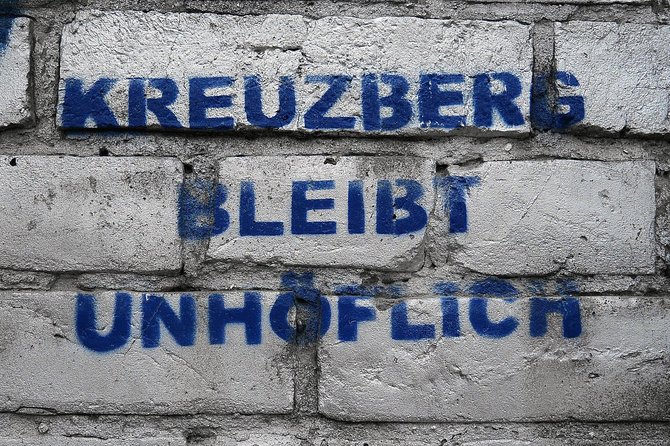
Kreuzberg tells Berlin’s story in rough, colorful layers. This three-hour tour links the Berlin Wall, immigrant culture, street art, old market halls, and new riverside plans in one lively neighborhood walk. I like the small group of up to six and the strong focus on local life rather than Berlin’s usual postcard sights.
I also like the food angle, especially the chance to sample Turkish market fare such as spinach-and-cheese gözleme. The main drawback is practical: some distances require public transport, and the $153.85 price is high unless you value a very personal guide and focused neighborhood context.
In This Review
- Key points to know before booking
- Why Kreuzberg makes such a good neighborhood tour
- Starting at Schlesische Strasse and crossing Oberbaumbrücke
- SO36 and Kreuzberg’s Cold War character
- Berlin Wall remains and creative reuse
- Görlitzer Park and the changing face of the district
- Markthalle Neun and Turkish food culture
- Riversides, development, and the price of change
- What the small group adds
- Is $153.85 a fair price?
- Who should book this Kreuzberg experience?
- My verdict on the Kreuzberg Walking Tour
- FAQ
- How long does the Kreuzberg Walking Tour last?
- Where does the tour begin?
- Where does the tour end?
- Is the tour offered in English?
- How large is the group?
- Can I take the tour by bicycle?
- Are public transport costs included?
- Are food and drinks included?
- What is the cancellation policy?
Key points to know before booking
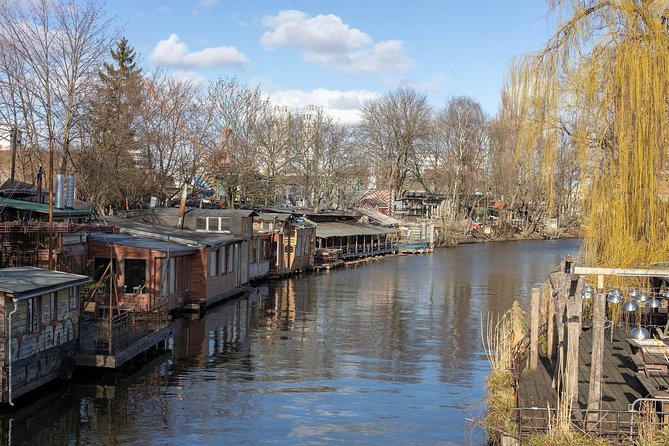
- Oberbaum Bridge opens the story: You begin at one of Berlin’s most attractive bridges before entering Kreuzberg.
- Cold War history meets present-day change: The route explains how SO36 shifted from a marginal district to a popular creative center.
- Food is part of the tour: Turkish shops, colorful markets, spices, flowers, and optional street food give the neighborhood a taste you can remember.
- The small group matters: With a professional art historian guide and only a handful of people, you have room for questions and discussion.
- Walking or cycling is possible: The bike version covers more ground and costs an extra 10 EUR per person for rental.
- The tour looks beyond the trendy surface: You discuss abandoned buildings, graffiti, the Berlin Wall, gentrification, and controversial riverside development.
Why Kreuzberg makes such a good neighborhood tour
If you have already seen the Brandenburg Gate, Reichstag, and Museum Island, Kreuzberg gives you a different Berlin. This is not a parade of grand monuments. It is a district shaped by division, migration, protest, art, music, small businesses, and rapid change.
The tour’s title points to three groups that help explain the area: immigrants, artists, and hipsters. That shorthand is useful, but the neighborhood is more complicated than a slogan. You see traces of Turkish culture beside creative studios, old working-class streets beside fashionable shops, and remnants of the Cold War beside ambitious new construction.
I like this kind of tour because it asks you to notice how a city changes. Kreuzberg is not treated as a finished attraction. Your guide explains why certain buildings, empty plots, walls, parks, and markets matter, then connects them to the arguments shaping the district today.
The experience is offered in English and lasts about three hours. That is enough time to build a strong sense of the area without turning the outing into an all-day march.
More Walking Tours in Berlin
- Discover Berlin Half-Day Walking Tour
★ 5.0 · 9,624 reviews - Berlin: Third Reich and Cold War 2 Hour Walking Tour
★ 4.9 · 6,830 reviews - Berlin: Discover Berlin Walking Tour
★ 4.9 · 5,998 reviews
Starting at Schlesische Strasse and crossing Oberbaumbrücke
The meeting point is Schlesische Strasse 18, in the Kreuzberg area. From there, the tour begins with a walk over Oberbaumbrücke, the handsome bridge linking Kreuzberg and Friedrichshain across the River Spree.
This opening is more than a scenic photo stop. The bridge helps set up the relationship between the two districts and gives you a sense of how Berlin’s former eastern and western sides now connect. It is also a pleasant way to begin, with water, brickwork, towers, and views before the route turns into the neighborhood streets.
You should wear comfortable shoes and be ready for several changes of pace. The route includes open streets, market areas, parks, and sites connected by public transport. The total duration is only about three hours, but it is not a single straight stroll.
The tour can also be taken by bicycle. The bike option lets you cover more of Kreuzberg while remaining within the district, but rental costs an additional 10 EUR per person. If you prefer a slower pace and want more time to stop for explanations, the walking version may suit you better.
SO36 and Kreuzberg’s Cold War character
The route continues through the main inland streets of SO36, the part of Kreuzberg associated with its rougher Cold War-era identity. Your guide explains how the district became a marginal, often overlooked part of West Berlin, hemmed in by the Berlin Wall and cut off from much of the surrounding city.
That isolation helped create a distinctive local culture. Low rents attracted people who could not easily fit into more conventional parts of the city. Immigrants, squatters, artists, musicians, and political groups all helped shape the area’s reputation.
The tour also connects Kreuzberg with rock legends who spent time in Berlin during the Cold War. This detail gives the neighborhood some music history, but the focus remains on everyday life and the political conditions that made Kreuzberg unusual.
I would expect this part to be especially useful if you know Berlin mainly through its central monuments. You begin to see that the city’s modern identity was also formed in ordinary streets, apartment blocks, workshops, and improvised community spaces.
The history is not polished for easy consumption. Kreuzberg’s past includes poverty, social tension, abandoned buildings, and political conflict. That makes the discussion more useful than a simple story about a district becoming fashionable.
Berlin Wall remains and creative reuse
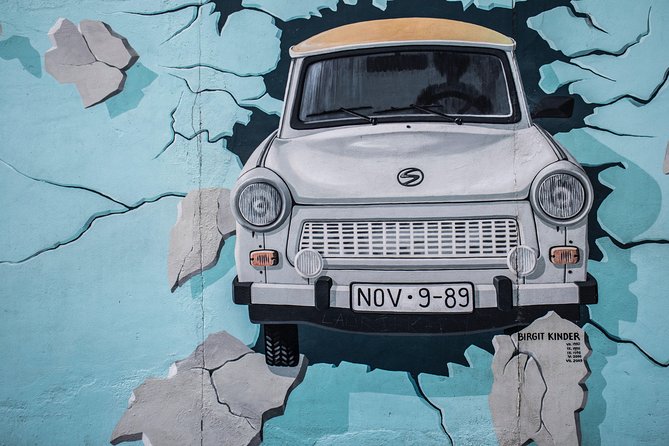
The route includes surviving sections or traces of the Berlin Wall. These remains may not have the scale of the best-known memorial sites, but their value comes from being placed in the neighborhood where the division affected daily life.
Your guide helps explain what the wall meant for Kreuzberg and how its presence shaped the district’s streets and possibilities. You also look at abandoned buildings and empty plots that were given new uses by artists, community groups, and other local residents.
This is one of the tour’s strongest themes. Instead of treating vacant land as an eyesore, Kreuzberg often treated it as a chance to experiment. That might mean art, gardens, gathering places, studios, or other uses that would have been harder to create in a tightly controlled commercial district.
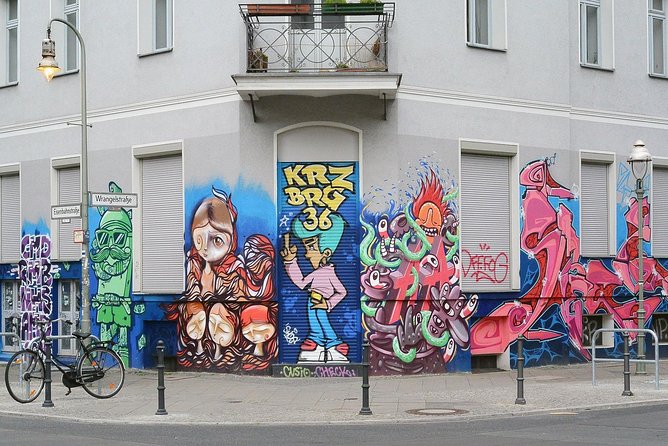
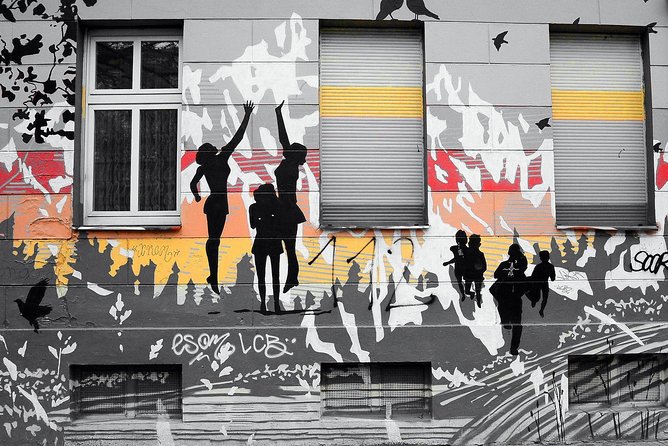
The creative side of Kreuzberg is not limited to gallery art. Graffiti and street art are part of the area’s visual language. Your guide explains why painted walls matter here, how they relate to local identity, and why the same art can be seen either as expression or as a sign of disorder.
I appreciate that the tour does not reduce graffiti to a photo backdrop. It places street art within the neighborhood’s social and political setting. You can look at the work while also asking who gets to shape public space.
Still Berlin, at a slower pace:
- Berlin: Reichstag, Dome and Government District Guided Tour
★ 4.7 · 18,288 reviews - Berlin: 1-Hour City Tour by Boat with Guaranteed Seating
★ 4.3 · 16,993 reviews - Berlin: Boat Tour Along the River Spree
★ 4.4 · 11,252 reviews - Berlin: Hop-on Hop-off Bus Tour with Live Commentary
★ 4.3 · 8,579 reviews
Görlitzer Park and the changing face of the district

Görlitzer Park brings a different mood to the route. After the dense streets and painted walls, the park gives you open space and a chance to see how residents use a shared public area.
The park also fits the larger theme of the tour. Public spaces in Kreuzberg are not just decorative. They reflect debates about safety, community, recreation, city planning, and who feels welcome in a changing neighborhood.
You should not expect a formal garden tour. The appeal is seeing how the park fits into daily Kreuzberg life and hearing your guide connect it to the district’s wider changes.
This is where a small group can make a real difference. A guide such as Peter or Ronan can adjust the explanation to your questions instead of delivering a fixed speech to a large crowd. Peter is described as especially good at offering local recommendations, while Ronan is praised for patient discussion and thoughtful answers.
That matters because Kreuzberg raises questions with no quick answer. Why do artists move into a district? What happens when shops and rents change? When does regeneration improve an area, and when does it push out the people who gave it character? A good guide can make those questions understandable without pretending they are simple.
Markthalle Neun and Turkish food culture
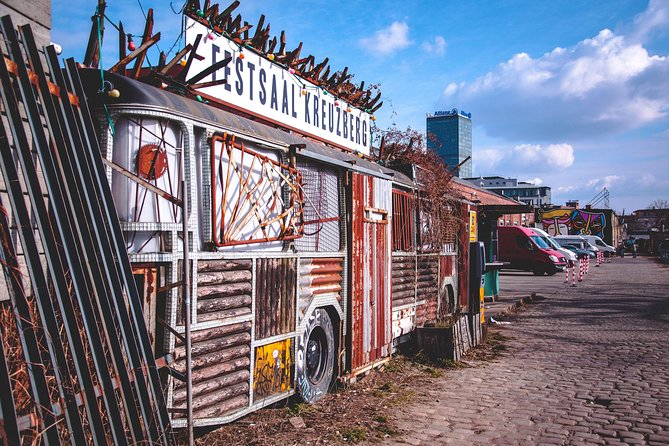
The tour then reaches Markthalle 9, a market hall with around 120 years of history. The hall gives you a more concrete look at food, trade, and neighborhood life than a general lecture about migration ever could.
You see stalls, ingredients, and local commerce in a setting that has served the area for generations. Depending on the day and the exact route, the market may be one of the more active points of the tour, so allow yourself time to look around without losing contact with the group.
Turkish culture is a major part of this section. Shops and colorful markets offer flowers, spices, prepared food, and everyday goods. The district’s immigrant story becomes something you can see, smell, and taste.
One food example is gözleme, a flatbread filled with spinach and cheese and cooked before being deep-fried. Food and drinks are not included unless specifically stated, so bring money if you want to sample something. I would strongly consider doing so, since a small snack helps turn the market visit into a personal experience rather than a quick look at stalls.
The food stop is also a useful reminder that Kreuzberg’s identity did not come only from artists and nightlife. Turkish families and businesses have played a central role in the neighborhood for decades. Their presence is part of the district’s foundation, not a recent decoration added for visitors.
Riversides, development, and the price of change
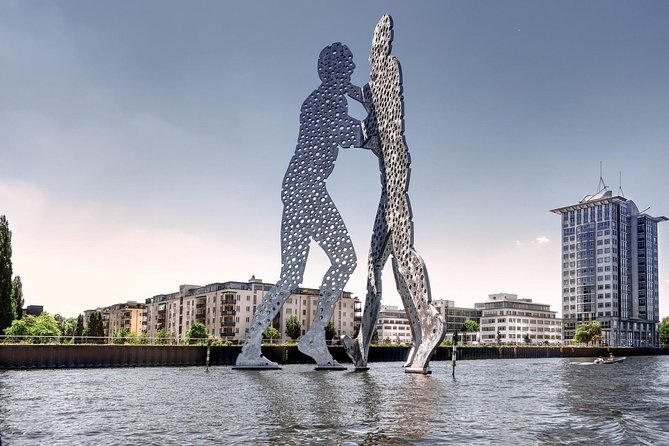
Near the end, the tour turns toward controversial plans for riverside development. This gives the experience a forward-looking finish. You are not only studying what Kreuzberg was. You are considering what it may become.
Riverside projects can bring new housing, workplaces, public areas, and investment. They can also change access to the river and increase pressure on rents and long-standing businesses. The discussion helps you understand why development can be welcomed by some residents and opposed by others.
This ending works well because it ties the tour’s subjects together. The Cold War created an isolated district. Immigrant communities helped sustain it. Artists used its cheap or abandoned spaces. New popularity brought fashionable shops and higher demand. Now the riverfront represents another possible turning point.
The route may conclude in Berlin rather than at a clearly advertised named site. One version of the experience ended at the Friedrichshain-Kreuzberg Museum, which would make a fitting final stop, but you should confirm the exact ending when you book. The published meeting information gives a starting point at Schlesische Strasse 18 and a general Berlin end location.
What the small group adds
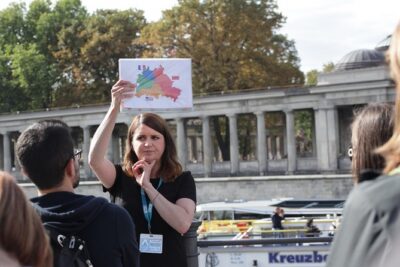
The tour is promoted as a small-group experience, with six people listed as the intended maximum. Other booking details mention a maximum of eight people per booking and up to ten participants for the activity, so the exact group size may depend on the date and booking arrangement.
That inconsistency is worth checking before you pay. Still, even a group of ten is much more manageable than a large city walk. You can hear the guide in busy streets, ask about a shop or mural, and keep the conversation moving.
The art historian background is another plus. You are not simply following someone who points at colorful walls. The guide can place art, architecture, and public space within the political and social story of Kreuzberg.
The strongest guide feedback centers on personal attention and conversation. Peter is described as offering an insider view and useful suggestions for the rest of a Berlin visit. Ronan is praised for patience, sensitivity, and answering detailed questions. Those qualities matter here because the subject is not just visual. You need someone who can handle competing views without turning the tour into a lecture or an argument.
Is $153.85 a fair price?
At $153.85 per person, this is an expensive three-hour neighborhood tour. The price makes the most sense if you want a private-feeling, specialist-led introduction to Kreuzberg and would rather ask questions than move through a standard sightseeing route.
The six-person format improves the value. A good guide can spend more time responding to your interests, and you are paying for interpretation rather than admission to a major landmark. The professional art historian guide is also a meaningful part of the cost.
The price is harder to justify if you mainly want to see street art, stroll through a park, or eat at a market. You can do those things independently for much less, although you would lose the connected explanation about Cold War Berlin, migration, artistic reuse, and development plans.
Remember the extra costs. Public transport is needed several times, bike rental costs 10 EUR per person, and food and drinks are not included unless specified. Hotel pickup and drop-off are also not provided.
For a couple or small group that values context, the tour can be worthwhile. For budget-conscious visitors, I would compare the cost with a larger general city walk and decide how much personal discussion you really want.
Who should book this Kreuzberg experience?
I would recommend it to you if you have already seen Berlin’s central sights and want a closer look at a neighborhood shaped by modern history. It is also a good choice if you care about street art, urban change, food culture, migration, and the tension between local identity and new investment.
It suits adults and older children who can manage a three-hour outing with walking and public transport. Children must be accompanied by an adult, and most people can participate, but the route is not presented as a dedicated children’s tour.
You should choose the bike version if you want to cover more of the district and are comfortable paying extra for rental. Choose walking if you prefer more time for conversation, food stops, and close looks at streets and buildings.
Bad weather need not ruin the experience. One guide-led outing continued through cold rain, with the historical stories keeping the group engaged. Still, dress for Berlin’s changeable conditions, since much of the experience takes place outdoors.
The tour is offered in English only. If you prefer a quiet, self-guided afternoon or want guaranteed indoor stops, this may not be the best match.
My verdict on the Kreuzberg Walking Tour
Book this tour if you want Berlin explained through one neighborhood instead of a checklist of famous sights. The best parts are the small-group format, art historian guides such as Peter and Ronan, the food and market culture, and the honest look at how Kreuzberg continues to change.
I would confirm the final group size, the exact ending point, and whether a food sample is included before booking. If the $153.85 cost fits your budget, you are paying for thoughtful local interpretation and a chance to see the district through more than its fashionable surface.
Free cancellation is available until 24 hours before the start time, which gives you some flexibility. Canceling or changing the booking inside that window does not qualify for a refund.
FAQ
How long does the Kreuzberg Walking Tour last?
The tour lasts approximately three hours.
Where does the tour begin?
The meeting point is Schlesische Strasse 18, 10997 Berlin, Germany.
Where does the tour end?
The published end point is listed generally as Berlin, Germany. Confirm the precise ending location when booking.
Is the tour offered in English?
Yes. The experience is offered in English.
How large is the group?
The tour is described as a small-group experience with six people maximum. Additional booking information lists a maximum of eight people per booking and up to ten participants for the activity, so confirm the expected group size for your date.
Can I take the tour by bicycle?
Yes. A bicycle version is available and covers more ground within Kreuzberg. Optional bike rental costs 10 EUR per person.
Are public transport costs included?
No. You need to use public transport several times because some sites are too far apart to reach on foot.
Are food and drinks included?
Food and drinks are not included unless specifically stated. You can buy items such as spinach-and-cheese gözleme during the market and food sections.
What is the cancellation policy?
You can cancel up to 24 hours before the experience begins for a full refund. Cancellations or changes made less than 24 hours before the start time are not accepted for a refund.
Just added around Berlin
- Private Walking Tour in Berlin: Hitler’s Germany & WWII★ 5.0 · 7 reviews
- The History of Berlin: WWII PRIVATE Walking Tour With Locals★ 5.0 · 209 reviews
- Private Berlin WWII and Cold War History Tour with Local Expert Guide★ 5.0 · 28 reviews
- Private Walking Tour Berlin 3 hours: Brandenburg, Historic Center★ 5.0 · 7 reviews
- Berlin: Private Bike Tour of the Berlin Wall and Third Reich★ 5.0 · 23 reviews
- Berlin: Guided Private Bike Tour to Explore the Highlights★ 5.0 · 12 reviews
- Berlin Photography Masterclass – Private Photography Lesson★ 4.5 · 23 reviews
- Group Driving Tour 1 to 6 people. Berlin Shore Excursion incl pick-up at Port★ 5.0 · 8 reviews
Walking Tours, compared.
Old Town & Viktualienmarkt City Walk in German
Read our review →Browse the lists this tour appears in