
Reviewed · HISTORICAL TOURS
Munich: Historical Walking Tour on the Rise of Hitler
Munich has more than beer halls and palaces. This 2.5-hour walking tour with Alex, a Munich-born guide, examines how the city became the center of National Socialism and how its streets were used for speeches, parades, propaganda, and war. I like the clear chronological approach, which helps you follow a difficult story without getting lost, and I also like Alex’s effort to connect grand political events with ordinary places in the city. The main drawback is simple: the tour is conducted in German, so it is best suited to German speakers.
I also appreciate that Alex treats the subject seriously without turning the walk into a grim lecture. He allows room for questions, plans short pauses, and brings a local perspective shaped by years of thinking about how the dictatorship became possible. At $30 per person, the price is fair for a long, fully guided city walk, though you should be ready to spend much of the time outdoors in changing weather.
In This Review
- Key points at a glance
- Starting at Marienplatz and changing the way you see Munich
- Following the rise of National Socialism in chronological order
- Nazi-era buildings and Munich’s political stage
- The bombing war and the physical cost of dictatorship
- Alex’s local perspective and teaching style
- What the German-language format means for you
- Is $30 a fair price for 2.5 hours?
- Who should book this Munich history walk?
- Should you book it?
- FAQ
- Where does the tour begin?
- How long does the walking tour last?
- What language is the tour conducted in?
- Is the tour wheelchair accessible?
- What should I bring?
- Is hotel pickup included?
- Can I cancel the booking?
Key points at a glance
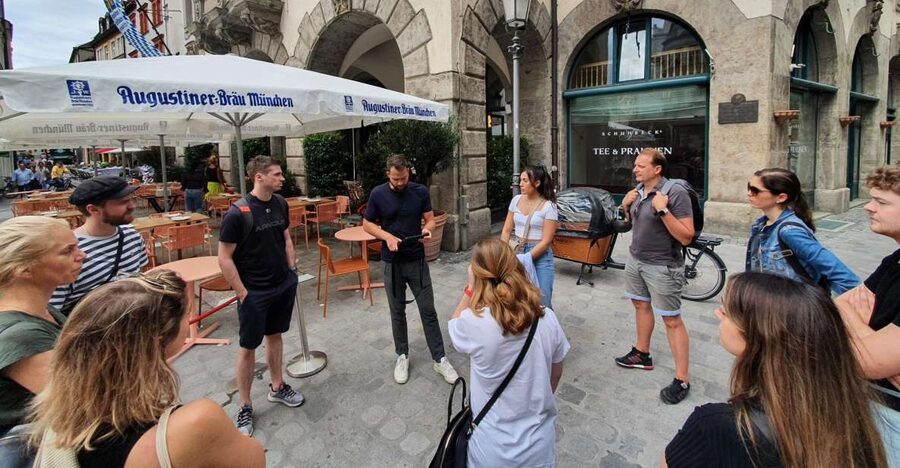
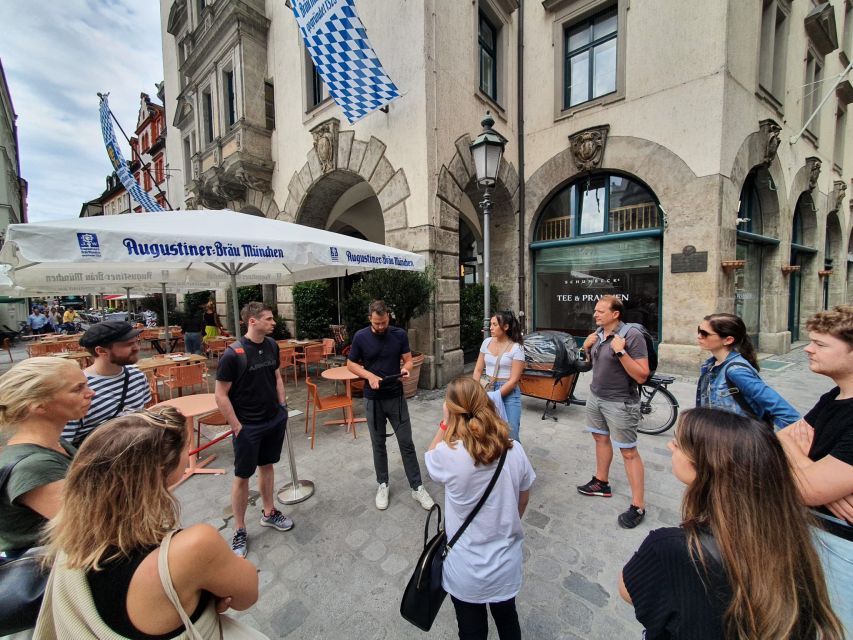
- Marienplatz starting point: Meet Alex at the Marian Column, the large central column with the small golden statue on Marienplatz.
- A chronological story: The tour follows events in order, making the rise of Hitler easier to understand.
- Munich as the Nazi movement’s center: You examine why this open, cultured city became known as the capital of the movement.
- Buildings with a dark purpose: Nazi-era buildings and sites connected with speeches, parades, propaganda, and wartime bombing form the heart of the walk.
- A personal local guide: Alex was born and raised in Munich and has focused on this subject since his youth.
- Practical format: The tour lasts 2.5 hours, runs rain or shine, and is wheelchair accessible.
Starting at Marienplatz and changing the way you see Munich
Marienplatz is one of the easiest meeting points in Munich. Find the Marian Column, which rises near the center of the square, and look for Alex there. The location is central and simple to reach, but the square can be busy, so give yourself a few extra minutes to find the correct column rather than arriving at the last second.
Beginning here makes sense. Marienplatz is usually introduced through its grand civic buildings, church towers, and daily city life. This walk asks you to look again. Munich’s dark political past is not confined to a distant museum or a single memorial. It is tied to familiar squares, public buildings, and routes through the city center.
That contrast gives the tour its purpose. You are not simply collecting dates about Hitler and the Nazi Party. You are considering how political movements use public space, how crowds can be shaped by ceremonies and speeches, and how a modern city can carry on while the same streets recall terrible events.
Alex’s stated aim is to explain how an unknown Austrian soldier became the dictator of the Third Reich. That focus is useful because it keeps the tour centered on cause and development rather than on a parade of shocking facts. You begin with the question of how it happened, then follow the answer through Munich’s political and social setting.
More History Tours in Munich
- Munich: Guided Tour of the historic Town Hall on Marienplatz
★ 4.8 · 63 reviews - Munich Craft Beer & Cultural Tour With Snack
★ 5.0 · 46 reviews - Munich History Tour: Private & Personalized with a Local Guide
★ 4.5 · 33 reviews
Following the rise of National Socialism in chronological order
A chronological tour is especially valuable for this subject. The history of National Socialism can quickly become a tangle of party names, dates, buildings, and political changes. By moving through events in order, Alex gives you a framework for understanding what came first, what followed, and how Munich’s role changed over time.
The tour presents Munich as the place where Hitler’s political career took shape. It explores the reasons the city became the birthplace of National Socialism and later received the official Nazi title of capital of the movement. That title was not just ceremonial. It helped justify a major building program and the creation of sites designed to project power.
You can expect the walk to connect several layers of history:
- Hitler’s early appearances and speeches
- The growth of the Nazi movement in Munich
- Public ceremonies and mass parades
- Buildings created for Nazi propaganda
- Places that were repurposed as political shrines
- The effects of the bombing war on Munich
This approach gives the buildings a reason for being included. You are not looking at architecture simply because it is old. You are asking what the structure was meant to communicate, who used it, and how people were expected to behave around it.
The subject is heavy, but Alex does not present it as a solemn performance from start to finish. His approach allows for some humor and a relaxed manner, while keeping the facts and moral weight intact. That balance matters. A guide who is too casual can make the subject seem shallow. A guide who is too formal can make it hard for people to ask questions. The available feedback on Alex points to a useful middle ground: engaging, approachable, and never careless with the topic.
Nazi-era buildings and Munich’s political stage
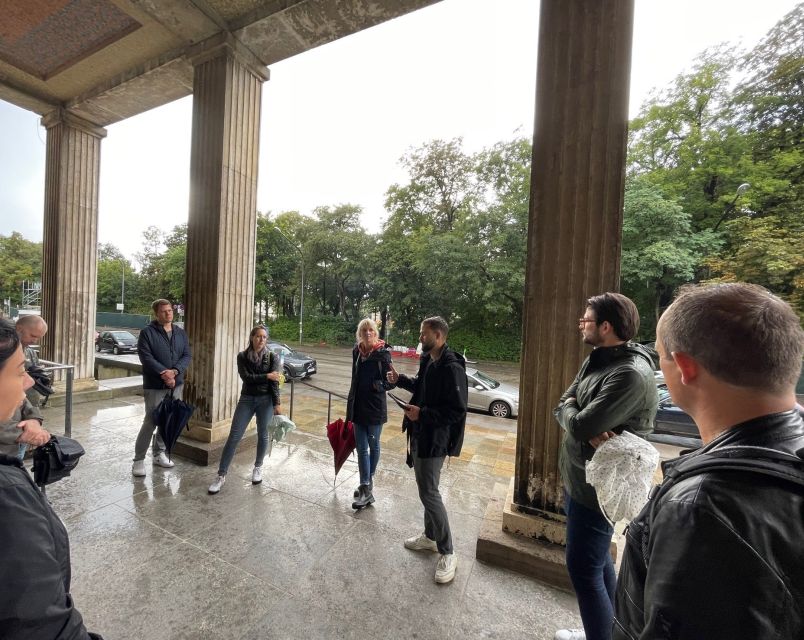
One of the strongest parts of the walk is its attention to buildings erected during the Nazi period. Many survived the Second World War with relatively little damage, so they remain part of Munich’s present-day cityscape. You may pass them as ordinary urban structures unless someone explains the political purpose they once served.
Alex uses these buildings as silent evidence. Their survival creates an uncomfortable connection between present-day Munich and the machinery of propaganda that once operated here. You can see how architecture was used to create authority, organize crowds, and give a political movement a permanent physical presence.
The wording of the tour description refers to buildings built by Hitler, but it is more accurate to think of them as buildings commissioned or created under the National Socialist regime. Hitler did not personally construct them. Their importance lies in the ideology and political system they represented.
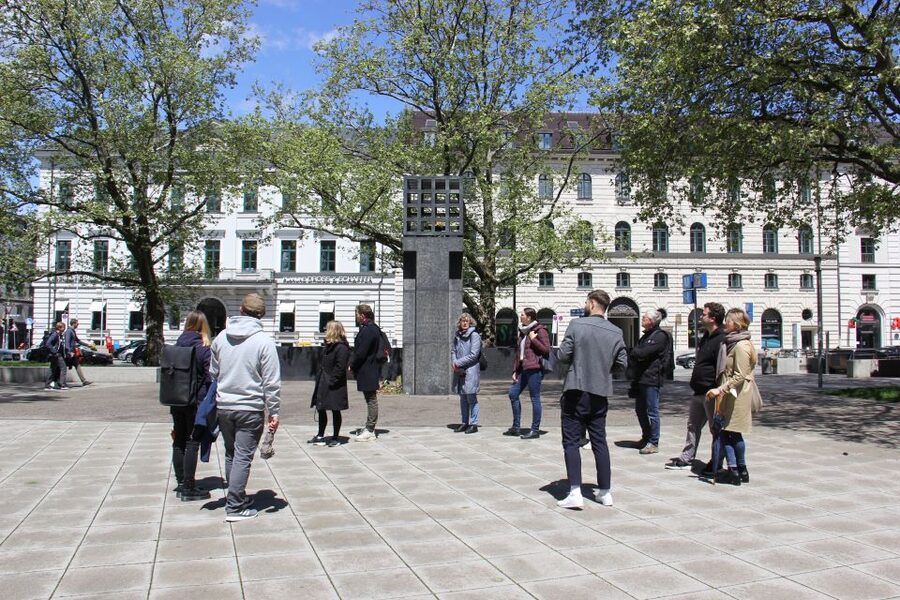
The walk also visits squares and buildings that were used for Nazi ceremonies. These were places where speeches were made, parades were held, and public loyalty was displayed. Learning about such events on the actual site helps explain the power of staging. A speech in a room is one thing. A speech delivered before a carefully arranged crowd in a major city square sends a much stronger message.
You will also examine places that were misused as sites of political worship. This is an important distinction. The Nazi movement did not rely only on laws and violence. It also built rituals, symbols, ceremonies, and sacred-looking spaces around its leaders and ideas. Seeing those locations makes the propaganda system easier to grasp.
Do not expect every stop to look dramatic. That is part of the point. Some sites may appear plain or integrated into modern Munich. The guide’s explanation is what reveals their former role. You need to listen closely rather than wait for a grand monument at every turn.
The bombing war and the physical cost of dictatorship
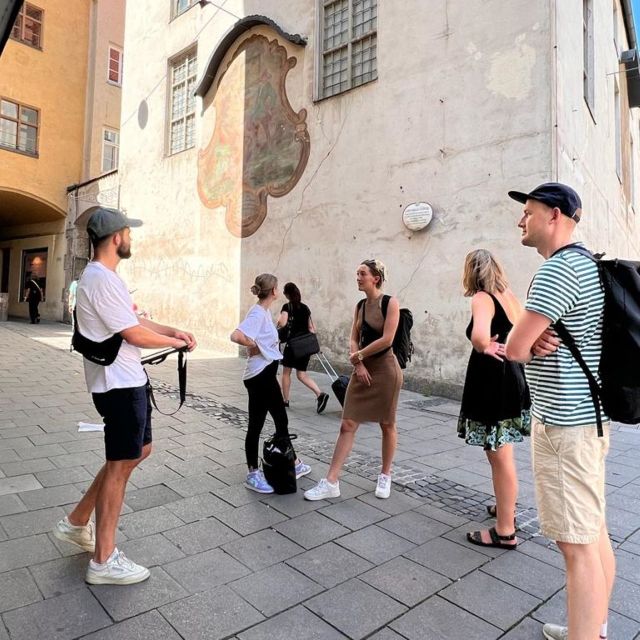
The tour does not stop with Hitler’s rise. It also considers Munich during the bombing war. This broadens the story beyond party politics and helps you see the consequences of the regime in the city itself.
Munich’s wartime damage forms another layer in the walk. Buildings and squares connected to Nazi power were part of a city that eventually suffered from the war the regime had helped create. The tour connects political ambition, propaganda, military expansion, and the destruction that followed.
This section may be particularly useful if you already know the basic story of Hitler’s rise but want to understand how it affected Munich. You are not only studying where speeches took place. You are also looking at how the city endured the war and how traces of that period remain visible.
The walk’s focus on surviving buildings creates an interesting tension. Some Nazi-era structures remained standing while much of Munich was damaged. Their presence raises difficult questions about preservation, memory, and how a city should handle buildings tied to dictatorship. Alex’s emphasis is on understanding the events and their connections, rather than presenting the structures as attractions in themselves.
That is an important way to approach this subject. The buildings are not objects to admire for their own sake. They are evidence. The value comes from learning what they were designed to do and how they were used.
More Walking Tours in Munich
- Munich: Third Reich & WWII Walking Tour
★ 4.6 · 6,181 reviews - Third Reich Walking Tour Munich
★ 4.5 · 4,291 reviews - Munich: Old Town & Viktualienmarkt City Walk in German
★ 4.7 · 2,304 reviews - Munich: Night Watchman Walking Tour
★ 4.7 · 2,092 reviews
Alex’s local perspective and teaching style
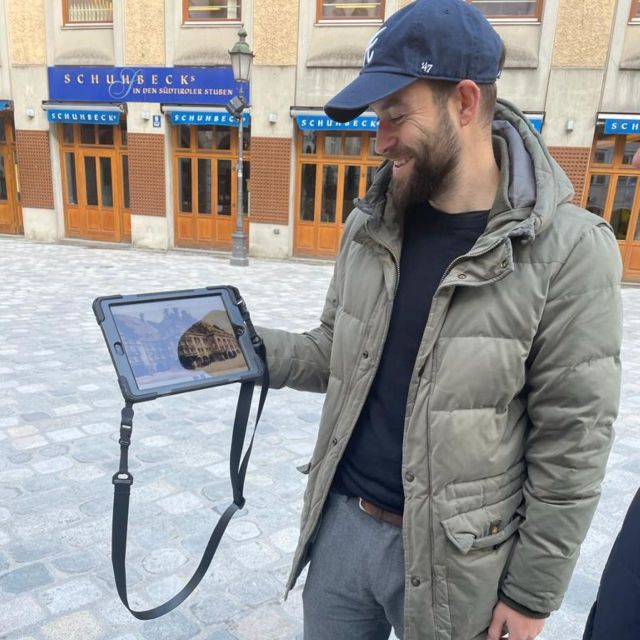
Alex is 32, was born and raised in Munich, and has been interested in this subject since his youth. His reason for leading the tour is personal and intellectual: he wanted to understand how National Socialism could rise in Germany and how the dictatorship could destroy much of Europe within a few years.
That motivation gives the tour a clear purpose. Alex is not presenting a list of famous Nazi sites simply because they are easy to sell. He is trying to explain the conditions that allowed the movement to grow. For you, that can make the walk more useful than a tour focused only on Hitler’s biography.
He also describes the tour as suitable for people without a professional background in history. That is important. You do not need to arrive with a detailed knowledge of German politics, military history, or Nazi-era institutions. The chronological structure is designed to build the story as you go.
The strongest praise for Alex centers on three qualities:
- He explains connections between events rather than giving isolated facts.
- He answers questions and responds to the needs of the group.
- He keeps the tone relaxed without making the subject superficial.
One particularly useful practical detail is that he includes short pauses during the walk. A nearly three-hour historical tour can become tiring, especially when the subject demands concentration. These breaks help you absorb what you have heard and make the pace more manageable.
Alex also offers personal suggestions for exploring Munich like a local. That adds value at the end of the tour, especially if you are staying in the city for several days. Do not expect hotel pickup, though. You meet at Marienplatz and make your own way there.
What the German-language format means for you
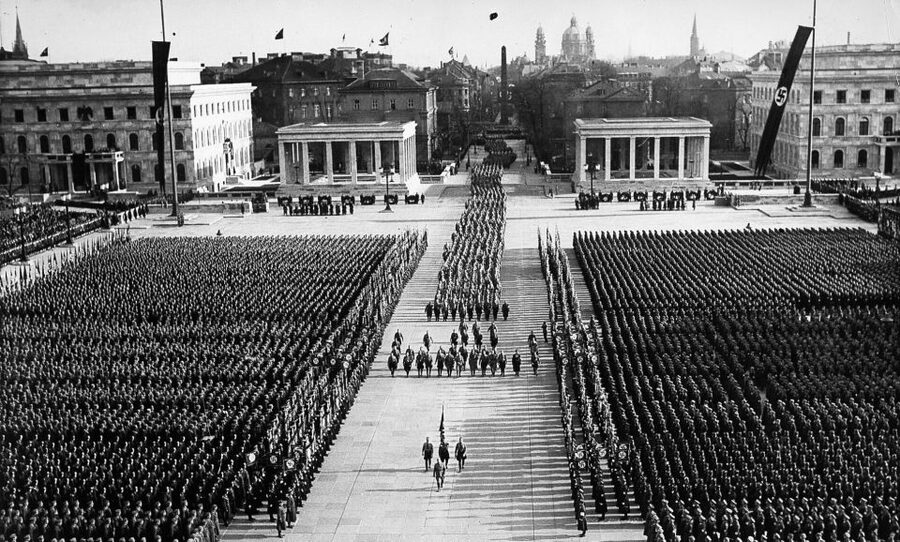
The tour is conducted in German. This is the most important point to consider before booking.
If you speak German comfortably, the language should allow you to follow the details, ask questions, and appreciate Alex’s style. German-speaking visitors from outside Munich can also benefit from the local angle. The walk has been described as suitable for Munich residents as well as visitors, which suggests that it goes beyond the most basic introduction.
If you do not speak German, this is not the right choice. The subject depends on explanation and context, not just on seeing buildings. You would lose the central value of the tour if you could not follow the guide’s discussion.
The tour is wheelchair accessible, and it takes place outdoors in the city. Wear comfortable shoes, since you will be walking for 2.5 hours. It runs rain or shine, so bring suitable clothing for the forecast. There is no separate hotel pickup service.
Is $30 a fair price for 2.5 hours?
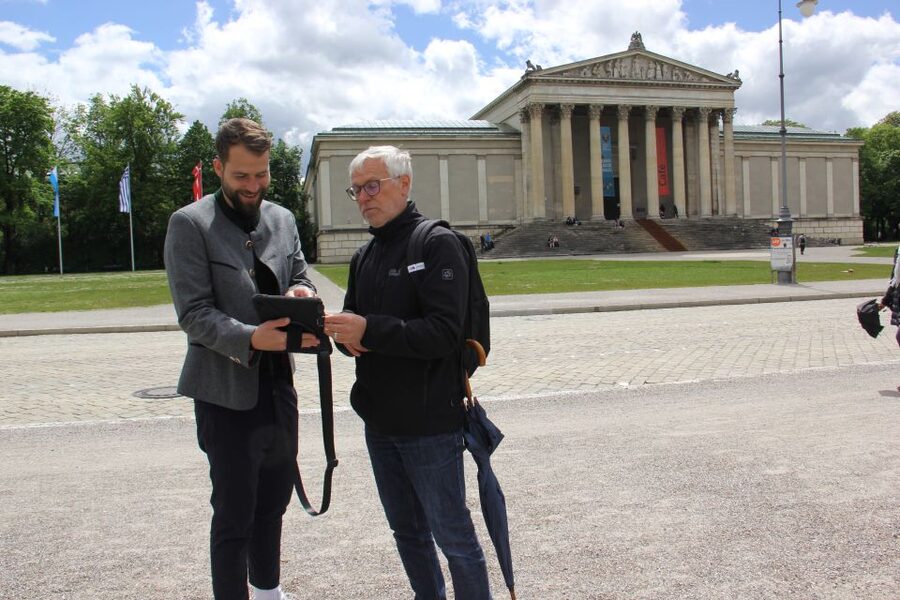
At $30 per person, the tour offers good value if you want a focused historical walk rather than a general introduction to Munich. You are paying for a full 2.5 hours with a dedicated guide, a carefully organized subject, and local interpretation of places that can be easy to miss.
The value is strongest for people who would otherwise walk past these buildings without understanding their role. A general city tour might mention Munich’s Nazi past briefly. This walk gives it the full route and enough time to explain the political setting, propaganda, architecture, and war.
It is also a reasonable price for a tour led by someone who has made this subject a long-term personal focus. The walk is not simply a short talk at one monument. It connects several sites and uses the movement between them to build a story.
The cost may feel less worthwhile if you want a broad overview of Munich’s art, food, churches, or royal history. This is a specialist tour. It also may not suit you if you prefer indoor exhibits, because the experience takes place on city streets and continues in poor weather.
Free cancellation up to 24 hours before the tour and the option to reserve now and pay later make planning easier. Those policies are useful if your Munich schedule is still changing, but the main question remains whether the German-language format suits you.
Who should book this Munich history walk?
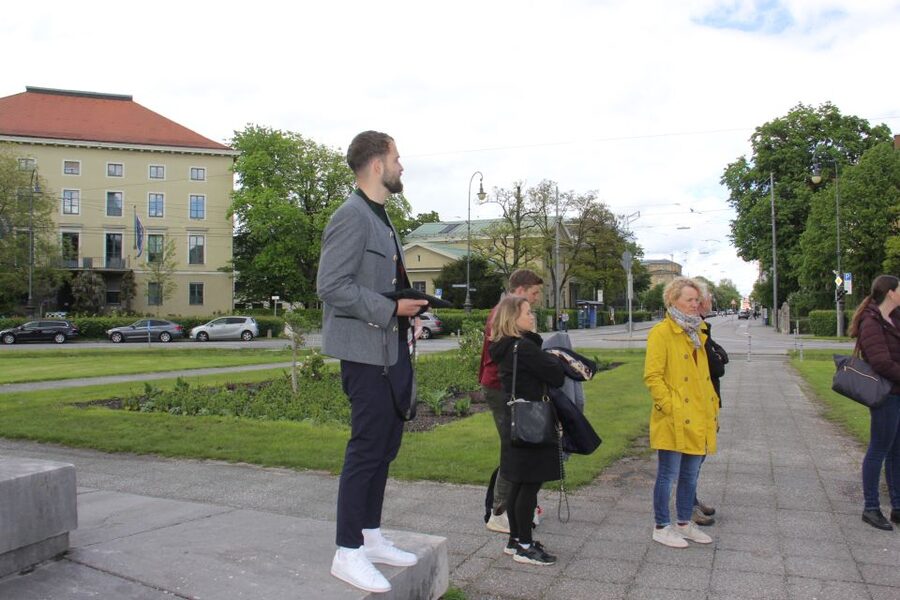
I would recommend this tour to:
- German-speaking visitors with a serious interest in twentieth-century history
- People who want to understand Munich’s role in the rise of Hitler
- Repeat visitors who have already seen the city’s main sights
- Munich residents who want a more difficult and less familiar side of their hometown
- Students and adults who prefer learning through real places
- Anyone interested in how architecture and public ceremonies support political power
I would be more cautious if you are traveling with very young children. The tour is described as suitable for young and old, but the subject includes dictatorship, war, political violence, and the destruction of Europe. You should decide if that material fits your group.
It is also not ideal for anyone looking for a light sightseeing walk. Alex keeps the tone friendly and sometimes humorous, but the content remains serious. You will leave with more to think about than when you arrived.
Should you book it?
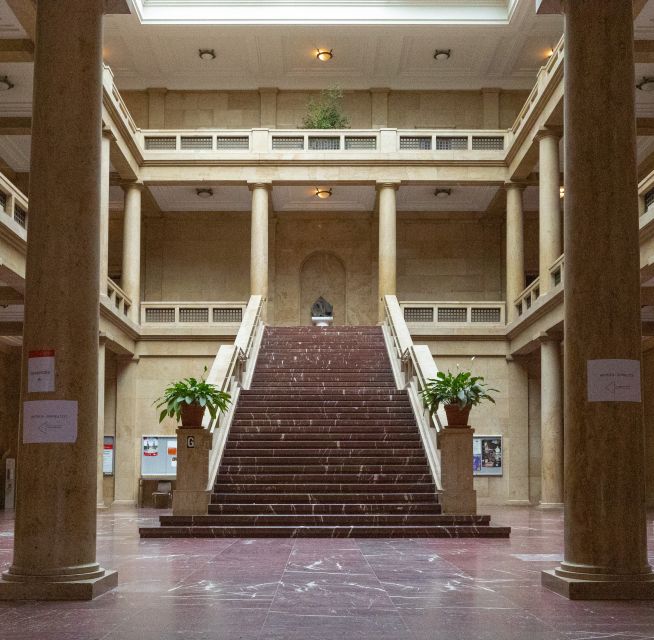
Book this walk if you speak German and want a careful explanation of why Munich became the center of the Nazi movement. The strongest reasons are Alex’s local connection, the clear chronological structure, and the focus on real buildings and squares rather than abstract political history.
Skip it if you need an English-language tour or want a general overview of Munich’s famous sights. For the right audience, though, $30 buys a useful 2.5-hour lesson in how a modern city can be shaped by propaganda, political ambition, and memory. Meet Alex at the Marian Column, wear comfortable shoes, and arrive ready to look at familiar Munich streets with new eyes.
FAQ
Where does the tour begin?
The meeting point is at the Marian Column on Marienplatz in central Munich. The column is large and has a small golden statue at its center.
How long does the walking tour last?
The scheduled duration is 2.5 hours. One reported tour lasted close to three hours because there was so much to explain, so you may want to avoid scheduling another activity immediately afterward.
What language is the tour conducted in?
The live tour guide language is German. The supplied tour information does not list another language.
Is the tour wheelchair accessible?
Yes, the activity is described as wheelchair accessible.
What should I bring?
Wear comfortable shoes. The tour takes place outdoors and runs rain or shine, so suitable clothing for the weather is also sensible.
Is hotel pickup included?
No. You make your own way to the meeting point at Marienplatz.
Can I cancel the booking?
You can cancel up to 24 hours in advance for a full refund. The reserve-now-and-pay-later option lets you keep your plans flexible.
Just added around Munich
- Pub crawl incl. Oktoberfest museum guided tour with beer tasting (private)★ 5.0 · 5 reviews
- South Tyrolean specialties and wine tasting★ 5.0 · 5 reviews
- Size Matters Beer Tour Munich★ 4.6 · 105 reviews
- Short & sweet: Tasting the Viktualienmarkt★ 4.8 · 37 reviews
- Secret Food Tours Munich★ 4.8 · 5 reviews
- Munich: Romantic Wine Experience for Two at Viktualienmarkt★ 4.2 · 14 reviews
- Residence of Munich private tour with skip the line ticket★ 5.0 · 4 reviews
- Munich: Resistance against Hitler – Historical Walking Tour★ 5.0 · 5 reviews
Historical Tours, compared.
City History Canal Sightseeing Tour on a Motorboat
Read our review →
Browse the lists this tour appears in