
Reviewed · THIRD REICH HISTORY TOURS
Nuremberg Third Reich Tour in Spanish
History feels close here. This three-hour Spanish tour links Nuremberg’s medieval past with its role as a Nazi propaganda center, then follows the city’s path toward destruction, justice, and renewal. I especially like the carefully connected route and the strong Spanish-language guidance from Federico, also called Fede. The price, about $19.70 per person, is another plus. The main consideration is that this is an outdoor city tour, so heat, rain, and the walking pace can affect your comfort.
The route begins in the old center at Hauptmarkt and ends at the Street of Human Rights, near the central train station. You will not visit the former rally grounds on this outing, so this tour works best as a focused introduction to Nuremberg’s political and social history rather than a complete survey of every Nazi site in the city.
In This Review
- Key points to know before booking
- Why Nuremberg became a Nazi symbol
- Hauptmarkt and Frauenkirche: the first warning signs
- St. Sebaldus Church and the long history of antisemitism
- Nuremberg Town Hall and Hitler’s connection to the city
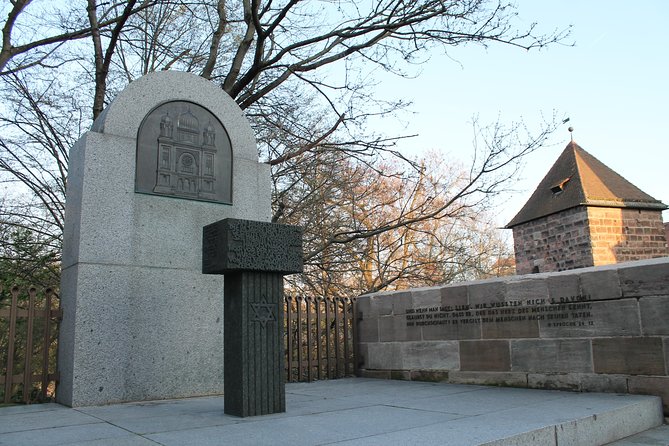
- The former main synagogue and Kristallnacht
- Katharinenkirche: ruins, liberation, and reconstruction
- St. Lorenz and the concentration camp connection
- The State Theater and opera under National Socialism
- Charterhouse Gate and the Nuremberg trials
- The Street of Human Rights and Nuremberg’s new identity
- What the Spanish guide adds
- Price, timing, and practical value
- Who should book this Nuremberg history tour?
- Should you book it?
- FAQ
- How long does the Nuremberg Third Reich Tour in Spanish last?
- What language is the tour conducted in?
- Where does the tour begin?
- What time does the tour start?
- Where does the tour end?
- How far is the end from the starting point?
- How many people can join the tour?
- Is admission to the stops included?
- Can I cancel for a refund?
Key points to know before booking
- Medieval history comes first: The tour explains how Nuremberg’s importance under the Holy Roman Empire later helped the Nazi regime use the city as a symbol of German tradition.
- Jewish history is central: Stops at Frauenkirche, St. Sebaldus Church, and the former main synagogue address persecution from the Middle Ages through the Nazi period.
- Federico brings energy and detail: His explanations have been praised for being well documented, lively, flexible, and easy to follow.
- The route covers nine major sites: You see churches, the town hall, synagogue memorial, theater, courthouse area, and the Street of Human Rights.
- It ends near the main station: The final stop is about a ten-minute walk from the starting point, which makes the tour easy to fit into a day in Nuremberg.
- Plan for outdoor conditions: The experience depends on good weather and may be rescheduled or refunded if poor conditions prevent it from going ahead.
Why Nuremberg became a Nazi symbol
Nuremberg was not chosen by the Nazi leadership at random. For centuries, the city had held an important place in the Holy Roman Empire, with imperial assemblies known as the Diets of Nuremberg. These gatherings brought emperors together with prince electors, giving the city a long association with power and German political tradition.
Hitler wanted to connect National Socialism with that medieval past. Nuremberg could be presented as the supposed capital of German history, loyalty, and national identity. The Nazi regime used the city’s old symbols and reputation to give its modern dictatorship a false sense of legitimacy.
That connection is the thread running through this experience. You are not simply taken from one wartime plaque to another. The guide explains how medieval religious prejudice, civic identity, political theater, antisemitism, war, and postwar justice became linked in the city’s story.
The tour also introduces Julius Streicher, one of Nuremberg’s most important Nazi figures. Streicher published and promoted Der Stürmer, a weekly paper built around aggressive antisemitism. His connection to the city helps explain why Nuremberg became not only a setting for Nazi spectacle, but also a center for the regime’s hateful propaganda.
More Third Reich History Tours in Nuremberg
- Nuremberg: Walking Tour of Former Nazi Party Rally Grounds
★ 4.7 · 1,665 reviews - Nuremberg: Historischer Kunstbunker WWII Art Bunker Tour
★ 4.8 · 921 reviews - Nuremberg Old Town and Nazi Party Rally Grounds Walking Tour in English
★ 4.5 · 504 reviews
Hauptmarkt and Frauenkirche: the first warning signs
The tour begins at Hauptmarkt, outside the Frauenkirche. This is a useful starting place because the location lets the guide move backward before moving forward. You first encounter Nuremberg as a medieval city, then learn how old religious prejudice shaped later events.
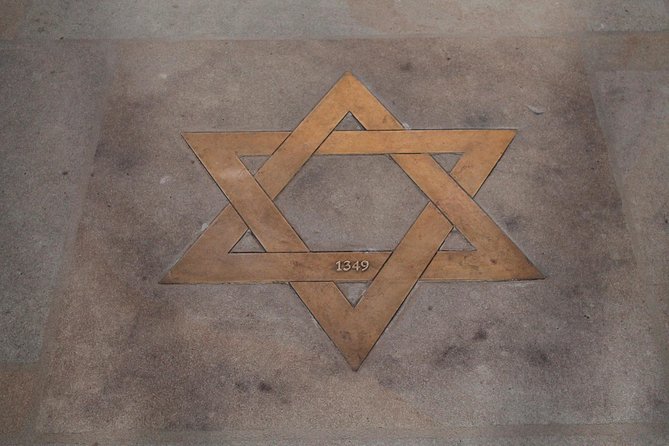
The discussion here focuses on the pogrom of 1349 and the former Jewish quarter. This is an important choice. The Nazi period did not create antisemitism from nothing, and the tour makes that connection clear rather than treating the 1930s as an isolated break from the past.
You spend about 15 minutes at this stop. Admission is free, and the value comes from the explanation rather than from entering a paid attraction. I would pay close attention to the relationship between the Jewish community and the city itself, since this opening section sets up themes that return throughout the route.
St. Sebaldus Church and the long history of antisemitism
The next stop, St. Sebaldus Church, continues the discussion of antisemitism from the Middle Ages into National Socialism. The church gives the subject a strong historical setting, but this is not presented as a simple church visit. The focus remains on how ideas and prejudices developed over time.
You have around 15 minutes here. That is enough for a clear explanation, though not enough for every detail about the church or medieval Nuremberg. If you want an extensive art-history tour of St. Sebaldus, you will need a separate visit.
What I like about this portion is its refusal to make history too tidy. You see that political movements can reuse older fears and prejudices for new purposes. For anyone who wants to understand how propaganda gained an audience, this context is more useful than a list of dates.
Nuremberg Town Hall and Hitler’s connection to the city
At Nuremberg Town Hall, the subject turns more directly to Hitler and his relationship with the city. The stop lasts about 15 minutes and helps explain why Nuremberg was promoted as the German city par excellence, or the place supposedly most loyal to the Nazi regime.
The setting matters. A town hall is a civic building, so the discussion can connect national dictatorship with local identity and public life. The tour shows how the regime used Nuremberg’s existing reputation to stage political events and reinforce its message.
This is also where the broader idea of political theater becomes easier to understand. The Nazis did not only rely on laws and police power. They used places, ceremonies, symbols, and historical references to shape how people saw the regime.
Still Nuremberg, at a slower pace:
- Nuremberg: City Tour with the Bimmelbahn Train
★ 4.4 · 2,475 reviews - Nuremberg: Old Town Guided Walking Tour
★ 4.6 · 2,416 reviews - Nuremberg: Tunnels and Secret Passages in the City Wall Tour
★ 4.8 · 2,334 reviews - Nuremberg: Medieval Dungeons Guided Tour
★ 4.8 · 1,726 reviews
The former main synagogue and Kristallnacht
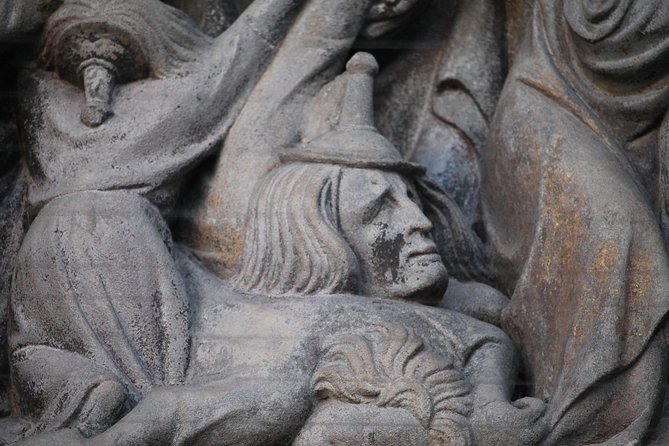
The memorial at the site of Nuremberg’s main synagogue is one of the most serious stops on the route. You spend about ten minutes learning about the synagogue’s destruction and the Night of Broken Glass, known in German as Kristallnacht.
The site brings the story of antisemitism out of the realm of speeches and printed propaganda. Here, discrimination became physical destruction. A synagogue was not merely a building lost in the war. Its destruction was part of the organized persecution of Jewish people under the Nazi regime.
Because the stop is relatively brief, you should expect a focused explanation rather than a long memorial visit. The subject is heavy, and the tour’s strength is in placing it within the larger sequence: medieval persecution, political antisemitism, Nazi propaganda, and then open violence.
Katharinenkirche: ruins, liberation, and reconstruction
The ruins of St. Catherine’s Church offer a different view of the period. The ten-minute stop deals with the battle and liberation of Nuremberg, along with the city’s reconstruction after the war.
Ruins can make wartime destruction easier to grasp than a polished display. At the same time, this stop shifts attention from persecution to the physical damage suffered by Nuremberg itself. The city that had been used as a stage for Nazi power was left with the consequences of war.
I appreciate that the tour does not end its story in 1945. Reconstruction raises difficult questions about what a city preserves, what it rebuilds, and how it lives with an abusive past. The discussion helps connect the wartime city with the Nuremberg you see today.
St. Lorenz and the concentration camp connection
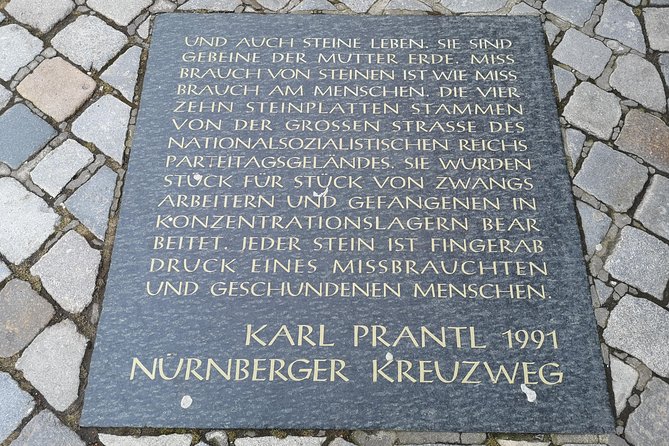
At St. Lorenz, the guide discusses the Via Crucis of the church and its relationship to the Nuremberg concentration camp. You spend about ten minutes at this location.
The connection between a church’s imagery and the concentration camp gives the stop a moral and historical dimension. It also reminds you that the Nazi system was not confined to distant battlefields or government offices. Its actions affected the city and the institutions around it.
This section may feel compressed because the overall route covers a lot of ground in three hours. Still, it adds an important link between religious symbolism, suffering, and the machinery of persecution.
The State Theater and opera under National Socialism
The Nuremberg State Theater is another ten-minute stop. Here, the tour explains the opera house’s connection with National Socialism.
This is a useful reminder that culture was part of Nazi politics. The regime did not only use rallies, uniforms, and government buildings. Theater and opera could also be tied to national identity, public messaging, and official ideas about German culture.
For me, this stop broadens the tour beyond the usual military and political story. You see how a dictatorship tries to shape public life through art and performance, not just through force. The short visit will not cover the full history of the theater, but it gives you a clear reason to view the building differently.
Charterhouse Gate and the Nuremberg trials
At Charterhouse Gate, the focus moves to the Nuremberg trials. This stop lasts about 15 minutes and brings the story into the postwar period, when leading figures of the Nazi regime were prosecuted.
The trials gave Nuremberg a second major historical role. The city had been used to celebrate Nazi power, yet it later became associated with legal efforts to hold Nazi leaders responsible. That change gives the tour a strong sense of historical reversal.
You should note that the supplied route identifies Charterhouse Gate as the stop for the trials, but it does not include admission to a courtroom or a museum visit. The value here is the guide’s explanation and the connection between the city’s Nazi past and the legal response that followed.
The Street of Human Rights and Nuremberg’s new identity
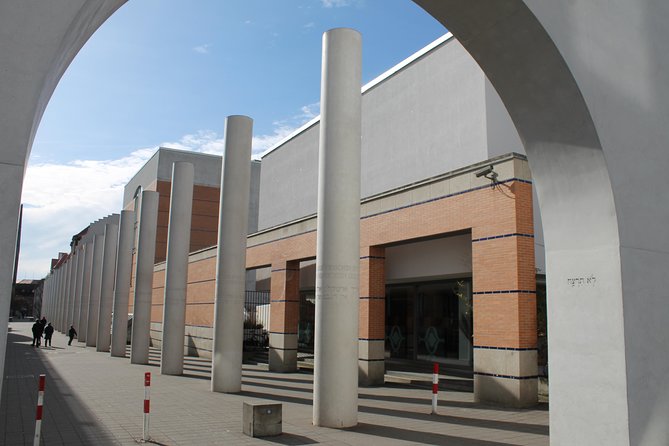
The tour ends at the Street of Human Rights, on Kartäusergasse. This final stop lasts about ten minutes and provides the clearest statement about Nuremberg’s postwar rebirth.
The name and purpose of the street point in the opposite direction from the Nazi ideal of racial hierarchy and political obedience. It gives the route a forward-looking ending, centered on human rights rather than imperial power, dictatorship, or persecution.
This is a smart place to finish. After hearing how Nuremberg was presented as the most loyal city of the regime, you end with a public commitment to universal rights. The transition does not erase the past. It shows how the city has tried to address it.
The route ends near the central train station, about a ten-minute walk from Hauptmarkt. That makes the final stop practical if you are continuing to another part of town or catching a train.
What the Spanish guide adds
A Spanish-language guide can make a major difference on a subject this dense. The route includes medieval history, Nazi ideology, antisemitism, wartime destruction, the trials, and postwar memory. You will get more from it if the guide can explain the links clearly rather than simply translate dates and names.
Federico has been praised for being well documented, dynamic, flexible, and sympathetic. One particularly useful quality is his ability to keep the tour engaging despite the seriousness of the subject. The comments also describe the experience as entertaining, complete, and full of information, with a strong sense of being taken back into the period.
That does not mean the tour is light. The subjects include pogroms, synagogue destruction, concentration camps, and Nazi propaganda. The appeal is that the presentation remains accessible and well paced, even when the material is difficult.
The group can contain up to 30 people. That is not a tiny private walk, so you should expect a shared experience rather than constant one-to-one discussion. At the same time, a maximum of 30 keeps the group more manageable than a large open city tour.
Price, timing, and practical value
At about $19.70 per person, this is a strong-value introduction to Nuremberg’s Third Reich history. You receive roughly three hours with a Spanish-speaking guide and visit nine significant locations. Since admission is free at the listed stops, most of what you are paying for is the structure, interpretation, and language service.
The tour begins at 3:30 p.m. That timing may work well if you spend the morning visiting other parts of Nuremberg. It also means you should think about the season and daylight, especially because the experience depends on good weather.
The tour uses a mobile ticket, and confirmation is provided at booking. It begins at Hauptmarkt 14 and ends at Kartäusergasse 1. Public transportation is nearby, and service animals are allowed.
The experience requires a minimum number of participants. If that minimum is not reached, or if poor weather forces cancellation, you can choose another date or receive a full refund. You can also cancel for a full refund up to 24 hours before the start time. A cancellation or change made less than 24 hours before the start is not refundable.
Who should book this Nuremberg history tour?
I would recommend it most strongly to Spanish-speaking visitors who want a clear introduction to Nuremberg’s Nazi past without paying for a private guide. It also suits anyone who values context, since the route begins with medieval persecution rather than jumping straight into Hitler’s rise.
The tour is a good fit if you enjoy learning while walking through a city and want to understand why particular buildings matter. It may be less suitable if you want a visit inside the main rally grounds, a museum-based experience, or a detailed examination of the courtroom where the trials took place.
You should also be comfortable spending about three hours on a city route that deals with painful subjects. Heat can make the experience tiring, as shown by the positive comment praising how enjoyable it remained despite hot weather. Bring sensible clothing for the forecast and be ready for a steady sequence of stops.
Should you book it?
Book this tour if you want an affordable, Spanish-language route that connects Nuremberg’s medieval identity, Nazi propaganda, Jewish persecution, war, the trials, and human rights. Federico’s praised presentation is a real advantage, especially when so much information must fit into three hours.
Skip it if your main goal is the former rally grounds or a museum visit. For most first-time visitors who want a strong historical orientation in the city center, though, the price, route, and final stop at the Street of Human Rights make this a worthwhile choice.
FAQ
How long does the Nuremberg Third Reich Tour in Spanish last?
The tour lasts approximately three hours.
What language is the tour conducted in?
The tour includes a guide in Spanish.
Where does the tour begin?
It begins at Hauptmarkt 14, 90403 Nürnberg, Germany.
What time does the tour start?
The scheduled start time is 3:30 p.m.
Where does the tour end?
It ends at the Street of Human Rights, Kartäusergasse 1, 90402 Nürnberg, near the central train station.
How far is the end from the starting point?
The ending location is about a ten-minute walk from the starting point.
How many people can join the tour?
The maximum group size is 30 travelers.
Is admission to the stops included?
The listed stops have free admission. The included service is the Spanish-speaking guide.
Can I cancel for a refund?
Yes. You can cancel up to 24 hours before the experience start time for a full refund. Changes or cancellations made less than 24 hours before the start are not accepted for a refund.
Just added around Nuremberg
- Tour en español al Campo Zeppelin★ 5.0 · 8 reviews
- Stein: Public guided tour of the “Old Mine” museum★ 4.5 · 18 reviews
- “Rotes Bier” and “Blaue Zipfel”. A historical-culinary walk★ 4.4 · 190 reviews
- Nuremberg: Old Town Guided Tour By Bus★ 4.4 · 198 reviews
- Nürnberg kennenlernen: Highlights in der Altstadt★ 4.7 · 189 reviews
- Nuremberg: Bar and Club Tour with Free Shots and Free Entry★ 3.8 · 23 reviews
- Nürnberg Bachelor(ette) Party with Night PubCrawl★ 4.2 · 5 reviews
- Nuremberg: WWII Tour, Courtroom 600 and 3rd Reich Sites★ 4.6 · 94 reviews