
Reviewed · HISTORICAL TOURS
Private Berlin In a Day History Tour With Expert Guide
Berlin rewards a day of focused attention. I like the private format, which lets your guide adjust the pace for your group, and I like how the route links Nazi, Cold War, royal, and modern Berlin rather than treating each sight as an isolated stop. The main drawback is clear: six hours on foot is a serious walking day, and the $247 per-person price makes the tour best suited to visitors who value personal guidance over a cheaper group outing.
You start from your hotel on foot, if you choose pickup, or meet near Brandenburg Gate at Ebertstraße 24. Guides speak English or Polish, and the tour includes a lunch break, though food and drinks cost extra. Toby earned special praise for making the day enjoyable without rushing, while Steve was noted for his humor and thoughtful explanations.
In This Review
- Key points at a glance
- Six hours to understand Berlin’s big story
- Starting at Brandenburg Gate and the Reichstag
- Confronting Nazi Berlin around the Holocaust Memorial
- Walking the Wall from memorial to checkpoint
- Unter den Linden, Humboldt University, and the old center
- Alexanderplatz and the Soviet view of Berlin
- How the walking pace and private format work
- Is $247 per person a fair price?
- Who should book this Berlin history day?
- My verdict: a smart first day for history-minded visitors
- FAQ
- How long is the Berlin in a Day history tour?
- Is the tour private?
- Can the guide pick me up at my hotel?
- What languages are available?
- Is lunch included in the price?
- Is the tour wheelchair accessible?
- What should I bring?
Key points at a glance
- One route, many eras: Cover Brandenburg Gate, the Reichstag, the Berlin Wall, Checkpoint Charlie, Museum Island, Alexanderplatz, and much more in six hours.
- Private attention: Your guide works only with your group, making it easier to ask questions and adjust the walking pace.
- A serious history focus: The route connects World War I, World War II, the Battle of Berlin, Nazi Germany, the Cold War, and reunification.
- Lunch breaks up the day: Stop at a local partner restaurant to eat and learn a little about Berlin cuisine. Food is not included.
- Hotel pickup is possible: The guide can meet you at your accommodation on foot, or you can begin at the Brandenburg Gate meeting point.
- Strong personal praise: Toby was described as highly informed and enjoyable, while Steve was appreciated for his humor and engaging style.
Six hours to understand Berlin’s big story
Many Berlin sightseeing days feel like a pile of unrelated monuments. This tour tries to give you a usable timeline. You move from the Prussian and imperial city to the Nazi capital, then into the ruins and divisions of the Cold War, before finishing around central Berlin’s modern landmarks.
That approach is valuable because Berlin’s history is spread across a large area. The Reichstag makes more sense after you understand the political role of the capital. Checkpoint Charlie means more after you have heard how Berlin was split. The Berlin Wall Memorial and East Side Gallery reveal different parts of the same divided-city story.
You should also know what this is not. It is not a museum tour with long indoor visits. Most of the six hours are spent walking and looking at sites from outside, with short stops for explanation. If you want detailed time inside the German Historical Museum, the Topography of Terror, or the Humboldt Forum, you will need separate visits.
More History Tours in Berlin
- Berlin: Natural History Museum Entrance Ticket
★ 4.6 · 3,382 reviews - Berlin: World Heritage Cruise to Potsdam
★ 4.5 · 1,435 reviews - Berlin Historical Highlights Walking Tour
★ 4.9 · 657 reviews
Starting at Brandenburg Gate and the Reichstag
The usual meeting point is in front of Hopfingerbräu restaurant at Ebertstraße 24, near Brandenburg Gate. Hotel pickup is available on foot, which is helpful if you are staying centrally and would rather begin at your accommodation.
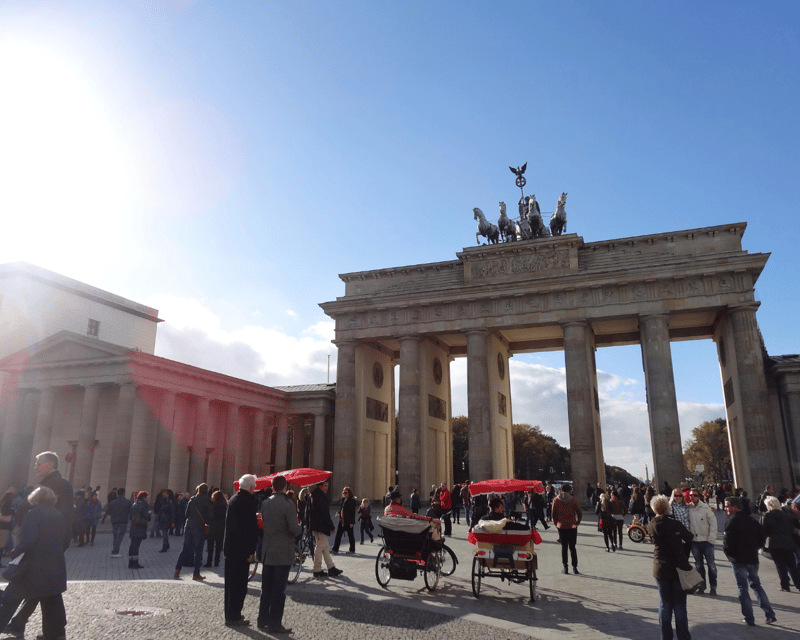
Brandenburg Gate is the right place to start. Once a city gate, it became a symbol of Prussian power, Napoleon’s occupation, Nazi ceremony, wartime destruction, and German reunification. Your 15-minute stop is enough for the main story and photographs, but not for a long architectural discussion.
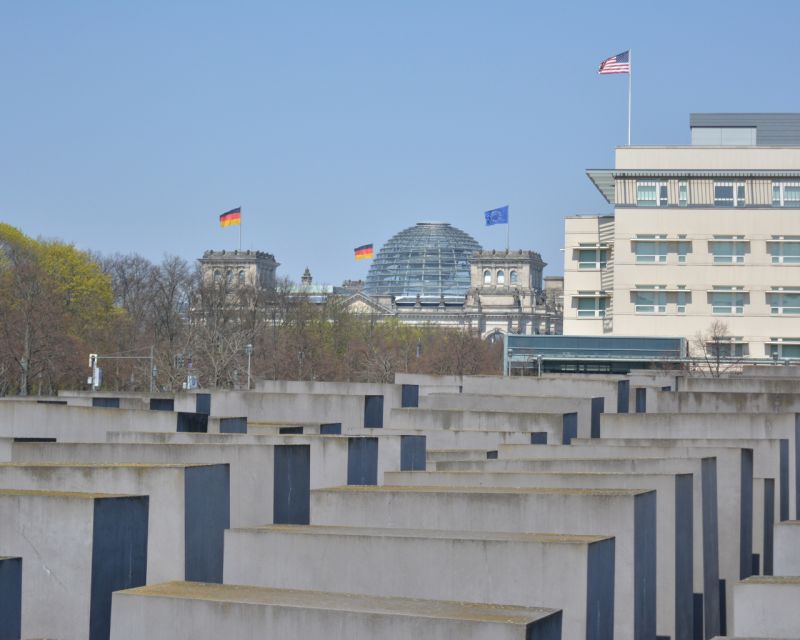
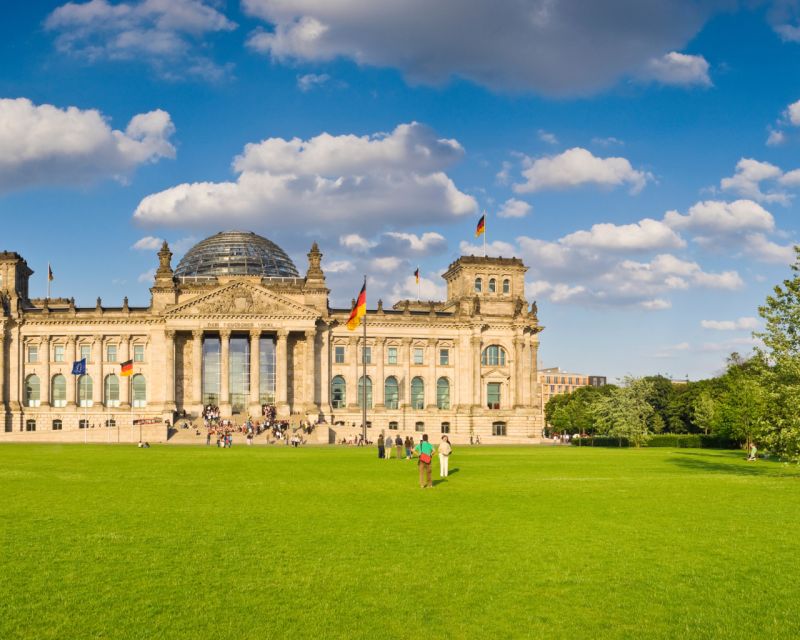
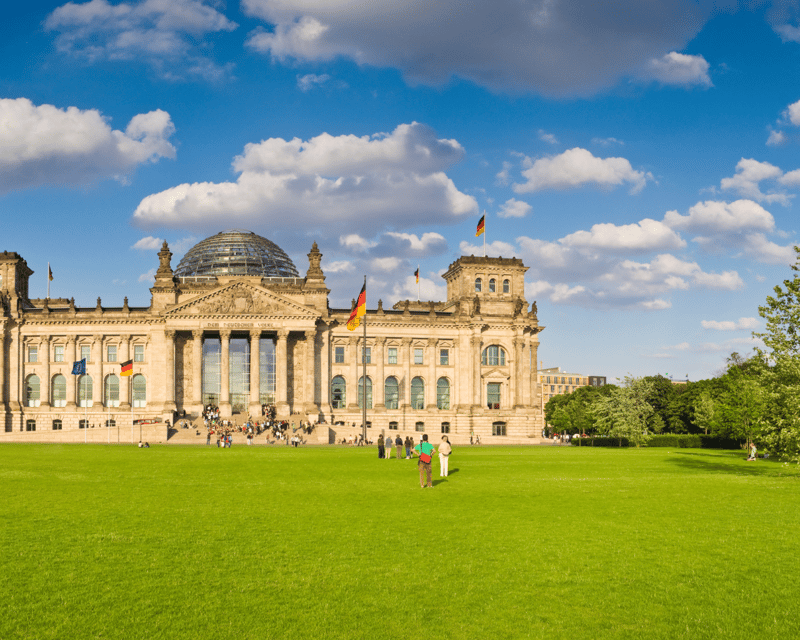
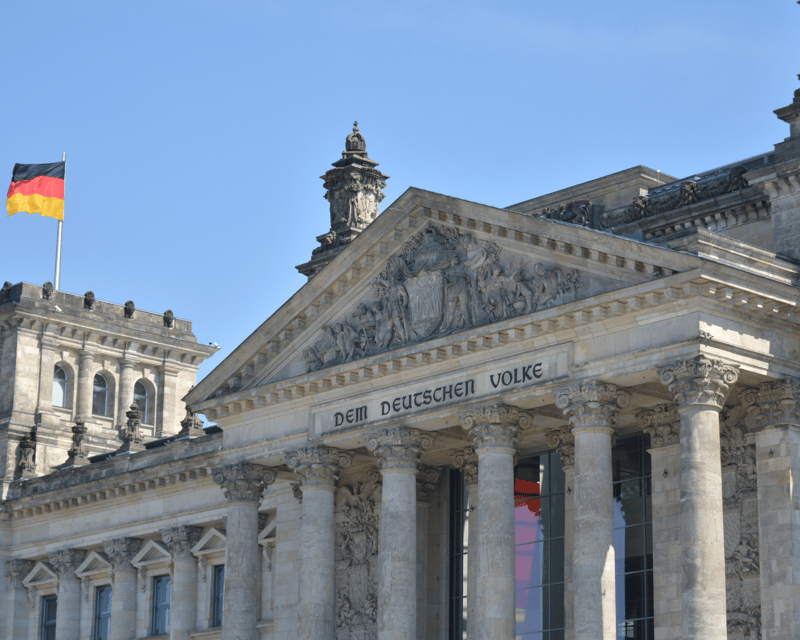
The Reichstag is close by. You get about 15 minutes for sightseeing, enough to place the building in the story of the German Empire, the Weimar Republic, the Nazi rise to power, and today’s federal government. The tour does not state that you enter the dome, so plan on viewing the building from outside unless your guide tells you otherwise.
From here, the route moves through the Tiergartenviertel and toward the Victory Column. These short stops help you see Berlin as a city of grand boulevards and political monuments, not just a collection of museums. The Victory Column stop is only about five minutes, so it is best treated as a quick orientation point.
Confronting Nazi Berlin around the Holocaust Memorial
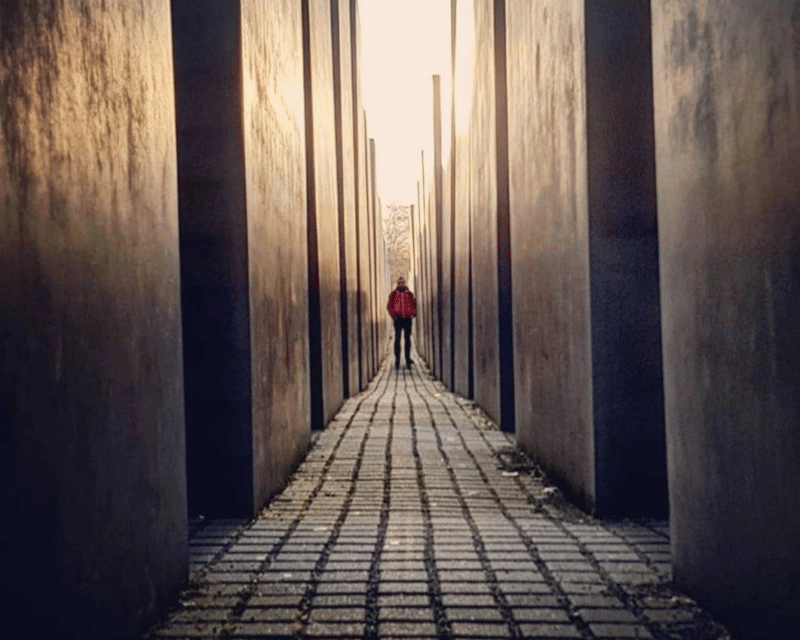
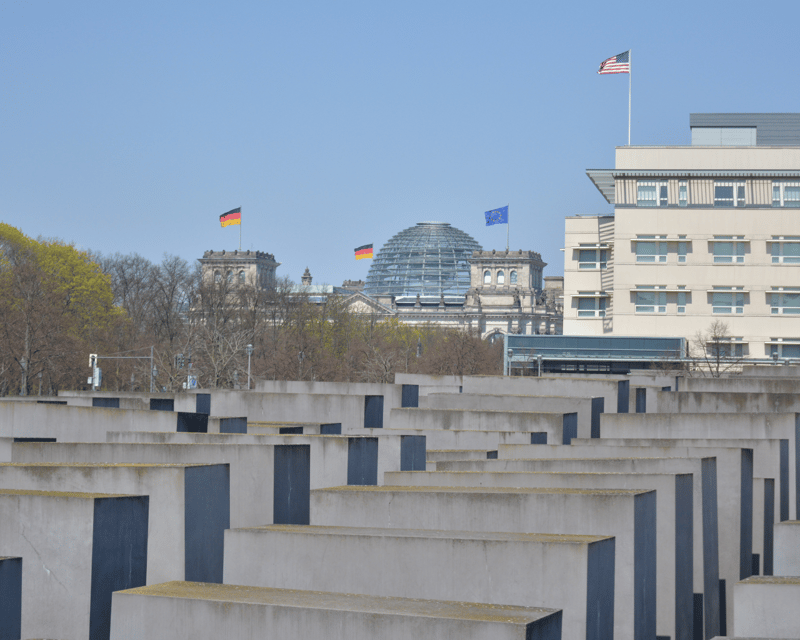
The Holocaust Memorial is given about 15 minutes. The field of concrete slabs creates a powerful place for reflection, but the guide’s historical context is what makes the stop useful. You can connect the memorial to the machinery of persecution and murder that shaped this part of central Berlin.
The nearby Hitler’s Bunker site receives another 15-minute stop. There is no dramatic building to enter. The point is understanding the final stage of the Nazi regime and the Battle of Berlin, not seeing an intact bunker interior. Keep your expectations grounded: this is a historical location explained on foot, not a preserved attraction.
The Johann Georg Elser Memorial adds a more personal angle. Elser attempted to kill Hitler in 1939, before the war had fully begun. His story reminds you that opposition existed inside Germany, even though it was dangerous and often isolated.
At Detlev-Rohwedder-Haus, the tour touches another building with several layers of twentieth-century history. The stop fits the broader theme of political power changing hands in Berlin. With about ten minutes there, you will receive context rather than a full building tour.
The Topography of Terror is one of the most important stops for visitors interested in Nazi history. It occupies the former Gestapo and SS headquarters area and focuses on the institutions behind Nazi persecution. The route allows roughly 15 minutes, so you should consider returning later if you want to read the exhibition in detail.
Walking the Wall from memorial to checkpoint
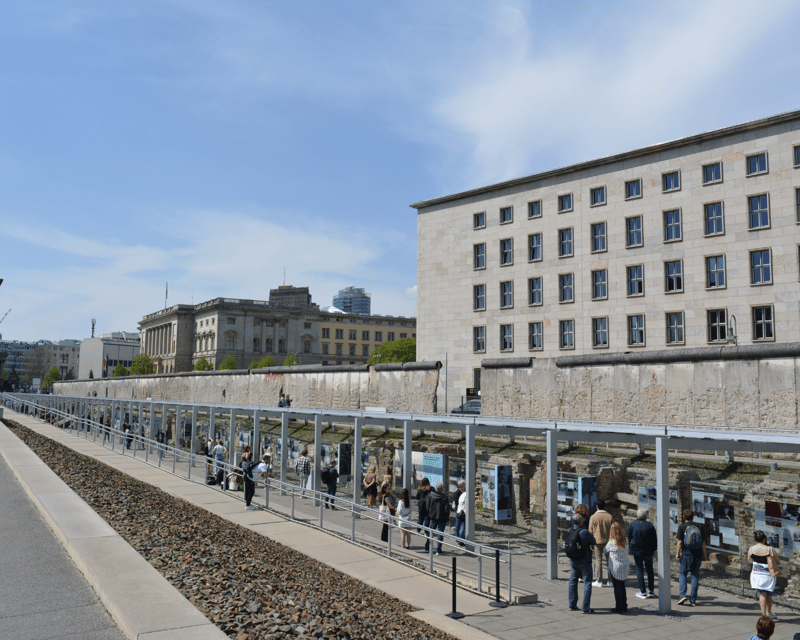
The Berlin Wall Memorial gives you a more tangible sense of how division worked. This part of the route covers guard towers, escape stories, ghost stations, and the practical barriers that separated East and West Berlin. A 15-minute stop cannot cover every detail, but it can give you the framework for understanding the wall as a system, not simply a strip of concrete.
That distinction matters. The wall included observation posts, controlled crossings, restricted zones, and heavily guarded stretches. Your guide can also explain how people tried to escape and why underground and railway routes became part of Berlin’s divided geography.
Checkpoint Charlie offers a different kind of wall history. It was a crossing point between the American and Soviet sectors and became one of the best-known Cold War symbols. The stop lasts about ten minutes. You will have time for a look and a clear explanation, but the area is now highly commercial, so do not expect an untouched historical site.
The tour also includes East Side Gallery. This is where you see a long surviving section of the wall covered with murals. Its meaning is different from the Wall Memorial: less about fortification and escape, more about art, memory, and the public transformation of a former barrier. Since the detailed stop times for every part of the route are not specified, your guide may adjust the exact amount of time spent here.
Still Berlin, at a slower pace:
- Berlin: Reichstag, Dome and Government District Guided Tour
★ 4.7 · 18,288 reviews - Berlin: 1-Hour City Tour by Boat with Guaranteed Seating
★ 4.3 · 16,993 reviews - Berlin: Boat Tour Along the River Spree
★ 4.4 · 11,252 reviews - Discover Berlin Half-Day Walking Tour
★ 5.0 · 9,624 reviews
Unter den Linden, Humboldt University, and the old center
The route turns back toward central Berlin along Unter den Linden, the city’s famous east-west boulevard. This is a useful place to see how Berlin’s royal and imperial past sits beside twentieth-century destruction and twenty-first-century rebuilding.
The German Cathedral, or Deutscher Dom, receives around 15 minutes. Its setting on Gendarmenmarkt makes it one of the more elegant points in central Berlin, and it gives your guide a chance to explain the old civic and religious center of the city.
Humboldt University receives about ten minutes. The university is tied to Berlin’s intellectual life and sits in a district filled with major institutions. The nearby Neue Wache receives 15 minutes and provides a solemn memorial space for victims of war and dictatorship.
The German Historical Museum is scheduled for about ten minutes. Again, this is an exterior or orientation stop rather than a full museum visit. If you want to explore its collections, plan another block of time on a different day.
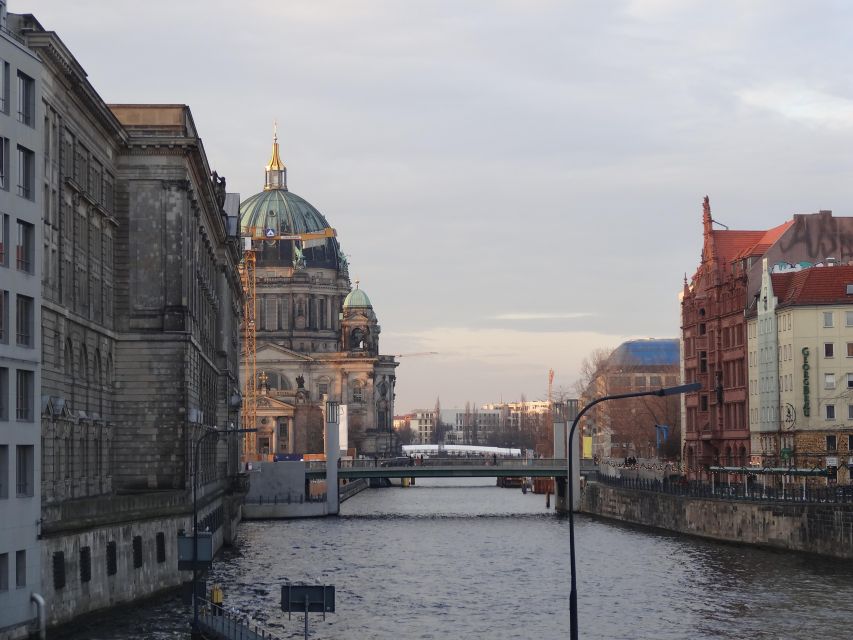
Museum Island and the Humboldt Forum continue the story of Berlin as a capital of collections, scholarship, monarchy, and reconstruction. The tour gives approximately 15 minutes at Museum Island and ten minutes at the Humboldt Forum. That is enough to understand the area’s importance and identify places to revisit.
Marienkirche, one of Berlin’s oldest parish churches, adds another layer to the city’s religious and medieval past. The ten-minute stop is brief, but it helps prevent the tour from focusing only on the twentieth century.
Alexanderplatz and the Soviet view of Berlin
The final part of the route includes the TV Tower and Alexanderplatz. The tower is a major symbol of East Berlin and the former German Democratic Republic. You see it as part of the city skyline and Cold War story, not as an included observation-deck visit.
Alexanderplatz is given only about five minutes, so treat it as the final landmark rather than a long stop. It is a practical endpoint because it places you in one of central Berlin’s major public spaces, with plenty of options for continuing your own sightseeing.
The route also includes a Soviet war memorial, though the supplied schedule does not assign it a separate numbered time. That stop fits naturally with the tour’s attention to the Battle of Berlin, the Soviet victory, and the political shape of East Berlin after 1945.
Two stops in the detailed schedule are unnamed. This may reflect flexible routing or an incomplete presentation of the planned sequence. I would ask your guide at the start which locations those entries represent, especially if one particular site matters to you.
How the walking pace and private format work
This is a walking tour, not a coach tour. The guide meets you on foot, and the route covers a large amount of central Berlin. Comfortable shoes are essential, and you should carry water. The tour allows breaks for snacks, bathrooms, and rest, with the pace adjusted to the group.
The private setup is the main reason to choose this experience over a standard group walk. You can ask why one memorial is designed as it is, pause when a story catches your interest, or move along more quickly at a place you already know. The guide can also explain Berlin in a way that fits your interests, such as military history, architecture, Jewish history, Cold War politics, or local food.
Still, private does not mean effortless. Six hours of walking, even at an easy pace, can be tiring. Wheelchair access is listed, but Berlin’s historic streets and the number of outdoor sites mean you should discuss your particular mobility needs before booking.
The lunch break helps. You stop at a local partner and get a small introduction to Berlin cuisine, but the meal is not included in the $247 price. Budget separately for lunch and drinks.
Is $247 per person a fair price?
At $247 per person, this is not a budget sightseeing walk. The value depends on your group size and your available time. For one or two people, the cost is substantial. For a family or small group splitting the private guide fee, the price may feel more reasonable, especially if you want one person shaping the entire day around your questions.
I see the strongest value for a short Berlin visit. You can cover much of the central historical core in one organized route instead of spending your first day working out transport, locations, and background on your own. You also avoid the stop-and-start feel that can come with joining a large group.
The tour’s five-star average from six ratings supports the idea that the personal service is a major strength. Toby was praised for making the experience enjoyable without rushing, and Steve received credit for humor and engaging explanations. Those details matter because six hours of history can become heavy if the guide simply recites dates.
The price is harder to justify if you have several days in Berlin and enjoy researching independently. You could visit many of these sites at no admission cost, then spend your money on selected museums and longer indoor visits. This tour gives you breadth and guidance, not extensive time inside each attraction.
Who should book this Berlin history day?
I would choose this tour if you have only one full day for sightseeing, want a strong historical framework, or prefer to ask questions privately. It is especially useful if your interests include World War II, the Holocaust, the Battle of Berlin, the Berlin Wall, escape attempts, and the contrast between East and West Berlin.
It also suits families and mixed-interest groups. A private guide can explain difficult subjects in an age-appropriate way and adjust the pace when attention starts to fade.
I would be more cautious if you dislike long walks, want lots of free time for photography, or expect admission to major museums. The tour reaches many places, but the schedule is built around short sightseeing stops. Think of it as an excellent first pass through Berlin’s story, followed by independent museum visits if you have time.
The flexible booking terms help reduce the risk. You can cancel up to 24 hours ahead for a full refund, and reserve now while paying later. That is useful when your Berlin plans are still shifting.
My verdict: a smart first day for history-minded visitors
I recommend the Private Berlin In a Day History Tour if you want maximum historical coverage in six hours and are willing to pay for personal attention. The best parts are the private pace, the wide range of sites, the local lunch break, and guides who bring humor and clear explanations to difficult material.
I would not book it simply to take photographs of Berlin’s famous buildings. You will get better value if you care about how Brandenburg Gate, the Holocaust Memorial, the Wall, Checkpoint Charlie, Museum Island, and Alexanderplatz fit into one connected story.
Choose hotel pickup if you are staying centrally and want an easy start. Meet at Ebertstraße 24 if you prefer to begin at Brandenburg Gate. Wear good shoes, bring water, budget for lunch, and ask which two unnamed itinerary stops are planned. With those expectations in place, this is a useful, personal, and efficient way to get your bearings in Berlin.
FAQ
How long is the Berlin in a Day history tour?
The tour lasts six hours, including a lunch break and stops at major historical sites and landmarks.
Is the tour private?
Yes. It is a private group experience for your group only.
Can the guide pick me up at my hotel?
Yes. Hotel pickup is available on foot. You can also meet the guide at Ebertstraße 24, in front of Hopfingerbräu near Brandenburg Gate.
What languages are available?
The live tour is available in English and Polish.
Is lunch included in the price?
No. The tour includes a lunch stop at a local partner, but food and drinks are not included.
Is the tour wheelchair accessible?
Yes. The activity is listed as wheelchair accessible. Since it is a walking tour, you should still discuss specific mobility needs when booking.
What should I bring?
Wear comfortable shoes. The tour involves walking between many Berlin sights, and you may also want to bring water and money for lunch and drinks.
Just added around Berlin
- Private Walking Tour in Berlin: Hitler’s Germany & WWII★ 5.0 · 7 reviews
- The History of Berlin: WWII PRIVATE Walking Tour With Locals★ 5.0 · 209 reviews
- Private Berlin WWII and Cold War History Tour with Local Expert Guide★ 5.0 · 28 reviews
- Private Walking Tour Berlin 3 hours: Brandenburg, Historic Center★ 5.0 · 7 reviews
- Berlin: Private Bike Tour of the Berlin Wall and Third Reich★ 5.0 · 23 reviews
- Berlin: Guided Private Bike Tour to Explore the Highlights★ 5.0 · 12 reviews
- Berlin Photography Masterclass – Private Photography Lesson★ 4.5 · 23 reviews
- Group Driving Tour 1 to 6 people. Berlin Shore Excursion incl pick-up at Port★ 5.0 · 8 reviews
Historical Tours, compared.
City History Canal Sightseeing Tour on a Motorboat
Read our review →
Browse the lists this tour appears in