
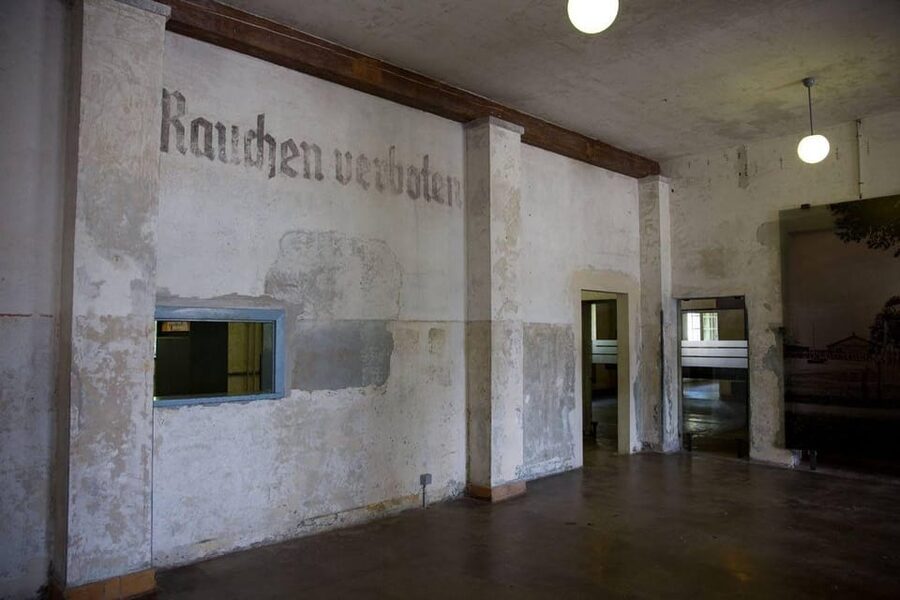
Reviewed · CONCENTRATION CAMP MEMORIAL VISITS
Private Dachau Memorial Site Tour from Munich
Dachau asks you to pay attention. This private tour makes the visit easier to understand, with expert historical guidance and a respectful pace through one of Germany’s most difficult places. I like the hotel pickup option and the way the guide handles the train and bus journey, so you are not left to figure out the route alone. The main drawback is emotional: three hours at the memorial can feel heavy, especially for younger visitors.
I also like the private format, since you can ask questions without holding back a larger group. Guides such as Mat and Markus have been praised for clear English, patience, and careful explanations, including help for elderly family members. At $273 per person, it is not cheap, but the price makes more sense if you want personal attention and historical context rather than simply arriving at Dachau on your own.
In This Review
- Key points before you book
- Why Dachau deserves more than a quick visit
- Meeting in Munich and taking the train to Dachau
- Entering a place built for control and fear
- Daily life, punishment, and prisoner groups
- Liberation and the memorial after 1945
- What makes the private format worth $273
- Timing, comfort, and emotional preparation
- Who will get the most from this Dachau tour
- Practical advice before you go
- Should you book this private Dachau tour?
- FAQ
- How long does the tour last?
- How long do you spend at the Dachau memorial?
- How do you travel from Munich to Dachau?
- Is hotel pickup available?
- Is transportation included?
- Is the tour suitable for children?
- Can you record the tour or bring a large bag?
Key points before you book
- Three hours at the memorial: Enough time to cover the central history, prisoner life, punishment, liberation, and the camp’s postwar memorial role without turning the visit into a rushed photo stop.
- A private English-speaking guide: You can ask direct questions and set the pace around your group’s needs.
- Public transport is included: The trip uses a 25-minute train ride and an eight-minute bus ride in each direction.
- Strong historical context: The tour explains how the political and economic climate of the 1930s allowed Nazi persecution to grow.
- A solemn, restricted site: Smoking, large bags, drones, selfie sticks, alcohol, and audio or video recording are not allowed.
- Best for adults and older teenagers: Children under 12 are not considered suitable for this experience.
Why Dachau deserves more than a quick visit
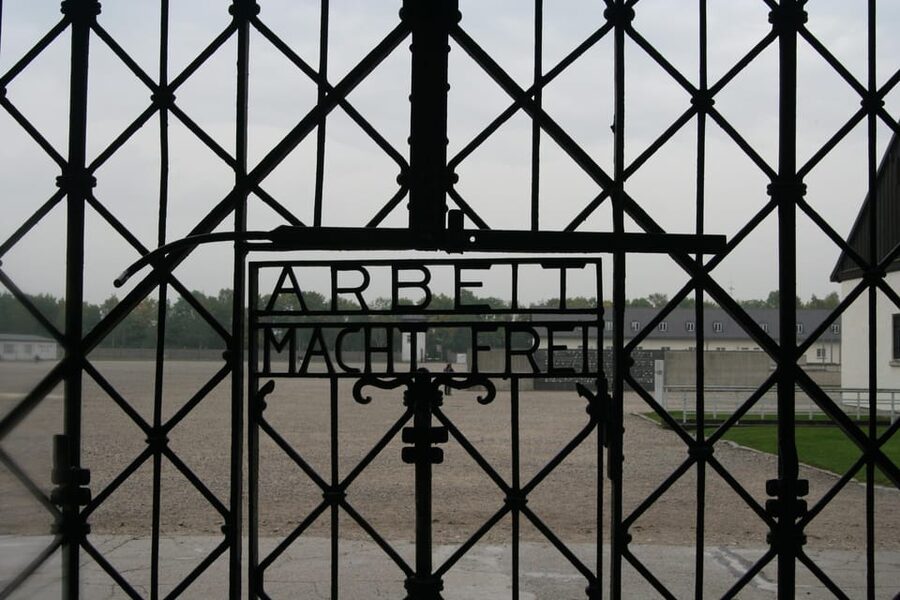
Dachau was the first concentration camp opened by the Nazi regime in Germany, beginning operations less than two months after Adolf Hitler came to power. It remained open for the full 12 years of Nazi rule, from 1933 until liberation in April 1945.
That timeline matters. Dachau was not a short-lived holding site. It became a model for the concentration camp system and a training center for SS personnel. It was also called a school of terror because the largest SS training facility in the Reich was located there.
By the time American forces arrived on April 29, 1945, about 206,000 people from 34 nationalities had been imprisoned at Dachau. More than 43,000 people had been murdered. Those figures are difficult to absorb as a list, which is why a guide can be useful. Good interpretation connects the numbers to the camp’s structure, rules, prisoner groups, and daily routine.
I find the historical framing especially valuable for first-time visitors. Dachau was not created in isolation from German society. Understanding the political and economic conditions of the 1930s helps you see how dictatorship, propaganda, persecution, and bureaucratic power developed into mass imprisonment and murder.
The site became an international memorial in 1965. A visit therefore covers two periods: the camp’s operation under Nazi rule and the later effort to preserve the place for remembrance. That second story matters too. The memorial is not only about what happened there. It is also about how societies choose to remember crimes and teach future generations.
Other memorial sites open to visitors:
- Berlin: Sachsenhausen Concentration Camp Tour in English
★ 5.0 · 5,711 reviews - Dachau Concentration Camp Memorial Site Tour from Munich by Train
★ 4.5 · 5,637 reviews - Berlin: Sachsenhausen Concentration Camp Memorial Tour
★ 4.7 · 3,716 reviews
Meeting in Munich and taking the train to Dachau
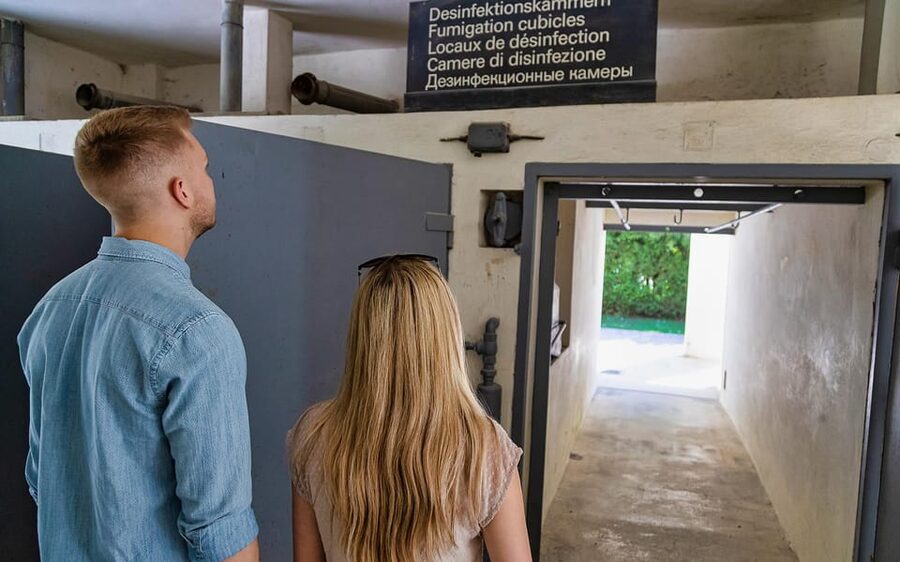
The tour begins in Munich, with pickup available from a centrally located hotel or another central meeting point. If you are staying outside the central area, confirm the meeting arrangement before booking, since the pickup promise applies to central hotels.
From Munich, you take a train for about 25 minutes. The guide provides the public transportation tickets, which removes one small but useful task from your morning. This is particularly helpful if you are unfamiliar with Munich’s ticket system or are traveling with family members who need extra assistance.
The journey is part of the practical value of a private tour. There is no need to search for the correct platform, work out the transfer, or wonder if you are heading toward the right bus stop. Mat was praised for helping with train tickets and even assisting with bags at the station, though you should not bring large luggage to the memorial itself.
After the train, an eight-minute bus ride takes you to the Dachau Concentration Camp Memorial Site. The transport is not glamorous, but it is direct and manageable. From pickup in Munich to the memorial takes no more than about 45 minutes, according to the stated schedule.
You should wear comfortable, appropriate footwear. The visit involves walking around a large historic site, and practical shoes will make the three-hour visit easier. Do not plan to carry a suitcase, large bag, selfie stick, drone, or recording equipment.
Entering a place built for control and fear
The guided visit lasts about three hours. That is a useful amount of time because Dachau is not a single building with one story. The memorial presents the camp’s development, the prisoner experience, the machinery of punishment, and the final liberation.
Your guide is expected to explain the camp at different points in its history rather than simply point out buildings. That approach can help you understand the difference between seeing a structure and grasping its purpose.
The first major question is why Dachau was created and how it became a model for later camps. The tour places the site within the broader political setting of the 1930s, showing how Nazi rule used fear, imprisonment, and organized persecution.
You will also hear about the camp’s role as an SS training center. This is one of Dachau’s most important and disturbing features. The camp was not only a place where prisoners suffered. It was also a place where members of the SS learned methods of control that could be used elsewhere.
The guide’s role is especially important here. Without context, a memorial can feel like a collection of stark buildings and empty spaces. With careful explanation, the layout becomes evidence of a planned system.
Daily life, punishment, and prisoner groups
The tour covers daily life for prisoners, including camp discipline and punishment. The subject is grim, but it is central to understanding how the camp operated. Dachau was designed to strip people of freedom, dignity, identity, and control over their own lives.
You will discuss the different groups imprisoned at Dachau and the reasons they were targeted. The camp held people from 34 nationalities, so the site’s history is international rather than limited to one country or one community.
Religion is also part of the visit. The tour includes the religious camp area and the experience of prisoners connected to faith communities. This adds an important layer to the story, since Nazi persecution affected people for different political, social, ethnic, and religious reasons.
Medical experimentation is covered as well. This is another section where a sensitive guide matters. You are not visiting an attraction built for entertainment, and the subject requires plain language rather than sensational detail. Mat was specifically praised for being respectful and easy to communicate with when answering difficult questions.
A private group gives you room to pause. If your group needs a moment of silence, has questions about a particular subject, or wants the guide to clarify a confusing point, the format is more flexible than a large shared tour.
A few more Germany trips worth comparing
- Berlin: Private Reichstag and Glass Dome Tour
★ 4.8 · 2,226 reviews - Berlin Private Complete History All Day Walking Tour
★ 5.0 · 474 reviews - Munich Private Tour with a Local – Highlights & Hidden Gems
★ 5.0 · 469 reviews - Private Walking Tour Berlin Third Reich Hitler and World War II
★ 5.0 · 360 reviews
Liberation and the memorial after 1945
The tour also reaches the camp’s liberation on April 29, 1945. By that point, tens of thousands had died, and many more had endured imprisonment, hunger, disease, forced labor, punishment, and fear.
The liberation story is not a simple ending. It marks the collapse of the camp system at Dachau, but it also raises questions about what happened to survivors, how the site was used after the war, and how remembrance developed.
Dachau became an international memorial in 1965. The tour includes its postwar use, giving you a fuller sense of how the location changed from a functioning concentration camp into a place of public memory.
I appreciate that the visit does not stop at liberation. A memorial site needs to explain both the crime and the act of remembering it. That makes the experience more useful for visitors who want to understand modern Germany’s approach to historical responsibility.
What makes the private format worth $273
The listed price is $273 per person. For a solo visitor, that is a significant cost compared with using public transport and walking through the memorial independently. If you are mainly looking for the cheapest way to reach Dachau, this tour will not be the budget choice.
The value comes from the personal service. You receive a licensed guide, hotel pickup when requested, and public transportation tickets. You also have a private group rather than sharing the visit with strangers.
That can matter a great deal at a site like Dachau. You are not simply paying for directions. You are paying for historical explanation, help with the transport, the ability to ask questions, and a guide who can adjust the pace for your group.
The strongest praise has gone to Mat, Markus, and the general quality of the guiding. Mat was described as patient with elderly parents and an aunt, while another visitor appreciated his excellent English and historical context. These details suggest that the tour works well for mixed-age adult groups, especially when some members may need a slower pace.
The price is easier to justify for a family or small private party than for one person. It also makes more sense if this is your main historical visit in Munich and you want to do it carefully. If you are comfortable navigating trains and buses, reading the memorial displays, and researching the background yourself, an independent visit may offer better value.
Timing, comfort, and emotional preparation
The total duration is five hours, including transportation from Munich and back. About three hours are spent at the memorial, leaving roughly 90 minutes for the outward and return journeys.
That half-day shape fits neatly into a Munich itinerary, but I would not schedule a demanding museum visit immediately afterward. Dachau is a serious place, and many people will want quiet time after leaving. The tour is not designed as a quick stop between lighter activities.
The experience is conducted in English with a live guide. It is wheelchair accessible, but practical conditions can still vary depending on the exact route and the needs of your group. If accessibility is important to you, discuss your requirements when arranging pickup and timing.
Children under 12 are not considered suitable. For older teenagers, the decision depends on maturity and family judgment. The subject includes murder, imprisonment, punishment, and medical experimentation. A calm conversation before the visit can help older children understand why you are going.
Site rules are strict and appropriate. Smoking, alcohol, drugs, intoxication, drones, selfie sticks, and video or audio recording are not allowed. These restrictions protect the memorial’s tone and prevent the visit from becoming casual or intrusive.
Who will get the most from this Dachau tour
I would recommend this tour to you if you want historical explanation rather than a self-guided visit. It is especially suited to adults, families with older teenagers, older relatives, and anyone who prefers a private setting for serious questions.
It is also a good fit if you are staying in central Munich and want help with public transportation. The guide meets you in the city, handles the included tickets, and accompanies you to and from the memorial.
You may prefer an independent visit if cost is your main concern or if you want to spend much longer reading every display at your own pace. The five-hour schedule is fixed enough to keep the day manageable, but it may feel short if you want extended quiet time at each section.
This is not a sightseeing excursion in the usual sense. You will not leave with cheerful photographs or a list of attractions checked off. You will leave with a clearer understanding of how Dachau functioned and why its memory still matters.
Practical advice before you go
Book this tour when you have enough energy for a serious morning or afternoon. Do not treat it as an easy add-on after a long day of sightseeing.
Wear suitable walking shoes and bring only what you need. Large bags are not allowed, and recording devices such as audio or video equipment are prohibited. Keep your phone use discreet and follow the memorial’s rules.
Ask questions. The private format is one of the main reasons to pay for this experience, and guides such as Mat have been praised for answering them patiently and clearly.
Give yourself room to respond to the visit in your own way. Some people want to discuss the history as they walk. Others need silence. A private group lets you handle the experience without the social pressure of a large tour.
Should you book this private Dachau tour?
Book it if you want a carefully explained visit, simple transport from central Munich, and the freedom to ask questions in a private group. The guide quality, especially the repeated praise for Mat’s patience, English, historical context, and care with older relatives, is the strongest reason to choose it.
Skip it if you only want the lowest-cost route to Dachau or prefer to explore entirely alone. At $273 per person, this is a premium experience, but the cost buys more than transportation. It buys time with a licensed guide at a place where context, restraint, and clear answers are genuinely important.
FAQ
How long does the tour last?
The full experience lasts five hours, including transportation from Munich to Dachau and back.
How long do you spend at the Dachau memorial?
The guided visit at the memorial site lasts approximately three hours.
How do you travel from Munich to Dachau?
The route includes a train ride of about 25 minutes and a bus or coach ride of about eight minutes in each direction.
Is hotel pickup available?
Pickup is available when requested from a centrally located hotel in Munich. You may also meet the guide at the memorial site or another central location.
Is transportation included?
Yes. Public transportation tickets are included in the tour price.
Is the tour suitable for children?
The experience is not suitable for children under 12. The subject includes Nazi persecution, murder, imprisonment, punishment, and medical experimentation.
Can you record the tour or bring a large bag?
No. Audio and video recording, drones, selfie sticks, and large bags are not allowed. Smoking, alcohol, drugs, and intoxication are also prohibited.
Just added around Germany
- Private Walking Tour in Berlin: Hitler’s Germany & WWII★ 5.0 · 7 reviews
- The History of Berlin: WWII PRIVATE Walking Tour With Locals★ 5.0 · 209 reviews
- Private Walking Tour Berlin 3 hours: Brandenburg, Historic Center★ 5.0 · 7 reviews
- Berlin: Private Bike Tour of the Berlin Wall and Third Reich★ 5.0 · 23 reviews
- Private Berlin WWII and Cold War History Tour with Local Expert Guide★ 5.0 · 28 reviews
- Berlin: Guided Private Bike Tour to Explore the Highlights★ 5.0 · 12 reviews
- Berlin Photography Masterclass – Private Photography Lesson★ 4.5 · 23 reviews
- Group Driving Tour 1 to 6 people. Berlin Shore Excursion incl pick-up at Port★ 5.0 · 8 reviews