
Reviewed · CONCENTRATION CAMP MEMORIAL VISITS
Sachsenhausen Concentration Camp Bus Tour in English from Berlin
History has a physical address. This Sachsenhausen bus tour takes you from central Berlin to a former concentration camp with a licensed guide trained by the memorial authority, giving you context before you arrive. I like the simple two-way coach transfer and the chance to learn from guides such as Hannah, Rebecca, Ariel, Maria, and Irish Paul. The main drawback is time: four hours is enough for the major sites, but not always enough to read the memorial’s many personal accounts.
This is a serious excursion, not a light sightseeing outing. You will walk across a large, exposed memorial site, hear about cruelty and death, and likely leave with plenty to think about. The group can reach 28 people, so the quality of your experience depends partly on how clearly your guide manages the pace.
In This Review
- Key points to know before booking
- Why Sachsenhausen belongs on a Berlin history itinerary
- Meeting at Friedrichstraße and riding to Oranienburg
- Walking through Tower A and the main camp
- Infirmary barracks, Z Block, and personal stories
- The Soviet special camp, 1945 to 1950
- The guides make or break the experience
- Is $68.77 a fair price?
- Who should book this Sachsenhausen excursion?
- Should you book it?
- FAQ
- Where does the Sachsenhausen bus tour begin?
- What time does the tour start?
- How long does the experience last?
- Is transportation included?
- Does the tour return to Berlin?
- Is admission to Sachsenhausen included?
- Is the tour offered in English?
- What is the maximum group size?
- Should I bring food and drinks?
- Is the tour suitable for people with limited mobility?
Key points to know before booking
- The tour begins at 10:00 am near Friedrichstraße station, with a required arrival 15 minutes early.
- The air-conditioned coach saves you the train connection to Oranienburg and returns you to central Berlin.
- Guides provide historical context before arrival, including what local people may have known about the camp system.
- You visit major areas of Sachsenhausen, including Tower A, the commandant’s house, infirmary barracks, and Z Block.
- The site covers both Nazi and Soviet use, including the postwar special camp that operated from 1945 to 1950.
- Bring water and a snack, since food and drinks are not included and the four-hour schedule has no stated meal stop.
Why Sachsenhausen belongs on a Berlin history itinerary
Berlin offers many museums about the Nazi period, but Sachsenhausen gives you a different kind of understanding. You are not only looking at documents behind glass. You are walking through the actual grounds of a camp built by the SS in 1936.
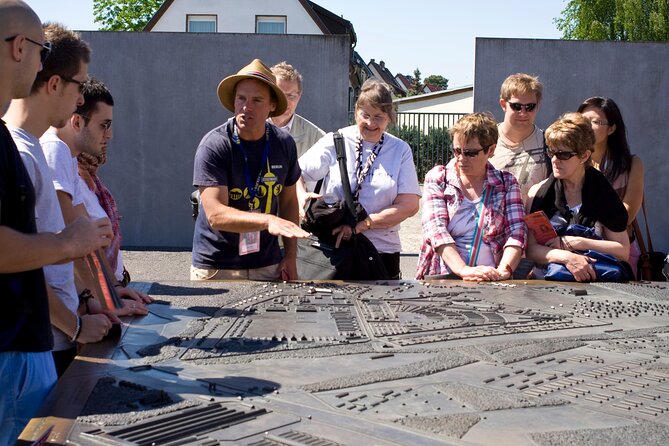
The site was designed as a model concentration camp by Heinrich Himmler. Its layout was intended to be orderly, modern, and easy to expand. That cold administrative design is part of what makes Sachsenhausen so disturbing. The camp was not an improvised prison hidden away from society. It was a planned system built for control, forced labor, punishment, and murder.
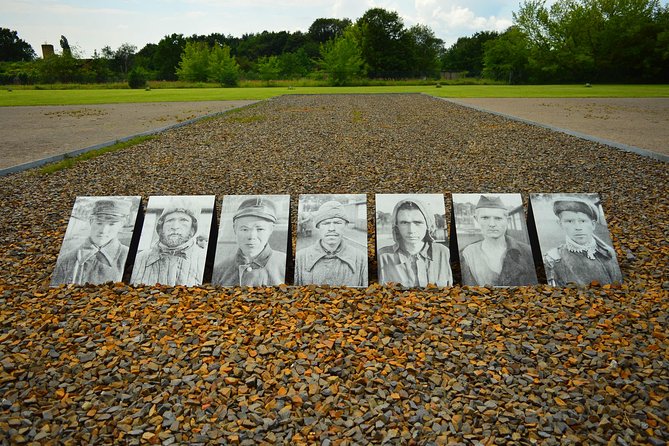
Around 35,000 people died at Sachsenhausen between 1936 and 1945. After the war, the Soviets reused the camp as a special camp from 1945 to 1950. Another 12,500 people died during that period. A guided visit helps you keep these two chapters separate, which matters because the site’s story did not end with the fall of Nazi Germany.
I would not describe this as easy sightseeing. The subject is painful, and some parts of the memorial are stark. Yet that is also the reason to go. You gain a clearer sense of how persecution operated, how prisoners were treated, and how ordinary places around Oranienburg fit into the wider system.
Other memorial sites open to visitors:
- Berlin: Sachsenhausen Concentration Camp Tour in English
★ 5.0 · 5,711 reviews - Berlin: Sachsenhausen Concentration Camp Memorial Tour
★ 4.7 · 3,716 reviews - Berlin: Sachsenhausen Concentration Camp Tour in English
★ 4.8 · 1,889 reviews
Meeting at Friedrichstraße and riding to Oranienburg
The meeting point is at Reichstagufer 17, near Friedrichstraße station. The tour starts at 10:00 am, and you should arrive by 9:45. Do not cut this close. One person missed the excursion after arriving late and having trouble locating the group, so give yourself time to identify the guide and coach.
The included coach transfer is one of the tour’s strongest practical features. You avoid arranging the trip to Oranienburg yourself, and the guide begins the history lesson on the way. That early explanation is useful because it gives you a framework before you enter the memorial.
The journey also helps connect the camp to the town around it. Your guide points out places where inmates worked in Oranienburg and explains what the local population may have known about the camp system. This makes the visit less isolated. You begin to see Sachsenhausen as part of a functioning community, not as a remote site disconnected from daily life.
The coach is air-conditioned, and the return trip ends back at the same central meeting point. Food and drinks are not included, so bring a small snack and something to drink. The transport makes this a tidy half-day plan, but you should still dress for outdoor conditions. One positive account described the visit in snow and cold, when the exposed grounds felt especially harsh.
Walking through Tower A and the main camp
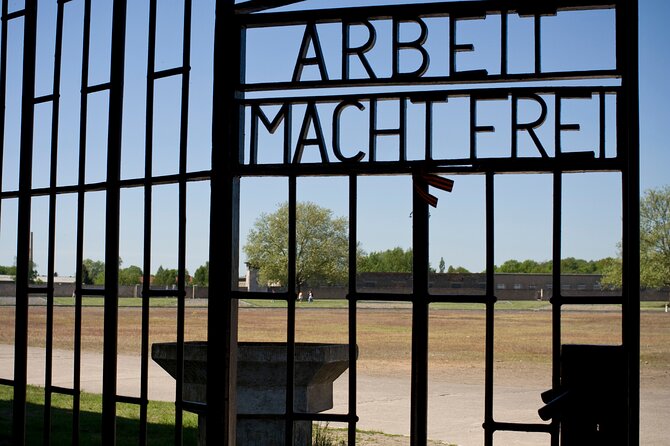
At Sachsenhausen, your guide leads you into the camp interior. One of the first major points is Tower A, the main entrance tower. The words ARBEIT MACHT FREI remain visible on the gate, a chilling example of how Nazi language disguised exploitation as work.
The entrance is not just a photo stop. Your guide explains how the gate, tower, and camp arrangement helped create a sense of total control. From here, you begin to understand the camp as both a prison and a machine built around forced labor.
You then see the commandant’s house. Its presence near the camp raises an uncomfortable question: how close were the people running the system to the suffering inside it? A guide can provide the context that a silent walk may not.
The site requires a moderate level of fitness. You will walk across a broad memorial area, and the ground and weather may make the pace harder at certain times of year. The tour is not recommended for people with limited mobility or walking impairments. If you tire easily, think carefully about whether a four-hour outdoor visit is right for you.
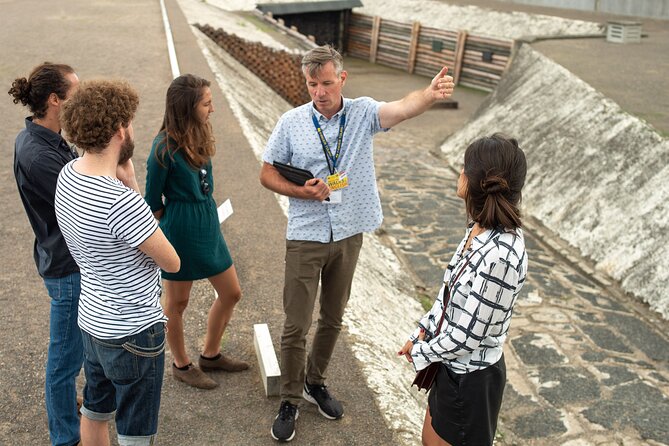
The group size can be as many as 28 people. That is not a private tour, but it is still manageable when the guide uses a clear meeting point and steady commentary. Most of the praise for this excursion centers on the guides’ ability to explain difficult material with care. Hannah, Rebecca, Ariel, Maria, Joseph, Jamie S., Campbell, Klaus, Georgia, Mikhal, Mikhail, and Irish Paul were all singled out for clear, respectful presentations in different groups.
Infirmary barracks, Z Block, and personal stories
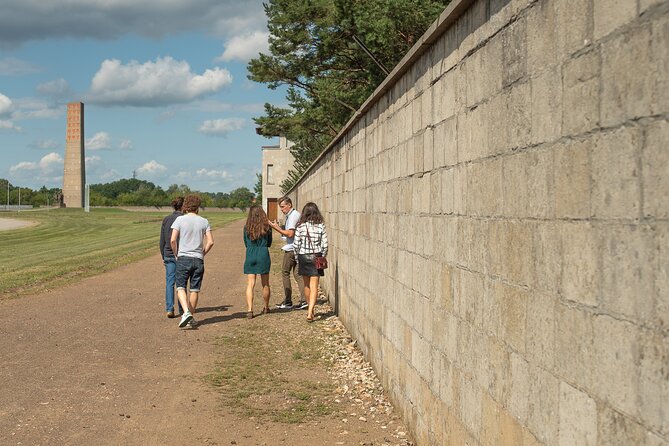
The infirmary barracks are among the most difficult areas on the visit. During the war, experimentation took place there. Your guide explains what happened and places it within the camp’s wider system of abuse.
Z Block is another important stop. It is associated with killing at Sachsenhausen, and many people find this part especially distressing. You should expect the visit to affect you differently from the person beside you. Some people feel numb during the walk and process the material later. Others find the emotional impact immediate.
The memorial includes individual accounts and information panels about prisoners. This is where the four-hour schedule can feel tight. A guide-led tour gives you a strong overview, but you may not have much time to stop and read every personal story in detail.
That trade-off is worth understanding before you book. If you want the site’s main structure, historical context, and key locations explained in a single morning, the guided format works well. If your priority is reading biographies and spending long periods with the museum displays, an independent visit may suit you better.
Several guides receive praise for answering questions and adding lesser-known details. Campbell was noted for pointing out unusual facts, while Ariel was praised for allowing time at the main areas and responding to questions. Those qualities matter here because a good explanation can help you notice details you might otherwise pass without understanding.
A few more Berlin trips worth comparing
- Berlin: Reichstag, Dome and Government District Guided Tour
★ 4.7 · 18,288 reviews - Berlin: 1-Hour City Tour by Boat with Guaranteed Seating
★ 4.3 · 16,993 reviews - Berlin: Boat Tour Along the River Spree
★ 4.4 · 11,252 reviews - Discover Berlin Half-Day Walking Tour
★ 5.0 · 9,624 reviews
The Soviet special camp, 1945 to 1950
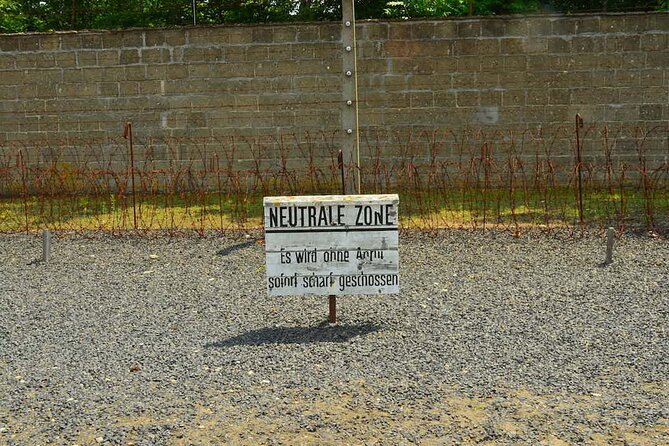
Sachsenhausen’s later history is easy to miss if you think only about the Nazi period. After World War II, the Soviets reused the site as a special camp. It operated from 1945 to 1950, and 12,500 people died there.
This part of the visit gives the camp a more complicated history. It does not erase the crimes committed by the Nazis, nor does it make the two systems identical. It shows how a place built for imprisonment continued to be used after 1945, under a different authority and for a different political purpose.
A guide helps you place this period in postwar Germany. Without that explanation, you might assume the memorial’s story ends when the original camp closed. The postwar section reminds you that liberation did not instantly bring justice, safety, or normal life to everyone held at the site.
For me, this is one of the best reasons to choose a guided tour rather than simply walking around alone. You receive the sequence of events in the right order, and the guide can explain why the same grounds carry several layers of memory.
The guides make or break the experience
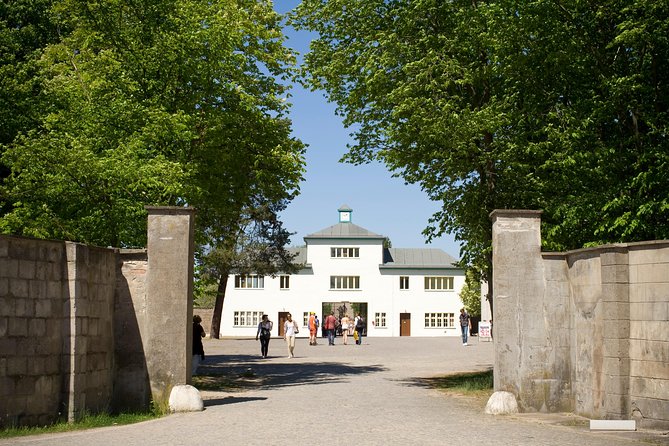
The operator uses licensed guides trained by the memorial authority. The strongest reports focus on three traits: command of the subject, a respectful tone, and good pacing.
Rebecca is praised for presenting difficult material with clarity and sensitivity, then walking through the coach on the return journey to offer Berlin food and sightseeing suggestions. Hannah helped one hesitant family member feel more prepared for the visit and also shared a personal family connection to Nazi Germany. Ariel was described as engaging, with a pace that worked even in cold weather.
Irish Paul is praised for handling a large group of 15 friends and relatives while keeping the visit educational and respectful. Maria is noted for giving a particularly detailed explanation of the camp and the events that led to it. Joseph brought social and cultural context about Berlin in the early twentieth century, while Mikhail was praised for teaching families carefully despite the emotional weight of the subject.
These personal touches can make a real difference, but guide style varies. One less positive experience felt rushed, with too much emphasis on the limited schedule. Another visitor wished for more time with the individual stories in the museum. I would treat those comments as a useful warning: this is a fixed four-hour group outing, not an unhurried private study visit.
Is $68.77 a fair price?
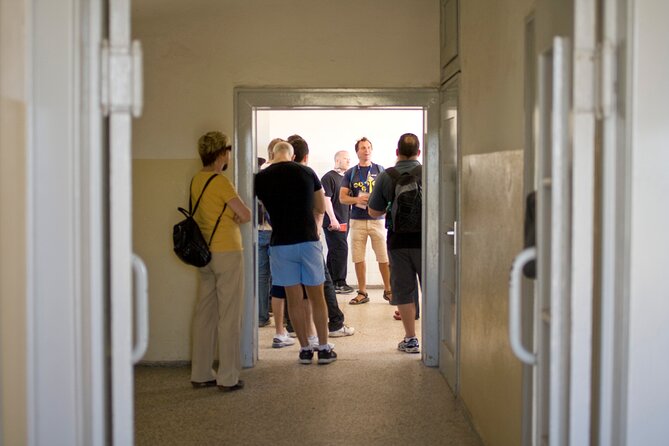
At the stated price of $68.77 per person, you are paying for more than admission. The cost includes the air-conditioned vehicle, driver, return transport from central Berlin, a licensed guide, entry to Sachsenhausen Memorial, and a €3 donation per person to the memorial.
That is solid value if you want convenience and structure. The coach removes the need to plan the trip to Oranienburg, and the guide starts teaching before you reach the site. You also avoid the uncertainty of arriving alone and trying to understand a large memorial without a clear route.
The value is weaker if you want maximum time inside the museum and displays. A self-guided visit may give you more control over the pace, although you would need to arrange your own transport and research the history in advance.
The reported rating is 4.9 from 1,962 reviews, with 99 percent recommending the experience. Those figures suggest strong overall satisfaction, especially with the guides and organization. Still, the lower ratings point to the same practical issue: the schedule can feel short for anyone who wants to read everything.
Who should book this Sachsenhausen excursion?
I would choose this tour if you have one morning available in Berlin and want a clear introduction to Sachsenhausen without handling the transport yourself. It suits first-time visitors to the memorial, families with older children who can manage the subject and walking, and anyone who values historical explanation over independent browsing.
It also works well if you want to ask questions. The guides are repeatedly praised for explaining the rise of Nazism, the camp’s operation, the wartime crimes, and the Soviet period. On the ride back, you can also ask for general Berlin suggestions.
You should think twice if you have limited mobility, dislike group schedules, or want to spend long periods reading personal testimonies. The memorial is emotionally heavy, and the four-hour format may leave you wishing for more time.
Book at least 24 hours ahead if your plans might change. Cancellations made at least 24 hours before the 10:00 am start receive a full refund. Later cancellations and changes are not accepted under the stated policy.
Should you book it?
Yes, if you want a well-organized, serious introduction to Sachsenhausen with transport from central Berlin and a guide who can explain the site with care. The strongest part is the human guidance: names such as Rebecca, Hannah, Ariel, Maria, and Irish Paul appear often because their clear and sensitive approach helps people face difficult material.
Just keep your expectations realistic. You will see the main parts of the memorial and gain a strong historical framework, but you may not have time to read every account or examine every display. Bring water, wear practical shoes, arrive 15 minutes early, and allow yourself quiet time afterward. This is a worthwhile trip for understanding Berlin’s past, but it is not a casual half-day diversion.
FAQ
Where does the Sachsenhausen bus tour begin?
It begins at Reichstagufer 17, 10117 Berlin, Germany, near Friedrichstraße station.
What time does the tour start?
The tour starts at 10:00 am. You should arrive at the meeting point 15 minutes before departure.
How long does the experience last?
The tour lasts approximately four hours, including the journey to and from Oranienburg.
Is transportation included?
Yes. An air-conditioned vehicle, driver, and return transport to central Berlin are included.
Does the tour return to Berlin?
Yes. The excursion ends back at the Friedrichstraße meeting point in central Berlin.
Is admission to Sachsenhausen included?
Yes. Entry to Sachsenhausen Memorial is included, along with a €3 donation per person to the memorial.
Is the tour offered in English?
Yes. This experience is offered in English and includes a licensed guide trained by the memorial authority.
What is the maximum group size?
The activity can have a maximum of 28 people.
Should I bring food and drinks?
Yes. Food and drinks are not included, so bring a snack and something to drink.
Is the tour suitable for people with limited mobility?
No. The tour requires a moderate level of physical fitness and is not recommended for people with limited mobility or walking impairments.
Just added around Berlin
- Private Walking Tour in Berlin: Hitler’s Germany & WWII★ 5.0 · 7 reviews
- The History of Berlin: WWII PRIVATE Walking Tour With Locals★ 5.0 · 209 reviews
- Private Berlin WWII and Cold War History Tour with Local Expert Guide★ 5.0 · 28 reviews
- Private Walking Tour Berlin 3 hours: Brandenburg, Historic Center★ 5.0 · 7 reviews
- Berlin: Private Bike Tour of the Berlin Wall and Third Reich★ 5.0 · 23 reviews
- Berlin Photography Masterclass – Private Photography Lesson★ 4.5 · 23 reviews
- Group Driving Tour 1 to 6 people. Berlin Shore Excursion incl pick-up at Port★ 5.0 · 8 reviews
- Berlin: Guided Private Bike Tour to Explore the Highlights★ 5.0 · 12 reviews