
Reviewed · CITY TOURS
Quedlinburg: Guided City Walk – Highlights tour (private)
Quedlinburg rewards slow looking. This private walk brings together 1,100 years of German history, from Henry I to the present, while leading you through medieval lanes, churches, market squares, and castle hill. I like the personal format and the chance to see both famous sights and small details without being tied to a large group. I also like that the walk ends near the collegiate church, where you can continue sightseeing on your own.
The main consideration is that this is a German-language tour, and the route includes cobblestones plus a steep climb toward castle hill. One guide received criticism for spending too long on minor details, so if you prefer a brisk walk with broad context, say so early. For most visitors, though, the private setup makes it easier to ask questions and adjust the pace.
In This Review
- Key points at a glance
- Why Quedlinburg works so well on foot
- The market square and Quedlinburg Town Hall
- St. Benedikti and the old town lanes
- Hölle, St. Blasii, and the half-timbered museum
- The climb to castle hill
- Castle Garden and St. Servatii
- What the private format is worth
- The guide makes or breaks the two hours
- Who should book this Quedlinburg walk?
- Practical ways to get more from the walk
- Should you book it?
- FAQ
- Where does the Quedlinburg city walk begin?
- Where does the tour finish?
- How long does the tour last?
- How many people can join the private group?
- What language is the tour conducted in?
- Is entry to St. Servatii Collegiate Church included?
- Is the route wheelchair accessible?
- Does the tour operate in bad weather?
- Are dogs allowed?
Key points at a glance
- A private walk for up to 12 people: The $141 group price can be very good value for families or friends traveling together.
- A full look at old Quedlinburg: The route covers the town hall, churches, medieval streets, the Schuhhof, and several historic districts.
- More than 2,000 half-timbered houses: You get a useful introduction to the town’s famous building tradition, not just a quick photo stop.
- Castle hill finishes the story: The walk ends by Klopstock House, the Lyonel Feininger Museum, the castle garden, and St. Servatii Collegiate Church.
- German-speaking local guidance: The tour suits German speakers who want history, architecture, and room for questions.
- Prepare for old-town footing: Cobblestones and a steep section up castle hill are part of the route, and the tour runs rain or shine.
Why Quedlinburg works so well on foot
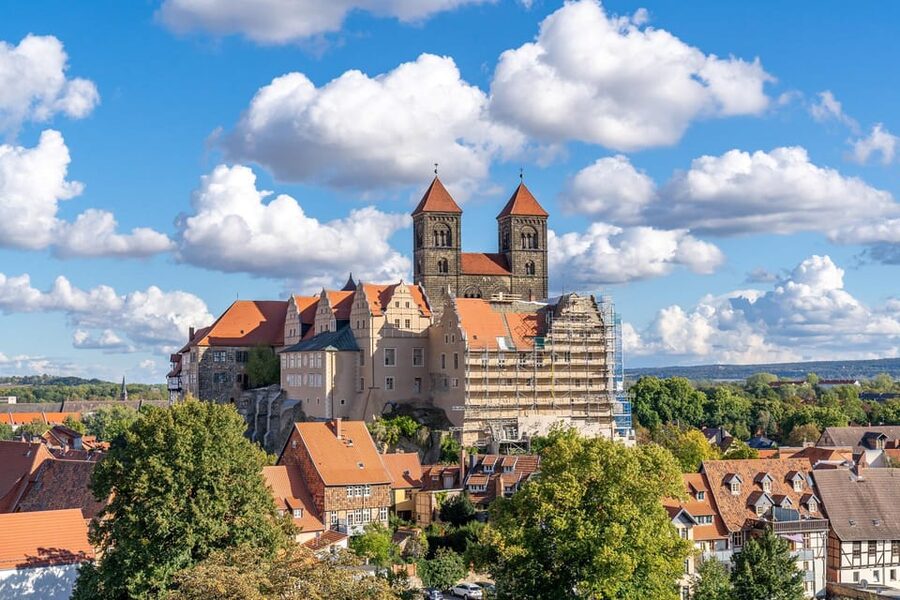
Quedlinburg is the sort of town best understood at walking speed. Its old center is not one grand monument surrounded by modern streets. It is a connected web of lanes, squares, churches, timber-framed houses, and slopes leading toward the castle.
That makes a guided walk useful. You can admire the façades on your own, but a guide helps explain why the town looks the way it does and how its story developed over roughly 1,100 years. The route links major sights with less obvious corners, giving you a better sense of the town as a whole.
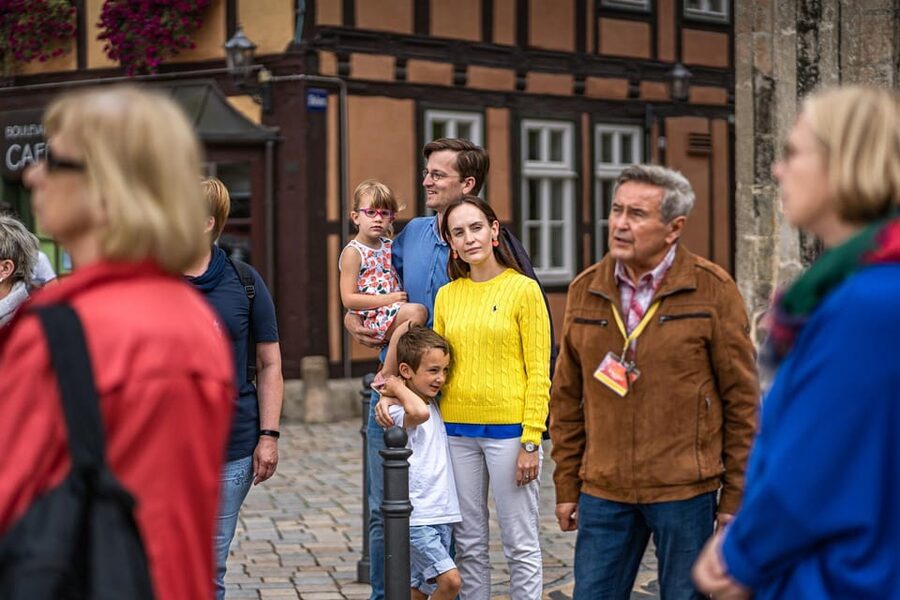
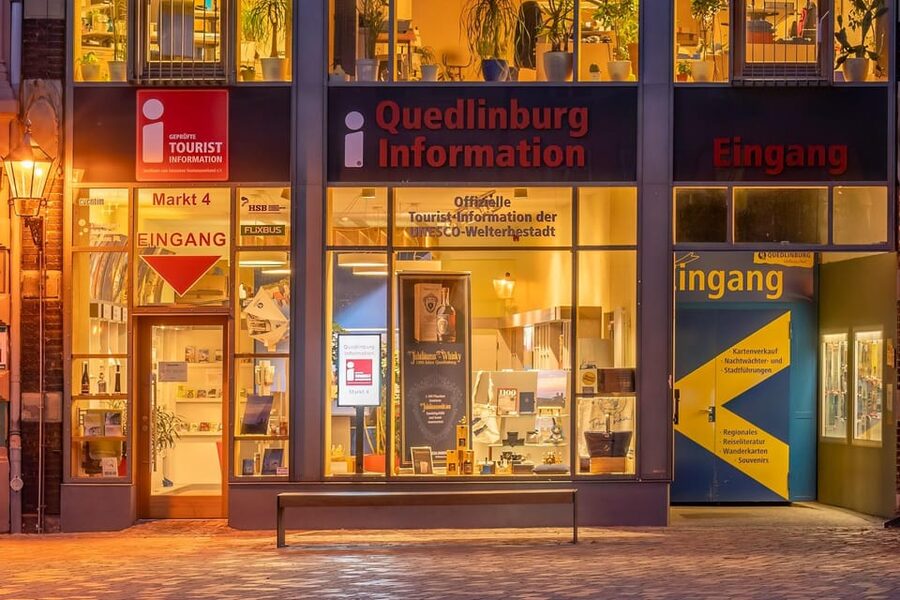
The walk begins at Quedlinburg-Information on the market square. Look for the tourist information center and a guide wearing a name tag on a usually yellow loop. You do not need to exchange your voucher. Simply show it or hand it to the guide.
The starting point is practical because the market square quickly puts you in the middle of the historic center. You are not spending the first part of the tour walking from a car park or transport stop. Instead, the town hall, church, and old lanes are close at hand.
More Walking Tours in Germany:
- Discover Berlin Half-Day Walking Tour
★ 5.0 · 9,624 reviews - Berlin: Third Reich and Cold War 2 Hour Walking Tour
★ 4.9 · 6,830 reviews - Munich: Third Reich & WWII Walking Tour
★ 4.6 · 6,181 reviews
The market square and Quedlinburg Town Hall
The town hall gives the opening section a clear focal point. Here, the guide can set out the town’s civic story and explain how Quedlinburg grew around trade, religious power, local government, and noble influence.
I like this kind of beginning because it gives you a map in your head before the route becomes more winding. The market square is also a good place to notice the contrast between public buildings and the narrow residential streets nearby.
Expect the guide to place the town within the period from Henry I to modern times. The tour also introduces important people connected with Quedlinburg, including Dorothea Erxleben, the first woman to receive a medical doctorate in Germany, poet Friedrich Gottlieb Klopstock, and educator Johann Christoph Friedrich GutsMuths.
The information can be especially useful if you know little about Quedlinburg before arriving. Rather than treating the town as a collection of pretty buildings, the guide connects architecture with people and events.
St. Benedikti and the old town lanes
From the market area, the route includes the Market Church of St. Benedikti. Churches are important markers in Quedlinburg, and this stop helps show how religious buildings shaped the town’s appearance and daily life.
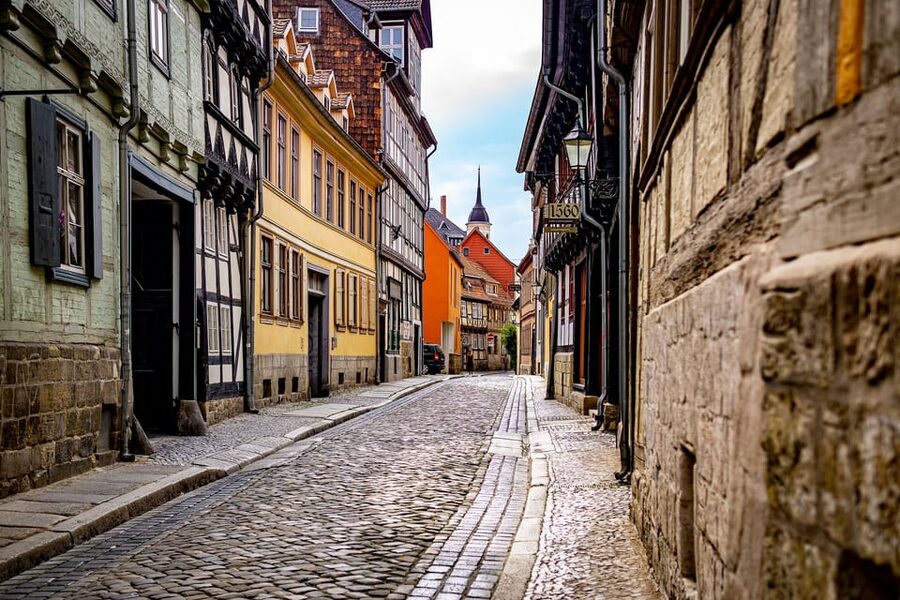
You will also pass through medieval streets and the Schuhhof. These tighter spaces are where the town’s character becomes easiest to appreciate. The route is not just a procession from one famous façade to another. It gives you time to see how buildings meet the street, how lanes change width, and how many different timber-framed designs appear within a fairly compact area.
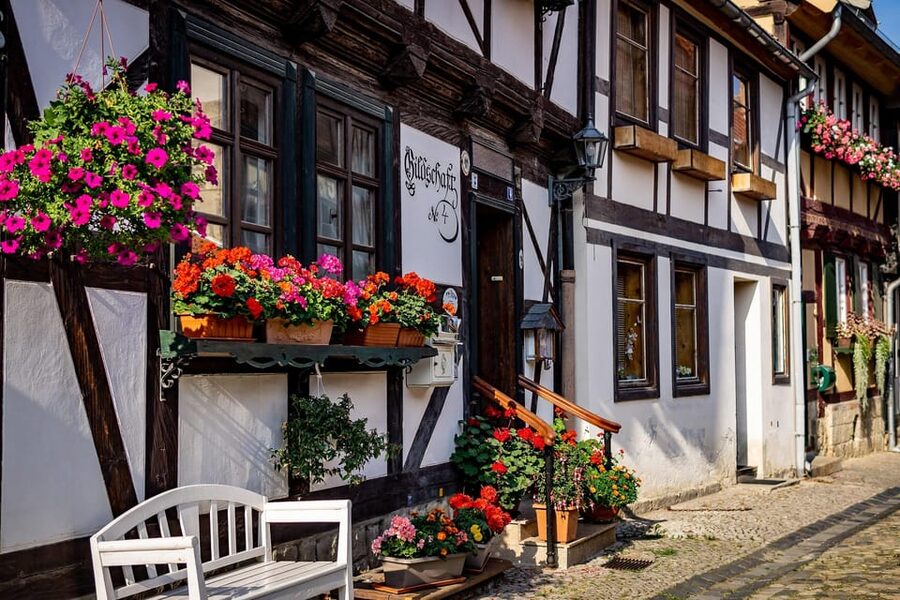
Quedlinburg is known for having more than 2,000 half-timbered houses. That number matters because the architecture is not a single postcard image repeated across town. You can look for variations in beams, façades, rooflines, age, and decoration as the walk continues.
The Schuhhof is a good place to focus on that variety. The name hints at an old craft connection, and the close setting makes it easier to compare the structures around you. This is also the section where a guide’s judgment matters. A good explanation helps you notice details you would otherwise pass without a second look.
One caution: the route runs across cobblestones. Wear shoes with steady soles, and expect an uneven surface rather than a smooth city pavement. The tour is listed as wheelchair accessible, but old streets and the later climb toward castle hill may still require careful planning.
Hölle, St. Blasii, and the half-timbered museum
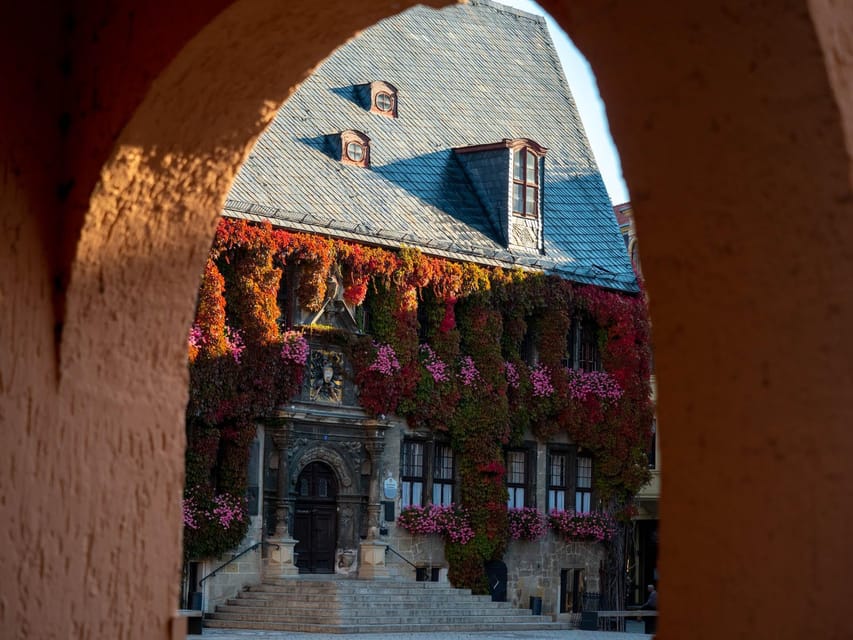
The route also includes Hölle and St. Blasii Church. Even the street names help make Quedlinburg feel like a place with layers rather than a museum set built for visitors.
This part of the walk is useful for seeing how the town’s religious and domestic buildings sit together. You are likely to move from a church setting into lanes lined with timber framing, then toward another historic point of interest. That variety keeps the two hours from becoming a single long architecture lecture.
The half-timbered museum adds another angle. Instead of only looking at houses from the outside, you get an introduction to the building tradition itself. For visitors who enjoy architecture, this can be one of the most useful inclusions because it gives the old façades a practical context.
Still, the amount of time spent at each stop can depend on the guide. One low-scoring assessment described too much attention to minor details and not enough movement or variety. If your group wants to keep seeing new places, you can politely ask for the short version of a technical explanation and request that the tour keep moving.
That is one benefit of booking a private group. You are not trying to influence the pace of a large crowd. A simple request should help the guide tailor the balance between history, architecture, and walking.
More City Tours in Germany:
- Berlin: 1-Hour City Tour by Boat with Guaranteed Seating
★ 4.3 · 16,993 reviews - Leipzig: City History Canal Sightseeing Tour on a Motorboat
★ 4.7 · 6,232 reviews - Cologne: Panoramic City Cruise
★ 4.3 · 5,698 reviews - Berlin: City Sightseeing Hop-On Hop-Off Bus Tour
★ 4.1 · 4,233 reviews
The climb to castle hill
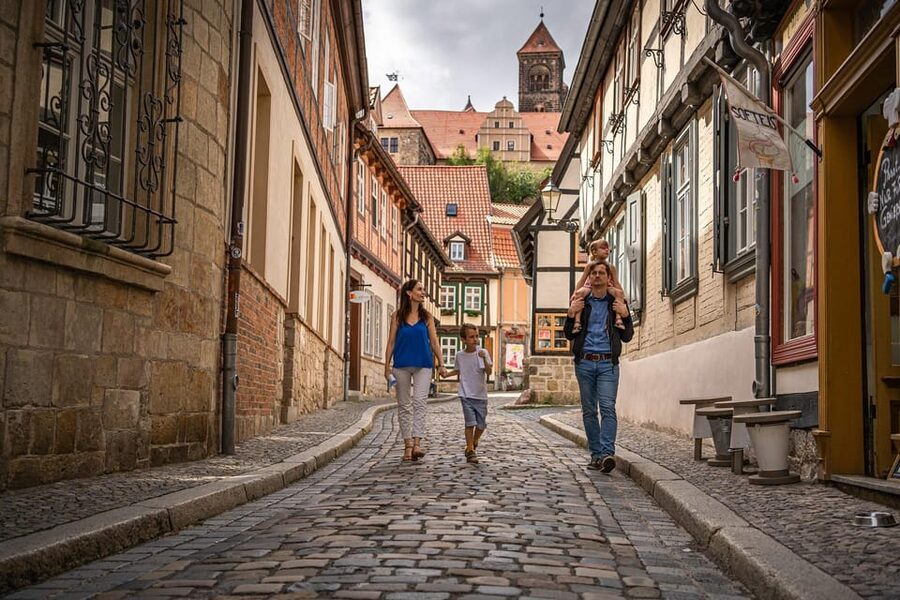
The tour gradually shifts from the old town to castle hill. This is the route’s strongest change of mood. The lower town shows Quedlinburg as a medieval urban center, while the hill brings in the religious and aristocratic power that shaped its wider story.
The path is rather steep in places. The climb is not a minor detail, especially in wet weather or if anyone in your group has limited mobility. Take your time, and treat this section as part of the experience rather than a race to the top.
The tour is offered rain or shine, so a weather check matters. An umbrella, rain jacket, and shoes that cope with wet cobblestones can make a real difference. Dogs are welcome, which is helpful for people traveling with a pet, though the steep route and crowded old-town footing still call for care.
Near castle hill, the walk includes Klopstock House. This connects the physical place with one of Quedlinburg’s best-known sons. The poet’s name is also part of the wider story of the town’s writers and scholars, giving the final section a stronger human focus.
You will also pass the Lyonel Feininger Museum. The museum is included as part of the route around castle hill, but the information provided does not indicate that museum admission is part of the tour. Think of this stop as an exterior or orientation point unless your guide tells you otherwise.
Castle Garden and St. Servatii
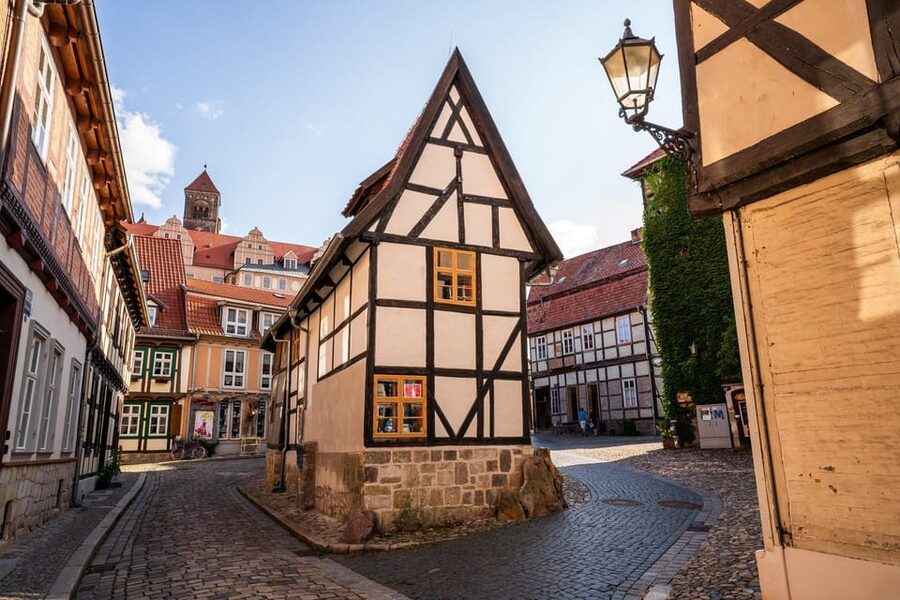
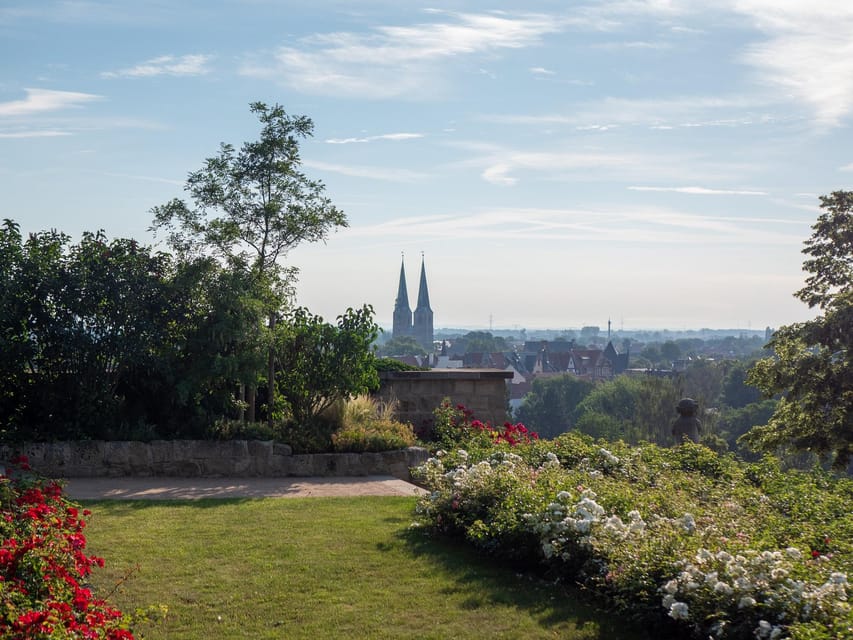
The walk finishes at Quedlinburg Castle Garden, next to the collegiate church of St. Servatii. Ending here makes practical sense. You finish at one of the town’s most important sights, with the option to continue independently rather than being returned to the market square.
The collegiate church is not included in the tour price. You will need to arrange and pay for entry separately if you want to visit inside. That separation is worth knowing before you book, since the church is likely to be a major reason many people want to reach castle hill.
The castle garden also gives you a natural pause after the climb. You can decide whether to visit St. Servatii, explore more of the hill, or make your way back into town. Because the guided portion ends here, you are not forced to rush through the church in order to keep up with the group.
For planning purposes, I would avoid scheduling an immediate train, meal, or timed admission after the tour. The walk itself lasts two hours, but the climb, questions, and independent visit afterward can easily make the castle hill section feel like the start of a second part of your day.
What the private format is worth
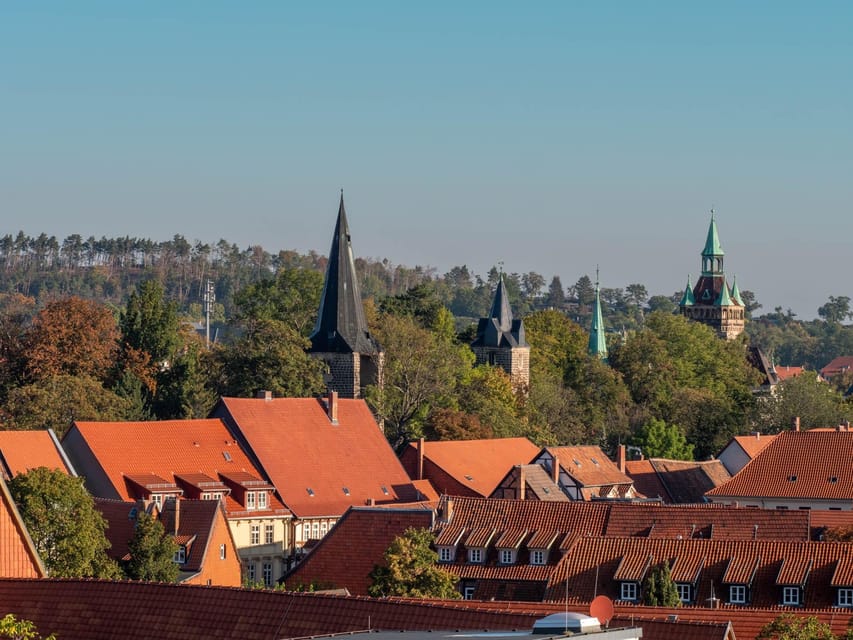
The price is $141 per group of up to 12 people. For one or two people, that is a noticeable cost for a two-hour walk. For a family or group of friends, the calculation changes quickly: four people pay about $35.25 each, while a full group of 12 pays about $11.75 each.
That makes the experience strongest as a shared booking. You receive a private guide rather than joining a standard public group, and the guide can respond to questions or adjust the pace. A small group of four received especially warm praise for having a guide who could respond to individual wishes and keep the walk informative and easy to follow.
The private format also helps if your group has mixed interests. One person may care about church history, another about half-timbered construction, and another about famous residents. You can ask the guide to spend more time on the subjects that matter most to your group.
The price does not include entry to St. Servatii Collegiate Church. That is not a major flaw, but you should add the church admission to your sightseeing budget if you plan to go inside.
The guide makes or breaks the two hours
The strongest pattern in the available feedback is clear: people value friendly, competent guides who explain Quedlinburg well and respond to questions. Several assessments describe the walk as informative, pleasant, and worth the money. One particularly positive experience praised the guide’s high level of subject knowledge and willingness to answer questions.
Another praised the guide as friendly and competent, with the group learning a great deal about Quedlinburg’s past. That is exactly what you want from a town walk. The best guide does not merely recite dates. The guide helps you understand why the market square, churches, timber framing, and castle hill belong in one connected story.
The weaker experience points to a possible problem with detail. A guide can know too much for the time available and become tangled in small points. If you prefer a clear overview, tell your guide at the beginning. You can ask for the main story first, with extra detail only when time allows.
The tour is conducted in German. That is a firm consideration. If you are comfortable following German spoken at a walking-tour pace, the experience should suit you well. If not, the history and architectural explanations may lose much of their value, even though the route itself remains attractive.
Who should book this Quedlinburg walk?
I would recommend it to German-speaking visitors who want a strong first orientation to Quedlinburg. It works particularly well for couples, families, and groups of friends who can share the $141 cost.
It also suits you if you enjoy buildings but want more than a photo walk. The route includes civic architecture, churches, half-timbered houses, a museum, a famous poet’s home, and the castle hill. That range gives you a useful introduction in two hours.
History-minded visitors will appreciate the references to Henry I, Erxleben, Klopstock, and GutsMuths. The tour does not focus only on one period, so you get a broad outline of Quedlinburg from its early medieval roots to the present.
I would be more cautious if you want a very fast-paced route or dislike uneven ground. The cobblestones and steep climb are real parts of the experience. I would also think twice if you need an English-language guide, since the stated tour language is German.
Practical ways to get more from the walk
Arrive at the market square with comfortable shoes and weather protection. Since the walk takes place in all weather, you should not treat a forecast of rain as a reason to arrive unprepared.
Keep the tour’s ending in mind when planning your day. You finish at Castle Garden, not back at the tourist information center. That is convenient if you want to visit St. Servatii next, but less convenient if you have left belongings or made plans near the market square.
Ask questions early. The guides are expected to respond to them, and the private format gives you a better chance of shaping the tour around your interests. If the group prefers major sights and broad context, say that plainly so the walk does not linger too long on minor details.
Allow time for St. Servatii after the guided portion if it interests you. Entry is not included, but the church is right at the end of the route, making it easy to add without crossing town again.
Should you book it?
Book this walk if you are traveling with a small group, speak German, and want a guided introduction to Quedlinburg’s old town and castle hill. The route covers a lot in two hours, and the private price becomes attractive once shared among four or more people.
Skip it if you need English commentary, want a flat route, or plan to see the collegiate church as part of the tour price. For the right group, though, this is a practical way to connect Quedlinburg’s streets, houses, churches, famous residents, and hilltop monuments before exploring the town on your own.
FAQ
Where does the Quedlinburg city walk begin?
It begins in front of Quedlinburg-Information, the tourist information center on the market square.
Where does the tour finish?
The guided walk finishes at Quedlinburg Castle Garden near the collegiate church.
How long does the tour last?
The tour lasts two hours.
How many people can join the private group?
The price covers a private group of up to 12 people.
What language is the tour conducted in?
The live tour guide speaks German.
Is entry to St. Servatii Collegiate Church included?
No. Entry to the collegiate church is not included in the tour price.
Is the route wheelchair accessible?
The tour is listed as wheelchair accessible, but you should note that it includes cobblestone paths and a rather steep route or steps up castle hill.
Does the tour operate in bad weather?
Yes. The tour takes place rain or shine.
Are dogs allowed?
Yes. Dogs are welcome on the tour.
Just added around Germany
- Private Walking Tour in Berlin: Hitler’s Germany & WWII★ 5.0 · 7 reviews
- The History of Berlin: WWII PRIVATE Walking Tour With Locals★ 5.0 · 209 reviews
- Private Berlin WWII and Cold War History Tour with Local Expert Guide★ 5.0 · 28 reviews
- Private Walking Tour Berlin 3 hours: Brandenburg, Historic Center★ 5.0 · 7 reviews
- Berlin: Private Bike Tour of the Berlin Wall and Third Reich★ 5.0 · 23 reviews
- Berlin Photography Masterclass – Private Photography Lesson★ 4.5 · 23 reviews
- Group Driving Tour 1 to 6 people. Berlin Shore Excursion incl pick-up at Port★ 5.0 · 8 reviews
- Berlin: Guided Private Bike Tour to Explore the Highlights★ 5.0 · 12 reviews
City Tours, compared.

1-Hour City Tour by Boat with Guaranteed Seating
Read our review →
City History Canal Sightseeing Tour on a Motorboat
Read our review →
Browse the lists this tour appears in