
Reviewed · WALKING TOURS
Queer Berlin Walking Tour
Berlin’s queer past is impossible to miss. This 3.5-hour walking tour links Schöneberg, Tiergarten, famous nightlife sites, and the people who pushed Berlin toward greater freedom. I like its clear historical focus and the way it connects grand political events with ordinary queer lives. I also like that the guides make room for questions, humor, and practical tips for a night out.
The main drawback is simple: you will walk for several hours, often outdoors, and public transport is not included if the meeting point or route requires it. Some former venues are now only marked by their location, so do not expect a tour of preserved interiors. Still, at about $23 per person, this is a strong value for anyone who wants more than Berlin’s usual war and Cold War story.
In This Review
- Key points about the Queer Berlin Walking Tour
- Why this queer history tour belongs in your Berlin plans
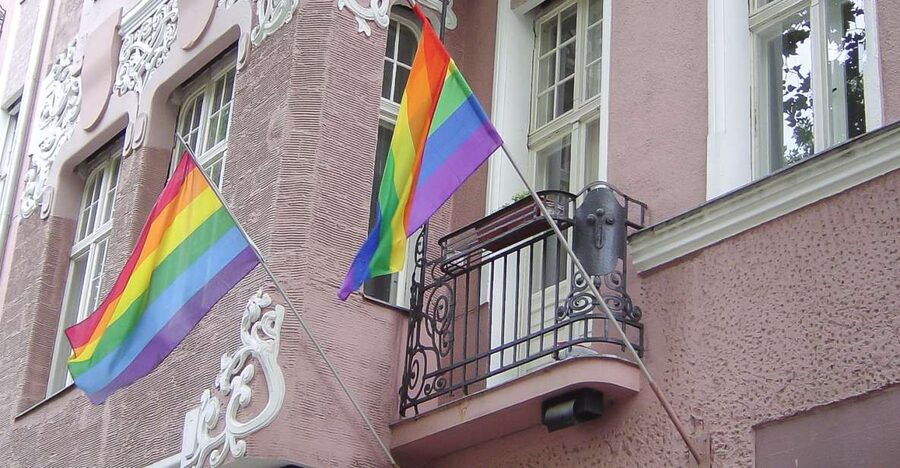
- Starting in Schöneberg, Berlin’s queer neighborhood
- The former Eldorado and Berlin’s nightlife
- Magnus Hirschfeld and the Institute for Sexual Science
- Section 175 and the cost of legal discrimination
- Tiergarten, meeting places, and the Berlin Wall
- From Frederick the Great to Klaus Wowereit
- A tour that includes lesbian and transgender history
- AIDS, memorials, and the memory of loss
- What the walking pace and practical details mean
- Is $23 a fair price?
- Who should book this tour?
- Should you book the Queer Berlin Walking Tour?
- FAQ
- How long is the Queer Berlin Walking Tour?
- How much does the tour cost?
- Which languages are available?
- What areas does the tour visit?
- Is public transport included?
- Can I cancel for a full refund?
Key points about the Queer Berlin Walking Tour
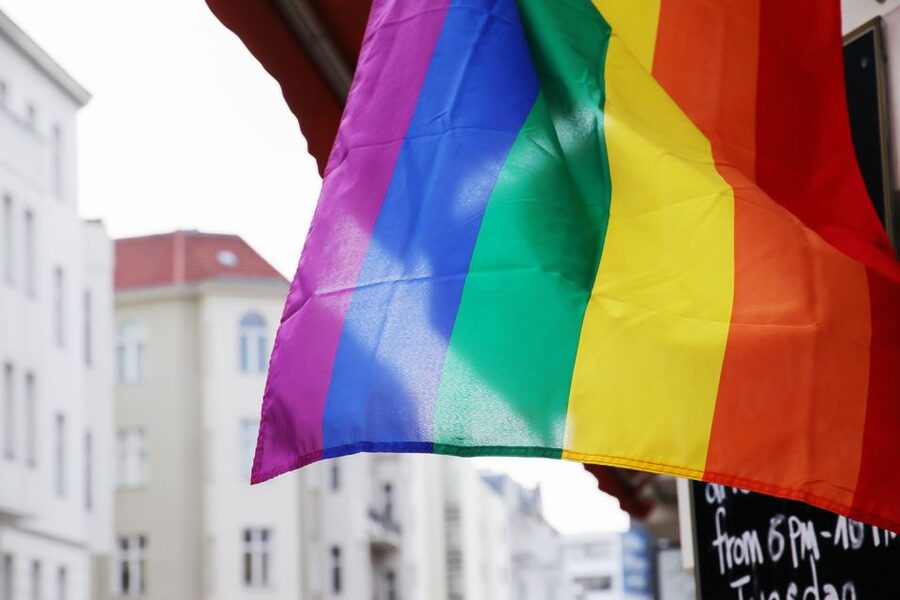
- Schöneberg supplies the nightlife story: Follow the streets tied to Marlene Dietrich, Christopher Isherwood, Otto Dix, cabaret, and queer clubs.
- The former Eldorado adds a vivid sense of place: Learn about one of Berlin’s oldest gay and trans bars, even though the original venue no longer operates as it once did.
- Magnus Hirschfeld anchors the political history: His Institute for Sexual Science offered support to queer and transgender people before the Nazis shut it down in 1933.
- Tiergarten brings the past into the present: Walk through Berlin’s best-known gay meeting area, near the former Berlin Wall.
- The story includes both progress and persecution: Section 175, Nazi imprisonment, AIDS memorials, lesbian bars, and modern queer politics all enter the discussion.
- The guides earn strong praise: Past guides have included Tobi, Tom, Finn, Jared, Beth, and Kyle, with particular praise for clear explanations, humor, patience, and personal touches.
Why this queer history tour belongs in your Berlin plans
Berlin is often presented through its Prussian monuments, Nazi memorials, and Cold War checkpoints. Those subjects matter, but they can leave out the people who built lives outside the social rules of their time. This tour gives you another way to read the city.
You will hear about queer Berlin from the era of Frederick the Great through the cabaret years, Nazi rule, the division of the city, and modern political life. The result is not a simple story of steady progress. Berlin offered unusual freedom in some periods, then imposed harsh punishment in others.
That tension makes the tour worthwhile. You learn how a city can be both a haven and a dangerous place, sometimes within the same lifetime. You also see how bars, meeting places, political groups, researchers, artists, and ordinary residents helped create a community.
The tour is conducted in English or German by a live guide. The strongest guide comments describe a warm, funny, patient style, with enough command of the subject to answer questions rather than simply recite dates. Guides have included Tobi, Tom, Finn, Jared, Beth, and Kyle over the years.
More Walking Tours in Berlin
- Discover Berlin Half-Day Walking Tour
★ 5.0 · 9,624 reviews - Berlin: Third Reich and Cold War 2 Hour Walking Tour
★ 4.9 · 6,830 reviews - Berlin: Discover Berlin Walking Tour
★ 4.9 · 5,998 reviews
Starting in Schöneberg, Berlin’s queer neighborhood
Schöneberg is the natural starting point because it has long been tied to Berlin’s gay and lesbian life. The streets here help explain why Berlin gained its reputation for sexual freedom and nightlife, especially during the late 19th and early 20th centuries.
You will hear about the cabaret world documented by Christopher Isherwood and Otto Dix. Their work captured a Berlin of performers, artists, outsiders, and night owls. Marlene Dietrich also belongs to this part of the story, and the tour points out places connected with where she lived and worked.
This is not just a celebrity walk. The famous names help you understand the wider culture around them. Cabaret was entertainment, but it also gave people room to question gender roles and social conventions. A performer, writer, or club regular could sometimes live more openly in Berlin than elsewhere.
I appreciate that the tour does not treat Schöneberg as a frozen museum of the 1920s. You will also hear about current queer culture and the changes brought by gentrification. That gives the neighborhood a more honest shape. The streets are not simply relics of an old nightlife era, and the people who use them today are not just background to a historical story.
The former Eldorado and Berlin’s nightlife
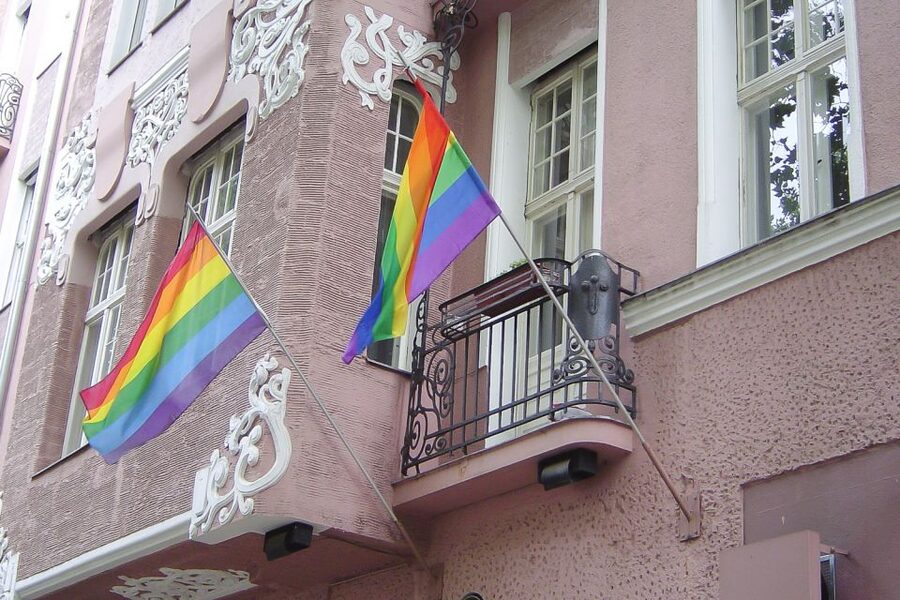
One of the most memorable stops is the site of the former Eldorado, among Berlin’s oldest gay and trans bars. The name opens a window onto a nightlife world that was daring, social, and often precarious.
You should set your expectations correctly. This is a historical location, not necessarily an active museum or preserved bar interior. The value comes from standing at the place and hearing what it meant, who gathered there, and how queer and transgender people found community in a city that could be both permissive and punitive.
A good guide can make an ordinary street corner feel surprisingly charged. You begin to notice that queer history is often attached to spaces that have changed owners, uses, or appearances. The building may look unremarkable, but the story connected to it is not.
The nightlife section also helps explain why writers and artists were drawn to Berlin. Cabaret and clubs provided work, friendship, flirtation, performance, and a degree of anonymity. They were not safe for everyone, all the time, but they offered possibilities that were hard to find elsewhere.
Magnus Hirschfeld and the Institute for Sexual Science
Magnus Hirschfeld is one of the central figures on the walk, and rightly so. He was a doctor and sexologist who created the Institute for Sexual Science, a pioneering center that offered advice and support to gay, lesbian, and transgender people.
For you, this stop adds more than a biography. It shows that queer people in Berlin were not waiting passively for society to change. They were building institutions, gathering evidence, offering medical help, and arguing for legal reform.
The institute was shut down by the Nazis in 1933. Its library was destroyed during the notorious Nazi book burnings, an act that symbolized the attempt to erase both research and the people represented by it.
The guide’s job here is especially important. Hirschfeld’s work can sound abstract if reduced to a list of achievements. On the street, connected to the political climate that destroyed the institute, the story becomes more personal. You see how advanced some of his ideas were, and how quickly an organized campaign of hatred could dismantle that progress.
This part may be especially valuable if you know Berlin mainly through the Holocaust and World War II. It adds a specific queer perspective without separating queer persecution from the wider Nazi system.
Still Berlin, at a slower pace:
- Berlin: Reichstag, Dome and Government District Guided Tour
★ 4.7 · 18,288 reviews - Berlin: 1-Hour City Tour by Boat with Guaranteed Seating
★ 4.3 · 16,993 reviews - Berlin: Boat Tour Along the River Spree
★ 4.4 · 11,252 reviews - Berlin: Hop-on Hop-off Bus Tour with Live Commentary
★ 4.3 · 8,579 reviews
Section 175 and the cost of legal discrimination
The tour explains Section 175, the German penal code provision that criminalized sex between men. The law existed for decades and continued to affect gay men after World War II.
That detail matters because the end of Nazi rule did not mean an immediate end to persecution. A legal system can carry old prejudice forward, even after a dictatorship has fallen. The tour makes that continuity easier to understand.
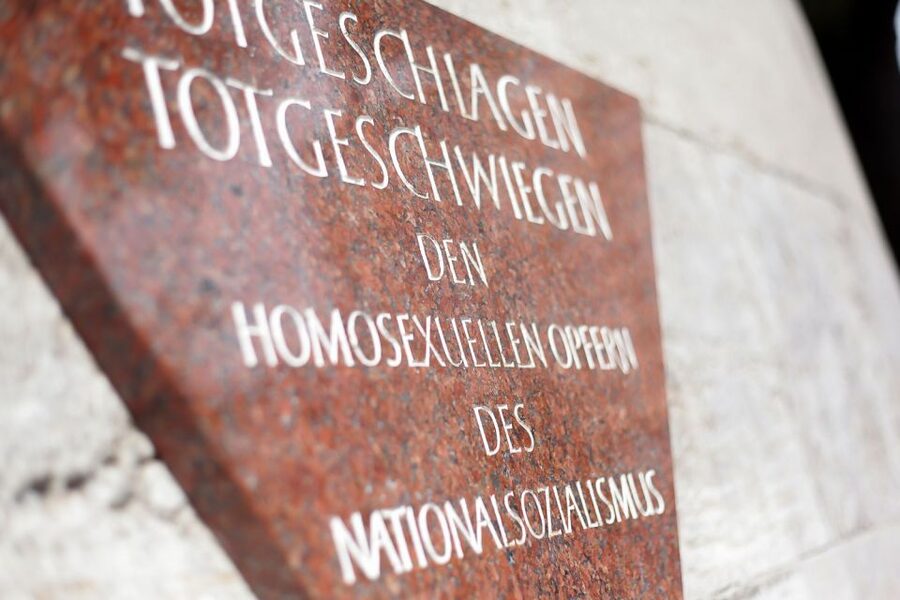
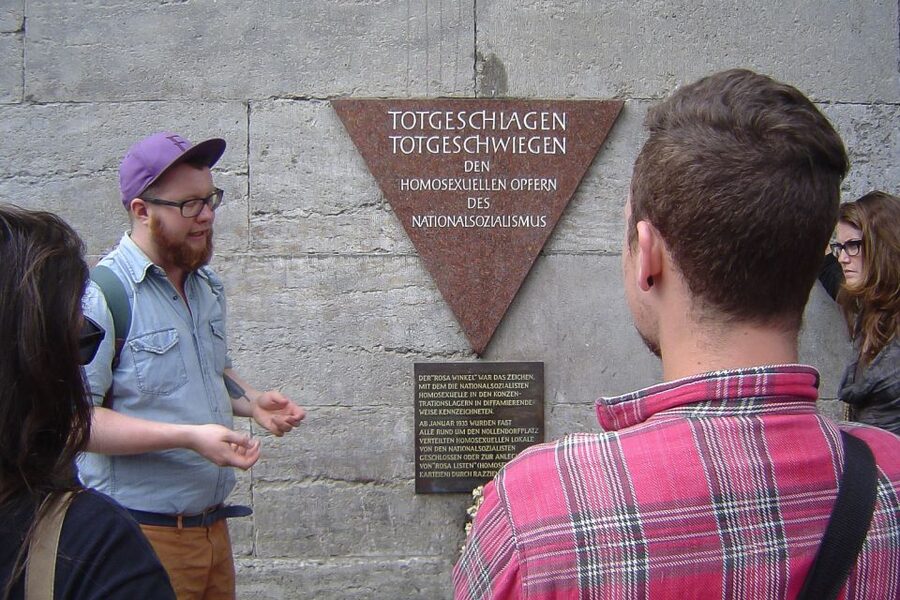
You will also stop at the memorial to homosexual men persecuted by the Nazis and sent to concentration camps. It is a quiet, painful counterpoint to the brighter stories of clubs, artists, and political progress.
The tour’s balance is one of its best features. It does not turn Berlin into a simple success story, nor does it focus only on tragedy. You hear about bravery, support networks, and political gains, but also about imprisonment, exclusion, and the damage done when institutions are destroyed.
This is where the tour becomes useful for understanding present-day rights. Legal protection is not ancient or automatic. The history you hear shows how recently basic freedoms could be denied, and how hard people worked to secure them.
Tiergarten, meeting places, and the Berlin Wall
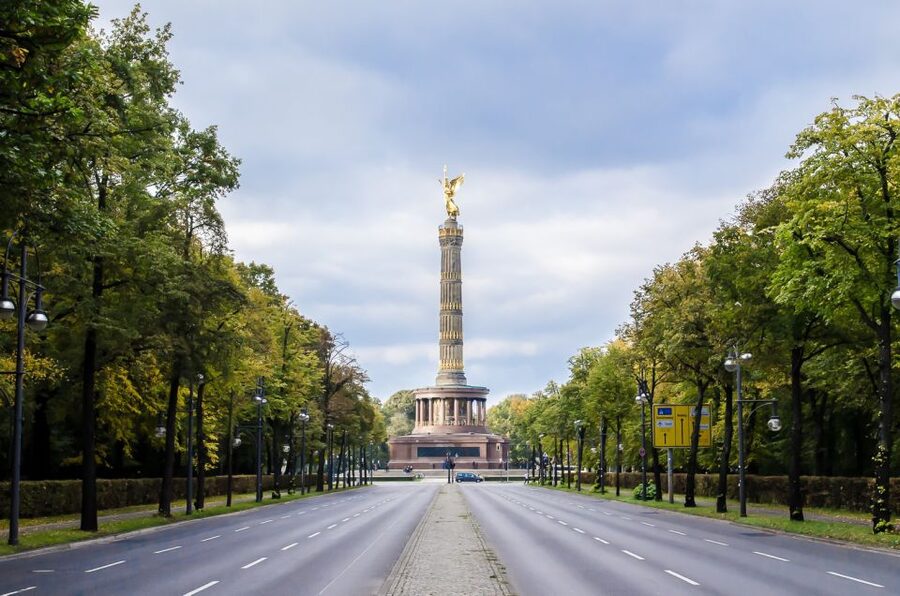
The route continues through the Tiergarten, widely known as Berlin’s best-known gay meeting spot. Its location in the shadow of the Berlin Wall adds another layer to the story.
Here, queer life is connected to the physical division of Berlin. The Wall did not erase the need for meeting places, friendships, and private communities. Instead, the changing political geography affected how people moved, gathered, and lived.
A walk through the Tiergarten also changes the pace of the tour. After the dense streets and nightlife stories of Schöneberg, you have open space and a setting tied to more private forms of social life. The guide can show how a public park became part of queer Berlin’s social map.
Do not expect every stop to look dramatic. Some important sites are simply locations with a story attached. That is normal for an urban history walk, but it means you should listen closely and use your imagination. The tour works best when you are willing to picture the people who used these places, rather than waiting for a grand building at every stop.
From Frederick the Great to Klaus Wowereit
The tour reaches well beyond the familiar cabaret years. You will hear about figures ranging from the Prussian King Friedrich the Great to Klaus Wowereit, Berlin’s openly gay former mayor.
These examples show how queer history is not limited to one social class or one political period. Royal courts, artists, scientists, club communities, activists, and elected officials all appear in the larger story.
The point is not to label every historical figure with modern terms. It is to ask how people expressed themselves, formed relationships, managed public reputation, and dealt with the laws of their time. That approach gives the past more care and avoids forcing today’s categories onto every earlier life.
The discussion of Wowereit brings the story into recent Berlin politics. It also helps you see how much public attitudes have changed, while remembering that acceptance is uneven and never guaranteed.
A tour that includes lesbian and transgender history
Some queer history walks lean heavily toward gay men, especially when they focus on Section 175 and the Nazi pink triangle. This tour makes a real effort to include lesbian history and transgender lives.
That matters because women’s stories have often been pushed to the edges of public history. The route includes locations connected to former lesbian bars, and the discussion of Hirschfeld’s work covers support for transgender people as well as gay and lesbian communities.
The treatment is not limited to nightlife. You will hear about resistance, inclusion, political organizing, and the ways people found help when official institutions offered little protection. A past guide was specifically praised for keeping women’s history and the politics of inclusion in view.
You should still remember that a 3.5-hour walk cannot cover every group or era in equal detail. Berlin’s queer past is too large for that. But the tour makes a worthwhile effort to avoid presenting one narrow version of queer life.
AIDS, memorials, and the memory of loss
The tour also includes a cemetery with graves of notable people who died from HIV and AIDS. This stop broadens the timeline again, moving from early queer organizing and Nazi persecution to a crisis that shaped late 20th-century communities.
A cemetery stop can feel different from the nightlife locations. It is less about spectacle and more about remembrance. You may find the contrast useful: queer Berlin is not only about parties and liberation, but also about illness, grief, activism, and the people whose lives were cut short.
The inclusion of this site is one of the tour’s less expected features. If you arrive expecting only cabaret and club history, it gives the walk more emotional range. If you prefer a light sightseeing outing, the subject matter may feel heavy at times.
That balance is worth knowing before you book. The guide uses entertaining anecdotes, but the tour does not avoid painful material. You will get humor and human stories alongside the harder facts.
What the walking pace and practical details mean
The tour lasts 3.5 hours, so comfortable shoes are sensible. One past participant advised packing light, bringing a snack, and carrying a cool drink. That is practical advice for any long city walk, especially since the tour runs in all weather.
The meeting point can vary depending on the option you choose. Check the exact details before setting out, and look for the guide wearing a blue Original Berlin Walks name badge.
Public transport is not included if it is needed. Entrance fees are also not included, although the experience is primarily an outdoor walking tour. You should budget for your own transport and food if you want a break during or after the walk.
A past group stopped for lunch at an important location, but you should not assume that food is included or that every departure follows the same break pattern. Carrying a small snack is the safer plan.
The walking format has a clear advantage: you see how the sites fit into the city rather than viewing them as isolated points on a map. The tradeoff is that weather and tired feet can affect your enjoyment. The tour runs in rain or shine, so dress for the forecast and keep a light rain layer handy.
Is $23 a fair price?
At $23 per person, this is good value for a 3.5-hour guided walk. You are paying for a focused subject, an English or German-speaking guide, and a route that combines several neighborhoods and periods of history.
The value is strongest if you would otherwise miss these stories. Berlin’s main sights rarely explain the former Eldorado, Hirschfeld’s institute, lesbian bars, queer meeting places in the Tiergarten, or the continuing impact of Section 175.
The price does not cover public transport or entrance fees, but the tour does not appear to depend on a costly attraction ticket. Its main resource is the guide’s research and storytelling. That makes the individual guide important.
The consistently high rating of 4.7 from 64 reviews supports the idea that the experience delivers what it promises. Past guides such as Tom and Tobi received praise for their clear explanations, humor, patience, and ability to handle logistical surprises. Jared was praised for covering both older history and East Berlin’s changing gay neighborhood, while Beth was remembered for combining facts with warmth.
No guide can guarantee the same personality or exact stories on every departure. Still, the range of positive comments points to a well-established experience rather than a thin add-on to a standard Berlin walk.
Who should book this tour?
I would recommend it most strongly if you want to understand Berlin through social history, not just famous buildings. It suits LGBTQIA+ visitors, allies, students of history, and anyone curious about how law, nightlife, art, and political power shape a city.
It is also a good choice early in your stay if you want practical ideas for queer nightlife. The guide can offer tips for a night out, and the social atmosphere may help you meet people with similar interests.
You may want to skip it if you dislike long walks, outdoor tours in uncertain weather, or serious historical subjects. It is not a museum tour, and several locations are former sites rather than preserved interiors.
Should you book the Queer Berlin Walking Tour?
Book it if you want a focused, human account of Berlin’s queer past and present. The mix of Schöneberg nightlife, the former Eldorado, Hirschfeld’s groundbreaking work, Nazi persecution, Tiergarten meeting places, AIDS memorials, and modern politics gives you far more than a list of old bars.
I especially like the effort to include lesbian and transgender lives alongside the better-known gay male history. At $23, the tour offers solid value, provided you are ready to walk for 3.5 hours and bring your own transport money, water, and snack.
FAQ
How long is the Queer Berlin Walking Tour?
The tour lasts 3.5 hours.
How much does the tour cost?
The listed price is $23 per person.
Which languages are available?
The tour is offered in English and German.
What areas does the tour visit?
The tour explores Schöneberg and continues through the Tiergarten, including sites connected to queer nightlife, history, and meeting places.
Is public transport included?
No. Public transport is not included if it is needed during the experience.
Can I cancel for a full refund?
Yes. You can cancel up to 24 hours in advance for a full refund. You can also reserve now and pay later.
Just added around Berlin
- Private Walking Tour in Berlin: Hitler’s Germany & WWII★ 5.0 · 7 reviews
- The History of Berlin: WWII PRIVATE Walking Tour With Locals★ 5.0 · 209 reviews
- Private Berlin WWII and Cold War History Tour with Local Expert Guide★ 5.0 · 28 reviews
- Private Walking Tour Berlin 3 hours: Brandenburg, Historic Center★ 5.0 · 7 reviews
- Berlin: Private Bike Tour of the Berlin Wall and Third Reich★ 5.0 · 23 reviews
- Berlin: Guided Private Bike Tour to Explore the Highlights★ 5.0 · 12 reviews
- Berlin Photography Masterclass – Private Photography Lesson★ 4.5 · 23 reviews
- Group Driving Tour 1 to 6 people. Berlin Shore Excursion incl pick-up at Port★ 5.0 · 8 reviews
Walking Tours, compared.
Old Town & Viktualienmarkt City Walk in German
Read our review →Browse the lists this tour appears in