
Reviewed · CITY TOURS
Trier: City Walking Tour
Trier begins with a giant Roman gate. I like the way this 1.5-hour city walk links Roman, medieval, and Baroque Trier in one compact route, and I like that official Trier Guides lead it in either German or English. The main consideration is pace: four UNESCO monuments and several historic streets leave little time for long stops or interior visits.
You meet at the Tourist Information office beside the Porta Nigra, which makes the tour easy to find and gives you a useful starting point in the old center. At $17 per person, the tour is especially good value if you want a clear introduction before exploring Trier on your own.
In This Review
- Key points to know before you book
- Why this Trier walk works well for a first visit
- Starting at the Porta Nigra
- Medieval stories around Dreikönigenhaus and Judengasse
- Hauptmarkt, where Trier’s center turns public
- Trier Cathedral and the Church of Our Lady
- The Aula Palatina and Trier’s Baroque finish
- What the $17 price really gets you
- Guide quality and language options
- Timing, cancellation, and who should book
- Should you book the Trier City Walking Tour?
- FAQ
- Where does the Trier City Walking Tour meet?
- How long does the tour last?
- What languages are available?
- Which UNESCO monuments are included?
- Is the tour wheelchair accessible?
- Can I cancel the booking for a refund?
Key points to know before you book
- Four UNESCO monuments appear on one short walk: Porta Nigra, Trier Cathedral, the Church of Our Lady, and the Aula Palatina, also called the basilica.
- The route covers three major eras: Roman Trier, medieval Trier, and the Baroque world of the Electoral Palace.
- The meeting point is simple: Look for the Tourist Information office directly in front of the Porta Nigra.
- The guide brings local context: Stories include medieval power struggles, fortified houses, St. Peter, knights, monkeys, and church towers.
- The tour costs $17: That is a sensible price for a guided overview of Trier’s central monuments.
- English and German tours are available: The walk is also listed as wheelchair accessible.
Why this Trier walk works well for a first visit
Trier can feel like several cities placed side by side. One minute you are facing a Roman gate built from dark stone. A few streets later, you are looking at a medieval market square, a cathedral with centuries of additions, or a palace garden shaped by Baroque taste.
I like this tour because it gives those changes a sensible order. The walk begins at Trier’s most famous Roman monument, moves through the medieval center, then finishes near the Electoral Palace and its garden. You are not simply ticking off buildings. You are seeing how the city changed hands, tastes, and political roles over time.
The route also gives you four UNESCO-listed buildings in one outing. That matters if you have only a short stay in Trier or are visiting as part of a larger trip through Rhineland-Palatinate. You get the essential orientation without giving up a full day.
The tradeoff is that this is a survey, not an in-depth architectural visit. The tour lasts only 90 minutes. You should expect a steady walk and focused explanations rather than long periods inside each monument.
More Walking Tours in Germany:
- Discover Berlin Half-Day Walking Tour
★ 5.0 · 9,624 reviews - Berlin: Third Reich and Cold War 2 Hour Walking Tour
★ 4.9 · 6,830 reviews - Munich: Third Reich & WWII Walking Tour
★ 4.6 · 6,181 reviews
Starting at the Porta Nigra
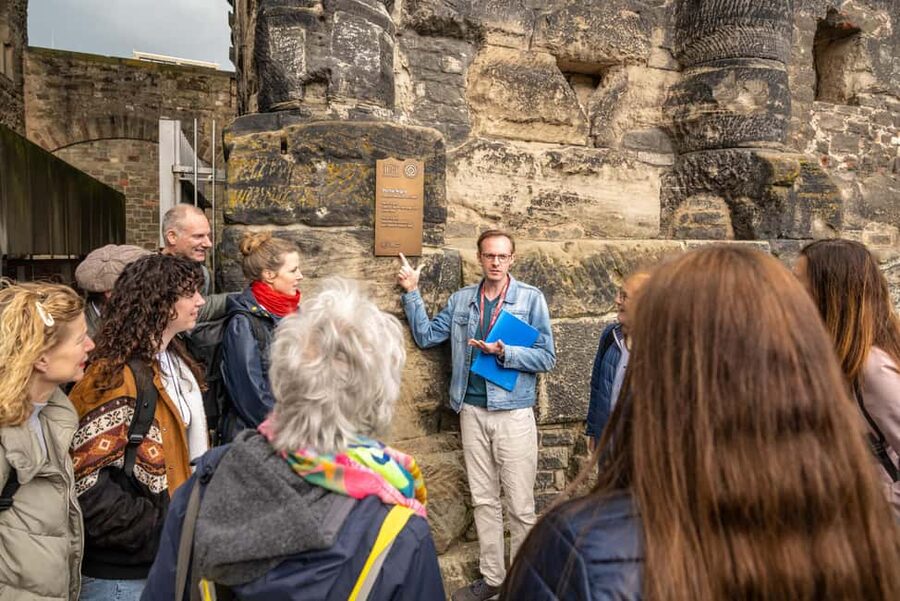
The meeting point is in front of the Tourist Information office, right beside the Porta Nigra. This is one of the easiest meeting points in Trier, since the Roman gate is hard to miss and the tourist office can answer questions if you arrive early.
The Porta Nigra is the right place to begin. Its name means Black Gate, a reference to the darkened stone that developed over time. The building immediately tells you that Trier was not a minor Roman outpost. It was a city built on a substantial scale, with monumental public works that still shape the center today.
Your guide starts the walk here and uses the gate as an entry into Trier’s Roman period. The tour description frames the opening in the spirit of the Romans, so you can expect the first part to focus on the city’s ancient identity and the importance of this surviving structure.
This opening is also practical. If you are still getting your bearings, the Porta Nigra gives you a fixed landmark. After the walk, you can return to the same area for further sightseeing, shopping, or questions at the tourist office.
Medieval stories around Dreikönigenhaus and Judengasse
From the Roman beginning, the route shifts into the Middle Ages. The Dreikönigenhaus and Judengasse bring the city’s medieval character into view, with architectural details and narrow streets that feel very different from the monumental Roman gate.
One useful theme here is security. Fortified citizens used clever building methods to protect their property, and the tour explains how architecture could serve as a defense. That gives you more to notice than façades alone. Look for the ways buildings were shaped to control access, guard possessions, or make a home harder to attack.
The route also brings in St. Peter, the patron saint of Trier. Religious influence was central to the city’s identity, but it did not always settle political questions. The walk explains how self-confident citizens fought the bishop in a struggle over imperial immediacy, or the right to answer directly to the emperor rather than remain under local control.
That conflict gives the medieval section some welcome humor. The stories include knights, monkeys, and church towers. Those details keep the presentation from becoming a dry list of dates, while still showing how power worked in medieval Trier.
Hauptmarkt, where Trier’s center turns public
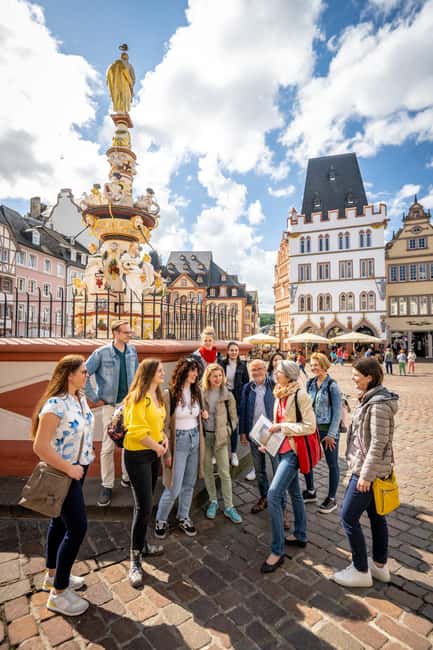
The Hauptmarkt is one of the key stops on the walk. This market square connects the city’s commercial life with its political and religious history. It is the kind of place where the shape of Trier becomes easier to read because several eras meet in one public space.
Your guide uses the square as a sightseeing stop and explains its place in the medieval city. The focus on citizens, bishops, and civic rights fits naturally here. This was not just a pretty square. It was a stage for trade, public life, and disputes over who controlled the city.
I would pay close attention here if you enjoy urban history. The best part of a guided walk is often not the grand building itself, but the explanation of how ordinary public spaces worked. A market square can reveal who had money, who had authority, and how people moved through the city.
The Hauptmarkt is also a useful point for photographs and orientation. Still, because the walk has several major stops ahead, you should not expect a long break. If you want time to study every façade or take many pictures, plan to return later.
More City Tours in Germany:
- Berlin: 1-Hour City Tour by Boat with Guaranteed Seating
★ 4.3 · 16,993 reviews - Leipzig: City History Canal Sightseeing Tour on a Motorboat
★ 4.7 · 6,232 reviews - Cologne: Panoramic City Cruise
★ 4.3 · 5,698 reviews - Berlin: City Sightseeing Hop-On Hop-Off Bus Tour
★ 4.1 · 4,233 reviews
Trier Cathedral and the Church of Our Lady
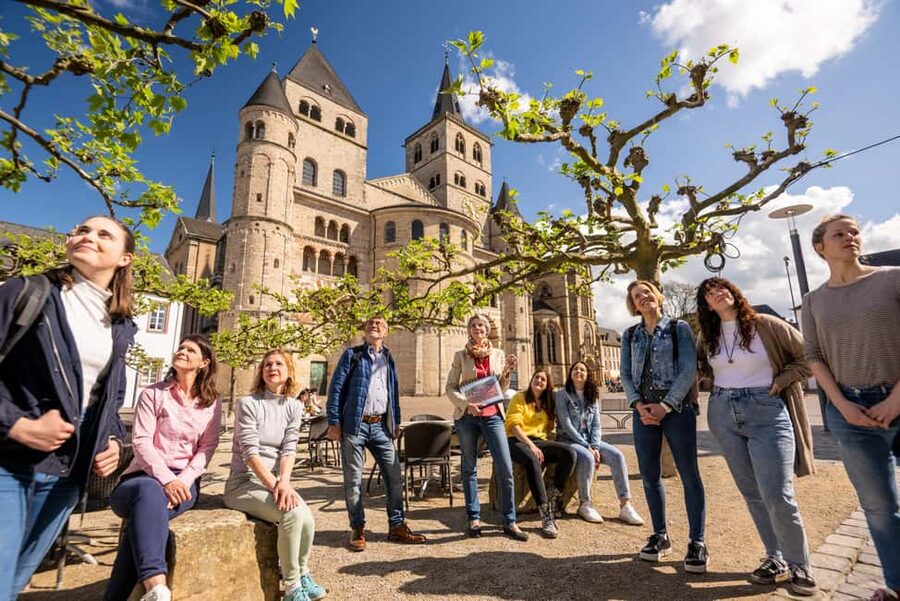
The route then reaches two of Trier’s UNESCO-listed religious buildings: Trier Cathedral and the Church of Our Lady. Both are part of the same World Heritage setting, but they offer different architectural impressions.
Trier Cathedral is the larger and more imposing of the two. Its importance comes from its long connection with the city and its role as one of the central religious landmarks in Trier. During the guided stop, you receive context that helps place the cathedral within the city’s changing eras rather than seeing it as an isolated church.
The Church of Our Lady provides a contrast in form and feeling. Its presence on the route matters because the tour counts it among the four UNESCO monuments you pass. Along with the cathedral, it shows how Trier’s Christian identity took shape beside its Roman foundations.
The supplied details do not promise entry into either church, so you should treat these as guided exterior and sightseeing stops unless the guide says otherwise. That is an important point for planning. If you want a quiet interior visit, set aside extra time before or after the walk.
The cathedral courtyard is also part of the transition toward modern Trier. From here, the route moves away from the medieval civic story and toward the grander political style of the Baroque period.
The Aula Palatina and Trier’s Baroque finish
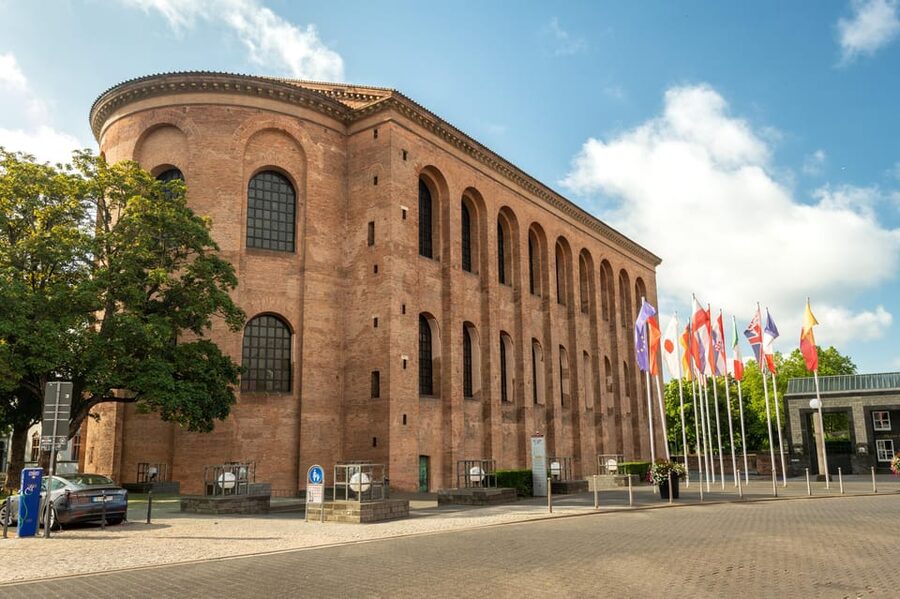
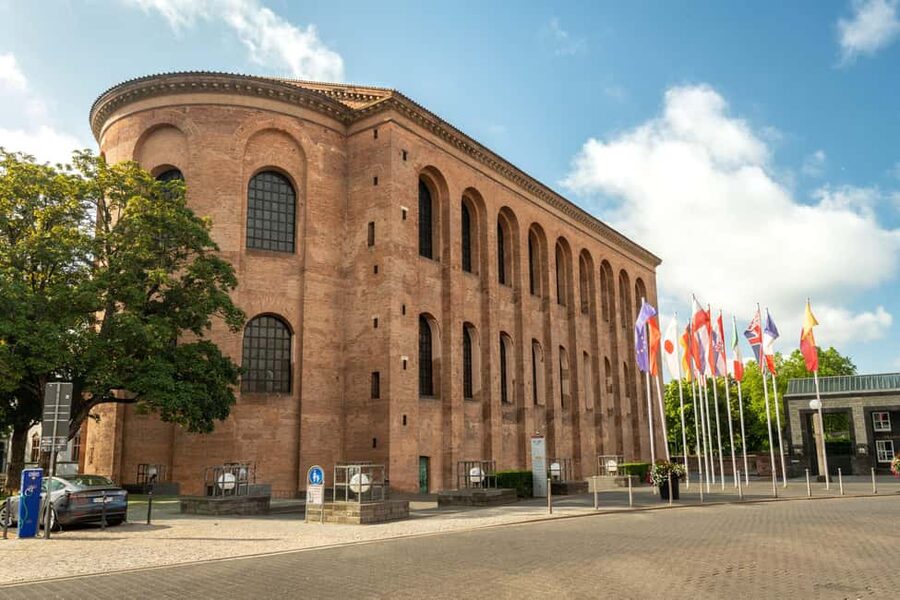
The final major monument is the Aula Palatina, commonly known as the basilica. This enormous Roman hall is one of Trier’s defining sights and another of the four UNESCO buildings included in the walk.
Its presence gives the tour a satisfying return to Rome after the medieval section. You begin at a Roman gate and later reach a Roman basilica, but the two buildings show different sides of ancient Trier. The Porta Nigra is a fortified city entrance. The Aula Palatina was a grand hall built to project authority.
The tour then connects the basilica with the Electoral Palace and its palace garden. Here you shift into the Baroque splendor of modern times. The palace reflects the power and taste of Trier’s electors, while the garden gives the walk a more formal and spacious ending.
This final section helps you see that Trier did not simply preserve Roman ruins. Later rulers used the old city, its religious institutions, and its grand buildings to express their own power. That layering is one of the best reasons to take the walk with a guide.
The listed drop-off points are the Kurfürstliches Palais and the palace garden. That is a useful ending because you are already positioned near more central sights, and the open garden provides a change of pace after the close streets of the old town.
What the $17 price really gets you
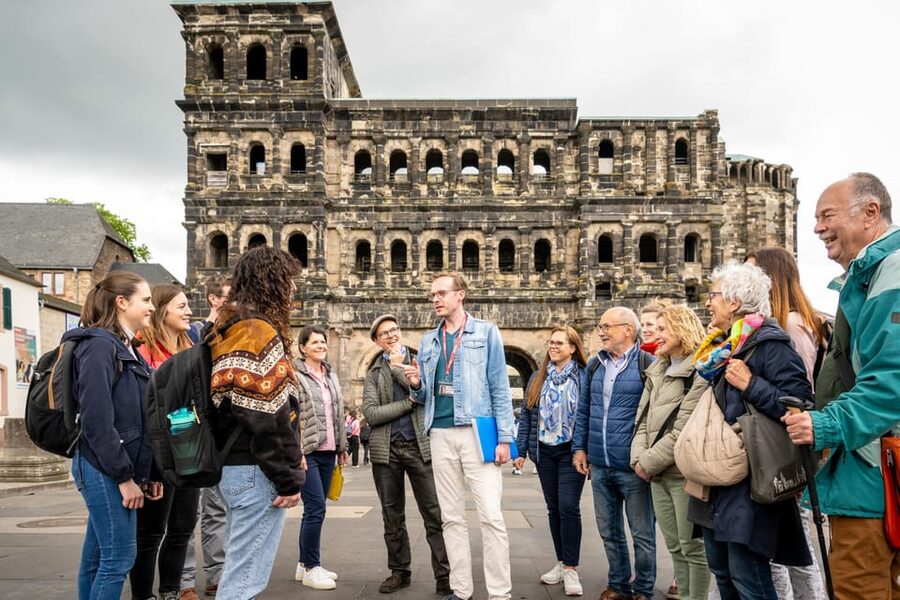
At $17, this is not a premium small-group experience with extended access or a meal. It is a straightforward city introduction led by an official local guide. For many visitors, that is exactly the right format.
You are paying for a 90-minute explanation of Trier’s main center, four UNESCO monuments, and a historical thread that links the stops. If you visited the same places without context, you would still see impressive buildings, but you could miss the connections between Roman planning, medieval civic struggles, church authority, and Baroque court culture.
The value improves if you are in Trier for one day, since the tour quickly identifies the sights worth returning to. It also suits a first afternoon, when you want an overview before choosing which buildings deserve more of your time.
The price is less compelling if you already know Trier well or prefer to set your own pace. You will follow the group’s timing, and a 90-minute route cannot cover every corner of the center.
Guide quality and language options
The tour is led by official Trier Guides through Trier Tourismus und Marketing GmbH. That gives the experience a direct connection to the city’s own visitor service rather than an unknown independent operator.
The available languages are German and English. Recent booking feedback includes praise for an eloquent guide and a separate German-language comment calling the tour very informative. Those short comments point to the two qualities that matter most here: clear delivery and useful historical content.
No individual guide names are provided, so I would not book expecting a specific person. Instead, choose the language that suits you and arrive ready for a compact, story-based walk through the center.
The route is listed as wheelchair accessible. Since the tour moves through historic streets and public spaces, it is still sensible to confirm current conditions with the Tourist Information office if you have particular mobility requirements.
Timing, cancellation, and who should book
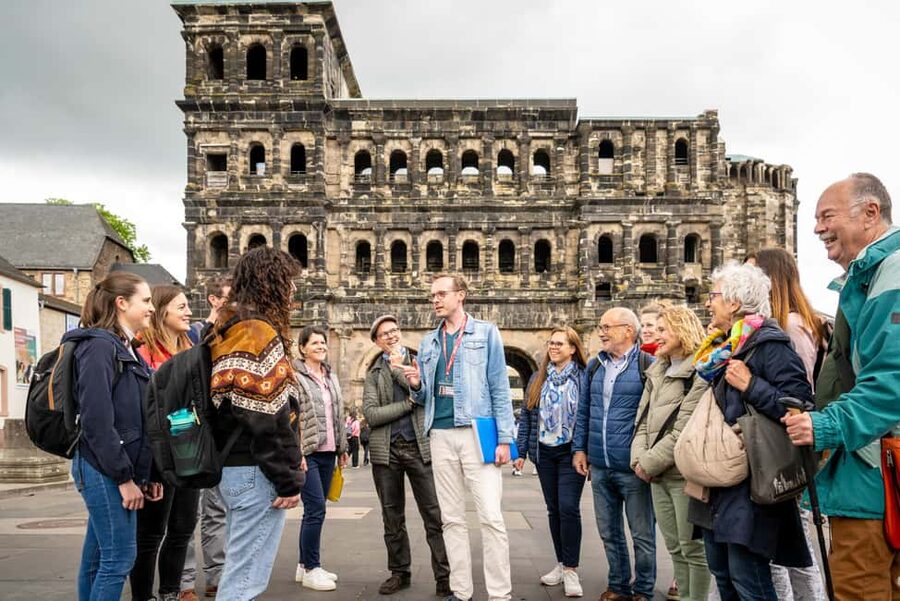
The tour lasts 1.5 hours, with starting times shown according to availability. That makes it easy to fit around a museum visit, a train arrival, or an afternoon in the old town.
You can cancel up to 24 hours in advance for a full refund, and you can reserve now while paying later. Those terms are useful if your Rhine or Moselle plans may shift.
I would recommend this walk to:
- First-time visitors who want Trier’s main sights explained in order
- People with limited time in the city
- Anyone interested in Roman, medieval, and Baroque history
- Visitors who prefer a local guide to a self-guided phone tour
- English or German speakers looking for an official city experience
I would be more cautious if you want long interior visits, a slow photography walk, or detailed coverage of every Roman site outside the center. This route focuses on the classic central monuments.
Should you book the Trier City Walking Tour?
Book it if you want a reasonably priced introduction with a clear route and strong historical range. The best feature is the concentration: in 90 minutes, you move from the Porta Nigra through medieval streets and the Hauptmarkt, past the cathedral and Church of Our Lady, then toward the Aula Palatina and Electoral Palace.
You should think of it as a first look, not a complete visit to Trier. Leave time afterward to revisit the buildings that catch your attention, especially the cathedral, the basilica, or the palace garden.
At $17, the balance is favorable. You receive an official local guide, four UNESCO monuments, and a practical orientation to one of Germany’s most layered city centers. For a first visit, I would book it.
FAQ
Where does the Trier City Walking Tour meet?
The meeting point is in front of the Tourist Information office, directly at the Porta Nigra.
How long does the tour last?
The walking tour lasts 1.5 hours.
What languages are available?
The tour is available in German and English.
Which UNESCO monuments are included?
The route passes the Porta Nigra, Trier Cathedral, the Church of Our Lady, and the Aula Palatina, also called the basilica.
Is the tour wheelchair accessible?
Yes, the activity is listed as wheelchair accessible.
Can I cancel the booking for a refund?
Yes. You can cancel up to 24 hours in advance for a full refund.
Just added around Germany
- Private Walking Tour in Berlin: Hitler’s Germany & WWII★ 5.0 · 7 reviews
- The History of Berlin: WWII PRIVATE Walking Tour With Locals★ 5.0 · 209 reviews
- Private Berlin WWII and Cold War History Tour with Local Expert Guide★ 5.0 · 28 reviews
- Private Walking Tour Berlin 3 hours: Brandenburg, Historic Center★ 5.0 · 7 reviews
- Berlin: Private Bike Tour of the Berlin Wall and Third Reich★ 5.0 · 23 reviews
- Berlin: Guided Private Bike Tour to Explore the Highlights★ 5.0 · 12 reviews
- Berlin Photography Masterclass – Private Photography Lesson★ 4.5 · 23 reviews
- Group Driving Tour 1 to 6 people. Berlin Shore Excursion incl pick-up at Port★ 5.0 · 8 reviews
City Tours, compared.
1-Hour City Tour by Boat with Guaranteed Seating
Read our review →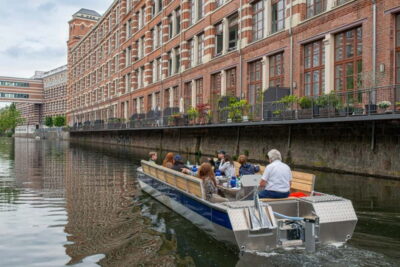
City History Canal Sightseeing Tour on a Motorboat
Read our review →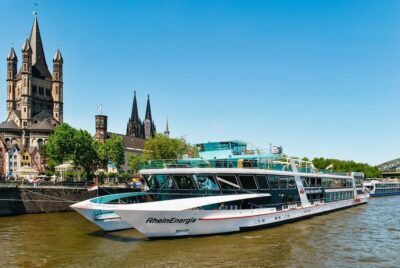
Browse the lists this tour appears in