
Reviewed · WALKING TOURS
Augsburg: Walking Tour with Fuggerei
Augsburg rewards a slower, closer look. I like the visit to the Fuggerei, the world’s oldest social settlement, and the way this tour links it with the city’s canals and grand fountains. The gentle splash of the Augustus Fountain gives the old center a pleasant rhythm, while the guide supplies the context that turns a simple walk into a story about money, faith, art, and daily life.
I also like the personal threads woven through the route. You follow the Fugger banking family, Mozart’s Augsburg connection, and Bertolt Brecht at the Römerlager/Brechthaus. The main consideration is timing: the 2 PM tour includes the entrance to the Römerlager/Brechthaus, while the 11 AM option is in German, so you need to choose carefully if you want English.
In This Review
- Key points at a glance
- Why Augsburg works so well on foot
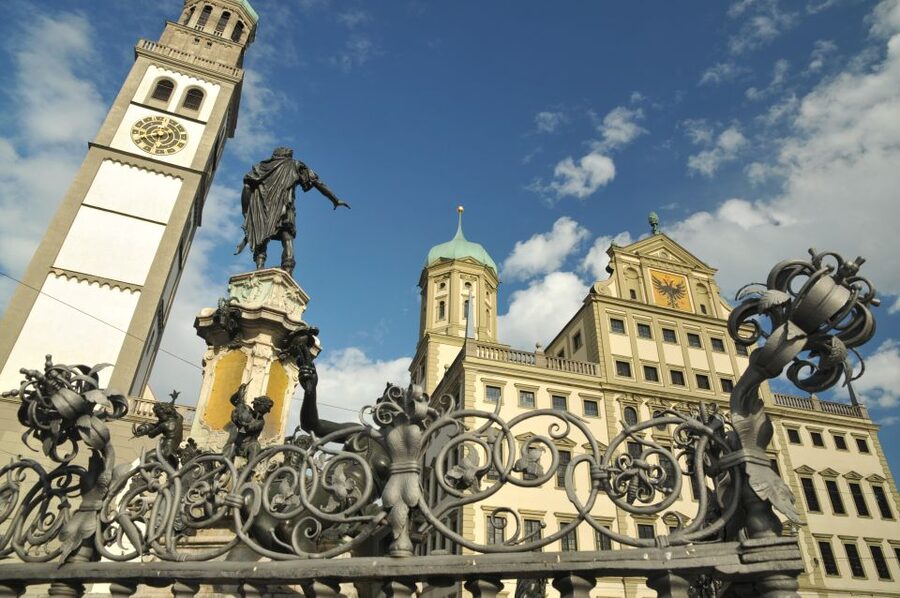
- The Augustus Fountain sets the tone
- Entering the Fuggerei
- Roman Augsburg and the Brecht connection
- Mozart, the Fuggers, and local connections
- What the two-hour format gives you
- Choosing between 11 AM and 2 PM
- Is $22 a fair price?
- Who should book this Augsburg walk?
- Practical tips for a better visit
- Final verdict: Book it for a first look at Augsburg
- FAQ
- Where does the Augsburg walking tour begin?
- How long does the tour last?
- What languages are available?
- When is the extra English group available?
- Is entry to the Fuggerei included?
- Is entry to the Römerlager/Brechthaus included?
- Do I need anything for the optional sound amplification system?
Key points at a glance
- The Fuggerei is the main prize: Your ticket takes you inside the world’s oldest social settlement, not just past its entrance.
- Augsburg’s water system shapes the walk: Canals and ornate fountains help explain why the city earned UNESCO World Heritage recognition.
- The 2 PM option is bilingual: The regular 2 PM tour runs in German and English, with an extra English group from Thursday to Sunday between July 19 and the end of September.
- Mozart has a local connection: His father was born in Augsburg, giving the city a direct link to the famous composer’s family.
- You get more than one historic personality: The route also introduces the Fugger family and writer Bertolt Brecht.
- The tour is compact and fairly priced: At $22 per person for two hours, it combines a guided walk with two included admissions.
Why Augsburg works so well on foot
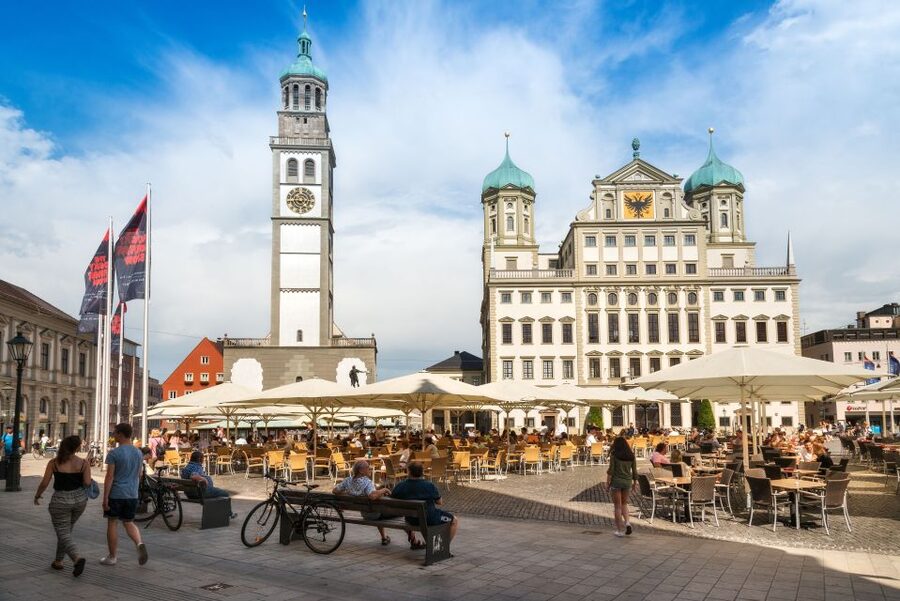
Augsburg is one of those German cities that can seem quiet at first glance. That is part of its appeal. Its old town is compact enough for a walking tour, yet the stories reach from Roman times to the banking power of the Fugger family and the social ideals behind the Fuggerei.
You begin at the Tourist-Information Augsburg, a sensible meeting point in the city center. From there, the guide leads you through the old town rather than asking you to piece the main sights together on your own. That matters in Augsburg because the city’s importance is spread across fountains, canals, historic buildings, and the homes or workplaces tied to notable people.
The two-hour format gives you a useful first look without consuming your entire day. I would treat it as an orientation walk with meaningful interior visits, not as a full study of every church, museum, and historic street. You get the main story, a few memorable stops, and a better idea of where to return later.
More Walking Tours in Germany:
- Discover Berlin Half-Day Walking Tour
★ 5.0 · 9,624 reviews - Berlin: Third Reich and Cold War 2 Hour Walking Tour
★ 4.9 · 6,830 reviews - Munich: Third Reich & WWII Walking Tour
★ 4.6 · 6,181 reviews
The Augustus Fountain sets the tone
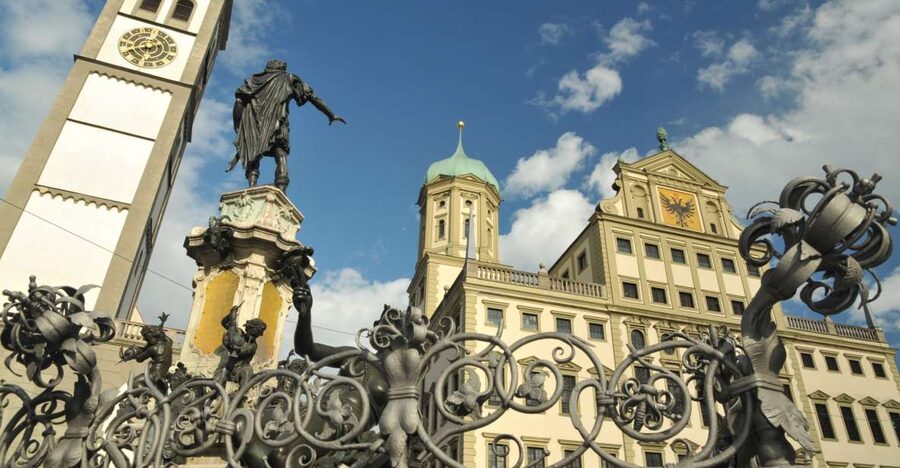
One of the most atmospheric moments comes at the Augustus Fountain. This ornate fountain dates from the 16th century, when Augsburg was a wealthy and ambitious city. The sound of moving water makes the stop feel less like a quick photo pause and more like a small piece of urban theater.
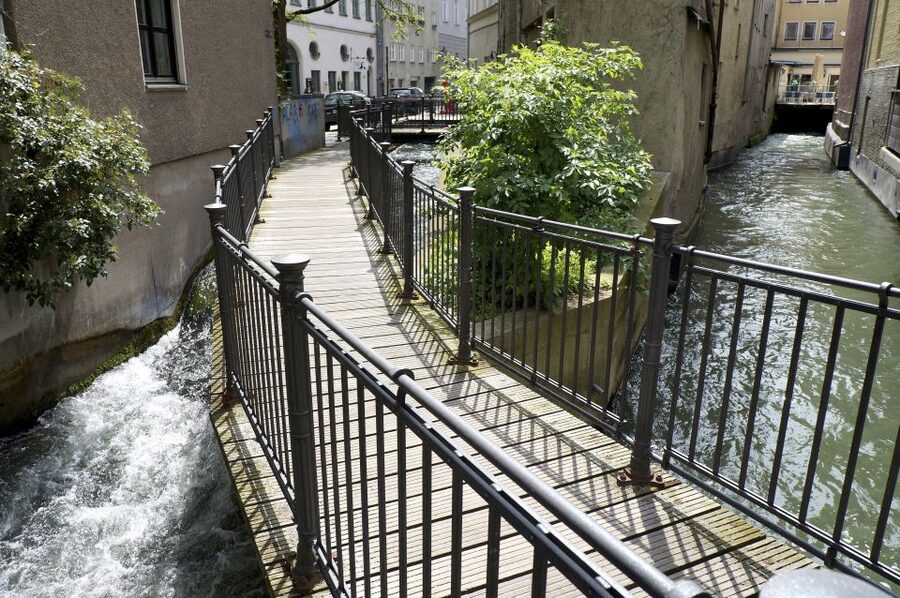
The fountain also points you toward Augsburg’s water story. The city’s canals and water management features are part of its UNESCO World Heritage designation. As you walk, the guide can connect the visible channels and fountains with the engineering and civic power that made them possible.
You should not expect a long technical lecture at every canal. The value is in seeing the system as part of the city, rather than treating the UNESCO label as a detached museum fact. Water here is not just decoration. It is part of how Augsburg developed and displayed its wealth.
Bring comfortable shoes. The tour is only two hours, but the route passes through the city center and old town streets, with stops where you will want to look up, take photographs, and listen.
Entering the Fuggerei
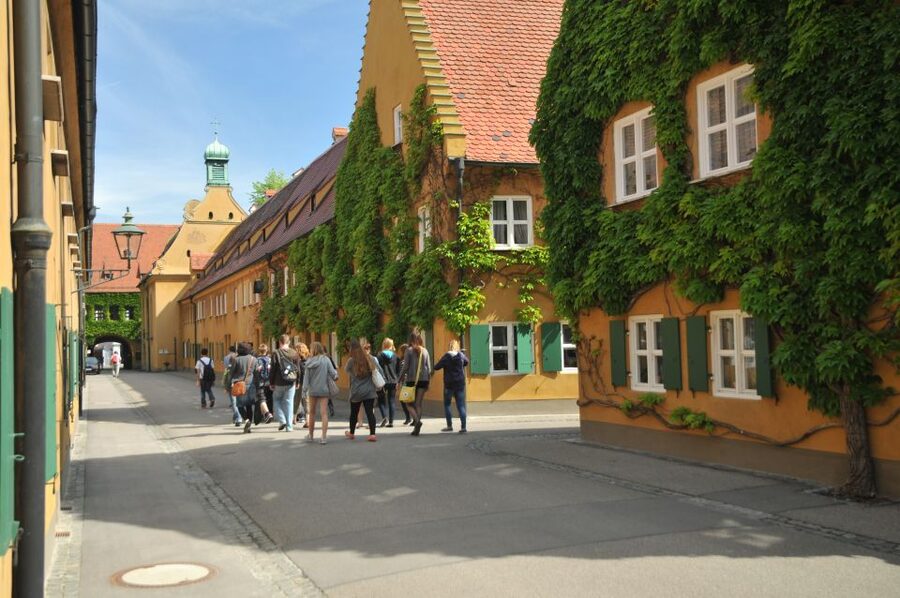
The Fuggerei is the central attraction, and the included entrance ticket adds real value to the $22 price. Founded by the Fugger family, this social settlement continues to be one of Augsburg’s most unusual places to visit. It is not simply an old housing complex preserved behind glass. It remains associated with the idea of providing affordable homes for people in need.
The Fugger family was a powerful upper-bourgeois German family and a major banking force in Europe. Their wealth helped shape Augsburg, but the Fuggerei shows another side of that power: a planned community built around social support and religious expectations.
Inside, you get a closer look at the settlement’s streets and atmosphere. The small scale is important. Rather than hearing only about charity in the abstract, you see how the idea was given a physical form through homes, lanes, and shared space.
The stop is also useful because it gives the wider walking tour a human focus. Fountains and canals tell you about public investment. The Fuggerei asks a different question: what should wealth do for a city and its residents?
Allow enough attention for this visit. The Fuggerei is easy to reduce to a quick checklist stop, but it rewards you if you listen to the guide and notice the setting. One recent booking described the visit as a must and praised the amount of useful information available about the settlement. That matches my view: this is the part of the tour most likely to stay with you after the walk ends.
Roman Augsburg and the Brecht connection
The included entrance to the Römerlager/Brechthaus comes at 2 PM. This pairing gives you two different views of Augsburg, one connected with its Roman past and one with Bertolt Brecht, the major German playwright and poet associated with the city.
The Römerlager name points to Augsburg’s Roman foundations. You get a glimpse of the city’s earlier role before the medieval and banking stories take over. It is a useful reminder that Augsburg was not created by the Fugger family. Their era was one important chapter in a much longer civic story.
The Brechthaus brings the focus forward to literature and modern cultural identity. The stop helps show how Augsburg’s story includes artists and writers as well as merchants, engineers, and politicians. If Brecht is a particular interest, the interior visit gives you a reason to pay close attention to the final part of the tour.
The timing deserves a clear warning. The entrance is listed at 2 PM, so the afternoon option is the logical choice if you want this included stop. The 11 AM German tour may suit German speakers who prefer an earlier start, but you should not assume the same interior timing applies.
A few more Germany trips worth comparing
- Augsburg’s Water Management System – City Walking Tour
★ 4.5 · 168 reviews - Augsburg: Illuminated Guided Evening Walking Tour
★ 4.6 · 67 reviews - Classic city tour in the World Heritage City of Augsburg
★ 4.0 · 41 reviews - Pubcrawl Augsburg: Tour through best Bars and Clubs in Town
★ 4.4 · 13 reviews
Mozart, the Fuggers, and local connections
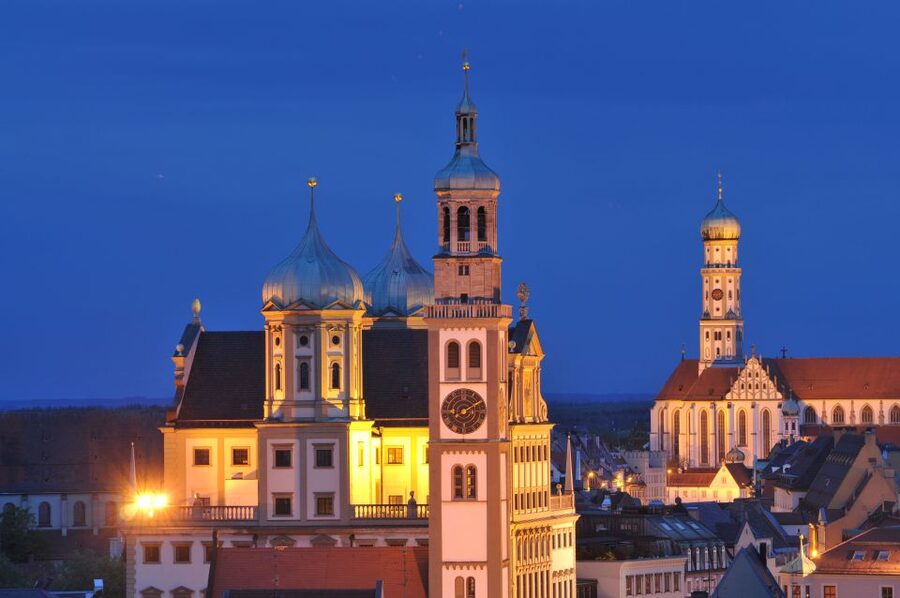
Augsburg’s Mozart link is easy to misunderstand. Wolfgang Amadeus Mozart was not born here. His father was born in Augsburg, and the tour follows that family connection as part of the city’s cultural story.
That detail works well on a city walk because it gives you a recognizable name without pretending Augsburg is Salzburg. You learn how famous people can be connected to a place through family, residence, or work, not only through birthplace.
The Fugger family provides the strongest local connection. Their banking influence helps explain why Augsburg has such grand civic features and why the Fuggerei could be created here. Brecht then offers a contrast, showing a city shaped not only by money and public works but also by critical writing and theater.
I like this mix because it keeps the tour from becoming a list of dates. You move between architecture, social policy, music, literature, and urban engineering. The subjects are varied, but they all point back to the same question: why did Augsburg matter?
What the two-hour format gives you
Two hours is enough to see the core of Augsburg, but it requires sensible expectations. You will not tour every major building or spend long periods inside each attraction. The guide has to keep the route moving, especially with a group that includes people interested in different parts of the city.
That brisk pace is mostly a benefit. You receive a clear introduction before deciding how to use the rest of your time. If you have only a short stay in Augsburg, the tour helps you cover several important places without wasting time finding them.
The drawback is that a short guided walk can leave you wanting more detail. The Fuggerei, water system, Roman remains, and Brecht connection could each support a much longer visit. Here, they are linked into one well-planned overview.
I would book this early in your Augsburg schedule. Afterward, you can return to the stop that caught your attention, spend more time at the Fuggerei, or explore another part of the old town at your own pace.
Choosing between 11 AM and 2 PM
The tour offers a German-language departure at 11 AM and a bilingual German-English departure at 2 PM. Pick the language option during booking rather than relying on a last-minute change.
For English speakers, the afternoon time is the key choice. From July 19 through the end of September, an extra English group runs from Thursday to Sunday at 2 PM. The booking option is labeled Ticket English July-September, so select that exact option during this seasonal period.
The 2 PM departure also matters because the Römerlager/Brechthaus entrance is scheduled for 2 PM. If that interior visit is important to you, the afternoon tour gives you the clearest match.
An optional free elysium sound amplification system is available. You need your own smartphone, headphones, and an internet connection to use it. This can be helpful if you have trouble hearing while walking or if the group spreads out around a fountain or narrow old-town street.
Is $22 a fair price?
At $22 per person, the tour offers solid value for a two-hour experience. You are paying for a live guide, the walking route, entry to the Fuggerei, and entry to the Römerlager/Brechthaus at 2 PM. Those included admissions make the cost more attractive than a walk that only points at buildings from the pavement.
The real value depends on how much context you want. If you prefer to wander alone and read signs, you can see parts of Augsburg without booking a tour. But the Fuggerei, UNESCO water sites, Fugger family, Mozart connection, and Brecht story are easier to understand when one guide links them together.
The tour also saves planning time. You meet at the central Tourist-Information Augsburg, follow a set route, and skip the ticket line. There is no hotel pickup or drop-off, so you need to reach the meeting point yourself, but that is reasonable for a city-center walking tour.
Free cancellation up to 24 hours before the start and the option to reserve now and pay later add flexibility. These policies do not change the tour itself, but they make it easier to fit into a changing Germany itinerary.
Who should book this Augsburg walk?
I would recommend this tour to a first-time visitor who wants a clear introduction to Augsburg in half a day. It suits you especially well if you like history with a strong local angle and want more than a parade of façades.
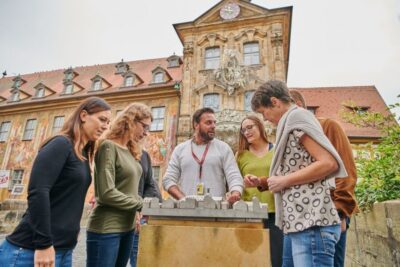
It is also a good choice for families and mixed-interest groups. One person can focus on the Fuggers, another on Mozart or Brecht, and someone else can enjoy the fountains and canals. The route brings different subjects together without requiring specialist knowledge.
The tour may be less suitable if you want a slow photography walk or long museum visits. Two hours creates a useful overview, but the guide has a schedule to keep. You should also check the language and start time carefully, especially if you need English.
The stated wheelchair accessibility is a plus, though the tour remains a walking route through the old town. If you have specific mobility needs, confirm the practical route details when booking.
Practical tips for a better visit
- Choose 2 PM for English and the Brechthaus entrance: This is the safest choice for English speakers who want the full listed program.
- Bring your phone and headphones: You need them, along with an internet connection, if you want to use the free elysium sound amplification system.
- Wear walking shoes: The route covers the city center and old town, with several stops rather than one stationary presentation.
- Keep time afterward: The guide points out more places worth seeing, so plan a little extra time to revisit a favorite sight.
- Do not rush the Fuggerei: Its importance is social as well as architectural, and the visit makes more sense when you consider how the settlement still functions as a symbol of organized support.
- Listen for connections, not only dates: The best part of the tour is the way water, banking, Roman Augsburg, Mozart, and Brecht fit into one city story.
Final verdict: Book it for a first look at Augsburg
You should book the Augsburg Walking Tour with Fuggerei if you want a compact, guided introduction with two worthwhile admissions included. The Fuggerei is the strongest reason to go, while the canals, Augustus Fountain, Roman connection, Mozart family link, and Brecht stop give the walk a wider reach.
At $22, the combination is fair, and the 4.6 rating from 2,245 bookings supports the impression of a well-liked, dependable city tour. The main thing to get right is the departure option: choose 2 PM for the bilingual tour and the scheduled Römerlager/Brechthaus entrance. If you prefer an earlier German-language walk or plan to explore independently, you may not need it, but for most first visits, this is an efficient and worthwhile way to get your bearings in Augsburg.
FAQ
Where does the Augsburg walking tour begin?
The meeting point is the Tourist-Information Augsburg.
How long does the tour last?
The walking tour lasts two hours.
What languages are available?
The tour is available in German and English. The 11 AM departure is in German, while the 2 PM departure is bilingual in German and English.
When is the extra English group available?
From July 19 through the end of September, an extra English group runs at 2 PM from Thursday to Sunday. You should select the Ticket English July-September option when booking.
Is entry to the Fuggerei included?
Yes. The entrance ticket to the Fuggerei is included in the tour price.
Is entry to the Römerlager/Brechthaus included?
Yes, the entrance ticket is included at 2 PM.
Do I need anything for the optional sound amplification system?
Bring your smartphone, headphones, and an internet connection if you want to use the free elysium sound amplification system.
Just added around Germany
- Private Walking Tour in Berlin: Hitler’s Germany & WWII★ 5.0 · 7 reviews
- The History of Berlin: WWII PRIVATE Walking Tour With Locals★ 5.0 · 209 reviews
- Private Berlin WWII and Cold War History Tour with Local Expert Guide★ 5.0 · 28 reviews
- Private Walking Tour Berlin 3 hours: Brandenburg, Historic Center★ 5.0 · 7 reviews
- Berlin: Private Bike Tour of the Berlin Wall and Third Reich★ 5.0 · 23 reviews
- Berlin: Guided Private Bike Tour to Explore the Highlights★ 5.0 · 12 reviews
- Berlin Photography Masterclass – Private Photography Lesson★ 4.5 · 23 reviews
- Group Driving Tour 1 to 6 people. Berlin Shore Excursion incl pick-up at Port★ 5.0 · 8 reviews
Walking Tours, compared.



Old Town & Viktualienmarkt City Walk in German
Read our review →Browse the lists this tour appears in